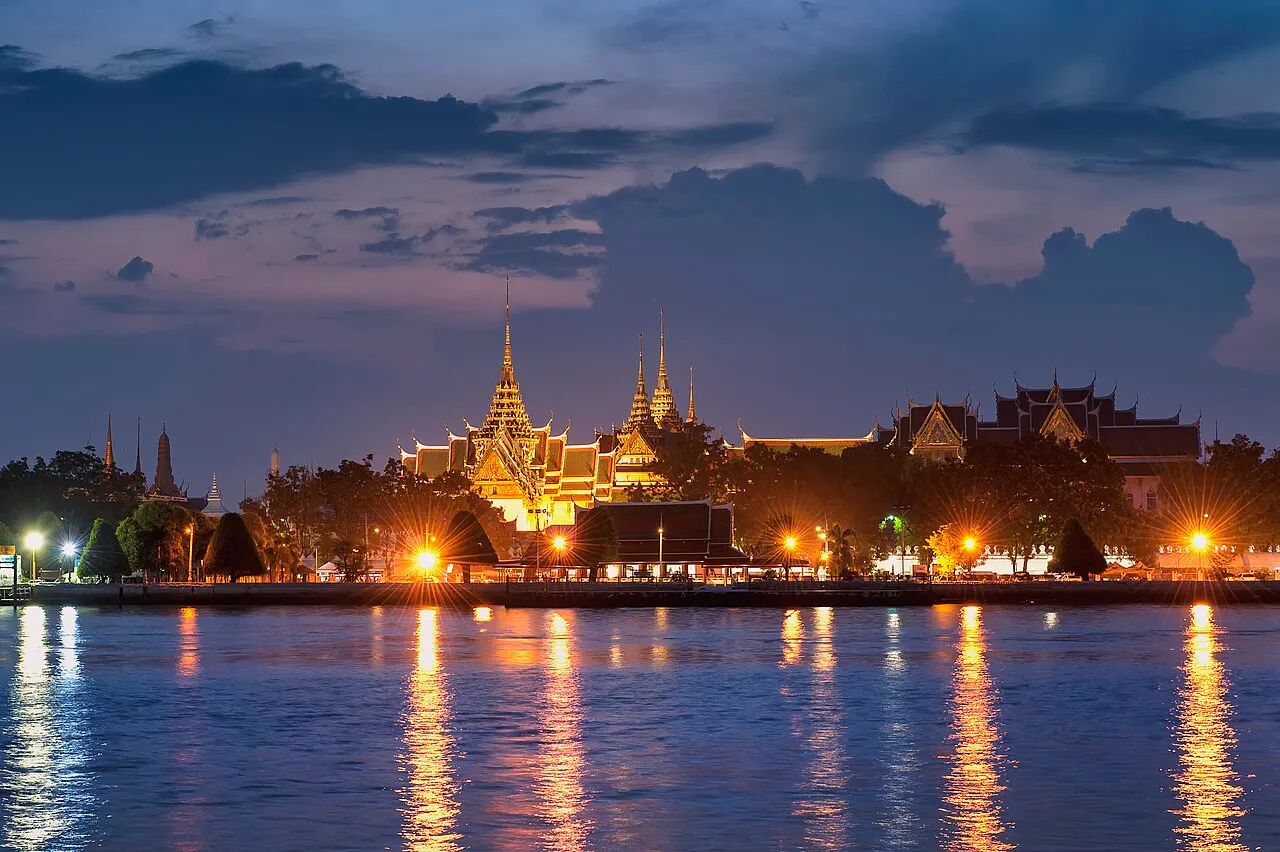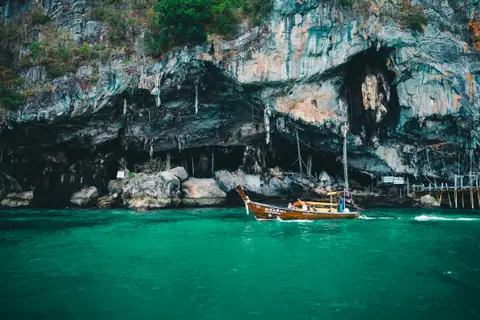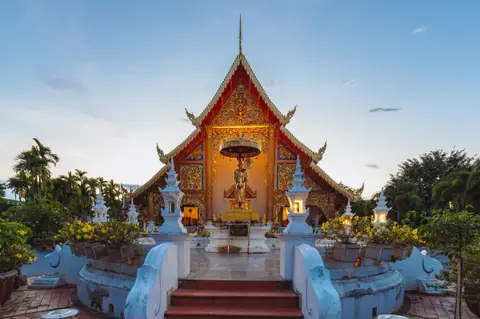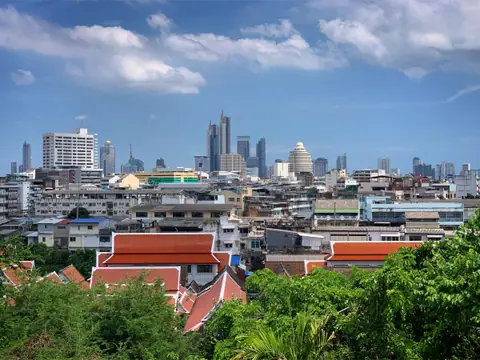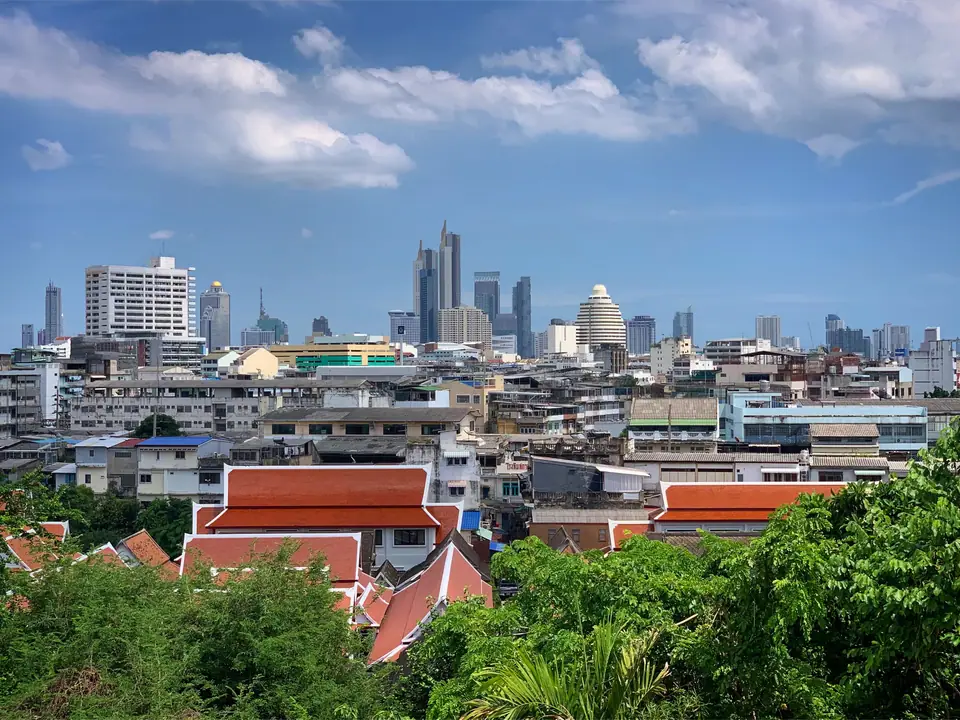
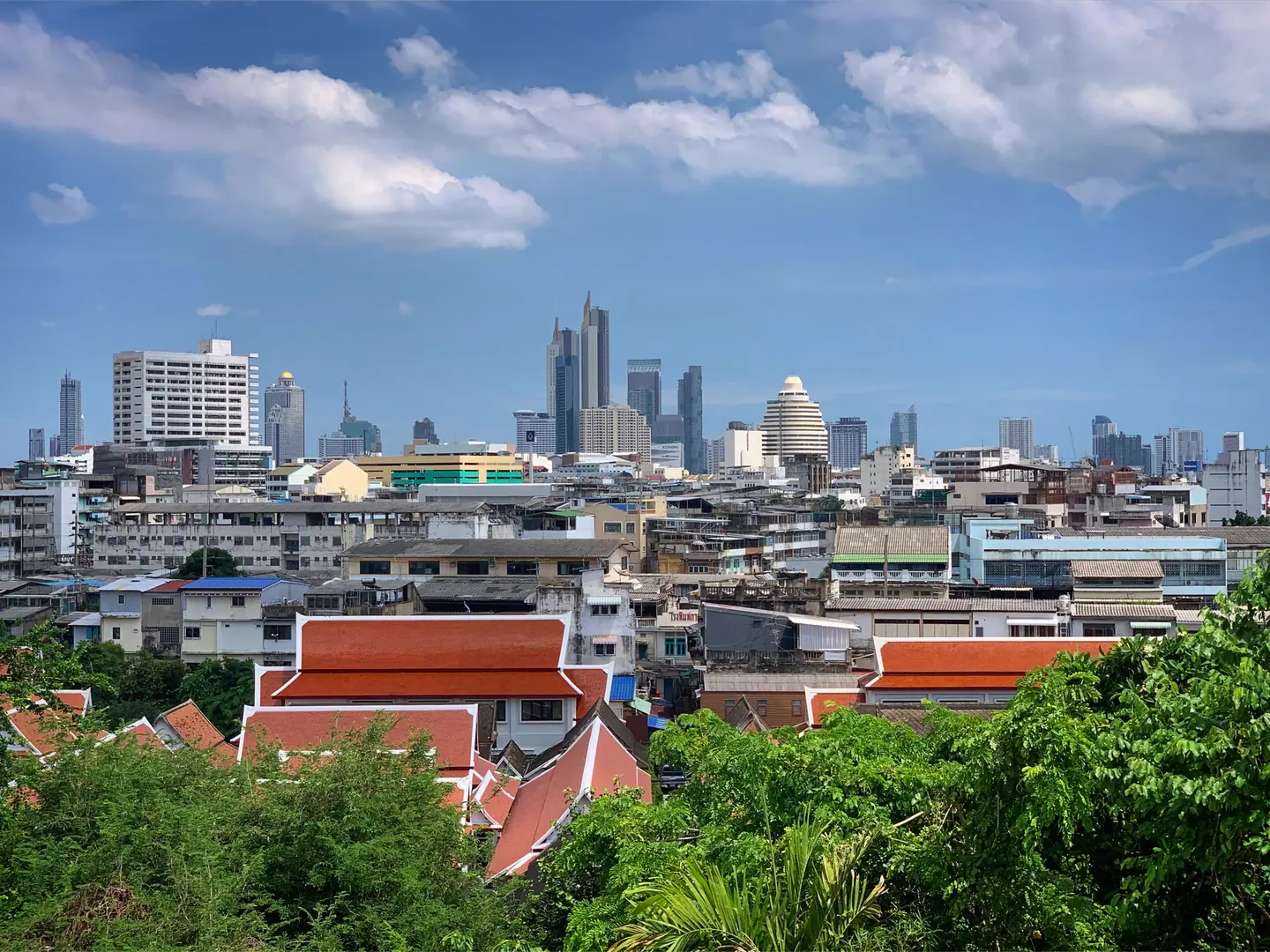
A 100-stop walking and river ferry route across historic Bangkok, linking Royal Rattanakosin Island, Thonburi temples, Yaowarat Chinatown, and the Chao Phraya waterfront.
From the Fall of Ayutthaya to the Canal Ring of Old Siam
Bangkok began as a fortified trading post called Bang Makok on the banks of the Chao Phraya River during the Ayutthaya Kingdom. After Burmese armies destroyed Ayutthaya in 1767, General Taksin established a new capital at Thonburi on the western bank before King Rama I founded the Chakri Dynasty in 1782 and moved the royal seat across the river to Rattanakosin Island. Ringed by defensive canals dug by tens of thousands of labourers, the new capital was modelled directly on the layout of lost Ayutthaya, earning the nickname Venice of the East.
During the nineteenth and early twentieth centuries, Kings Mongkut (Rama IV) and Chulalongkorn (Rama V) modernised Siam while preserving its independence against European colonial powers, laying out grand boulevards, neoclassical ministries, and railway terminals alongside gilded royal monasteries. Today, historic Rattanakosin, the Chinese merchant shophouses of Yaowarat, and the tranquil klongs of Thonburi form one of Asia's richest urban landscapes.
Grand Palace, Wat Pho & Inner Rattanakosin
Grand Palace, Wat Phra Kaew, Wat Pho, Sanam Luang, National Museum Bangkok, Lak Mueang City Pillar, Saranrom Palace, and Phra Athit forts
Grand Palace
Established in 1782 by King Rama I, this walled complex served as the administrative centre of the Siamese kingdom for generations. Visitors can examine an intriguing synthesis of classical Thai roofs and European neo-Renaissance facades at the Chakri Maha Prasat. The intricate pavilions and ceremonial courtyards illustrate the evolution of royal court architecture across two centuries.
Wat Phra Kaew
Regarded as the most sacred Buddhist temple in Thailand, this sanctuary stands within the grounds of the Grand Palace. The central ubosot encloses the Emerald Buddha, a celebrated palladium carved from a single block of jadeite. Surrounding cloister galleries display detailed mural paintings depicting scenes from the Ramakien, the Thai national epic.
Phra Si Rattana Chedi
Erected by King Rama IV in the nineteenth century, this soaring golden stupa reflects the architectural traditions of ancient Ayutthaya. Its gleaming surface consists of imported Italian mosaic tiles that catch the tropical sunlight. The structure serves as a reliquary, enshrining fragments of bone reputed to belong to the historical Gautama Buddha.
Prasat Phra Thep Bidon
This cross-shaped pavilion combines traditional Khmer prang spires with elaborate Thai decorative motifs. Constructed during the reign of King Rama IV, it originally served as a royal chapel before being rededicated as a dynastic pantheon. Inside stand bronze statues of past Chakri kings, which the public can honour only on specific commemorative national holidays.
Phra Mondop
Commissioned by King Rama I, this square library building was designed to house the revision of the Tripitaka scriptures after the fall of Ayutthaya. The exterior features mother-of-pearl inlaid doors, carved timber gables, and columns flanked by protective demon guardians. A floor of solid woven silver mats protects the delicate canonical texts kept within.
Dusit Maha Prasat Throne Hall
Built in 1789, this cruciform hall remains one of the oldest surviving original structures inside the royal precinct. Its tiered spire exemplifies early Rattanakosin woodcarving and traditional proportions. The hall functions as the solemn venue for royal lying-in-state ceremonies and houses the mother-of-pearl inlaid throne crafted during the reign of Rama I.
Wat Pho
One of the capital's oldest religious sites, Wat Pho predates the founding of Bangkok itself and served as Thailand's earliest public university. Its cavernous assembly hall encloses a forty-six metre long gilded image of the Buddha entering nirvana. The monastery grounds also retain a celebrated traditional medical school where visitors can observe the practice of classic Thai massage.
Phra Maha Chedi Si Ratchakan
These four towering chedis rise forty-two metres into the skyline, each covered in thousands of colourful glazed porcelain tiles. Every spire commemorates one of the first four monarchs of the Chakri dynasty, distinguished by green, white, yellow, and blue decorative schemes. The structures demonstrate the historic Sino-Thai ceramic trade that supplied ballast for merchant vessels.
Bangkok City Pillar Shrine
King Rama I erected the original wooden pillar here in 1782 to anchor the spiritual fortune of his newly founded capital. The white pavilion houses two distinct pillars, representing both the initial foundation and a replacement post added by King Rama IV. Devotees regularly gather here to make traditional floral offerings and commission ceremonial music performances.
Sanam Luang
Originally designated as a cremation ground for kings and high-ranking royalty, this vast oval esplanade faces the Grand Palace. The grounds have witnessed significant moments in modern Thai history, from royal ploughing rites to mass political assemblies. Rows of tamarind trees, planted during the late nineteenth century, line the broad perimeter pathways.
National Museum, Bangkok
Occupying the former Wang Na palace of the viceroy, this institution displays antiquities spanning prehistoric times to modern art. The collection includes the celebrated Sukhothai bronze Buddha images, ceremonial royal chariots, and ancient Dvaravati stone carvings. The Buddhaisawan Chapel on site displays eighteenth-century murals detailing the life of the Buddha.
National Gallery of Thailand
Housed in a handsome Western-style brick building completed in 1902, this gallery was originally constructed to produce national coinage. It now presents an extensive permanent collection of works by royal artists, including King Rama IX, and influential modern pioneers such as Silpa Bhirasri. The exhibition rooms document the transition of Thai painting from classical religious modes to secular expression.
Wat Mahathat Yuwaratrangsarit
Founded during the Ayutthaya period, this historic royal temple serves as the administrative centre of Thailand's largest Buddhist fraternity. It also accommodates Mahachulalongkornrajavidyalaya University, which trains monks in higher Buddhist philosophy. Travellers often visit the surrounding lanes on weekends, when an extensive open-air amulet market spreads across the neighbouring pavements.
Tha Phra Chan
This historic river landing takes its name from the Moon Fort that originally stood guarding the defensive palace wall. Today, the shaded alleys leading from the pier contain dozens of specialised stalls selling talismans, cast metal images, and protective clay charms. Collectors and monks inspect tiny figurines through magnifying loupes to determine their spiritual lineage and age.
Thammasat University
Established in 1934 by statesman Pridi Banomyong as the University of Moral and Political Sciences, this campus sits beside the Chao Phraya River. The grounds contain notable mid-century modernist buildings, including the distinctive domed main hall. The site played a pivotal role in the student-led pro-democracy movements of 1973 and 1976.
Saranrom Palace
Constructed between 1866 and 1878, this two-storey neoclassical palace reflects the growing European architectural influence favoured by King Rama IV and King Rama V. It initially accommodated foreign royalty on official visits before housing the Ministry of Foreign Affairs for several decades. Across the lane lies Saranrom Park, a Victorian-style garden transformed from former royal leisure grounds.
Wat Rajabopit
Commissioned by King Rama V in 1869, this temple features an exterior clad in hand-painted Chinese-style ceramic tiles and a circular courtyard layout. Surprisingly, the interior of the principal ordination hall displays a striking European neo-Gothic design complete with gilded vaulted ceilings. The royal cemetery on the western edge contains monuments dedicated to members of the royal family.
Wat Ratchapradit
Despite its modest proportions, this temple holds high ritual status as one of the few designated royal monasteries of the first class. Built by King Rama IV in 1864 for the Thammayut monastic order, its ordination hall is faced entirely with grey marble blocks. The interior retains well-preserved murals illustrating traditional royal ceremonies throughout the twelve months of the year.
Phra Sumen Fort
Constructed in 1783, this whitewashed octagonal fortress is one of only two bastions surviving from Bangkok's original fourteen defensive city wall fortifications. Built from brick and stucco, it features crenellated battlements and artillery slots designed to repel naval incursions along the river. It now forms the focal point of Santi Chai Prakan Park, overlooking the river bend.
Phra Athit Road
Running parallel to the Chao Phraya River, this historic street formed the northern rim of Rattanakosin Island during the reign of Rama V. The route retains fine examples of early twentieth-century shophouses, traditional printing offices, and former aristocratic compounds. The avenue provides a calm, reflective counterpoint to the busy ceremonial spaces surrounding Sanam Luang.
Wat Arun, Thonburi Canals & Kudeejeen Quarter
Wat Arun, Wat Kalayanamit, Santa Cruz Church, Kuan An Keng Shrine, Royal Barges National Museum, Wang Lang, and Wat Prayoon
Wat Arun
Named after the Hindu god Aruna, this ancient sanctuary served as the royal chapel during the Thonburi period. Its central Khmer-style tower rises beside the Chao Phraya River, decorated with thousands of colourful Chinese ceramic shards salvaged from ship ballast. Visitors can inspect the steep exterior stairways and guardian figures standing watch along the terraces.
Phra Racha Wang Derm
Built after the fall of Ayutthaya, this modest royal residence served as the command centre of King Taksin the Great. The grounds feature traditional Thai pavilions, historic throne rooms, and shrines dedicated to the monarch. Maintained by the Royal Thai Navy, the preserved site offers a direct window into the short-lived Thonburi kingdom.
Wat Kalayanamit
Founded in 1825 by an aristocrat of Chinese descent, this temple reflects strong Sino-Thai cultural ties. The cavernous main assembly hall shelters Phra Phuttha Trai Rattananayok, a massive seated Buddha statue reverently called Luang Pho To. Murals inside depict vivid scenes of maritime trade and everyday nineteenth-century life along the riverbanks.
Santa Cruz Church
King Taksin granted land here to Portuguese mercenaries and merchants in 1769 following their assistance in battle. The present Renaissance Revival structure, completed in 1916, features a domed bell tower reminiscent of the cathedral in Florence. The surrounding Kudeejeen quarter continues to produce traditional Portuguese-derived egg pastries.
Kuan An Keng Shrine
Constructed by Hokkien migrants during the Thonburi era, this waterfront shrine stands between Wat Kalayanamit and Santa Cruz Church. The building displays classical southern Chinese craftsmanship, including carved wooden beams, ceramic roof ridges, and incense-filled alters. It remains a tranquil community prayer space honouring the goddess of mercy.
Wat Prayurawongsawat
Commonly known as Wat Prayoon, this royal monastery was built during the reign of King Rama III. Its primary landmark is Phra Borommathat Maha Chedi, an enormous white stupa supported by a central pillar system that earned a UNESCO conservation award. At the base, an artificial rock garden called Khao Mo shelters hundreds of turtles.
Memorial Bridge
Opened in 1932 to commemorate the 150th anniversary of the Chakri Dynasty and Bangkok, this green steel structure was manufactured in Britain. The crossing once opened to allow royal naval vessels to sail upriver. Pedestrians can walk across the spans to gain panoramic views across the river towards both historical city banks.
Phra Pok Klao Bridge Garden
Known locally as the Chao Phraya Sky Park, this green walkway was constructed atop an abandoned railway infrastructure between twin road bridges. Native trees and shrubs frame paved walkways, cycling channels, and rest benches. It provides a peaceful pedestrian corridor between the Kudeejeen riverfront and Phra Nakhon.
Kudeejeen Museum
This privately managed townhouse museum preserves the distinct identity of the Sino-Portuguese community established in 1769. Exhibits showcase original family heirlooms, maritime trade maps, and religious artefacts related to Santa Cruz Church. The rooftop terrace looks out across the tiled roofs of the historic quarter.
Wat Rakhangkhositaram
Dating to the Ayutthaya period, this monastery was extensively renovated by King Rama I, who discovered a melodious bell on the grounds. The complex contains the Tripitaka Hall, a wooden pavilion that once served as Rama I's residence before his accession. Monastic quarters house detailed murals painted by master artists of the early Bangkok era.
Siriraj Medical Museum
Housed within Siriraj Hospital, this educational institution comprises six distinct medical museums spanning forensic medicine, parasitology, pathology, and anatomical science. Established in the late nineteenth century, the collections display historic surgical tools alongside preserved specimens used for training Thai doctors. The exhibits provide insight into tropical disease treatment and historical medical development.
Wang Lang Market
Occupying the historical site of the Rear Palace, this maze of narrow pedestrian alleys is famous for traditional street food and bakeries. Commuters and medical staff frequent the stalls for southern Thai curries, steamed dumplings, and second-hand clothing. The market provides direct access to the Wang Lang ferry pier.
Royal Barges National Museum
Located along Bangkok Noi canal, this dry-dock museum displays the fleet of ceremonial barges used in state water processions. Each vessel is carved from solid teak and embellished with gold leaf, glass mosaic, and mythical figureheads such as Garuda and Suphannahong. Explanatory panels detail the centuries-old royal river traditions.
Wat Suwannaram
Positioned beside Khlong Bangkok Noi, this temple served as an execution ground during King Taksin's rule before its renovation under Rama I and Rama III. Inside the ordination hall, competing master painters Thong Yu and Pae Ngun produced celebrated mural compositions illustrating the Jataka tales. The brushwork represents the zenith of classical Thai fresco art.
Ban Bu Community
This canal-side enclave was settled by Ayutthaya metalworkers who fled the capital after its destruction in 1767. A handful of workshops still practice khan long hin, the method of hand-hammering bronze bowls from an alloy of copper and tin. Visitors can witness artisans heating, shaping, and polishing the bronze vessels by hand.
Wat Hong Rattanaram
Founded by a wealthy Chinese merchant during the Ayutthaya period, this temple received patronage from King Taksin due to its proximity to his palace. The complex features an ancient stone pool where the king performed purification rites before heading into battle. Inside the ordination hall, a gilded Buddha changes colour according to prevailing daylight.
Wat Molilokkayaram
This quiet monastery served as an academy for royal children during the early Chakri Dynasty, including the future King Rama III. Its architectural ensemble includes an elevated scripture depository and an ordination hall with decorated gables. The monastery remains a premier educational centre for monks studying Pali scriptures.
Wat Kanmatuyaram
Tucked away in the Thonburi canal network, this community temple reflects the quiet, residential rhythm of the old west bank. The compound features a slender chedi surrounded by small open-air prayer halls decorated with glazed ceramic plates. Monks maintain daily alms-gathering routines along the canal footpaths directly outside the temple walls.
Wat Nak Klang
Dating to the late Ayutthaya era, Wat Nak Klang stands beside Khlong Mon and retains strong ties to the naval history of Thonburi. The complex contains a dedicated hall enshrining statues of King Taksin and significant Buddhist relics. Traditional boat landings along the canal edge allow visitors to observe residential river life.
Bangkok Noi Museum
Established to preserve the social history of western Bangkok, this district museum displays agricultural tools, lacquerware, and trade documents. Displays explain the development of the Bangkok Noi railway station, canal excavations, and the settlement of skilled immigrant guilds. The museum provides context on how waterways shaped the daily life of Thonburi.
Giant Swing, Golden Mount & Old City Shophouses
Wat Suthat, Giant Swing Sao Chingcha, Wat Saket Golden Mount, Loha Prasat Wat Ratchanatdaram, Democracy Monument, Wat Bowonniwet, and Phra Sumen
Giant Swing
Commissioned in 1784 by King Rama I, this prominent red teak portal served as the site for dramatic swinging rituals honouring Shiva. Men propelled themselves into the air to catch bags of coins tied to bamboo poles until the practice was discontinued in the 1930s. The current timber posts were carefully restored using centuries-old teak trunks.
Wat Suthat Thepwararam
Started under King Rama I and completed decades later, Wat Suthat features an expansive ordination hall and grand prayer pavilion. The central bronze Buddha, Phra Si Sakyamuni, was salvaged from Sukhothai ruins and transported by river to Bangkok. Inside, visitors can study detailed murals depicting Buddhist cosmology, maritime trade and nineteenth-century city life.
Devasathan
Situated opposite the Giant Swing, this royal shrine complex dates from 1784 and remains the official centre of Thai court Brahminism. Three separate sanctuaries house statues of Shiva, Ganesha, and Vishnu, where court priests perform consecration rites for state ceremonies and royal coronations. The walled courtyard offers a quiet look at Bangkok's enduring Hindu heritage.
Wat Thepthidaram
Built by King Rama III for his daughter Princess Vilas, this quiet compound features gable roofs ornamented with colourful imported Chinese ceramic shards. Renowned national poet Sunthorn Phu lived here as a monk between 1839 and 1842, and his former monastic residence now functions as a modest museum exhibiting original writing implements.
Loha Prasat at Wat Ratchanatdaram
Commissioned in 1846, Loha Prasat is recognised as the only surviving metal-spire castle in the world, modelled on ancient prototypes from India and Sri Lanka. The structure features thirty-seven spires representing the thirty-seven virtues leading to enlightenment, which were recently gilded with bronze panels. Visitors can ascend interior spiral stairs to view relics displayed beneath the central spire.
King Rama III Memorial
Overlooking Ratchadamnoen Avenue, this public square features a seated bronze statue of King Nangklao (Rama III) on an elevated marble plinth. Surrounding gardens lead to a traditional Thai pavilion used for royal receptions and welcoming foreign dignitaries entering the historic core. The location serves as an open vantage point for viewing the nearby fortress walls and monastery roofs.
Mahakan Fort
Constructed in 1783, Mahakan Fort is one of only two surviving bastions from the original fourteen fortifications built to guard Rattanakosin Island. Its octagonal whitewashed walls, cannon embrasures, and low wooden battlements defend the confluence of Khlong Rop Mueang and Khlong Maha Nak. Today, the surrounding municipal park showcases remaining sections of early Bangkok defence ramparts.
Phan Fa Lilat Bridge
Spanning Khlong Bang Lamphu along Ratchadamnoen Klang Avenue, this bridge was designed during the reign of King Chulalongkorn to connect royal quarters with Dusit. The structure boasts cast-iron balustrades, classical lamp posts, and gilded royal insignias influenced by contemporary European bridge construction. It also stands as the western terminus for commuter canal boats running through Maha Nak.
Wat Saket
Tracing its foundations to the Ayutthaya period, Wat Saket was extensively expanded under King Rama I when it served as the royal hair-washing monastery. During nineteenth-century cholera epidemics, the temple grounds served as the primary cremation centre for thousands of common citizens. The extensive lower grounds house quiet monastic residences, prayer halls, and stone banyan-shaded courtyards.
Golden Mount
Engineered on an artificial mound of earth and crushed brick after an earlier grand chedi collapsed, the Golden Mount rises eighty metres above the surrounding flatlands. A spiralling footpath of over three hundred low steps winds through hanging gardens and prayer bells to reach the summit terrace. From the top platform, travellers gain panoramic vistas of Bangkok's traditional low-rise shophouses and canal networks.
Democracy Monument
Erected in 1939, this prominent roundabout monument commemorates the bloodless coup that transitioned Siam from an absolute to a constitutional monarchy. Italian-born sculptor Corrado Feroci designed the four wing-like structures, each standing twenty-four metres tall to represent 24 June, the date of the revolution. Base bas-relief carvings depict citizens, soldiers, and officials cooperating to build modern institutions.
October 14 Memorial
Occupying the corner of Ratchadamnoen Avenue and Tanao Road, this memorial honours students killed during the popular uprising against military rule on 14 October 1973. An open-air sunken amphitheatre surrounds a conical black stupa containing the cremated remains of victims identified after the clashes. The attached gallery exhibits documentary photographs, archival posters, and texts explaining the movement.
Wat Bowonniwet Vihara
Established in the 1820s, Wat Bowonniwet serves as the seat of the Supreme Patriarch and has sheltered several Thai kings during their monastic periods, including Rama IV and Rama IX. The sanctuary merges classical Thai ordination layouts with subtle Western and Chinese decorative motifs introduced during nineteenth-century restorations. The central golden stupa shelters revered fourteenth-century Buddha images, notably Phra Phuttha Chinnasi.
Wat Chana Songkhram
Dating back to the Ayutthaya period, this temple was renovated by the younger brother of King Rama I following Siamese victories over invading Burmese armies in the late 1700s. Its name translates as victory in war, making it a popular site for Thais seeking resolve against personal obstacles. The bright ordination hall contains gilded stucco Buddha figures flanked by guardian soldiers.
Banglamphu Museum
Operated by the Treasury Department, this community museum is housed in a restored wooden printing school building beside Phra Sumen Fort. Interactive exhibits explore the social history of the Banglamphu neighbourhood, including gold-leaf beating, durian orchards, and silver smithing. The riverside courtyard features one of the last remaining mature lamphu trees, which gave the district its historical name.
Phra Sumen Fort
Built in 1783 at the northern corner of Rattanakosin Island, Phra Sumen Fort defended Bangkok against naval attacks entering from the Chao Phraya River. Constructed from plastered brick, the three-tiered hexagonal fortification retains original artillery embrasures, a central watchtower, and defensive cannon emplacements. The surrounding public park provides an open lawn where residents gather beside the water.
Santi Chai Prakan Park
Opened in 1999 to celebrate King Rama IX's sixth-cycle birthday, this public garden borders the Chao Phraya River adjacent to the old city ramparts. Its centrepiece is the Santichai Prakan Throne Pavilion, built using four-sided open timber framing according to late-Ayutthaya court traditions. The river promenade offers clear viewpoints across the water toward the modern cable-stayed Rama VIII Bridge.
Phra Athit Shophouses
Phra Athit Road was constructed during the reign of King Rama V along the old defensive walls, developing into a prosperous riverfront merchant district. The western side presents rows of two-storey shophouses featuring louvered shutters, decorative wooden fretwork, and neoclassical archways dating from the early 1900s. These buildings now accommodate local publishing offices, quiet tea rooms, and indie bookshops.
Wat Tri Thotsathep
Established in the late nineteenth century by three royal brothers, this low-key monastery is celebrated among art historians for its extraordinary interior decoration. Between the 1990s and 2000s, celebrated national artist Chakrabhand Posayakrit painted the ordination hall murals, combining classic Siamese elegance with realistic human expressions. The resulting compositions offer a fresh interpretation of traditional Buddhist narratives.
Ratchadamnoen Boxing Stadium
Constructed in 1945 on land commissioned by the royal government, Rajadamnern is the oldest purpose-built Muay Thai stadium in Thailand. The concrete arena displays characteristic post-war modernist architecture with sweeping curved façades and open mezzanine levels. It remains an active centre for traditional martial arts matches, where traditional live percussion ensembles accompany fighters throughout every bout.
Yaowarat Chinatown, Talad Noi & Charoen Krung
Wat Traimit, Chinatown Gate, Wat Mangkon Kamalawat, Talad Noi, Soi Heng Tai Mansion, Holy Rosary Church, Old Customs House, and Assumption Cathedral
Wat Traimit
Wat Traimit houses the Golden Buddha, officially titled Phra Phuttha Maha Suwana Patimakon, weighing over five tonnes. Cast during the Sukhothai period, the sculpture was long concealed beneath plaster to protect it from invading armies before accidental rediscovery in 1955. The upper levels offer views of the Chinatown gateway, while lower floors contain an informative heritage museum.
Chinatown Heritage Centre
Located on the second floor of the Phra Maha Mondop at Wat Traimit, this museum charts the arrival of Chinese diaspora communities in Siam. Dioramas and historical artefacts depict life aboard 19th-century junks and the establishment of trade businesses along the river. Visitors can examine personal letters, archival photographs, and recreations of early trading houses.
Chinatown Gate
Erected at the Odeon Circle intersection in 1999, this ceremonial arch honours King Bhumibol Adulyadej's 72nd birthday. Built in traditional Chinese architectural style, the structure features intricate dragon carvings, glazed ceramic roof tiles, and royal emblems. It serves as a visual threshold between old Bangkok and the Chinese trading quarter, attracting ceremonial parades during Chinese New Year.
Wat U Phai Rat Bamrung
Founded during the reign of King Rama I by Vietnamese migrants, this sanctuary represents the Annam Nikaya Buddhist sect. The interior contains gilded statues of the Buddha alongside traditional Mahayana iconography, red lacquered pillars, and ancestral tablets. King Chulalongkorn later granted royal patronage to the monastery, commissioning fine mother-of-pearl decorative panels for the main hall.
Wat Mangkon Kamalawat
Established in 1871 as Wat Leng Noei Yi, this temple serves as the spiritual heart of Bangkok's Mahayana Buddhist community. The courtyard complex blends southern Chinese architectural styles, featuring sweeping terracotta roofs decorated with glazed ceramic animals. Worshippers gather before the central shrine of three golden Buddhas, flanked by figures of Taoist and Confucian deities.
Leng Buai Ia Shrine
Hidden along a narrow alleyway off Charoen Krung Road, this Teochew shrine traces its foundation to the late Ayutthaya era. A plaque inside confirms an early restoration in 1792, honouring the local tutelary deity Leng Buai Ia. The interior displays carved wooden beams, ancestral altars, and hanging incense coils that create a dense atmosphere of quiet veneration.
Wat Samphanthawongsaram
Also known locally as Wat Ko, this third-class royal monastery predates the founding of Bangkok and was renovated under King Rama I. The complex underwent major mid-century reconstructions, resulting in a three-storey concrete ordination hall housing an ancient gilded Buddha image. Monks here have long preserved historical records detailing the early maritime trade of surrounding merchant guilds.
Song Wat Road
Planned by King Chulalongkorn following a devastating 1906 fire in Yaowarat, Song Wat Road runs parallel to the Chao Phraya River. The thoroughfare retains numerous stuccoed Sino-Portuguese warehouses and commercial premises built for agricultural traders. Many facades preserve delicate pediments and wooden shutters, with family-run spice merchants operating alongside restored contemporary galleries.
Chao Zhou Shi Kong Shrine
Situated on the edge of the Talad Noi neighbourhood, this riverside shrine has served local river workers and boatmen since the early 19th century. Decorated in red and gold lacquer, the hall enshrines deities believed to provide safe passage along the waterways. The courtyard offers views across river traffic, surrounded by lanes packed with automotive spare parts shops.
Soi Heng Tai Mansion
Erected in the early 19th century by the Posayachinda family, this Siheyuan-style residence features four timber pavilions facing a central courtyard. Carved teak doors, weathered granite pavers, and ancestral shrines recall the affluence of early Sino-Thai trading dynasties. Today, the courtyard houses a private scuba diving training pool while the owners maintain the historic family altars.
Rong Kuak Shrine
Built during the reign of King Rama V, Rong Kuak Shrine stands on the riverside path of Talad Noi. The temple is dedicated to the Taoist deity Guanyin and reflects Hakka craftsmanship in its carved limestone bases and sweeping rooflines. Travellers can examine intricate ceramic mosaics and ornamental wall paintings illustrating classical Chinese morality tales.
Holy Rosary Church
Founded by Portuguese merchants in 1786 following the fall of Ayutthaya, Holy Rosary Church assumed its current Gothic Revival appearance in 1897. The building features a towering central spire topped with a crucifix, ribbed vaulting, and imported European stained-glass windows depicting biblical scenes. The churchyard opens directly onto the river, retaining historic gravestones from early European Catholic settlers.
Siam Commercial Bank, Talat Noi Branch
Designed by Italian architect Annibale Rigotti, this building opened as the first permanent branch of Thailand's first commercial bank. The riverfront structure features classical pediments, balustrades, and a grand ground-floor banking hall with original polished timber counters. A manicured waterfront garden retains an early mechanical safe, serving as a monument to early modern financial trade in Siam.
Wat Trai Mit Witthayaram
Beyond its celebrated mondop, the wider monastery grounds contain quiet monastic residential quarters and a traditional Thai-style ordination hall. The ubosot features gilded window frames and murals depicting Buddhist cosmology and Jataka fables. Monks maintain daily chanting routines here, providing a reflective counterpoint to the busy commercial avenues of nearby Hualamphong.
Old Customs House
Designed by Italian architect Joachim Grassi and completed in 1888, the Old Customs House was once the official maritime entry point into Siam. The neo-Palladian facade features arched windows, classical pilasters, and a central clock tower overlooking the Chao Phraya River. Although long weathered by the tropical climate, the landmark remains a prime example of late nineteenth-century civic architecture.
East Asiatic Building
Constructed in 1901 as the corporate offices of the Danish-founded East Asiatic Company, this whitewashed building demonstrates Venetian Renaissance architectural influences. Designed by Annibale Rigotti, it features round-topped loggias, decorative brackets, and riverboat landing docks. The building played a pivotal role in early trade between Bangkok and Europe, particularly in the teak shipping business.
Assumption Cathedral
First constructed in 1821 by French missionary Father Pascal, the cathedral was rebuilt between 1910 and 1919 under French architect Emile Ferrandi. The exterior displays red brick walls and twin towers, while the interior features coffered ceilings, imported Italian marble, and ornate stained glass. Pope John Paul II and Pope Francis both conducted papal masses within its nave.
General Post Office
Completed in 1940 on Charoen Krung Road, the Grand Postal Building exhibits striking Art Deco and Functionalist lines designed by Sarot Sukkhawan and Miw Jitrasena. The severe facade is dominated by massive concrete columns and monumental Garuda figures sculpted by Corrado Feroci. Today, the building houses postal services alongside contemporary design institutions and exhibition spaces.
Bangkok Folk Museum
Bequeathed to the city by its former owner Waraporn Surawadee, this compound consists of three polished teak houses built in the 1930s and 1940s. The rooms contain original furnishings, Western-style kitchen appliances, vintage medical equipment, and family photographs from the wartime era. Shaded by mature tropical trees, the site offers rare insight into Bangkok's middle-class home life before modern high-rise development.
Neilson Hays Library
Founded in 1869 and moved to this purpose-built neoclassical pavilion in 1922, the library honours missionary Jennie Neilson Hays. Tamagno incorporated innovative tropical climate adaptations, including double walls and raised floor systems that prevent humidity from damaging antique volumes. The central domed rotunda and quiet reading rooms house one of the largest collections of English-language books in Bangkok.
Dusit Royal District, Jim Thompson & Lumphini
Wat Benchamabophit Marble Temple, Ananta Samakhom Throne Hall, Vimanmek Mansion area, Jim Thompson House, Erawan Shrine, Lumphini Park, and Benchakitti
Wat Benchamabophit Dusitvanaram
Commissioned in 1899 by King Chulalongkorn, this temple exemplifies classical Siamese monastic architecture blended with European stone. The ordination hall features Carrara marble walls, tiered roofs with golden finials, and a courtyard cloister lined with 52 bronze Buddha images. Inside, visitors encounter the Phra Buddhajinaraja replica, illuminated beneath high lacquered crossbeams.
Ananta Samakhom Throne Hall
Built between 1908 and 1915, this grand reception hall was designed by Italian architects Mario Tamagno and Annibale Rigotti. Its central dome rises above white marble facades imported directly from Italy. The interior ceilings display classical Renaissance frescoes detailing the history of the Chakri Dynasty from King Rama I to King Rama VI.
Royal Plaza and King Chulalongkorn Equestrian Statue
Cast in Paris in 1908, the bronze equestrian monument of King Chulalongkorn anchors the expansive Royal Plaza facing the throne hall. Funded through public donations, the statue portrays the monarch in European military uniform. The surrounding open parade ground has served as a central staging area for state ceremonies and royal processions.
Vimanmek Mansion
Dating to 1900, this sprawling three-storey pavilion was constructed without a single metal nail, using interlocking golden teak timbers. King Chulalongkorn used the structure as his residential retreat after moving from the Grand Palace. The palace complex showcases Victorian architectural motifs adapted for tropical living, complemented by shaded verandas and landscaped perimeter lawns.
Abhisek Dusit Throne Hall
Erected in 1904, this ornate single-storey hall features intricate fretwork, pointed Moorish arches, and pastel wooden facades. It served originally as a royal banquet and gathering space within Dusit Palace. Later repurposed to display traditional folk arts and crafts from Queen Sirikit's SUPPORT foundation, it showcases masterworks of nielloware, embroidery, and woven basketry.
Paruskavan Palace
Completed in 1906, Paruskavan Palace was commissioned by King Rama V for his son, Prince Chakrabongse Bhuvanath. The estate features Baroque and Art Nouveau detailing, pastel stucco, and leaded glass windows designed by Western court architects. The building currently houses the Metropolitan Police Bureau museum, preserving early twentieth-century military and civic history.
Government House of Thailand
Originally known as Baan Norasingha, this compound was built in 1923 by King Rama VI for one of his favoured generals. The main building reflects Venetian Gothic influences, complete with domed towers, pointed arcades, and a golden roof dome. It serves today as the central executive headquarters for the Prime Minister and cabinet.
Wat Thepsirin
King Chulalongkorn established this monastery in 1876 in honour of his mother, Queen Debsirindra. The complex features a spacious ordination hall adorned with detailed woodcarvings and traditional murals depicting royal ceremonies. Its historic crematorium has long accommodated solemn state funeral rites for members of the royal family and high-ranking statesmen.
Jim Thompson House
Assembled in 1959 by American entrepreneur Jim Thompson, this complex combines six historic wooden Thai houses transported from Ayutthaya and Bang Krua. Elevated on stilts amid dense tropical gardens, the residence houses an extensive collection of Southeast Asian art, ceramics, and Buddhist statuary. The property reflects traditional domestic architecture modified for mid-century living.
Wat Pathum Wanaram
Founded in 1857 by King Mongkut near his Sa Pathum Palace, this temple was conceived as a rural meditation sanctuary set among lotus ponds. The ordination hall preserves exquisite nineteenth-century murals showing daily canal life and local customs. Today, the cloister offers a tranquil meditative space preserved directly between towering contemporary shopping centres.
Erawan Shrine
Erected in 1956 to ward off bad fortune during the construction of the neighbouring Grand Hyatt Erawan Hotel, this open pavilion houses a gilded statue of Brahma. The shrine remains an active site of veneration, drawing continuous streams of worshippers making offerings of incense, marigold garlands, and wooden elephants. Classical Thai dance troupes frequently perform votive dances here.
Nai Lert Park Heritage Home
Constructed in 1915 by developer Nai Lert, this expansive open-plan wooden home sits on sturdy pillars within preserved heritage gardens. The estate displays personal heirlooms, vintage transport artefacts, and antique teak furnishings belonging to three generations of the prominent family. The open verandas illustrate early twentieth-century residential architecture adapted to tropical breezes.
Siam Society Under Royal Patronage
Founded in 1904, the Siam Society promotes knowledge of the culture, history, and arts of Thailand and its neighbours. The leafy grounds contain Kamthieng House, a nineteenth-century northern teak house transported from Chiang Mai to serve as an ethnological museum. Inside, visitors find rural agricultural tools, spirit houses, and historical exhibits on traditional domestic lifestyles.
Lumphini Park
Created on royal land by King Rama VI in the 1920s, this 57-hectare park was the first public open green space in Bangkok. Shaded pathways, ornamental lakes, and mature rain trees provide habitat for large resident water monitor lizards and migrating birds. A bronze monument of King Rama VI stands gracefully guarding the southwestern gate.
King Rama VI Monument at Lumphini
Unveiled in 1942, this bronze statue by Italian-born sculptor Corrado Feroci (Silpa Bhirasri) honours King Rama VI, who donated royal property to establish Lumphini Park. Standing atop an elevated stone plinth, the sculpture portrays the monarch in full royal regalia. It anchors the civic plaza facing the busy Sala Daeng intersection.
Neilson Hays Library
Commissioned by Dr Thomas Heyward Hays in memory of his late wife, this refined Neoclassical library opened in 1922 under the design of Mario Tamagno. The stuccoed building features Doric columns, symmetrical pediments, and a central domed rotunda. Inside, dark wood bookcases, double-walled ventilation, and vintage reading tables maintain its colonial-era literary atmosphere.
Christ Church Bangkok
Constructed on land granted by King Rama V, this Anglican church opened for worship in 1905 to serve Bangkok's expatriate Protestant community. The white stucco structure features Lancet windows, a prominent bell tower, and fine nineteenth-century stained glass imported from England. Its peaceful nave preserves historical memorial plaques detailing early foreign residents of Siam.
Queen Saovabha Memorial Institute Snake Farm
Established in 1923 by the Thai Red Cross Society under King Rama VI, this facility was the world's second antivenom research centre. The institute features colonial-era research wards alongside outdoor serpentarium pits and educational vivariums. Daily demonstrations educate visitors on venom extraction, snake biology, and the medical production of lifesaving serums.
Benchakitti Forest Park
Developed on land previously occupied by the Tobacco Monopoly, this massive ecological park features engineered wetlands, retention ponds, and elevated timber boardwalks. Visitors can walk along suspended skywalks winding through thousands of newly planted native trees and filtered bio-swales. The park serves as a modern flood-mitigation project and an urban bird sanctuary.
Queen Sirikit National Convention Center
Named in honour of Queen Sirikit, this landmark convention centre initially opened in 1991 to host the World Bank annual meetings. Extensively rebuilt and expanded in 2022, the facility integrates traditional Thai design cues into sleek contemporary architecture. Its public terraces and glass atriums overlook the adjacent Lake Rajada and Benchakitti Park.
River Ferries and Canal Boats in Historic Bangkok
You can combine these stops with the district-by-district where-to-stay notes and seasonal planning tables on our Bangkok Temples, Grand Palace & Chao Phraya Route destination page, or explore further regional and neighbourhood guides.