All 100 essential sights across Buda Castle Hill, Gellért Hill, the Danube Bridges, Hungarian Parliament, Historic Pest, the Jewish Quarter and City Park mapped in walking order.
Aquincum, Ottoman Thermal Baths and the 1873 Unification of Buda and Pest
Settled around natural thermal springs along the Danube fault line by Celts and made the capital of Lower Pannonia by the Romans as Aquincum in the first century AD, the twin banks developed after the ninth-century Magyar conquest into two distinct royal towns: hilly fortified Buda on the west bank (where King Béla IV built Buda Castle after the 1241 Mongol invasion) and the flat walled market city of Pest on the east bank. Under Renaissance King Matthias Corvinus in the fifteenth century, Buda Castle housed one of Europe finest humanist libraries before a century and a half of Ottoman rule (1541 to 1686) left behind the domed Rudas and Király thermal baths.
In 1873, following the construction of the permanent Széchenyi Chain Bridge, Buda, Óbuda and Pest formally united into the single metropolis of Budapest. Celebrating the Hungarian Millennium of 1896 during the Austro-Hungarian dual monarchy, the city built Continental Europe first underground railway under Andrássy Avenue, Heroes Square, Fisherman Bastion and the Neo-Gothic Hungarian Parliament Building.
Buda Castle Hill, Matthias Church, Fisherman Bastion & Várkert Bazár
Walk the cobbled lanes of the Buda Castle District from the Royal Palace and Castle Funicular to Matthias Church and the panoramic turrets of Fisherman Bastion.
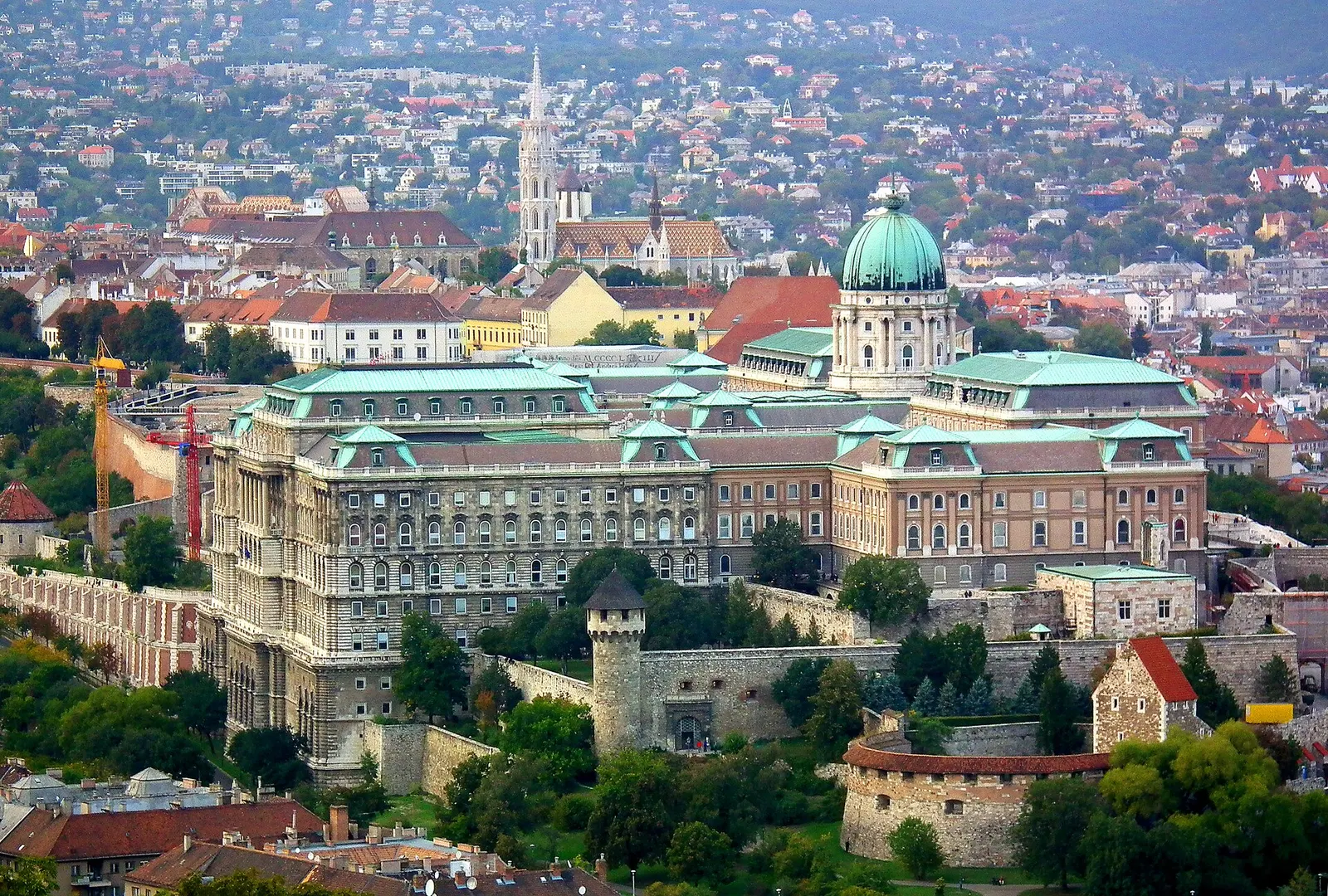
Buda Castle
First constructed in the thirteenth century, this sprawling palace complex was repeatedly rebuilt after wars, acquiring its vast Baroque and neoclassical form under the Habsburgs. Today the wings house the Hungarian National Gallery and the Budapest History Museum. Visitors can observe monumental courtyards, sculpted lions, and sweeping panoramas across the river to Pest.
Castle Garden Bazaar
Architect Miklós Ybl designed this romantic nineteenth-century complex to link the royal gardens with the riverbanks below. The restored pavilions feature ornate arcades, terracotta ornaments, and formal terraced gardens climbing the Castle hill. We find art exhibitions, manicured flowerbeds, and an escalator system that carries travellers up into the palace grounds.
Budapest Castle Hill Funicular
Opened in 1870, this inclined railway is one of the oldest operational funiculars in Europe, rebuilt after suffering severe damage during the Second World War. Two vintage wooden carriages, named Gellért and Margit, travel along a steep track over brick viaducts. The short journey provides expansive views across the Chain Bridge and Parliament.
Sándor Palace
Erected in the early nineteenth century by architect Mihály Pollack, this refined neoclassical mansion stands on Szent György Square. It served as the prime minister's residence before undergoing meticulous restoration to become the seat of the presidency. Travellers often pause by the main entrance to observe the ceremonial changing of the palace guard.
Matthias Fountain
Sculpted by Alajos Stróbl in 1904 against the western wall of the Royal Palace, this fountain portrays King Matthias Corvinus with his hunting entourage. Bronze figures of hounds, a slain stag, and the peasant girl Ilonka surround the monarch. The water tumbles over rough natural boulders, drawing comparisons to Rome's famous fountain monuments.
Equestrian Statue of Prince Eugene of Savoy
Positioned prominently on the Danube terrace of the palace, this dynamic 1900 bronze monument by József Róna commemorates the military commander who liberated Buda from Ottoman rule. The pedestal features intricate relief carvings depicting the 1697 Battle of Zenta and captured Ottoman soldiers. It serves as a popular gathering point offering uninterrupted city vistas.
Labyrinth of Buda Castle
Carved by thermal springs and expanded by medieval residents, this underground maze stretches beneath the Castle District streets. Over the centuries it functioned as a wine cellar, military shelter, and wartime hospital. Travellers can wander through damp limestone corridors that reveal historic stonework, gothic chambers, and historical displays in near-total darkness.
Holy Trinity Column
Erected between 1710 and 1713 by local residents, this ornate limestone column commemorates the end of devastating plague epidemics. Sculptors Fülöp Ungleich and Antal Hörger decorated the hexagonal pillar with cherubs, saints, and relief scenes depicting historic prayers. It anchors Trinity Square, providing a striking counterpoint to the neighbouring gothic church facade.
Matthias Church
Originally founded in the eleventh century, the current structure showcases a dramatic late-nineteenth-century reconstruction by Frigyes Schulek. The exterior features a towering spire and diamond-patterned roof tiles, while the interior holds painted floral frescoes and royal coronation regalia. Several Hungarian monarchs, including the last Habsburg emperor, were crowned within its historic walls.
Fisherman's Bastion
Built between 1895 and 1902 along the medieval ramparts, this panoramic terrace honours the guild of fishermen who once defended this stretch of the castle walls. Its seven conical white stone towers symbolize the original Magyar tribes that settled the Carpathian Basin. The sweeping arcades offer unobstructed perspectives of the Danube, Margaret Island, and Pest.
Statue of King Saint Stephen
Unveiled in 1906 between Matthias Church and Fisherman's Bastion, this bronze statue by Alajos Stróbl depicts King Stephen the First holding an apostolic double cross. The ornate neo-Romanesque limestone pedestal was crafted by Frigyes Schulek, adorned with sculpted medallions, lions, and narrative reliefs. It commemorates Stephen's role in establishing the Christian Hungarian state.
Hospital in the Rock Nuclear Bunker Museum
Concealed beneath Castle Hill, this cavernous complex operated as a secret emergency medical facility during the Siege of Budapest and the 1956 Revolution. It was later expanded into a top-secret nuclear shelter equipped with air filtration systems and independent power generators. Today, original surgical equipment, vintage wax figures, and machinery illustrate its grim history.
Museum of Military History
Occupying the nineteenth-century Nándor Barracks at the north-western corner of Castle Hill, this museum examines Hungarian military conflicts from the Middle Ages onwards. The collection holds historic weapons, uniforms, flags, and artillery pieces displayed in the open courtyard. The rear ramparts overlook the Buda hills, offering a quiet perspective away from busier thoroughfares.
Mary Magdalene Church, Budapest
Constructed in the thirteenth century for Hungarian parishioners, this church was the only Christian sanctuary permitted during early Ottoman rule before conversion into a mosque. Devastated in the Second World War, only its fourteenth-century gothic bell tower and single window frame remain standing. Visitors can climb the stone tower to see historical bells and suburban vistas.
Vienna Gate
Serving as the northern threshold of the medieval quarter, this gate was rebuilt in 1936 to commemorate the 250th anniversary of the retaking of Buda from Ottoman forces. The masonry arch incorporates Latin inscriptions and carved reliefs honouring fallen defenders. Walking through the gate brings travellers directly into Vienna Gate Square, framed by neat pastel townhouses.
National Archives of Hungary
Designed by Samu Pecz and completed in 1923, this massive yellow-brick edifice dominates the northern approaches of Castle Hill. Its exterior features decorative roof tiles, ornamental brickwork, and a distinctive square clock tower. Inside, grand halls with historic murals safeguard parchment charters, treaties, and official records spanning nearly a thousand years of Hungarian history.
Tóth Árpád Promenade
Running along the western wall of the Castle District, this quiet pedestrian promenade was named after the prominent twentieth-century poet. Lined with Japanese cherry trees, historic gas lanterns, and antique cast-iron benches, it follows the former rampart line. Walkers enjoy calm views across the Vérmező parkland and the residential slopes of the western Buda hills.
Golden Eagle Pharmacy Museum
Housed within an authentic fifteenth-century merchant dwelling on Tárnok Street, this small specialist museum preserves Buda's first public pharmacy. The collection features baroque medicine jars, wooden cabinets, dried botanical specimens, and alchemical equipment. Preserved gothic niches and vaulted ceilings provide a tangible look at everyday domestic life in the medieval town.
Houdini House
Located near Dísz Square, this museum celebrates the renowned illusionist Harry Houdini, who was born in Budapest in 1874. The exhibition features original handcuffs, personal letters, vintage performance props, and authentic movie memorabilia. Resident magicians give live illusion demonstrations in a small private theatre, adding theatrical depth to the historical displays.
Dísz Square
This expansive public square served as a medieval marketplace and later as a military parade ground during the Ottoman and Habsburg periods. Today it functions as the primary transit junction between the royal palace complex and the residential castle streets. Bordering buildings include eighteenth-century Baroque townhouses, government departments, and the Honvéd memorial monument.
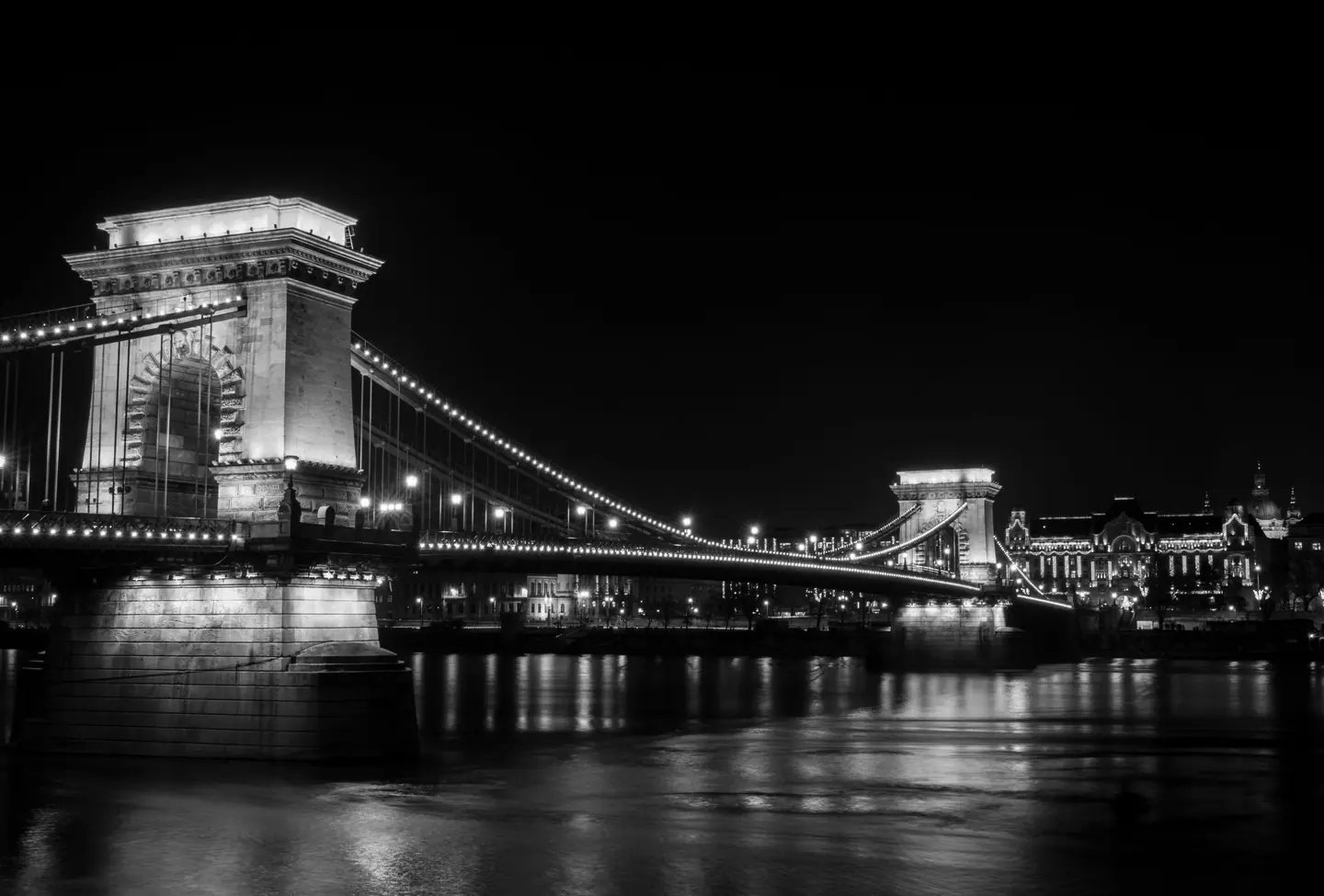
Gellért Hill, Citadella, Thermal Baths & Danube Bridges
Trace the Buda riverfront from the Castle Garden Bazaar and Rudas Baths up Gellért Hill to the Liberty Statue, then cross Liberty Bridge to the Central Market Hall.
Castle Garden Bazaar
Designed by master architect Miklós Ybl in the late nineteenth century, this riverside pleasure pavilion originally connected the Danube bank to the Royal Palace. The complex features terraced formal gardens, decorative colonnades and glazed Zsolnay ceramics. We can admire the symmetry of the pavilions and access escalators leading up the castle hill.
Semmelweis Museum of Medical History
Housed in the former home of Ignaz Semmelweis, this museum traces European medicine from antiquity through to the modern era. Exhibits display historic surgical equipment, anatomical models and an authentic nineteenth-century apothecary. Visitors learn how Semmelweis discovered the cause of childbed fever, transforming clinical hygiene across the continent.
Tabán Parish Church
Erected between 1728 and 1736 on the site of an earlier Ottoman mosque, this church served the diverse communities of the historic Tabán quarter. The interior contains ornate Baroque altars and eighteenth-century ceiling frescoes. The surrounding parklands replace the dense, rustic streets that were cleared during urban renewal projects in the 1930s.
Tabán Park
Once a lively, bohemian district of wine taverns and crooked alleys, the Tabán was razed before the Second World War. Today, wide lawns and mature trees cover the hillside, offering peaceful footpaths between the Danube and the hills. Stone boundary markers and historic plaques recall the vanished mediaeval settlement that once flourished here.
Rudas Baths
Founded under Ottoman rule by Sokollu Mustafa Pasha in 1566, Rudas retains its original Turkish core. Light filters through coloured glass apertures in the stone dome, illuminating an octagonal central pool supported by eight pillars. A modern rooftop pool now complements the historic complex, providing expansive views across the Danube towards Pest.
Elisabeth Bridge
Named after Empress Elisabeth of Austria, the original suspension bridge was destroyed during wartime retreats in 1945. The present white cable-stayed design opened in 1964 as the only bridge in the city rebuilt to a totally new plan. Its minimalist lines span the river at its narrowest point between Gellért Hill and inner Pest.
Saint Gellért Monument
Erected in 1904, this neoclassical semi-circular colonnade frames a bronze depiction of Bishop Gerard holding a raised cross. Designed by sculptor Gyula Jankovits, it commemorates the Italian missionary martyred here in 1046 during a pagan rebellion. Below the monument, an artificial waterfall cascades directly down the steep dolomite rock face towards the river.
Philosophers' Garden
Cast in bronze by sculptor Nándor Wagner, this serene clearing features statues of five spiritual leaders gathered in a circle, including Buddha, Jesus, Abraham, Laozi and Akhenaten. Nearby, secondary statues depict Saint Francis of Assisi, Daruma and Mahatma Gandhi. The site invites quiet contemplation while overlooking the rooftops of southern Buda.
Kilátókő Reserve
Placed near the western slopes of Gellért Hill, this charming piece by Márta Lesenyei portrays Prince Buda and Princess Pest reaching towards each other across an open chasm. The chasm symbolizes the river dividing the two settlements before their unification in 1873. The spot provides an expansive look over the Buda residential hills.
Citadella
The Austrian military erected this imposing U-shaped stone fortress following the defeat of the Hungarian Revolution of 1848. Armed with artillery, the stronghold served as a deterrent against local civic unrest rather than foreign invasion. Today, the bastions form an open terrace that delivers broad panoramic views across the Danube, Buda Castle and the parliament building.
Liberty Statue
Created by sculptor Zsigmond Kisfaludi Strobl in 1947, this fourteen-metre bronze woman stands high atop Gellért Hill. Originally conceived to commemorate Soviet liberation from Nazi forces, its inscriptions and secondary figures were altered after 1989 to honour all who sacrificed their lives for Hungarian independence. The monument remains visible from almost everywhere across Pest.
Gellért Hill Cross
Standing on the eastern rocky spur above Liberty Bridge, this large stone cross marks the path descending from the fortress towards the riverbank. First erected in 1936, removed during the communist era, and restored in 2001, it is illuminated at night. It offers travellers a direct vantage point straight down the course of the Danube.
Gellért Hill Cave Church
Inspired by the sanctuary at Lourdes, the Hungarian Pauline Order established this unusual place of worship inside natural limestone caverns in 1926. The communist regime sealed the entrance with thick concrete in 1951, imprisoning its monks, before the chapel was reopened in 1989. The cool rock chambers feature carved wooden altars and a replica of the Black Madonna of Częstochowa.
Danube Riverbank Viewpoint
Tracing the lower southeastern cliffs of Gellért Hill, this paved promenade connects the cave church with the thermal baths below. The open terrace provides excellent perspectives of Liberty Bridge and the southern bridges of Budapest. Benches along the path offer shaded resting spots under acacia trees alongside the granite retaining walls.
Hotel Gellért
Constructed between 1912 and 1918 by Ármin Hegedűs, Artúr Sebestyén and Izidor Sterk, this building represents the pinnacle of late Austro-Hungarian Secessionist style. Its curvilinear gables, copper cupolas and grand entrance halls have welcomed dignitaries for over a century. The structure dominates the southern riverfront approach to Liberty Bridge.
Gellért Baths
Fed by mineral-rich thermal springs emerging from the depths of Gellért Hill, this bathhouse is noted for its splendid Art Nouveau interiors. Stained-glass skylights, turquoise majolica tiles and marble pillars line the indoor thermal chambers and barrel-vaulted swimming hall. Outside, an open-air wave pool operates on the hillside terrace surrounded by gardens.
Szent Gellért Square
This focal meeting point in Buda links the base of Gellért Hill with the western approach to Liberty Bridge. The square accommodates elegant yellow trams and an award-winning deep underground station lined with hypnotic ceramic mosaics designed by Tamás Komoróczky. From here, we gain balanced views of the bathhouse façade and the river.
Budapest University of Technology and Economics
Founded in 1782, this institution is among the oldest institutes of technology in the world. The central Neo-Renaissance building, designed by Alajos Hauszmann and completed in 1909, stretches along the Danube bank south of Liberty Bridge. Its grand ceremonial hall, open central courtyards and manicured riverfront lawns anchor the academic life of Buda.
Liberty Bridge
Opened in 1896 for the Millennium Exhibition, this green steel truss bridge originally carried the name of Emperor Franz Joseph. Four mythological Turul falcons perch atop the iron spires, clutching golden balls in their talons. Pedestrians cross the historic timber-block walkways alongside rumbling trams, passing directly between Buda and the markets of Pest.
Great Market Hall
Engineered by Samu Pecz and opened in 1897, this market hall remains the largest covered trading space in Budapest. The exterior features Neo-Gothic brickwork topped with historic glazed ceramic tiles, while the vast interior relies on an airy steel framework. Ground-floor stalls brim with strings of red paprika, salamis and fresh local seasonal produce.
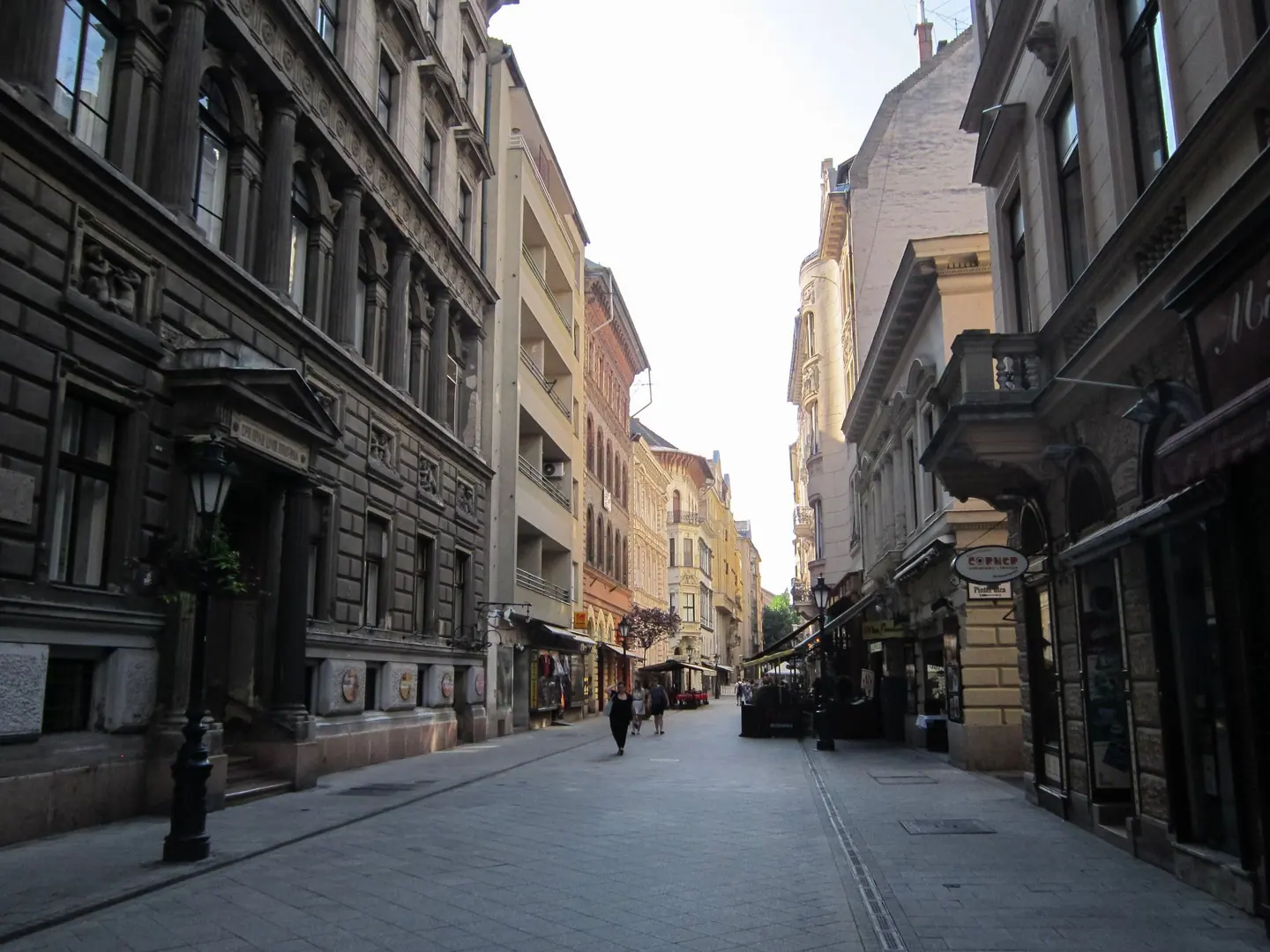
Hungarian Parliament, Danube Promenade, St Stephen Basilica & Lipótváros
Explore the Pest embankment from the Shoes on the Danube and Hungarian Parliament to Liberty Square, St Stephen Basilica, Vörösmarty Square and Café Gerbeaud.
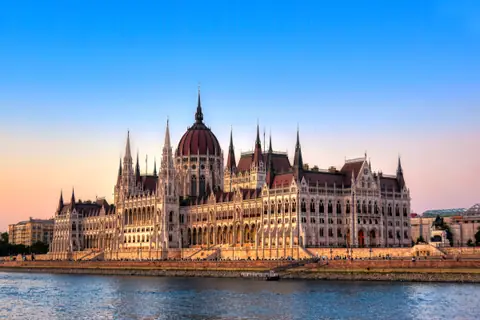
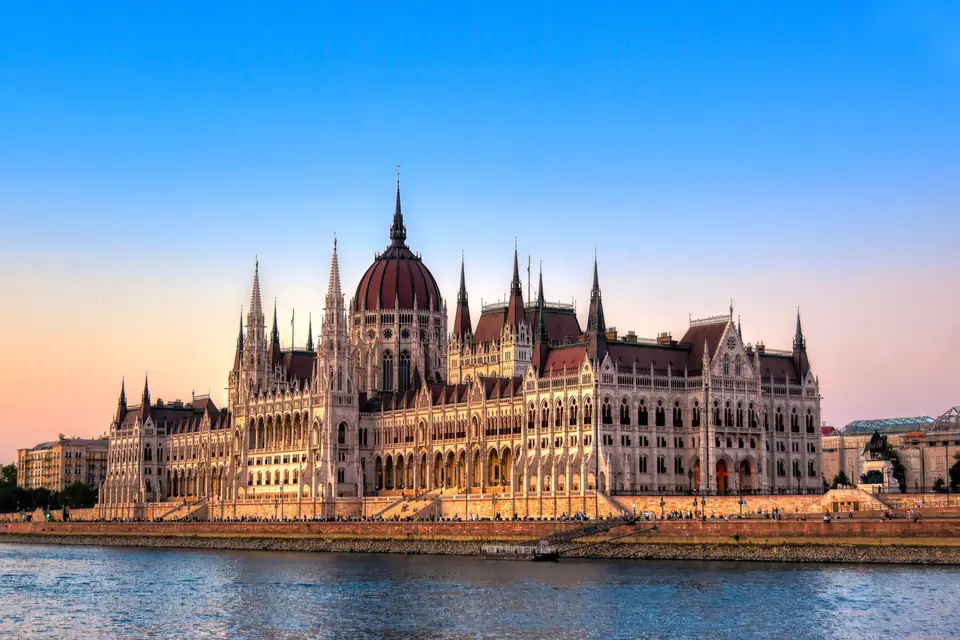
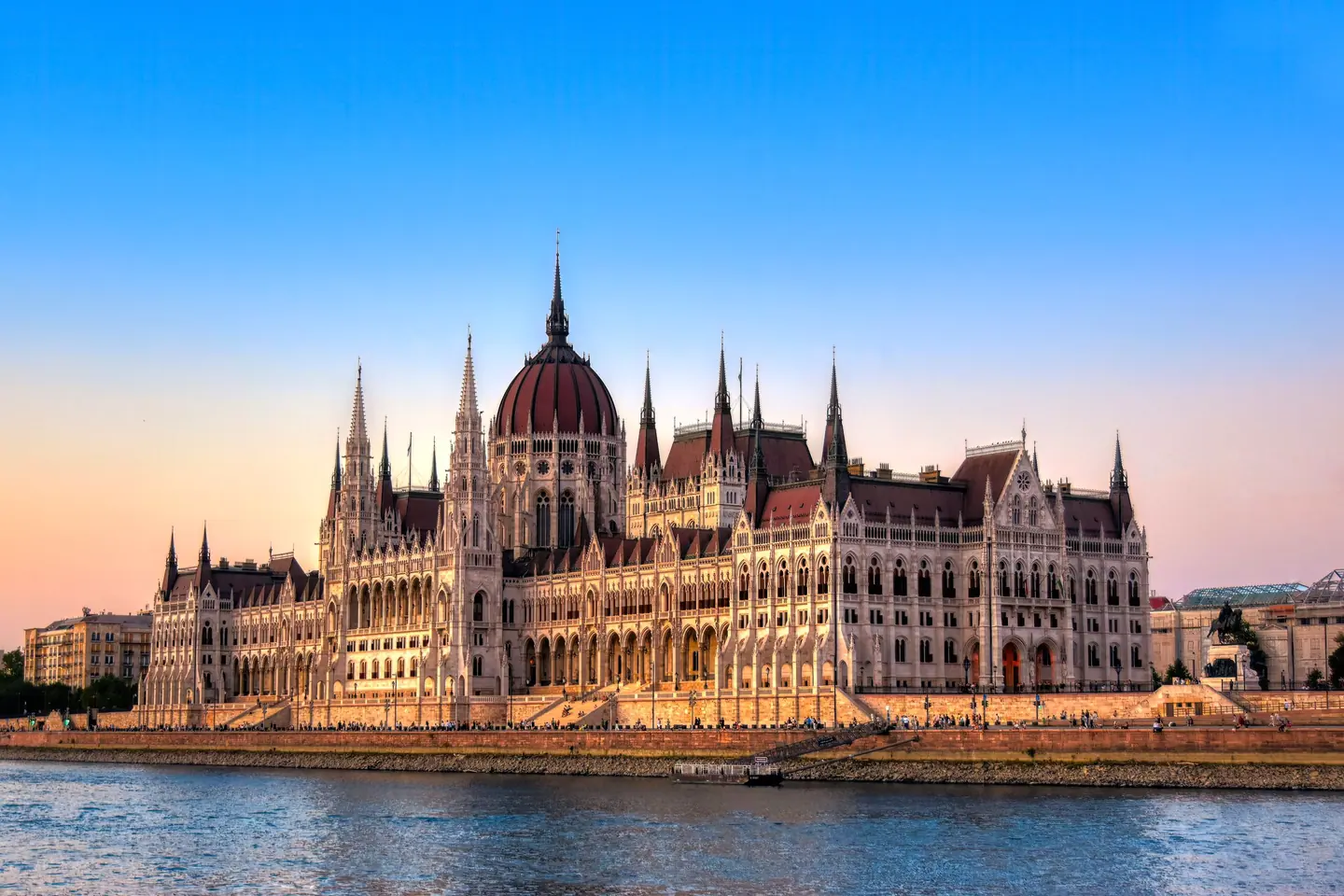
Hungarian Parliament Building
Designed by architect Imre Steindl and completed in 1904, this vast legislative palace incorporates Renaissance and Baroque elements alongside its Gothic pinnacles. We observe symmetrical façades, a central dome rising ninety-six metres, and ornamental statues of Hungarian rulers overlooking Kossuth Square and the river.
Kossuth Lajos Square
Named after the nineteenth-century statesman Lajos Kossuth, this landscaped public plaza serves as the symbolic heart of Hungarian political life. The open esplanade showcases equestrian statues, national memorial flagpoles, and scars from the 1956 Hungarian Revolution preserved on neighbouring ministry walls.
Shoes on the Danube Bank
Conceived by film director Can Togay and sculptor Gyula Pauer, this installation comprises sixty pairs of period iron shoes fixed to the river embankment. It commemorates Jewish citizens who were ordered to remove their footwear before being shot into the river by Arrow Cross militiamen during the winter of 1944.
Museum of Ethnography
Constructed between 1893 and 1896 by Alajos Hauszmann, this grand hall originally housed the Curia, the highest court of the Kingdom of Hungary. Its monumental classical portico and ceiling frescoes by Károly Lotz served as the Ethnography Museum for decades before the collection moved to City Park.
Hungarian Ministry of Agriculture
Built in the neoclassical revival style by Gyula Bukovics in the late nineteenth century, this imposing government complex flanks Kossuth Square. Travellers walking through its long arcades can observe bronze memorial plaques and iron spheres embedded into the masonry, marking the tragic Bloody Thursday shootings of 1956.
Szabadság Square
Laid out on the site of the former Neugebäude military barracks, this park features an eclectic mix of political and financial monuments. The green centre incorporates shaded walking paths, the United States Embassy, and interactive water fountains surrounded by elegant turn-of-the-century apartment blocks.
Soviet War Memorial
Erected in 1945 by sculptor Károly Antal, this stone obelisk remains the final Soviet military monument preserved in central Budapest. Crowned with a golden hammer and sickle, the monument commemorates the Red Army soldiers who died during the intense winter siege of Budapest at the close of the Second World War.
Hungarian National Bank
Designed by Ignác Alpár and completed in 1905, the central bank building anchors the eastern perimeter of Liberty Square. We can admire classical colonnades, grand pediments, and limestone relief panels sculpted by József Róna depicting ancient trade, agriculture, and industry.
Former Stock Exchange Palace
Also drafted by Ignác Alpár, this massive palace originally served as the Budapest Stock and Commodity Exchange before later housing Hungarian National Television. Its grand limestone façade, flanked by classical towers, reflects the tremendous financial boom that transformed Pest at the dawn of the twentieth century.
Ronald Reagan Statue
Unveiled in 2011 to mark the centenary of the American leader's birth, this life-size bronze figure by István Máté portrays Reagan strolling through the park. Situated steps from both the Soviet monument and the American embassy, the statue recognises his diplomatic role in dismantling the Iron Curtain across Eastern Europe.
Statue of Imre Nagy
Created by Tamás Varga, this bronze installation shows Prime Minister Imre Nagy standing pensively atop a small bridge. Relocated to Jászai Mari Square near the Margaret Bridge, the monument commemorates his leadership during the anti-Soviet uprising of 1956 and his subsequent execution for treason.
St Stephen's Basilica
Constructed over half a century by architects József Hild, Miklós Ybl, and József Kauser, this cathedral rises ninety-six metres above the city. Inside, travellers can examine ornate gilded chapels, intricate marble columns, and the reliquary containing the mummified right hand of Saint Stephen, Hungary's first king.
Szent István Square
This expansive paved square connects the grand entrance of St Stephen's Basilica with the pedestrian avenues of Lipótváros. Lined with terraced cafes, historic residences, and decorative pavement mosaics, the plaza offers an unhindered vantage point for admiring the twin bell towers and neoclassical pediment.
Széchenyi István Square
Named after Count István Széchenyi, this riverside plaza was established in the mid-nineteenth century as a key civic junction. Shaded lawns surround statues of Széchenyi and Ferenc Deák, flanked by monumental architecture, including the Hungarian Academy of Sciences and the restored Gresham Palace.
Hungarian Academy of Sciences
Designed by Prussian architect Friedrich August Stüler and opened in 1865, this scholarly palace serves as the seat of Hungarian academic research. The neo-Renaissance façade features classical pediments and allegorical figures celebrating the natural sciences, philosophy, history, and the arts.
Gresham Palace
Completed in 1906 for the Gresham Life Assurance Company by Zsigmond Quittner and the Vágó brothers, this palace exemplifies central European Secessionist architecture. Travellers can examine intricate wrought-iron peacock gates, stained-glass windows by Miksa Róth, and curved ceramic flourishes across the exterior.
Danube Promenade
Stretching between the Chain Bridge and Elizabeth Bridge along the Pest embankment, this popular walkway has welcomed visitors since the nineteenth century. Lined with bronze statues, heritage tram lines, and hotel terraces, it provides broad panoramas across the water toward the Royal Palace and Castle Hill.
The Little Princess Statue
Sculpted by László Marton in 1972 and cast in bronze on the Danube Promenade, this whimsical figure depicts the artist's young daughter playing dress-up. Wearing a paper crown and oversized coat, the small sculpture sits comfortably on the iron balustrade beside the passing yellow riverfront trams.
Vörösmarty Square
Centred around a massive Carrara marble monument to poet Mihály Vörösmarty, this pedestrian plaza forms a social hub in central Pest. The square is surrounded by commercial establishments, historic bank buildings, and the northern terminus of the historic Millennium Underground railway line.
Café Gerbeaud
Established by Henrik Kugler in 1858 and later expanded by Swiss confectioner Émile Gerbeaud, this heritage salon embodies central European coffeehouse traditions. Its opulent interior retains Bohemian crystal chandeliers, exotic wood panelling, and marble tables where guests enjoy classic Hungarian cakes and chocolates.
Historic Jewish Quarter (Erzsébetváros), Dohány Street Synagogue & Palace District
Discover the Moorish-Revival Dohány Street Synagogue, Rumbach and Kazinczy Street synagogues, Gozsdu Courtyard, Hungarian National Museum and Metropolitan Ervin Szabó Library.
Dohány Street Synagogue
Designed by Austrian architect Ludwig Förster, this monumental place of worship opened in 1859 as the central sanctuary for Neolog Judaism. The polychrome brick facade features rich Byzantine and Moorish elements alongside prominent rose windows. Inside, visitors observe an ornate gilded sanctuary, two upper galleries, and an imposing organ played by Franz Liszt.
Raoul Wallenberg Memorial Park
Located behind the Dohány Street Synagogue, this quiet courtyard honours Swedish diplomat Raoul Wallenberg and others who saved thousands of Hungarian Jews during the Second World War. The rear garden contains mass graves from the wartime ghetto winter. Red marble tablets and stone monuments commemorate individual rescuers who risked their lives across the capital.
Tree of Life Holocaust Memorial
Sculptor Imre Varga created this emotive metal weeping willow in 1991, resembling an inverted menorah. Thousands of delicate metal leaves on the weeping branches bear the inscribed names of Hungarian victims murdered during the Holocaust. The memorial stands centrally above the mass graves within the synagogue complex, serving as an enduring focal point for quiet contemplation.
Hungarian Jewish Museum and Archives
Built between 1930 and 1931 on the plot where Zionist thinker Theodor Herzl was born, this museum adjoins the grand synagogue. The galleries display ceremonial silver Judaica, embroidered textiles, holiday artefacts, and rare historical documents. Curators present the long history of Hungarian Jewry, from Roman antiquity through the Holocaust to the post-war community revival.
Carl Lutz Memorial
Created by Tamás Szabó in 1991, this expressive bronze sculpture portrays a descending angel reaching down to help a fallen figure. It commemorates Swiss vice-consul Carl Lutz, who issued protective passes and established safe houses that spared over sixty thousand lives. The monument stands beside an old ghetto gateway on Dob Street, surrounded by historic residential tenements.
Gozsdu Courtyard
Romanian lawyer Manuil Gojdu financed this expansive passage complex, erected in 1901 to combine merchant workshops, storehouses, and middle-class apartments. Seven buildings connect through seven open courtyards between Király Street and Dob Street. Today, the pedestrian arcade features architectural stuccoes, weekend craft markets, and a lively sequence of modern bistros and open-air terraces.
Rumbach Street Synagogue
Viennese Secession master Otto Wagner completed this Status Quo Ante synagogue in 1872, creating an octagonal prayer hall surmounted by an imposing lantern dome. Slender cast-iron columns support the women's gallery, surrounded by intricate geometric stencils painted in historic gold, blue, and red hues. Following comprehensive restoration, the hall functions as both a religious and cultural venue.
Kazinczy Street Synagogue
Designed by the Löffler brothers and consecrated in 1913, this red-brick complex remains the heart of Budapest's Orthodox Jewish community. The sanctuary showcases Hungarian Art Nouveau craftsmanship, featuring stained-glass windows by Miksa Róth and hand-painted floral motifs across vaulted ceilings. Adjacent structures house a kosher slaughterhouse, a ritual bath, communal dining rooms, and traditional religious schools.
Budapest Ghetto Memorial Wall
Constructed in late 1944, the enclosed Budapest Ghetto segregated over seventy thousand Jewish residents behind high timber and stone barricades. This rebuilt section of brick wall in a courtyard off Dohány Street marks the physical boundary of that confinement. Commemorative plaques and informational panels document the difficult conditions endured here before liberation in January 1945.
Király Street
Dating to the eighteenth century, this long street served as the primary trading spine of Erzsébetváros and the traditional Jewish merchant quarter. Notable facades range from Neoclassical and Biedermeier courtyards to grand late-nineteenth-century apartment blocks. Walking the narrow pavements, travellers can admire restored entrance portals, old workshop signage, and traditional storefronts coexisting with fashionable contemporary boutiques.
Klauzál Square Market Hall
Opened in 1897 as the third district market hall in the city, this brick pavilion provided hygienic trading facilities for neighbourhood residents. Its spacious interior features tall arched windows and an exposed steel roof truss supported by riveted iron pillars. Local farmers and butchers sell regional produce, dairy, and Hungarian specialities across two bright levels.
Szimpla Kert
Established in 2002, this landmark converted an abandoned nineteenth-century stove factory and residence into a famous community hub. The open-air central courtyard displays an eclectic collection of vintage cinema projectors, stripped brick walls, and repurposed furniture. Beyond its evening hospitality, the venue hosts regular Sunday farmers' markets, flea fairs, and independent acoustic concerts.
Hungarian National Museum
Architect Mihály Pollack completed this majestic Neoclassical building between 1837 and 1847, fronted by an eight-column Corinthian portico and ornamental pediment. The exterior steps served as the gathering point where the 1848 revolution was ignited with Sándor Petőfi's stirring recitations. Inside, grand frescoed galleries display the medieval Hungarian Coronation Mantle, Roman mosaics, and comprehensive historical collections.
Károlyi Garden
Originally the private estate garden of the aristocratic Károlyi family, this tranquil greenspace opened to the public in 1932. Encircled by ornate wrought-iron railings and grand palaces, it retains formal French-style geometric flower arrangements alongside mature shade trees. Visitors discover quiet benches, gravel strolling paths, a historic stone fountain, and small bronze statues celebrating Hungarian literature.
Károlyi Palace
Rebuilt in the late 1830s for Count György Károlyi, this aristocratic city palace displays an elegant U-shaped Neoclassical layout opening towards the garden. Since 1957, the mansion has housed the Petőfi Literary Museum, presenting rare manuscripts, personal belongings, and portraits of Hungarian writers. Visitors can inspect restored period salons, fine parquet floors, and changing literary exhibitions.
Metropolitan Ervin Szabó Library
Constructed in 1887 for Count Frigyes Wenckheim, this Neo-Baroque urban palace now functions as the central branch of the municipal library network. The upper floor preserves magnificent aristocratic reception rooms, complete with carved oak panelling, gilded chandeliers, marble fireplaces, and sweeping spiral staircases. Students and visitors read under ornate ceilings within the famous smoking room and ballroom.
Festetics Palace
Miklós Ybl conceived this noble city residence in 1862 for the influential Festetics family, drawing inspiration from Italian Renaissance and French classical mansions. The exterior showcases fine rusticated masonry, while the lavish interior boasts mirror-lined salons and a monumental marble staircase. Today, the preserved palace accommodates Andrássy University Budapest, preserving its nineteenth-century cultural atmosphere.
Károlyi Palace, Pollack Mihály Square
Positioned behind the National Museum, this refined palace was built in the late nineteenth century for the Károlyi dynasty by Miklós Ybl. The facade presents delicate Neo-Renaissance window pediments, stone balconies, and decorative friezes. Part of the aristocratic enclave known as the Palace District, the building exhibits the lavish civic architecture favoured by Hungary's landed nobility.
Uránia National Film Theatre
Designed by Henrik Schmahl and completed in the mid-1890s, this ornate palace originally operated as a music and variety hall. The unique facade blends Venetian Gothic arches with historic Moorish surface patterning and gilded ceramics from the Zsolnay factory. Inside, the main auditorium features gilded balconies, deep-red velvet seats, and intricate stucco details evoking oriental palaces.
Gutenberg Square
Named after printing pioneer Johannes Gutenberg, this charming green square sits on the boundary between Józsefváros and Erzsébetváros. Its eastern side is anchored by the Gutenberg Home, a monumental 1907 Art Nouveau apartment block built for the printers' trade union. The building features expressive folk reliefs, sculpted stonework, and stained glass, overlooking manicured urban gardens.
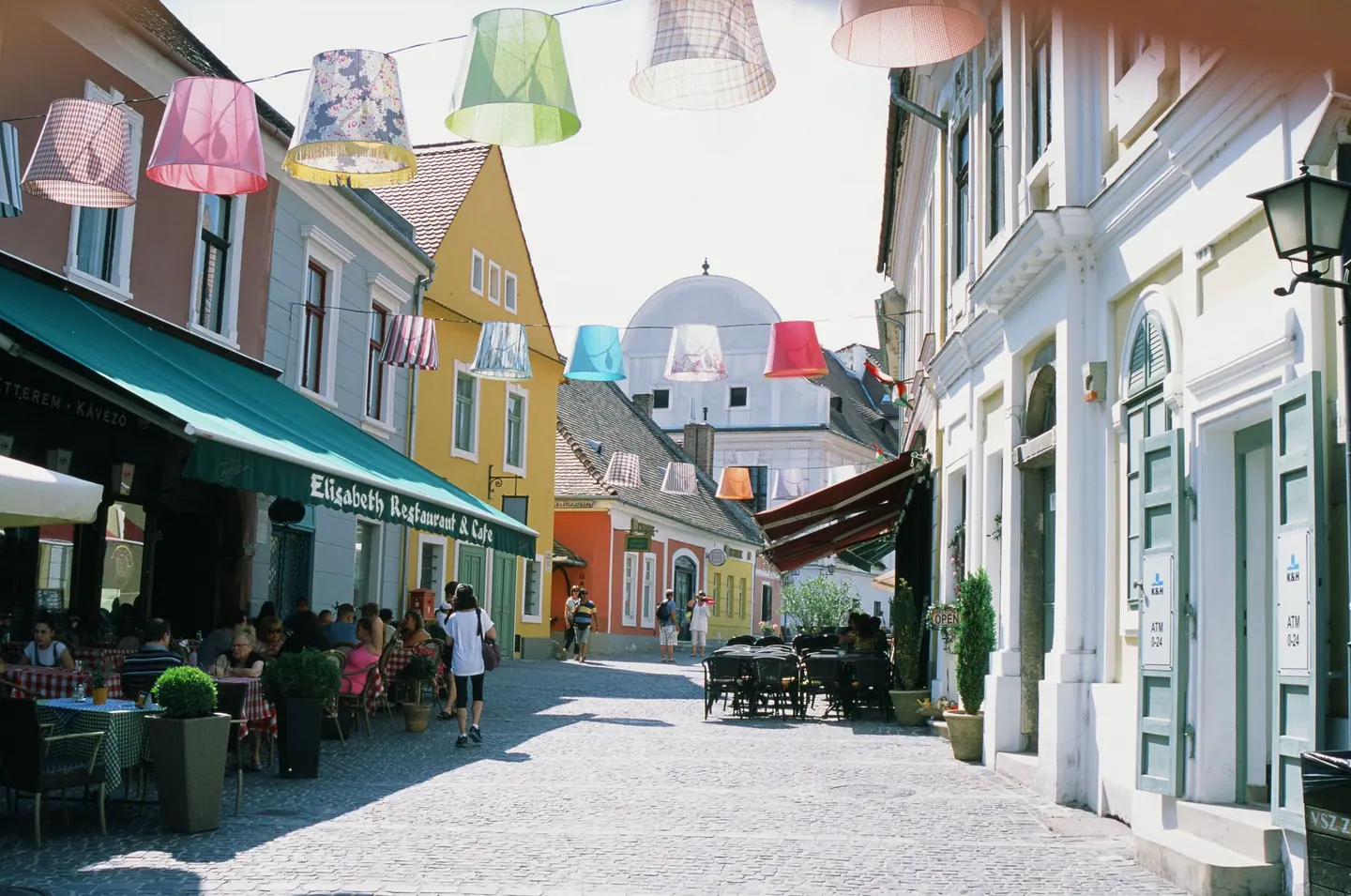
Andrássy Avenue, State Opera, Heroes Square, City Park & Széchenyi Baths
Follow UNESCO-listed Andrássy Avenue past the Hungarian State Opera and House of Terror to Heroes Square, Vajdahunyad Castle, House of Music and Széchenyi Thermal Bath.
Andrássy Avenue
Constructed in the late nineteenth century to connect the inner city with City Park, this grand avenue reshaped the urban landscape. Modelled after Parisian boulevards, it features tree-lined pavements flanked by ornate residential palaces. Beneath the paving runs the historic Millennium Underground Railway, Europe's second oldest subterranean transit system.
Hungarian State Opera House
Inaugurated in 1884, this Neo-Renaissance landmark showcases marble sphinxes, wrought-iron lamps, and intricate stone carvings. Inside, a three-ton bronze chandelier illuminates ceiling frescoes by Károly Lotz depicting Mount Olympus. Statues of composers Ferenc Erkel and Franz Liszt flank the main entrance, celebrating the nation's rich musical tradition.
Dreschler Palace
Designed by Ödön Lechner and Gyula Pártos, this striking building sits directly opposite the State Opera House. It long housed the State Ballet Institute, nurturing generations of Hungarian dancers within its high-ceilinged halls. Its roofline displays early French Renaissance elements and refined stone traceries that stand out along the boulevard.
Nagymező Street
Often dubbed the Broadway of Budapest, this lively thoroughfare crosses Andrássy Avenue and houses several premier performance venues. The street developed rapidly in the late nineteenth century as entertainment halls and private clubs clustered here. Today, ornate theatre facades, cultural institutions, and historic cafes line the pavements.
Budapest Operetta Theatre
Constructed in 1898 by the prolific Viennese architectural duo Fellner and Helmer, this venue was originally the Somossy Orfeum. Its interior boasts rich gilded stucco, velvet drapery, and a classic tiered auditorium. We can still see the original architectural balance designed to host light opera and musical performances.
Mai Manó House
Built in 1894 for imperial court photographer Mai Manó, this Neo-Renaissance townhouse served as both residence and daylight studio. The glazed studio floor and decorative maiolica tiles on the facade illustrate the prestige of early portrait photography. It now operates as the Hungarian House of Photography, showcasing historic and contemporary prints.
Franz Liszt Memorial Museum
Situated in the Old Music Academy on Vörösmarty Street, this museum preserves the composer's final Budapest apartment. Liszt lived and taught here between 1881 and his death in 1886. The rooms contain original Chickering and Bösendorfer pianos, portraiture, and personal manuscripts arranged according to contemporary inventory records.
House of Terror
Occupying the former headquarters of both the fascist Arrow Cross Party and the communist State Security Authority, this museum memorialises victims of twentieth-century totalitarianism. The striking black blade roof projects over Andrássy Avenue, casting the word 'Terror' in sunlight onto the facade. Inside, preserved basement cells offer a sombre historical record.
Oktogon
This major public junction was created in the 1870s when the Grand Boulevard met Andrássy Avenue. Four symmetrical Neo-Renaissance residential palaces enclose the intersection, giving it an eight-sided geometry planned by Antal Szkalnitzky. It serves as an essential transport node where historic tram lines cross the underground railway.
Ferenc Hopp Museum of Asiatic Arts
Optical instrument manufacturer Ferenc Hopp bequeathed his private villa and extensive East Asian collection to the state in 1919. The museum features Japanese ceramics, Chinese porcelain, and Buddhist statuary collected during world tours. The surrounding garden remains designed with East Asian stone lanterns and tranquil botanical arrangements.
Kodály Körönd
Named after composer Zoltán Kodály, who lived and worked here for decades, this circular intersection breaks the linear progression of Andrássy Avenue. Four ornate palaces curve to form the circle, featuring sgraffito patterns and painted timber balconies. Statues of historical Hungarian military leaders decorate the central gardens around the perimeter.
Zoltán Kodály Memorial Museum
Located inside one of the stately palaces on Kodály Körönd, this apartment museum preserves the composer's residence from 1924 to 1967. The interior remains exactly as it was when Kodály composed his choral works and refined his music education method. Displays include folk art, personal sheet music, and his original study.
Heroes' Square
Laid out in 1896 for the Millennium celebrations, this expansive plaza anchors the northern end of Andrássy Avenue. A soaring Corinthian column carries the Archangel Gabriel holding the Holy Crown, while semicircular colonnades display bronze statues of Hungarian kings and statesmen. The Cenotaph of Heroes honours those fallen in defence of the realm.
Museum of Fine Arts Budapest
Occupying the western side of Heroes' Square, this temple-like building designed by Albert Schickedanz opened in 1906. Its pediment reproduces the carvings of the Temple of Zeus at Olympia. The permanent galleries house Egyptian antiquities, classical Greek artefacts, and European masters including El Greco, Goya, Raphael, and Rembrandt.
Palace of Art Budapest
Positioned opposite the Museum of Fine Arts, this grand hall (locally known as the Műcsarnok) was built in 1896 for the Millennium Exhibition. Designed in a Neoclassical style with Italian Renaissance accents, its pediment features a colourful glass mosaic titled Saint Stephen as Patron of the Arts. It functions as a venue for contemporary art installations.
City Park
Originally known as the Oxmeadow, this green expanse was transformed into one of the world's first public parks during the early nineteenth century. It served as the central grounds for the national Millennium celebrations in 1896. Today, leafy promenades, broad boating lakes, and modern cultural pavilions span the park grounds.
Vajdahunyad Castle
Designed by Ignác Alpár in 1896, this eclectic castle complex replicates landmark buildings from across the historical Kingdom of Hungary. It features copies of the Hunyad Castle in Transylvania along with Romanesque chapels and Baroque wings. Inside, the Museum of Hungarian Agriculture occupies the palatial halls surrounded by peaceful lake waters.
Statue of Anonymous
Sculpted by Miklós Ligeti in 1903, this bronze statue depicts the mysterious twelfth-century chronicler known only as Anonymus, who recorded early Hungarian history in the Gesta Hungarorum. The figure wears a heavy monk's cowl that deeply shadows the face. Writers and visitors frequently rub the gleaming bronze quill for literary inspiration.
House of Music Hungary
Completed in 2021 as part of the Liget Budapest cultural development, this striking structure integrates modern architecture directly into the surrounding forest. Its perforated roof canopy features organic openings that accommodate growing trees, while extensive glass facades open up views of City Park. Inside, interactive exhibition halls document the history and physics of music.
Széchenyi Thermal Bath
Constructed in 1913 to plans by Győző Czigler, this complex forms one of the largest medicinal bath facilities on the continent. Fed by deep natural thermal wells discovered by Vilmos Zsigmondy, its bright yellow Neo-Baroque wings house numerous indoor plunge pools, saunas, and steam rooms. Outdoors, steaming basins draw visitors year-round to play water chess.
Thermal Baths, Trams and Danube Crossings in Budapest
Our main Budapest guide covers airport arrivals, neighbourhood bases and multi-day pacing to complement this walk; see also our full collection of city route guides.