A 100-stop walking and harbour cycle route through Copenhagen, connecting seventeenth-century Nyhavn gables, Christian IV Renaissance castles, Frederiksstaden palaces, and Christianshavn canals.
Bishop Absalon’s Fortress on Slotsholmen to Nordic Design Capital
First fortified in 1167 by Bishop Absalon on the island of Slotsholmen overlooking the Øresund strait, København (Merchants' Harbour) became the royal capital of Denmark in the early fifteenth century under King Eric of Pomerania. Between 1588 and 1648, the builder-king Christian IV transformed the medieval port into a Dutch Renaissance showcase, erecting Rosenborg Castle, the dragon-spired Børsen stock exchange, the Round Tower observatory, and the artificial canal island of Christianshavn.
In the eighteenth century, King Frederick V commissioned architect Nicolai Eigtved to lay out the Rococo district of Frederiksstaden centred on the octagonal Amalienborg Palace square, while the modern city pioneered harbour swimming baths, bicycle bridges, and New Nordic architecture along its former shipyards.
Nyhavn, Amalienborg & Frederiksstaden Royal Quarter
Nyhavn, Kongens Nytorv, Royal Danish Theatre, Charlottenborg Palace, Amalienborg Palace, Frederik’s Church Marble Church, Designmuseum Danmark, Gefion Fountain, Kastellet, and The Little Mermaid
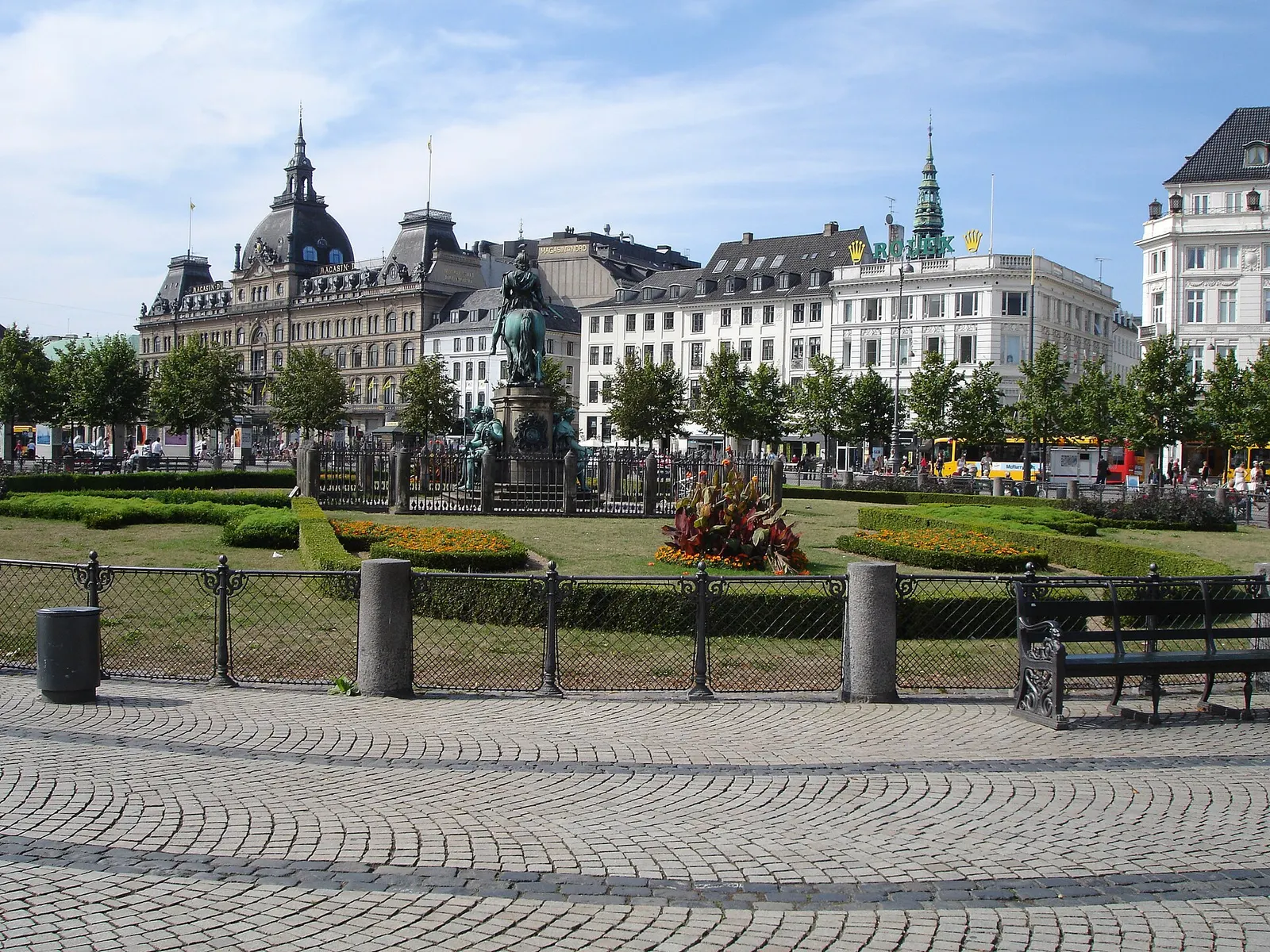
Kongens Nytorv
Laid out by King Christian V in 1670, this vast cobblestone plaza forms the junction between old medieval Copenhagen and the grand Frederiksstaden quarter. An equestrian bronze of Christian V stands at the centre, surrounded by historic town mansions, elite cultural institutions, and manicured parterres. It remains a key focal point for city parades and cultural events.
Charlottenborg Palace
Completed in 1683 as a residence for Ulrik Frederik Gyldenløve, this Dutch Baroque palace later became the seat of the Royal Danish Academy of Fine Arts. The sober brick building features symmetrical wings surrounding a courtyard often used for public installations. Today, the adjoining Kunsthal Charlottenborg mounts rotating exhibitions of modern visual art.
Royal Danish Theatre
Erected in 1874 by architects Vilhelm Dahlerup and Ove Petersen, the Old Stage at Kongens Nytorv reflects Historicist grandeur with its Renaissance revival facade. Bronze statues of playwrights Ludvig Holberg and Adam Oehlenschläger flank the entrance. Inside, opulent gilded plasterwork and velvet seating frame performances of the Royal Danish Ballet.
Nyhavn Canal
Dug by Swedish prisoners of war between 1671 and 1673, this canal provided maritime access from the harbour directly to Kongens Nytorv. The sunny northern quay displays timbered merchant dwellings dating from the late seventeenth and eighteenth centuries. Historic wooden schooners moored along the water maintain the maritime atmosphere of bygone trading eras.
Nyhavn 18
This classic narrow merchant house was constructed in the 1770s and presents a preserved plaster facade with delicate dormer windows. Fairy tale author Hans Christian Andersen rented rooms here between 1871 and 1873, drawing inspiration from the canal traffic outside his window. A discreet historical plaque marks the building, which retains its eighteenth-century proportions.
Nyhavn 67
Dating back to 1737, this townhouse represents one of the oldest residences along the canal's southern side. Hans Christian Andersen lived here for nearly two decades, penning celebrated works such as The Steadfast Tin Soldier. Today, visitors can observe the traditional lime-washed exterior, period sash windows, and steep red-tile roof typical of maritime Copenhagen.
Memorial Anchor
Positioned at the head of Nyhavn canal, this massive seventeenth-century naval anchor was salvaged from the frigate Fyen and installed in 1951. It honours more than one thousand Danish civilian sailors who perished serving Allied supply fleets during the Second World War. A lead capsule beneath the anchor contains the names of the fallen seamen.
Inderhavnsbroen
Opened in 2016, this pedestrian and cycling bridge spans the Inner Harbour with an innovative sliding mechanism that retracts to allow ship passage. Its curved concrete approach ramps offer fine views back toward the historical canal entrance and the open waters of the harbour. The bridge forms an essential contemporary link between historical quarters.
Sankt Annæ Plads
Created over an infilled canal in the late eighteenth century, this long square forms a dignified transition between Nyhavn and the royal quarter. Mature lime trees flank statues of prominent cultural figures, while neoclassical town mansions line both sides. Today, several foreign embassies and publishing houses occupy these dignified classical structures.
Garnisons Kirke
Designed by architect Wilhelm Friedrich von Platen and consecrated in 1706, this church was built primarily for the Danish military garrison stationed in the capital. The exterior features red brickwork with sandstone pilasters, while the spacious interior boasts two tiers of galleries supported by fluted wooden pillars. The carved baroque altarpiece survived several city fires.
Odd Fellow Mansion
Erected between 1751 and 1755 by royal architect Johann Gottfried Rosenberg for Count Christian Frederik Knuth, this mansion exemplifies private Rococo design. The main corps de logis connects to flanking curved wings, enclosing a paved courtyard. Restored after a devastating fire in 1992, the building serves as fraternal meeting rooms and a classical concert venue.
Amalienborg Palace
Conceived by Niels Eigtved as the centrepiece of Frederiksstaden, Amalienborg comprises four identical Rococo palaces facing an octagonal courtyard. Originally built for prominent noble families, the Danish Royal Family acquired the estate after Christiansborg Palace burned in 1794. Royal Life Guards in bearskin caps stand sentry here around the clock.
Equestrian Statue of Frederick V
Commissioned by the Danish Asiatic Company and unveiled in 1771, this bronze monument portrays King Frederick V dressed as a Roman emperor. French sculptor Jacques Saly laboured for two decades to cast this equestrian piece, ensuring classical anatomical accuracy. It anchors the geometrical centre of the Amalienborg Palace courtyard, perfectly aligned with the harbour.
Amaliehaven
Established in 1983 as a gift from the A.P. Møller Foundation, this symmetrical park connects Amalienborg Palace directly to the waterfront. Belgian landscape architect Jean Delogne laid out two levels of shrubbery, stone walls, and tranquil fountains made of red limestone. Italian artist Arnaldo Pomodoro contributed striking bronze sculptures that stand beside the water.
Frederik's Church
Often called the Marble Church, construction began in 1749 under Nicolai Eigtved but stalled for over a century due to exorbitant costs. Industrialist C.F. Tietgen financed its completion in 1894 using local limestone and Danish marble. The dome, inspired by St Peter's Basilica in Rome, spans over thirty metres and rests on twelve piers.
Alexander Nevsky Church
Constructed between 1881 and 1883 by Russian court architect David Grimm, this church was built for Tsarina Maria Feodorovna, born Princess Dagmar of Denmark. The facade blends red brick stripes with carved sandstone, capped by three gilded onion domes. Inside, marble mosaics, golden iconostases, and ornate candelabra reflect traditional Russian ecclesiastical decoration.
Designmuseum Danmark
Occupying the former Royal Frederik's Hospital built in the 1750s, this institution preserves modern and historical decorative arts. Four Rococo wings surround an open grass courtyard, adapted for museum use in the 1920s by Kaare Klint. Galleries present twentieth-century Danish furniture, contemporary industrial craft, porcelain, and textile history.
Gefion Fountain
Sculpted by Anders Bundgaard and completed in 1908, this bronze fountain illustrates the Norse goddess Gefion driving four oxen to plough land away from Sweden. Cascading granite pools generate tumbling sheets of water over tiered stone basins. Located near the waterfront, it was donated to Copenhagen by the Carlsberg Foundation to mark the brewery's golden jubilee.
Kastellet
Commissioned by King Christian IV in 1626 and upgraded after the Swedish siege, this pentagonal star fortress preserves intact earthen ramparts and double bastions. Inside the defensive perimeter stand timbered red barracks, a baroque commander house, a powder magazine, and a preserved windmill. The grassy ramparts function as public walking grounds overlooking the sea.
The Little Mermaid
Commissioned by brewer Carl Jacobsen and cast by sculptor Edvard Eriksen, this bronze figure was unveiled on a granite boulder along the Langelinie promenade in 1913. Ballerina Ellen Price served as the model for the character, though the sculptor's wife posed for the body. The small statue gazes quietly out across the entrance of the harbour.
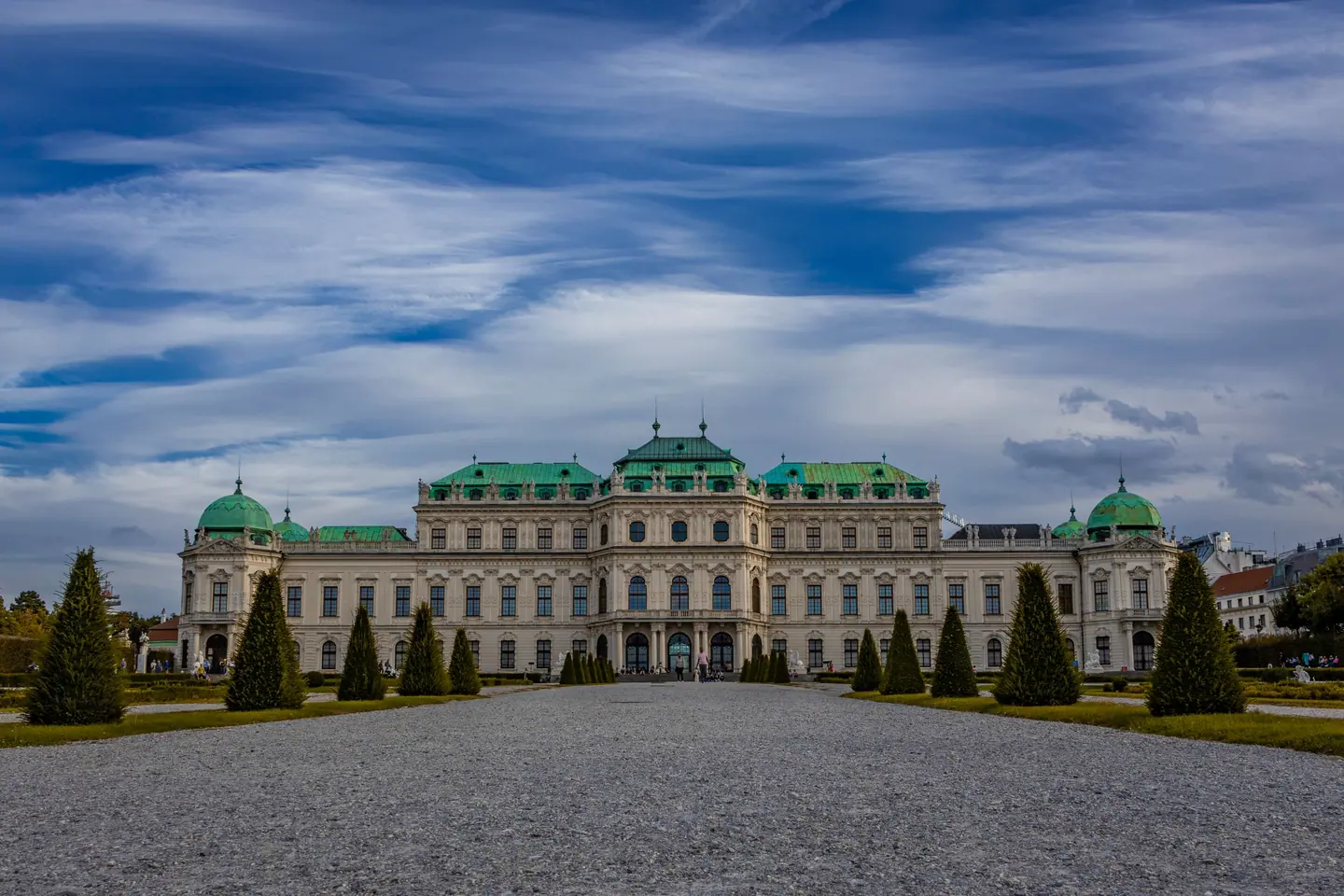
Rosenborg Castle, Round Tower & Indre By Medieval Core
Rosenborg Castle, King’s Garden Kongens Have, Botanical Garden Copenhagen, Statens Museum for Kunst SMK, Rundetaarn Round Tower, Strøget, Church of Our Lady Vor Frue Kirke, and Gråbrødretorv
Rosenborg Castle
Built by King Christian IV in the Dutch Renaissance style, this compact castle served as a royal summer residence from 1606. Within its brick walls, we discover the Long Hall with its coronation thrones guarded by three silver lions. The basement treasury safeguards the Danish crown jewels and royal regalia.
The King's Garden
Established in the early seventeenth century alongside Rosenborg Castle, this public park remains the oldest garden in the city. Symmetrical lime tree avenues, known as the Cavalier's Path, define the layout alongside a prominent statue of Hans Christian Andersen. Locals gather here year-round beneath historic tree canopies.
Statens Museum for Kunst
Originally designed by Vilhelm Dahlerup in an Italian Renaissance revival style, the museum opened in 1896 to house royal art collections. A sleek modernist wing connects to the historic core via a light-filled indoor sculpture street. Visitors can inspect Danish Golden Age paintings alongside European masterworks from Rubens and Mantegna.
The Hirschsprung Collection
Tobacco manufacturer Heinrich Hirschsprung donated his private art collection to the state, prompting the construction of this neoclassical museum in 1911. The interior retains an intimate domestic ambience with period furniture complementing the curated canvases. The galleries showcase extensive selections of works by the Skagen Painters and Symbolist painters.
Østre Anlæg
Laid out by landscape architect H.A. Flindt in the 1870s, this park preserves the moats and bastions of the old fortification ring. Picturesque lakes trace the former defensive waters, encircled by weeping willows and shaded footpaths. The grounds provide a peaceful retreat directly behind the national gallery.
University of Copenhagen Botanical Garden
Relocated to the former city bastions in 1874, this living museum holds thousands of plant species across landscaped lawns and rock gardens. The centerpiece is the Victorian Palm House, constructed using cast iron and curved glass plates inspired by London's Crystal Palace. A spiral staircase inside allows tree-canopy viewing.
Geological Museum
Positioned at the corner of the Botanical Garden, this university museum occupies an imposing neoclassical building opened in 1893. The collection traces its origins back to seventeenth-century royal cabinets of curiosities. A primary attraction in the courtyard is the Agpalilik meteorite, one of the heaviest iron meteorites ever recovered.
Kultorvet
Created following the catastrophic fire of 1728, this pedestrian square historically served as the designated market for coal and charcoal traders. Colourful eighteenth-century townhouses flank the stone-paved open space, which now holds outdoor café terraces and flower stalls. The central fountain incorporates relief carvings celebrating the former trade history.
Round Tower
King Christian IV commissioned this distinct tower in 1642 to unite an academic library, student church, and astronomical observatory in one complex. Instead of steps, a wide spiral ramp wraps around the hollow core to transport delicate scientific instruments to the top. The upper deck affords sweeping vistas across the tiled roofs of the medieval centre.
Trinitatis Church
Constructed alongside the Round Tower, this church was consecrated in 1656 to serve the students of the adjacent university. Although gutted during the 1728 fire, its vaulted interior was restored with baroque furnishings, including an ornate gilded altarpiece. The attic space directly above the nave originally served as the university library.
Regensen
Founded in 1623 by Christian IV, this red-brick collegiate residence continues to house students from the University of Copenhagen. The courtyard features a famed ancient linden tree that forms the social heart of the student community. Rebuilt after the 1728 fire, its quiet cloistered arcade contrasts with the neighbouring thoroughfares.
Gråbrødretorv
Named after the Greyfriars monastery that occupied this ground until the Reformation, this sheltered square was rebuilt with pastel-painted houses following the 1728 fire. A mature plane tree shades the centre near a bronze monument created by sculptor Søren Georg Jensen. It remains one of the city centre's most attractive public spaces.
Church of Our Lady
Serving as the cathedral of Copenhagen, this neoclassical building was designed by Christian Frederik Hansen after the previous church burned down during the 1807 British bombardment. The austere Doric exterior gives way to a grand barrel-vaulted nave. Inside stands Bertel Thorvaldsen's celebrated marble statues of Christ and the twelve apostles.
Frue Plads
Located along the northern flank of the cathedral, this square is enclosed by scholarly architecture including the University of Copenhagen main building. Bronze portrait busts honouring prominent Danish scientists and intellectuals, including physicist Niels Bohr, line the shaded pathways. An annual outdoor arts and crafts market is traditionally hosted across the flagstones.
University of Copenhagen Main Building
Designed by architect Peter Malling and inaugurated in 1836, this Gothic Revival hall stands on the medieval university site. An eagle crowns the pediment above the central portal, while the interior ceremonial hall is embellished with frescoes depicting historical and mythological themes. The institution itself dates back to its royal founding charter of 1479.
Sankt Petri Church
Dating back to the fifteenth century, this red-brick gothic structure has served Copenhagen's German-speaking Lutheran parish since the late sixteenth century. It survived the great fires of 1728 and 1795 with its medieval core intact, though the spire was rebuilt in rococo fashion. The surrounding herb garden and baroque burial chapels provide an evocative atmosphere.
Strøget
Created as an experimental car-free zone in 1962, this pedestrian thoroughfare spans over a kilometre through the medieval core. Comprising several connected streets, it runs between City Hall Square and Kongens Nytorv. Along the route, historic merchant facades sit alongside contemporary storefronts, street performers, and historic urban activity.
Gammeltorv
Dating from the twelfth century, Gammeltorv served as the original town marketplace and judicial assembly site. Its focal point is the Renaissance Caritas Well, installed by Christian IV in 1608, whose bronze figures spout water during civic celebrations. The square adjoins Nytorv, creating a wide public expanse across Strøget.
Nytorv
Established in 1606 by clearing medieval tenements, Nytorv was historically the location of the municipal pillory and execution scaffolds. The neoclassical Copenhagen Court House dominates the western edge, designed by C.F. Hansen with massive Ionic columns. Pavement markings indicate the historic footprints of earlier town halls destroyed by fire.
Helligaandskirken
This complex originated as an Augustinian hospital and monastery founded in the thirteenth century. Although modified after multiple fires, the church contains a restored Renaissance portal and a richly decorated interior. Adjacent stands the House of the Holy Ghost, the only completely preserved medieval monastic building in Copenhagen, now used for public exhibitions.
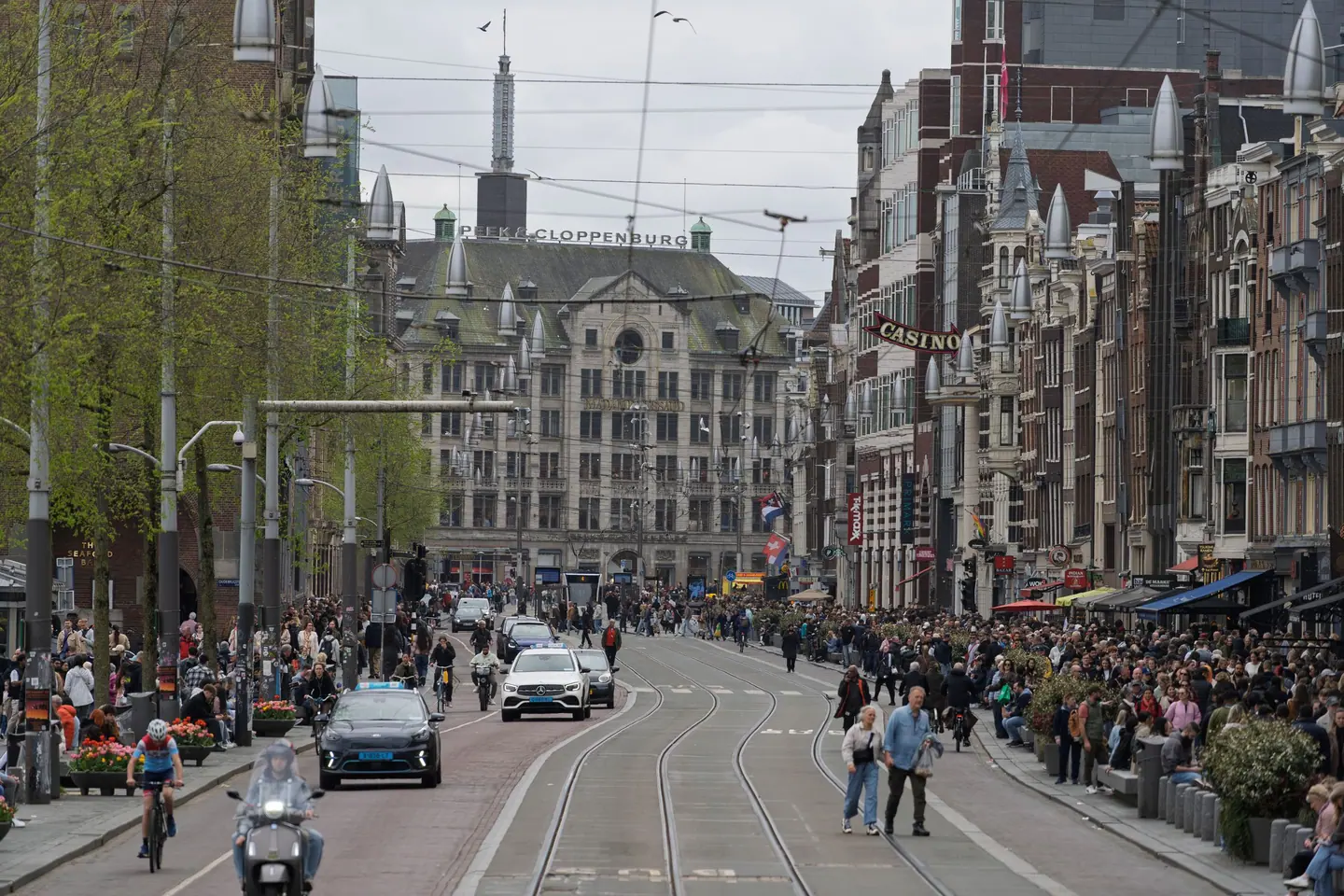
Slotsholmen, Christiansborg Palace & Tivoli Gardens
Christiansborg Palace, Royal Library Black Diamond, Christian IV’s Brewhouse, Thorvaldsens Museum, National Museum of Denmark, Copenhagen City Hall, and Tivoli Gardens
Christiansborg Palace
Rebuilt in Neo-baroque style after devastating fires, this grand complex houses the Danish Parliament, the Prime Minister's Office, and the Supreme Court. Visitors can admire the Royal Reception Rooms decorated with modern tapestries by Bjorn Norgaard. The granite facades and expansive courtyards reflect centuries of royal and political authority.
Christiansborg Palace Chapel
Dating from 1826, this church features a classical temple front with four Ionic columns and a grand dome. It hosts royal christenings, weddings, and lying-in-state ceremonies for Danish monarchs. Inside, the cool white plasterwork, Roman-style coffered ceiling, and serene statuary reflect Danish Neoclassical design at its purest.
Christiansborg Palace Tower
Rising 106 metres above the city, the palace tower offers panoramas stretching across Copenhagen to the coast of Sweden. The brick-clad structure was completed in the early twentieth century as part of the third palace. A dedicated lift carries visitors through the structural rafters to the open-air viewing platform.
Christiansborg Palace Ruins
Excavated beneath the current palace, these ruins reveal the chalkstone foundation walls of the original castle built by Bishop Absalon in 1167. Walkways lead through dimly lit medieval vaults that also showcase the foundations of the subsequent Copenhagen Castle. Informative displays trace centuries of defensive construction on this islet.
Royal Stables
Constructed in 1745, these baroque stables survived the devastating fires that destroyed the earlier palaces. The marble-columned interior still accommodates white Kladruber horses used for official state ceremonies and royal processions. The adjacent coach museum preserves regal carriages, including the gilded carriage crafted in 1840.
Danish Royal Riding Hall
Positioned alongside the formal riding grounds, this hall features an elaborate timber roof truss and a regal viewing balcony. Built during the reign of King Christian VI, it remains in regular equestrian use for training royal horses. The symmetrical wings flanking the arena define the grand western approach to Christiansborg.
Marble Bridge
Designed by Nicolai Eigtved and erected between 1739 and 1745, this elegant bridge serves as the grand entrance to the Christiansborg riding grounds. It is faced with Norwegian marble and paved with historic cobblestones. Two twin rococo pavilions decorated with royal crests and sculptural reliefs flank the entrance.
Thorvaldsens Museum
Opened in 1848, this building was designed by Michael Gottlieb Bindesboll to house the life work of Bertel Thorvaldsen. The exterior boasts a colourful fresco depicting the sculptor's return from Rome, while the interior features painted vaulted ceilings inspired by Pompeian villas. Plaster models, marble statues, and Thorvaldsen's personal tomb reside here.
Black Diamond
Completed in 1999 by Schmidt Hammer Lassen architects, this striking structure features polished black granite cladding that tilts over Copenhagen harbour. A vast glazed atrium splits the building, framing views of the water and connecting to the older library via skyways. Inside, visitors find quiet reading rooms, concert halls, and exhibition spaces.
Royal Library Garden
Occupying the former naval harbour of King Christian IV, this sheltered green space lies between Christiansborg Palace and the old Royal Library. The central water basin features an eight-metre fountain that shoots water on the hour. Sculptures, including a bronze figure of philosopher Soren Kierkegaard, stand among flowering flowerbeds and manicured hedges.
Christian IV's Brewhouse
Erected around 1608 as a defensive bastion on the waterfront, this imposing building was converted into a royal brewery by King Christian IV. Its massive red-brick walls and steep, high-pitched tiled roof illustrate early Danish Renaissance utilitarian architecture. Today the cavernous, vaulted halls house royal lapidarium collections and historic stone sculptures.
Danish Jewish Museum
Housed within Christian IV's seventeenth-century Royal Boat House, this museum was redesigned by architect Daniel Libeskind. The interior features sloping wooden corridors and striking angles meant to evoke the rescue of Danish Jews to Sweden in 1943. Exhibitions trace four hundred years of Jewish cultural heritage, integration, and community in Denmark.
Copenhagen Court House
Designed by Christian Frederik Hansen and built between 1805 and 1815, this monumental structure originally served as both city hall and courthouse. Six colossal Ionic columns support a pediment carrying the ancient Danish motto 'With law shall the land be built'. A rusticated brick archway over Slutterigade connects the main courthouse to the historic prison.
National Museum of Denmark
Housed within the rococo Prince's Mansion of 1744, Denmark's primary cultural museum covers 14,000 years of human history. Standout treasures include the prehistoric Sun Chariot, the bronze-age Egtved Girl, and elaborate Viking silver hoards. Classical antiquities, ethnographical collections, and Danish medieval church art are distributed across spacious, airy galleries.
Frederiksholms Kanal
Dug in 1681 under King Christian V, this picturesque waterway served as a protective moat and transport route for naval supplies. Today, traditional wooden barges and leisure craft moor along its granite quaysides. Strolling along the water offers clear vantage points of the Royal Stables, the National Museum, and ornate baroque facades.
Copenhagen City Hall
Completed in 1905, this red-brick municipal palace was heavily inspired by the City Hall of Siena in Italy. The facade is adorned with a gilded statue of Bishop Absalon, ornate copper spires, and handcrafted stone details. Inside, the vast covered courtyard leads to the council chambers and Jens Olsen's celebrated World Clock.
City Hall Square
Serving as the municipal heart of Copenhagen, this large public plaza anchors the western end of the pedestrianised Stroget thoroughfare. It features notable public monuments such as the Dragon Fountain and the Lur Blowers statue atop a tall column. The square acts as a focal gathering point for national celebrations, protests, and cultural events.
Tivoli Gardens
Founded by Georg Carstensen on the former city ramparts, this celebrated pleasure garden combines historic rides, orientalist architecture, and landscaped grounds. The park features the 1914 wooden roller coaster Rutschebanen, the Moorish-style Nimb Palace, and classical bandstands. Manicured flowerbeds, illuminated lanterns, and open-air theatrical pantomimes preserve nineteenth-century leisure traditions.
Pantomime Theatre
Built in 1874 by architect Vilhelm Dahlerup, this distinctive open-air stage features ornate Chinoiserie carvings, dragon motifs, and gilded trim. Its most famous mechanism is a mechanical peacock tail that unfurls and folds down to serve as the stage curtain. Free daily pantomime performances continue the comic tradition of Pierrot, Harlequin, and Columbine.
Nimb Palace
Erected in 1909 to replace an earlier bazaar, this striking structure was designed by architect Knud Arne Petersen in an opulent Moorish revival style. The facade features white domes, onion turrets, and intricate arches that glow with thousands of electric bulbs after sunset. Today the building accommodates luxury dining venues and boutique guest rooms overlooking the park.
Christianshavn Canals, Church of Our Saviour & Harbour Bridges
Inderhavnsbroen, Christianshavns Kanal, Church of Our Saviour Vor Frelsers Kirke, Christiania, Cirkelbroen Circle Bridge, Danish Architecture Center BLOX, and Royal Danish Opera House
Inderhavnsbroen
Completed in 2016, this sliding bascule footbridge crosses the Inner Harbour to link the city centre with Christianshavn. Its unusual mechanism withdraws two central horizontal decks into the approach piers to allow tall shipping vessels to pass through. Pedestrians can pause on the stepped viewing platforms to inspect maritime traffic navigating the harbour channel.
North Atlantic House
Constructed in 1767, this timber-framed brick storehouse originally accommodated trade goods arriving from Iceland, Greenland and the Faroe Islands. Today the renovated warehouse houses gallery spaces, cultural programmes and diplomatic missions representing the North Atlantic territories. Visitors can examine the heavy timber beams and maritime stonework that define its maritime trading past.
Christianshavns Torv
King Christian IV laid out this central marketplace in 1618 as the civil heart of his fortified naval settlement. The square features the bronze Greenland Monument, sculpted by Svend Rathsack, which depicts an Inuit seal hunter standing between two polar bears. The open space remains the focal transport node and social gathering point of the Christianshavn district.
Church of Our Saviour
Consecrated in 1696, this Dutch Baroque church is renowned for its distinctive corkscrew spire designed by architect Lauritz de Thurah. The gilded winding staircase ascends 400 steps on the exterior of the tower, terminating beneath a globe and a statue of Christ. Inside, inspect the monumental carillon and the immense three-storey organ supported by two carved marble elephants.
Christianshavns Kanal
Excavated in the early seventeenth century along Dutch planning principles, this central canal divides Christianshavn into two distinct residential and mercantile quarters. Traditional wooden sailing vessels, residential barges and small pleasure craft moor along its stone quaysides. Strolling along the water reveals preserved merchant houses displaying colorful gables, grand carriage arches and timber hoardings.
Christians Church
Built between 1754 and 1759 by architect Nicolai Eigtved, this church originally served the local German-speaking trading community of Christianshavn. Its layout resembles a theatre rather than a conventional house of worship, featuring three tiers of box seating flanking the central nave. The crypt beneath holds dozens of marble sarcophagi belonging to distinguished merchant families.
Cirkelbroen
Designed by artist Olafur Eliasson and opened in 2015, this pedestrian crossing spans the mouth of Christianshavns Kanal. The structure consists of five overlapping circular decks of differing sizes, each carrying a tall central mast strung with wire stays. The design deliberately encourages travellers to slow their pace and contemplate the harbour surroundings.
Royal Danish Opera House
Designed by architect Henning Larsen and opened in 2005 on the island of Dokøen, this national opera house terminates the central axis running from Amalienborg Palace. The monumental structure is distinguished by its vast cantilevered roof canopy and glazed facade looking across the water. Inside, the auditorium features maple-panelled walls, gold leaf ceilings and seating for up to 1,700 guests.
BLOX
Constructed over a major traffic artery on the harbour edge, this modular glass and steel building was created by the Dutch architectural studio OMA. It serves as the headquarters of the Danish Architecture Center, hosting permanent exhibition galleries, public squares and creative workspaces. Its interlocking green glass boxes span the busy thoroughfare beneath, reconnecting the street with the quayside promenade.
Freetown Christiania
Established in 1971 when local squatters claimed the abandoned Bådsmandsstræde military barracks, this self-governing community occupies roughly 85 acres of ramparts and historic rampart ditches. The district is characterised by self-built experimental houses, communal workshops, artist studios and organic eateries. Travellers can wander quiet gravel paths along the ancient earthen fortifications and scenic moats.
Lille Mølle
Constructed in 1783, this smock mill replaced an earlier post mill on the fortress rampart bastion known as Løvens Bastion. Converted into a private residence in the early twentieth century by engineer Ejnar Flach-Bundegaard, it preserves authentic interiors filled with folk art and period furnishings. It remains the final surviving windmill of the many that once fortified Copenhagen's walls.
Knippelsbro
This bascule bridge, opened in 1937, represents the fifth crossing constructed on the site since King Christian IV built the first timber bridge in 1618. Designed by architect Kaj Gottlob, the structure is instantly recognised by its pair of green patinated copper towers that oversee the opening mechanisms. The bridge forms the primary arterial link connecting Christianshavn to Slotsholmen.
Langebro
Erected in 1954 to replace a succession of historic timber structures, this substantial steel bascule bridge spans the harbour between western Copenhagen and Amager. The bridge was designed by architect Kaj Gottlob and engineered to manage both heavy commuter traffic and frequent maritime shipping. Pedestrians cross its wide footpaths to gain expansive views across the inner docks.
Lille Langebro
Opened in 2019 to relieve commuter pressure on the neighbouring road bridge, this elegant steel swing bridge connects Vester Voldgade to Christianshavn. Designed by international engineers WilkinsonEyre, its gentle serpentine curve dips toward the waterline and swings open in two rotating sections for passing boats. The bridge deck provides quiet passage away from motorised traffic.
Overgaden
Split into Overgaden oven Vandet and Overgaden neden Vandet, these two quaysides form the scenic spine of the canal network. The banks are lined with seventeenth and eighteenth-century merchant townhouses, former warehouses and contemporary art institutes. Visitors can observe local boaters tending timber vessels alongside stone bollards that have stood since the city's maritime peak.
Holmen Naval Base
Founded in the late seventeenth century, this collection of small islands served as the principal base for the Royal Danish Navy for three centuries. Today, historic ropewalks, dry docks and powder magazines host Denmark's premier creative institutions, including the National Film School and the Royal Academy of Fine Arts. The perimeter offers views of working naval ships and naval architectural relics.
Trangravsbroen
Constructed in 2014, this tripartite footbridge links Christianshavn, Holmen and the former Trangraven harbour basin. Its three distinct spans meet in a central junction, with two bascule sections capable of lifting to accommodate vessel masts in the narrow channels. It provides an efficient transit route for cyclists traversing the creative quarters of eastern Copenhagen.
Arsenaløen
This southernmost island of the Holmen complex was laid out from dredged earth in the 1740s to store heavy naval munitions and artillery. The grand Royal Arsenal Building and the Royal Danish Navy Officers' School dominate the island with their restrained military masonry. Visitors can inspect the historic rampart gates, classical facade carvings and the monumental King's Gate entrance.
Christianshavns Vold
These earthen ramparts were excavated between 1618 and 1625 to protect the kingdom from seaward artillery attack. Today, the zig-zag bastions, moats and timbered copses function as a tranquil municipal park that frames the district's eastern boundary. Walking the elevated trails offers perspectives over the canal system, preserved powder magazines and historic mill locations.
Mast Crane
Designed by architect Philip de Lange and completed in 1749, this brick and timber masting crane stands on Nyholm island. The exterior resembles a classical tower disguised to protect its internal wooden lifting tackle from the coastal elements. The structure once hoisted towering wooden mainmasts directly into the hulls of royal men-of-war.
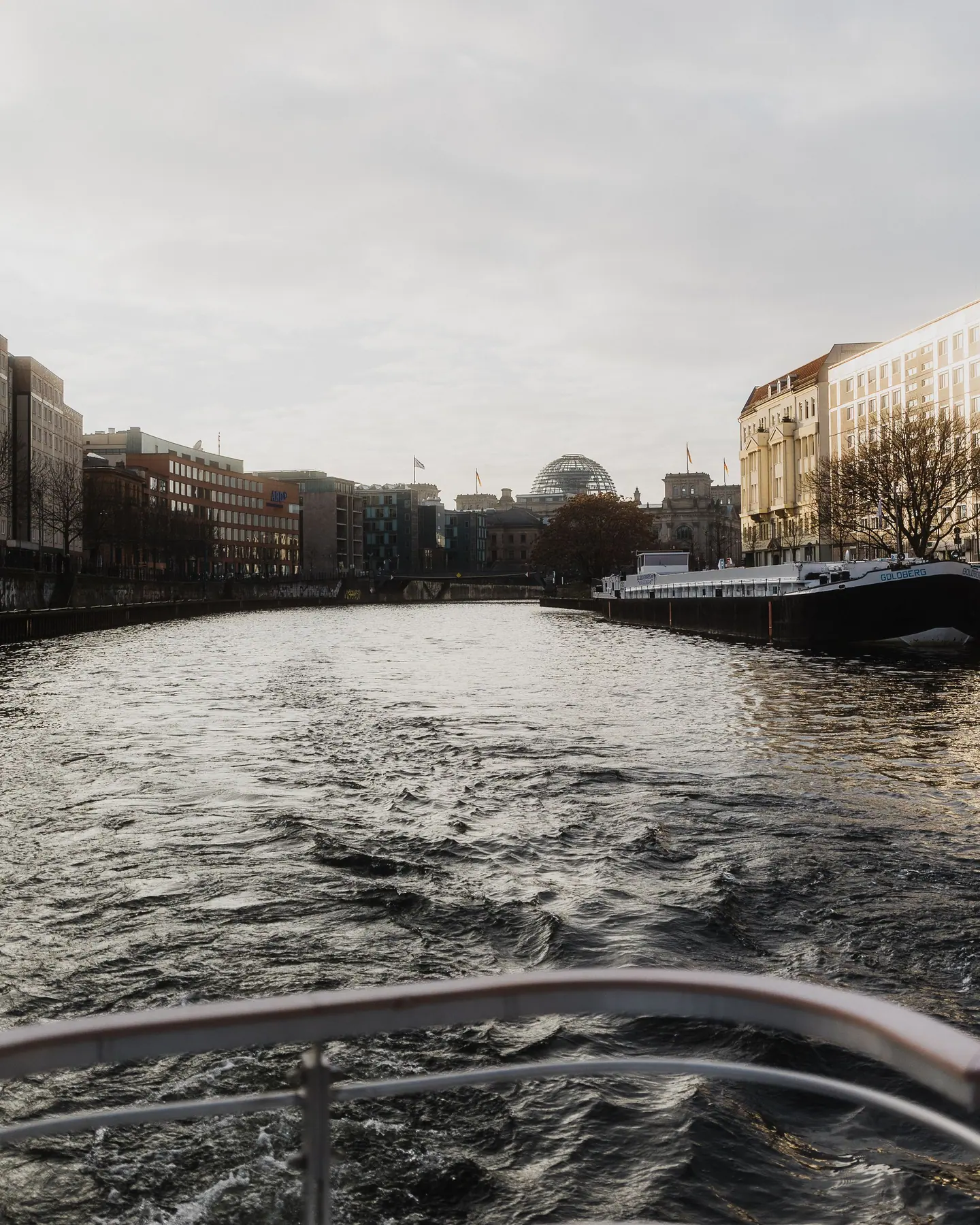
Carlsberg Glyptotek, Frederiksberg Palace & Nørrebro
Ny Carlsberg Glyptotek, Torvehallerne, Queen Louise’s Bridge, Assistens Cemetery, Grundtvig’s Church, Frederiksberg Palace and Gardens, Cisternerne, and Carlsberg Byen Elephant Gate
Ny Carlsberg Glyptotek
Founded in 1888 by brewer Carl Jacobsen, this museum displays classical Mediterranean antiquities alongside French and Danish 19th-century paintings. Visitors enter through a central Winter Garden crowned by a glass dome before wandering into Vilhelm Dahlerup's grand galleries. Look out for Auguste Rodin bronzes and Greek marble sarcophagi.
Danish Design Centre
Established in 1978, this institution fosters creative collaboration and presents evolving design prototypes. Previously occupying a Henning Larsen building on H.C. Andersens Boulevard, it now anchors dynamic projects across Danish creative sectors. Exhibits frequently explore sustainable urban solutions, furniture ergonomics, and digital interfaces.
Vesterbro Torv
Laid out in 1850 during the urban expansion beyond Copenhagen's western ramparts, this square features mature trees and late 19th-century apartment blocks. The central focal point is Otto Evens' bronze monument of the Hercules fountain. Cafes and bakeries line the perimeter, reflecting the district's working-class heritage.
Torvehallerne
Built on the historical site of Grønttorvet vegetable market, these modern glass-and-steel pavilions opened in 2011 to celebrate Danish food culture. Over sixty stalls supply fresh seafood, smørrebrød, seasonal produce, and specialist coffee. The central cobblestone plaza accommodates open-air fruit vendors and flower merchants.
Dronning Louises Bro
Designed by Vilhelm Dahlerup and opened in 1887, this three-span granite bridge spans the Sortedam and Peblinge lakes. It was named after King Christian IX's wife, Queen Louise, and features ornate cast-iron lampposts alongside broad pedestrian promenades. The bridge serves as a major arterial crossing for cyclists.
Sankt Hans Torv
Once an intersection outside the historic city gates, this square developed rapidly in the late 19th century into Nørrebro's social centre. Jørgen Haugen Sørensen's granite sculpture, The House That Rains, stands opposite long rows of historic residential facades. Independent cinema Empire Bio sits just around the corner.
Assistens Cemetery
Inaugurated in 1760 to relieve overcrowded parish churchyards within the city walls, this vast cemetery now functions as both a peaceful park and an outdoor museum. Prominent burial plots include those of fairy-tale writer Hans Christian Andersen and philosopher Søren Kierkegaard. Mature lime trees shelter the weathered sandstone markers.
Superkilen
Conceived by architecture firm BIG, landscape architects Topotek1, and arts collective Superflex, this public space opened in 2012. It divides into three distinct zones: the Red Square, the Black Market, and the Green Park. Objects such as Moroccan fountains and Armenian benches represent the neighbourhood's multifaceted international roots.
Grundtvig's Church
Designed by Peder Vilhelm Klint and completed in 1940, this church in the Bispebjerg district synthesises Gothic verticality with Danish Expressionist brickwork. Six million yellow bricks form the soaring west facade and stepped gable design. The cavernous interior relies on delicate natural light falling across minimalist pillars.
Frederiksberg Town Hall
Completed in 1953 to designs by Henning Hansen, this municipal complex features a central clock tower rising sixty metres above the municipality. The limestone facade projects formal mid-century civic dignity, surrounded by manicured plazas. The tower offers elevated views across the tree-lined avenues of the independent borough.
Frederiksberg Palace
Commissioned by King Frederick IV and built between 1699 and 1703, this yellow-ochre Italianate Baroque palace overlooks expansive gardens. It historically served as a summer retreat for the Danish royal family before becoming the Royal Danish Military Academy in 1869. The site features an ornate stuccoed ceiling chapel.
Frederiksberg Gardens
Originally designed as French formal grounds, these gardens were transformed in the late 18th century into an English landscape park with winding waterways and grottos. Travellers can admire the Chinese Pavilion, built in 1799, and the Temple of Apis near the southern lawn. The estate directly borders Copenhagen Zoo's elephant enclosure.
Cisternerne
Dug beneath Søndermarken park in the 1850s to supply clean drinking water, these cavernous underground chambers once held sixteen million litres. Since 2001, the vaulted granite and brick spaces have served as an exhibition venue for modern art. The damp environment features natural stalactites and echoes.
Søndermarken
Established in the 1730s as a hunting ground and forest annex to Frederiksberg Palace, this park preserves a wilder character than its manicured northern neighbour. Beech trees, sprawling lawns, and historical memorial mounds provide quiet walking circuits. Several paths connect directly to nearby cultural venues and cisterns.
Bakkehuset
Dating back to the 1750s, this historic building served as a gathering place for Golden Age intellectuals hosted by Kamma and Knud Lyne Rahbek. Guests such as Hans Christian Andersen and Adam Oehlenschläger met inside its timbered chambers. Today, restored period interiors and an authentic kitchen garden present 19th-century domestic life.
Elephant Gate Carlsberg
Erected in 1901 by architect Vilhelm Dahlerup, this distinctive gatehouse served as the entrance to the New Carlsberg brewery. Four life-sized Bornholm granite elephants bear the red-brick water tower above, each symbolising industry and global enterprise. Decorative mosaics, coats of arms, and carved cornices line the red masonry above.
DIPLON Carlsberg
Designed by Vilhelm Dahlerup and completed in 1892, this monumental double gate spanned the main industrial thoroughfare into Carlsberg. The exterior features glazed tile friezes, granite carvings, and a clock flanked by bronze bells. Today, the preserved structure forms a decorative cornerstone within the reimagined Carlsberg Byen urban district.
Carlsberg Laboratory
Founded in 1875 by industrialist J.C. Jacobsen, this historic research centre pioneered yeast isolation techniques and the chemical pH scale. The Italian Renaissance Revival facade looks onto Gamle Carlsberg Vej with grand arched windows and pedimented entrances. A statue of Jacobsen presides over the landscaped approach to the scientific complex.
Jesus Church Copenhagen
Commissioned by Carl Jacobsen in memory of his mother, this church was completed in 1892 by architect Vilhelm Dahlerup. Inspired by early Christian basilicas in Ravenna, the facade includes a freestanding Italian-style campanile across the street. The crypt beneath houses the granite tombs of the Jacobsen brewing dynasty.
Enghave Park
Laid out in 1928 by architect Arne Jacobsen, this public park was designed with straight avenues, a central fountain, and neoclassical pavilions. A recent redevelopment introduced sunken reservoirs capable of retaining large amounts of rainwater during heavy storms. The site balances early modern Danish landscaping with contemporary ecological flood defence.
Cycling Bridges and Harbour Buses in Copenhagen
Our main Copenhagen Nyhavn, Royal Palaces & Harbour Route guide covers airport arrivals, neighbourhood bases and multi-day pacing to complement this walk; see also our full collection of city route guides.