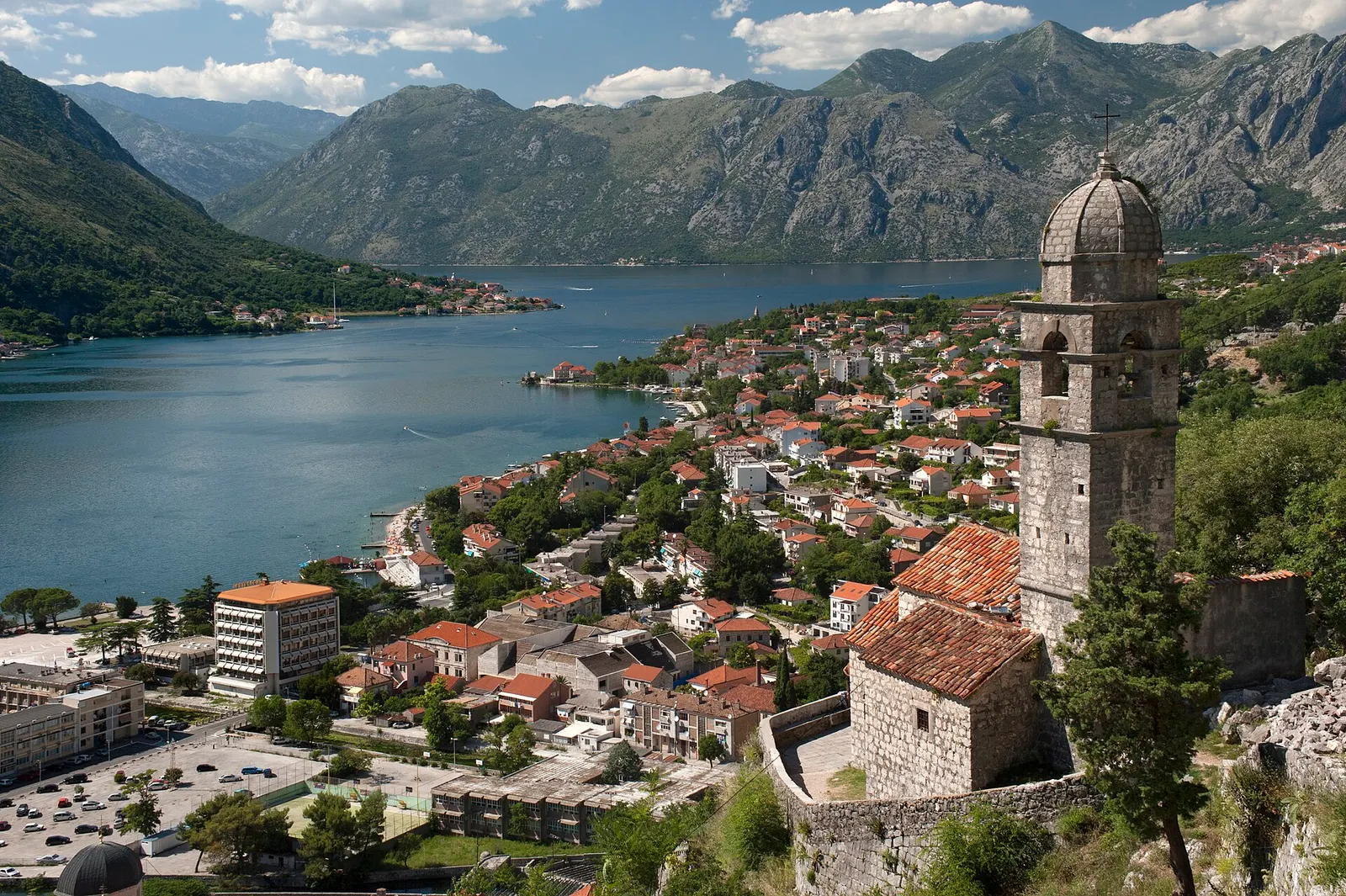
A detailed walking and bay route through the fjord-like Bay of Kotor: Venetian piazzas and palaces inside Kotor’s triangular walls, the 1,350-step ladder to San Giovanni, and Perast.
Four Centuries of Venetian Albania and the Maritime Captains of the Bay
Sheltered at the innermost reach of Boka Kotorska, a submerged river canyon carving twenty-eight kilometres beneath the sheer limestone walls of Mount Lovćen and Mount Orjen, ancient Acruvium was fortified by Byzantine Emperor Justinian I in AD 535 after the Gothic Wars. In 809 a Venetian merchant vessel brought the relics of Saint Tryphon to the city, inspiring the construction of the twin-towered Romanesque Cathedral consecrated in 1166.
Placing itself under the protection of the Most Serene Republic of Venice from 1420 to 1797 as Albania Veneta, Kotor (Cattaro) and neighbouring Perast produced legendary naval captains, Baroque stone palaces, and 4.5 kilometres of mountain ramparts climbing 260 metres straight up the St John (San Giovanni) cliff face.
Sea Gate, Square of Arms & St Tryphon’s Cathedral
Sea Gate (1555 Venetian Winged Lion of St Mark), Square of Arms (Trg od Oružja), Kotor Clock Tower (1602) & Medieval Pillory Pyramid, Rector’s Palace Providur’s Palace, Napoleon’s Theatre, Bizanti Palace, Beskuća Palace Gothic Portal, and Cathedral of Saint Tryphon (1166 Romanesque Ciborium & Reliquary Treasury)
Sea Gate
Constructed in 1555 during Venetian rule, this massive limestone portal serves as the principal entrance to the fortified town. Above the central arch, the Venetian Winged Lion of Saint Mark stands alongside a communist inscription marking Kotor's liberation in 1944. Visitors can examine the heavy vaulted passage and the ornate stone reliefs carved into the thick defensive walls.
Square of Arms
Trg od Oruža forms the central civic space of Kotor, named after the Venetian military arsenal that once stood here. Paved with polished flagstones, it is enclosed by an ensemble of aristocratic mansions, civic palaces, and historic cafes. The expansive area serves as an orientation point for exploring the interconnected alleys and courtyards of the old settlement.
Kotor Clock Tower
Erected directly opposite the Sea Gate in 1602, this three-storey limestone tower displays a blend of late Renaissance and Baroque architectural details. The structure developed a noticeable tilt following a major earthquake in 1979 and underwent subsequent structural stabilization. A medieval stone pillory pyramid stands prominently at its base, where petty criminals were once publicly disgraced.
Rector's Palace
Occupying a long section of the Square of Arms, the Rector's Palace served as the residence of the Venetian military governors known as providurs. Constructed originally in the seventeenth century, it displays refined Renaissance proportions combined with Baroque window surrounds and long stone consoles. It now forms part of a historic heritage hotel complex overlooking the primary public plaza.
Napoleon's Theatre
Built during the brief French occupation under Napoleon Bonaparte in 1810, this stately building was adapted from an earlier seventeenth-century municipal hall. It operated as one of the earliest permanent theatres in the southern Adriatic region. The classical facade features balanced symmetry and fine ashlar masonry, harmonising with the adjacent aristocratic residences flanking the southern edge of the square.
Bizanti Palace
Overlooking the Square of Arms, this palace belonged to the Bizanti family, one of the most influential patrician dynasties in medieval Kotor. Although originating in the fourteenth century, the facade was heavily modified with Renaissance balconies and decorative cornices after the 1667 earthquake. A charming interior courtyard contains external stone staircases, family coats of arms, and carved Romanesque wall brackets.
Beskuća Palace
Constructed in 1776 by the wealthy Beskuća family, this palace features a relatively austere Baroque facade punctuated by a magnificent Gothic entrance portal. The portal was salvaged from the demolished medieval palace of the Bizanti family and incorporated into this later build. The detailed carving displays Saint Michael slaying a dragon, framed by intricate stone acanthus leaves and decorative figures.
Cathedral of Saint Tryphon
Consecrated in 1166, this Romanesque cathedral is one of the oldest monumental churches along the eastern Adriatic shore. Its distinctive interior features a celebrated fourteenth-century ciborium supported by red marble columns and intricately carved stone canopies. The church reliquary treasury contains the silver-gilt head of Saint Tryphon alongside medieval liturgical vessels, precious crucifixes, and gold and silver filigree works.
Drago Palace
Standing directly adjacent to Saint Tryphon's Cathedral, the Drago Palace consists of two interconnected wings dating from the fourteenth and fifteenth centuries. The facade showcases some of Kotor's finest examples of Florid Gothic stonework, including trilobed windows and family heraldry depicting dragons. The building now houses municipal cultural heritage offices dedicated to the preservation of local historical documents and art.
Pima Palace
Situated on Flour Square, this residence was built for the prominent Pima family after the catastrophic 1667 earthquake. The facade combines Renaissance simplicity on the ground floor with an expansive Baroque balcony supported by twelve stone consoles across the piano nobile. The wrought-iron balcony railings represent some of the finest blacksmith craftsmanship from the late Venetian period in Montenegro.
Buca Palace
Facing Flour Square opposite Pima Palace, Buca Palace was the ancestral seat of a medieval merchant family that served Serbian royalty. Built predominantly in the fourteenth century, the facade retains several fine Gothic elements despite later repairs following earthquakes. Look closely at the carved family coat of arms, which displays a fleur-de-lis granted by the French Anjou dynasty for diplomatic service.
Church of Saint Luke
Erected in 1195, Saint Luke's Church is an intact Romanesque-Byzantine single-nave building set on Saint Luke's Square. For more than a century from 1657, it served both Catholic and Orthodox congregations simultaneously, holding two distinct altars under its vaulted ceiling. The interior contains fragments of thirteenth-century frescoes, ancient floor tombstones, and a stone iconostasis installed after it became exclusively Orthodox.
Church of Saint Nicholas
Completed in 1909 on the site of a Dominican monastery destroyed by fire, this impressive Neo-Byzantine temple features twin bell towers and a massive central dome. The interior is characterized by dark wood panelling, rich silver chandeliers, and an enormous iconostasis painted by Czech artist František Ziegler. Its spacious interior creates an acoustic sanctuary renowned for traditional Orthodox choral singing.
Maritime Museum of Montenegro
Housed within the Baroque Grgurina Palace, this institution chronicles the rich seafaring traditions of the Bay of Kotor and the ancient Bokelian navy guild. The exhibits feature ship models, nautical instruments, historical weapons, and oil portraits of famous local captains. The palace itself features stone balconies and an original central salon layout typical of eighteenth-century maritime aristocracy.
Church of Saint Michael
Dating from the late fourteenth century, this compact Romanesque stone church stands along a quiet passage near the base of the mountainside fortifications. The interior has been converted into the municipal lapidarium, displaying ancient Roman tombstones, medieval architectural fragments, and coats of arms recovered during post-earthquake restorations. Traces of fourteenth-century frescoes remain visible on the interior stone wall surfaces.
Church of Saint Anne
Constructed in the late twelfth century, Saint Anne is an intimate Romanesque church historic against the rising hillside alleys of the upper town. Archaeological investigations have revealed multiple layers of medieval wall frescoes, with the oldest surviving sections dating back to the fifteenth century. Its simple barrel-vaulted nave and stone apse offer a quiet look at early local religious architecture.
Collegiate Church of Saint Mary
Erected in 1221, this venerable church is known locally as Saint Mary of the River due to its proximity to the northern moat. Inside rests the glass sarcophagus of Blessed Osanna of Kotor, a sixteenth-century anchorite revered for her spiritual devotion and counsel during times of siege. The entrance features twentieth-century bronze relief doors depicting her life and Kotor's dramatic history.
River Gate
Also known as the North Gate, this Renaissance portal was constructed in 1540 to commemorate Kotor's successful defence against the Ottoman admiral Hayreddin Barbarossa. A stone bridge leads out across the fast-flowing, crystal-clear waters of the Škurda River toward the mountainside. The surrounding ramparts display substantial Renaissance bastions designed to resist artillery fire from the northern approaches.
Gurdic Bastion and South Gate
The southern entrance to the walled town is protected by the powerful Gurdić Bastion and a system of multiple defensive gates dating from the thirteenth through seventeenth centuries. The access bridge crosses the Gurdić spring, a natural geological phenomenon where subterranean freshwater surges up against seawater depending on seasonal rainfall. The thick curtain walls here demonstrate the evolution of Adriatic military engineering.
Castle of Saint John
Perched upon the steep cliffs of Saint John Hill, this formidable fortress represents the apex of Kotor's UNESCO-listed fortification system. Reached via a rigorous path of over 1,300 stone steps, the citadel dates back to Illyrian and Roman times, later rebuilt comprehensively by the Republic of Venice. The battlements provide expansive panoramas across the fjord-like bay, historic red-tiled roofs, and surrounding limestone peaks.
Maritime Museum, St Luke, St Nicholas & River Gate
Drago Palace, Boka Navy Square & Maritime Museum of Montenegro inside Grgurina Palace, Pima Palace Renaissance Balconies, Flour Square (Trg od Brašna), Church of St Luke (1195 Romanesque-Byzantine church that once held both Catholic and Orthodox altars), Serbian Orthodox Church of St Nicholas, Blessed Ozana Church, Collegiate Church of St Mary (1221), and North River Gate on the Škurda Canyon
Maritime Museum of Montenegro
Set inside the eighteenth-century Grgurina Palace, this institution chronicles the rich nautical heritage of the Bay of Kotor. The exhibits include authentic ship models, navigational instruments, coastal flags, and ornate weapons carried by local sailors. Visitors should inspect the central stone staircase and the memorial bronze cannons guarding the entrance courtyard.
Grgurina Palace
Built for the noble Grgurina family, this palace is among the finest examples of late Baroque domestic architecture in the walled city. Its classical stone facade features symmetrical balconies supported by carved brackets and decorative window surrounds. The interior layout preserves the traditional Mediterranean arrangement of family living quarters arranged around a grand central reception room.
Boka Navy Square
Officially named Trg Bokeljske Mornarice, this open plaza honours the seafaring association that dates back to the ninth century. Surrounded by patrician mansions, it serves as the backdrop for traditional naval dances during civic festivals. A historic stone fountain and surrounding flagstone alleys offer visitors a vivid impression of old town urban planning.
Drago Palace
Constructed in stages between the fourteenth and fifteenth centuries, this palace incorporates elements from earlier structures damaged in medieval tremors. The exterior displays delicate Gothic tracery alongside refined Renaissance windows and carved dragon coats of arms belonging to the Drago dynasty. An ornate stone portal connects the two distinct wings across an elevated archway.
Pima Palace
Dominating Flour Square, this residence was reconstructed following the devastating earthquake of 1667. The facade combines Renaissance porch arcades on the ground level with a long, ornate Baroque balcony forged from local iron. Above the grand entrance, look for the relief plaque featuring the heraldic crest supported by two winged angels.
Flour Square
Known locally as Trg od Brašna, this open space once accommodated the official flour stores of the Venetian administration. It is bordered by several important aristocratic residences, including Pima Palace and Beskuća Palace. Today, the paved expanse offers clear views of the dramatic limestone cliffs rising behind the city rooftops.
Church of St Luke
Erected in 1195 by Mauro Kacafrangi, this compact stone sanctuary reflects a harmonious blend of Romanesque walling and Byzantine central dome construction. It famously held both Catholic and Orthodox altars simultaneously between the seventeenth and nineteenth centuries. Inside, notice fragments of twelfth-century frescoes and floor slabs that cover centuries of community interments.
St Luke's Square
Officially known as Trg Sv Luke, this open space forms the religious heart of the northern old town. Flanked by both Romanesque and Neo-Byzantine houses of worship, the square features fine stone pavers and shaded corners under mature trees. It remains a central orientation point for exploring the labyrinthine alleyways leading toward the river.
Church of St Nicholas
Designed by the architect Ćiril Iveković, this grand Serbian Orthodox temple was built on the foundations of a Dominican monastery destroyed by fire. The twin bell towers and prominent lead dome establish a strong presence over the northern district. Inside, the massive wooden iconostasis by Czech artist František Ziegler commands immediate attention.
Church of St Mary Collegiate
Dating from 1221, this Romanesque church was built over the foundations of a sixth-century Christian basilica. The building features an exterior apse with decorative blind arcades, while the interior holds early medieval stone carvings and surviving fresco fragments. Bronze relief doors created in the twentieth century narrate pivotal historical moments from Kotor's past.
Shrine of Blessed Ozana
Housed within the Collegiate Church of St Mary, this shrine contains the preserved relics of Blessed Ozana of Kotor. The sixteenth-century Dominican anchorite was revered for interceding during the Ottoman siege led by Hayreddin Barbarossa in 1539. A finely sculpted glass-fronted casket displays her figure, drawing religious pilgrims throughout the year.
North River Gate
Constructed in 1540 to commemorate the city's successful defence against Ottoman naval forces, this gate leads out to the Škurda River. The portal displays classical Renaissance symmetry topped by the Venetian Lion of Saint Mark and commemorative Latin inscriptions. Crossing the exterior stone bridge provides views of the sheer canyon walls.
Beskuća Palace
Dating to the late eighteenth century, this palace belonged to the merchant Beskuća family, who rose to prominence through maritime trade. Its main portal is a recycled fifteenth-century Gothic masterpiece taken from the ruined Bizanti family house. The carved arch showcases floral motifs, flanking lions, and the crest of the Bizanti lineage.
Bizanti Palace
Originally erected in the fourteenth century and extensively remodelled following the 1667 earthquake, this residence displays a mixture of Renaissance and Baroque styles. The building incorporates an internal courtyard with stone stairs and decorative open galleries that are characteristic of coastal Dalmatia. The exterior facade faces the main civic square opposite the clock tower.
Church of St Michael
Constructed in the fourteenth century on the site of a tenth-century Benedictine monastery, this small single-nave church features a Romanesque barrel vault. The interior retains rare fresco paintings from the early fourteenth century and several preserved medieval gravestones. Archaeological excavations inside revealed structural walls and carved fragments from the earlier pre-Romanesque basilica.
Church of St Anne
Dating from the early thirteenth century, this intimate stone church is tucked away among the steep lanes below the city ramparts. Its interior walls preserve multiple layers of frescoes, including thirteenth-century depictions of Christ and fifteenth-century works attributed to local masters. The external facade showcases austere Romanesque masonry with a single arched belfry.
Gurdic Bastion
This massive stone bastion defended Kotor's southern flank, constructed over a subterranean karst spring that flows into the sea. Refortified by Venetian military engineers during the sixteenth century, it incorporates gun embrasures and a drawbridge mechanism. Travellers walking the ramparts here observe the natural freshwater pool churning beneath the ancient limestone masonry.
Citadel of Kotor
Positioned at the northern corner where the Škurda River meets the bay, this fortress bastion provided heavy artillery coverage over maritime approaches. Rebuilt during the Venetian period, the structure features thick sloping walls, internal powder magazines, and sentry walkways. Its elevated platform affords views across the fjord towards the slopes of Mount Vrmac.
Church of the Holy Spirit
Erected in the fifteenth century, this stone sanctuary was once part of a Franciscan convent located beneath the mountain cliffs. The structure features a Renaissance stone facade and an open timber roof that provides exceptional internal acoustics. Today, the de-consecrated nave serves as a concert hall for classical recitals and international musical masterclasses.
Škurda River Bridge
Extending from the North River Gate, this stone bridge crosses the emerald waters of the Škurda River as it rushes from the Lovćen massif. Built to control northern pedestrian access, it provides a viewpoint for inspecting the vertical medieval bastions rising straight from the riverbed. The path beyond marks the beginning of the historic caravan trail.
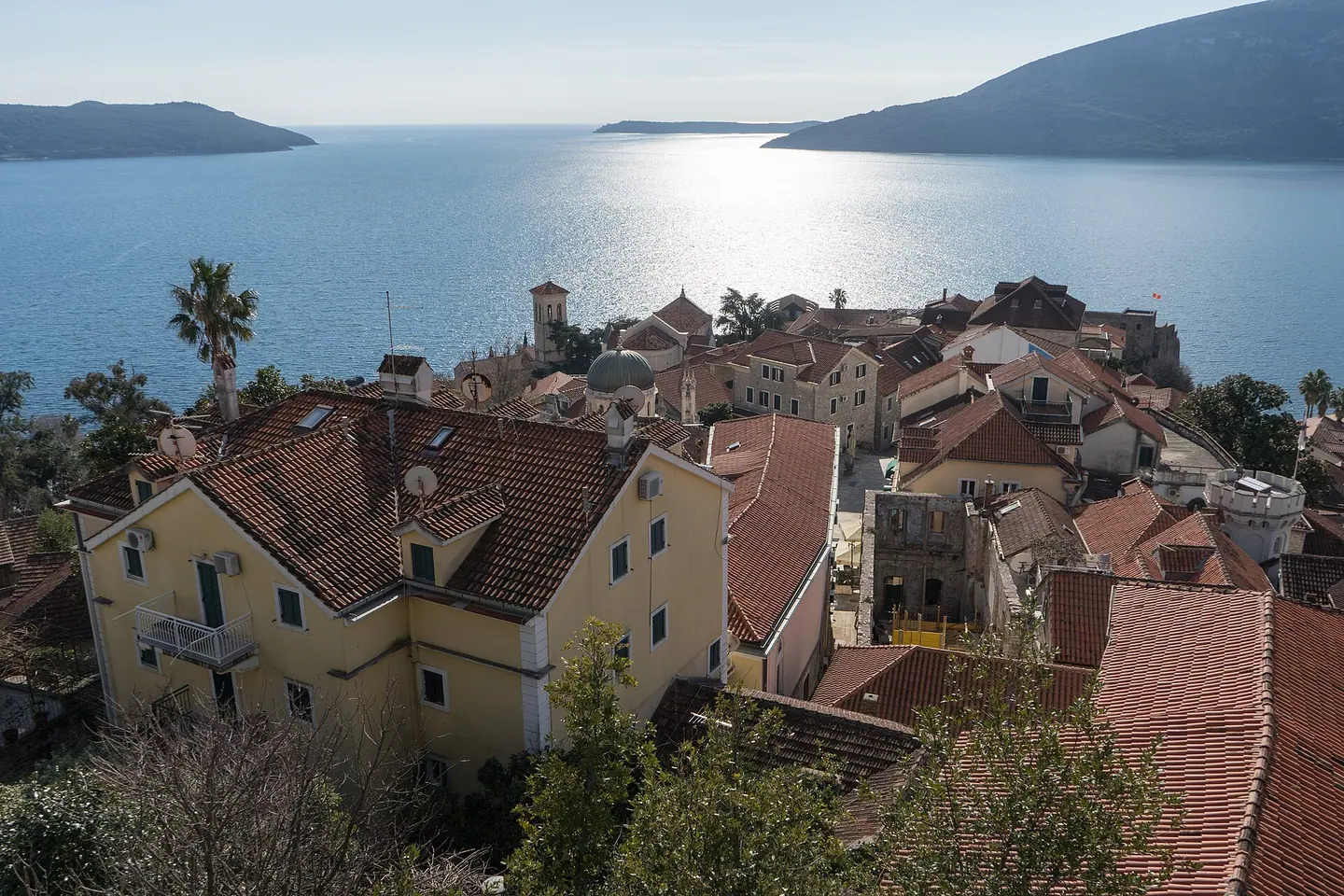
Southern Old Town, Gurdić Bastion & San Giovanni Fortress Climb
Lombardic Palace, Monastery of St Clare Franciscan Library, Gurdić South Gate & Emerald Karst Spring Moat, Kampana Tower, Špiljari Old Caravan Trail, Church of Our Lady of Remedy (Gospa od Zdravlja, 1518 halfway up the cliff), and St John’s (San Giovanni) Castle Summit Panorama over the Bay
Gurdić Gate and Bastion
Guarding the southern approach to the old town, this imposing bastion complex was reinforced across centuries with a three-gate defence network. A wooden drawbridge once spanned the natural karst spring moat. Travellers passing through can inspect the thick Venetian stonework and heavy iron-studded timber doors designed to withstand hostile sieges.
Gurdić Karst Spring Moat
This deep pool of emerald water emerges directly from subterranean caverns beneath Mount Lovćen to form a natural boundary. During periods of heavy mountain rain, the surging freshwater visibly repels seawater back into the bay. We observe smooth limestone banks enclosing this dynamic water body beneath the southern city wall.
Lombardić Palace
Constructed in the mid-eighteenth century, this refined residence showcases classic regional Baroque features including arched stone portals and carved window sills. It housed the Russian consulate during the early nineteenth century under Petar I Petrović-Njegoš. The ashlar facade reflects the maritime wealth and political status of local seafaring nobility.
Monastery and Church of Saint Clare
Founded in the fourteenth century, this monastic complex features a plain exterior contrasting with a rich Baroque interior. The site preserves an extraordinary collection of rare incunabula and manuscripts within its historic Franciscan library. Inside, visitors can examine a splendid marble altar sculpted by the Venetian master Francesco Cabianca.
Church of Saint Michael
Dating from the late fourteenth century, this compact Romanesque structure stands on foundations of an even older church. Its interior reveals preserved fragments of Gothic frescoes painted by local masters. The quiet stone chamber provides an evocative look at early medieval devotional art away from larger city squares.
Church of Saint Anne
Built between the late twelfth and early thirteenth centuries, this intimate Romanesque church features a single barrel-vaulted nave and semicircular apse. Archaeological investigations uncovered multiple fresco layers painted across different centuries. Stone inscriptions along the perimeter provide valuable records regarding medieval civic patrons.
Square of the Salad
Known locally as Trg od Salate, this quiet stone square served as the historic market where women from mountain villages sold fresh garden produce. Bordered by tall stone residences, it retains an authentic domestic character. We observe historic street lamps and stone paving worn smooth by generations of town residents.
Biskupija Bishopric Palace
This solid stone building has long accommodated the Bishop of Kotor, serving as the administrative core of the local Catholic diocese. The exterior exhibits proportional windows, molded cornices, and discreet heraldic carvings. It stands as a testament to the enduring religious authority that shaped the town's urban fabric.
Valier Bastion
Erected in the seventeenth century, this bastion was named after the Venetian military governor who oversaw its construction. The platform was designed to host heavy cannons trained directly on the bay. Today, visitors can walk along the parapet to examine gun embrasures and look out toward passing coastal vessels.
Kampana Tower
Standing where the Škurda River meets the bay, this imposing cylindrical tower anchors the northwestern corner of the fortifications. Raised by the Venetians across the thirteenth and fourteenth centuries, its massive masonry repelled naval incursions. The elevated battlements provide wide vistas across the harbour and steep limestone peaks.
Corner Bastion of Saint Francis
Marking the transition between the valley walls and the rising mountain ramparts, this bastion reinforced the southern perimeter. Its thick inclined stone revetments were built to absorb artillery strikes. Walking along its base allows an appreciation of the immense engineering required to secure the settlement against land attacks.
Southern Lower Ramparts Trailhead
This narrow portal marks the beginning of the eastern climb up the cliff face toward the high castle. Sturdy stone stairways, worn smooth over centuries, begin their steep zigzag path directly from the urban street network. The gateway features medieval stonework that welcomed soldiers patrolling the upper battlements.
Špiljari Old Caravan Trail
Known as the Ladder of Kotor, this historic switchback path was the principal overland trade conduit between coastal merchants and old Montenegro. The expertly graded gravel trail serpentines across bare karst limestone outside the defensive walls. Travellers can follow the route to view traditional stone terrace walls and rustic goat pastures.
Špiljari Abandoned Settlement
Tucked in a limestone depression behind the fortress ridge, this deserted hamlet preserves stone shells of rustic farmsteads and a simple chapel. Its former residents survived by supplying dairy and produce to city markets below. The roofless buildings illustrate vernacular dry-stone construction techniques common across the coastal mountains.
Church of Saint George in Špiljari
This isolated stone chapel served the rural community of Špiljari outside the municipal walls. Featuring an arched belfry and simple gabled roof, it retains substantial medieval wall construction despite centuries of abandonment. It stands as a silent reminder of pastoral life unfolding adjacent to the fortified military zone.
Church of Our Lady of Remedy
Erected in 1518 by local citizens grateful for deliverance from the plague, this chapel stands midway up the fortification route. A graceful belfry rises above its compact stone porch and carved entry portal. The terrace fronting the sanctuary provides an expansive overview of the tiled roofs and bay waters below.
Small Fortress of Saint Roko
Positioned just above the intermediate chapel, this fortified stone redoubt supported small artillery pieces and infantry detachments. Gunports pierced through thick limestone slabs offered clear lines of fire across the mountain flank. Visitors frequently rest here to catch their breath while ascending the exposed rocky ridge.
Upper Venetian Powder Magazine
Constructed with thick vaulted ceilings to withstand shellfire and prevent catastrophic accidental explosions, this magazine stored munitions for upper artillery batteries. Its recessed entry and robust stone buttresses demonstrate advanced Venetian military architecture. The structure remains remarkably intact despite seismic shocks and severe mountain weather.
Contarini Bastion and Lookout
This projecting bastion bears the name of a Venetian noble family who contributed to the city's maritime governance. Built directly into vertical limestone ledges, it anchored defensive curtains against mountain incursions. Its commanding elevation offers a complete panoramic view over the southern town entrance and neighbouring water channels.
Castle of Saint John Summit
Perched 280 metres above sea level, San Giovanni Castle represents the apex of the town's fortifications, combining Illyrian, Byzantine, and Venetian defensive layers. Visitors reaching the summit can explore ruined barracks, parapets, and the national flag platform. The site offers sweeping vistas spanning the entire bay and surrounding dramatic limestone massifs.
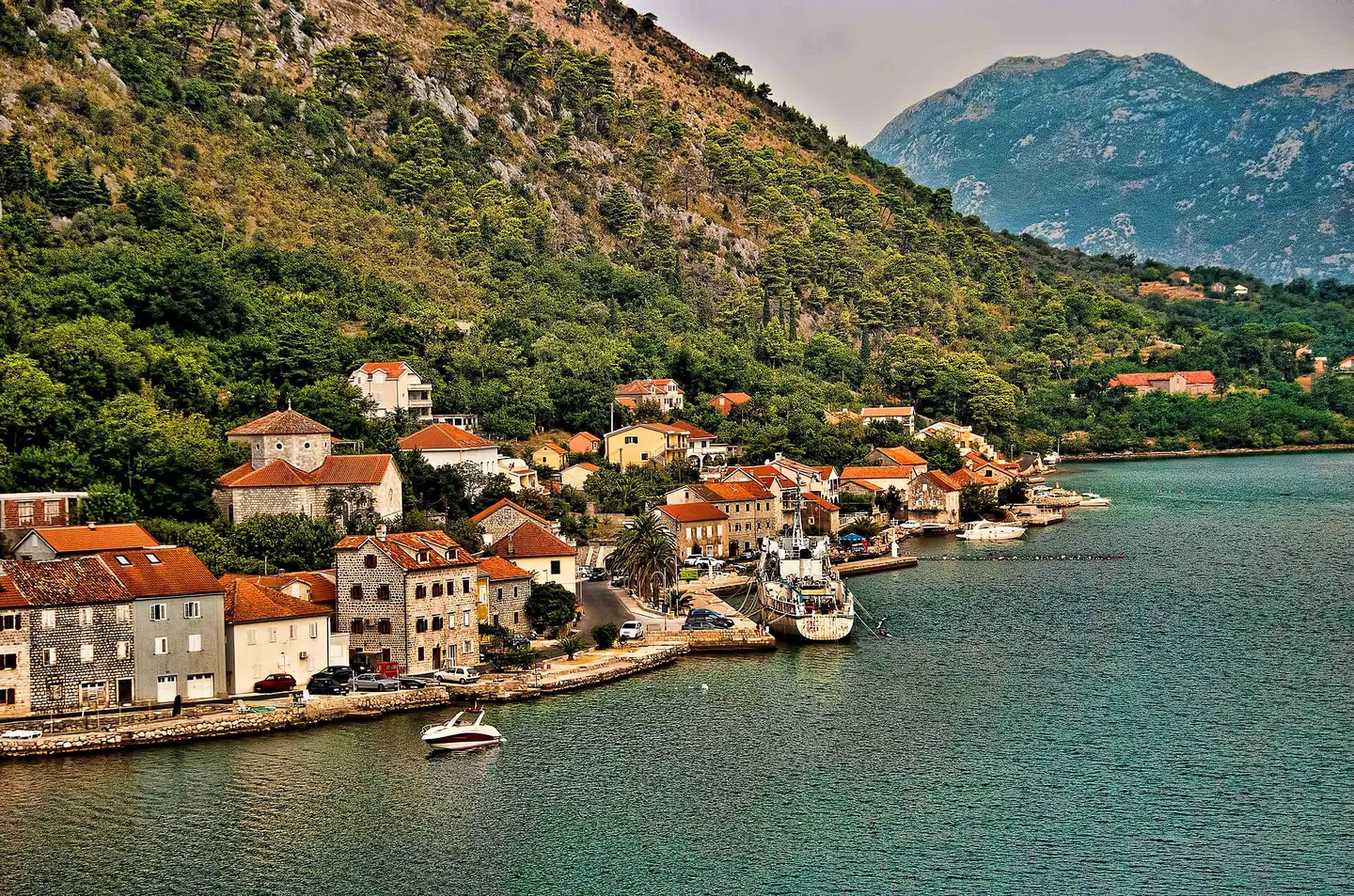
Dobrota Captains’ Palaces, Prčanj & Perast Baroque Town
Dobrota Waterfront Promenade, Tripković Palace, Dabinović Kokot Tower Palace, Church of St Eustace, Prčanj Birthplace of the Boka Mariners & monumental Church of the Nativity of the Blessed Virgin Mary, Perast St Nicholas Bell Tower (55m), Bujović Palace Museum, and Smekja Palace
Dobrota Waterfront Promenade
Stretching for several kilometres along the inner bay, this waterfront path connects stone jetties and historic estates built by wealthy sea captains. Visitors can examine original mooring rings, carved family crests, and classical balustrades facing the calm waters. It offers an unbroken architectural timeline of eighteenth-century maritime prosperity.
Tripković Palace
Constructed entirely from fine Korčula limestone, this grand palace features an imposing elevated terrace supported by stone arcades. The facade displays an ornate central balcony, classical pediments, and symmetrical wings that housed a prominent merchant family. Its private boat landing and ornamental garden reflect the peak of Boka merchant wealth.
Dabinović Kokot Tower Palace
Erected by the seafaring Dabinović clan, this complex combines domestic residential quarters with a fortified defensive tower known as Kokot. The architecture incorporates narrow embrasures alongside refined Baroque windows, providing protection against Ottoman incursions while maintaining residential prestige. Look for the family heraldry carved into the lintels above the main gate.
Church of St Eustace
Completed in 1773, this parish church features a soaring stone bell tower and an interior adorned with Venetian marble altars. The treasury safeguards celebrated Dobrota lace alongside marine paintings gifted by grateful captains returning from long voyages. The vaulted ceiling showcases frescoes depicting the conversion of Saint Eustace.
Church of St Matthew
Positioned close to the shore in lower Dobrota, this stone sanctuary dates from 1670 and was expanded in 1770. Inside, the church preserves a celebrated painting of the Madonna and Child attributed to Giovanni Bellini, as well as marble side altars. Its seaside terrace provides an expansive perspective across the water towards Prčanj.
Radoničić Palace
This three-storey residence belonged to the Radoničić family, who commanded merchant vessels across the Mediterranean during the Venetian era. The exterior showcases classical proportions, wrought-iron balcony railings, and finely worked stone quoins. It represents the standard residential typology that defined the elite coastal strip of the bay.
Ivanović Palace
Home to the Ivanović counts, who earned naval distinctions under the Republic of Venice, this palace stands prominently along the road. The building features an elegant belvedere tower and carved stone portals bearing the family coat of arms. Its defensive walls and spacious inner courtyards demonstrate both status and functional security.
Church of the Nativity of the Blessed Virgin Mary
Designed by Venetian architect Bernardino Maccarucci, this monumental parish church took over a century to finish following its commencement in 1789. The elevated facade features sweeping double staircases, monumental Corinthian columns, and statues of local patrons. The treasury houses an exceptional collection of Venetian paintings, silver votives, and maritime relics.
Beskuća Palace in Prčanj
Constructed in the late eighteenth century, this grand estate belonged to the Beskuća family, who rose from poverty to immense maritime fortune. The exterior features classical window pediments and an open sea-facing terrace with traditional stone bollards. The structure illustrates the rapid accumulation of naval capital in the Gulf of Kotor.
Tre Sorelle Palace
Also known as the Villa of the Three Sisters, this rare fifteenth-century Gothic country house displays distinct lancet windows on its upper floor. According to legend, three sisters spent their lives watching the sea from these windows for an absent sailor. Architectural details include Gothic arches and intact medieval stonework.
Church of St Anne in Prčanj
Dating back to the fourteenth century, this modest chapel sits on the lower slopes behind the town amid olive groves. The single-nave structure features a distaff belfry and preserved fragments of medieval fresco work inside. It marks the ancient core of settlement before naval families moved down to the shore.
Luković Palace
This imposing residence belonged to the Luković family, notable patrons of the monumental parish church. The building displays well-preserved stone portals, symmetrical rectangular windows, and a private mooring quay. Inside, historic maritime furnishings and family archives illustrate daily life during the final decades of the Venetian Republic.
Bujović Palace
Designed by Venetian architect Giovanni Battista Fontana in 1694, this palace features an open ground-floor portico of five rounded arches. The facade exhibits classical stone balustrades, carved lion heads, and commemorative Latin inscriptions. Today it houses the town museum, displaying naval portraits, weaponry, and historical ship models.
Smekja Palace
Built from Korčula stone, this multi-storey palace belonged to the Smekja family, who established early merchant links between the Adriatic and the Baltic. The lower section dates to 1764, while the grand upper wing was completed in the 1930s in keeping with the original style. Look for the ornate balconies offering wide perspectives across the Verige Strait.
St Nicholas Church Bell Tower
Constructed in 1691 by architect Giuseppe Beati, this fifty-five-metre stone campanile is among the tallest Baroque towers on the eastern Adriatic. The bell tower adjoins the unfinished parish church, which contains an extensive treasury of silver, textiles, and sacred art. Climbing the interior stairs rewards visitors with expansive views across the bay.
Zmajević Palace
Perched above the town against the limestone cliffs, this palace was the seat of the influential Zmajević family, including Archbishop Andrija Zmajević. The complex includes the private family chapel of Our Lady of the Rosary, distinguished by an octagonal belfry. The architecture blends fortified walls with ornate Renaissance and Baroque decorative elements.
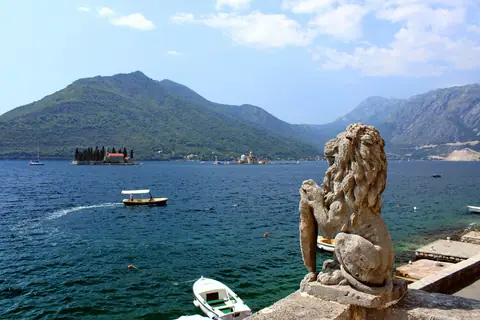
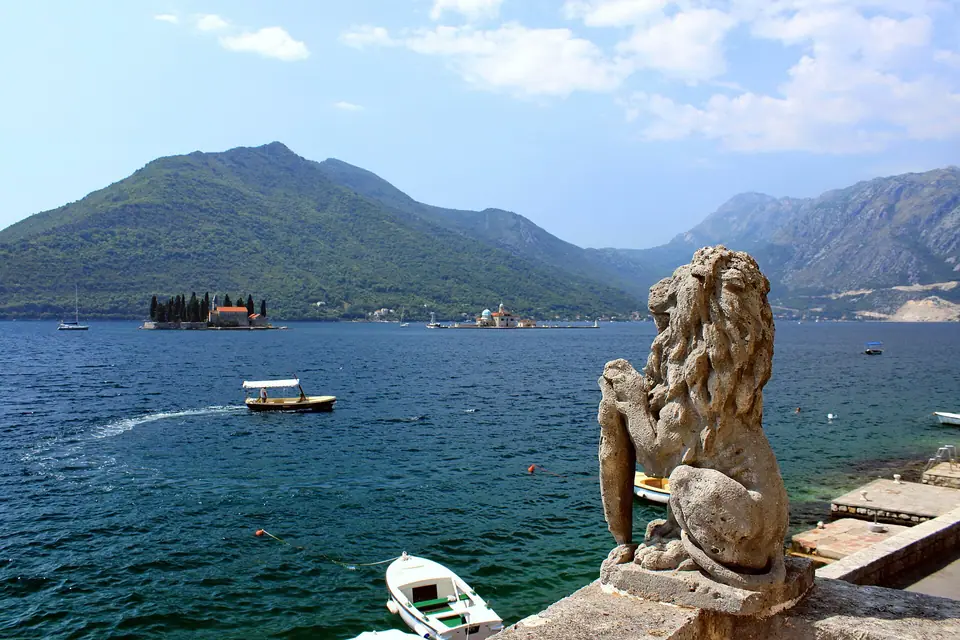
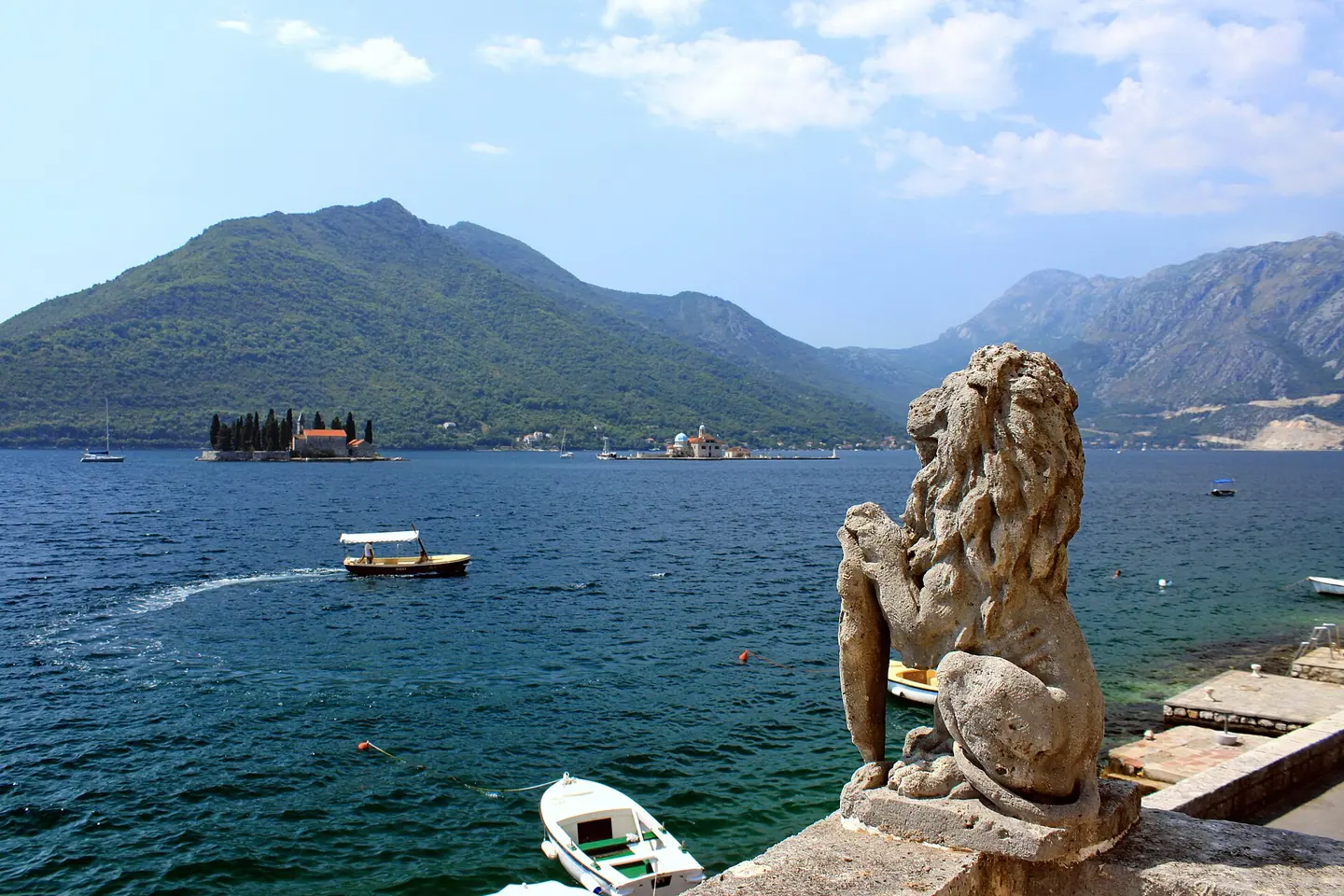
Our Lady of the Rocks
Constructed over centuries by sinking old vessels and rocks around a natural reef, this islet church was completed in 1722. The interior houses sixty-eight oil paintings by Baroque master Tripo Kokolja and thousands of silver votive tablets presented by mariners. An attached museum exhibits maritime instruments and an intricate embroidery created with human hair.
Saint George Island
Located adjacent to Our Lady of the Rocks, this natural islet has housed a Benedictine monastery since the twelfth century. Shaded by ancient cypresses, the island features an old graveyard where prominent noble families of Perast were buried. Although access is restricted, its silhouette remains a defining landmark from the Perast shoreline.
Fortress of the Holy Cross
Occupying a high vantage point behind the town, this fortress played a critical role in repelling an Ottoman assault in 1654. The surviving stone ramparts and gun platforms offer clear sightlines through the Verige Strait towards the open sea. It preserves structural traces from both the Venetian garrison and later Austrian fortifications.
Bronza Palace
Built in the mid-eighteenth century for the Bronza merchant family, this two-storey stone palace stands directly on the eastern waterfront. The architecture retains original Baroque window frames alongside defensive gun slits designed to protect against pirate raids. It illustrates how naval traders balanced domestic refinement with constant defensive vigilance.
Our Lady of the Rocks Island, Risan Roman Mosaics & Lovćen Serpentine
Our Lady of the Rocks (Gospa od Škrpjela artificial bulwark island & Tripo Kokolja paintings), Benedictine Island of St George (Sveti Đorđe), Risan Roman Villa Hypnos Mosaic, Morinj Mills, Verige Strait Viewpoint, Kotor-Lovćen 25-Hairpin Serpentine Road, and Njegoš Mausoleum atop Jezerski Vrh
Our Lady of the Rocks
Constructed over centuries by sailors sinking ballast and seized ships, this man-made islet supports an ornate Roman Catholic sanctuary. Inside, visitors encounter sixty-eight oil paintings by Baroque artist Tripo Kokolja alongside hundreds of silver votive tablets. A neighbouring museum houses an intricate embroidered tapestry crafted with silver, gold and human hair.
Sveti Đorđe Island
Unlike its artificial neighbour, this natural island hosts a twelfth-century Benedictine monastery sheltered beneath tall cypress trees. The island graveyard holds the remains of noble sea captains from Perast, earning it local reputation as the island of the dead. Although closed to casual disembarkation, its forested silhouette remains visible from the shoreline.
Roman Mosaics Risan
Discovered in the ancient Illyrian capital of Rhizon, this archaeological site preserves the remnants of a grand Roman patrician villa. Five distinct mosaic floors remain intact, featuring geometric meanders, floral rosettes and maritime motifs. The central highlight depicts Hypnos, the Greco-Roman god of sleep, represented as a winged youth resting upon a couch.
Church of Saints Peter and Paul in Risan
Rebuilt in the early eighteenth century following the expulsion of Ottoman forces, this parish church stands encircled by mature parkland. The limestone structure features a traditional bell-gable and an interior decorated with fine seventeenth-century icons brought from Venice and Russia. It marks the focal point of civic Orthodox gatherings in the bay.
Gabela Street
This narrow lane represents the principal market artery of historic Risan, flanked by traditional limestone merchant townhouses. The roadway retains unique herringbone paving composed of rounded sea stones and river pebbles. Walking along the route reveals architectural details dating from the Venetian and early Ottoman trading administrations.
Banova Soba
Positioned against the limestone cliffs above Risan, these atmospheric ruins mark the seat of local governors and border administrators. The remaining walls display typical Dalmatian masonry techniques with defensive embrasures facing the gulf. The elevated ground affords panoramic views over the northernmost waters of Kotor Bay.
Gradina Fortress
Perched above the town on an ancient Illyrian acropolis site, this fortress was fortified by Venetians, Ottomans and Austrians. Surviving perimeter walls and gun platforms demonstrate how successive rulers controlled the mountain pass into Herzegovina. The climb rewards hikers with expansive vistas of the inner bay and limestone ridges.
Carine Archaeological Site
Ongoing excavations at Carine have uncovered palace foundations, public squares and minting workshops belonging to Illyrian King Ballaios. Polish and Montenegrin archaeologists have unearthed Hellenistic pottery, amphorae and bronze coins within these coastal layers. The site provides tangible evidence of urban life centuries before Roman consolidation.
Morinj Watermills
The coastal village of Morinj features an extensive network of freshwater springs and forested channels that once powered grain and olive mills. Stone canals, sluice gates and millstones remain preserved within lush laurel and fig groves. Today, several historic mill buildings have been converted into waterside dining establishments.
Verige Strait
Measuring only three hundred metres across, this dramatic choke point derives its name from heavy iron chains once stretched across the water to deter pirate raids. The rocky shoreline offers views of passing vessels entering the inner basins of Kotor and Risan. Watchtowers and historic gun batteries still mark the opposing headlands.
Church of Our Lady of the Angels
Erected directly above the crashing surf at the entrance to the Verige channel, this small sanctuary served both maritime prayer and tactical defence. Loopholed walls surrounding the chapel sheltered lookouts monitoring naval movements into the inner gulf. Sailors traditionally sounded ship horns here when passing safely into Perast waters.
Kotor Serpentine Road
Designed by Austrian engineer Josip Slade in the late nineteenth century, this carriageway links Kotor to the former royal capital of Cetinje. The route ascends the sheer limestone face of Mount Lovćen via twenty-five numbered hairpin bends. From the upper bends, travellers look down across the fjord-like waters of Boka Kotorska.
Kotor Serpentine Bend 25
Serving as the crowning switchback of the carriage pass, Bend 25 sits roughly one thousand metres above sea level. This vantage point reveals the entire inner bay, the Vrmac ridge and the open Adriatic Sea beyond the Luštica peninsula. The stone parapet marks the transition from coastal cliffs to highland pastures.
Krstac Pass
Situated atop the coastal limestone escarpment, Krstac served for centuries as the guarded frontier crossing between Austrian Kotor and the Old Montenegro highlands. A handful of stone cottages, shepherd paths and trail markers converge at this intersection. It forms the northern access point to Lovćen National Park.
Njeguši Village
Settled on a high karst plateau beneath Mount Lovćen, this traditional highland village is famous as the cradle of Montenegrin rulers. Visitors observe stone houses and traditional drying sheds where prosciutto and cheese cure in mountain breezes. The settlement retains its rustic heritage, surrounded by terraced gardens and limestone peaks.
Njegoš Birthplace Museum
This traditional two-storey stone house in Njeguši was the birthplace of Montenegrin ruler, philosopher and poet Petar II Petrović-Njegoš. The ground floor displays agricultural implements and historic weapons, while the upper quarters feature period furnishings and family portraits. It provides rare insight into the austere life of nineteenth-century Montenegrin leaders.
Ivanova Korita
Named after the medieval ruler Ivan Crnojević, this green meadow is framed by dense beech forests and mountain summits. The central clearing features historical stone water troughs fed by natural mountain springs. The area serves as the central crossroads for hiking tracks that traverse the national park.
Jezerski Vrh
Rising to 1,657 metres above sea level, this limestone summit was specifically chosen by Petar II Petrović-Njegoš as his final resting place. The mountain crest affords sweeping views that encompass Durmitor, Lake Skadar and the Adriatic coastline. A stone stairway of 461 steps tunnels through the peak to reach the shrine.
Njegoš Mausoleum
Completed in 1974, this dramatic modernist sanctuary houses the remains of Prince-Bishop Petar II Petrović-Njegoš. Guarded by two massive granite caryatids, the chapel interior features an eight-metre canopy covered with over two hundred thousand gold mosaic tiles. Below lies the crypt containing the simple marble sarcophagus.
Guvernadura Viewpoint
Constructed behind the mausoleum complex, this rounded stone threshing floor style terrace extends out over the precipice. From this high platform, observers trace the entire topography of Montenegro, from jagged inland peaks to coastal waters. The stone parapet offers an ideal vantage for studying the karst terrain of the coastal ranges.
Early Climbs on the San Giovanni Ladder and Bay Boats
You can combine these stops with the district-by-district where-to-stay notes and seasonal planning tables on our Kotor destination page, or explore further regional and neighbourhood guides.