An evocative urban journey through Melbourne's historic gold-rush arcades, street art laneways, grand cultural boulevards, and bohemian inner-city quarters.
From Wurundjeri Birrarung Grounds to 'Marvellous Melbourne' Gold Boom
For tens of thousands of years, the wetlands and bluffs around the Birrarung (Yarra River) were nurtured by the Wurundjeri Woi-wurrung people of the Kulin Nation. European colonisation accelerated in 1835 under pastoral syndicates, prompting surveyor Robert Hoddle to draft the city's rigid, wide-avenued street grid in 1837. Within two decades, the discovery of gold across central Victoria catapulted the riverside settlement into one of the wealthiest metropolitan centres on Earth.
Known internationally as 'Marvellous Melbourne' by the 1880s, the metropolis indulged in lavish Boom Style architecture, erecting soaring civic monuments like the Royal Exhibition Building and grand commercial arcades. The city centre later reinvented itself through its intricate network of nineteenth-century service alleys, turning abandoned service lanes into celebrated cultural conduits of specialty coffee, dynamic public murals, and historic culinary venues.
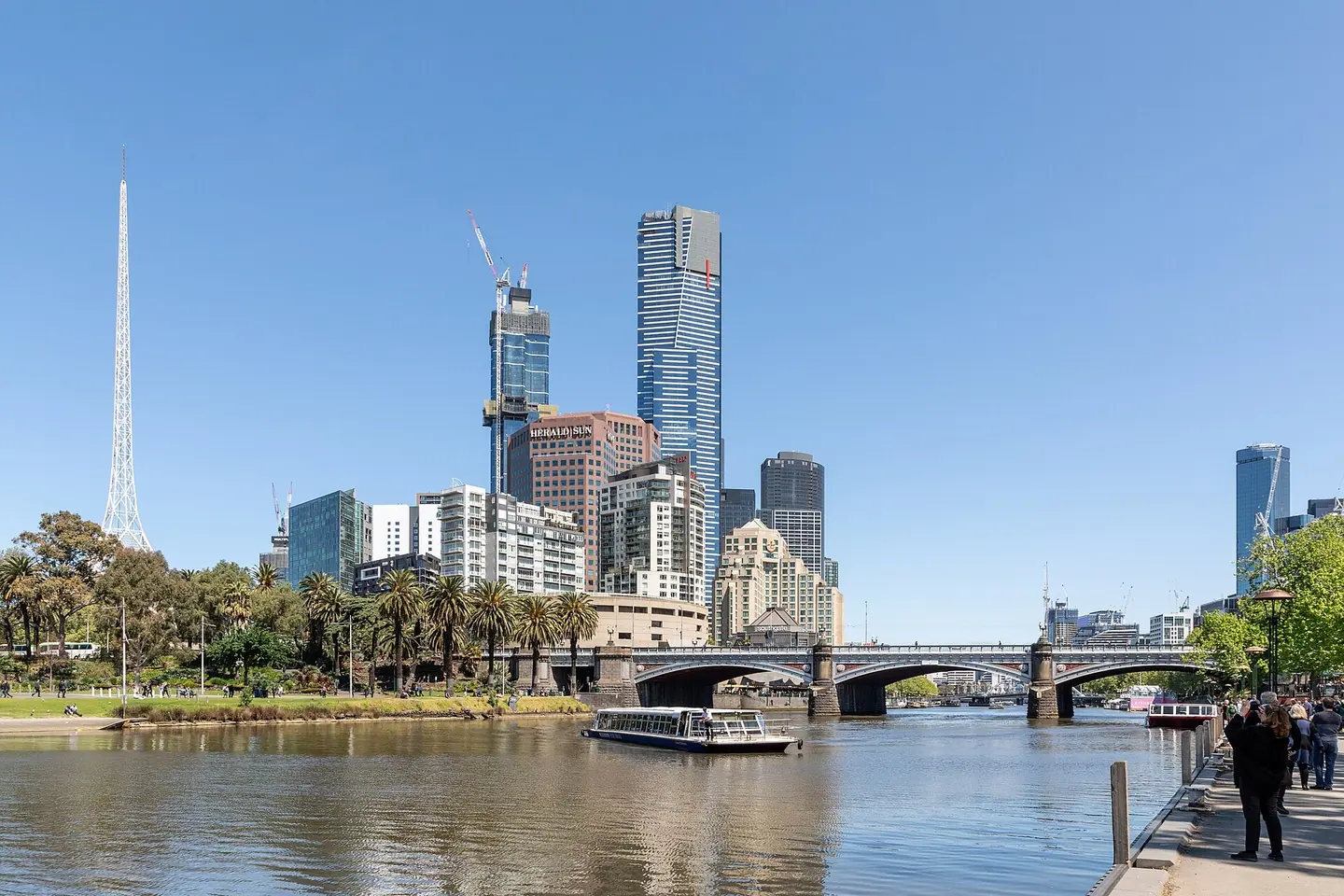
The Hoddle Grid: Historic Arcades, Flinders Street and Blended Laneways
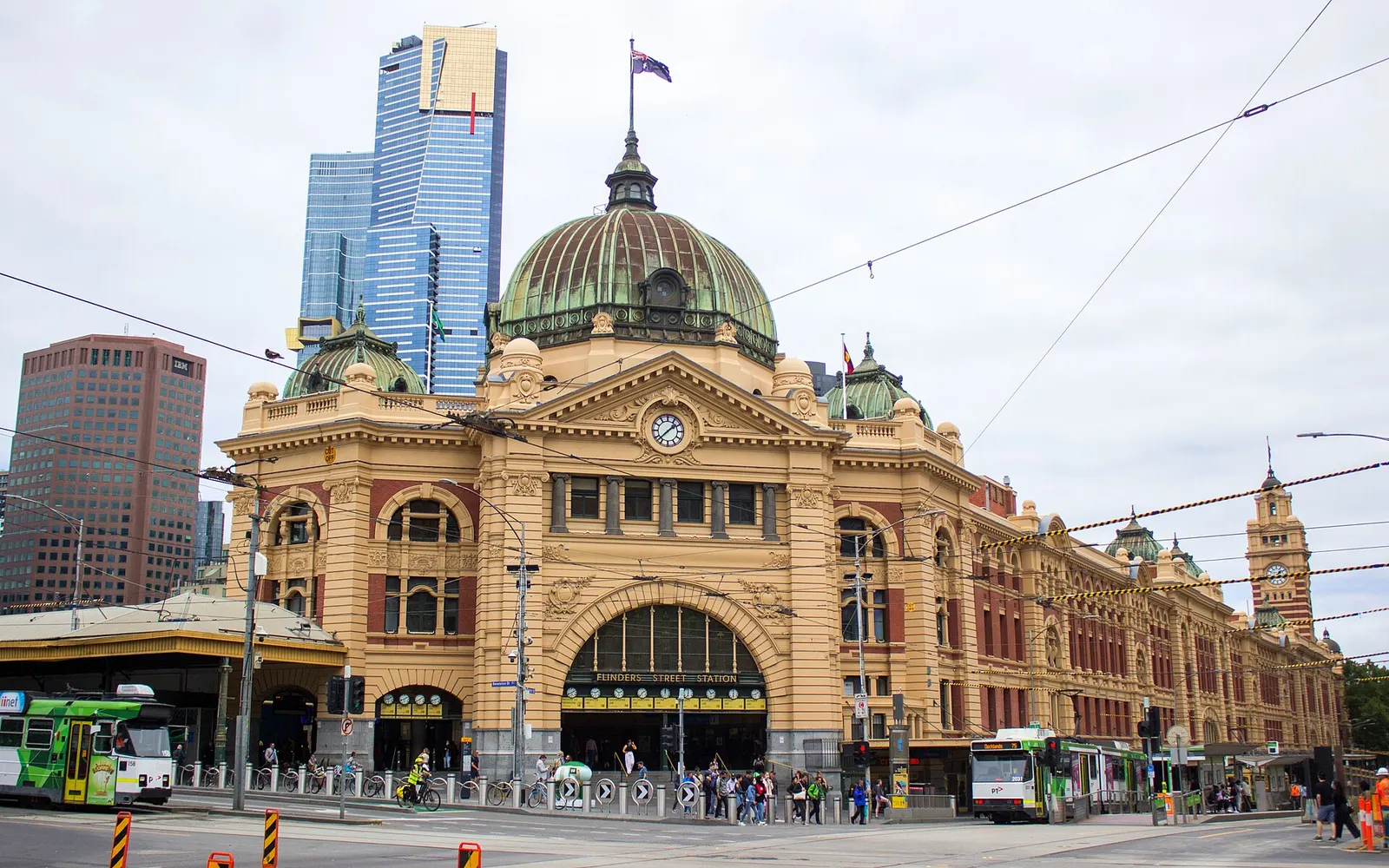
Begin at the copper-domed Flinders Street Station before tracing the retail opulence of Block Arcade and the shifting murals of Hosier Lane.
Flinders Street Railway Station
Completed in 1910, this grand French Renaissance design by James Fawcett and H.P.C. Ashworth anchors the southern edge of the Hoddle Grid. Travellers can observe the prominent yellow facade, copper dome, and row of clocks above the main entrance showing departure times for regional and suburban lines.
St Paul's Cathedral
Designed by English architect William Butterfield, the cathedral opened in 1891 on the site of early colonial church gatherings. Its polychromatic sandstone exterior contrasts with Moorhouse Tower, added in the 1930s. Inside, visitors can view patterned floor tiles, carved woodwork, and an ornate glazed tile reredos behind the high altar.
Hosier Lane
This narrow cobblestone lane features continuously refreshed murals, stencils, and paste-ups by local and international artists. Paved with dark basalt, it reflects Melbourne's bluestone heritage while showcasing street art that reacts to contemporary politics and pop culture. The paint layers have built up noticeably across brick facades over decades.
Forum Melbourne
Constructed in 1929 as the State Theatre, this atmospheric cinema was designed by John Eberson and Bohringer, Taylor & Johnson. The exterior displays minarets and intricate plasterwork, while the interior ceiling recreates a twilight sky complete with twinkling electric stars. Statues of Roman figures stand in alcoves along the auditorium walls.
Athenaeum Theatre
Established in 1839 as the Melbourne Mechanics' Institute, this Collins Street institution played an integral role in early civic education. The present facade, dating from the 1880s, features a statue of the goddess Athena presiding over the classical parapet. It continues to operate as an active theatre and subscription library.
Regent Theatre
Designed by Cedric Ballantyne, this grand theatre opened in 1929 and survived fires, neglect, and demolition threats before reopening in 1996. The building combines Spanish Renaissance and French Renaissance motifs across its monumental foyer and auditorium. Visitors can admire the vast crystal chandelier, gilded plaster cornices, and marble staircases.
Melbourne Town Hall
Completed in 1870 to designs by Joseph Reed, the town hall is characterised by its mansard roofs and classical portico on Swanston Street. Prince Alfred Tower rises above the complex, which contains a cavernous main auditorium. The hall houses a massive grand pipe organ originally installed in 1929.
Manchester Unity Building
Erected during the Great Depression in 1932 by architect Marcus Barlow, this commercial landmark rises on the corner of Collins and Swanston Streets. The buff-coloured terracotta facade terminates in a stepped Gothic tower. Inside, copper-faced escalators, polished marble, and decorative friezes narrate the fraternal society's benevolent mission.
Block Arcade
Inspired by the Galleria Vittorio Emanuele II in Milan, this L-shaped arcade opened in 1892 under the direction of architect Charles Webb. Its glass canopy illuminates detailed mosaic tile floors, carved stone archways, and traditional brass-trimmed shopfronts. Heritage tea rooms and boutique shops preserve the nineteenth-century promenade tradition.
Royal Arcade
Charles Webb designed this English-style arcade, which opened in 1870 between Bourke, Little Collins, and Elizabeth Streets. High glass skylights illuminate arched bays and decorative plaster coats of arms. At the southern mezzanine, mechanised figures of mythical giants Gog and Magog strike bells on the hour flanking Gaunt's clock.
General Post Office
Constructed in stages between 1859 and 1907, this prominent building at the corner of Bourke and Elizabeth Streets was designed largely by A.E. Johnson. Classical tiers of Doric, Ionic, and Corinthian columns ascend to a clock tower. Following a major fire in 2001, the interior was adapted into retail spaces.
State Library Victoria
Founded in 1854, the library complex occupies an entire city block fronted by bronze statues and wide lawns. Its centrepiece is the La Trobe Reading Room, an octagonal space finished in 1913 under a reinforced concrete dome. Tiered balconies, heritage desks, and radial book stacks evoke the scholarly ambitions of colonial Victoria.
Old Melbourne Gaol
Operating from 1842 to 1929, this sombre bluestone prison was the site of 133 executions, including that of bushranger Ned Kelly in 1880. The surviving cellblock features three tiers of narrow stone cells surrounding a central catwalk. Visitors can view plaster death masks and original execution apparatus displayed throughout the corridors.
Old Treasury Building
Built between 1858 and 1862 by nineteen-year-old architect J.J. Clark, this palace-like structure stored bullion extracted from the Victorian gold fields. The sandstone facade stands at the top of Collins Street, elevated on a rusticated bluestone base. Subterranean brick vaults that once held millions in gold bullion now house archival exhibitions.
Parliament House
Begun in 1856 to plans by Peter Kerr and John Knight, this grand civic building served as Australia's federal parliament from 1901 to 1927. The exterior features a monumental colonnade of freestone columns perched above wide granite steps. The Legislative Assembly and Council chambers boast gold-leaf detailing and red and green velvet appointments.
Princess Theatre
Architect William Pitt designed this Spring Street theatre in 1886, drawing heavily on French Second Empire styles. Its mansard roofs, copper figures, and ornate plaster relief work make it a notable theatrical landmark. It was celebrated for its innovative sliding ceiling and copper-domed fly tower, which provided cooling ventilation during summer seasons.
St Patrick's Cathedral
Dedicated in 1897 and completed in 1939, this cathedral designed by William Wardell is one of the largest Gothic Revival churches in the world. Built from dark local bluestone and freestone dressings, it features three tall spires rising above the eastern edge of the city. The interior houses flying buttresses, stained glass, and an expansive ambulatory.
Scots' Church
Completed in 1874 by Joseph Reed, this church features a soaring spire that was once the tallest structure on Melbourne's skyline. Built of Barrabool sandstone and brown freestone, the interior displays timber hammerbeam trusses and fine stained glass windows. It remains an enduring symbol of Scottish immigration to nineteenth-century Victoria.
Melbourne City Baths
Opened in 1904, this triangular building was designed by J.J. Clark to provide sanitary bathing facilities for inner-city residents. The structure exemplifies the Queen Anne style through contrasting red brickwork, cream banding, and domed corner turrets. It continues to house Melbourne's oldest operating swimming pool alongside gymnasium amenities.
Customs House
Facing the original turning basin of the Yarra River, this edifice was constructed in phases between 1858 and 1876. Its formal portico and Ionic pilasters project colonial administrative authority from Melbourne's maritime era. The Long Room serves as the centrepiece of the interior, today occupied by exhibitions charting cultural arrivals to Australia.
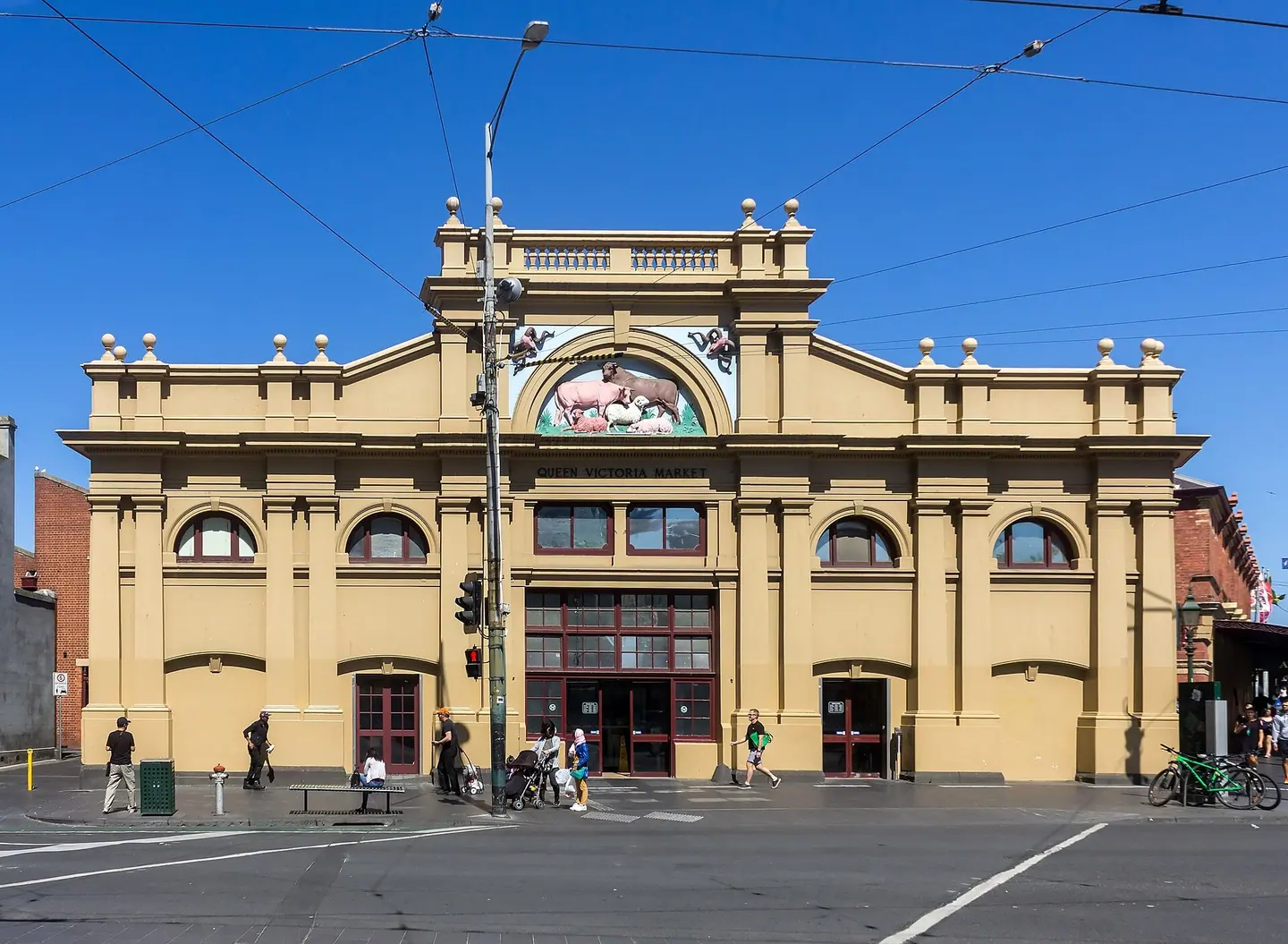
East Melbourne and Spring Street: Parliament, Cathedrals and Treasury Gardens
Wander the elevated political and ecclesiastical spine framed by the Parliament of Victoria and the soaring neo-Gothic towers of St Patrick's Cathedral.
Parliament House
Completed in stages from 1856, this neoclassical landmark served as the temporary federal parliament during Australia's early nationhood. The imposing Roman Doric colonnade faces Bourke Street, while inside, the Legislative Council chamber features gold leaf detailing, encaustic tiled floors and portraits of former premiers.
Old Treasury Building
Architect J.J. Clark designed this palatial sandstone palace in 1862 to store the colony's vast bullion reserves. The exterior exhibits classical proportions with arcaded balconies, while the basement vaults preserve original iron bullion cages alongside museum exhibitions exploring nineteenth-century civic life.
St Patrick's Cathedral
Consecrated in 1897, William Wardell's masterwork features three spires clad in sandstone that rise above the eastern city edge. Local bluestone gives the outer walls a sombre hue, contrasting with the rich stained glass and expansive timber ceilings within the cavernous nave.
Princess Theatre
Opened in 1886, William Pitt designed this ornate theatre with Second Empire architectural flourishes, crowning it with a copper dome and a bronze statue of Spring. Inside, an elaborate marble staircase leads to an opulent auditorium featuring a historic sliding ceiling once opened on balmy nights.
Treasury Gardens
Created in the mid-nineteenth century, these formal public grounds provide green respite adjacent to the state government quarter. Grand avenues of English elms frame sloping lawns, historic monuments and an ornamental pond that supports native waterbirds.
Fitzroy Gardens
Established in 1857 by Clement Hodgkinson, these gardens boast walking paths laid out to echo the British Union flag. Stately elms, sweeping lawns and historic garden structures define the landscape, which sits immediately east of the city grid.
Cooks' Cottage
Built in 1755 in Yorkshire by the parents of Captain James Cook, this stone cottage was dismantled brick by brick and reassembled here in 1934. Visitors can view period domestic furnishings, historical herb plots and commemorative statues set within the fenced grounds.
Fairies' Tree
Sculptor Ola Cohn spent several years in the early 1930s carving whimsical woodland creatures and mythical figures into this ancient red gum stump. The artwork remains protected behind decorative fencing and offers a tangible example of public art from the interwar era.
Conservatory, Fitzroy Gardens
Erected in 1930, this stuccoed glasshouse features arched entryways and a terracotta-tiled parapet reflective of Spanish Mission design. Inside, the central hall regularly hosts seasonal flower arrangements, surrounding a classic fountain with hydrangeas, begonias and tropical plants.
The Hotel Windsor
Dating to 1883, Charles Webb designed this grand hostelry with twin mansard towers, elaborate stucco work and a sweeping portico. Its corridors witnessed the drafting of the Australian constitution in 1898, preserving heritage reception rooms and traditional afternoon tea salons.
Alcaston House
Designed by architectural firm A. and K. Henderson in 1929, this refined corner block displays classical masonry details and terracotta balconies. Constructed on the site of early medical consulting rooms, it served as an early Melbourne luxury apartment building for professionals.
Victorian Arts Centre
Designed by Roy Grounds and opened in 1982, this riverside complex features a dramatic geometric steel spire that punctuates the city skyline. Below the surface, expansive theatre auditoriums and rehearsal spaces host state opera, ballet and theatrical productions throughout the year.
Synagogue, East Melbourne Hebrew Congregation
Built in 1877 to designs by Crouche and Wilson, this synagogue presents an imposing façade with paired round-headed windows and twin octagonal towers. The interior retains its cedar bimah, brass chandeliers and a gilded dome resting upon Corinthian columns.
St Peter's Church, Eastern Hill
Founded in 1846, this is the oldest surviving Anglican church within the original city grid. Constructed from rough-hewn bluestone with a Gothic belfry, the interior features rich Anglo-Catholic liturgical furnishings, timber roof trusses and historic stained glass windows.
Robert Burns Memorial
Unveiled in 1904, this bronze figure by sculptor George Anderson Lawson stands atop a polished granite pedestal in Treasury Gardens. Commissioned by Melbourne's Scottish community, the monument features bas-relief plaques depicting scenes from Burns's celebrated poems.
Gordon Reserve
Bounded by Spring Street and MacArthur Street, this modest reserve contains the bronze memorial to General Charles Gordon, erected in 1887. Mature palms, shade trees and gravel pathways provide an open visual buffer fronting the political quarter.
Kardinia House
Dating to the late nineteenth-century boom, this fine residence demonstrates the ornate cast-iron lace and masonry craftsmanship typical of East Melbourne's leafy streets. Elegant double-storey verandas and pedimented parapets illustrate how early merchants lived outside the commercial district.
Bishopscourt
Constructed in 1853 from bluestone, Bishopscourt served briefly as the residence of the Victorian governor before returning to the Anglican archbishop. The house sits among tranquil private gardens, presenting battlements, pointed-arch windows and an asymmetric footprint.
Cliveden Mansions
Originally built for pastoralist William Clarke in 1887, this grand Renaissance Revival townhouse was the centre of high society in colonial Victoria. Though largely rebuilt as apartments, preserved stone salvage and historical markers document the site's architectural and political pedigree.
Old Melbourne Gaol
Operating from 1842 until 1929, this severe bluestone penitentiary housed bushranger Ned Kelly before his execution in 1880. Visitors can explore the central three-tier cellblock, viewing death masks, historic punishment cells and interpretive records detailing colonial criminal justice.
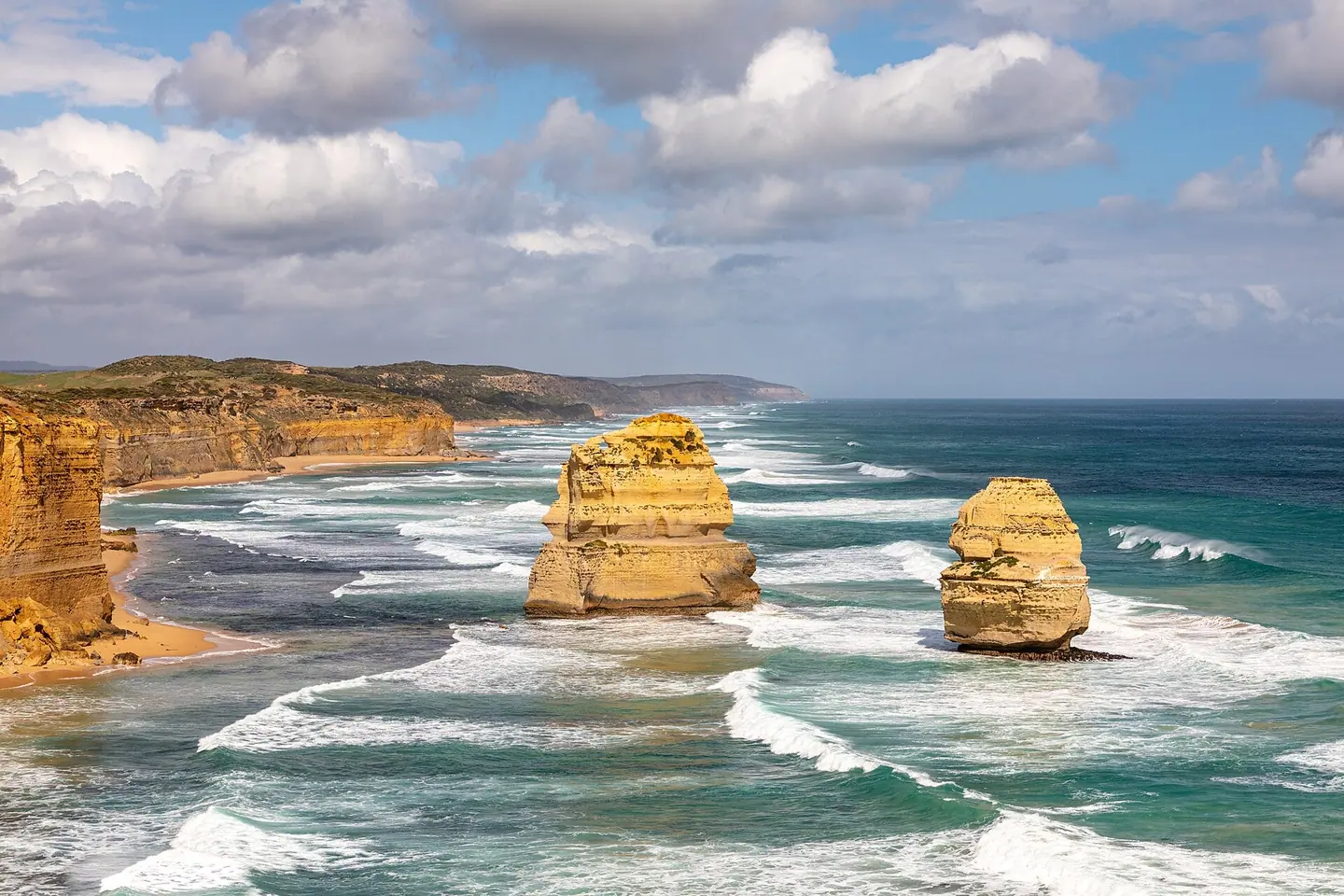
Fitzroy and Carlton: Victorian Terraces, Italian Heritage and Exhibition Gardens
Traverse the verdant Carlton Gardens before uncovering the vintage emporiums, bohemian pubs, and historic worker cottages of Fitzroy.
Royal Exhibition Building
Completed in 1880 for the Melbourne International Exhibition, this structure blends Byzantine, Romanesque and Renaissance styles under a soaring dome. It hosted Australia's first Federal Parliament in 1901. Visitors can examine the restored Great Hall, timber fan-trussed galleries, and elaborate stencilled interior murals that reflect Victorian imperial ambition.
Carlton Gardens
Designed by architect Joseph Reed and curator Edward La Trobe Bateman, these gardens feature classic Victorian landscaping alongside the Exhibition Building. Grand avenues of mature English elms frame the Hochgurtel Fountain, crafted for the 1880 World Fair. The grounds contain ornate bronze fixtures, ornamental parterres, and expansive nineteenth-century specimen trees.
Melbourne Museum
Opened in 2000, this modernist complex designed by Denton Corker Marshall sits directly opposite the Victorian Exhibition Building. The facility preserves significant regional history, from First Peoples culture in the Bunjilaka Aboriginal Cultural Centre to complete paleontological specimens. An enclosed living Forest Gallery highlights the ecology and climate of the Victorian ranges.
Fitzroy Town Hall
Designed by George Johnson and opened in stages from 1873, this building exemplifies the Victorian Free Classical style. The monumental Corinthian portico and clock tower dominate Napier Street, reflecting the prosperity of Melbourne's earliest declared suburb. Today the complex contains civic chambers, community spaces, and an intact nineteenth-century ballroom.
Trades Hall, Melbourne
Established in 1859 and expanded by architect Joseph Reed in classical revival style, this complex is often called the world's oldest trade union building. The classical stone facade honours the pioneering local victory for the eight-hour working day. Within, historic meeting rooms display painted union banners, polished timber furnishings, and trade union archives.
St Patrick's Hall
Erected in the mid-nineteenth century, this modest bluestone hall represents early Catholic community life in Fitzroy. The pointed arches and rustic stone walls typify simple early colonial ecclesiastical architecture. Located near historic parish boundaries, it served as both a primary classroom and a central venue for parish societies and charitable groups.
Sacred Heart Church, Carlton
Consecrated in 1899, this red-brick church incorporates Romanesque motifs and decorative Italianate finishes. It became a spiritual anchor for post-war southern European migrants arriving throughout the mid-twentieth century. The nave features traditional statuary, stained-glass panels, and memorial tablets that illustrate the cultural transformation of Carlton into Melbourne's primary Little Italy.
Puglia House
Situated along Lygon Street, this modest commercial facade stands as a marker of the post-Second World War migrant community. Italian business owners transformed these standard Victorian terrace shops into cafes, delicatessens, and import groceries. The streetscape retains intact upper storeys with cast-iron lacework, alongside street-level dining rooms that pioneered Melbourne's espresso culture.
Brunswick Street Oval
Operating since the 1880s, this sports ground served as the home base for the Fitzroy Football Club until 1966. Its centerpiece is the 1893 grandstand, an ornate timber structure with cast-iron brackets and turned balusters. The surrounding Edinburgh Gardens provide a classic Victorian park framework of palm trees, rotunda gazebos, and bluestone gutters.
Church of All Nations, Carlton
Constructed in 1870 as the Carlton Wesleyan Methodist Church, this bluestone edifice exhibits French Gothic influences with a prominent front rose window. Designed by Charles Webb, it adapted its ministry during the mid-twentieth century to serve non-English-speaking migrants. The complex retains carved timber pews and commemorative plaques honouring inner-city social outreach programs.
Melbourne General Cemetery
Opened in 1853, this sprawling cemetery reflects Victorian attitudes toward death and memorialisation across denominational zones. The grounds feature elaborate gothic vaults, classical mausoleums, and the historic Gatehouse lodge. Notable burials include Prime Minister Robert Menzies, explorers Burke and Wills, and numerous municipal leaders who directed early Melbourne's development.
Princes Park, Melbourne
Reserved as public open space in 1873, Princes Park forms an expansive green wedge along Carlton's northern boundary. The grounds contain sports fields, walking paths lined with mature Moreton Bay figs, and the historic Carlton Football Club ground. The venue remains an important landmark in the development of early professional Australian sports.
La Mama Theatre
Housed within an 1883 two-storey brick building originally used as an ammunitions factory and printing shop, La Mama opened in 1967. It played a defining role in developing Australian dramatic writing and experimental performance. After a devastating fire in 2018, the structure was meticulously restored using heritage methods to preserve its raw interior character.
MacRobertson Steam Confectionery Works
Built across several blocks by confectioner Macpherson Robertson between the 1880s and 1920s, this red-brick factory complex defines north Fitzroy's industrial heritage. Known for producing Freddo Frogs and Cherry Ripes, the compound features distinctive white-painted typography on exposed masonry. The buildings have since been converted into residential lofts while keeping their saw-tooth rooflines.
The Champion Hotel, Fitzroy
Constructed in the late nineteenth century at a prominent Fitzroy intersection, this hotel displays classic corner-pub architecture. It features decorative stucco work, arched sash windows, and an entrance positioned directly across the corner street angle. Such establishments functioned as neighbourhood community hubs, meeting rooms, and workers' social clubs during Melbourne's industrial expansion.
Former Fitzroy Post Office
Erected in the 1880s, this classical government building operated as Fitzroy's central postal and telegraph depot. Designed by the Victorian Public Works Department, the facade exhibits balanced arched windows, rusticated stonework, and a deep ornamental cornice. It sits within an intact municipal precinct alongside the neighbouring police station and courthouse.
Royal Terrace, Fitzroy
Constructed between 1853 and 1858 along Nicholson Street, Royal Terrace is among Melbourne's oldest surviving multi-storey terrace rows. Built from rough-hewn bluestone rather than later brick and stucco, the three-storey structures feature continuous cantilevered balconies with cast-iron balustrades. The design reflects early colonial Georgian proportions adapted to the gold-rush boom.
Cable Tram Engine House
Completed in the 1880s, this substantial brick building housed the steam engines and winding gear that drove the Johnston Street cable tram line. The facade displays robust Romanesque arches, polychromatic brickwork, and tall industrial window openings. It represents the engineering network that connected Melbourne's inner suburbs before the widespread introduction of electric transit.
Dan O'Connell Hotel
Trading since the mid-nineteenth century, this prominent corner venue stands as an enduring emblem of the local Irish diaspora in Carlton. The exterior displays painted render, decorative parapets, and traditional arched hotel doorways. For generations it served as an informal social centre for local workers, hosting music sessions, political rallies, and community clubs.
St Mark's Church, Fitzroy
Designed by pioneer architect James Blackburn and founded in 1853, St Mark's is the oldest standing church building in Fitzroy. The pointed arches, buttressed bluestone walls, and timber roof trusses demonstrate early colonial ecclesiastical engineering. Surrounding the church are historic parish outbuildings and an intact nineteenth-century bluestone parsonage.
Southbank and the Arts Precinct: Riverside Promenades and Cultural Galleries
Cross Princes Bridge into a dynamic cultural corridor defined by the National Gallery of Victoria and sprawling open-air riverside dining.
Princes Bridge
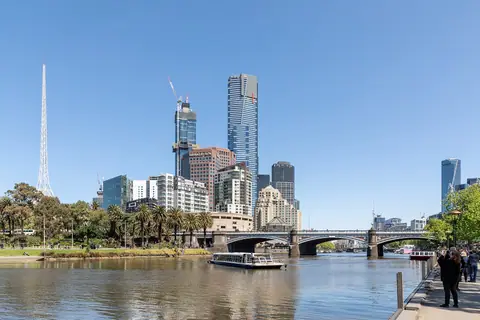
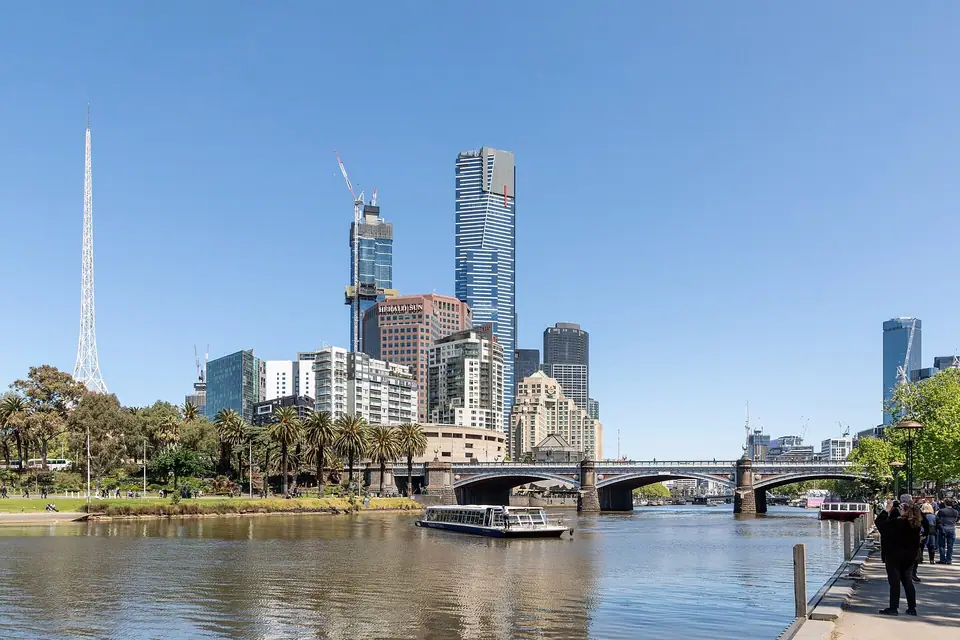
Designed by engineer John Grainger, this three-span arch bridge connects the historic grid directly to the cultural boulevard of St Kilda Road. Built from solid bluestone and cast iron, it features ornate Victorian lampposts and carved heraldic crests. It offers clear sightlines along the Yarra River and serves as the northern threshold of Southbank.
National Gallery of Victoria
The NGV International building opened in 1968, designed by modern architect Roy Grounds with a striking bluestone facade and a continuous defensive moat. Visitors pass through a glass water wall into the Great Hall, which features a vast coloured glass ceiling conceived by Leonard French. The permanent galleries house significant collections of European, Asian, and international decorative art.
Arts Centre Melbourne
Constructed beneath a soaring 162-metre steel lattice spire, this major cultural hub incorporates the State Theatre, Playhouse, and Fairfax Studio. The complex extends deep underground beneath the riverbank to accommodate high-capacity auditoriums and orchestra pits. The interiors, styled by John Truscott, display rich brass accents, red plush fabrics, and curated collections of Australian theatrical memorabilia.
Hamer Hall
Originally known as the Melbourne Concert Hall, this cylindrical concrete venue serves as the primary home of the Melbourne Symphony Orchestra. The subterranean auditorium features hand-finished plaster walls designed to mimic the strata of subterranean rock formations. A redeveloped riverside foyer connects the auditorium directly to the lower promenade of Southbank.
Southbank Promenade
Transformed during the early 1990s from an industrial wharf area into a broad riverside promenade, this corridor stretches west towards the casino complex. Lined with native red gums, public sculptures, and outdoor terraced dining, it provides views of the central business district skyline. The route hosts street performers, weekend craft gatherings, and public art installations.
Eureka Tower
Completed in 2006, this 297-metre skyscraper was designed by Fender Katsalidis Architects to commemorate the Eureka Stockade. The building incorporates blue glass to represent the rebel flag, thin red stripes symbolising spilled blood, and gold-plated glass across the top floors representing the goldfields. An enclosed observation deck on the 88th floor overlooks Port Phillip Bay.
Australian Centre for Contemporary Art
Housed in a distinctive weathering steel sculpture-building designed by Wood Marsh, this non-collecting kunsthalle opened in 2002. The monumental geometric exterior features no windows, creating flexible cavernous galleries suited for large-scale site-specific commissions. Outside stands Ron Robertson-Swann's controversial yellow painted steel sculpture, Vault, originally removed from City Square.
Malthouse Theatre
Occupying the former Castlemaine Brewery maltings built in 1892, this red-brick industrial landmark was converted into a performing arts centre in 1990. The interior preserves original cast-iron columns, exposed timber trusses, and heritage brickwork across several performance spaces. It functions as a venue for independent Australian theatre companies and fringe performance seasons.
Sidney Myer Music Bowl
Opened in 1959, this pioneering tensile sound shell was designed by Yuncken, Freeman Brothers, Griffiths & Simpson using aircraft cables and aluminium sheeting. The aerodynamic structure covers thousands of reserved seats while sloping lawns accommodate massive crowds for open-air concerts. It holds historical significance as one of Australia's earliest major suspended-canopy architectural projects.
Queen Victoria Gardens
Established in the late Victorian period, these landscaped gardens across from the Arts Centre feature sweeping lawns, ornamental ponds, and mature European elms. The centrepiece is an active floral clock planted with over seven thousand seasonal seedlings, alongside a marble statue of Queen Victoria sculpted by James White. The park also hosts temporary architectural pavilions each summer.
The Arts Centre Spire
Replacing Roy Grounds' original, shorter copper design in 1996, the current spire rises to a height of 162 metres above St Kilda Road. Conceived as a stylised interpretation of a ballerina's tutu, the open framework is fitted with thousands of programmable lights. It serves as a visual beacon across the Arts Precinct day and night.
Evan Walker Bridge
Named after the Victorian planning minister who championed the urban revitalisation of Southbank, this curved pedestrian bridge opened in 1992. The structure crosses the Yarra River directly from Flinders Street Station platforms to the Southbank Promenade below. Mid-river pylons support a small commercial hospitality pavilion built right above the flowing water.
Victoria Barracks
Constructed by stonemasons using locally quarried basalt, this substantial military fortress exemplifies British colonial administration architecture. It served as the central headquarters for Australia's Department of Defence throughout both World Wars and during the early years of the Cold War. The enclosed parade ground and symmetrical classical wings remain an imposing presence along St Kilda Road.
Kings Domain
Bordering the Arts Precinct to the east, this parcel of parkland was reserved in 1854 to protect the natural river landscape. The lawns are dotted with exotic trees, civic memorials, and statues of nineteenth-century governors and monarchs. It seamlessly links the city riverbank with the entrance to the Royal Botanic Gardens.
Sandridge Bridge
Constructed in 1888 for the Melbourne and Hobson's Bay Railway Company, this heavy steel truss bridge once carried suburban steam trains into the central terminal. In 2006 it was restored as a footbridge decorated with 'The Travellers', an installation of nine large-scale steel figures created by Nadim Karam. The walkway displays plaques detailing the global migration waves that built Victoria.
Testing Grounds
Occupying a formerly vacant parcel behind the cultural boulevard, this outdoor space was repurposed to offer public infrastructure for creative experimentation. Simple timber platforms, shipping containers, and clear canopies provide studio space and exhibition areas for emerging artists. The site functions as a community hub between the institutional galleries and the residential high-rises.
Southbank Spillway and Queens Bridge
Erected in 1889 to replace a wooden predecessors, this wrought-iron plate girder bridge spans the exact site of the historic Yarra Falls. These natural basalt rapids historically marked the tidal limit of the river, preventing saltwater from contaminating the town's early drinking water before they were blasted away. Today, it accommodates trams and vehicles while connecting the riverbank promenades.
State Theatre
Located entirely below street level inside the main Arts Centre complex, this auditorium seats over two thousand patrons. The interior is decorated with plush red velvet seating, gold leaf, and large-scale painted murals created by Australian artist Jeffrey Smart. It houses one of the largest stages in the Southern Hemisphere, supporting seasons by Opera Australia and The Australian Ballet.
Queensbridge Square
Situated at the western end of the promenade, this triangular civic space functions as a major junction for cyclists and pedestrians crossing between Southbank and the central city. The square incorporates a wide stepped amphitheatre and the historic Sandridge Bridge abutment. It frequently hosts community rallies, pop-up markets, and outdoor public art displays.
Vault
Created by Ron Robertson-Swann in 1980, this bold, geometric abstract sculpture consists of fabricated steel plates coated in bright yellow enamel paint. Derisively dubbed 'The Yellow Peril' when first unveiled in the city centre, it became the focal point of an intense debate regarding modern public art in Victoria. It was eventually relocated to the gravel forecourt beside the Australian Centre for Contemporary Art.
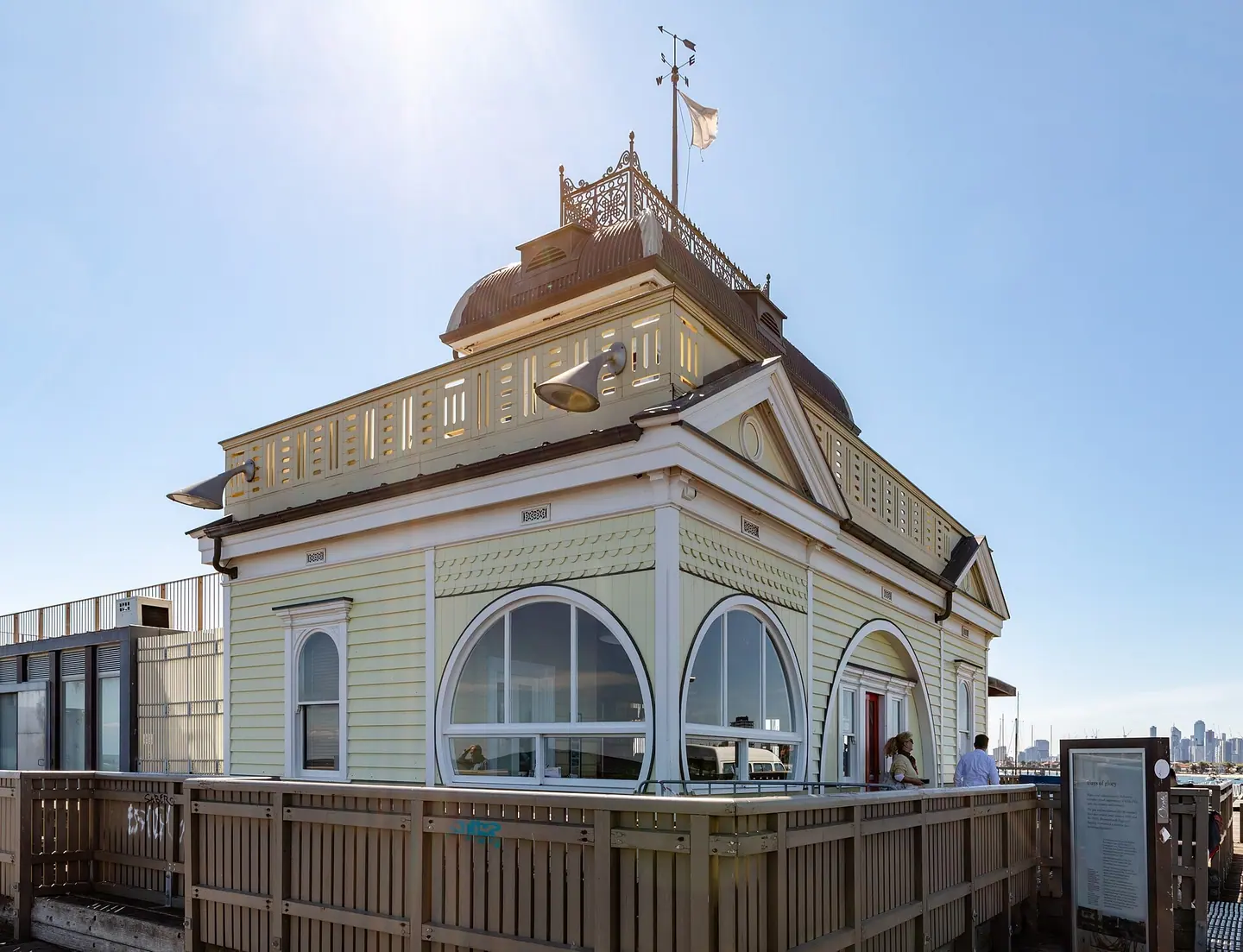
Royal Botanic Gardens and Kings Domain: Memorials and Native Flora
Ascend along the Tan Track past the neoclassical Shrine of Remembrance into sweeping nineteenth-century botanical gardens bordering the Yarra.
Shrine of Remembrance
Designed by architects Phillip Hudson and James Wardrop, this massive stone structure takes inspiration from the ancient Mausoleum at Halicarnassus. The sanctuary features an internal ambulatory, classical colonnades, and an inscribed stone sunken into the floor. Visitors can ascend to the external balcony for broad views over the surrounding parklands towards the northern city skyline.
Royal Botanic Gardens Victoria
Established in 1846, these sprawling grounds were shaped largely under the direction of botanist Ferdinand von Mueller and landscape designer William Guilfoyle. The estate features rolling lawns, shaded paths, and a collection of over eight thousand plant species from around the globe. Meandering trails lead past mature heritage trees, themed plant beds, and tranquil ornamental lakes.
Government House, Melbourne
Constructed in the 1870s to designs by William Wardell, this white stuccoed mansion reflects the extravagant prosperity of Victoria's gold rush era. A towering belvedere rises above the classical facade, which was modelled closely on Queen Victoria's Osborne House on the Isle of Wight. The surrounding private grounds preserve specimen trees and formal carriage drives adjoining the public domain.
Sidney Myer Music Bowl
Opened in 1959, this pioneering piece of civic architecture features an expansive canopy suspended by steel cables over a natural grass slope. Engineered by modernists Barry Patten and Yuncken Freeman, it was designed to stage large outdoor orchestral concerts for the public. The shell provides a sheltered performance stage against the leafy background of Kings Domain.
Guilfoyle's Volcano
Constructed in 1876 by garden director William Guilfoyle, this elevated reservoir originally stored water pumped from the Yarra River for irrigation. Following a comprehensive restoration, the conical structure now features boardwalks winding through extensive plantings of arid-climate succulents and cactuses. The rim offers clear viewing platforms overlooking the southeastern quadrant of the botanic grounds.
National Herbarium of Victoria
Founded in 1853 by Ferdinand von Mueller, this scientific institution preserves more than one million dried botanical specimens. The present brick building dates to 1934, funded through a philanthropic gift to mark the centenary of Victorian settlement. Today it serves as an active research centre for plant taxonomy, featuring an adjoining public botanical library.
La Trobe's Cottage
Imported from England in pieces and assembled in 1839, this compact cottage served as the home of Superintendent Charles Joseph La Trobe. Relocated to Kings Domain in the 1960s, it survives as one of the few remaining examples of early colonial prefabricated architecture. The interior displays original furnishings, documents, and domestic artefacts from Melbourne's foundation period.
King George V Memorial, Melbourne
Erected in the late 1930s following the death of King George V, this formal monument comprises a classical bronze statue set against a pale granite pylon. Sculptor William Leslie Bowles designed the work with carved relief panels celebrating civic service and imperial ties. It occupies an elevated paved plaza positioned directly opposite the western entrance to Government House.
Pioneer Women's Memorial Garden
Designed by landscape architect Hugh Linaker in 1934, this peaceful garden features a formal sunken layout lined with low hedges and flowerbeds. At the centre, a tiled canal leads towards a bronze statuette sculpted by Charles Web Gilbert. Shaded by mature trees, the enclave was financed through penny subscriptions raised by the women of Victoria.
Tan Track
Circling the perimeter of the Royal Botanic Gardens and Kings Domain, this three-point-eight kilometre path was originally surfaced with tanbark for equestrian exercise. Now paved in gravel, it forms Melbourne's most famous running course, tracking gentle gradients along Anderson Street and Birdwood Avenue. Memorial trees, historic lampposts, and heritage gates border the entire loop.
Ornamental Lake, Melbourne
Formed from natural riverside billabongs, this expansive water body acts as the focal centrepiece of William Guilfoyle's garden master plan. Densely planted islands provide refuge for native waterbirds, including black swans, egrets, and cormorants. Shaded walking paths encircle the perimeter, leading past weeping willows, bamboo thickets, and traditional wooden lakeside pavilions.
Fern Gully, Melbourne
Re-creating the lush ecology of south-eastern Australian rainforest valleys, this sunken gully is sheltered beneath a thick canopy of broadleaf trees. An elevated timber boardwalk guides travellers over flowing streams and beneath tall, mature Dicksonia antarctica tree ferns. Modern misting systems maintain the cool microclimate required by the delicate epiphytes, mosses, and understorey plants.
Melbourne Observatory
Founded in 1861, this heritage astronomical facility served for decades as the scientific centre for timekeeping, meteorology, and celestial charting in Victoria. The complex retains its original brick pavilions, revolving iron domes, and heavy stone piers that once anchored substantial telescopes. Today, guided astronomy evenings and educational visits are hosted within the historic grounds.
Marquis of Linlithgow Monument
Commissioned to commemorate John Adrian Louis Hope, the seventh Earl of Hopetoun, this dynamic equestrian monument was sculpted by British artist William Birnie Rhind. Unveiled in 1911, the bronze figure portrays the governor astride his mount on a high granite pedestal adorned with decorative crests. It commands an elevated terrace at the northern entrance to Kings Domain.
Queen Victoria Monument, Melbourne
Unveiled in 1907 within Queen Victoria Gardens, this monumental civic work was sculpted by James White out of white Carrara marble and Harcourt granite. The monarch is depicted in regal attire, flanked by allegorical bronze figures representing Justice, Progress, History, and Wisdom. Broad lawns and formal flowerbeds surround the elevated base, facing St Kilda Road.
Floral Clock, Melbourne
Donated to the city in 1966 by a consortium of Swiss watchmakers, this functioning timepiece features hands driven by an underground mechanism. The sloped face is planted with thousands of compact flowering annuals that are replaced regularly to produce crisp seasonal patterns. It stands prominently on a lawn slope opposite the Victorian Arts Centre precinct.
Kings Domain Resting Place
Established in 1985, this grassy memorial mound marks the reburial site of ancestral remains belonging to thirty-eight Aboriginal people from throughout Victoria. The repatriated remains had previously been held in museum collections without community consent. A simple inscribed granite boulder rests atop the low mound, creating a solemn space for contemplation.
Walker Fountain
Bequeathed by civic benefactor Ron Walker, this large illuminated fountain sits amid open lawn near the Yarra River bank in Kings Domain. Its concentric rings of water jets cast shifting sprays against the dramatic profile of the city skyline. Surrounding pathways connect the gardens seamlessly to the riverside promenade along Alexandra Avenue.
Mac's Hotel (Melbourne)
Situated within the lower nursery precinct of the gardens, the Tropical Glasshouse maintains a controlled humid atmosphere for exotic equatorial specimens. Visitors can inspect collections of orchids, pitcher plants, bromeliads, and delicate epiphytic ferns displayed across multi-tiered iron staging. The structure provides a sheltered botanical contrast to the temperate outdoor parklands.
Morell Bridge
Completed in 1899 by engineer John Monash, this three-span structure was the first reinforced concrete bridge built in Victoria. Decorated with ornamental Victorian iron balustrades and classical motifs, the crossing now serves solely pedestrian and bicycle traffic. It links the southern trails of the Royal Botanic Gardens directly to the Olympic Park sports precinct across the river.
Navigating Melbourne: Trams, Myki and River Crossings
You can combine these stops with the district-by-district where-to-stay notes and seasonal planning tables on our Melbourne destination page, or explore further regional and neighbourhood guides.