


























Sydney
Harbour ferries, sandstone headlands, ocean rock pools and coastal trails around Port Jackson.
Quick decisions
How many days?
4 days: Circular Quay, The Rocks, the Bondi to Coogee walk, the Manly ferry, and a day trip to the Blue Mountains.
Where should I stay?
Circular Quay or The Rocks: immediate harbour and ferry access. Surry Hills: specialty coffee and dining. Bondi: morning swims and ocean pools.
Do I need a car?
No. Contactless Opal fares on ferries, double-deck trains, metro, and light rail reach every major beach, harbour headland, and the Blue Mountains.
Best for
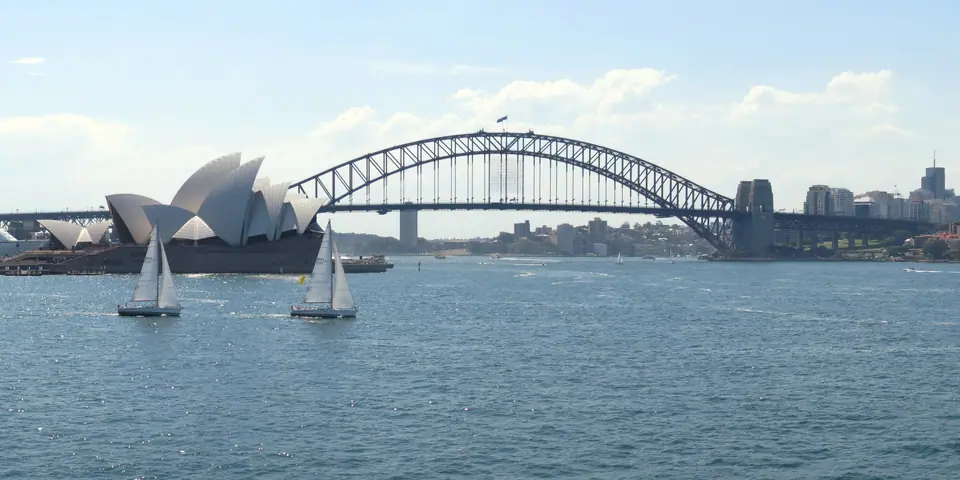
Views: Harbour Bridge and Opera House. Walks: Bondi to Coogee. Food: rock oysters and seafood.
Before you go
Foreign visitors need an Electronic Travel Authority (ETA) or eVisitor visa before boarding, and high UV levels require SPF 50+ sunscreen and a broad-brimmed hat.
Getting around
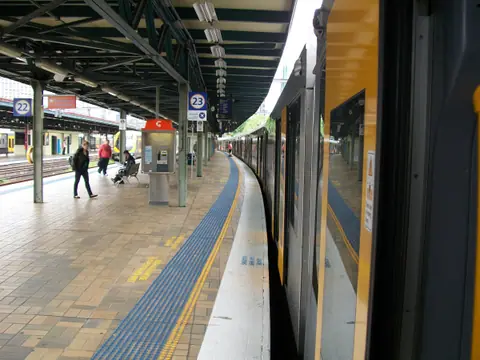
Tap a contactless Visa, Mastercard, or American Express card at Opal gates on trains, ferries, metro, and light rail across the Sydney transport network.
Continue your trip
Pair Sydney with a coastal journey south toward the Illawarra escarpment and Jervis Bay, or fly interstate from Mascot to Melbourne, Hobart, or Brisbane.
Overview
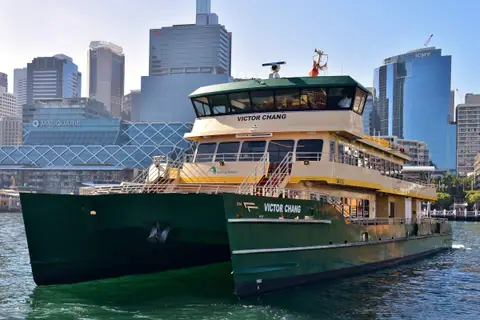
Sydney builds its daily life around water. Port Jackson, a drowned river valley carved into Hawkesbury sandstone, winds inland for nearly twenty kilometres past eucalypt headlands, sheltered coves, and working ferry wharves. Instead of viewing the city from tour buses, visitors experience its clearest angles by stepping onto a green-and-gold commuter ferry at Circular Quay, walking across the eastern deck of the Sydney Harbour Bridge, and swimming in tidal ocean rock pools cut directly into the Pacific cliffs along the Bondi to Coogee coastal walk.
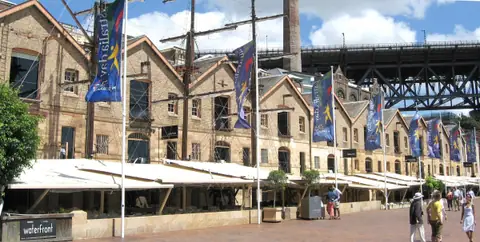
Beyond the twin harbour landmarks of the Sydney Opera House and the steel arch, the metropolis divides into distinct villages linked by double-deck trains, metro tunnels, and light rail. Historic convict-built sandstone warehouses anchor The Rocks, Victorian iron-lace terraces climb the ridges of Surry Hills and Paddington, and eucalyptus-scented canyons drop away in the World Heritage-listed Blue Mountains west of the Cumberland Plain.
Planning by water and rail corridors keeps travel times short. Dedicate one full day to Bennelong Point, the Royal Botanic Garden, and the bridge walk; a second to the eastern beaches; a third to the Manly ferry or Taronga Zoo and Bradleys Head; and a fourth to Katoomba and Echo Point.
Getting there
Sydney Kingsford Smith Airport (SYD) sits eight kilometres south of the central business district at Mascot. The Airport Link T8 train connects the international and domestic terminals directly to Central, Museum, St James, and Circular Quay stations in roughly fifteen minutes. Read our how to get to Sydney guide for transfer details and interstate rail options.
Where to stay
Staying near Circular Quay, Wynyard, or Central Station keeps ferries and trains within a short walk. Read our where to stay in Sydney guide to compare harbour hotels in The Rocks, terrace neighbourhoods in Surry Hills and Potts Point, and beach stays in Bondi and Manly.
Things to do
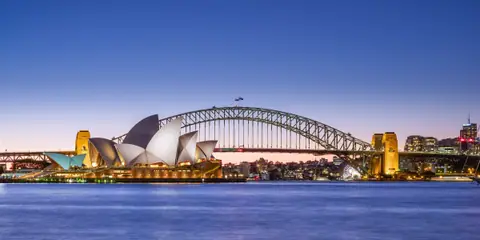
Start at Circular Quay where the Sydney Opera House and Sydney Harbour Bridge frame Sydney Cove. Follow the harbour foreshore through the Royal Botanic Garden, ride the F1 ferry to Manly, and walk the sandstone cliffs from Bondi to Coogee. See our things to do in Sydney guide and 3-day itinerary.
Food and drink
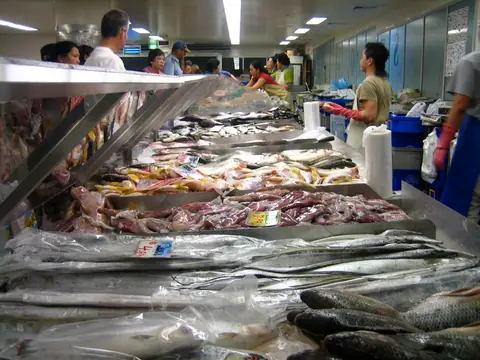
Sydney's dining culture pairs cold-water Tasman Sea seafood with British bakery traditions and Asian-Australian flavours. Shuck fresh Sydney rock oysters and grilled barramundi by the harbour, order a flaky beef meat pie after a coastal swim, and finish with passionfruit pavlova or a coconut-coated lamington.
Culture
For tens of thousands of years before the First Fleet anchored at Sydney Cove in January 1788, the Gadigal and neighbouring clans of the Eora Nation fished, hunted, and cared for the sandstone shorelines of Port Jackson, known in local language as Warrane. Today, Aboriginal heritage walks in The Rocks and the Royal Botanic Garden share the harbour with twentieth-century engineering landmarks and public ocean baths.
Weather by month
Sydney is warmest in January, with average highs around 27°C, and coldest in July, when nights drop to about 8°C. June is the wettest month, with rain on about 9 days. For mild weather with fewer rainy days, aim for May, July, August, September, October and December.
| Month | Low | Range | High | Rain | Rainy days |
|---|---|---|---|---|---|
| Jan | 19°C | 27°C | 102 mm | 9 d | |
| Feb | 19°C | 27°C | 118 mm | 9 d | |
| Mar | 18°C | 25°C | 130 mm | 9 d | |
| Apr | 15°C | 23°C | 126 mm | 9 d | |
| May | 12°C | 20°C | 118 mm | 8 d | |
| Jun | 10°C | 18°C | 133 mm | 9 d | |
| Jul | 8°C | 17°C | 96 mm | 7 d | |
| Aug | 9°C | 19°C | 80 mm | 6 d | |
| Sep | 11°C | 21°C | 68 mm | 6 d | |
| Oct | 14°C | 23°C | 77 mm | 8 d | |
| Nov | 16°C | 24°C | 84 mm | 8 d | |
| Dec | 18°C | 26°C | 78 mm | 8 d |
Averages of daily values from 2015 to 2024. Rainy days are days with at least 1 mm of rain. Source: Open-Meteo · Compare destinations by month.
Sydney on the map
Every place we cover in Sydney. Tap a category or pin to explore.
In-depth Sydney guides
Browse the guides grouped by topic: sights, neighbourhoods, food, transport, day trips and trip planning.
Sights, Landmarks & Parks
Key monuments, viewpoints, museums and nature trails.
- Things to Do in Sydney: Harbour Icons, Clifftop Walks, Markets and WildlifeThe essential experiences in Sydney, from walking the Harbour Bridge and riding the Manly ferry to swimming in ocean rock pools and visiting the Blue Mountains.
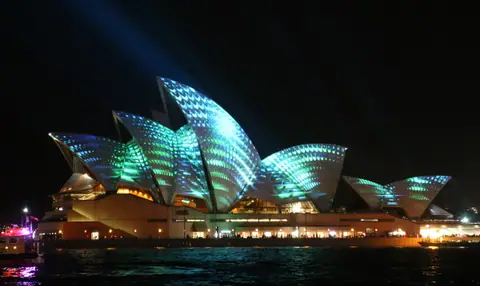
- Best Time to Visit Sydney: Seasons, Ocean Temperatures, Jacarandas and FestivalsMonth-by-month breakdown of Sydney weather, Pacific ocean swimming temperatures, spring jacaranda bloom, and winter Vivid Sydney light installations.
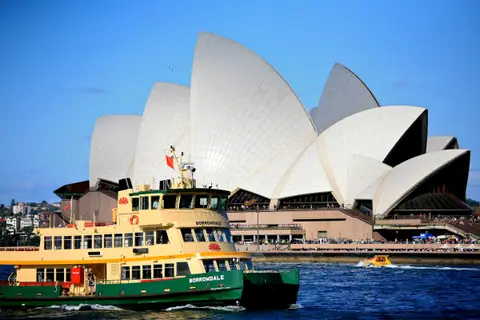
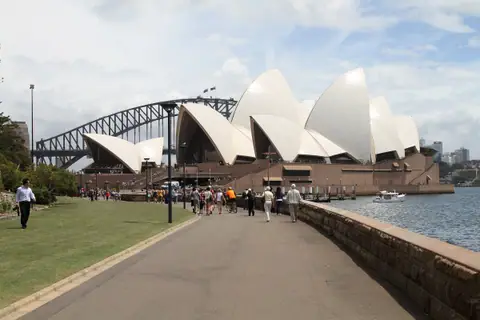
- Sydney Opera House: Utzon Sails, Concert Hall, Forecourt Views and Guided ToursHow to visit the UNESCO-listed Sydney Opera House at Bennelong Point, including Jørn Utzon’s vaulted shells, interior venues, tours, and best photo angles.
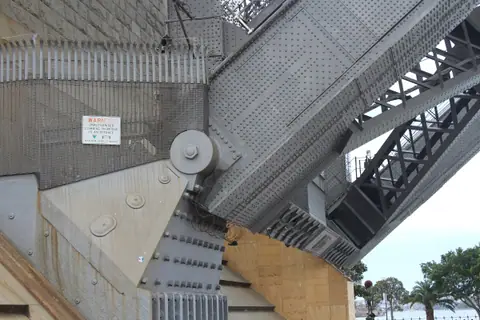
- Sydney Harbour Bridge: Free Pedestrian Walkway, Pylon Lookout and BridgeClimbHow to cross the Sydney Harbour Bridge on the free eastern footpath, visit the South-East Pylon Lookout, or book the guided arch climb, plus best viewpoints.
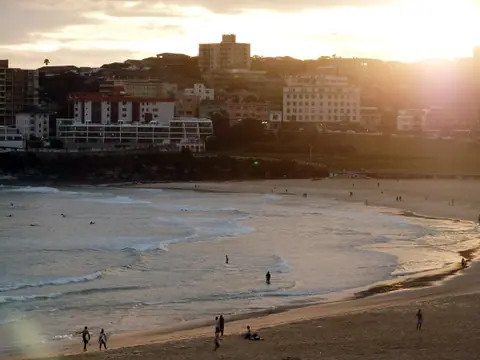
- Bondi to Coogee Coastal Walk: Icebergs Pool, Tamarama, Bronte and Clifftop BaysStep-by-step route for the 6-kilometre Bondi to Coogee Coastal Walk, comparing every beach, ocean rock pool, swim spot, and bus link back to the city.
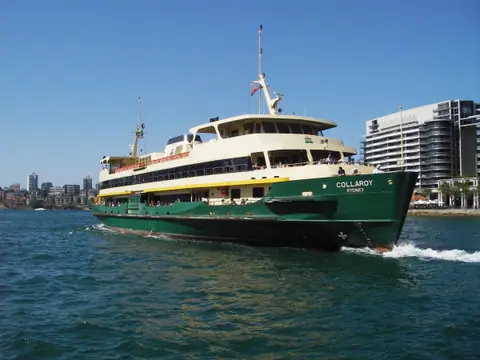
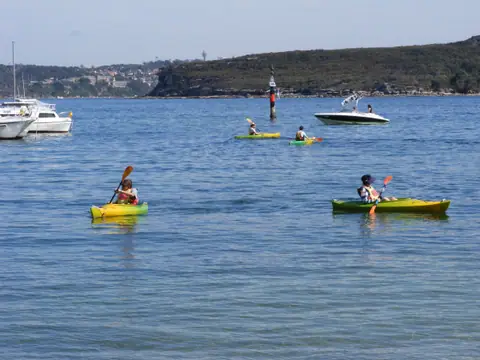
- Manly Beach and the Circular Quay Ferry: The Corso, Shelly Beach and North HeadHow to take the F1 Manly Ferry across Sydney Heads, walk from Manly Cove to ocean-facing Manly Beach, snorkel at Cabbage Tree Bay, and hike to North Head.
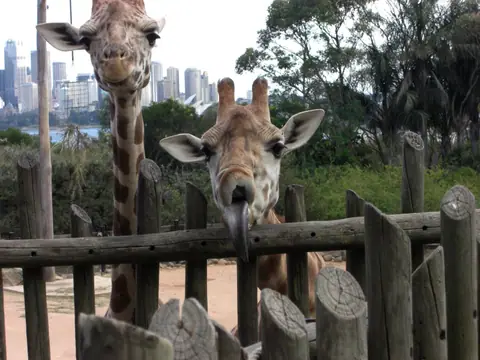
- Taronga Zoo and Bradleys Head: Native Australian Wildlife, Harbour Views and BushwalkVisiting Taronga Zoo by ferry from Circular Quay, seeing koalas, platypuses, and giraffes overlooking Sydney Harbour, and walking the Bradleys Head foreshore trail.
Neighbourhoods & Where to Stay
Districts, historic quarters and the best bases for your stay.
- Sydney: Harbour Layout, Opal Transit, Beaches and First-Time PlanningHow Sydney is organised around Port Jackson, the eastern beaches, and the inner suburbs, plus visa rules, sun safety, and transit essentials.
- Where to Stay in Sydney: Circular Quay, The Rocks, CBD, Surry Hills and Bondi ComparedHow to choose the right Sydney base comparing harbour views at Circular Quay, heritage lanes in The Rocks, cafes in Surry Hills, and beachside Bondi.
- 3 Days in Sydney: Harbour Icons, Bondi to Coogee Walk, Manly Ferry and Blue MountainsA balanced three-day Sydney route linking the Opera House, The Rocks, and Harbour Bridge with the Bondi to Coogee cliff walk, Manly, and the Blue Mountains.
- The Rocks and Circular Quay: Sandstone Laneways, Cadmans Cottage and MarketsA walking route through Sydney’s oldest neighbourhood, covering convict-cut sandstone lanes, Cadmans Cottage, the Museum of Contemporary Art, and weekend markets.
Food & Drink
Local dishes, markets, cafés and dining districts.
Getting Around & Arrival
Airport transfers, public transit, passes and driving rules.
- How to Get to Sydney: Kingsford Smith Airport, Airport Link Train and Cruise TerminalsArriving at Sydney Airport (SYD), taking the T8 Airport Line into Central and Circular Quay, and reaching the city by interstate train or cruise ship.
- Getting Around Sydney: Contactless Opal Fares, Ferries, Light Rail, Metro and TrainsHow to use contactless bank cards on Sydney’s Opal transit network across Circular Quay ferries, double-deck suburban trains, the driverless Metro, and light rail.
Day Trips & Excursions
Easy half-day and full-day trips from the city.

Need your embassy or consulate in Australia? See embassies and consulates in Australia.
Reviews
Log in to write a review.
No reviews yet.
