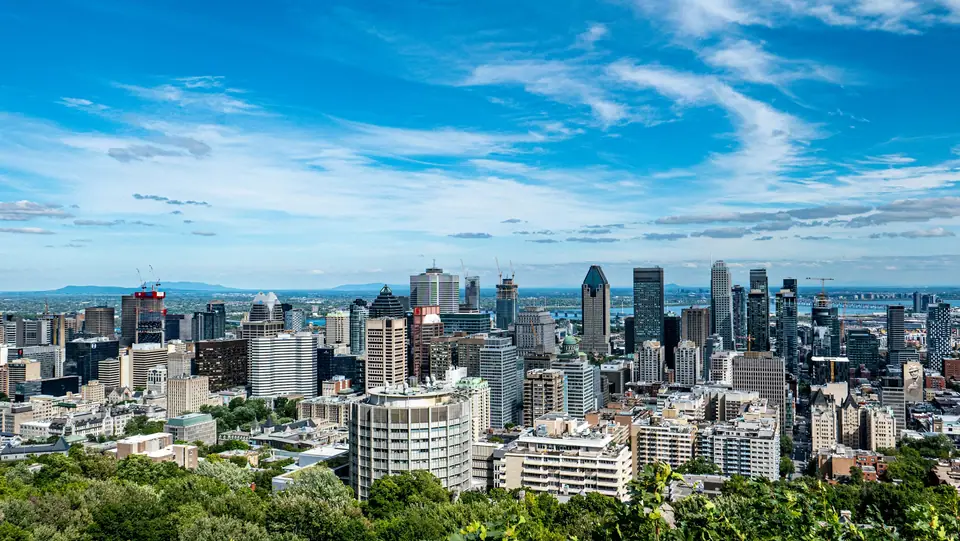
A detailed walking route across the Island of Montreal, from seventeenth-century limestone streets in Vieux-Montréal to Mount Royal Belvedere, the Plateau’s spiral staircases, and Mile End.
Ville-Marie on the St Lawrence, the Lachine Canal and Expo 67
Known to the Kanien'kehá:ka (Mohawk) and St Lawrence Iroquoians as Tiohtià:ke around the fortified village of Hochelaga visited by Jacques Cartier in 1535 when he named the three-peaked hill Mont Royal, the permanent French settlement of Ville-Marie was founded in May 1642 by Paul de Chomedey de Maisonneuve and Jeanne Mance at Pointe-à-Callière. Here in 1701 thirty-nine First Nations and New France signed the Great Peace of Montreal.
Surrounded by the Lachine Rapids on the St Lawrence River, Montreal grew in the nineteenth century after the opening of the 1825 Lachine Canal into Canada's premier banking, railway, and industrial metropolis, celebrated worldwide during Expo 67.
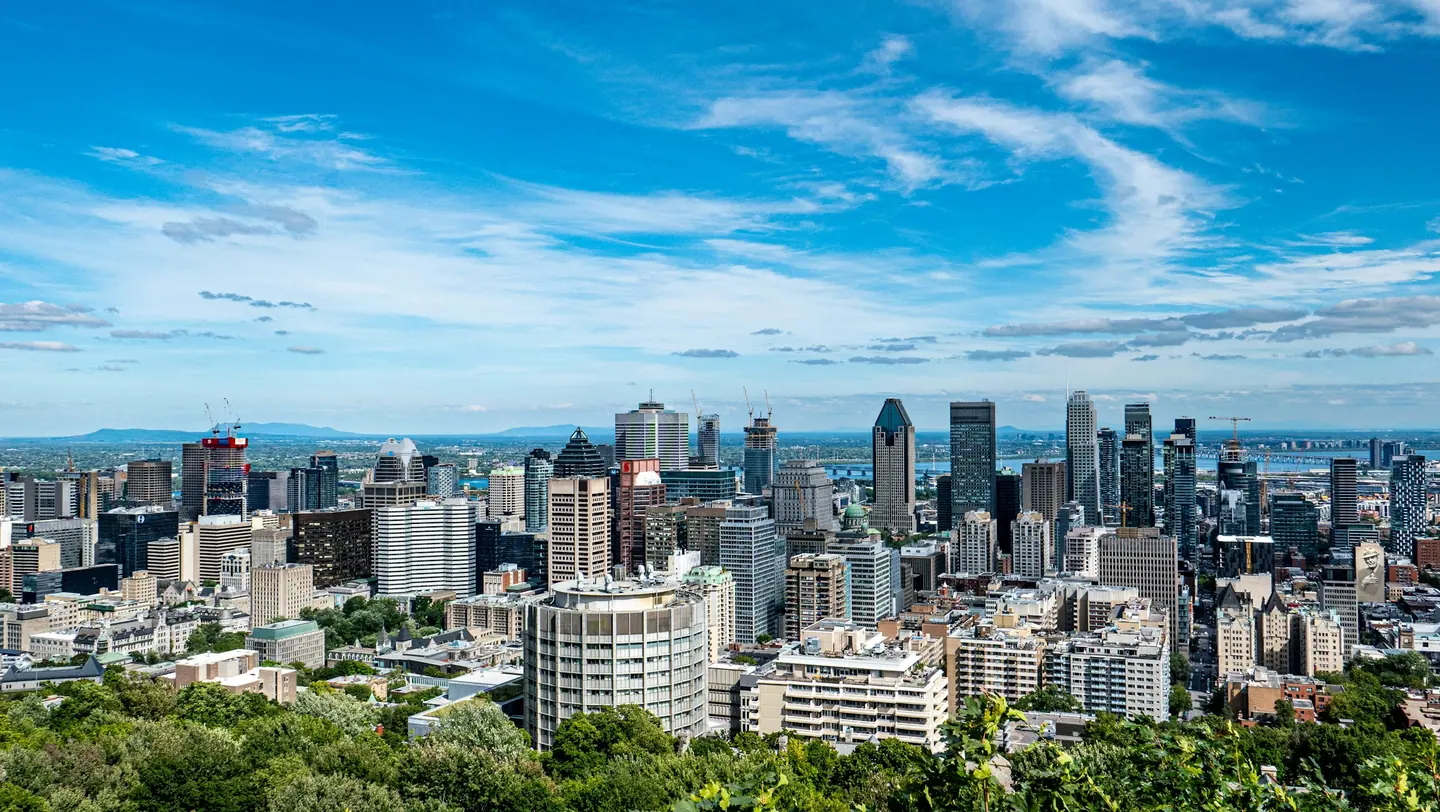
Place d’Armes, Notre-Dame Basilica & Western Vieux-Montréal
Place d’Armes, Notre-Dame Basilica of Montreal, Saint-Sulpice Seminary, Bank of Montreal Museum, Pointe-à-Callière Archaeology Museum, Place Royale, Rue Saint-Paul West, Centaur Theatre, and Crew Collective Royal Bank Hall
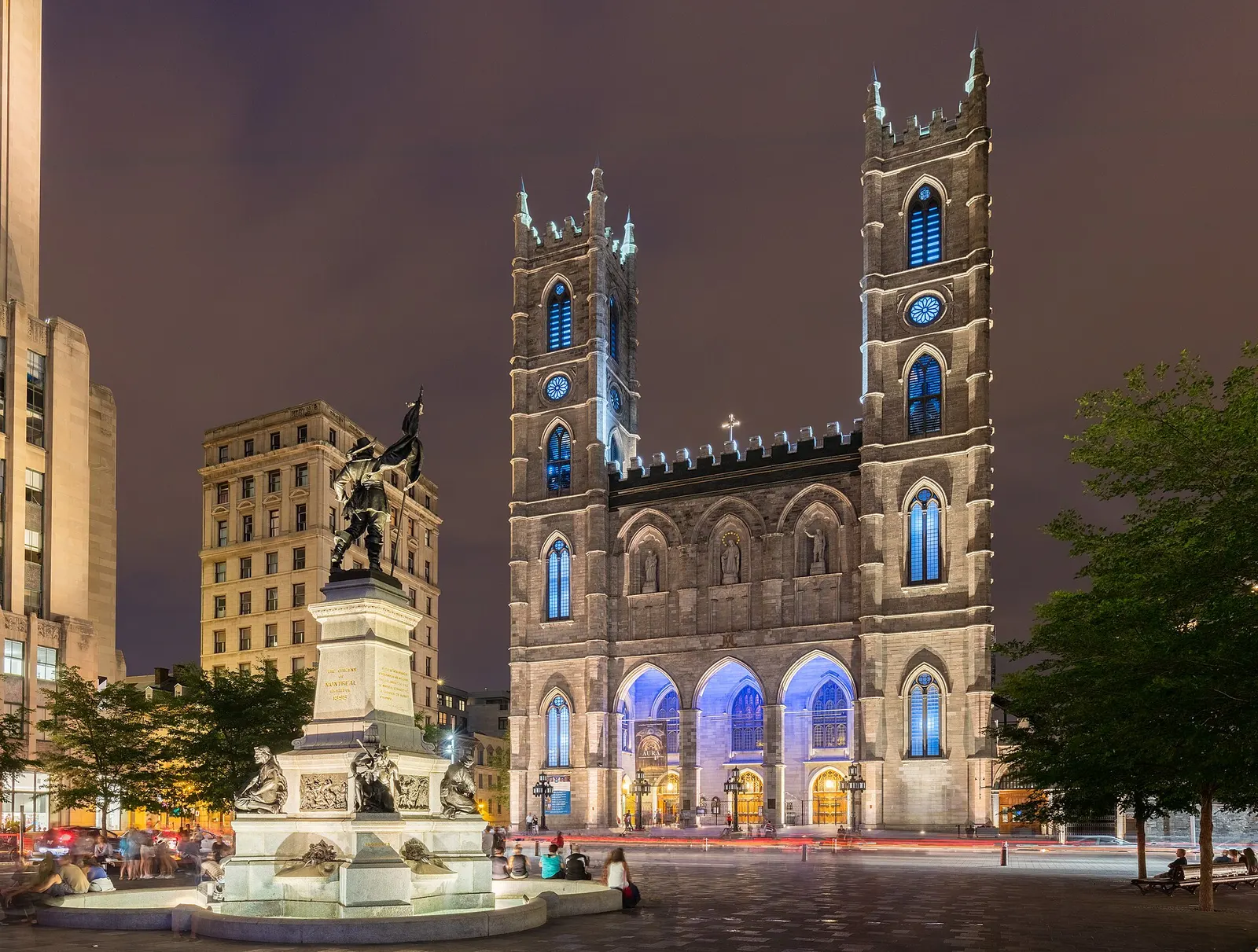
Notre-Dame Basilica of Montreal
Designed by Irish-American architect James O'Donnell, this monumental church opened in 1829. The interior displays deep blue vaulted ceilings decorated with golden stars alongside intricate wooden carvings. Visitors should inspect the polychrome carved sanctuary and the magnificent Casavant Frères pipe organ towering over the rear nave gallery.
Place d'Armes
Established in the late seventeenth century, this civic square witnessed the formal transition of French colonial rule to British authority. The central plaza is surrounded by buildings representing successive eras, from New France to twentieth-century corporate towers. At its heart stands the Maisonneuve Monument honouring the city's French colonial founder.
Saint-Sulpice Seminary
Constructed between 1684 and 1687, this U-shaped stone complex served as the headquarters for the Sulpician seigneurs who governed Montreal. The classical facade features fieldstone masonry and a historic clock installed on the central pediment in 1701. The walled private gardens behind the structure maintain their seventeenth-century layout.
Bank of Montreal Museum
Constructed in 1847 to designs by John Wells, this monumental temple front features six Corinthian columns carved from imported stone. Inside, the grand banking hall includes pink marble columns and detailed coffered ceilings. A small museum passage exhibits antique bank notes, mechanical coin banks, and historic ledgers charting early Canadian commerce.
Pointe-à-Callière Archaeology Museum
Opened in 1992 for Montreal's 350th anniversary, the museum sits upon the actual site where colonial settlers established Fort Ville-Marie in 1642. The triangular Éperon building leads down to underground crypts showcasing preserved colonial foundations and North America's first stone collector sewer. The complex offers deep insight into Indigenous trade and French settlement.
Place Royale
Originally designated as a marketplace during the French regime, this compact plaza served as the centre of early colonial public life. It was here that official government proclamations were read aloud to the assembled townspeople. Today, the paved space links the Old Custom House with the archaeological pavilions of Pointe-à-Callière.
Old Custom House
Completed in 1836, this stone building handled customs clearance as Montreal grew into Canada's leading maritime port. Architect John Ostell designed the symmetrical stone structure with refined pediments and Doric pilasters fronting Place Royale. It now houses museum exhibition space, preserving the historic connection between the city and the St Lawrence River.
Rue Saint-Paul West
Paved with traditional stone setts, this thoroughfare is Montreal's oldest established street, laid out in the 1670s along an early footpath. The western section retains dense rows of Victorian stone warehouses and commercial offices that once served maritime merchants. Today the street accommodates contemporary art galleries, fashion boutiques, and traditional restaurants.
Centaur Theatre
Occupying the former Montreal Stock Exchange building constructed in 1903, this Beaux-Arts edifice features a monumental pediment supported by Corinthian columns. Architect George B. Post designed the robust exterior to project commercial power. Since 1969, the repurposed interior has operated as the city's principal English-language theatrical company, staging contemporary and classical works.
Crew Collective & Café (Old Royal Bank Building)
Completed in 1928, this towering skyscraper on Rue Saint-Jacques served as the headquarters of the Royal Bank of Canada. The cavernous main banking hall features 15-metre vaulted ceilings, elaborate bronze teller grilles, and inlaid travertine floors. The space has been thoughtfully transformed into a modern public cafe and workspace, open to all visitors.
New York Life Insurance Building
Constructed in 1888, this eight-storey structure on Place d'Armes introduced American-style office architecture to the city. Built from distinctive imported Scottish red sandstone, it incorporates Renaissance Revival details and an ornate clock tower. When completed, its state-of-the-art hydraulic lift was considered a major technological milestone for local commercial architecture.
Aldred Building
Completed in 1931, this limestone skyscraper mirrors the step-back Art Deco silhouette typical of contemporary Manhattan towers. Architects Barott and Blackader designed its setbacks specifically to comply with historic municipal shadow regulations on Place d'Armes. Stone bas-relief panels flanking the ground-floor portals feature stylized flora and geometric metal grilles.
Maisonneuve Monument
Unveiled in 1895 at the centre of Place d'Armes, this bronze work by sculptor Louis-Philippe Hébert commemorates Paul de Chomedey, sieur de Maisonneuve. The central figure stands atop an ornate granite pedestal holding a banner. Bronze figures of early settlers, including Jeanne Mance and Charles Le Moyne, guard the corners of the base.
Merchant's Bank Building
Erected in the late nineteenth century, this limestone building reflects the era when Rue Saint-Jacques functioned as Canada's primary financial district. The classical facade features rusticated masonry, strong pediments, and deeply recessed windows designed to suggest institutional permanence. The structure now forms part of the surrounding historic streetscape.
Place d'Youville
This linear public space was created over the buried Saint-Pierre River, transforming an old marsh into an urban commons. Named after Saint Marguerite d'Youville, founder of the Grey Nuns, the square contains archaeological sites, commemorative public art, and landscaped walkways. It links western Old Montreal directly to the Old Port quays.
Grey Nuns General Hospital
This complex of stone structures represents the former hospital run by the Sisters of Charity, commonly known as the Grey Nuns. Constructed between 1693 and 1765, the buildings provided medical care and refuge for the impoverished. Visitors walking along Rue Normandin can view the weathered stone walls and historic outdoor memorial courtyard.
Montreal Board of Trade Building
Built in the early twentieth century after a fire destroyed its predecessor, this imposing sandstone building housed commercial shipping merchants and grain brokers. The exterior demonstrates Edwardian commercial architecture, with classical cornices and rhythmic rows of arched windows. It stands as a reminder of the business networks that drove the Port of Montreal.
Molson Bank Building
Erected between 1864 and 1866, this structure served as the headquarters for the financial institution founded by the Molson family. Architects George and John Browne used Ohio sandstone to craft an ornate Second Empire facade with classical pilasters and a dramatic mansard roof. Stone carvings above the entrance depict armorial symbols and founding patrons.
500 Place d'Armes
Completed in 1968, this building represents mid-century modernist intervention within the historic district. Designed by Pierre Boulva and Jacques David, the tower presents a clean geometric facade of black granite and glass. Its stark minimalist lines contrast directly with the neighbouring Victorian bank temples and Gothic Revival church spires.
Rue Saint-Jacques (Old Wall Street of Canada)
Once referred to as Canada's Wall Street, this street formed the financial nerve centre of the Dominion from the 1880s until the mid-twentieth century. Its narrow corridor is lined with monumental stone facades built by competing banks, insurance firms, and trust corporations. Walking along the pavement reveals elaborate classical pediments, bronze coats of arms, and heavy iron doorways.
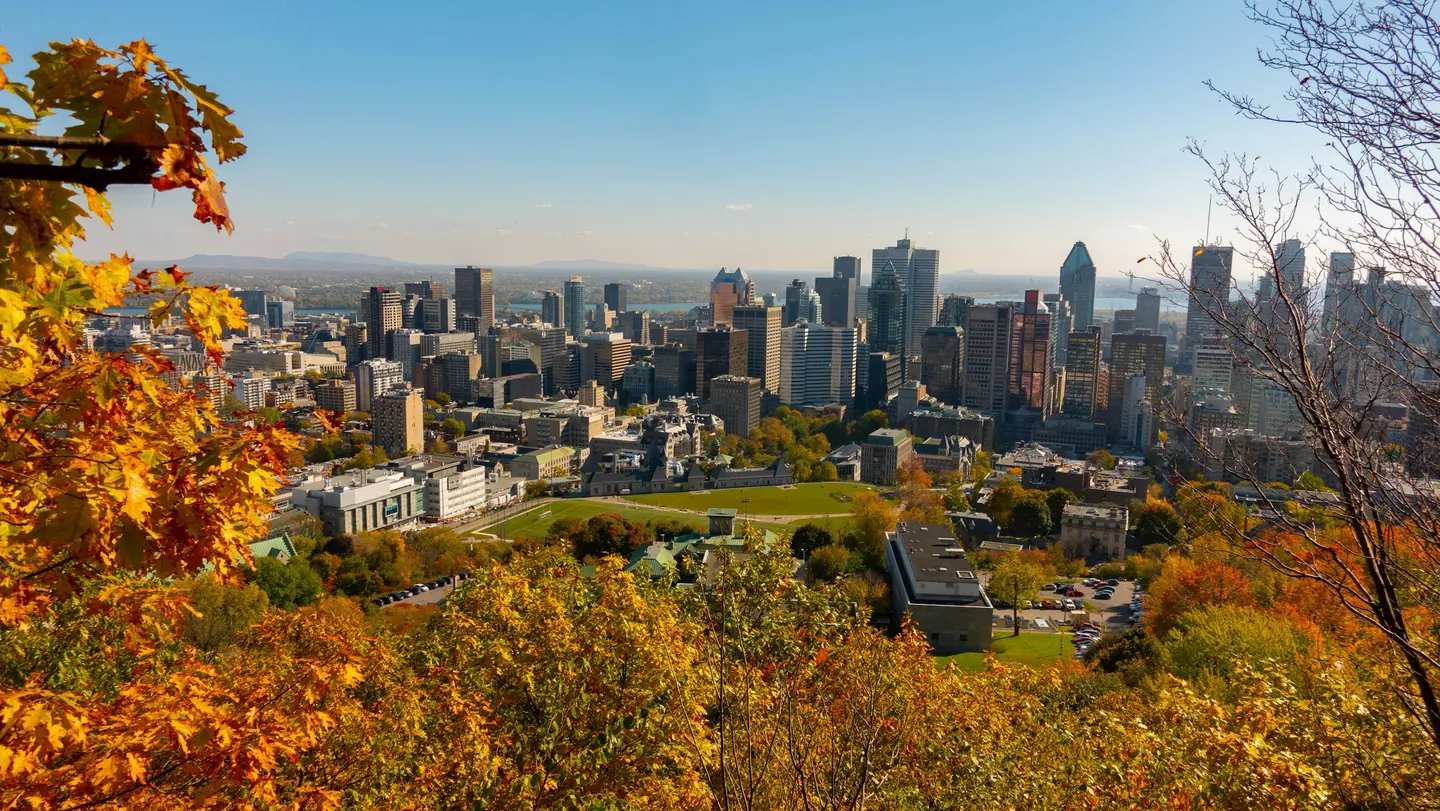
Place Jacques-Cartier, Bonsecours & Old Port Waterfront
Place Jacques-Cartier, Montreal City Hall, Château Ramezay, Marché Bonsecours, Notre-Dame-de-Bon-Secours Chapel, Montreal Clock Tower Quay, Habitat 67 by Moshe Safdie, and Lachine Canal Atwater Market
Place Jacques-Cartier
Laid out in the early nineteenth century on the site of the former Château Vaudreuil, this public square slopes gently from Rue Notre-Dame toward the river. Cobblestone paths flank public gardens and terraces, while street performers gather throughout the summer. Nelson's Column crowns the upper end, offering a vista toward the waterfront promenades.
Nelson's Column
Erected in 1809, this monument commemorates Admiral Horatio Nelson following the Battle of Trafalgar. The Doric column stands upon a carved limestone plinth adorned with naval reliefs and inscriptions. It represents Montreal's oldest surviving commemorative work, marking the northern entrance to Place Jacques-Cartier.
Montreal City Hall
Designed by architects Henri-Maurice Perrault and Alexander Cowper Hutchison, this municipal building was constructed between 1872 and 1878. A reconstruction following a 1922 fire added a mansard roof inspired by Paris City Hall. Visitors admire the ornate council chamber and the balcony where Charles de Gaulle delivered his famous 1967 address.
Château Ramezay
Built in 1705 by Claude de Ramezay, the eleventh governor of Montreal, this residence reflects French colonial stone architecture. It served as the headquarters for the Continental Army during the American occupation in 1775. Inside, we observe period furnishings, historical artefacts, and the formal Governor's Garden designed in eighteenth-century New France style.
Place de la Dauversière
Situated directly across from City Hall, this small public space provides an elevated vantage point over Place Jacques-Cartier. Terraced gardens and mature trees shade stone benches facing the historic façade of Château Ramezay. The park honours Jérôme le Royer de la Dauversière, an essential founder of the colonial settlement.
Marché Bonsecours
Opened in 1847, this neoclassical landmark served as Montreal's principal public market for more than a century. The grand façade features cast-iron Doric columns manufactured in England and a distinctive silver-toned dome. Today, the interior halls accommodate boutique artisan shops, exhibition spaces, and regional cultural displays.
Notre-Dame-de-Bon-Secours Chapel
Founded in 1655 by Saint Marguerite Bourgeoys, this church was rebuilt in 1771 following a major fire. Carved wooden ships hang suspended from the vaulted ceiling as votive offerings from grateful mariners. The adjoining museum displays the original stone foundations and offers access to the rooftop tower overlooking the port.
Marguerite Bourgeoys Historic Site
Housed within the complex of Notre-Dame-de-Bon-Secours Chapel, this museum explores the life of Montreal's first teacher. Visitors descend into the stone crypt to view archaeological remains of earlier churches and an Indigenous encampment. The exhibits detail French colonial governance, early schools, and religious history.
Sir George-Étienne Cartier National Historic Site
This pair of semi-detached limestone homes was the nineteenth-century residence of Sir George-Étienne Cartier, a key architect of Canadian Confederation. Restored interiors present period furnishings that illustrate the domestic lifestyle of the Victorian bourgeoisie. Costumed interpreters describe the political debates that shaped modern Canada during the 1860s.
Pointe-à-Callière
Established in 1992 on the point where Montreal was founded in 1642, this complex covers centuries of urban development. Underground walkways take visitors through exposed foundations of seventeenth-century structures and the first cemetery. The modern Éperon building hosts multimedia presentations detailing Indigenous and colonial trade.
Old Port of Montreal
Stretching along the Saint Lawrence River, this historic harbour terminal was redeveloped into a continuous linear public park in the 1990s. We observe working locks, legacy railway lines, and expansive maritime quays repurposed for recreation. Pedestrian boardwalks offer open views of maritime traffic and surrounding port heritage.
Montreal Clock Tower
Constructed between 1919 and 1922, this forty-five-metre stone tower commemorates sailors of the Canadian Merchant Navy lost in the First World War. The clock mechanism was built in Croydon, England, replicating the movement of London's Big Ben. A staircase inside leads to an upper observation deck surveying the river.
Clock Tower Quay
This broad concrete pier extends into the Saint Lawrence River at the northern margin of the historic port. It features an urban beach complete with fine sand, bright blue parasols, and timber boardwalks. It provides an uninterrupted panorama of the Jacques Cartier Bridge and the passing cruise ships.
Jacques Cartier Bridge
Opened in 1930, this monumental steel structure carries road and pedestrian traffic between Montreal Island and the South Shore. Its intricate cantilever spans rise high above Île Sainte-Hélène to permit international shipping passage. An integrated evening lighting system illuminates the structural trusses with programmed artistic colours.
Grand Quai du Port de Montréal
Formerly known as the Alexandra Pier, this maritime dock was extensively modernised to receive ocean-going cruise vessels. The terminal features a landscaped rooftop lawn, maritime plazas, and a sleek contemporary observation tower. Visitors explore walkways that place them directly adjacent to the shipping channel.
Habitat 67
Conceived as a master thesis and built for the Expo 67 world exposition, this brutalist landmark reimagined urban residential density. It consists of 354 prefabricated concrete modules arranged in geometric stepped clusters. Each apartment enjoys private garden terraces, natural light exposure, and expansive river vistas from the Cité du Havre.
Silos de la Bourse
Constructed in stages between 1903 and 1958, Silo No. 5 stands as a towering industrial monument to Montreal's grain-shipping supremacy. Its massive concrete cylinders and metal conveyor galleries stretch across the western harbour basin. Although decommissioned, the monumental structure remains a stark subject for architectural preservation and photography.
Lachine Canal
Opened in 1825 to bypass the treacherous Lachine Rapids, this fourteen-kilometre canal spurred Canada's industrial revolution. Decommissioned after the Saint Lawrence Seaway opened, the waterway now serves as a national historic site with paved cycling paths. Restored stone locks, brick factories, and green banks line the route.
Lachine Canal National Historic Site Visitor Centre
Positioned beside the waterway, this heritage station informs travellers about early engineering efforts that opened trade to the interior continent. Interpretive panels explain lock gate mechanics, barge haulage, and the growth of manufacturing districts. Boat rentals and cycle pathways allow active exploration of the surrounding heritage corridor.
Atwater Market
Completed in 1933, this public market building showcases Art Deco architecture distinguished by its prominent stone clock tower. Outdoor awnings shelter local market gardeners, florists, and fruit sellers from spring to autumn. Inside, butcher shops, bakeries, and cheese mongers provide regional culinary specialties year-round.
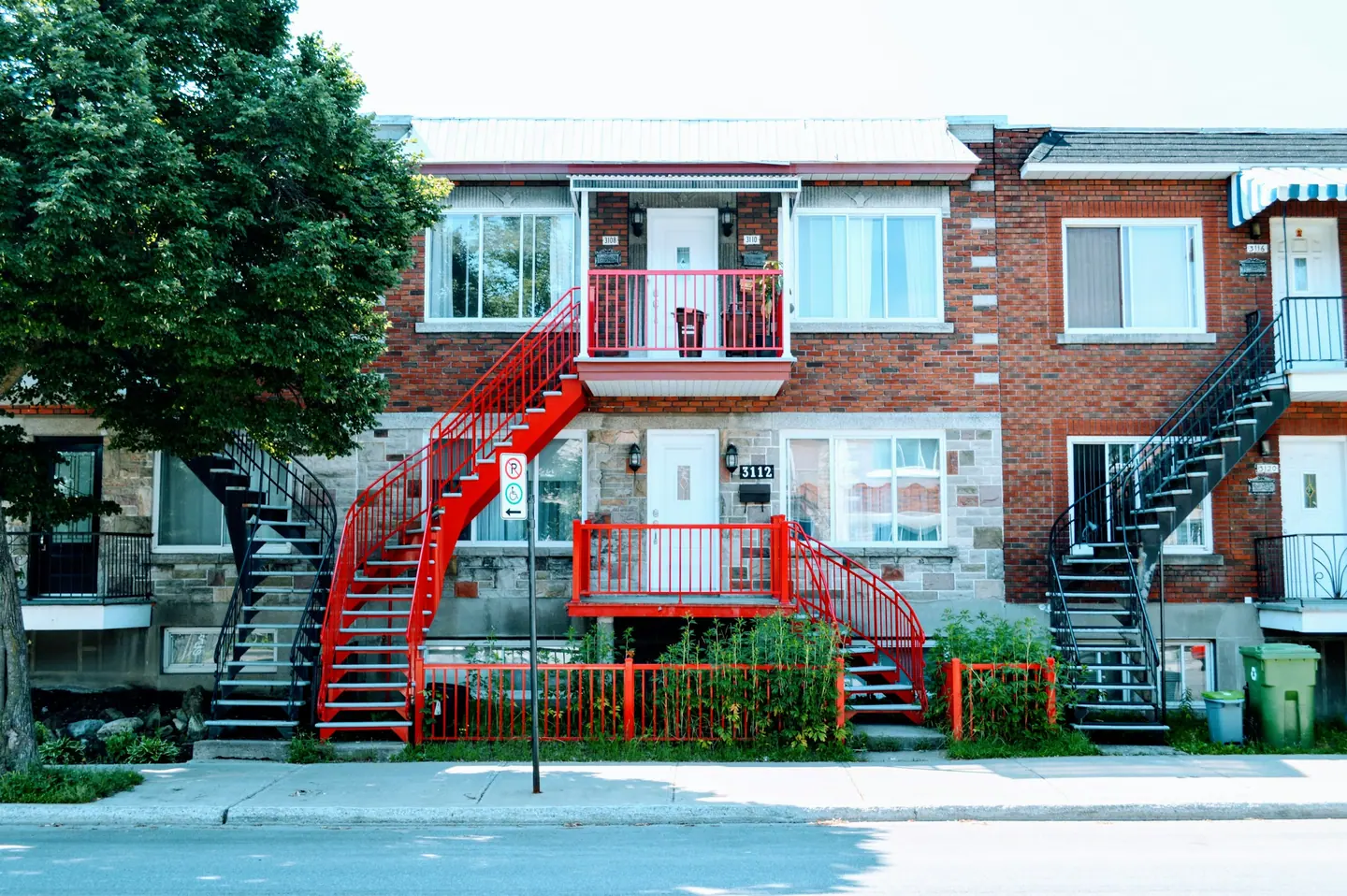
Quartier des Spectacles, Golden Square Mile & Museums
Place des Arts, St Patrick’s Basilica, Dorchester Square, Mary Queen of the World Cathedral, Redpath Museum McGill University, McCord Stewart Museum, and Montreal Museum of Fine Arts MMFA
Place des Arts
Inaugurated in 1963, this expansive complex anchors the Quartier des Spectacles and houses several major performance halls, including Salle Wilfrid-Pelletier. Visitors can inspect brutalist concrete architecture complemented by contemporary glass expansions that open onto a central public esplanade used for festivals.
Musée d'art contemporain de Montréal
Founded in 1964 by the Quebec government, this institution is the country's first museum devoted solely to contemporary art. Situated within the Place des Arts complex, it displays rotating exhibitions of multimedia installations, sculpture, and video art from Canadian and international artists.
Saint Patrick's Basilica
Constructed between 1843 and 1847, this stone church served the wave of Irish immigrants arriving during the Great Famine. Inside, timber columns carved to resemble marble support soaring vaults decorated with shamrock motifs, while memorial plaques pay tribute to poet Thomas D'Arcy McGee.
Dorchester Square
Laid out on the site of the former Saint-Antoine Cemetery, this green space opened to the public in the 1870s. Shaded by mature deciduous trees, the square features notable monuments, including the Boer War Memorial and a statue of Scottish poet Robert Burns.
Place du Canada
Originally considered the southern portion of Dominion Square, this public space was renamed in 1967 to commemorate the Canadian Centennial. It contains the Montreal Cenotaph, modelled after the Whitehall memorial in London, alongside an ornate monument dedicated to Sir John A. Macdonald.
Mary, Queen of the World Cathedral
Commissioned by Bishop Ignace Bourget and consecrated in 1894, this Catholic cathedral serves as the seat of the Archdiocese of Montreal. The roofline displays statues of the patron saints of Montreal parishes, while the interior features an elaborate neo-baroque baldachin over the high altar.
Redpath Museum
Built in 1882 to house the collections of naturalist Sir William Dawson, this Greek Revival structure stands on the central grounds of McGill University. The galleries display dinosaur skeletons, ancient Egyptian mummies, and extensive mineral collections beneath original carved timber galleries and tall sash windows.
McCord Stewart Museum
Founded in 1921 by collector David Ross McCord, this institution occupies a limestone building opposite McGill University. The permanent collections preserve over a million objects, including historic photography by William Notman, indigenous garments, and decorative arts documenting Canadian urban social history.
Montreal Museum of Fine Arts
Dating back to 1860, this premier arts venue encompasses five distinct pavilions connected by underground galleries beneath Rue Sherbrooke. Visitors can examine classical antiquities, European masters, Canadian paintings by the Group of Seven, and an extensive collection of contemporary international sculpture.
Church of St. Andrew and St. Paul
Erected in 1932 using iron-rich Tyndall limestone, this structure serves as the regimental church of The Black Watch of Canada. The interior boasts intricately carved oak choir stalls, expansive stained glass windows crafted by William Morris and Charles Kempe, and a grand Casavant organ.
Erskine and American United Church
Constructed in 1894 with grey limestone and red sandstone trim, this former Presbyterian sanctuary now operates as Bourgie Concert Hall. The interior retains twenty Tiffany stained glass windows, which were preserved during the building's incorporation into the Montreal Museum of Fine Arts complex.
George Stephen House
Built between 1880 and 1883 for the first president of the Canadian Pacific Railway, this limestone mansion reflects the opulence of the Golden Square Mile. The preserved interior features Cuban mahogany panelling, English hand-painted ceiling frescoes, and onyx fireplaces imported from Europe.
Ravenscrag
Designed in 1863 for shipping magnate Sir Hugh Allan, this stone residence crowns the slope of Mount Royal. The property was donated to McGill University in the twentieth century and now houses the Allan Memorial Institute, retaining its prominent watchtower and sweeping panoramic grounds.
Lady Meredith House
Erected in 1894 for industrialist Vincent Meredith, this brick and limestone mansion incorporates prominent corner turrets and decorative terracotta chimney stacks. Now part of McGill University's faculty of medicine, the building retains ornate interior woodwork, patterned plaster ceilings, and fine stained glass.
Hosmer House
Constructed in 1901 by architect Edward Maxwell, this lavish limestone property illustrates the classical grandeur favoured by Golden Square Mile elites. Today managed by McGill University, its grand salons retain gilded plaster details, elaborate marble fireplaces, and carved oak panelling.
Sun Life Building
Completed in 1931, this twenty-four-storey skyscraper was once the largest commercial building in the British Empire. Built of grey Stanstead granite, the structure served as the secret repository for Britain's gold reserves and the British crown jewels during the Second World War.
Windsor Station
Constructed in 1889 as the eastern headquarters of the Canadian Pacific Railway, this stone complex was designed by architect Bruce Price. It features massive rock-faced arches, a towering corner clock spire, and a glass-vaulted interior concourse that now hosts private civic events.
Saint James United Church
Dedicated in 1889, this stone church was designed in the Victorian Gothic style with asymmetrical spires and broad rose windows. Formerly concealed behind commercial shops, the front courtyard has been restored to display its intricate facade, interior hammerbeam timber ceiling, and monumental Casavant pipe organ.
Christ Church Cathedral
Consecrated in 1859, this neo-Gothic cathedral features Decorated Gothic stone tracery modelled on fourteenth-century English churches. The building stands on deep concrete caissons installed during the 1980s, which allow the structure to float directly over an active subterranean underground retail complex.
McGill University Roddick Gates
Erected in 1925 in memory of Sir Thomas Roddick, these limestone and wrought-iron gates mark the primary southern approach to the historic McGill campus. The stone columns house a set of Westminster chimes that ring across the landscaped central avenue towards the Arts Building.
Mount Royal Park, Oratory, Plateau Mont-Royal & Mile End
George-Étienne Cartier Monument, Beaver Lake, Kondiaronk Belvedere Mount Royal Chalet, Mount Royal Cross, Saint Joseph’s Oratory, Square Saint-Louis, Parc La Fontaine, Fairmount & St-Viateur Mile End, and Jean-Talon Market
George-Étienne Cartier Monument
Sculpted by George William Hill and inaugurated in 1919, this grand stone column features a winged figure of Fame above Sir George-Étienne Cartier. The granite base features eighteen bronze figures representing the Canadian provinces and territories of the era. The open lawns surrounding the structure host informal percussion gatherings on summer weekends.
Beaver Lake
Created during the Great Depression as a public relief works project, this curvilinear artificial lake opened in 1938 inside Mount Royal Park. Designed by architect Frederick Todd, the basin supports winter ice skating and summer pedestrian circuits. Nearby stands the mid-century modern Beaver Lake Pavilion, designed by Hazen Sise and Guy Desbarats.
Mount Royal Chalet
Constructed in 1932 under Mayor Camillien Houde, this elegant stone pavilion was designed by Aristide Beaugrand-Champagne. The grand interior hall features high timber rafters alongside historic paintings depicting scenes from Montreal history by notable Canadian artists. It functions as an indispensable community gathering hall during mountain strolls.
Kondiaronk Belvedere
Directly fronting the Mount Royal Chalet, this wide granite terrace honours Kondiaronk, the Petun Huron chief who negotiated the Great Peace of Montreal in 1701. Visitors gather along the balustrade to observe the St Lawrence River, southern bridges, and distant Monteregian Hills. The viewpoint remains one of the city's quintessential geographical landmarks.
Mount Royal Cross
Erected in 1924 by the Société Saint-Jean-Baptiste, this steel structure stands over thirty metres tall on the northeastern peak of the mountain. It commemorates the wooden cross raised on the summit in 1643 by Paul Chomedey de Maisonneuve following a devastating flood. Modern light-emitting diodes shift colour to mark significant municipal events.
Saint Joseph's Oratory
Founded in 1904 by Saint André Bessette as a modest hillside chapel, this colossal basilica was completed in the mid-twentieth century. The vast Italian Renaissance dome rises high over the western slope of Mount Royal. Pilgrims ascend the central wooden steps on their knees, while the crypt museum preserves Brother André's heart.
Square Saint-Louis
Laid out in the late nineteenth century on the site of a municipal reservoir, this public garden features a central cast-iron fountain. The perimeter showcases colourful Victorian townhouses characterized by mansard roofs, conical turrets, and ornate woodwork. In the twentieth century, the square became the favoured salon for Quebec poets and intellectuals.
Parc La Fontaine
Established on former military garrison grounds in 1874, this forty-hectare expanse serves as the principal public park of the Plateau Mont-Royal. Divided into formal French gardens and picturesque English landscape styles, it features an interconnected pond network with fountain jets. The park also contains an open-air theatre and commemorative statuary.
Saint-Jean-Baptiste Church
Rebuilt after a destructive fire in 1898 under the supervision of architect Émile Tanguay, this church could accommodate thousands of Plateau parishioners. Its imposing facade features twin towers and rich classical carvings. Inside, visitors can inspect an exceptionally ornate Casavant Frères organ and decorative wall paintings by artist Toussaint-Xénophon Renaud.
Saint-Enfant-Jésus du Mile-End Church
Constructed between 1857 and 1858, this Roman Catholic parish church anchors the southern entrance of the historic Mile End neighbourhood. Architect Victor Bourgeau oversaw its early development, while the front facade was redesigned in 1903 using fine sculptural stonework. The interior exhibits fine vault gilding and stained glass windows imported from France.
Fairmount Bagel
Established in 1919 by Isadore Shlafman, this humble storefront on Fairmount Avenue remains one of the cornerstones of Montreal Jewish culinary culture. The dense bagels are boiled in honey water before being baked on long cedar planks in a wood-burning oven. Observers can watch the continuous baking process inside the compact production area.
St-Viateur Bagel
Founded in 1957 by Myer Lewkowicz, this celebrated shop operates as an essential social landmark in the heart of Mile End. The bakers continually roll, boil, and seed dough in plain view of patrons lining the narrow counter. Crisp sesame and poppy seed varieties emerge fresh from the open-flame brick oven day and night.
Rialto Theatre
Designed by architect Joseph-Raoul Gariépy and decorated by Emmanuel Briffa, this Beaux-Arts cinema palace opened in 1924. Its elaborate limestone facade features classical columns, while the lavish auditorium features ornate neo-baroque plasterwork and gilded balconies. Now operating as a performing arts venue, it remains a rare surviving picture palace in Quebec.
Jean-Talon Market
Inaugurated in 1933 under Mayor Camillien Houde, this large market hall serves as a primary hub for regional Quebec agriculture. A sprawling central pavilion is framed by regional fruit and vegetable stalls, cheesemongers, and artisanal butchers. The surrounding perimeter streets offer small specialty grocers, coffee bars, and Italian delicatessens.
Church of the Madonna della Difesa
Built by Montreal Italian immigrants in 1919 to commemorate an apparition of the Virgin Mary, this church features Romanesque Revival styling. Artist Guido Nincheri designed the elaborate interior, including decorative ceiling frescoes painted in traditional wet plaster. The apse contains a notable fresco depicting the 1929 Lateran Pacts featuring Benito Mussolini.
Saint-Michel-Archange Church
Completed in 1915 to serve the Irish immigrant community of Mile End, this grand structure was designed by architect Aristide Beaugrand-Champagne. The exterior displays distinctive Byzantine Revival elements, including a broad copper dome and slender minaret-style corner turrets. The interior features expansive open vaulting and intricate decorative brick patterning.
Notre-Dame-du-Très-Saint-Sacrement Church
Erected between 1890 and 1898, this limestone sanctuary was designed by the firm of Perrault and Mesnard. The church features soaring twin spires and a dignified Gothic Revival nave supported by slender interior columns. Stained glass windows and marble altars enhance the interior, which historically served as a dedicated centre for perpetual adoration.
Mile End Public Library
Originally consecrated in 1910 as the Church of the Ascension, this neo-Gothic building was designed by architect H.C. Stone. In the late twentieth century, the city converted the hall into the Mile End Public Library while retaining original timber roof trusses and pointed-arch window frames. It provides a peaceful civic reading environment.
Sir Wilfrid Laurier Park
Covering more than eleven hectares, this park represents the northern leisure anchor of the Plateau district. Shaded pathways wind past mature deciduous trees, public sports grounds, and an outdoor swimming pool. A bronze statue of Sir Wilfrid Laurier by sculptor Joseph-Émile Brunet stands at the southern entrance.
Notre-Dame-de-Grâce Cemetery
Opened in 1854 on the northwestern flank of Mount Royal, this is the largest cemetery in Canada. Designed in the garden cemetery tradition, its winding lanes contain monumental mausoleums, Celtic crosses, and family vaults sheltering prominent Quebec politicians, artists, and civic leaders. The grounds contain thousands of heritage trees.
Botanical Garden, Olympic Park & Parc Jean-Drapeau
Montreal Botanical Garden, Chinese and Japanese Gardens, Montreal Biodome, Olympic Stadium Tower, Montreal Insectarium, Biosphere Expo 67 Dome on Île Sainte-Hélène, Stewart Museum Fort, and Oratoire Viewpoint
Montreal Botanical Garden
Founded in 1931 by botanist Brother Marie-Victorin and designed by landscape architect Henry Teuscher, this 75-hectare complex ranks among the largest botanical collections in North America. We admire the Art Deco administrative pavilion, extensive thematic outdoor grounds, and historic exhibition greenhouses displaying orchids, tropical plants, and desert cacti.
Chinese Garden, Montreal Botanical Garden
Constructed in 1991 through a municipal partnership with Shanghai, this serene enclosure exemplifies classical Ming dynasty design. Artisans imported hundreds of tonnes of limestone from Lake Tai alongside authentic woodwork to assemble ornate pavilions around Dream Lake, providing an authentic setting for the annual autumn lantern festival.
Japanese Garden, Montreal Botanical Garden
Designed in 1988 by landscape architect Ken Nakajima, this peaceful garden features cascading streams, carp ponds, and granite stepping stones positioned to encourage contemplation. The adjacent cultural pavilion showcases bonsai trees and tea ceremony implements, celebrating traditional Japanese aesthetics through meticulously pruned Japanese maples and sculpted rock arrangements.
Montreal Insectarium
Established in 1990 by entomologist Georges Brossard, this specialist science museum underwent an extensive subterranean redevelopment that completed in 2022. The modernist, partly buried structure allows visitors to view mounted insect collections, move through simulated subterranean passages, and observe live arthropods in an expansive open vivarium.
First Nations Garden
Inaugurated in 2001 to mark the tricentennial of the Great Peace of Montreal, this six-hectare naturalistic area features boreal and deciduous species native to eastern Canada. A central contemporary interpretive pavilion houses displays on First Nations ethnobotany, bordered by wetlands, maple groves, and traditional totems.
Montreal Biodome
Constructed by architect Roger Taillibert as the cycling velodrome for the 1976 Summer Olympics, this immense concrete shell was transformed into an environmental museum in 1992. Today the vaulted interior replicates five ecosystems of the Americas, containing over 2,500 animals living in faithfully recreated climate zones ranging from tropical rainforests to sub-Antarctic islands.
Olympic Stadium
Designed by French architect Roger Taillibert, this massive organic concrete structure served as the centrepiece of the 1976 Summer Games. Notable for its expressive sculptural ribs and cavernous stadium bowl, it remains one of the most recognisable architectural landmarks in eastern Canada, despite complex structural retrofits to its expansive canopy.
Montreal Tower
Rising 165 metres at a dramatic 45-degree angle, this inclined tower was designed to anchor the stadium roof cables and stands as the tallest inclined structure in the world. A glass-walled funicular carries visitors up the concrete spine to an observation floor offering panoramic views across the St Lawrence River and the central city.
Olympic Village
Conceived by architects Roger D'Astous and Luc Durand, these stepped concrete pyramidal blocks accommodated roughly 11,000 athletes and team officials during the 1976 Summer Games. The terraced Brutalist design provides private balconies along exterior ridges, functioning today as private residential complexes beside municipal sports parks.
Maurice Richard Arena
Built in 1962 and named in honour of Montreal Canadiens hockey icon Maurice 'Rocket' Richard, this municipal arena features a classic mid-century arched roofline. It served as a venue for Olympic boxing events in 1976 and now functions as a national training centre for short-track speed skating, alongside public ice-skating sessions.
Olympic Pool
Integrated beneath the massive foundation of the Montreal Tower, this subterranean sports complex houses training pools, diving tanks, and spectator stands designed for the 1976 aquatic events. Its sweeping rib-vaulted concrete ceiling and underwater viewing ports showcase the structural gymnastics typical of Taillibert's 1970s sports architecture.
Rio Tinto Alcan Planetarium
Opened in 2013 on the Olympic Park esplanade, this environmentally sustainable facility features two striking aluminium-clad cones pointing skyward towards the polar star. Designed by Cardin Ramirez Julien, the complex houses dual dome theatres that deliver immersive astronomical presentations alongside interactive public exhibition galleries.
Biosphere
Originally conceived by visionary architect Buckminster Fuller as the United States pavilion for the 1967 International and Universal Exposition, this 61-metre-high geodesic dome dominates Île Sainte-Hélène. Although its acrylic skin burned away in a 1976 fire, the steel lattice structure survived intact and now encloses a dedicated environmental and climate science museum.
Fort Île Sainte-Hélène
Constructed between 1820 and 1824 by the British military under the Duke of Wellington, this stone citadel secured the St Lawrence supply route against potential American naval aggression. The fortification features stone barracks, munitions magazines, and an interior parade ground that housed the military collections of the Stewart Museum until its closure.
Place des Nations
Designed by architect André Blouin, this monumental concrete amphitheatre formed the diplomatic focal point for official state ceremonies and national celebrations during Expo 67. The sweeping tiers of bleachers and elevated perimeter walkways overlook a paved central arena that borders the St Lawrence shipping channels.
Circuit Gilles Villeneuve
Occupying the length of artificial Île Notre-Dame, this semi-permanent racing circuit has hosted Formula One racing since 1978. Named after legendary Quebec driver Gilles Villeneuve, the track incorporates the notorious Wall of Champions at its final chicane, while serving as a recreation route for cyclists and in-line skaters outside race weekends.
Casino de Montréal
This expansive gaming and entertainment venue occupies the former France and Quebec national pavilions constructed for Expo 67. The primary building is renowned for its striking multi-tiered geometry of concrete, glass, and aluminium louvres designed by French architect Jean Faugeron, dramatically reflected in the surrounding parkland lagoons.
Habitat 67
Conceived as a master thesis project by architect Moshe Safdie for Expo 67, this brutalist landmark consists of 354 precast concrete modules assembled in an asymmetrical stepped formation. Situated along the Cité du Havre promontory directly opposite Parc Jean-Drapeau, the complex reimagined urban apartment living through private rooftop terraces and light-filled open corridors.
Lévis Tower
Constructed in the 1930s as a municipal works relief project, this crenellated stone water and observation tower crowns the highest natural summit of Île Sainte-Hélène. Named after French military commander François-Gaston de Lévis, the tower features an interior spiral staircase that leads to panoramic outlooks over the St Lawrence River.
Saint Joseph's Oratory Observatory Terrace
Positioned outside the grand dome of Saint Joseph's Oratory on the western flank of Mount Royal, this stone plaza serves as one of the finest natural viewing terraces in the city. Visitors gaze across northern Montreal, the Lac Saint-Louis basin, and the Laurentian mountains, especially during clear sunset evenings.
Metro Stations, Markets and Mountain Paths in Montreal
Before setting out, check local transit connections, museum booking notes and monthly weather data in our Montreal city guide, and compare other walking itineraries.