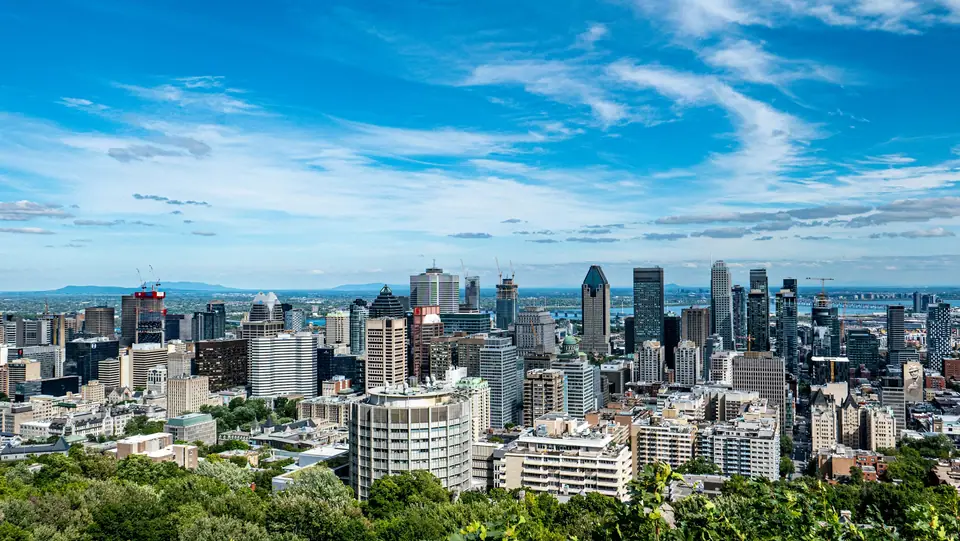
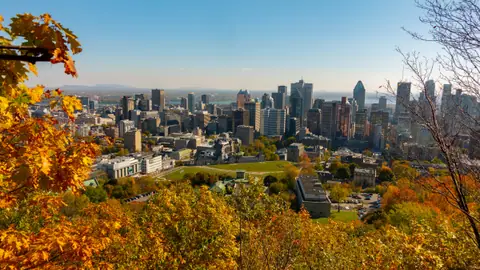
Photo by Grant Van Cleemput on Unsplash
Montreal
A French-speaking island city on the St. Lawrence, with a cobbled old port, a mountain park in the middle and a festival for every week of summer.
Quick decisions
How many days?
2 days: Old Montreal, Mount Royal and the Plateau. 3 days: add the markets, the Olympic Park area and a festival night. 4 to 5 days: add a day or, better, a night in Quebec City.
Where should I stay?
Old Montreal: stone buildings and cobbles, quiet at night. Downtown: linked to the underground city, ideal in winter. The Plateau: local streets, cafés and the mountain on foot. More in our where to stay guide.
Do I need a car?
No. The metro, buses and the REM light rail cover the city, and parking rules are notoriously confusing. Rent one only for Quebec City, the Eastern Townships or the Laurentians.
Best for
Food lovers: bagels, smoked meat, poutine and a serious restaurant scene. Festival fans: summer is one long programme. Couples: Old Montreal in the evening works every time. Families: the Biodôme and the Botanical Garden make easy days.
Before you go
Entry: most visa-exempt visitors flying in need an eTA, applied for on the Government of Canada site; US citizens don't. Language: French comes first, so open with "bonjour". Tips: 15 to 20 percent in restaurants, and sales taxes are added at the till.
Getting around
From the airport: the 747 bus runs day and night to downtown. The REM light rail to the airport isn't open yet. In the city: four metro lines and Bixi bikes. Details in our getting there guide.
Continue your trip
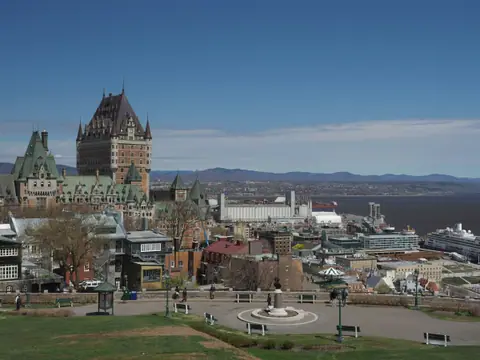
Quebec City is about three hours north-east by train, bus or car, covered in our Quebec City guide. Ottawa is two hours west, Toronto around five by train, and New York a long day on Amtrak's Adirondack.
Overview
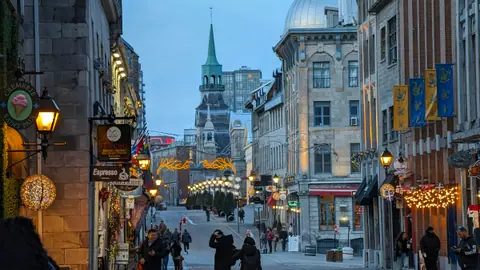
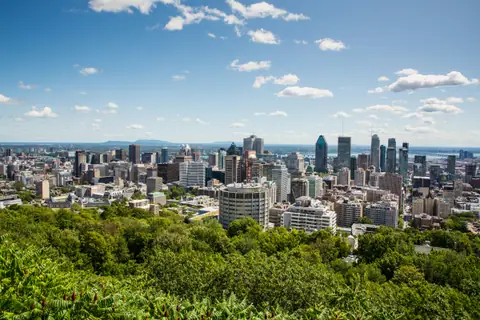
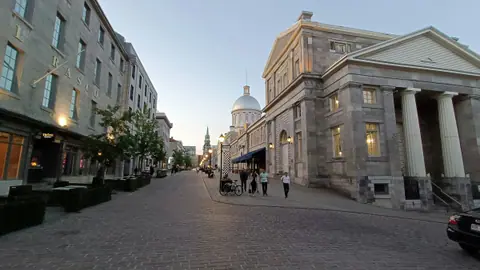
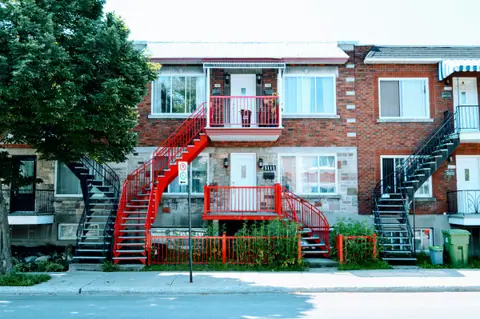
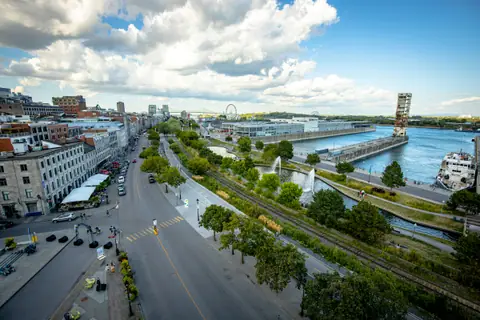
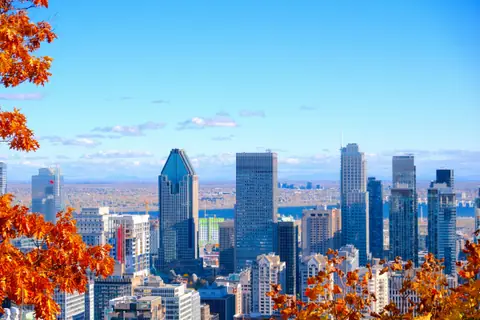
Montreal is the largest French-speaking city in North America, and it doesn't feel quite like anywhere else on the continent. The old town by the river is 17th and 18th-century stone, the downtown towers sit on top of kilometres of underground passages, and the residential streets of the Plateau have those famous outdoor staircases twisting up to second-floor front doors. In the middle of it all is Mount Royal, the small mountain that gives the city its name.
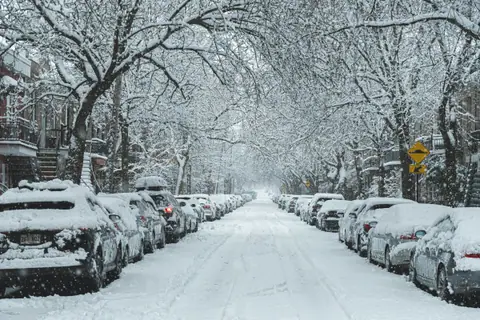
The city lives by its seasons more than most. Summer is terraces, bikes and free outdoor concerts almost every night. Winter is hard cold, snowbanks and a population that goes skating anyway. Both are good reasons to come, as long as you pack for the right one. Start with our Montreal travel guide.
Getting there
Montréal-Trudeau Airport (YUL) is in Dorval, about 20 km west of downtown, linked by the round-the-clock 747 bus while the REM airport station is still being finished. Trains arrive at Gare Centrale from Quebec City, Ottawa, Toronto and New York. Our getting there guide has every route.
Where to stay
Old Montreal is the romantic choice, downtown the practical one, especially in winter when the underground city keeps you out of the cold. The Plateau and Mile End suit travellers who want neighbourhood life, and the Quartier Latin is cheaper and central. We compare them in our where to stay guide.
Things to do
Begin in Old Montreal, with the Notre-Dame Basilica and the Old Port, then climb Mount Royal for the view back over the city. Our things to do list covers the markets, museums and neighbourhoods, and the Quebec City guide covers the trip north-east.
Food and drink
Montreal bagels are smaller, sweeter and denser than New York ones, boiled in honey water and baked in wood-fired ovens in Mile End. Smoked meat is brisket cured with spices and piled into rye bread. Poutine is fries with cheese curds that squeak and brown gravy. In spring, try maple taffy, hot syrup poured on snow and rolled onto a stick.
Culture
Montreal was founded as Ville-Marie in 1642, on the spot where the Pointe-à-Callière museum stands today, and it passed from French to British rule in the 1760s. That double history still shapes the city: a mostly francophone population, an English-speaking west side and a bilingual downtown. French is the official language of Quebec, and a simple "bonjour" at the counter goes a long way.
Weather by month
Montreal is warmest in July, with average highs around 27°C, and coldest in January, when nights drop to about -13°C. October is the wettest month, with rain on about 12 days. For mild weather with fewer rainy days, aim for May and September.
| Month | Low | Range | High | Rain | Rainy days |
|---|---|---|---|---|---|
| Jan | -13°C | -4°C | 78 mm | 12 d | |
| Feb | -12°C | -3°C | 75 mm | 11 d | |
| Mar | -6°C | 3°C | 80 mm | 11 d | |
| Apr | 1°C | 11°C | 114 mm | 12 d | |
| May | 9°C | 19°C | 76 mm | 10 d | |
| Jun | 14°C | 24°C | 118 mm | 14 d | |
| Jul | 18°C | 27°C | 106 mm | 12 d | |
| Aug | 17°C | 25°C | 121 mm | 13 d | |
| Sep | 13°C | 22°C | 77 mm | 9 d | |
| Oct | 7°C | 14°C | 126 mm | 12 d | |
| Nov | -1°C | 6°C | 81 mm | 12 d | |
| Dec | -7°C | 0°C | 92 mm | 13 d |
Averages of daily values from 2015 to 2024. Rainy days are days with at least 1 mm of rain. Source: Open-Meteo · Compare destinations by month.
Montreal on the map
Every place we cover in Montreal. Tap a category or pin to explore.
In-depth Montreal guides
Browse the guides grouped by topic: sights, neighbourhoods, food, transport, day trips and trip planning.
Sights, Landmarks & Parks
Key monuments, viewpoints, museums and nature trails.
Neighbourhoods & Where to Stay
Districts, historic quarters and the best bases for your stay.
Getting Around & Arrival
Airport transfers, public transit, passes and driving rules.

Day Trips & Excursions
Easy half-day and full-day trips from the city.
Trip Planning & Itineraries
When to visit, what to pack and day-by-day routes.
- Montreal: What to Know Before You GoHow the city works, how to handle the language and what to sort out before you land.
- Best Time to Visit MontrealFour very different seasons, and which one suits your trip.
- What to Wear in MontrealHow to dress for minus 20, and for a humid July afternoon.
- Montreal 3-Day ItineraryThree days that cover the old town, the mountain and the markets.
Need your embassy or consulate in Canada? See embassies and consulates in Canada.
Reviews
Log in to write a review.
No reviews yet.