All 100 essential sights across Lower Manhattan, Brooklyn Bridge, Greenwich Village, the High Line, Midtown, Central Park and Museum Mile mapped in walking order.
Lenapehoking, New Amsterdam and the 1811 Commissioners’ Grid
Long inhabited by the Lenape people who called the wooded island Mannahatta ("Island of Many Hills"), the harbour at the mouth of the Hudson River was settled by the Dutch West India Company in 1624 as New Amsterdam at the southern tip of Lower Manhattan (where the medieval street layout of Pearl Street, Wall Street and Stone Street still survives). Renamed New York by the British in 1664, the port briefly served as the first capital of the United States under the Constitution when George Washington was inaugurated at Federal Hall in 1789.
The opening of the Erie Canal in 1825, the layout of the 1811 Commissioners Grid Plan and the creation of Frederick Law Olmsted and Calvert Vaux Central Park in 1858 propelled the city expansion northward. Linked to Brooklyn by the Roebling suspension bridge in 1883 and consolidated into the five boroughs in 1898, twentieth-century Manhattan pioneered steel-frame Art Deco skyscrapers, Broadway theatre and world-renowned museum collections.
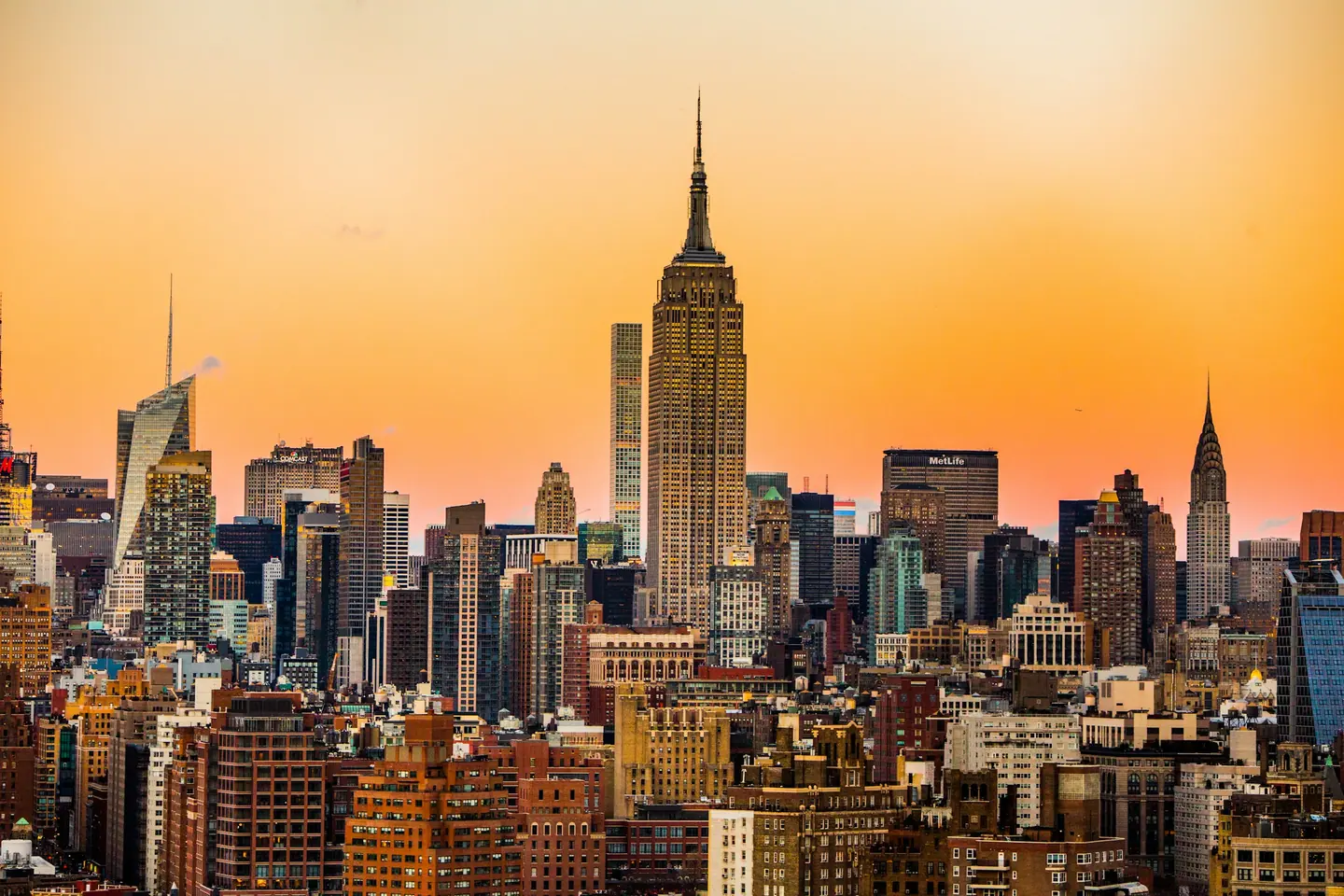
Financial District, Battery Park, Statue of Liberty, 9/11 Memorial & Brooklyn Bridge
Begin at Battery Park and the harbour ferries, walking up Canyon of Heroes and Wall Street to Trinity Church, the 9/11 Memorial, One World Observatory and across the Brooklyn Bridge.
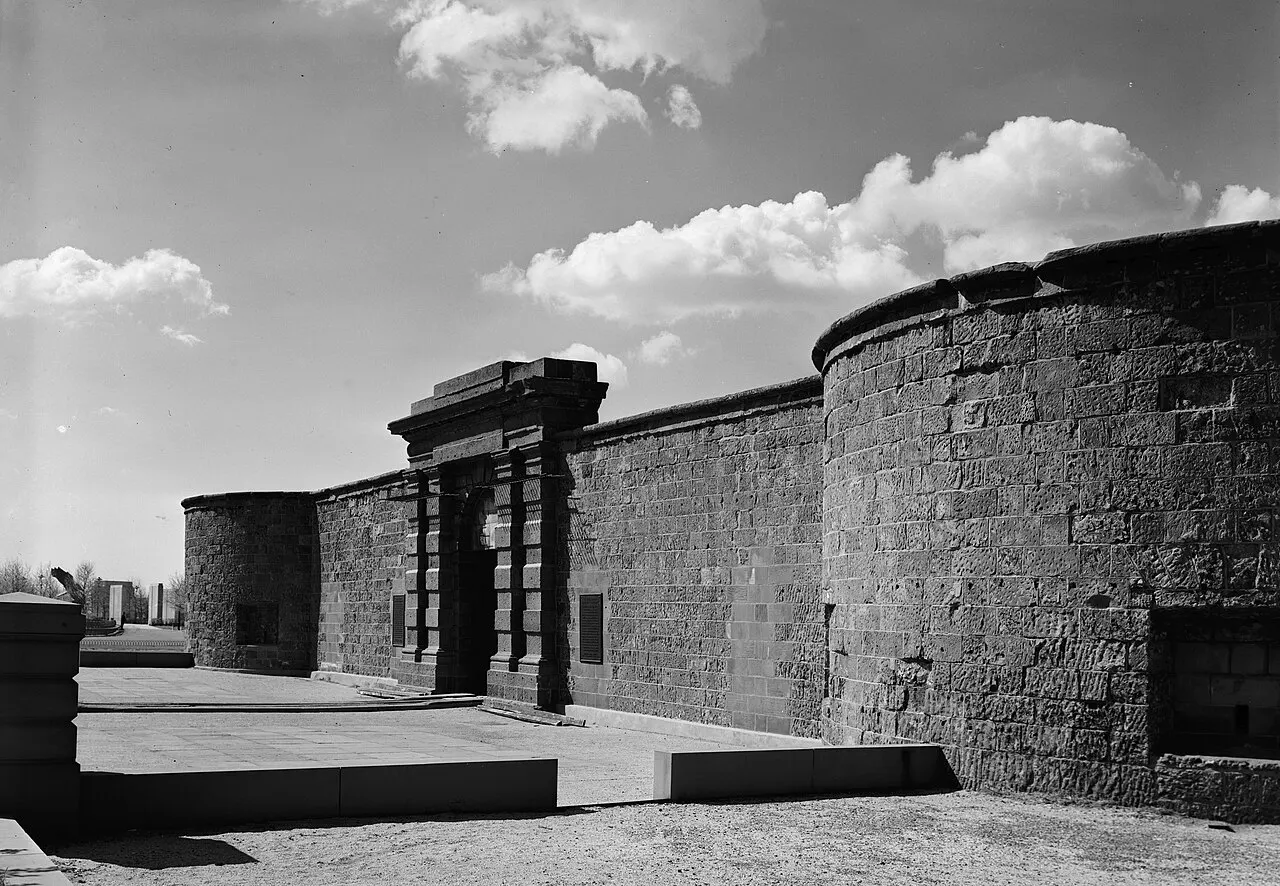
Castle Clinton National Monument
Built between 1808 and 1811 as a coastal fortification, this red sandstone battery later served as an opera house and an immigration depot. We now visit the structure to buy ferry tickets and inspect its preserved gun ports and thick curved walls. The open courtyard provides expansive views across the water towards the islands.
Battery Park
Named after the artillery batteries that protected the Dutch and British settlements, this public green space offers landscaped gardens, sea breezes, and promenades. Memorials honouring merchant mariners, explorers, and soldiers punctuate the pathways. The waterfront railing provides an unobstructed panorama of passing tugboats, commuter ferries, and the distant harbour forts.
Statue of Liberty National Monument
Dedicated in 1886 as a gift from France, the copper colossus was designed by Frédéric-Auguste Bartholdi with an internal iron framework engineered by Gustave Eiffel. Visitors arrive by ferry to inspect the classical drapery, the broken shackles at her feet, and the tablet bearing the American Declaration date. The pedestal museum chronicles its transatlantic fabrication.
Ellis Island National Museum of Immigration
Between 1892 and 1954, over twelve million immigrants passed through this red brick and limestone French Renaissance complex. The restored Registry Room features vaulted Guastavino tile ceilings, inspection benches, and original desks where officials questioned arrivals. Archival displays, family photographs, and oral recordings document the rigorous medical examinations and bureaucratic procedures.
Alexander Hamilton U.S. Custom House
Designed by Cass Gilbert and completed in 1907, this grand limestone edifice represents the prosperity of American maritime commerce. Sculptures by Daniel Chester French depicting four continents flank the entrance portico beneath elaborate Corinthian columns. Inside, the massive oval rotunda displays Reginald Marsh murals above galleries detailing indigenous art and cultural heritage.
Bowling Green
Established in 1733, this tear-drop shaped park originally functioned as a cattle market and bowling lawn for British colonists. An eighteenth-century wrought-iron fence surrounds the perimeter, bearing rough scars where colonial patriots hacked off crowns following the Declaration of Independence. Today, shade trees and benches frame the central fountain facing Broadway.
Charging Bull
Cast by Italian-American artist Arturo Di Modica, this bronze beast was placed illicitly outside the stock exchange in 1989 before moving here permanently. The muscular animal stands poised to strike, its lowered horns and tensed frame representing financial resilience. Crowds gather daily on the Broadway traffic island to touch the polished bronze flanks.
Fraunces Tavern
Dating to 1719 as a merchant residence, Samuel Fraunces converted the building into a tavern in 1762. General George Washington delivered his emotional farewell address to Continental Army officers in the Long Room following the British evacuation. The upper floors preserve early American domestic interiors, colonial flags, and Revolutionary War weaponry.
Delmonico's
Occupying a distinctive wedge-shaped corner building constructed in 1891, this establishment helped invent modern restaurant hospitality in America. The entrance retains marble portals reputedly brought from Pompeii. Inside, dining rooms steeped in Gilded Age character honour the birthplace of classic dishes such as Eggs Benedict and Baked Alaska.
New York Stock Exchange
George B. Post designed this neoclassical landmark in 1903, fronting Broad Street with six massive Corinthian columns and a carved marble pediment. Although automated trading has altered the frenzy of the trading floor inside, the exterior remains an imposing symbol of capital. Security barriers protect the facade, where visitors view the ceremonial brass entry doors.
Federal Hall National Memorial
Standing where the original City Hall witnessed George Washington presidential inauguration in 1789, the present Greek Revival structure was erected in 1842 as the United States Custom House. A commanding bronze statue of Washington surmounts the front steps. The interior features a domed rotunda, classical columns, and galleries displaying the original inauguration bible.
Trinity Church
Completed in 1846 to designs by Richard Upjohn, this brownstone church was once the tallest structure in the United States. Its soaring spire terminates the visual axis of Wall Street with rich Gothic tracery and stained glass windows. Outside, the shaded churchyard contains the gravestones of founding father Alexander Hamilton and inventor Robert Fulton.
Canyon of Heroes
This urban corridor along southern Broadway has hosted ticker-tape celebrations for world leaders, aviators, and sports champions since the late nineteenth century. Black granite strips embedded into the pavements record the names and dates of over two hundred honourees. High-rise masonry facades create the echoing urban chasm that gave the parade route its moniker.
St. Paul's Chapel
Constructed in 1766 from Manhattan mica schist, this Georgian chapel is the oldest continuously used public building in Manhattan. George Washington attended services here following his inauguration, and his private box remains preserved in the sanctuary. Exhibits inside document the church role as a volunteer relief haven following the September 11 attacks.
National September 11 Memorial
Architect Michael Arad designed this contemplative memorial plaza, planting swamp white oaks around two colossal sunken pools. Waterfalls cascade thirty feet down granite walls into central voids, marking the precise locations of the Twin Towers. Bronze parapets surrounding the pools bear the incised names of the 2,977 victims killed in the terrorist attacks.
The Oculus
Santiago Calatrava envisioned this transit hub as a white dove released from a child hands, using ribbed steel spans that rise outward like wings. The vast main concourse features Italian white marble floors illuminated by a central glass skylight. Commuters traverse the hall to connect between suburban rail lines and underground subway corridors.
One World Trade Center
Designed by David Childs of Skidmore, Owings and Merrill, this octagonal glass skyscraper ascends from a cubic base to reach exactly 1,776 feet. Chamfered edges create eight elongated triangular facets that reflect shifting sky patterns across lower Manhattan. The One World Observatory near the pinnacle offers vast panoramic perspectives of the surrounding waterways.
Woolworth Building
Commissioned by retail magnate Frank W. Woolworth and completed in 1913 by Cass Gilbert, this skyscraper held the title of world tallest building for seventeen years. Its terracotta facade incorporates delicate buttresses, gargoyles, and Gothic arches. The private vaulted lobby boasts glittering glass mosaics, gilded plasterwork, and carved stone caricatures of the architect and client.
City Hall Park
Serving as common pastureland in colonial times, this historic park is anchored by New York City Hall, completed in 1812. The building combines French Renaissance symmetry with American Federal detailing, featuring a cupola crowned by a statue of Justice. Shaded paths, gas lamps, and the ornate Jacob Wrey Mould fountain offer respite from the surrounding traffic.
Brooklyn Bridge
Completed in 1883 by John and Washington Roebling, this suspension span was engineered with pioneering steel cables and massive neo-Gothic limestone towers. An elevated wooden promenade separates pedestrians from road traffic, allowing a steady passage across the East River. Walking eastwards, we take in dramatic vistas of the Manhattan skyline receding behind intricate steel diagonal stays.
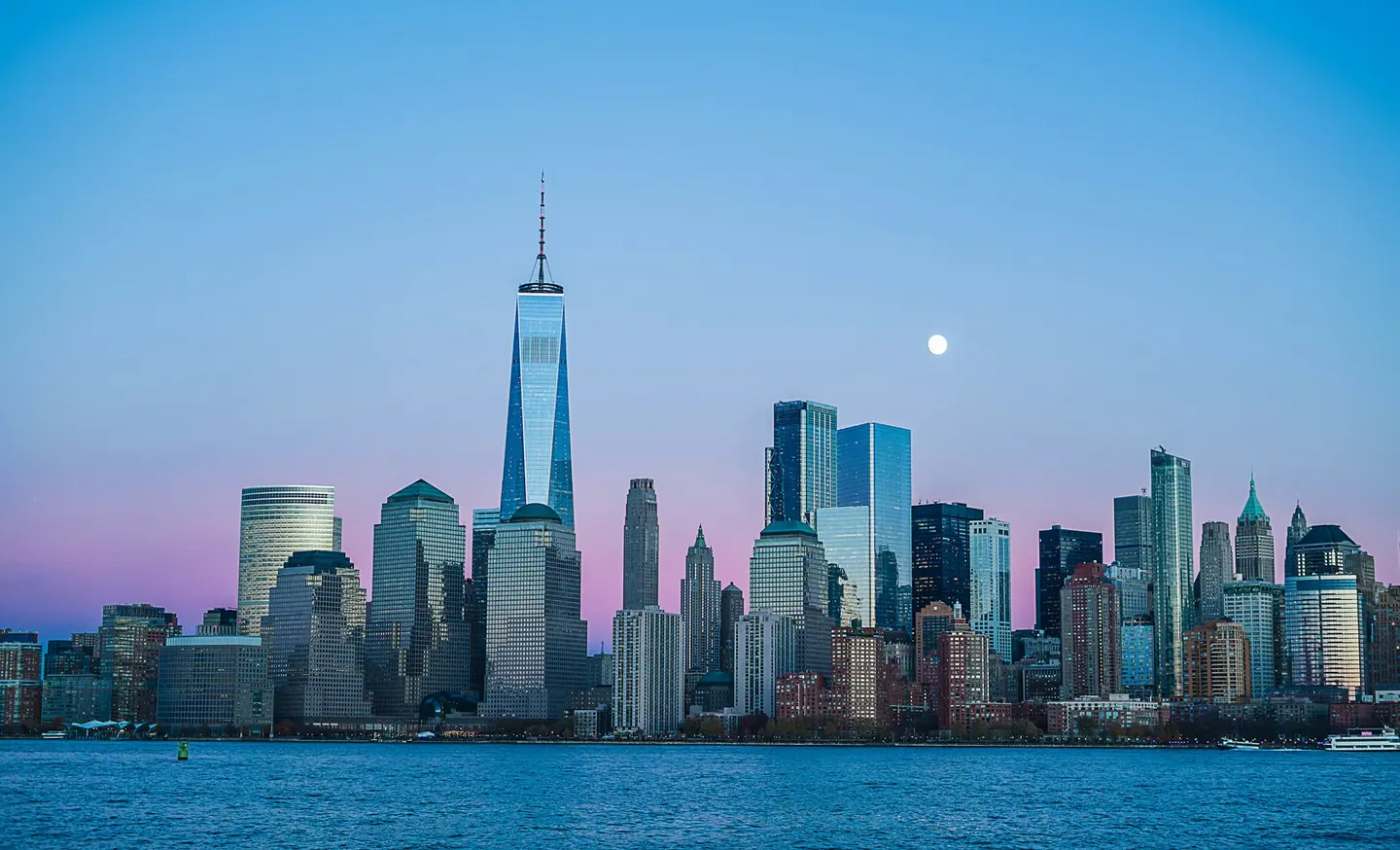
Chinatown, Little Italy, SoHo Cast-Iron District, Greenwich Village & Washington Square
Thread through Chinatown and Little Italy into the cast-iron galleries of SoHo and the brownstone lanes of Greenwich Village around Washington Square Arch.
Chatham Square
This ancient crossroads marks the convergence of eight streets at the historic gateway to Chinatown. We find the Kimlau War Memorial here, erected in 1962 to honour Chinese-American soldiers who died during the Second World War. The plaza also features a bronze statue of Lin Zexu, the nineteenth-century Qing dynasty official.
Edward Mooney House
Constructed between 1785 and 1789 for a wealthy butcher, this building represents a rare survival of late Georgian and early Federal architecture. The red brick exterior retains hand-hewn timbers and traditional stone lintels from the post-Revolutionary era. Today the ground floor houses commercial premises, yet the historic domestic proportions remain discernible from the street.
First Shearith Israel Cemetery
Established in 1682 by the Spanish and Portuguese Jewish community, this small enclosed graveyard preserves graves dating to the seventeenth century. Weathered brownstone markers bear inscriptions in Hebrew, Spanish, and English. The site reflects the early colonial origins of Manhattan before street grids compressed the original cemetery grounds.
Museum of Chinese in America
Housed in a former industrial machine shop redesigned by architect Maya Lin, this museum chronicles the Chinese diaspora in the United States. Galleries surround a central sky-lit courtyard inspired by traditional Chinese communal residences. Exhibitions display historic artefacts, personal letters, and photographic archives illustrating immigrant struggles and community resilience.
Church of the Transfiguration
Built in 1801 as the Zion English Lutheran Church, this fieldstone sanctuary was purchased by the Roman Catholic archdiocese in 1853. The building served waves of immigrant arrivals, transitioning from Irish and Italian congregations to Chinese parishioners. Its austere stone facade, pointed windows, and octagonal wooden belfry form a dignified presence.
Old St. Patrick's Cathedral
Completed in 1815 to designs by Joseph-Francois Mangin, this church served as the seat of the Roman Catholic Archdiocese before midtown expansion. High brick perimeter walls were constructed to repel nativist anti-Catholic mobs during the nineteenth century. The brick exterior conceals vaulted catacombs that contain historic family vaults and ecclesiastical crypts.
Most Precious Blood Church
Erected in the late nineteenth century by Franciscan friars, this Romanesque Revival sanctuary provided a spiritual centre for southern Italian newcomers. The ornate interior contains polychrome statuary, painted ceiling panels, and votive altars dedicated to patron saints. The church serves as the spiritual base for the annual Feast of San Gennaro.
Puck Building
Designed by Albert Wagner and finished in 1886, this red-brick commercial complex housed the satirical Puck magazine and its printing presses. Gilded statues of the Shakespearean sprite adorn the exterior facade above the entrance and at the corner of Houston Street. The building showcases decorative brickwork, cast-iron accents, and expansive industrial sash windows.
E. V. Haughwout Building
Erected in 1857 by architect John P. Gaynor, this commercial palace drew inspiration from Jacopo Sansovino's Venetian library. It was the first commercial site fitted with an operational Otis safety passenger elevator. Prefabricated cast-iron panels create rows of Corinthian columns and arched windows across both street elevations.
Roosevelt Building
Constructed in 1893 on land once owned by the prominent Roosevelt family, this building reflects the industrial transition of SoHo into manufacturing. The facade incorporates ornamental metal framing, terracotta dressings, and tall loft bays that maximized daylight for garment workers. Restored cast-iron elements illustrate the prefabricated decorative crafts of Gilded Age New York.
Singer Building
Designed by Ernest Flagg and completed in 1904, this twelve-storey building served as office space and manufacture showrooms for the sewing machine firm. The exterior incorporates deep recessed windows, delicate wrought-iron balconies, and dark green terracotta panels. The design stands out as a pre-modern hybrid of cast-iron construction and early steel framing.
Cheney Building
Completed in 1891, this building reflects the refined taste of nineteenth-century dry goods merchants who dominated the neighbourhood. The frontage displays modular classical orders, rhythmic tiers of fluted pilasters, and an ornate projecting roof cornice. The expansive plate-glass windows were designed to flood the internal warehouse floors with natural light.
Judson Memorial Church
Designed by Stanford White and opened in 1892, this Romanesque and Renaissance Revival church features light Roman brick and terracotta ornament. The companion campanile tower was built to finance the parish through artist boarding rooms. Inside, visitors can admire extensive stained-glass window schemes created by John La Farge.
Washington Square Arch
Commissioned in 1889 to replace a temporary wooden arch, this monument of Tuckahoe marble was designed by architect Stanford White. Bas-relief allegorical carvings adorn the spandrels, while statues of Washington as commander and statesman anchor the northern piers. The monument anchors the southern terminus of Fifth Avenue at Washington Square Park.
The Row
These uniform red-brick townhouses along Washington Square North were developed in the 1830s for prominent merchant families. Known as The Row, the houses feature marble steps, Ionic and Doric porticos, and ornamental cast-iron balustrades. Writers Henry James and Edith Wharton used this stately residential setting in their nineteenth-century novels.
MacDougal Alley
Tucked away behind the grand townhouses of Washington Square, this cul-de-sac originally held carriage stables and groom quarters. Around the turn of the twentieth century, sculptors and painters adapted the timbered stables into naturally lit studios. The cobblestone lane preserves historic gas streetlamps, providing an intimate glimpse into bohemian Greenwich Village history.
Washington Mews
This private, paved passage served as service access and horse stabling for the aristocratic residences along Washington Square North. During the early twentieth century, artists converted the two-storey brick and stucco carriage houses into residential studios. New York University now manages the mews, which remains paved with Belgian blocks and closed to vehicle traffic.
St. Luke in the Fields
Built in 1821 as a rural chapel for Trinity Church, this understated brick structure reflects the period when Greenwich Village remained a pastoral retreat. Its simple square bell tower and clear-glass sash windows echo village parish traditions of post-colonial America. Behind the chapel, secluded gardens provide quiet walkways planted with heritage flora.
Jefferson Market Library
Constructed in 1877 by architects Calvert Vaux and Frederick Clarke Withers, this former municipal courthouse features polychromatic stone, stained glass, and gables. The prominent fire-watch clock tower once surveyed the surrounding rooftops of Greenwich Village. Saved from demolition by local campaigners in the 1960s, the building serves as a public library branch.
Stonewall National Monument
Comprising Christopher Park and the neighbouring historic inn, this site witnessed the rebellion of June 1969 that galvanized the modern gay liberation movement. The small triangular park contains the bronze sculpture Gay Liberation, designed by artist George Segal. Interpretive displays tell how community resistance against police raids transformed global civil rights.
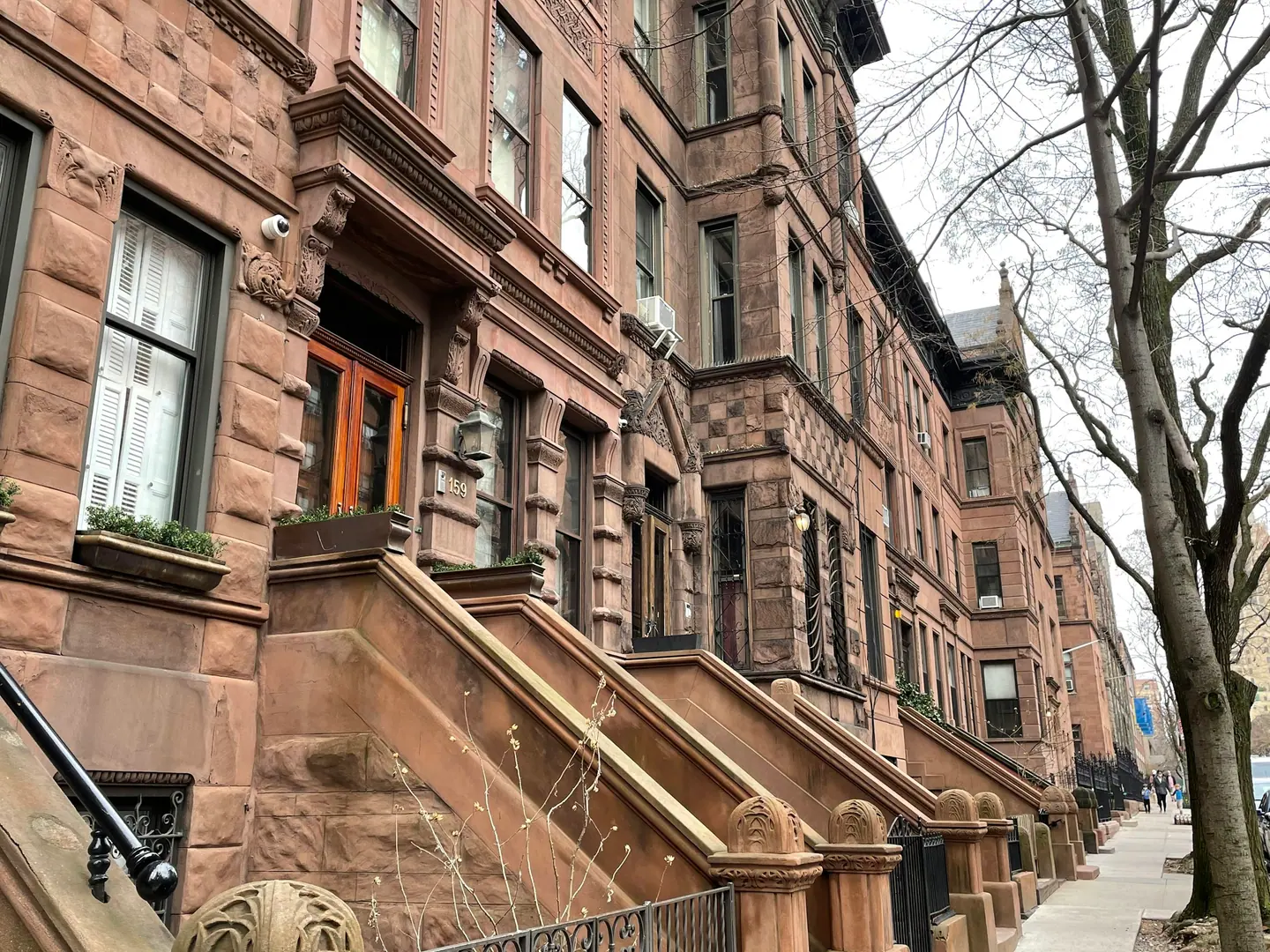
Meatpacking District, The High Line, Chelsea, Flatiron, Union Square & East Village
Walk the elevated park of the High Line from the Whitney Museum to Hudson Yards, then cross past the Flatiron Building, Madison Square Park and Union Square.
Whitney Museum of American Art
Founded by sculptor Gertrude Vanderbilt Whitney in 1930, the institution relocated to this asymmetric steel and glass structure in 2015. Visitors can observe multi-tiered outdoor sculpture terraces overlooking the Hudson River. The galleries showcase twentieth-century and contemporary masterworks by Edward Hopper, Georgia O'Keeffe, and Alexander Calder.
The High Line
Constructed in the 1930s to lift dangerous freight trains above Manhattan street traffic, the West Side Line fell into disuse by 1980. Community activists saved the structure from demolition, opening the continuous parkway in phases starting in 2009. The landscape incorporates indigenous prairie flora intertwined with preserved industrial railway tracks.
Chelsea Market
Occupying the former National Biscuit Company factory complex, this brick structure was where the Oreo biscuit was invented in 1912. The ground floor concourse retains exposed iron pipes, vintage brickwork, and an indoor waterfall fed by industrial machinery. The building now serves as an active retail concourse and corporate media office.
The Vessel
Conceived by British designer Thomas Heatherwick, this copper-clad steel monument opened to the public in 2019. Its geometric lattice design comprises 154 interconnecting flights of stairs and 80 distinct viewing landings. Rising sixteen storeys above the public plaza, it forms the visual centrepiece of the western rail yard redevelopment.
The Shed
Architects Diller Scofidio + Renfro partnered with Rockwell Group to create this flexible arts institution, which opened in 2019. The building features an eighty-foot movable outer shell made of fluoropolymer cushions that rolls on industrial wheels. This mechanical engineering enables the structure to expand and contract according to performance requirements.
Church of the Guardian Angel
Established in 1888, the current church building on Tenth Avenue was constructed in 1930 using a mix of Romanesque Revival and Classical idioms. It earned the local nickname of the Shrine of the Waterfront due to its service to longshoremen and rail workers. The interior preserves original marble altarpieces and carved religious figures.
General Theological Seminary
Dating to 1817, this Episcopal seminary occupies a historic city block known as Chelsea Square. Architect Charles Coolidge Haight designed the picturesque Gothic Revival brick and stone halls during the late nineteenth century. The leafy grounds enclose the Chapel of the Good Shepherd, which features an imposing 160-foot bell tower.
Hotel Chelsea
Built between 1883 and 1885 as a cooperative apartment house, this Victorian Gothic structure is embellished with delicate wrought-iron balconies. It became a legendary bohemian haven, providing lodging to Mark Twain, Arthur Miller, and Leonard Cohen. The lobby preserves period mouldings and walls adorned with artworks donated by former tenants.
Church of St. Vincent de Paul
Designed by French-American architect Henry Engelbert, this church was completed in 1869 to cater to French-speaking immigrants. The stone facade features Classical pilasters, arched entries, and balanced pediments that reflect Parisian ecclesiastical models. It stands as a reminder of the French diaspora that once thrived across lower midtown Manhattan.
Church of the Holy Apostles
Erected between 1846 and 1848 according to plans by architect Minard Lafever, this brownstone church exemplifies early Italianate ecclesiastical design. Its distinctive copper spire was completed later in 1854. Inside, an open timber-vaulted hall houses prominent social outreach efforts, set beneath stained-glass windows created by the studio of William Jay Bolton.
Flatiron Building
Designed by Chicago architect Daniel Burnham and completed in 1902, this twenty-two-storey tower occupies a wedge-shaped plot where Broadway meets Fifth Avenue. Its limestone and terracotta facade features Renaissance motifs rising from a rusticated base to a grand overhanging cornice. The apex measures just two metres wide, creating dramatic street-level wind currents.
Madison Square Park
Named after President James Madison, this public common was formally opened in 1847. The park features monuments to naval hero David Farragut and statesman William H. Seward alongside lush gardens and rotating public contemporary art installations. It provides vistas of surrounding architectural landmarks, including the Metropolitan Life Insurance Company Tower.
Metropolitan Life Insurance Company Tower
Completed in 1909 to designs by Napoleon LeBrun & Sons, this 700-foot tower reigned as the tallest building on earth until 1913. Its white marble cladding and four monumental clock faces mimic the historic campanile of Venice. An illuminated beacon crowned the gilded pyramidal roof, once signalling time across the city.
Appellate Division Courthouse of New York State
Constructed in 1899 under the direction of James Brown Lord, this marble judicial building sits on the eastern edge of Madison Square. Its exterior features statues representing historic lawgivers such as Justinian, Moses, and Confucius sculpted by leading American artists. The interior courtroom contains stained glass and classical ceiling panels.
Union Square
Laid out in 1839, the square received its name because it marked the union of Bloomingdale Road and the Bowery. It has long served as a gathering ground for political rallies and labour demonstrations. An 1856 equestrian bronze statue of George Washington by Henry Kirke Brown stands near the southern plaza.
Tammany Hall
Built in 1928 by architects Thompson, Holmes & Converse, this red brick and limestone building housed the powerful Democratic political machine. The pediment displays a carved portrait bust of Tammany, a legendary Delaware Indian chief. A contemporary glass dome addition completed in 2020 now crowns the historic colonial-inspired facade.
St. George's Episcopal Church
Erected between 1846 and 1856 to plans by Charles Otto Blesch and Leopold Eidlitz, this church influenced the widespread adoption of early Romanesque architecture. Its interior features broad arches, carved timber trusses, and a historic relationship with industrialist J.P. Morgan, who served on its vestry. The building anchors the quiet parkside.
Grace Church
Completed in 1846 by young architect James Renwick Jr., this French Gothic parish church is built from Sing Sing marble. Situated at an angle where Broadway bends, its ornate openwork spire creates a notable vista from the south. The interior contains stained glass crafted by Clayton and Bell of London alongside quiet cloisters.
Merchant's House Museum
Constructed in 1832 by Joseph Brewster and occupied by the Tredwell family for nearly a century, this brick townhouse remains structurally intact. The rooms contain original family furnishings, decorative gas-lighting fixtures, and period clothing. It offers rare physical insight into upper-middle-class domestic life in antebellum New York.
St. Mark's Church in-the-Bowery
Constructed in 1799, this is the oldest site of continuous religious practice in Manhattan, situated upon the family estate of Dutch Director-General Peter Stuyvesant. Built from local fieldstone, the church gained a Greek Revival steeple in 1828 and a cast-iron Italianate portico in 1854. The churchyard contains the Stuyvesant family burial vault.
Midtown Manhattan: Empire State Building, Grand Central, Public Library, Rockefeller Center & Broadway
Explore the Art Deco icons of Midtown from the Empire State Building, Bryant Park and Grand Central Terminal to St Patrick Cathedral, Top of the Rock, MoMA and Times Square.
Empire State Building
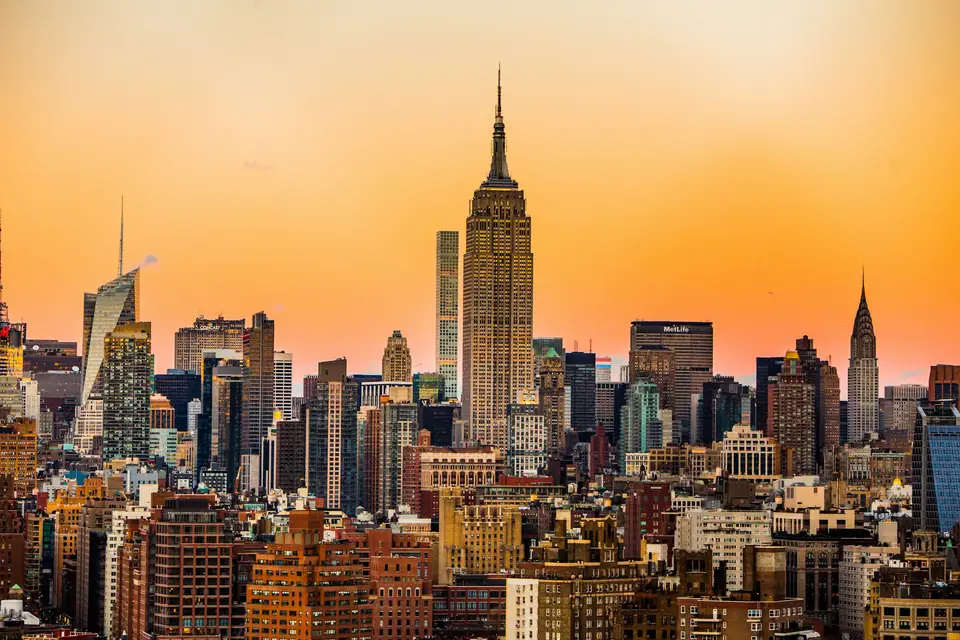
Designed by Shreve, Lamb and Harmon, this 102-storey limestone tower was constructed in just over a year and opened in 1931. Travellers can examine the gleaming marble lobby featuring multi-storey relief murals of the tower and celestial machinery. The open-air observation decks provide expansive panoramas across Manhattan and neighbouring states.
Morgan Library & Museum
Originally constructed for financier J. Pierpont Morgan between 1902 and 1906, this Classical Revival complex was designed by Charles McKim. Inside, visitors encounter three-storey inlaid walnut bookshelves, ceiling frescoes inspired by the Italian Renaissance, and an original Gutenberg Bible. Renzo Piano later linked the historic pavilions with modern glass pavilions.
New York Public Library Main Branch
Dedicated in 1911 and designed by Carrère and Hastings, this monumental marble repository serves as the flagship research centre of the city. Flanked by the carved marble lions Patience and Fortitude, the exterior leads to Astor Hall. Upstairs, the Rose Main Reading Room displays gilded plaster mouldings, soaring arched windows and painted cloud murals.
Bryant Park
Restored in the 1990s over the underground stacks of the neighbouring library, this manicured public square features rows of London plane trees and gravel paths. A monument to poet William Cullen Bryant stands at the eastern edge beside the fountain terrace. Visitors gather around green bistro chairs to watch lawn games or seasonal events.
American Radiator Building
Completed in 1924 by Raymond Hood and André Fouilhoux, this skyscraper pioneered a striking fusion of Gothic ornament and early Art Deco form. The exterior is clad in black brick to reduce mass, highlighted by gilded terracotta carvings representing heating and combustion. Today the structure operates as a boutique hotel.
Grand Central Terminal
Opened in 1913 by the New York Central Railroad, this transit hub exemplifies Beaux-Arts civic engineering. Inside the cavernous Main Concourse, visitors observe the four-faced brass clock and an astronomical mural painted across the barrel-vaulted ceiling. Downstairs, the Whispering Gallery permits sound to travel along Guastavino tile arches.
Chrysler Building
Designed by William Van Alen for Walter Chrysler, this tower was briefly the tallest structure in the world upon completion in 1930. The brick exterior features stylised eagle gargoyles and automobile radiator caps fashioned from Nirosta steel. The triangular lobby contains red Moroccan marble walls and a massive ceiling painting honouring industrial progress.
News Building
Constructed in 1930 to house the Daily News, this Art Deco landmark was designed by Raymond Hood and John Mead Howells. Striped brick facades accentuate its vertical lines, leading upward to geometric setbacks. The circular lobby contains an enormous revolving globe sunken into the floor, encircled by bronze compass points and wind charts.
St. Bartholomew's Church
Constructed between 1916 and 1918 by Bertram Goodhue, this Episcopal parish replaced an earlier Midtown chapel. The structure incorporates an ornate triple portal sculpted by Stanford White from the earlier church, blended into patterned brick walls. Inside, golden mosaics, marble columns and one of North America's largest pipe organs grace the nave.
St. Patrick's Cathedral
Designed by architect James Renwick Jr and dedicated in 1879, this Catholic cathedral anchors Fifth Avenue opposite Rockefeller Center. Its twin spires rise over one hundred metres, framing intricate rose windows and ribbed vaults. Inside, travellers can admire the bronze baldachin, sculpted Pietà by John Ziolkowski, and numerous chapels honouring patron saints.
Rockefeller Center
Conceived by John D. Rockefeller Jr during the Great Depression, this complex pioneered civic coordination across multiple city blocks. The sunken central plaza is overlooked by Paul Manship's gilded bronze Prometheus fountain. Symmetrical limestone buildings frame the Channel Gardens, which display seasonal floral arrangements along the pedestrian promenade.
Top of the Rock
The observation platforms atop 30 Rockefeller Plaza provide views of Central Park to the north and the Empire State Building to the south. Designed in tiered ocean-liner setbacks, the rooftop retains its 1930s nautical aesthetic with stainless steel detailing. The lower lobby features dramatic murals by José Maria Sert depicting human labour and progress.
Radio City Music Hall
Opened in 1932 under the direction of theatre impresario Samuel Roxy Rothafel, this entertainment venue showcases luxurious interior design by Donald Deskey. The grand foyer contains a sweeping staircase, gilded wall mirrors and a monumental mural by Ezra Winter. Inside the auditorium, concentric circular arches radiate outward across the ceiling.
Museum of Modern Art
Established in 1929 and expanded by Philip Johnson, Yoshio Taniguchi and Diller Scofidio + Renfro, this institution houses world-famous modern and contemporary artworks. Galleries feature works by Van Gogh, Picasso, Warhol and modern design objects. Outside, the Abby Aldrich Rockefeller Sculpture Garden offers reflecting pools, marble plazas and monumental bronzes.
Museum of Arts and Design
Occupying a redesigned modernist tower on Columbus Circle, this institution explores the creative processes behind contemporary craft, textiles and architecture. Redesigned by Brad Cloepfil, the building features a fritted glass facade that admits filtered natural light. Inside, travellers can view changing exhibitions of jewellery, ceramics, glasswork and functional design.
Carnegie Hall
Financed by industrialist Andrew Carnegie and designed by William Burnet Tuthill, this music hall opened in 1891 with Pyotr Ilyich Tchaikovsky conducting. Built without steel framing, its thick masonry walls ensure warm, resonant acoustic properties in Isaac Stern Auditorium. The attached museum displays historic concert programmes, performance posters and classical instruments.
Times Square
Formed by the junction of Broadway and Seventh Avenue, this world-renowned square gained its current name when The New York Times opened its headquarters here in 1904. Illuminated by high-definition video displays, the pedestrian plazas host millions of travellers yearly. A red glass staircase over the TKTS booth provides an elevated vantage over the neon corridors.
Lyceum Theatre
Constructed in 1903 by producer Daniel Frohman, this Beaux-Arts playhouse is the oldest Broadway theatre in continuous operation. The facade features colossal fluted columns, ornate limestone carvings and a classical copper mansard roof. The intimate interior retains historical woodwork and the former private apartment from which Frohman watched stage productions.
New Amsterdam Theatre
Opened in 1903 by Herts and Tallant, this landmark theatre long hosted the Ziegfeld Follies on historic 42nd Street. The building is renowned for its Art Nouveau interior, displaying carved stone reliefs, allegorical friezes and painted panels of Shakespearean lore. A full restoration in the 1990s preserved its historic plasterwork and grand lobby.
Town Hall
Erected in 1921 by the League for Political Education, this Georgian Revival hall served as a forum for political debates and the women's suffrage movement. Designed by McKim, Mead and White, the auditorium deliberately features no box seats to encourage democratic equality. Over the decades, it evolved into a venue for acoustic music and public lectures.
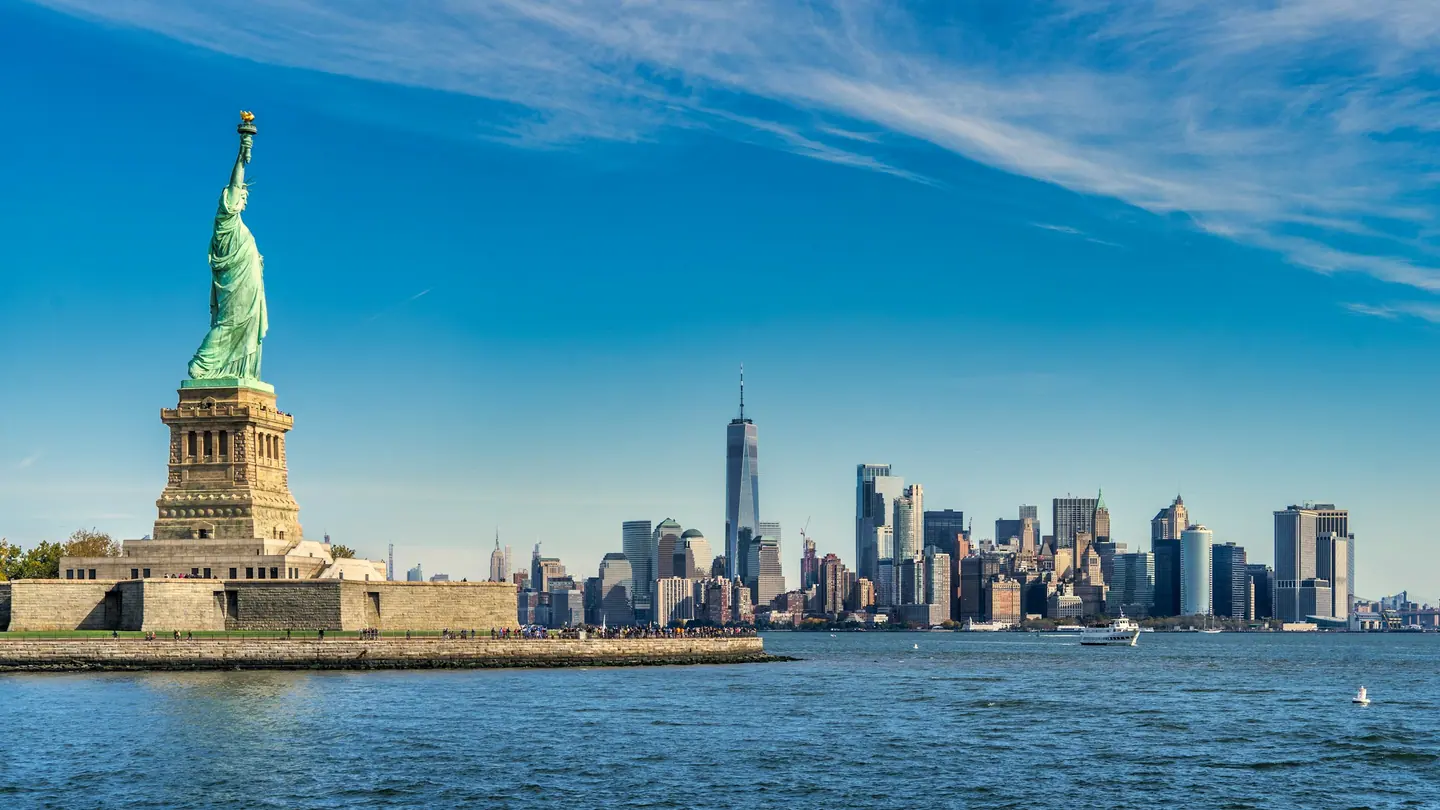
Central Park, Lincoln Center, American Museum of Natural History & Fifth Avenue Museum Mile
Follow the bridges and meadows of Central Park from Bethesda Terrace and Bow Bridge to the Metropolitan Museum of Art, Guggenheim Museum and Upper West Side.
Lincoln Center for the Performing Arts
Developed during the mid-twentieth century urban renewal programme, this modernist plaza unites venues designed by Wallace Harrison, Philip Johnson, and Eero Saarinen. Visitors gather around the central travertine fountain to admire the glass facades of the David Geffen Hall and the Metropolitan Opera House, which houses monumental murals painted by Marc Chagall.
Metropolitan Opera House
Opened in 1966 to replace the company's historic Midtown theatre, the venue features five distinctive travertine arches and a gold-leaf ceiling. Inside, crystal chandeliers designed by Hans Harald Rath illuminate Austrian velvet seats and sweeping staircases. Operas and ballet productions make regular use of its vast revolving stage machinery.
The Dakota
Commissioned by Singer Sewing Machine president Edward Clark and completed in 1884, this apartment block introduced luxury communal living to the Upper West Side. Architect Henry Janeway Hardenbergh incorporated steep gables, dormers, and an arched carriageway leading to an interior courtyard. It famously served as the home of musician John Lennon until his death in 1980.
Strawberry Fields
Dedicated on John Lennon's birthday in 1985, this quiet zone of Central Park was designed by landscape architect Bruce Kelly in collaboration with Yoko Ono. Its focal point is a circular black-and-white mosaic embedded in the pathway, crafted by artisans in Naples and bearing the word Imagine. Surrounding elm trees and benches provide space for quiet reflection.
Sheep Meadow
Frederick Law Olmsted and Calvert Vaux conceived this fifteen-acre meadow as an English pastoral retreat, complete with actual sheep grazing on the turf until 1934. Today, the manicured field remains an open expanse preserved strictly for quiet relaxation. The tree line offers expansive sightlines toward the contrasting stone and glass towers lining Central Park South.
Tavern on the Green
Calvert Vaux designed the original building in 1870 to stable the flock of sheep that grazed in neighbouring Sheep Meadow. Master builder Robert Moses converted the structure into a public restaurant in 1934 as part of park modernisation projects. The courtyard and dining rooms retain Victorian brickwork alongside distinctive outdoor courtyards beneath illuminated chestnut trees.
Bethesda Terrace and Fountain
Positioned at the end of the tree-lined Mall, this bi-level sandstone arcade features thousands of patterned encaustic tiles manufactured by Minton in Britain. Steps lead down to the lake level, where Emma Stebbins' bronze statue, Angel of the Waters, crowns the central fountain. The sculpture commemorates the 1842 opening of the Croton Aqueduct system.
Bow Bridge
Constructed in 1862, this gracefully arched span was the first cast-iron bridge erected within Central Park. Calvert Vaux and Jacob Wrey Mould embellished the railings with intricate interlocking circles and floral patterns. Crossing between Cherry Hill and the Ramble, the bridge frames reflections of rowboats and surrounding foliage across the water.
The Ramble
Covering thirty-six acres of artificially undulating topography, this dense sanctuary was planned as a wild forest contrast to formal park promenades. Winding dirt paths, moss-covered outcrops, and a meandering stream known as the Gill provide shelter for resident bird populations. Stone bridges and dense thickets create a quiet setting deep inside the metropolitan grid.
American Museum of Natural History
Founded in 1869, this vast research complex occupies multiple interconnected wings reflecting Gothic Revival, Romanesque, and modern architectural eras. Highlights include the Akeley Hall of African Mammals, extensive fossil galleries showing mounted dinosaur skeletons, and the contemporary Gilder Center. The monumental Romanesque entrance on Central Park West honours conservationist Theodore Roosevelt.
Hayden Planetarium
Rebuilt in 2000 as part of the Rose Center for Earth and Space, this facility features an illuminated sphere floating inside a glass curtain cube designed by James Stewart Polshek. The upper half houses the Star Theater projection auditorium, while the lower half displays exhibits on cosmic scales. A spiral walkway descends through explanations of universal history.
New-York Historical Society
Established in 1804, this classical granite building designed by York and Sawyer houses an extensive collection of historical documents, paintings, and artefacts. Galleries display original watercolour studies by John James Audubon alongside decorative art collections such as Tiffany lamps. Exhibitions explore the social, economic, and political forces that shaped the development of the city.
Belvedere Castle
Designed in 1869 by Calvert Vaux and Jacob Wrey Mould, this miniature stone fortress stands on the second-highest natural point in the park. Built from grey Manhattan schist quarried on site, it features open terraces and corner turrets. The National Weather Service has recorded official temperature and wind observations from its tower since 1919.
Delacorte Theater
Constructed in 1962 near the base of Vista Rock, this outdoor amphitheatre serves as the permanent home of the Public Theater's Shakespeare in the Park productions. The stage uses Belvedere Castle and surrounding park trees as an organic natural backdrop. Thousands of patrons queue each morning to obtain free admission tickets to its summer repertory plays.
Swedish Cottage Marionette Theatre
This traditional pine schoolhouse was constructed in Sweden and imported to the United States as an exhibition pavilion for the 1876 Centennial Exposition in Philadelphia. Frederick Law Olmsted purchased the structure afterwards, moving it to Central Park as a park tool house. Since 1947, its wood-panelled interior has staged regular marionette productions for local children.
Cleopatra's Needle
Carved from red granite around 1450 BC during the reign of Pharaoh Thutmose III in Heliopolis, this ancient obelisk was transported to Manhattan in 1881. It rests on modern bronze crabs designed after Roman originals found at its former Alexandrian site. Weathered hieroglyphic inscriptions record military campaigns and religious dedications beneath the shadow of the neighbouring art museum.
The Metropolitan Museum of Art
Founded in 1870, this vast institution features a Beaux-Arts limestone facade and Grand Hall designed by architect Richard Morris Hunt. The encyclopaedic holdings span over five millennia, including the reconstructed Egyptian Temple of Dendur, medieval European armaments, and classical American sculpture. The rooftop garden provides panoramic perspectives overlooking Central Park and the Manhattan skyline.
Solomon R. Guggenheim Museum
Completed in 1959, this cylindrical landmark represents Frank Lloyd Wright's final major architectural commission. Visitors ascend by lift to the top and descend along an unbroken continuous spiral ramp wrapping around a massive skylit atrium. The museum displays modern and contemporary masterworks by artists including Vasily Kandinsky, Paul Klee, and Pablo Picasso.
Cooper Hewitt, Smithsonian Design Museum
Housed within the Georgian Revival residence built for industrialist Andrew Carnegie in 1902, this Smithsonian institution explores historical and contemporary decorative arts. The sixty-four room mansion features rich oak panelling, early residential structural steel, and an expansive private garden. Interactive galleries examine product development, textiles, and graphic arts through centuries of innovation.
Jewish Museum
Established in the former Felix M. Warburg family mansion on Museum Mile, this museum preserves ceremonial objects and fine arts relating to global Jewish culture. Architect C.P.H. Gilbert finished the French Gothic-style chateau in 1908 using carved limestone reliefs. Exhibitions examine religious traditions, historical diaspora narratives, and contemporary works by modern painters and sculptors.
Subway Links and Ferry Crossings Around Manhattan
Before setting out, check local transit connections, museum booking notes and monthly weather data in our New York City guide, and compare other walking itineraries.