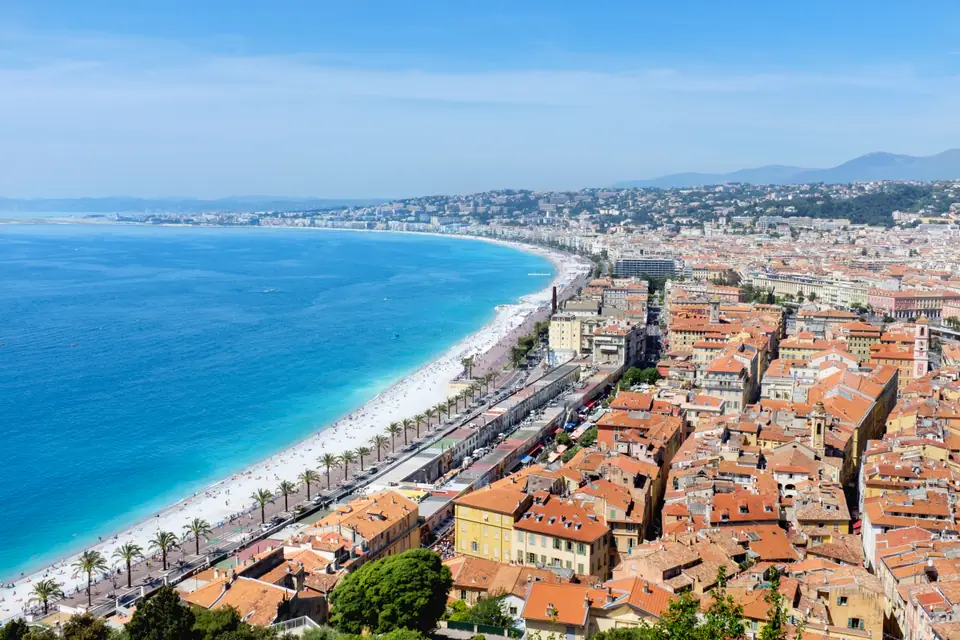
A detailed UNESCO Riviera walking route along the Baie des Anges, ochre Baroque lanes in Vieux-Nice, Colline du Château waterfalls, Roman Cimiez, and Cap-Ferrat.
Greek Nikaia, Five Centuries in the House of Savoy and the Riviera Winter Resort
Founded around 350 BC by Phocaean Greek mariners from Massalia (Marseille) on the rocky headland of the Colline du Château and named Nikaia in honour of Nike, goddess of victory, Nice was paired in Roman times with the hilltop provincial capital of Cemenelum (modern Cimiez). For nearly five centuries from 1388 until 1860, the County of Nice belonged to the Italian House of Savoy, giving Vieux-Nice its Piedmontese ochre facades, trompe-l'œil frescoes, and Baroque churches before the 1860 Treaty of Turin united Nice with France.
Starting in the late eighteenth century, British and Russian aristocrats turned Nice into Europe's premier winter resort (inscribed by UNESCO in 2021), funding the palm-lined Promenade des Anglais and inspiring Henri Matisse and Marc Chagall on the hill of Cimiez.
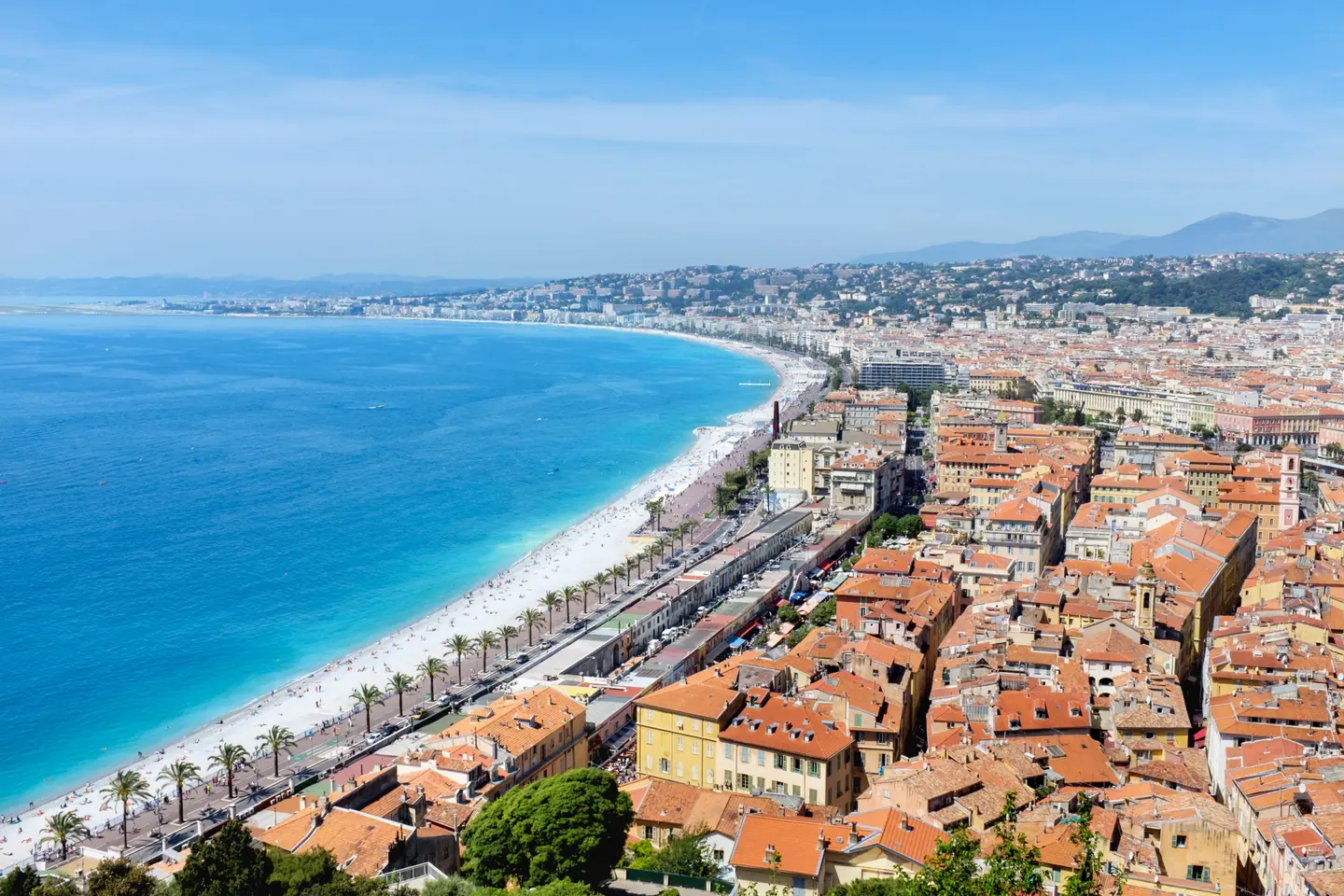
Vieux-Nice Baroque Lanes, Cours Saleya & Palais Lascaris
Cours Saleya Flower and Produce Market, Chapel of the Miséricorde by Bernardo Vittone, Prefecture Palace of the Dukes of Savoy, Nice Opera House, Nice Cathedral Sainte-Réparate Glazed Tile Dome, Place Rossetti, Palais Lascaris (17th-Century Genoese Staircase & Musical Instruments), and Church of the Gesù
Cours Saleya
Cours Saleya serves as the civic spine of the Old Town, lined with eighteenth-century facades and sheltered by colourful striped awnings. Each morning vendors arrange cut blooms, citrus fruits, and regional specialities before antique traders take over on Mondays. We observe classical Mediterranean life flourishing along this pedestrian strip, once the promenade of aristocratic winter residents.
Chapelle de la Miséricorde
Commissioned in 1740 by the Black Penitents brotherhood, this sanctuary exhibits an elliptical nave framed by convex chapels and gilded stuccoes. Piedmontese architect Bernardo Vittone orchestrated sophisticated light effects through upper clerestory windows, illuminating trompe-l'œil ceiling frescoes. Visitors should admire the exquisite wooden furnishings, intricate capitals, and late medieval altarpieces preserved within the adjacent sacristy.
Palais de la Préfecture
Erected in the seventeenth century as the Palace of the Dukes of Savoy, this monumental complex hosted kings and emperors before French annexation. Its imposing facade overlooks Place de la Préfecture, exhibiting symmetrical orders, wrought-iron balconies, and stone balustrades. Inside, lavish gilded state rooms continue to accommodate official government functions and historic diplomatic receptions.
Opéra de Nice
Constructed on the site of the former Théâtre Royal, which burned down in 1881, the opera house was conceived with advice from Charles Garnier. The exterior presents expressive statues representing Euterpe and Melpomene, while the Italian-style auditorium contains red velvet seating beneath an expansive ceiling painted by Emmanuel Costa. It remains an active venue for regional opera and ballet productions.
Nice Cathedral
Dedicated to the city's patron saint, this seventeenth-century cathedral draws inspiration from the Church of Santa Susanna in Rome. Its polychrome glazed-tile cupola rises prominently above the tiled rooftops of the historic quarter. Ten ornate chapels line the interior, adorned with rich marble revetments, gilded reredos, and fine Baroque paintings honoring early Christian martyrs.
Place Rossetti
Constructed following the demolition of aristocratic residences in the nineteenth century, this square forms the spiritual heart of the historic district. Traditional cafes and traditional ice cream parlours surround the central fountain, providing open vistas toward the cathedral steps. The space serves as a natural congregation point where narrow Baroque alleys converge into sunlight.
Palais Lascaris
Built for the influential Lascaris-Vintimille family, this townhouse exemplifies Genoese civil Baroque design with its monumental rusticated entrance. A grand stone staircase flanked by mythological statues ascends to ceremonial apartments decorated with mythological ceiling frescoes, tapestries, and carved woodwork. The palace presently displays a valuable regional collection of historical harps, lutes, and early wind instruments.
Église du Gesù
Also known as the Church of Saint-Jacques-le-Majeur, this church was completed in 1642 to counter Protestant theological influence along the Mediterranean coast. The Corinthian facade rises beside a slender brick bell tower topped with a distinctive conical roof. Within the barrel-vaulted nave, extensive stucco cherubs, faux marbles, and side altars demonstrate pure Counter-Reformation artistic devotion.
Place du Palais de Justice
Laid out on the grounds of a demolished Dominican convent, this broad square features a wide flight of stone steps fronting the courthouse. Built in 1892, the judicial palace displays classical columns and pedimental sculptures reflecting French administrative authority. Street musicians, bookbinders, and open-air markets frequently assemble on the paving throughout the week.
Tour Saint-François
Rising forty-two metres into the skyline, this square campanile originally belonged to a fourteenth-century Franciscan monastery secularised during the French Revolution. In the nineteenth century, municipal authorities installed an ornate public clock and a bell cast in Turin. Travellers can climb the spiral steps inside the masonry shaft to gain sweeping vistas toward the sea and foothills.
Chapelle du Saint-Suaire
Erected in the mid-eighteenth century for the Confraternity of the Red Penitents, this chapel features a sober Neoclassical facade designed by Jean-Baptiste Borra. The interior conceals fine rocailles and woodwork created to honour the Holy Shroud, which was briefly sheltered in Nice during Savoy transfers. Its elevated gallery and gilded baldachin reflect quiet devotional restraint.
Chapelle Sainte-Croix
Constructed between 1765 and 1767 by the architect Antonio Spinelli, this chapel exhibits an elegant curved facade tucked into Rue Saint-Joseph. The interior ceiling fresco portrays the Triumph of the Cross amidst flowing rococo cartouches and delicate pastel plasterwork. It remains one of the purest local manifestations of late eighteenth-century Piedmontese religious style.
Église Saint-Martin-Saint-Augustin
Standing as one of the oldest parish foundations in Nice, the church was reconstructed during the late Renaissance and early Baroque eras. Its monumental classical facade fronts Place Saint-Augustin, while the interior houses a fifteenth-century Pieta attributed to the school of Louis Bréa. The baptismal font where Italian patriot Giuseppe Garibaldi was baptised stands prominently near the west portal.
Place Garibaldi
Planned in 1773 to welcome travellers arriving from Turin, this formal square illustrates Savoyard urban design with its continuous arcades and trompe-l'œil window surrounds. At its centre stands a colossal nineteenth-century marble monument of Giuseppe Garibaldi gazing toward Italy. Paved in stone and planted with shade trees, it unites the old town with northern arterial boulevards.
Chapelle du Saint-Sépulcre
Integrated directly into the southern arcade of Place Garibaldi, this chapel was erected in 1782 by the Confraternity of the Blue Penitents. Designed by Antoine Spinelli, the facade presents Doric pilasters and a triangular pediment harmonising with the square. The interior preserves historic processional lanterns, penitential vestments, and religious canvases by regional masters.
Port Lympia
Initiated in 1748 under King Charles Emmanuel III of Sardinia, the port basin was cut into coastal marshes to foster international maritime trade. Genoese-style warehouses and townhouses border the quays, alongside traditional wooden fishing vessels called pointus. The adjacent Place de l'Île de Beauté features the neoclassical Church of Notre-Dame-du-Port facing the calm water.
Monument aux Morts de Rauba-Capeù
Inaugurated in 1928 beneath the Castle Hill cliff face, this massive stone cenotaph commemorates municipal residents who perished during the First World War. Architect Roger Séassal designed an open colonnade and towering urn, flanked by monumental relief carvings depicting national sacrifice. Its position on the Rauba-Capeù headland provides uninterrupted views across the Baie des Anges.
Tour Bellanda
Constructed in 1826 upon the foundations of the destroyed Saint-Elme fortress tower, this circular bastion served as an artistic residence where composer Hector Berlioz lodged. A broad terrace crowns the structure, providing dramatic panoramas across the red-tiled roofs of the historic quarter and the sweep of the bay. Ornamental stone battlements reflect Romantic revival architecture.
Castle of Nice
Perched on a limestone outcrop between the old town and the port, this fortified hill housed the early settlement of Nikaia before military modernisation. King Louis XIV ordered the destruction of its seemingly impregnable citadel in 1706. Today, leafy shaded walkways lead through medieval cathedral excavations, nineteenth-century decorative waterfalls, and peaceful pine terraces overlooking the coast.
Promenade des Ponchettes
Dating from the eighteenth century, the flat roofs of the low vaulted workshops along Cours Saleya were converted into a raised public boardwalk known as the Ponchettes. The walkway connects the foot of Castle Hill with the eastern entrance of the Promenade des Anglais. Strolling along its length, we observe both the Mediterranean shoreline and the lively market squares below.
Castle Hill (Colline du Château) & Port Lympia
Bellanda Tower on Montée Lesage, Castle Hill Cascade Waterfall & Baie des Anges Panorama, Archaeological Ruins of the Medieval Cathedral, Castle Hill Cemetery, Rauba-Capeù Quai (#ILoveNice Viewpoint), War Memorial Carved into the Cliff, Port Lympia Genoese Basin, and Place Garibaldi
Tour Bellanda
Erected in the 1820s on the foundations of the Saint-Lambert bastion, this round watchtower sits along the Lesage stairway. Composer Hector Berlioz lived here while composing King Lear in 1831. Travellers pause on its terrace to admire panoramic views curving around the Baie des Anges.
Cascade du Château
Engineers constructed this artificial cascade in 1885 atop the former fortress ruins, using water channelled from the alpine Vésubie river. The tumbling spray cools the hilltop gardens on hot summer afternoons. Stone paths flank the falls, leading up to an elevated belvedere overlooking the city rooftops.
Cathédrale Sainte-Marie du Château
Archaeological excavations reveal successive layers of fifth-century paleo-Christian worship and an imposing eleventh-century Romanesque cathedral. Destroyed alongside the citadel in 1706 by French forces, the site now displays preserved pillar bases and carved stonework. Interpretative plaques trace the religious core of ancient Nice.
Castle Hill Jewish Cemetery
Established in the sixteenth century on the upper plateau, this serene burial ground contains elaborate marble mausoleums and family plots. A prominent cenotaph honours local victims of deportation during the Second World War. Cypress trees shade the terrace, offering a quiet contrast to the lively parks nearby.
Cimetière du Château
Replacing the old parish churchyards in 1783, this cemetery spreads across the northern slope of the hill. It contains ornate neoclassical tombs belonging to notable figures such as admiral Emil von René and writer Gaston Leroux. Intricate wrought-iron crosses and stone statuary punctuate the terraced hillside.
Monument aux Morts de Rauba-Capeù
Carved directly into the rock face in 1928, this massive memorial honours thousands of local soldiers who perished in the First World War. Architect Roger Séassal designed the colossal stone pylons framing urns and sculpted friezes. Its waterfront plaza fronts the crashing waves of the Mediterranean.
Quai Rauba-Capeù
Connecting the seaside promenade with the harbour, this rocky promontory takes its name from local dialect meaning hat-snatcher. Visitors gather here to photograph the celebrated city sign and gaze across the bay toward the airport. Broad pavements accommodate cyclists, strollers, and maritime lookouts.
Port Lympia
Initiated in 1749 under King Charles Emmanuel III, the harbour occupies a former marshland drained by royal engineers. Rows of ochre Genoese-style townhouses and ancient mooring rings frame the deep water basin. Traditional wooden fishing vessels called pointus rest beside sleek modern pleasure yachts.
Place Garibaldi
Laid out in the 1770s by Turin architect Antonio Spinelli, this grand square is surrounded by uniform arcades painted with trompe-l'œil facades. In the centre rises a marble monument to Giuseppe Garibaldi, who was born in the port quarter. Paved esplanades connect the Old Town to modern tramway lines.
Notre-Dame-du-Port
Designed by architect Joseph Vernier and completed in 1853, this church served the local dockworkers and sailors. Four fluted columns support a triangular pediment looking out toward the docks. Inside, nineteenth-century maritime paintings and devotional chapels honour Saint Peter and Our Lady of the Port.
Place de l'Île de Beauté
Commanding the northern edge of Port Lympia, this square features grand buildings designed in the Piedmontese neoclassical manner. Colonnaded ground floors shield terrace cafes from the sun while framing views of the ferry terminals. The square long served as the departure point for ships bound for Corsica.
La Chaise Bleue de Sab
Created by local artist Sabine Géraudie, this two-dimensional metal sculpture pays homage to the coastal promenade's traditional seating. Installed on the waterfront paving stones, its clean white lines silhouette against the azure sea. It remains a popular point for maritime photography.
Monument de Robilant
This understated obelisk commemorates military engineer Gabriel de Robilant, who supervised the complex excavation of the port basin from 1761. Standing near the customs docks, it marks the technical transition from medieval shore landing to deep-sea commerce. The plaque recounts Nice's emergence as an international free port.
Phare de Nice
Constructed in 1952 to replace a nineteenth-century beacon destroyed during the war, this stone lighthouse guides vessels into Port Lympia. Its cylindrical tower rises beside the outer pier where sea spray regularly lashes the breakwater. Walkers stroll the long granite promenade to watch the Corsica ferries manoeuvre.
Galerie Lympia
Occupying the former bagne, or penal barracks, built in the 1750s, this historic stone complex once housed galley convicts and forced labourers. The adjoining clock tower oversaw daily work brigades across the royal docks. Today, renovated vaulted cells host temporary contemporary art exhibitions and historical retrospectives.
Chapelle du Saint-Sépulcre
Built between 1782 and 1784 for the Archconfraternity of the Blue Penitents, this chapel blends seamlessly into the northern facade of the square. The interior preserves rich Genoese-influenced woodwork, trompe-l'œil ceilings, and a marble altar holding historic relics. Members still wear traditional blue robes during solemn religious processions.
Musée de Terra Amata
Located just east of Port Lympia, this museum displays relics from an open-air Lower Palaeolithic campsite discovered in 1966. Displays contain stone tools, animal bones, and traces of some of the earliest domesticated hearths in Europe, dating back 380,000 years. Castings recreate the ancient dune dwellings.
Pointe Rauba-Capeù Sundial
Laid out on the coastal terrace, this horizontal stone sundial invites spectators to serve as the gnomon by standing on the appropriate monthly marker. Its engraved brass ellipse accurately projects the hour across stone roman numerals. The open location ensures uninterrupted solar exposure throughout the year.
Montée Lesage
Built in the early nineteenth century, this multi-tiered pedestrian stairway climbs steep rock ledges above the sea. Stone balustrades and viewing landings allow climbers to rest while tracking the sweep of the coastline below. The route passes the entrance to Tour Bellanda before reaching the crest.
Quai Lunel Customs House
Erected in the nineteenth century, this elegant stone edifice oversaw maritime customs and naval trade under both Sardinian and French administrations. Its classical pilasters and symmetry evoke Nice's historic commercial expansion. Paved stone docks outside remain lined with bollards and traditional fishing net drying stations.
Place Masséna, Coulée Verte & Promenade des Anglais
MAMAC Contemporary Art Museum, Promenade du Paillon Coulée Verte & Water Mirror, Place Masséna Red Piedmontese Arcades & Apollo Fountain, Jardin Albert 1er, Promenade des Anglais Blue Chairs, Palais de la Méditerranée Art Deco Facade, Villa Masséna Museum, and Hotel Negresco Pink Dome (1913)
Place Masséna
Designed in the 1820s by Joseph Vernier, this central square bridges the Old Town with modern districts. It features distinctive chequered paving stones, classical ochre facades, and Jaume Plensa resin statues perched atop tall metal poles that illuminate each evening.
Fontaine du Soleil
Positioned at the southern entrance of Place Masséna, this sculpted fountain dates to 1956 and honours the Greek god Apollo. The base features five bronze figures representing planetary deities sculpted by Alfred Janniot, capturing classical mythological motifs alongside dynamic water cascades.
Promenade du Paillon
Opened in 2013, this linear urban park spans twelve hectares across what was once an exposed river channel. Botanist landscape designers planted flora from diverse continents, creating a verdant strip with a large water mirror featuring hundreds of programmable jets.
MAMAC
Architects Yves Bayard and Henri Vidal designed this monumental stone and glass structure, inaugurated in 1990. The museum houses key works by the School of Nice, Yves Klein, and Niki de Saint Phalle, complemented by sweeping city views from its upper rooftop terraces.
Théâtre National de Nice
Constructed as part of the arts complex adjacent to MAMAC, this cultural venue has hosted theatrical productions since the late twentieth century. Its modern concrete design integrates into the urban park layout, serving as a hub for French contemporary performing arts.
Jardin Albert 1er
Created over reclaimed land in 1828, this municipal garden honours King Albert I of Belgium. Palm trees, century-old pines, and open-air concert facilities surround the central pathways, which run seamlessly from Place Masséna towards the Mediterranean shoreline.
Monument du Centenaire
Erected in 1896, this tall commemorative column marks the centenary of the 1793 union between Nice and France. Sculpted by Joseph Félix Bouchor, the bronze Nike figure at the summit faces out toward the open sea from within the coastal gardens.
Théâtre de Verdure de Nice
Built in 1946 by architect François Aragon, this outdoor auditorium draws inspiration from ancient Greek stages. Flanked by cypress trees and stone statues, it has hosted international jazz performers, pop concerts, and civic gatherings within the grounds of Jardin Albert 1er.
Arc de Venet
Fabricated by conceptual sculptor Bernar Venet, this minimalist Corten steel sculpture arcs nineteen metres over the seafront gardens. Installed in 2010 to commemorate the 150th anniversary of Nice joining France, the monument showcases an austere industrial curve.
Promenade des Anglais
Initiated in the 1820s by English winter residents under Lewis Way, this coastal promenade hugs the Baie des Anges for seven kilometres. Today, travellers stroll past historical architecture, pebbled beaches, and dedicated cycling tracks along its broad paved walkway.
Chaises Bleues de la Promenade
First introduced during the 1950s by Charles Tordo, these distinctive blue chairs remain fixtures along the seaside promenade. Designed specifically to let visitors face the sea, their robust aesthetic has become a widely recognised emblem of Riviera leisure culture.
Palais de la Méditerranée
Constructed in 1929 by Charles and Marcel Dalmas, this grand venue originally served as a winter casino and theatre. Its listed white facade displays intricate bas-reliefs by Antoine Sartorio, illustrating maritime themes, classical figures, and graceful sea-horse motifs.
Musée Masséna
Prince Victor d'Essling built this neoclassical winter residence between 1898 and 1901 following plans by Hans-Georg Tersling. Surrounded by gardens designed by Édouard André, the museum presents imperial furniture, Napoleon memorabilia, and fine paintings documenting the Riviera.
Hôtel Négresco
Opened in 1913 by Henri Negresco, this landmark was designed by Édouard Niermans in opulent Belle Époque fashion. Beneath the famous pink dome, visitors discover the Royal Lounge with its Baccarat chandelier and an eclectic private collection of historic European art.
Monument des Morts de Rauba-Capeù
Carved into the limestone of Castle Hill between 1924 and 1928, this cenotaph honours local citizens fallen in the First World War. Architect Roger Séassal integrated massive reliefs by Alfred Janniot that depict the land, the sea, and civilian sacrifices.
Opéra de Nice
Erected in 1885 following designs by François Aune after a fire destroyed the earlier wooden theatre, this opera house features an ornate Italianate interior. The ceiling displays mythological frescoes by Emmanuel Costa, complemented by classical pilasters along its coastal facade.
Palais des Rois Sardes
Originating in the sixteenth century as the governors' palace, this government seat was reconstructed around 1610 and updated in the nineteenth century. It once housed the rulers of the Kingdom of Sardinia and now accommodates the prefecture of the Alpes-Maritimes department.
Église Notre-Dame-des-Grâces de Nice
Constructed between 1836 and 1852 by architect Jean-Baptiste Vernier, this church fulfilled a civic vow made during an 1832 cholera outbreak. Its neoclassical colonnade and stately triangular pediment anchor the eastern section of the surrounding Paillon gardens.
Pont Neuf de Nice Site
Erected in 1824, this multi-arched stone crossing once served as the primary transit point between the medieval quarters and modern suburbs. Although integrated beneath Place Masséna when the river was vaulted, its foundational masonry remains a key element of local civil engineering history.
Square Général de Gaulle
Positioned midway along the Paillon axis, this landscaped square connects cultural venues with historic streets. Shaded by olive trees, palms, and cypress stands, the space provides open stone walkways where travellers observe the surrounding nineteenth-century architecture.
Cimiez Hill: Matisse Museum, Chagall Museum & Roman Arenas
Marc Chagall National Museum Biblical Message Cycle, Boulevard de Cimiez Belle Époque Excelsior Régina Palace (where Matisse lived), Roman Amphitheatre & Thermal Baths of Cemenelum, Matisse Museum in the 17th-Century Genoese Villa des Arènes, Franciscan Monastery & Cimiez Olive Grove Garden, and St Nicholas Russian Orthodox Cathedral
Marc Chagall National Museum
Built during the artist's lifetime and opened in 1973, this purpose-built pavilion was designed by architect André Hermant. The permanent collection displays seventeen immense canvases depicting scenes from Genesis, Exodus and the Song of Songs, surrounded by Mediterranean gardens. Visitors should examine the blue stained-glass windows Chagall crafted specifically for the auditorium concert hall.
Excelsior Régina Palace
Architect Sébastien-Marcel Biasini constructed this lavish residential hotel in 1897 to accommodate Queen Victoria and her vast imperial entourage during winter visits. Henri Matisse later maintained a top-floor flat and studio inside the premises between 1938 and 1943. The exterior facade displays ornate wrought-iron balconies, ornate stucco reliefs and a prominent glass crown.
Cimiez Amphitheatre
Dating to the second and third centuries AD, this stone amphitheatre held approximately five thousand spectators for gladiatorial games and naval spectacles. It served as the central gathering place for the Roman capital of the Alpes Maritimae province. Today travellers can walk along the surviving oval perimeter walls, ancient vomitoria passages and preserved seating tiers.
Cimiez Archaeological Museum
Set directly beside the ancient Roman ruins, this municipal museum exhibits coins, statuary, funerary stelae and domestic pottery recovered across the Cimiez plateau. Floor-to-ceiling windows present direct views across the excavated thermal bath complexes, including frigidarium, tepidarium and hypocaust heating chambers. The facility offers clear insight into urban life during Roman antiquity.
Thermal Baths of Cemenelum
Excavated systematically between 1950 and 1969, these ruins comprise three separate bathhouse complexes built between the first and third centuries. The surviving brick and stone walls reveal subterranean hypocaust heating ducts, marble water basins and palaestra training grounds. Pathways lead between the North, East and West baths, showing Roman engineering and communal hygiene traditions.
Matisse Museum
Housed within the red-ochre Villa des Arènes, this institution traces Henri Matisse's stylistic evolution from early oil paintings to late gouache paper cut-outs. The artist settled permanently in Nice in 1917, donating many personal artefacts, preparatory sketches and bronze sculptures to the municipality. The collection highlights how Mediterranean sunlight and local flora influenced his radical compositions.
Cimiez Monastery Garden
Established in 1546 by Franciscan friars on the site of an earlier Benedictine settlement, this garden ranks among the oldest cultivated plots in Nice. The layout follows Renaissance geometry, complete with central pergolas, climbing white roses and aromatic herb beds. Terraces look south over the Paillon valley, the old town rooftops and the Mediterranean coastline.
Church of Notre-Dame de Cimiez
Rebuilt in the seventeenth century with a neo-Gothic portico added in 1859, this church preserves exceptional masterworks by fifteenth-century painter Louis Bréa. The interior displays three significant panel paintings, including a Pieta executed in 1475 and a dramatic Deposition from the Cross. Visitors should observe the carved wooden choir stalls and the gilded Baroque high altar.
Cimiez Monastery Cemetery
Adjoining the monastery walls, this peaceful cemetery serves as the final resting place for prominent artists, scholars and Nice families. Henri Matisse and his wife Amélie lie buried beneath a simple stone slab, while fauvist painter Raoul Dufy rests nearby. Intricate marble mausoleums and wrought-iron family chapels reflect the aristocratic character of nineteenth-century winter visitors.
Cimiez Olive Grove
This expansive public park preserves thousands of mature olive trees, some dating back several centuries across ancient Roman foundations. Locals gather here for traditional boules games and springtime folk celebrations, including the annual Festin des Cougourdons. Shaded gravel paths link the archaeological site with neighbouring residential avenues, creating a peaceful pastoral setting.
Queen Victoria Memorial
Erected in 1912 by French sculptor Louis Maubert, this white marble monument commemorates Queen Victoria's regular winter residencies along the Riviera between 1895 and 1899. The central marble statue depicts the seated monarch receiving floral tributes from personifications of Nice and neighbouring coastal towns. The monument stands directly across the avenue from her former quarters at the Régina.
Boulevard de Cimiez
Engineered during the late nineteenth century to connect the city centre with the elevated hill plateau, this grand thoroughfare reflects Belle Époque urban planning. Aristocratic winter travellers constructed palatial residences and luxury villas along its route, utilising eclectic Neo-Classical, Moorish and Renaissance motifs. Tall palm trees, stone balustrades and landscaped gardens frame the gently rising street.
Villa Paradisio
Commissioned in 1897 by Baroness Hélène de Zuylen, this palatial estate reflects Italianate Neo-Classical residential styling. The property later served as the municipal conservatory of music, where many French composers taught and performed throughout the twentieth century. The exterior features ornate loggias, sculpted cornices and a formal park set behind ornamental iron security gates.
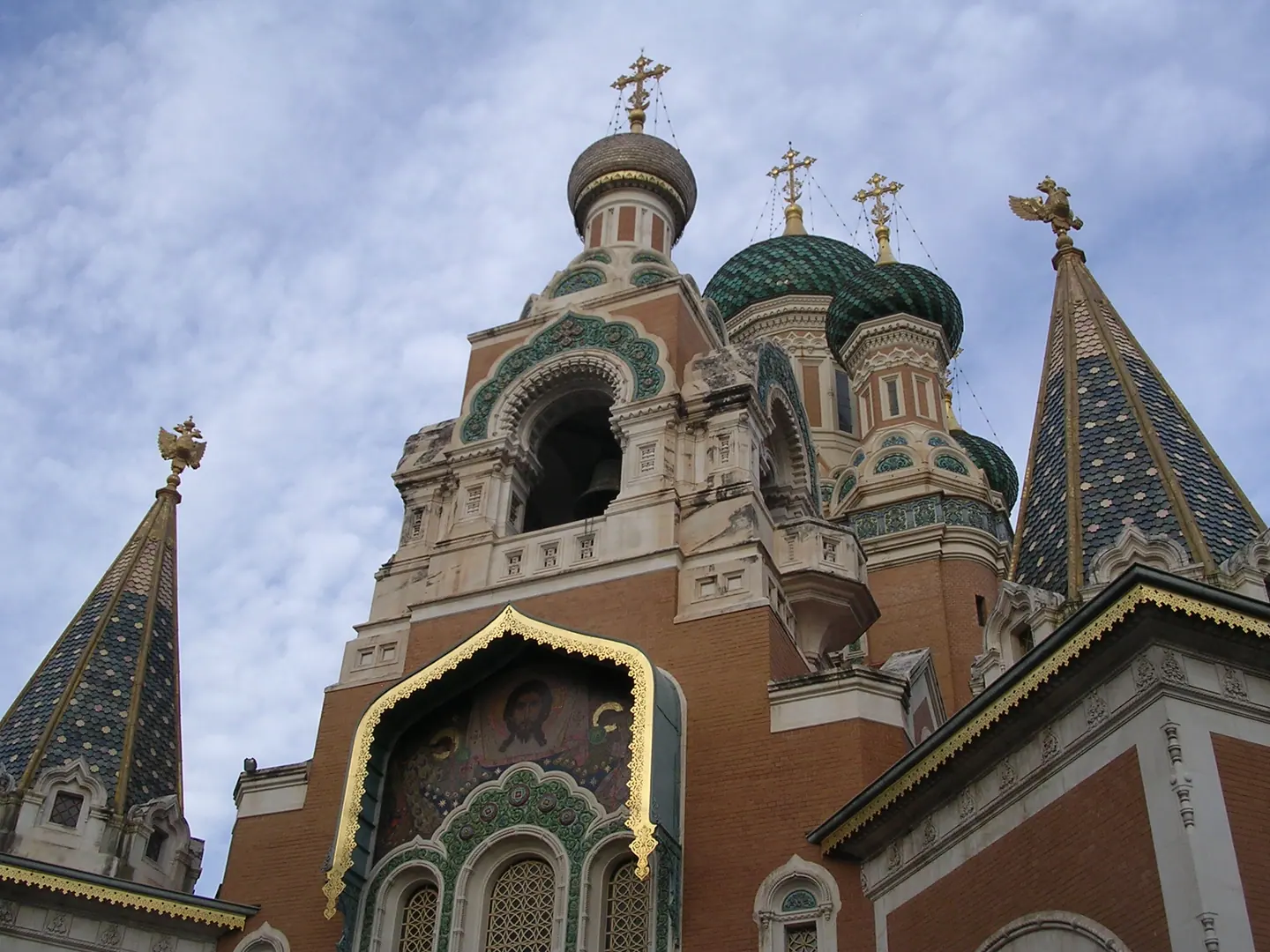
Russian Orthodox Cathedral of Saint Nicholas
Consecrated in 1912 under Tsar Nicholas II, this six-domed cathedral stands as the largest Russian Orthodox place of worship outside the Russian Federation. Architect Mikhail Preobrazhensky designed the structure using rose-pink bricks, majolica tiles, carved Italian marble and historic turquoise onion cupolas. The interior houses an extraordinary collection of historic icons, gold mosaics and religious woodwork.
Tsarévitch Chapel
Constructed in 1867 by order of Tsar Alexander II, this octagonal chapel occupies the exact site where Nicholas Alexandrovich, heir apparent to Russia, died of meningitis. The Byzantine-inspired exterior features white marble, decorative crosses and carved friezes within private parkland. A black marble slab inside marks the chamber where the twenty-one-year-old prince passed away in 1865.
Palais de la Méditerranée
Financed by American financier Frank Jay Gould and designed by architects Charles and Marcel Dalmas, this venue opened in 1929 as an entertainment palace. Although the interior was reconstructed as a luxury hotel, the magnificent white concrete facade remains a protected historic monument. The nine-bay frontage features monumental arches, bas-relief sea horses and classical Art Deco geometric ornamentation.
Holy Trinity Anglican Church
Erected in 1862 to replace an earlier eighteenth-century English chapel, this sandstone church accommodated the burgeoning British community visiting the Riviera. Designed by architect Thomas Smith, the building exhibits traditional English Gothic Revival features, including stained glass windows, timber hammerbeam roofing and marble memorial plaques. The surrounding churchyard contains graves of prominent Victorian civil servants, botanists and travellers.
Villa Masséna
Architect Aaron Messiah built this elegant residence between 1898 and 1901 for Victor Masséna, Prince d'Essling and grandson of Napoleon's marshal. Donated to the city in 1919, the museum displays First Empire furniture, regional landscape paintings and Napoleon's golden death mask. The surrounding landscaped gardens were planned by master landscape designer Édouard André.
St Nicholas Russian Cemetery
Established in 1867 by the Imperial Russian government on the western slopes of Caucade, this cemetery provides the resting place for over three thousand Russian expatriates. Grand Dukes, imperial army generals, poets and White Russian émigrés rest beneath traditional Orthodox three-bar crosses and stone chapels. The serene terraced hillside overlooks the Mediterranean Sea, shadowed by tall cypress trees.
Cimiez Franciscan Museum
Located within the ancient cloister halls of the monastery, this museum illustrates the daily life and spiritual mission of Franciscan friars from the sixteenth to eighteenth centuries. Exhibits display illuminated manuscripts, carved reliquaries, historic liturgical vestments and reconstructed monastic cells. The adjacent cloister quadrangle retains original wall frescoes depicting the life and miracles of Saint Francis of Assisi.
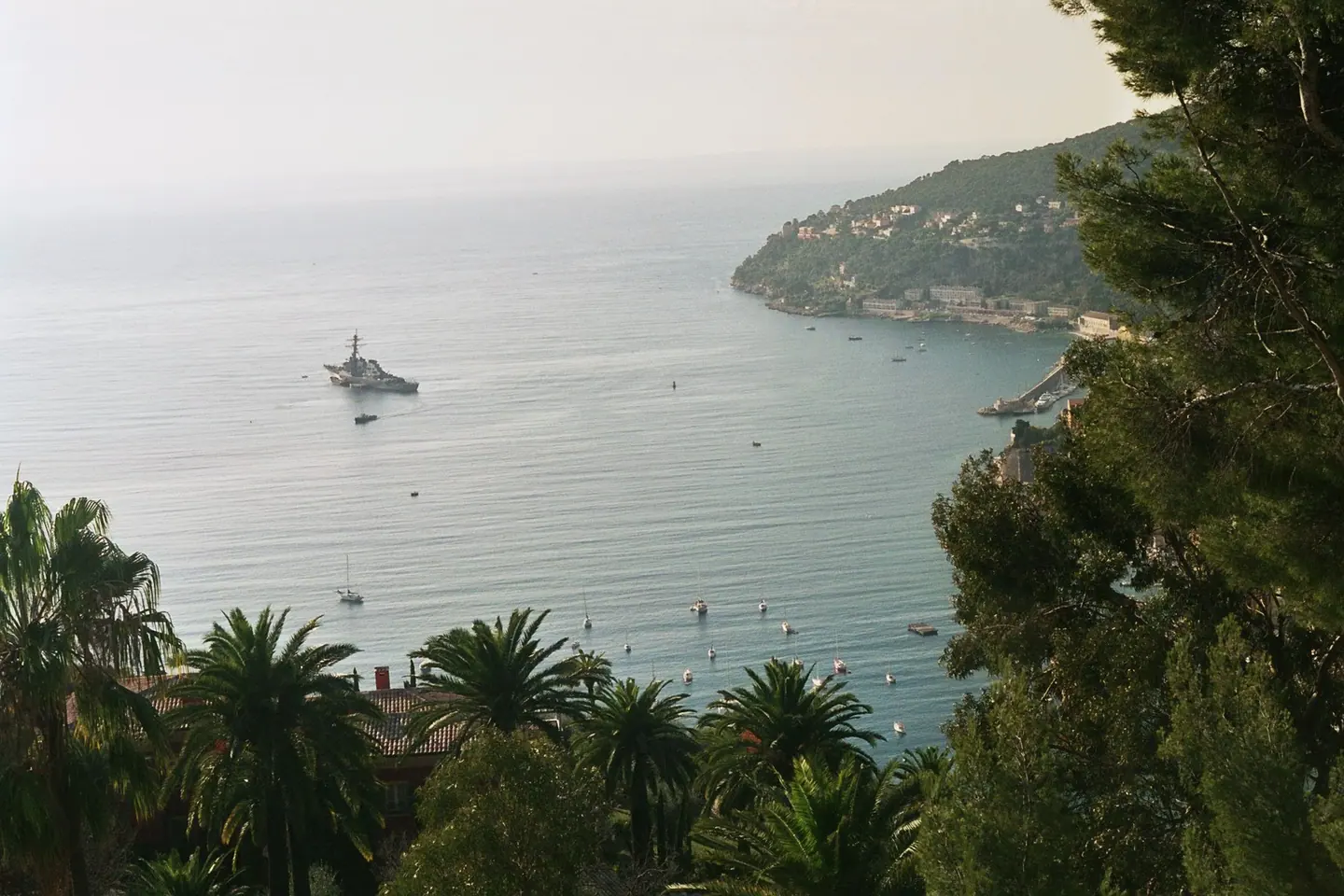
Mont Boron, Villefranche-sur-Mer, Cap-Ferrat & Perched Èze
Coco Beach Coastal Path, Fort du Mont Alban (1560), Villefranche-sur-Mer Citadel & Jean Cocteau’s Painted St Pierre Chapel, Villa Ephrussi de Rothschild & Nine Themed Gardens on Saint-Jean-Cap-Ferrat, Villa Kérylos in Beaulieu, and Èze Medieval Cliffside Exotic Garden
Sentier du Littoral de Nice
Carved directly into the limestone cliffs below Mont Boron, this pathway links Coco Beach with the neighbouring harbour of Villefranche-sur-Mer. Walkers can admire rugged Mediterranean sea shelves, historical handrails, and open maritime views towards the Cap de Nice. The route requires careful footing along the wave-swept stone stairs.
Château de l'Anglais
Built in the late 1850s for an eccentric British officer named Robert Smith, this eclectic fortress displays a blend of neo-Gothic and Indian Mughal architecture. The salmon-pink walls, crenellated towers, and ornate stone balconies stand high above the Cap de Nice. It remains one of the most eccentric nineteenth-century residences on the French Riviera.
Parc du Mont Boron
Covering over fifty hectares of elevated terrain, this wooded sanctuary offers shaded walking paths through Aleppo pine and carob trees. Hikers gather here for elevated views sweeping from the Baie des Anges across to Cap-Ferrat. The park preserves natural coastal scrub alongside centuries-old defensive installations.
Batterie du Mont Boron
Constructed in the 1880s to defend the Bay of Nice, this low-profile stone artillery fort occupies the southern crest of the hill. The fortified platforms once held heavy coastal guns aimed across the sea approaches. Today, its exterior perimeters serve as a quiet terrace for surveying maritime shipping traffic.
Fort du Mont Alban
Commissioned in 1560 by Duke Emmanuel Philibert of Savoy, this bastioned fortress defended the frontier following the Ottoman siege of Nice. Thick stone curtains, angular ramparts, and intact corner sentry boxes demonstrate early modern military engineering. The vantage point provides sweeping perspectives over both the city and the roadstead of Villefranche.
Citadelle de Villefranche-sur-Mer
Erected in the mid-sixteenth century as Citadelle Saint-Elme, this fortress guarded the maritime approaches of the House of Savoy. Travellers can wander through deep stone moats, vaulted casemates, and elevated rampart walkways overlooking the bay. Inside, several municipal museums exhibit regional sculpture and military artefacts within restored stone chambers.
Chapelle Saint-Pierre
Dating from the fourteenth century, this small waterside chapel long served the local guild of fishermen before falling into dereliction. In 1957, French artist Jean Cocteau restored the interior, covering the vaulted walls with expressive murals of Saint Peter and local maritime life. The exterior features a classic Mediterranean facade fronting the fishing quay.
Rue Obscure
Constructed in 1260 for military defensive movements, this covered passage stretches for over one hundred metres beneath residential buildings. Dim overhead lamps illuminate stone arches, heavy timber ceilings, and ancient cellar doorways. It sheltered residents during artillery bombardments throughout multiple historical sieges of the coastal settlement.
Église Saint-Michel de Villefranche-sur-Mer
Built during the first half of the fourteenth century and extensively remodeled in Baroque style during the eighteenth century, this church anchors the old town. The pale ochre and white facade leads into a gilded nave adorned with regional religious paintings. Organ enthusiasts come to admire its historic instrument, built by the Grinda brothers in 1790.
Rade de Villefranche
Recognised as one of the deepest natural anchorages in the Mediterranean Sea, this sheltered basin reaches depths of over ninety metres close to shore. It has accommodated royal galleys, imperial Russian navies, and modern ocean liners across several centuries. The surrounding slopes create an amphitheatre of colourful villas and steep wooded ridges.
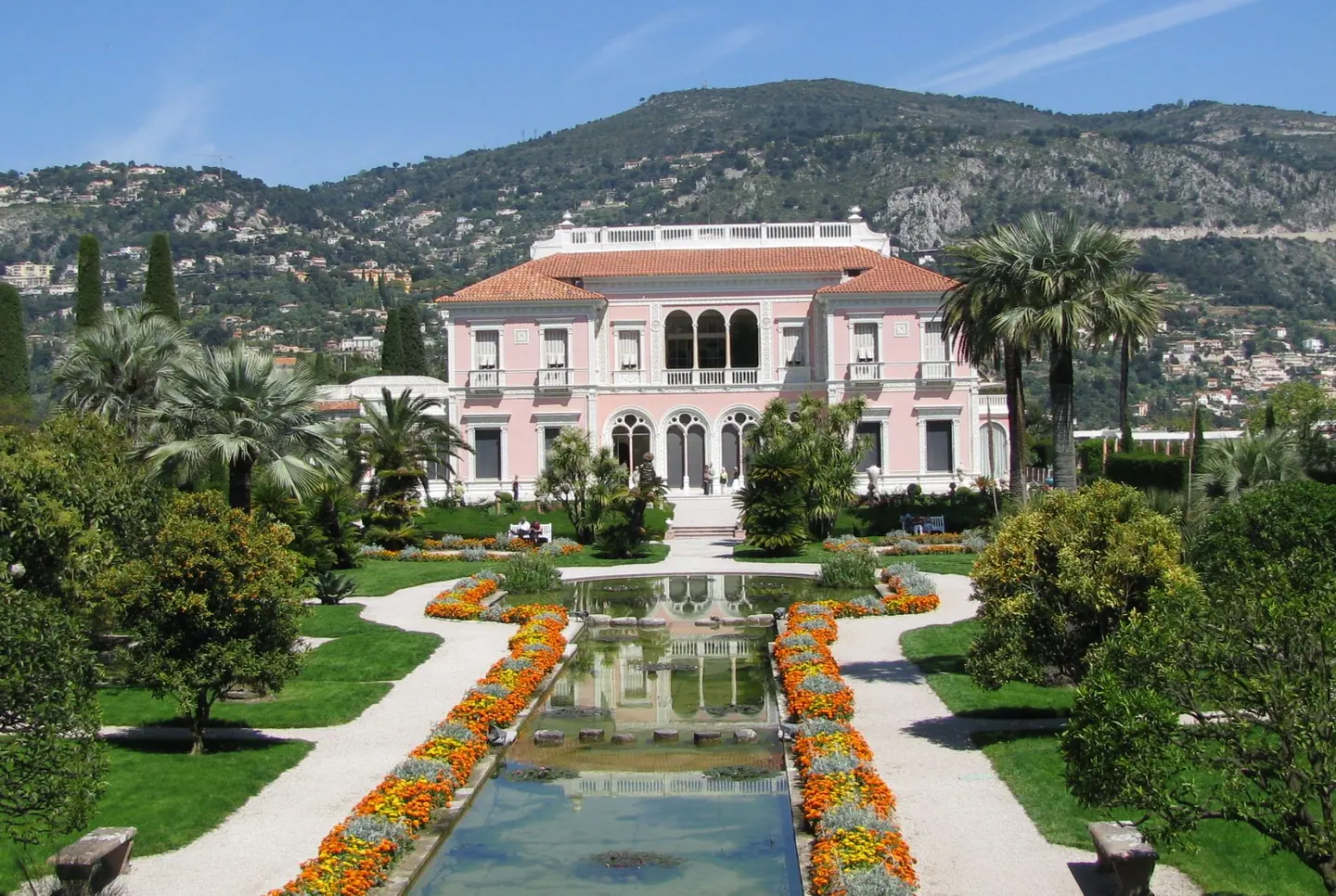
Villa Ephrussi de Rothschild
Constructed between 1905 and 1912 for Baroness Beatrice de Rothschild, this rose-coloured mansion showcases classic Italian Renaissance influences. The interior preserves original collections of porcelain, antique furniture, and Old Master paintings. Outside, manicured grounds feature musical fountains, a Florentine colonnade, and exotic botanical varieties arranged across formal terraces.
Phare du Cap-Ferrat
Constructed in 1951 to replace a nineteenth-century tower destroyed during the Second World War, this octagonal limestone structure rises thirty-four metres into the sky. It marks the dangerous rocky headland separating the bays of Nice and Monaco. The surrounding coastal path skirts dramatic limestone cliffs buffeted by Mediterranean swells.
Chapelle Saint-Hospice
Erected on the foundations of a sixth-century sanctuary, this quiet chapel honours Saint Hospice, an early Christian hermit who lived in prayer here. Beside the building stands a monumental eleven-metre bronze statue of the Virgin and Child, cast by sculptor Galbusieri in 1903. An adjacent military cemetery contains fallen soldiers from both World Wars.
Villa Santo Sospir
Acquired by patron Francine Weisweiller in 1950, this private residence hosted artist Jean Cocteau for over a decade. Rather than hanging paintings on the walls, Cocteau tattooed the plaster surfaces with mythological frescoes in historic tempera. The residence stands on the western flank of the peninsula amid umbrella pines and olive groves.
Port de Saint-Jean-Cap-Ferrat
Originally a modest shelter for local fishermen, this compact harbour now hosts leisure yachts alongside small wooden skiffs. Pedestrians stroll along the quayside to observe boat moorings and historic pastel facades lining the waterfront. The harbour mole provides views back towards the limestone peaks above Beaulieu and Èze.
Villa Kérylos
Conceived by archaeologist Theodore Reinach and architect Emmanuel Pontremoli in the early twentieth century, this villa recreates an Athenian home from the second century BC. Carrara marble, frescoed walls, and exact copies of ancient Greek furniture define the interior courtyards. Built on rocky shores at Beaulieu, it projects over Mediterranean shallows.
Château d'Èze
Perched atop a conical limestone crag, these medieval ruins mark the highest point of the cliffside village of Èze. Built in the twelfth century, the fortress was dismantled in 1706 by order of King Louis XIV during the War of the Spanish Succession. Today, weathered stone footings surround the site, offering panoramic views of the French Riviera.
Jardin Exotique d'Èze
Created following the Second World War amid the castle ruins, this botanical terrace cultivates hundreds of species of cacti, aloes, and agaves from arid zones. Paths wind past sculptural figures by artist Jean-Philippe Richard, poised against the blue backdrop of the sea. The elevated location provides exceptional views reaching towards Saint-Tropez on clear days.
Église Notre-Dame-de-l'Assomption d'Èze
Rebuilt in the late eighteenth century by architect Antoine Spinelli, this neoclassical church displays a distinct yellow facade with a square two-tiered clock tower. The interior houses gilded altars, trompe-l'œil ceiling decorations, and an ancient baptismal font from the medieval era. It stands prominently on the lower approach to the fortified old village.
Sentier Nietzsche
This steep mountain trail climbs over four hundred vertical metres from the railway station at Èze-sur-Mer to the medieval village summit. German philosopher Friedrich Nietzsche regularly walked this rocky path in the 1880s, composing parts of Thus Spoke Zarathustra along the ascent. The track traverses exposed scrubland, dry stone walls, and rocky outcrops.
Coastal Paths from Port Lympia to Villefranche and Cap-Ferrat
For neighbourhood accommodation notes, seasonal weather tables and airport transfer details, consult our Nice destination guide, or browse other city and regional walking routes across the atlas.