A detailed walking and ferry route along the 9-kilometre Oslo Havnepromenade, medieval Akershus Fortress, Karl Johans gate, Frogner’s Vigeland sculptures, and the Bygdøy ships.
Medieval Oslo, Christian IV’s 1624 Grid and the Reclaimed Harbourfront
Founded around AD 1048 by Viking King Harald Hardrada at the head of the hundred-kilometre Oslofjord and fortified by King Haakon V Magnusson with Akershus Castle in 1299, medieval Oslo stood east of the Akerselva River until a devastating three-day fire in August 1624. Danish-Norwegian King Christian IV ordered the city rebuilt on a Renaissance rectangular grid directly beneath the ramparts of Akershus Fortress and renamed it Christiania (later Kristiania), the name it bore until 1925.
In the nineteenth century architect Christian Heinrich Grosch and city planners laid out the grand ceremonial axis of Karl Johans gate rising to the Royal Palace, while twenty-first-century Oslo transformed its former industrial docks into the white Carrara marble roof of the Oslo Opera House, MUNCH, and the National Museum.
Bjørvika Fjordfront, Opera House, MUNCH & Medieval Oslo
Oslo Opera House Marble Roof Walk, MUNCH Museum in Bjørvika, Deichman Bjørvika Library, Sørenga Seawater Pool, Barcode Project, Middelalderparken St Mary’s Church Ruins, and Ekebergparken Sculpture Park Panorama
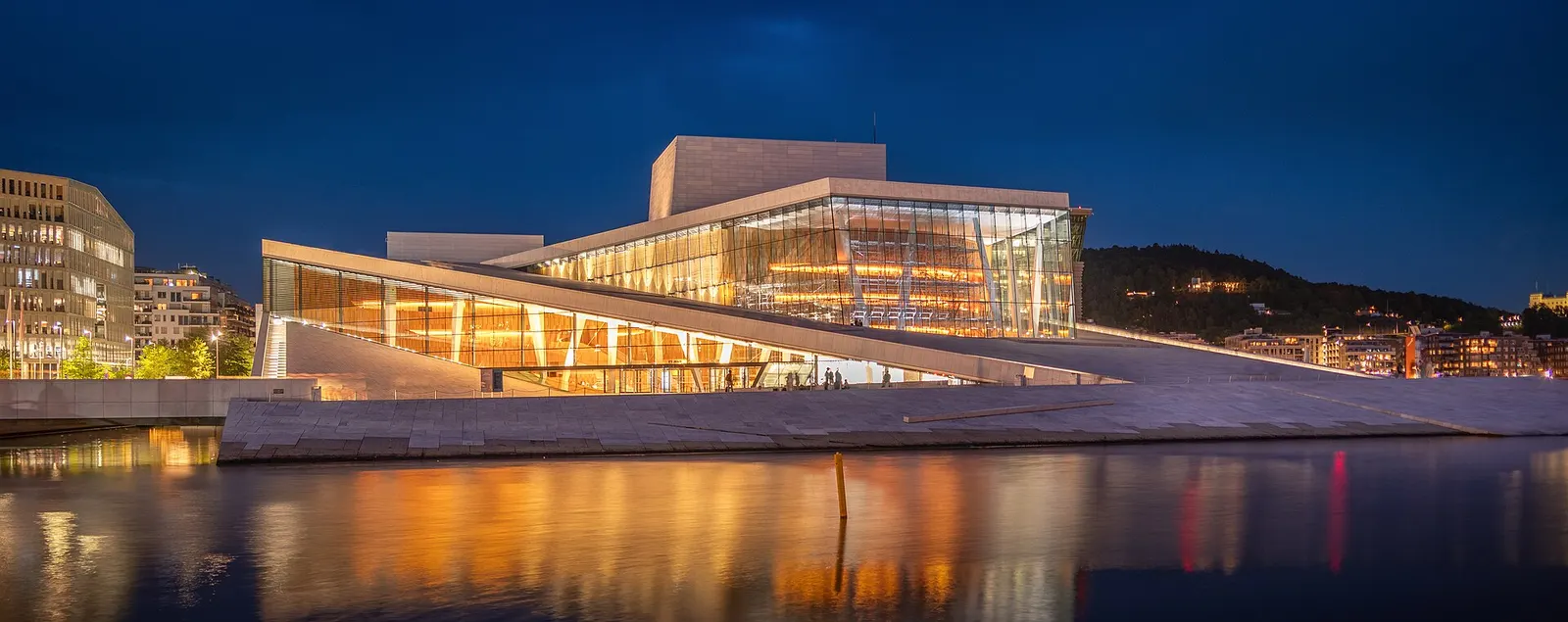
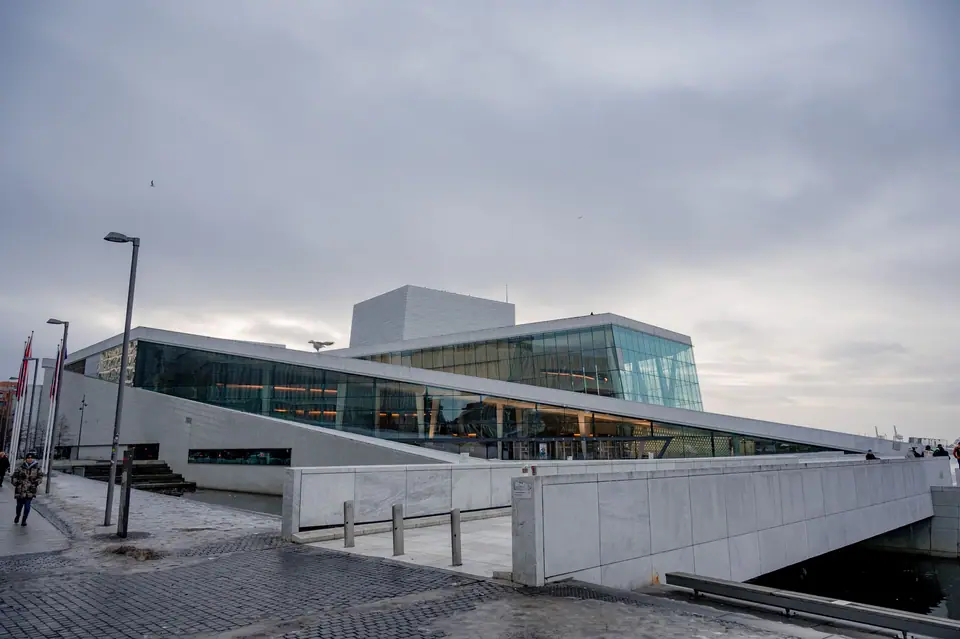
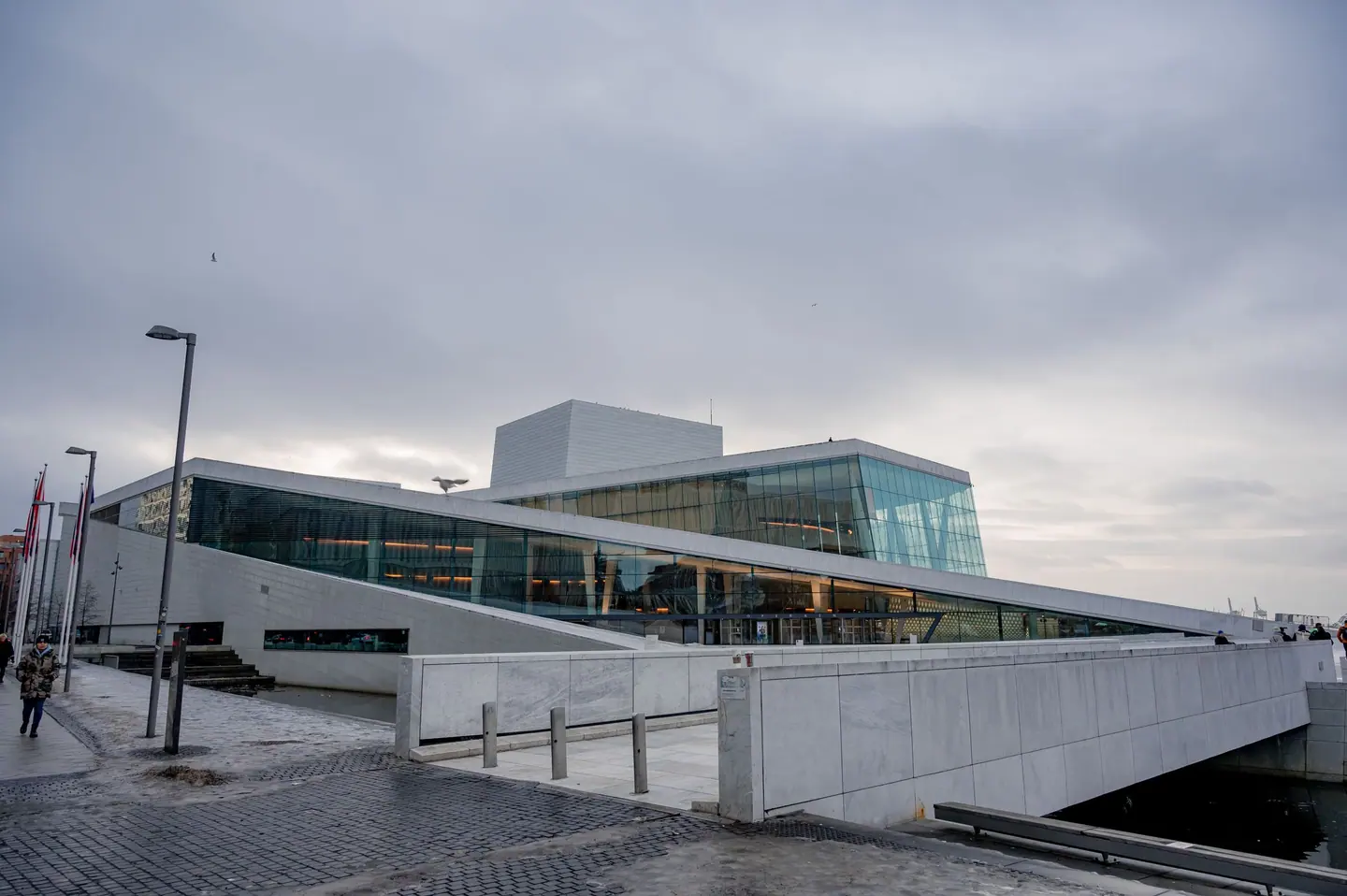
Oslo Opera House
Designed by the architectural practice Snøhetta and opened in 2008, the structure slopes directly into the waters of Oslofjord. Its exterior features white Italian Carrara marble and granite that form an expansive public plaza. Visitors can walk up the ramped roofscape to inspect panoramic harbour views and the light-filled interior foyer.
MUNCH Museum
Designed by Spanish studio Estudio Herreros, this vertical museum opened along the Bjørvika waterfront in 2021. It holds the extensive municipal collection of works left by painter Edvard Munch, including multiple editions of The Scream. The exterior features undulating, perforated aluminium panels with a distinct tilted top section overlooking the city harbour.
Deichman Bjørvika
Completed in 2020 by Lundhagem and Atelier Oslo, this modern library faces the central railway square and the fjord. Its architectural highlight is a cantilevered fifth storey that projects towards the water without visible column support. Inside, multiple light shafts cut through the building, uniting reading rooms, media labs, and community exhibition spaces.
Barcode Project
This row of twelve multi-use skyscrapers was constructed between 2005 and 2016 on former docklands behind the railway lines. The master plan required varying heights and narrow footprints to preserve sightlines and daylight between the fjord and the city. Each tower displays distinct geometric patterns, combining glass, brick, and carved geometric terraces.
Sørenga Seawater Pool
Sits at the southern extremity of the redeveloped Sørenga container dock, functioning as a large public leisure platform. Opened in 2015, the facility contains a seawater basin, diving board, and sunbathing decks made of durable timber. It offers broad sightlines over the inner harbour towards the fortress and the central islands.
Middelalderparken
This historical park covers ground that formed the royal and clerical centre of Oslo prior to the devastating fire of 1624. Its open lawns encompass the low stone foundations of churches and defensive keeps, surrounded by an artificial inlet reflecting the original medieval shoreline. It hosts educational events and historical walking trails.
St Mary's Church Ruins
The preserved stone footings mark what was once a large medieval church serving Norway's royal administration during the reign of King Haakon V. Initially built in stone around 1300, the church burned down in 1523 during Swedish incursions and was subsequently dismantled. Visitors can trace its two western towers and central nave layout.
St Hallvard's Cathedral Ruins
Constructed during the early twelfth century, this cathedral stood as the main religious building in the town until the relocation of Oslo. The church was dedicated to the patron saint of the city, Hallvard Vebjørnsson, whose shrine sat behind the high altar. Today, excavated stone perimeters and an adjacent cloister garden show its cross-shaped footprint.
Oslo Ladegård
This estate manor dates from 1725, erected by merchant Karen Toller directly atop the vaulted limestone cellars of the thirteenth-century Bishop's Palace. The building features Rococo interior halls and a restored formal baroque garden. It serves as a local heritage centre detailing the urban shift from Old Town Oslo to Christiania.
Ekebergparken Sculpture Park
Established in 2013 across an expansive wooded ridge, the municipal park combines natural forest trails with dozens of outdoor sculptures. Works by modern and classical sculptors such as Salvador Dalí, Auguste Rodin, and Louise Bourgeois stand among the pine trees. Promontories throughout the site offer clear vantage points over Bjørvika and Akershus Fortress.
Ekeberg Restaurant
Completed in 1929 by architect Lars Backer, this building is an established example of functionalist architecture in the Nordic region. The geometric white concrete structure features flat roofs, bands of horizontal windows, and an elevated terrace. It occupies a cliffside plot offering elevated perspectives across the fjord and developing waterfront districts.
She Lies
Conceived by Italian artist Monica Bonvicini, this permanent public installation floats on a concrete pontoon adjacent to the Opera House. Made of stainless steel and reflective glass panels, it turns on its mooring axis with the tidal movements and wind currents. The design references Caspar David Friedrich's Arctic painting, The Sea of Ice.
Akerselva Estuary Walkway
This waterside pathway traces the southernmost portion of the river Akerselva as it passes beneath transport lines into the inner harbour basin. The route provides an interface between the older brick railway viaducts and the glass towers of Bjørvika. It forms the starting point for riverside trails traversing the historic industrial spine of Oslo.
Oslo East Station
Designed by architects Heinrich Ernst Schirmer and Wilhelm von Hanno, the original red-brick railway terminus opened in 1854. The historic facade was later extended by Georg Andreas Bull and preserved when the modern Central Station was constructed behind it. The interior hall now operates as a marketplace and public passage.
Christian Frederiks Plass
Named after King Christian Frederik of Norway, this open civic square provides a link between the city centre and the Opera House. It features granite paving, urban tree plantings, and seating zones designed to manage major pedestrian movement towards the fjord. Broad footbridges span the neighbouring traffic routes directly towards the waterfront promenade.
St Clemens Church Ruins
This archaeological site reveals the remains of an early stone church distinguished by an unusual double-nave interior layout. Excavated during railway works in the twentieth century, it features remnants of timber predecessors dating back to the eleventh century. The visible foundation walls illustrate the scale of early parish settlements before the move to Christiania.
Bishop's Palace Ruins
Erected in the thirteenth and fourteenth centuries, this fortified complex formed the primary seat of Oslo's Catholic bishops. The ruins incorporate a defensive tower, stone gatehouses, and vaulted cellar chambers that survived fires and later building campaigns. Part of the structural masonry sits protected underneath the vaulted arches of Oslo Ladegård.
Jernbanetorget
Jernbanetorget serves as the central focal point for municipal trams, buses, and underground rail lines outside the central train station. The square features a four-metre bronze sculpture of a tiger, crafted by Elena Engelsen in 2000 to reflect Oslo's historical literary nickname. It forms the western approach into the Bjørvika pedestrian network.
Nyland Allé Bridge
Constructed to carry through-traffic and pedestrians above the extensive railway tracks, this bridge structure cuts through the central Bjørvika corridor. It offers elevated side viewpoints into the contrasting facade geometries of the Barcode towers and the neighbouring railway throat. Broad walkways link the modern office districts with the working rail infrastructure.
Ekeberg Petroglyphs
Located on an exposed rock ledge near the base of the Ekeberg hillside, these petroglyphs date back roughly 6,000 years to the Nordic Stone Age. The pecked carvings depict elks, human figures, and geometric symbols carved when sea levels reached this elevation. A protected wooden viewing platform allows inspection without walking upon the fragile stone surface.
Akershus Fortress, Kvadraturen & Karl Johans Gate
Akershus Fortress and Castle, Norwegian Resistance Museum, Christiania Torv First City Hall, Oslo Cathedral Domkirke, Stortorvet, Stortinget Parliament Building, Grand Café, National Theatre, University Aula Edvard Munch Murals, and Royal Palace & Slottsparken
Akershus Castle
Commissioned around 1299 by King Haakon V, this stone fortress withstood numerous sieges before Christian IV converted it into a Renaissance residence. Visitors can explore the banqueting halls, the Royal Mausoleum holding modern Norwegian monarchs, and the chapel with its historic baroque interior. The ramparts provide wide views across the inner waters of Oslofjord.
Norwegian Resistance Museum
Housed within a seventeenth-century stone building on fortress grounds, this museum documents the 1940 to 1945 German occupation. Authentic photographs, underground press equipment, and clandestine radio transmitters illustrate civilian resistance and military sabotage. The adjacent memorial marks the execution site where members of the Norwegian resistance movement were put to death.
Armed Forces Museum
Located in a brick military storehouse dating from the 1860s, this institution charts Norwegian military history from the Viking era to modern peacekeeping missions. Displays feature heavy artillery, uniforms, and maritime weaponry, alongside deep analytical presentations on the union conflicts with Sweden and Denmark. The outer courtyards display retired naval guns and historic field artillery pieces.
Christiania Torv
Following the devastating 1624 fire in the medieval settlement, King Christian IV relocated the town under the fortress walls and laid out this square. The centrepiece is a monumental fountain sculpted by Wenche Gulbransen, depicting the king's gloved hand pointing to the ground. Notable seventeenth-century structures frame the perimeter, making it a focal point of old Christiania.
Old City Hall
Erected in 1641 on Christiania Torv, this whitewashed brick edifice served as the town hall until 1733 and housed the Supreme Court. The basement served as the town gaol, while the upper rooms held council assemblies and civic celebrations. Today, it hosts a traditional restaurant and retains its classic seventeenth-century exterior detailing.
Garnisonskirken Site
Carpenters and stonemasons constructed vast defensive works around the outer perimeter of the castle to adapt to modern artillery warfare. Today, the surrounding tree-shaded lawns and bastions show remnants of former garrison quarters and powder houses. Travellers often walk along the parapets to study the sophisticated seventeenth-century earthworks and bastioned trace.
Bankplassen
This leafy urban square anchored the nation's banking system throughout the nineteenth and twentieth centuries. It is enclosed by prestigious civic landmarks, including Christian Heinrich Grosch's former head office for Norges Bank. The architecture displays refined neo-Renaissance facades and monumental masonry that reflect Norway's growing commercial confidence after 1814.
National Museum of Architecture
Occupying a former bank branch designed by Christian Heinrich Grosch in 1830, this site includes an adjoining pavilion created by Sverre Fehn. The institution showcases temporary exhibitions exploring urban planning, draughtsmanship, and contemporary structural forms. The stark contrast between nineteenth-century stone masonry and Fehn's glass-walled concrete gallery is a major structural highlight.
Museum of Contemporary Art Building
Designed by Ingvar Hjorth and completed in 1906, this imposing granite edifice initially served as the headquarters of Norges Bank. It later housed the state collection of contemporary art until its relocation to the harbourfront museum complex. The facade features elaborate stone carvings, heavy wrought ironwork, and decorative turrets rooted in the Jugendstil style.
Engebret Café
Operating on Bankplassen since 1857, this low-rise timber and brick building provided a meeting place for Norwegian cultural figures. Henrik Ibsen, Edvard Grieg, and Bjørnstjerne Bjørnson were regular patrons who discussed literature and politics in the wood-panelled dining rooms. Its traditional interior preserves historic oil paintings, period furnishings, and the atmosphere of nineteenth-century Bohemia.
Oslo Cathedral
Consecrated in 1697, the cathedral features a sturdy brick tower and baroque furnishings, notably its carved altarpiece and pulpit from 1699. Hugo Lous Mohr painted the extensive tempera murals across the vaulted ceilings between 1936 and 1950. Stained-glass windows created by Emanuel Vigeland illuminate the nave, which serves as the setting for national royal ceremonies.
Basarhallene
Constructed between 1840 and 1859 by architect Christian Heinrich Grosch, these circular red-brick cloisters were designed to improve food hygiene for local meat markets. The Romanesque-inspired arches embrace the eastern flank of the cathedral cemetery. Today, they accommodate independent craft workshops, antique dealers, and small dining terraces fronting the pedestrian market square.
Stortorvet
Established in 1736 to replace Christiania Torv as the principal commercial market of the city, Stortorvet remains an open municipal square. A bronze statue of King Christian IV, pointing to found his new capital, anchors the centre of the paved plaza. The square continues to host regular flower stalls and serves as a key transit crossroads.
Storting Building
Designed by Swedish architect Emil Victor Langlet and inaugurated in 1866, the national parliament building incorporates elements of Romanesque and Byzantine architecture. The central circular rotunda contains the debating chamber, flanked by two lower wings extending outward. Flanking the front steps, two granite lions carved by prison inmates guard the approach from the avenue.
Eidsvolls Plass
Laid out alongside the development of Karl Johans gate, this rectangular park is framed by civic buildings, hotels, and leafy promenades. At its centre stands a large bronze statue of Anton Martin Schweigaard alongside other notable statesmen. In winter, the shallow central pool transforms into an outdoor public ice-skating rink known as Spikersuppa.
Grand Hotel and Grand Café
Opening in 1874, this prominent hotel on Karl Johans gate has hosted Nobel Peace Prize laureates and international dignitaries for generations. On the ground floor, the Grand Café features Per Krohg's famous wall mural portraying nineteenth-century artists and writers. Henrik Ibsen took daily walks here from his apartment, establishing it as a primary centre of intellectual life.
National Theatre
Built in the neo-Rococo style to designs by Henrik Bull, this theatre opened with works by Ludvig Holberg and Henrik Ibsen. Monumental statues of Ibsen and Bjørnstjerne Bjørnson by Stephan Sinding guard the entrance portico. The main auditorium features a gilded ceiling and classical boxes that have framed the nation's leading stage productions for over a century.
University of Oslo Domus Media
Designed by Christian Heinrich Grosch with consulting advice from Karl Friedrich Schinkel, this central campus building was completed in 1852. Its temple-front facade of polished columns overlooks Karl Johans gate, housing the Faculty of Law. To the rear sits the University Aula, celebrated for the monumental oil murals painted directly by Edvard Munch between 1909 and 1916.
The Royal Palace
Commissioned for King Charles III John and designed by Hans Linstow, this neoclassical palace was completed in 1849. The stuccoed facade anchors the western axis of Karl Johans gate, fronted by an equestrian statue of the king. Visitors gather on the palace square to witness the daily changing of the Royal Guard ceremony.
Palace Park
Surrounding the royal residence, this twenty-two hectare park was planned in the 1840s as a romantic landscape garden with rolling lawns and mature deciduous trees. Walking paths meander past reflective ponds, the Queen Sonja Art Stable, and statues commemorating influential Norwegian women such as Camilla Collett. It remains open to the public year round as a tranquil green space.

Aker Brygge, National Museum, City Hall & Tjuvholmen
Oslo City Hall Rådhuset Mural Hall, Nobel Peace Center Vestbanen, National Museum Nasjonalmuseet, Aker Brygge Boardwalk, Tjuvholmen Sculpture Park, Astrup Fearnley Museum of Modern Art by Renzo Piano, and Henrik Ibsen Museum
Oslo City Hall
Designed by Arnstein Arneberg and Magnus Poulsson, this functionalist red-brick landmark was completed in 1950. The central hall displays large murals depicting Norwegian history, culture, and wartime occupation, created by notable artists including Henrik Sørensen and Alf Rolfsen. Visitors can observe the astronomical clock on the northern facade and wooden relief carvings detailing Norse mythology.
Nobel Peace Center
Housed in the former Vestbanen railway station dating from 1872, this cultural institution presents the work of peace laureates. British architect David Adjaye oversaw the interior conversion, integrating interactive technology into the classical structure. Exhibits document international conflicts, human rights campaigns, and the life of Alfred Nobel.
National Museum
Designed by German architect Klaus Schuwerk, the monolithic slate building opened beside the harbour in 2022. It holds comprehensive collections spanning antiquity to contemporary art, including Edvard Munch's The Scream and Harald Sohlberg's Winter Night in the Mountains. The rooftop Light Hall provides illuminated exhibition space for temporary installations.
Aker Brygge
This urban development occupies the former grounds of the Akers Mekaniske Verksted shipyard, which operated until 1982. The area blends preserved brick dry-dock warehouses with post-modern steel-and-glass structures along the Pipervika inlet. Visitors can walk the wide wooden boardwalk, which functions as a central harbourfront promenade.
Astrup Fearnley Museum of Modern Art
Designed by Renzo Piano, this complex opened in 2012 at the tip of Tjuvholmen. The structure consists of two pavilions divided by a canal, united by a timber and glass canopy shaped like a sail. Inside, the permanent collection features prominent works by Damien Hirst, Jeff Koons, and Anselm Kiefer.
Tjuvholmen Sculpture Park
Adjoining the Astrup Fearnley Museum, this waterfront green space was designed by Renzo Piano in collaboration with landscape architects. The park features works by international artists including Louise Bourgeois, Antony Gormley, and Anish Kapoor. Sculptures stand on lawns and pebbled beaches overlooking the outer Oslofjord.
Ibsen Museum
Henrik Ibsen resided in this corner apartment from 1895 until his death in 1906. The interior has been restored using original inventory, wallpaper, and textiles based on historical documentation from his wife Bergliot. Visitors can view his library, study, and the desk where he wrote his final plays.
The Sneak Peak
Rising 54 metres above the Tjuvholmen pier, this slender observation tower was designed alongside the surrounding waterfront district. A glazed external lift ascends to an open viewing platform that offers elevated perspectives across Pipervika, Akershus Castle, and the surrounding hills. It stands as an architectural focal point near the modern art quarter.
Pipervika
Historically a working-class residential and fishing quarter, this harbour basin was completely reshaped during twentieth-century urban renewal. Today the quays serve local passenger ferries departing for Bygdøy and the inner islands of the Oslofjord. The waterfront promenade links the medieval fortress grounds to the modern docks of Aker Brygge.
Rådhusplassen
This expansive public square slopes gently from Oslo City Hall down to the edge of the harbour basin. Paved in stone, it frequently hosts civic gatherings, outdoor exhibitions, and sporting events. Several bronze statues and fountains flank the periphery, including representations of fishermen and local workers.
Fridtjof Nansens Plass
Arranged in a formal crescent, this square was planned by Arnstein Arneberg and Magnus Poulsson to provide a grand entrance to the city hall. Lined with uniform stone office buildings, the plaza is named after the polar explorer and diplomat Fridtjof Nansen. A central vehicular driveway encircles a paved pedestrian zone featuring carved granite details.
Akershus Castle Church
Dating back to the seventeenth-century renovations under King Christian IV, this consecrated space houses the Royal Mausoleum. The chapel features historic baroque furnishings, including an intricately carved pulpit and altar from the mid-1700s. It remains in use for state ceremonies, military services, and classical music concerts.
Christiania Torv
Laid out after the devastating fire of 1624, this square formed the original centre of King Christian IV's planned town. The focal point is a bronze fountain shaped as a gloved hand pointing to the ground, symbolising the king's decree to build here. Surrounding buildings include the old town hall and seventeenth-century half-timbered residences.
Grev Wedels Plass
Named after Count Herman Wedel Jarlsberg, this green square was laid out in the nineteenth century on former military grounds. It is bordered by notable architecture including the Old Military Hospital, a rare surviving timber-framed public building from 1807. The park contains established deciduous trees, commemorative busts, and landscaped walking paths.
Stena Line Quay and Vippetangen
Positioned at the southern tip of the Akershus peninsula, Vippetangen has historically served cargo shipping, grain transport, and passenger lines. The area has been partially converted into public amenity space and food halls while retaining active international ferry docks. It offers uninterrupted vistas across the main shipping fairway toward Hovedøya and Bleikøya.
Crown Princess Märtha Church
Completed in 1925, this church serves the Swedish congregation in Oslo and is dedicated to Swedish-born Crown Princess Märtha. Designed by architect Preben Holmbäck, the building combines Nordic Classicism with national romantic design elements. Its square bell tower and steep pitched roof make it a notable landmark in the St Hanshaugen district.
Historical Museum
Designed by Henrik Bull and opened to the public in 1904, this museum is an example of Norwegian Art Nouveau architecture. Inside, the Medieval Gallery preserves church art, runic stones, and portal carvings from vanished stave churches. Extensive collections also encompass Viking jewellery, gold coin hoards, and global ethnographic artefacts.
University Aula
Constructed in 1911 for the centenary of the University of Oslo, this neoclassical ceremonial hall stands within the city centre campus. The interior is distinguished by eleven monumental oil paintings executed by Edvard Munch, including his famous composition The Sun. The hall continues to serve as an academic venue and a stage for classical concerts.
Nationaltheatret
Designed by architect Henrik Bull and inaugurated in 1899, this grand theatre was built specifically to stage Norwegian drama. Outside, monumental bronze statues of Henrik Ibsen and Bjørnstjerne Bjørnson stand beside the formal gardens. The rococo-inspired auditorium features ornate plasterwork, gilded balconies, and ceiling paintings by contemporary Norwegian artists.
Slottsparken
Designed by palace gardener Martin Mortensen in the 1840s, this romantic landscaped park surrounds the residence of the Norwegian monarch. It features mature trees, walking trails, and several artificial ponds such as Dronningdammen. The grounds hold notable historical monuments, including statues of mathematician Niels Henrik Abel and feminist pioneer Camilla Collett.
Vigeland Sculpture Park, Frogner & Akerselva River Walk
Frogner Park & Frogner Manor Oslo Museum, Vigeland Park Bridge (Angry Boy Sinnataggen), Vigeland Fountain, The Monolith Plateau (121 Carved Figures), Vigeland Museum, Damstredet & Telthusbakken Timber Lanes, Mathallen Vulkan, and Grünerløkka along the Akerselva
Frogner Manor
Frogner Manor developed from an ancient farm into an aristocratic summer retreat during the eighteenth century. The main timber mansion displays Baroque and neoclassical architectural details, flanked by preserved farm outbuildings and a landscaped courtyard. We recommend inspecting the collection of historic interiors, painted banquet halls, and urban artefacts preserved by the Oslo Museum inside.
Oslo City Museum
Located in the east wing of Frogner Manor, this museum documents the cultural and architectural transformation of Oslo across eight centuries. The permanent exhibitions present historic paintings, scale models of nineteenth-century Christiania, and artefacts from everyday domestic life. Visitors can study detailed records of urban planning alongside period furniture from prominent merchant families.
Frogner Park Main Gate
The monumental neoclassical gates at Kirkeveien serve as the primary eastern entrance to Frogner Park and Gustav Vigeland's sculpture axis. Erected in 1926 with funds provided by Christiania Bank, the structure features five wrought-iron gates adorned with stylised lantern posts and geometric dragon motifs. It provides a framed view directly towards the bridge and central fountain.
Vigeland Park Bridge
Constructed in granite between 1939 and 1940 across Frogner Pond, this bridge measures one hundred metres in length. Fifty-eight bronze figures are mounted along the parapets, portraying men, women, and children navigating the emotional phases of human relationships. We can observe dynamic physical poses, including running children, embracing couples, and struggling figures cast in dark bronze.
Sinnataggen
Mounted on the northern parapet of the bridge, Sinnataggen depicts a furious, crying toddler stamping his left foot. Modelled in 1928, this compact bronze figure has become one of Vigeland's most recognised single works. Notice how the left hand shines brightly from decades of visitors touching the surface, contrasting with the dark weathered bronze patina of the body.
Vigeland Fountain
Originally conceived for the square outside the Parliament building, the fountain was relocated to Frogner Park and installed in bronze. Six colossal male figures support a massive basin overflowing with water, symbolising the burden of existence. Encircling the parapet are twenty bronze tree groups where human figures merge into branches, depicting the lifecycle from infancy to skeleton.
The Monolith Plateau
Situated on the highest natural elevation in the park, the Monolith Plateau is approached via eight double wrought-iron gates. Thirty-six granite sculptural groups radiate outwards from the central obelisk across circular stone steps, representing the stages of life from birth to old age. The elevated position affords panoramic vistas back along the entire central axial promenade.
The Monolith
Standing over fourteen metres high, this single block of Iddefjord granite was quarried in Halden and carved on site between 1929 and 1943. Three stonemasons followed Gustav Vigeland's plaster model to carve 121 contorted human figures clambering upwards in pursuit of transcendence. The dense composition presents bodies intertwined in struggle, longing, and mutual support.
Wheel of Life
Erected in 1949 at the western terminus of the Vigeland installation, Livshjulet forms a circular wreath of figures. Cast in bronze with a diameter of three metres, the composition shows four adults and three children holding hands inside an unbroken loop. It serves as an allegorical full stop to the axis, reiterating the theme of cyclical eternity.
Vigeland Museum
Built during the 1920s by architect Lorentz Ree, this red-brick neoclassical complex originally served as Gustav Vigeland's studio and private residence. Under an agreement with the municipality, Vigeland gifted his works in exchange for this dedicated workspace, which became a museum after his death. Visitors can explore the original plaster casts, personal woodcuts, and the preserved upper-floor apartment.
Frogner Church
Designed by architect Ivar Næss and completed in 1907, Frogner Church is constructed from rough-hewn granite ashlar along Bygdøy Allé. The structure features a prominent corner tower and incorporates late-Gothic Revival and Romanesque Revival elements into its facade. Inside, the nave holds an ornate carved pulpit, stained glass windows by Per Vigeland, and decorative stone archways.
Damstredet
Damstredet is a narrow cobbled street that preserves timber residences dating from the late eighteenth and early nineteenth centuries. Once a low-income suburban settlement outside Christiania's historic borders, the lane retains brightly painted wooden facades, stone basements, and tiny domestic gardens. Norwegian author Henrik Wergeland lived here in the 1830s, producing poetry inside one of the timber cottages.
Telthusbakken
Descending from Old Aker Church towards the Akerselva river, Telthusbakken is lined along its south side by small wooden houses built around 1815. The north side borders the Kjærlighetsstien path and extensive terraced allotment gardens that cascade down the hillside. The street provides an intact picture of pre-industrial timber architecture that survived the city's brick-building mandates.
Old Aker Church
Dating to approximately 1150, Old Aker Church is a three-aisled Romanesque stone basilica constructed from local limestone. The building has survived multiple fires, lightning strikes, and plundering over eight centuries, undergoing careful restoration by Heinrich Ernst Schirmer in 1861. Visitors can inspect the austere round-arched nave, baroque pulpit, and an adjacent historic cemetery containing notable civic graves.
Kjærlighetsstien
Kjærlighetsstien, meaning the Love Path, traces the grassy slope directly beneath Old Aker Church. The route offers unobstructed views across the allotment gardens where local residents cultivate vegetables and flowers in miniature plots. It connects the medieval church plateau with the lower riverbank, retaining an open, green rural character rare for central Oslo.
Mathallen Oslo
Located in the Vulkan redevelopment quarter, Mathallen occupies the former ironworks building of the Vulkan Jernstøberi industrial complex. Opened in 2012, the brick and steel structure features original structural trusses, high industrial ceilings, and modern food stalls. The market showcases regional Norwegian artisanal produce, including cured meats, local cheeses, bakery goods, and sustainable seafood counters.
Kuba Park
Kuba Park flanks both banks of the Akerselva river, occupying land that once housed fuel depots and small manufacturing workshops. The park takes its unusual name from an old gas tank nicknamed 'Kuben' that stood nearby until the mid-twentieth century. Today it serves as a central hub on the river trail, equipped with timber footbridges and grassy amphitheatre banks.
Nedre Foss Gård
Recorded as Grünerløkka's oldest surviving building, Nedre Foss Gård dates from 1802 and stands adjacent to the lowest waterfall of the Akerselva. The site hosted grain milling operations for nearly eight centuries before the manor was adapted for modern hospitality. Following a comprehensive restoration after a severe fire in 2015, the building displays historic timber joinery alongside riverfront terraces.
Olaf Ryes Plass
Acquired by Christiania municipality in 1864, Olaf Ryes Plass is the primary open square of the Grünerløkka neighbourhood. Lined with four-storey plastered brick tenements built during the 1890s building boom, the park features a central fountain, lawns, and walking paths. A bronze bust of Major General Olaf Rye, commander in the First Schleswig War, overlooks the eastern side.
Birkelunden
Established in the 1860s and declared Norway's first protected cultural urban environment in 2006, Birkelunden forms the northern anchor of Grünerløkka. The square is framed by birch trees, historic street lamps, and a cast-iron music pavilion installed in 1926. The surrounding uniform blocks of late-nineteenth-century apartment buildings exemplify the classical Scandinavian brick architecture of the era.
Bygdøy Peninsula Maritime Museums & Holmenkollen Ski Jump
Bygdøy Ferry from Rådhusbrygge, Fram Polar Ship Museum (Nansen & Amundsen), Kon-Tiki Museum (Thor Heyerdahl), Norwegian Maritime Museum, Norwegian Museum of Cultural History & Gol Stave Church (c. 1200), Oscarshall Summer Palace, and Holmenkollen Ski Museum & Jump Tower
Fram Museum
Dedicated to Norwegian polar expeditions, this waterfront museum encases the reinforced wooden vessel Fram, used by Fridtjof Nansen, Otto Sverdrup, and Roald Amundsen. Visitors can step aboard the restored decks to inspect crew quarters, engines, and scientific apparatus used in extreme Arctic and Antarctic conditions. An adjacent pavilion displays the Gjøa, the first ship to navigate the Northwest Passage.
Kon-Tiki Museum
This museum preserves the original balsawood raft Kon-Tiki, which Thor Heyerdahl sailed across the Pacific Ocean from Peru to Polynesia in 1947. Beside it rests the papyrus reed boat Ra II, constructed to prove ancient transatlantic links between Africa and the Americas. The galleries contain ethnographic artefacts, maps, and an underwater tableau depicting marine life observed during the voyages.
Norwegian Maritime Museum
Located on the Bygdøynes shoreline, this modern institution surveys Norway's long relationship with coastal trade, shipbuilding, and ocean navigation. Exhibits include maritime art, models of trading schooners, and archaeological discoveries from sunken merchant craft. The harbour basin outside hosts historic vessels such as the schooner Svanen, which served northern freight routes for decades.
Norsk Folkemuseum
Founded in 1894 by historian Artur Hazelius and Hans Aall, this expansive open-air museum preserves over 150 relocated wooden structures from across Norway. Rural farmsteads, turf-roofed cottages, and timber barns illustrate everyday life from the Middle Ages to the twentieth century. An urban quarter reassembles old timber townhouses and shops salvaged from central Christiania during modern redevelopments.
Gol Stave Church
Constructed around 1200 in Hallingdal, this multi-tiered wooden stave church was dismantled and rebuilt on Bygdøy in the 1880s under King Oscar II. Its intricate architectural structure features soaring corner posts, tiered shingled roofs, and carved dragon heads designed to repel evil spirits. Inside, original medieval wall paintings and carved portal ornamentation survive in remarkable detail.
Oscarshall
Built between 1847 and 1852 by Danish architect Johan Henrik Nebelong for King Oscar I and Queen Joséphine, this summer palace stands as a primary monument of Norwegian Romanticism. The white exterior features pinnacles, crenellations, and a prominent viewing tower. The surrounding English landscape park sweeps down to the water, complemented by sculptures and shaded walking avenues.
Bygdøy Royal Estate
This historic agricultural estate has served as a royal residence and farming manor since early medieval times when it belonged to the Cistercian monastery of Hovedøya. The central wooden manor house dates from 1733, surrounded by active pastures, historic barns, and landscaped gardens. The estate produces organic dairy items and preserves traditional Norwegian livestock farming within the city perimeter.
Huk Beach
Occupying the southernmost point of the Bygdøy peninsula, this popular coastal park features sandy coves, smooth granite skerries, and grassy knolls overlooking the Oslofjord. A monumental bronze sculpture by Per Ung overlooks the bay, adding artistic significance to the waterfront. We find broad walking paths that connect the bathing bays with inland woodlands and protected bird reserves.
Paradisbukta
Paradisbukta, or Paradise Bay, is a sheltered inlet along the western coastline of the Bygdøy peninsula, surrounded by dense pine woods. Travellers can follow forest trails past commemorative boulders, including a memorial dedicated to victims of the 2004 Indian Ocean tsunami. The shoreline offers serene views west across Lysakerfjorden toward the hills of Bærum.
Rådhusbrygge 3
Situated along the Pipervika waterfront, this granite pier serves as the departure quay for passenger ferries crossing to the Bygdøy museums. Constructed during the urban redevelopment that accompanied the Oslo City Hall project, it offers wide vistas of Akershus Fortress across the harbour basin. Wooden passenger vessels and ferries board here, providing a maritime approach to Bygdøy.
Bygdøynes
This scenic promontory forms the easternmost tip of the Bygdøy peninsula, looking out across the harbour toward central Oslo. Three prominent museums cluster around its public square, which is anchored by outdoor maritime monuments and historic ship propellers. Ferry boats tie up at the quay here, delivering museum visitors from Rådhusbrygge directly onto the open flagstone esplanade.
Dronningberget
Rising at the northern end of Bygdøy, this wooded hill was landscaped in the Romantic style during the early nineteenth century for Queen Desideria. A path leads up to the Sæterhytten pavilion and a classic stone column monument dedicated to Count Herman Wedel-Jarlsberg. Ancient oak trees, some centuries old, dot the slopes alongside scenic viewpoints over Frognerkilen.
Gjøa Pavilion
Integrated into the Fram Museum complex, this separate modern hall holds the 70-foot sealing sloop Gjøa. Commanded by Roald Amundsen, the vessel conquered the long-sought Northwest Passage between 1903 and 1906 with a crew of just six men. Visitors can inspect the original hull, rigging, and equipment that withstood three Arctic winters trapped in polar ice.
Holmenkollen Ski Jump
Designed by the Danish-Belgian architecture firm JDS Architects and completed in 2010, this cantilevered steel structure soars 60 metres above the hillside. The ski jump has hosted international competitions since 1892, including events during the 1952 Winter Olympics. The summit observation deck provides panoramic views sweeping across the forested hills of Nordmarka and the entire Oslo basin.
Holmenkollen Ski Museum
Located directly beneath the ski jump run, this is the oldest specialist ski museum in the world, founded in 1923. The collection traces the evolution of skiing equipment, from ancient rock carvings and prehistoric wooden runners to modern racing gear. Extensive exhibits also detail Norwegian polar expeditions, showing polar garments, sledges, and navigational instruments used by Nansen and Amundsen.
Holmenkollen Chapel
Constructed in 1996 to replace an earlier 1903 timber chapel destroyed by arson, this mountain church reflects medieval Norwegian stave design. Built using massive pine timbers, spruce shingles, and traditional joinery, it features steep gable roofs topped with carved crosses. The church serves the local parish and provides a tranquil spiritual stop along the forest tracks near the ski arena.
Holmenkollen Park Hotel
Originally designed by architect Balthazar Lange in 1894 as a sanatorium, this timber building represents a classic example of Norwegian Dragestil architecture. Carved dragon motifs, sprawling log walls, and steep gables decorate the central historic wing. Positioned on the mountain ridge above the capital, the terrace looks out over the harbour waters and surrounding wooded valleys.
Kragstøtten
Sculpted by Gustav Lærum and erected in 1909, this bronze monument honours Hans Hagerup Krag, the road director who pioneered tourism highways through Holmenkollen and Voksenkollen. The figure gazes across the valley, representing early public access to the capital's surrounding forests. The site serves as a fine roadside viewpoint overlooking southern Oslo and the distant fjord.
Frognerseteren
Purchased by the municipality of Christiania in 1889, this hillside estate features a magnificent timber lodge constructed in the historicist Dragon Style by architect Holm Munthe. The interior contains hand-carved wood panelling and open stone fireplaces that welcome hikers coming from Nordmarka. Outside, the elevated veranda provides unbroken southern vistas across the forest canopy toward the Oslofjord.
Tryvannstårnet
Constructed in 1962 and designed by architect Peter Andreas Munch Mellbye, this 118-metre concrete broadcasting tower stands on a ridge 529 metres above sea level. Although its observation deck is currently closed to the public, the soaring structure remains an orienting landmark visible from throughout the capital region. Footpaths nearby lead around the scenic Tryvann lake into the winter ski network.
Bygdøy Ferries and Forest Tram Rides Above Oslo
Our main Oslo guide covers airport arrivals, neighbourhood bases and multi-day pacing to complement this walk; see also our full collection of city route guides.