All 100 essential sights across Prague Old Town (Staré Město), Josefov Jewish Quarter, Charles Bridge, Malá Strana, Prague Castle and Vyšehrad mapped in walking order.
Bohemian Kings, Charles IV’s Gothic Vision and the City of a Hundred Spires
Founded in the late ninth century when Prince Bořivoj of the Přemyslid dynasty fortified the hilltop spur of Prague Castle above the Vltava River, and paired in the tenth century with the rocky southern citadel of Vyšehrad, Prague grew around river fords where German, Jewish and Slavic merchants established the marketplace of the Old Town (Staré Město). Its golden age arrived in the fourteenth century under King Charles IV, simultaneously King of Bohemia and Holy Roman Emperor, who made Prague the imperial capital of Central Europe, founded Central Europe oldest university (Charles University, 1348), laid out the expansive New Town (Nové Město), began the Gothic choir of St Vitus Cathedral and commissioned the sixteen-arch stone Charles Bridge in 1357.
In the late sixteenth century, Habsburg Emperor Rudolf II turned Prague Castle into a centre of Renaissance astronomy (Tycho Brahe and Johannes Kepler) and art collecting, while after 1620 Baroque palaces and domed churches reshaped Malá Strana (Lesser Town). Spared major wartime bombing, Prague preserves an unbroken architectural panorama from Romanesque rotundas to Cubist and Art Nouveau landmarks.
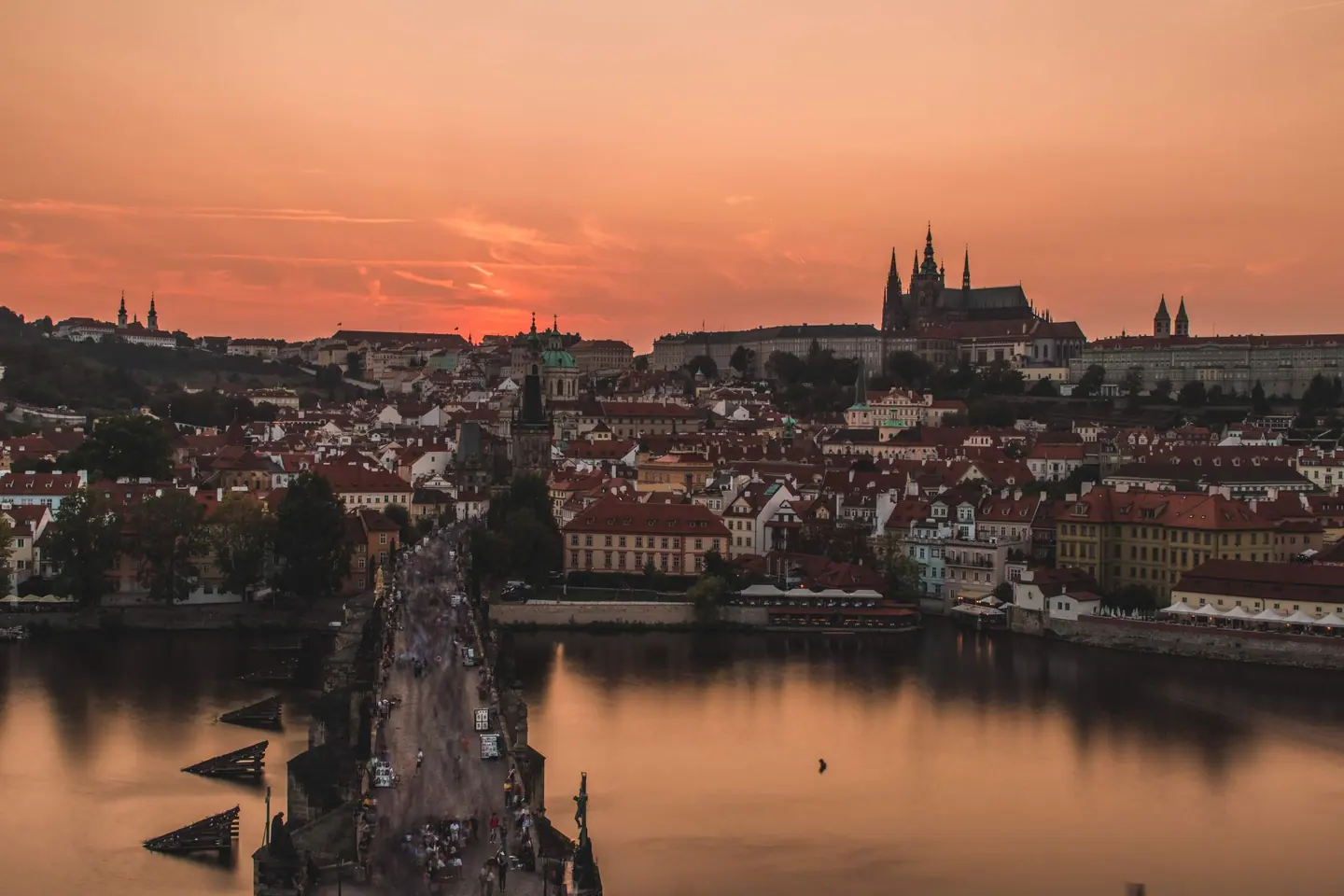
Old Town Square, Astronomical Clock, Týn Church & Powder Tower
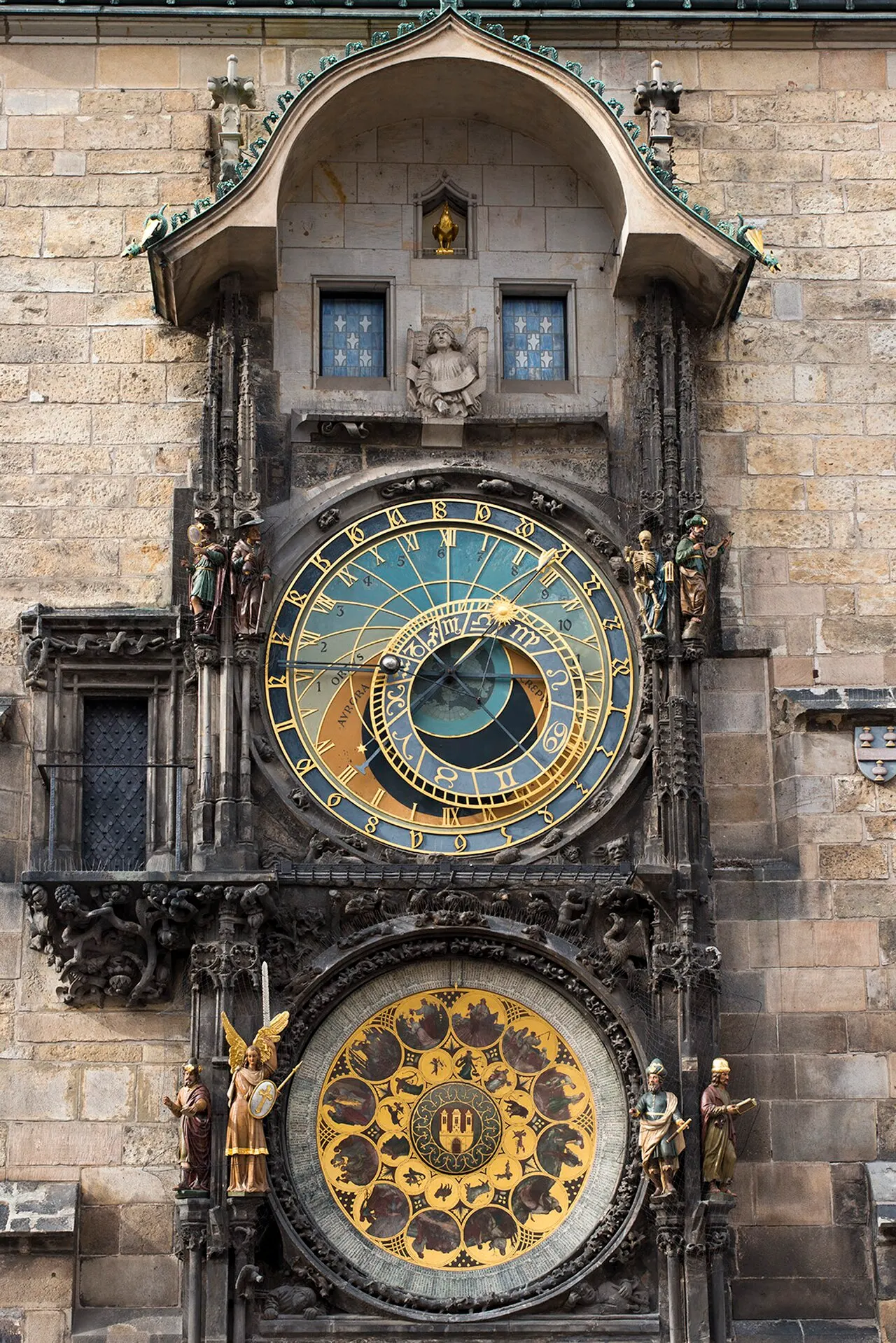
Start on Old Town Square beneath the 1410 Astronomical Clock, Gothic Church of Our Lady before Týn, St Nicholas Church, Municipal House and the Powder Tower.
Prague Astronomical Clock
Installed in 1410, this mechanism represents one of the oldest operational astronomical dials in Europe. The display shows solar and lunar positions, zodiacal rings, and an hourly procession of carved apostle figures. We observe allegorical sculptures flanking the dial, including depictions of Vanity, Greed, and Death.
Old Town Hall
Established in 1338 by King John of Bohemia, the complex expanded over centuries through adjacent merchant houses. The Gothic tower provides expansive views across the tiled roofs of the district, while the underground chambers preserve Romanesque foundations. The council hall contains original timber ceilings and painted coats of arms.
Old Town Square
This expansive space evolved from a major market crossroads into the civic heart of Bohemia. Romanesque and Gothic cellars lie beneath the surrounding houses, while the facades reflect Baroque, Renaissance, and Rococo renovations. Pavement markers commemorate the tragic execution of twenty-seven Bohemian Protestant leaders in 1621.
Church of Our Lady before Týn
Construction began in the mid-fourteenth century, establishing an imposing Gothic sanctuary with eighty-metre towers topped by delicate spires. The interior houses an elaborate Baroque high altar, the country's oldest surviving tin baptismal font, and the marble tomb of astronomer Tycho Brahe. Four historic houses screen the entrance from the public square.
Týn Courtyard - Ungelt
From the eleventh century, this enclosed courtyard served as a protected trade station where international merchants paid customs duties. Renaissance arcades and sgraffito decorations, notably on the Granovský Palace, adorn the surviving perimeter walls. Today, the peaceful enclave retains its medieval layout, connecting Týn Church with surrounding merchant lanes.
St. Nicholas Church, Old Town
Built between 1732 and 1737, this Baroque temple stands on the site of a thirteenth-century parish church. Kilian Ignaz Dientzenhofer designed the undulating white facade and copper-domed interior. Inside, visitors inspect monumental ceiling frescoes depicting Saint Nicholas, complemented by a substantial nineteenth-century Harrachov crystal chandelier.
Jan Hus Memorial
Sculptor Ladislav Šaloun completed this expansive bronze memorial in 1915, marking the quincentenary of Jan Hus's execution at Constance. The central bronze figure depicts the preacher standing resolute, encircled by Hussite warriors and defeated Czech exiles. The base features inscriptions from his letters and the national motto.
House at the Minute
Originally constructed as a late-Gothic residence, the building acquired its striking Renaissance sgraffito work around 1615. The detailed monochrome plasterwork depicts biblical tales, Greek mythology, and virtues, including portraits of Habsburg rulers. Author Franz Kafka lived here with his family in the late nineteenth century.
House at the Stone Bell
This tower palace served as a private residence for the royal family of John of Bohemia in the fourteenth century. Subsequent Baroque alterations were stripped away during twentieth-century restorations to reveal the original Gothic stonework and lancet windows. A small stone bell embedded at the corner gave the house its enduring name.
Kinský Palace
Designed by Anselmo Lurago and completed in 1765, this palace exemplifies late-Baroque architecture with rich Rococo stucco ornamentation. The aristocratic Kinský family acquired the property in 1768, assembling significant library collections within. The building now forms part of the National Gallery, hosting temporary art exhibitions.
Powder Tower
Begun in 1475 under King Vladislaus II, this Gothic gateway served as the monumental entrance through the Old Town fortifications. The name derives from the eighteenth century, when the interior functioned as a military gunpowder magazine. Elaborate heraldic reliefs and statues of Bohemian kings adorn both the eastern and western facades.
Municipal House
Constructed between 1905 and 1912 on the site of the former Royal Court, this building represents a premier example of Czech Art Nouveau. Renowned artists including Alfons Mucha decorated the ceremonial halls and the central Smetana Hall. It witnessed pivotal historical moments, including the official declaration of Czechoslovak independence in 1918.
Celetná Street
This historic pedestrian street connects Old Town Square directly to the Powder Tower, following an ancient trade route to eastern Bohemia. During the Middle Ages, bakeries selling woven bread rolls, or calty, lined the road and gave it its current name. The route contains continuous rows of Gothic, Renaissance, and Baroque facades.
House of the Black Madonna
Architect Josef Gočár designed this commercial structure in 1912, successfully integrating radical Cubist geometry into an existing Baroque urban environment. The facade features angular bay windows and a distinctive cubist entrance, alongside an encased seventeenth-century statue of the Black Madonna. The interior contains the Museum of Czech Cubism.
St. James's Church, Old Town
King Wenceslaus I founded this Minorite monastery church in the early thirteenth century, which was later rebuilt following a devastating fire in 1689. The resulting High Baroque interior features twenty-one marble altars, historic frescoes, and an eighteenth-century organ. Near the entrance hangs a mummified human arm, the subject of a traditional local legend.
Clam-Gallas Palace
Designed by the celebrated Viennese architect Johann Bernhard Fischer von Erlach, this palace was completed around 1718 for Count Gallas. Matthias Braun carved the dramatic sculptural portal, which features paired stone titans supporting the balcony above. The interior preserves an expansive ceremonial staircase, frescoed ceilings, and classical state reception rooms.
Church of St. Gall
Founded around 1230 by King Wenceslaus I, this church anchored a settlement of German merchants known as Havelské Město. Early reformist preachers, including Jan Hus, delivered sermons here prior to the Hussite Wars. The building received an expressive Baroque facade in the early eighteenth century and holds the tomb of painter Karel Škréta.
Havelská Market
This street market has operated continuously in the centre of Old Town since the thirteenth century. Wooden stalls line the central roadway, offering seasonal fruit, vegetables, flowers, and traditional wooden toys to local residents and travellers. Medieval arcaded buildings enclose both sides of the narrow market corridor.
Carolinum
Emperor Charles IV founded Central Europe's first university in 1348, and his son bought this merchant palace to serve as its primary seat in 1383. A distinctive Gothic oriel window projects over the street, representing the most intact medieval feature of the exterior. The complex continues to host university graduation ceremonies.
Estates Theatre
Count Nostitz built this Neoclassical theatre between 1781 and 1783 to foster civic culture in Prague. The structure retains international cultural fame as the venue where Wolfgang Amadeus Mozart conducted the world premiere of Don Giovanni in October 1787. Its green exterior and cream-and-gold auditorium remain largely unaltered.
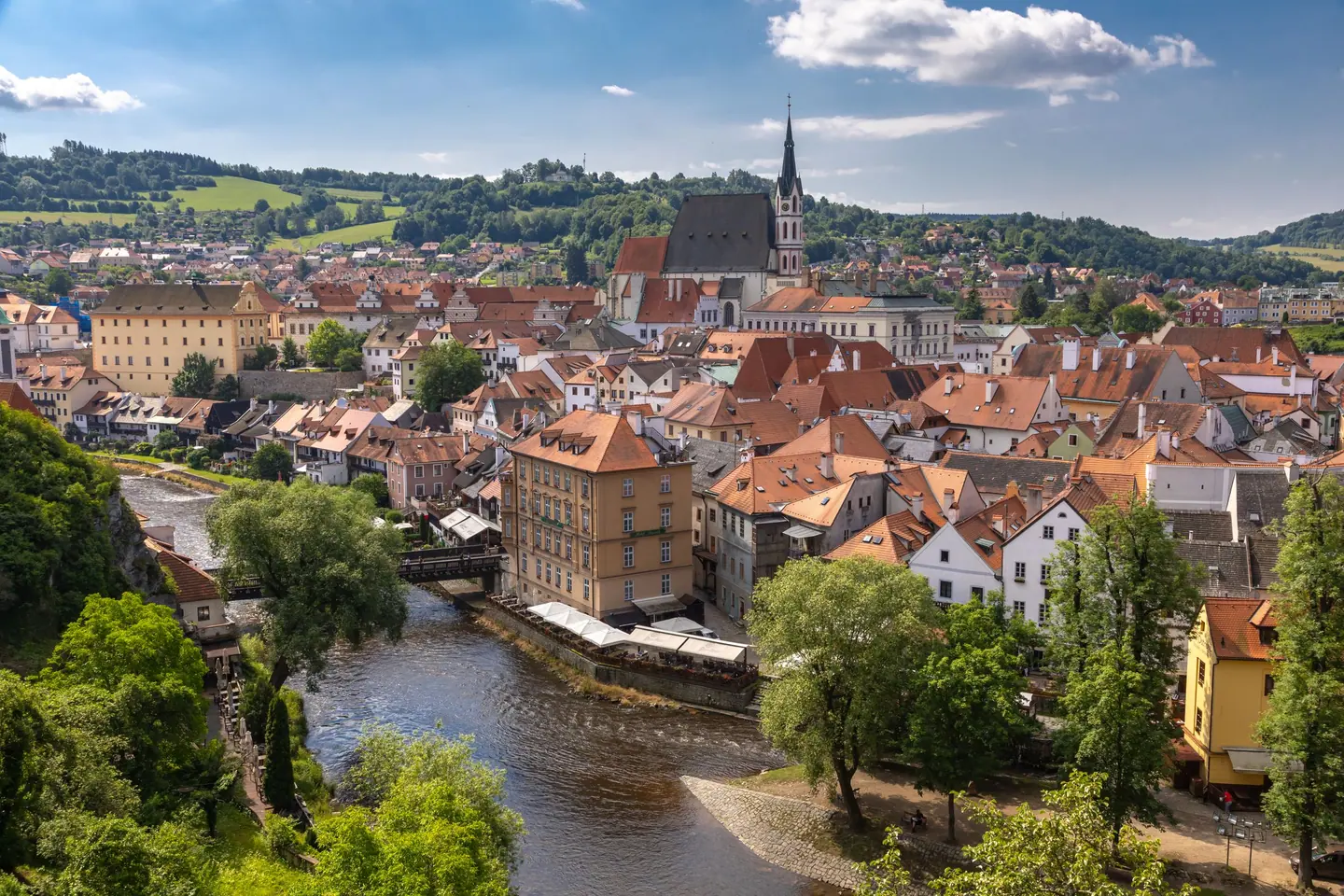
Josefov (Historic Jewish Quarter), Clementinum & Vltava Embankment
Explore the thirteenth-century Old-New Synagogue, Spanish Synagogue and Old Jewish Cemetery in Josefov, then walk through the Baroque Clementinum library.
Old-New Synagogue
Completed around 1270, this early Gothic sanctuary stands as the oldest surviving active synagogue in Europe. Its twin-nave interior features ribbed vaulting supported by octagonal pillars, alongside an ornate iron bimah grill. Local lore associates its attic vault with the resting place of the legendary sixteenth-century Golem created by Rabbi Judah Loew.
Old Jewish Cemetery
Established in the first half of the fifteenth century, this dense burial ground served Prague's Jewish community until 1787. Due to space constraints imposed by medieval confinement laws, bodies were buried in up to twelve layers, creating a striking landscape of crowded headstones. Notable graves include those of scholar Rabbi Judah Loew and philanthropist Mordecai Maisel.
Spanish Synagogue
Constructed in 1868 on the site of Prague's oldest synagogue, the building takes inspiration from the architecture of the Alhambra in Granada. Designed by Vojtech Ignac Ullmann, its interior features Moorish polychrome motifs, rich gilding and elaborate stained glass windows. Today the sanctuary displays exhibitions on the nineteenth- and twentieth-century history of Bohemian and Moravian Jews.
Pinkas Synagogue
Founded in 1535 by Rabbi Aron Mesullam Horowitz, this late Gothic and Renaissance hall was transformed after the Second World War into a solemn memorial. The interior walls bear hand-inscribed names, birthdates and deportation details of nearly 80,000 Bohemian and Moravian Holocaust victims. Upstairs, an exhibition presents drawings created by children held in the Terezin ghetto.
Klausen Synagogue
Erected between 1689 and 1694 following the Great Fire of Prague, this building occupies the ground where Rabbi Loew once established study halls and a ritual bath. It served as the largest synagogue in the Jewish quarter, distinguished by barrel-vaulted ceilings and classical pilasters. It now houses permanent displays detailing Jewish customs, holidays and everyday traditions.
Maisel Synagogue
Financed in 1592 by the court Jew and philanthropist Mordecai Maisel, the original structure boasted a three-aisled Renaissance plan before suffering major fire damage. Architect Alfred Grohs rebuilt the building between 1893 and 1905 with neo-Gothic elements and a symmetrical facade. It functions today as an exhibition space dedicated to the history of Czech Jews up to the eighteenth century.
Jewish Town Hall
Commissioned in the late sixteenth century by Mordecai Maisel, this civic building received its graceful Rococo facade and wooden clock tower from architect Josef Schlesinger in 1763. It features two distinct clocks: one displaying Roman numerals and another with Hebrew numbers running anticlockwise. The hall remains the administrative headquarters of Prague's contemporary Jewish community.
Franz Kafka Monument
Sculpted by Jaroslav Rona and unveiled in 2003, this four-metre bronze monument stands between the Spanish Synagogue and the Church of the Holy Ghost. It portrays the author seated on the shoulders of an empty, headless suit, drawing inspiration from his 1912 short story Description of a Struggle. The sculpture marks the historic boundary between Josefov and the Old Town.
High Synagogue
Constructed in 1568 alongside the Jewish Town Hall, this Renaissance building owes its name to the second-floor position of its main sanctuary. Architect Pancratius Roder designed the hall with Renaissance stucco groin vaults and lunette windows. Initially serving the Jewish council and local rabbinical court, the space now houses historic Torah binders, curtains and mantle textiles.
Ceremonial Hall
Designed by architect J. Gerstl and completed in 1912, this stone building served as the morgue and ritual purification hall for the Prague Burial Brotherhood. Constructed in the neo-Romanesque style with rounded arches and corner turrets, it stands adjacent to the Old Jewish Cemetery. It now contains exhibits exploring Jewish traditions regarding illness, death, medicine and burial rituals.
Church of the Holy Ghost
Founded in the 1340s as part of a Benedictine nunnery, this single-nave Gothic church marked the dividing line between Christian quarters and the Jewish ghetto. Rebuilt after severe fires in the seventeenth century, its exterior retains medieval buttresses and tall traceried windows. A Baroque statue of Saint John of Nepomuk, sculpted by Ferdinand Brokoff, stands outside its southern wall.
Rudolfinum
Designed by architects Josef Zitek and Josef Schulz, this monument of the Czech National Revival opened in 1885 on the Vltava bank. The building contains the Dvorak Hall, home to the Czech Philharmonic orchestra, and modern exhibition galleries across its upper floors. Its balustrades feature statues of prominent European composers, painters and sculptors.
Manes Bridge
Constructed between 1911 and 1914, this four-span concrete structure was designed by Frantisek Mencl and Alois Dryak to replace the former Rudolf footbridge. It carries distinctive Czech Cubist architectural details, visible in its geometric pylons, balustrades and street lamps. Relief panels along the piers depict the lives of traditional Vltava sand workers, fishermen and rafters.
Jan Palach Square
Renamed in December 1989 to honour the Charles University student who sacrificed his life in 1969 protesting Soviet occupation, this riverside square offers panoramas of Prague Castle. The square is framed by prominent cultural buildings, including the Rudolfinum, the Museum of Decorative Arts and the Faculty of Arts. A memorial plaque on the faculty facade commemorates Palach's historic stand.
Museum of Decorative Arts
Founded in 1885 and housed in a purpose-built neo-Renaissance palace designed by Josef Schulz, this museum preserves historical crafts and applied arts. Its halls contain comprehensive collections of Bohemian glass, porcelain, tapestries, furniture and horological instruments spanning several centuries. The building itself is notable for its painted ceilings, stained glass windows and carved wooden staircases.
Clementinum National Library
Originating as a Dominican monastery in the eleventh century, this sprawling complex was expanded by the Jesuits from 1556 into one of Europe's largest colleges. Its Baroque Library Hall is renowned for ceiling frescoes painted by Jan Hiebl, spiral wooden columns and collection of historic globes. The complex also houses the National Library of the Czech Republic and precious medieval codices.
Clementinum Astronomical Tower
Rising 68 metres above the central courtyard, this mid-eighteenth-century tower was equipped by Jesuit scholars to conduct astronomical observations. Topped by a lead statue of Atlas carrying the celestial sphere, the tower has recorded uninterrupted daily weather measurements since 1775. Visitors can see historic sextants and quadrants before climbing to the observation gallery for views of the Old Town.
Chapel of Mirrors
Consecrated in 1724 in honour of the Annunciation, this intimate hall features a distinctive design that incorporates large wall mirrors into its gilded ceiling stucco. The acoustic qualities of the interior are complemented by two historic eighteenth-century pipe organs, one of which was reportedly played by Wolfgang Amadeus Mozart. Elaborate ceiling frescoes depict scenes from the life of the Virgin Mary.
Church of Saint Francis of Assisi
Designed by French architect Jean-Baptiste Mathey and consecrated in 1688, this church served the Knights of the Cross with the Red Star beside the river crossing. The interior features an oval plan crowned by a grand dome with a fresco of the Last Judgement painted by Vaclav Vavrinec Reiner. Its underground crypt preserves original stones from the medieval Judith Bridge.
Charles Bridge Old Town Bridge Tower
Commissioned by Emperor Charles IV and designed by court architect Peter Parler in the late fourteenth century, this defensive tower marks the entrance to Charles Bridge. Its eastern facade features original Gothic stone reliefs depicting Charles IV, his son Wenceslaus IV and Saint Vitus. Visitors can climb 138 steps to an upper gallery overlooking the river, Josefov and the Clementinum.
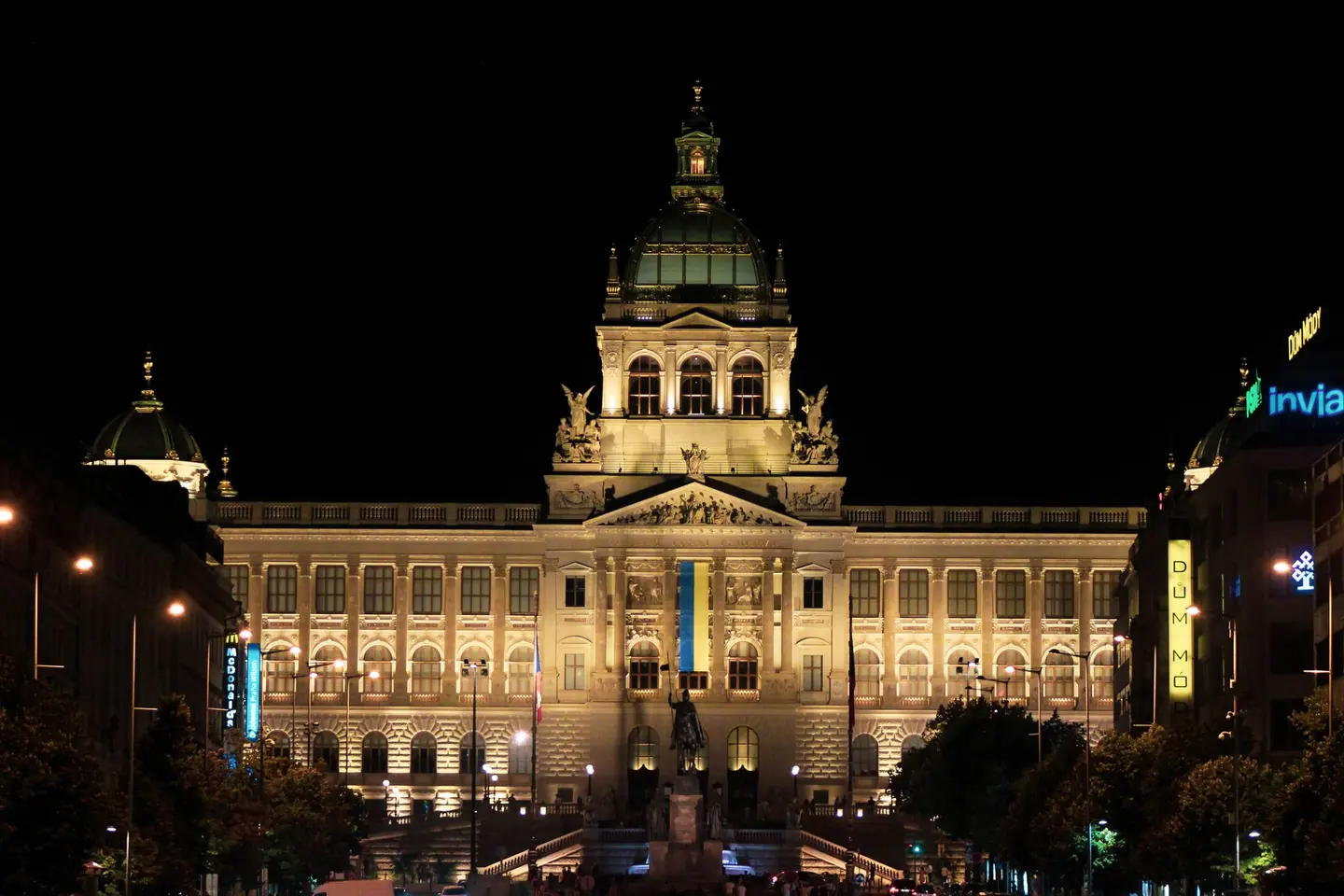
Charles Bridge, Kampa Island & Malá Strana (Lesser Town) Palaces
Cross the thirty Baroque statues of Charles Bridge to Kampa Island, the Lennon Wall, Wallenstein Palace Gardens, St Nicholas in Malá Strana and the Infant Jesus of Prague.
Charles Bridge
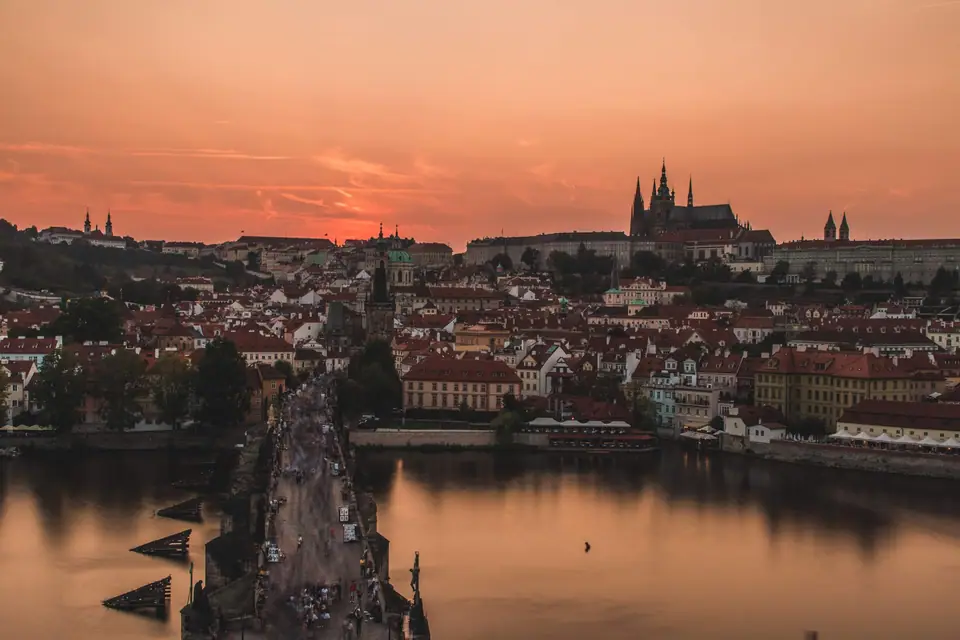
Commissioned by Holy Roman Emperor Charles IV in 1357, this sandstone bridge connects the Old Town to the Lesser Town. Master mason Peter Parler directed its construction across sixteen arches. Travellers can examine thirty replica and original Baroque statues, notably the bronze depiction of Saint John of Nepomuk whose plaque visitors polish for luck.
Old Town Bridge Tower
Constructed in the late fourteenth century under Peter Parler, this defensive tower served as a triumphal arch on the Royal Route. The eastern facade displays sculpted figures of Emperor Charles IV, King Wenceslaus IV, and Saint Vitus. Climb the interior staircase to survey the stone spans of the bridge and the river below.
Malá Strana Bridge Towers
Joined by an embattled Gothic gateway, these two towers anchor the western terminus of the bridge. The lower Romanesque tower formed part of the earlier twelfth-century Judith Bridge, while the taller counterpart echoes the Gothic style of the Old Town tower. The upper gallery provides direct sightlines along Mostecká street.
Statue of St John of Nepomuk
Erected in 1683, this bronze sculpture honours the royal court priest drowned in the Vltava on the orders of King Wenceslaus IV. Sculpted by Jan Brokoff, the martyr is depicted holding a crucifix and palm branch with five golden stars encircling his head. The worn brass relief beneath illustrates his martyrdom.
Kampa Island
Separated from the mainland by a man-made mill race called the Devil's Stream, this tranquil island served as pastureland and a centre for washerwomen for centuries. Several historical watermills line the watercourse, including the Grand Priory Mill with its wooden wheel. Broad lawns and public art installations now occupy the southern parkland.
Museum Kampa
Occupying a renovated nineteenth-century flour mill, this institution displays the private modern art collection of Jan and Meda Mládek. Focus areas include Central European abstract painting and a significant permanent installation of works by pioneer František Kupka. Outside, a line of yellow plastic penguins faces the river near monumental bronze babies.
Lennon Wall
Opposite the French Embassy, this stone wall belonged to the Sovereign Military Order of Malta before becoming a canvas for anti-communist messages in the 1980s. Following John Lennon's murder, youth painted his portrait alongside Beatles lyrics and protest slogans. The wall continues to change daily as street artists add new stencils and tributes.
Church of Our Lady Beneath the Chain
Founded around 1169 to guard the original Judith Bridge approach, this site represents the oldest church in the Lesser Town. The massive twin towers of ashlar masonry were left unfinished after Hussite raids destroyed the original nave. Visitors enter through a walled courtyard into an austere Baroque interior redesigned by Carlo Lurago.
Grand Priory Palace
Rebuilt in the 1720s by architect Bartolomeo Scotti, this aristocratic complex remains the regional headquarters of the Knights of Malta. The facade features elaborate portal carvings and a central balcony overlooking Grand Priory Square. Behind the gates lies a formal courtyard and private gardens backing onto the historic Lennon Wall.
Church of Our Lady Victorious
Built for German Lutherans in 1613 and later transferred to Discalced Carmelites, this was Prague's first Baroque ecclesiastical building. Pilgrims from across the world visit the marble side altar to view the sixteenth-century wax effigy of the Infant Jesus. A museum on the upper gallery exhibits the statue's intricate historical vestments and royal crowns.
Vrtba Garden
Designed between 1715 and 1720 by František Maxmilián Kaňka, this enclosed garden ascends steeply across three stone terraces. Matthias Bernard Braun carved the classical statues of mythological deities decorating the balustrades and lower sala terrena. The highest platform rewards visitors with intimate views across the terracotta rooftops and domes of the Lesser Town.
St. Nicholas Church, Malá Strana
Constructed over six decades by Christoph Dientzenhofer and his son Kilian Ignaz, this church marks the zenith of Bohemian Baroque architecture. Inside, Johann Lukas Kracker painted the enormous nave ceiling fresco celebrating Saint Nicholas. The interior contains gilded statues by Ignác Platzer and an eighteenth-century organ once played by Wolfgang Amadeus Mozart.
Malostranské náměstí
Divided into upper and lower sections by Saint Nicholas Church, this square has served as the social focal point of the Lesser Town since the tenth century. Noble residences, including the Renaissance town hall and Baroque Lichtenstein Palace, ring the perimeter. A high stone Holy Trinity Column erected in 1715 commemorates survival from plague.
Wallenstein Palace
Imperial military commander Albrecht von Wallenstein demolished over twenty houses to build this palace between 1623 and 1630 to rival Prague Castle. Italian masters designed the palatial complex around five courtyards, incorporating a grand main hall featuring a ceiling fresco of Wallenstein as Mars. Today it accommodates the Senate of the Parliament of the Czech Republic.
Wallenstein Garden
Connected to the palace, these geometric grounds centre on a massive three-arched sala terrena adorned with scenes from the Trojan War. Bronze replicas of mythological statues by Adriaen de Vries flank the main gravel avenue leading to a pond. A curious artificial grotto with stalactites, known as the dripstone wall, anchors the southern side.
Vojan Gardens
Originating as a mediaeval fruit orchard for the Bishop of Prague, these grounds were enclosed in the seventeenth century by Carmelite nuns. High stone walls insulate the interior fruit trees and walking paths from urban noise. Peacocks roam freely across the central lawn around two early Baroque chapels dedicated to Saint Elias and Saint Theresa.
Franz Kafka Museum
Occupying a riverside eighteenth-century industrial compound, this museum presents the life and psychological landscape of Prague-born writer Franz Kafka. The exhibition divides into existential space and imaginary topography, displaying first editions, correspondence, and diaries. In the courtyard stands David Černý's kinetic fountain sculpture depicting two bronze men urinating into a Czech-shaped basin.
Schönborn Palace
Built between 1643 and 1656 by Count Colloredo, this extensive complex features a prominent early Baroque facade facing Tržiště street. Writer Franz Kafka briefly rented an apartment here in 1917 before the United States government acquired the property in the 1920s. Behind the palace, a terraced private garden ascends towards a hill surmounted by an orchard pavilion.
Lobkowicz Palace, Malá Strana
Designed by Giovanni Battista Alliprandi in the early eighteenth century, this residence is noted for its oval central hall and rounded garden facade. The property gained international historical significance in autumn 1989 when thousands of East German citizens scaled its garden fence seeking asylum. In the gardens stands David Černý's sculpture of a Trabant car on legs.
Čertovka
Dug in the twelfth century by the Order of the Knights of Malta to power flour mills, this narrow artificial canal flows from the Vltava back into the river. House walls rise directly out of the water, earning the district the moniker of the Prague Venice. Visitors on the bridge can watch the timber wheel of the Grand Priory Mill turn slowly.
Hradčany, Prague Castle, St Vitus Cathedral, Golden Lane & Petřín Hill
Climb to Prague Castle for St Vitus Cathedral, the Old Royal Palace, St George Basilica, Golden Lane, Loreta, Strahov Monastery Library and Petřín Lookout Tower.
Prague Castle First Courtyard and Matthias Gate
Dating to 1614, this early Baroque triumphal gate was incorporated into Maria Theresa's palace reconstruction scheme. It forms the grand formal entry from Hradčany Square into the fortress. We observe the statues of Battling Titans towering above the entrance, alongside ceremonial guards flanking the wrought iron portals.
St Vitus Cathedral
Founded in 1344 under Charles IV, this monumental church took nearly six centuries to finish, concluding in 1929. Master builders Peter Parler and Matthias of Arras established its soaring rib vaults and flying buttresses. Travellers should view the gilded St Wenceslas Chapel and Alfons Mucha's stained-glass window in the nave.
Old Royal Palace
Constructed over Romanesque foundations, the complex served as the royal court until the Habsburgs relocated westwards. Its centrepiece is Vladislav Hall, an expansive late Gothic chamber featuring sweeping floral vaults engineered by Benedikt Rejt. The historic Bohemian Chancery, site of the fateful 1618 defenestration, adjoins the southern gallery.
St George's Basilica
Founded by Prince Vratislaus I around 920, this ancient shrine remains the best-preserved Romanesque church within the citadel. Its austere limestone interior contrasts sharply with the seventeenth-century red facade overlooking St George's Square. Look for the resting place of Saint Ludmila, grandmother of St Wenceslas, buried within the southern chapel.
Golden Lane
Built into the castle's northern fortifications during the reign of Rudolf II, these tiny cottages initially housed castle marksmen and goldsmiths. Franz Kafka lived and wrote at house number 22 between 1916 and 1917. Above the cottages runs a defensive timber corridor filled with medieval armour, crossbows and tournament gear.
Daliborka Tower
Completed in 1496 by Benedikt Rejt as part of the outer ramparts, this cylindrical tower soon served as a penitentiary for noble prisoners. It takes its name from Dalibor of Kozojedy, its first captive, who according to legend learned violin in the dungeon. Travellers can examine the subterranean oubliette and historic iron shackles.
Rosenberg Palace
Constructed by the powerful Rosenberg family in the mid-sixteenth century, the residence was comprehensively altered by Maria Theresa in 1753. It became the Institute for Noble Ladies, accommodating unmarried aristocratic women. The restored interior features an arcaded courtyard, period drawing rooms and a consecrated chapel adorned with classical religious frescoes.
Royal Garden of Prague Castle
Ferdinand I purchased old vineyards here in 1534 to cultivate exotic plants and botanical novelties, introducing tulips to Central Europe. The garden provides peaceful pathways along the castle's northern flank, with views across the deep Deer Moat. We pass ancient chestnut trees, ornamental parterres and the decorative Renaissance Ball Game Hall.
Queen Anne's Summer Palace
Commissioned by Emperor Ferdinand I for his wife Anne Jagiellon in 1538, this structure ranks among the earliest Renaissance buildings north of the Alps. Giovanni Spazio and Paolo della Stella designed the open arcades supported by carved stone columns. Outside stands the bronze Singing Fountain, cast by Tomáš Jaroš in 1568.
Deer Moat
Carved by the Brusnice stream, this ravine historically defended Prague Castle from northern assault before serving as an enclosure for red deer under Rudolf II. Today walking paths and footbridges link the upper and lower sections through tranquil greenery. Josef Pleskot's pedestrian tunnel cut through the embankment connects both halves of the glen.
Hradčany Square
Positioned directly before the castle gates, this plaza retains the urban plan established after the devastating city fire of 1541. Noble families erected sprawling residences here to remain close to the royal court. The square features a Baroque Marian plague column from 1726 alongside cast iron gas lamps from the nineteenth century.
Schwarzenberg Palace
Erected for the Lobkowicz family between 1545 and 1567, this landmark exemplifies the Bohemian adaptation of Italian Renaissance design. Its envelope is covered in trompe-l'oeil diamond sgraffito resembling faceted stone blocks. Operated by the National Gallery, the interior presents extensive collections of old masters, including Renaissance paintings and decorative military weaponry.
Archbishop's Palace
Occupying the northern corner of Hradčany Square, the palace has served Catholic primates since Ferdinand I bought it in 1562. Architect Jan Josef Wirch gave the structure its present Rococo facade in the 1760s, complete with gilded balconies and stone escutcheons. The interior conceals valuable tapestries manufactured in Paris and seventeenth-century portraits of Bohemian bishops.
Sternberg Palace
Hidden down an alleyway beside the Archbishop's Palace, this residence was built for Count Wenceslas Adalbert of Sternberg around 1700. Domenico Martinelli and Giovanni Battista Alliprandi designed the classical courtyard and curving garden wing. As a branch of the National Gallery, its galleries display masterpieces by Rubens, Tintoretto, Goya and Lucas Cranach the Elder.
Loreta
Established in 1626 by Benigna Catherine von Lobkowicz, this pilgrimage site was designed to bolster the Counter-Reformation in Bohemia. The complex features a replica of the Santa Casa in Loreto, encircled by arcaded cloisters and the Church of the Nativity. Its carillon of thirty bells rings hourly, while the treasury preserves the diamond-encrusted Prague Sun monstrance.
Černín Palace
Commissioned by Count Humprecht Jan Černín in 1668, this building represents one of the largest private Baroque palaces in Bohemia. Architect Francesco Caratti designed the vast front elevation, rhythmically broken by thirty monumental Corinthian half-columns. The palace became the scene of foreign minister Jan Masaryk's controversial death in 1948.
Strahov Monastery
Founded in 1143 by Bishop Jindřich Zdík, this religious community has endured wars, sieges and communist suppression. The monastery complex incorporates the Basilica of the Assumption alongside an art gallery. Visitors flock to inspect the Baroque Theological Hall and the soaring Neoclassical Philosophical Hall, lined with walnut bookcases and ceiling frescoes.
Petřín Lookout Tower
Erected in 1891 for the General Land Centennial Exhibition, this 63-metre steel tower crowns the summit of Petřín Hill. Members of the Czech Tourists Club commissioned it after visiting Paris, adapting the design to fit the topography. Two spiral staircases lead to an open viewing platform delivering clear panoramas across Prague.
Petřín Mirror Maze
Constructed as a temporary display for the 1891 Jubilee Exhibition, this pavilion echoes the medieval fortification gates of the Vyšehrad fortress. Inside, travellers navigate a labyrinth of mirrors that opens into a hall of comical distorting glass. The central room features an expansive diorama portraying the 1648 defense of Charles Bridge against Swedish troops.
Hunger Wall
King Charles IV built this defensive rampart between 1360 and 1362 to reinforce the fortifications of Prague Castle and Malá Strana. Popular history asserts that Charles commissioned the works to provide paid employment and food to citizens during severe regional famine. The crenellated stone wall still stands over four metres tall across the hill's western parklands.
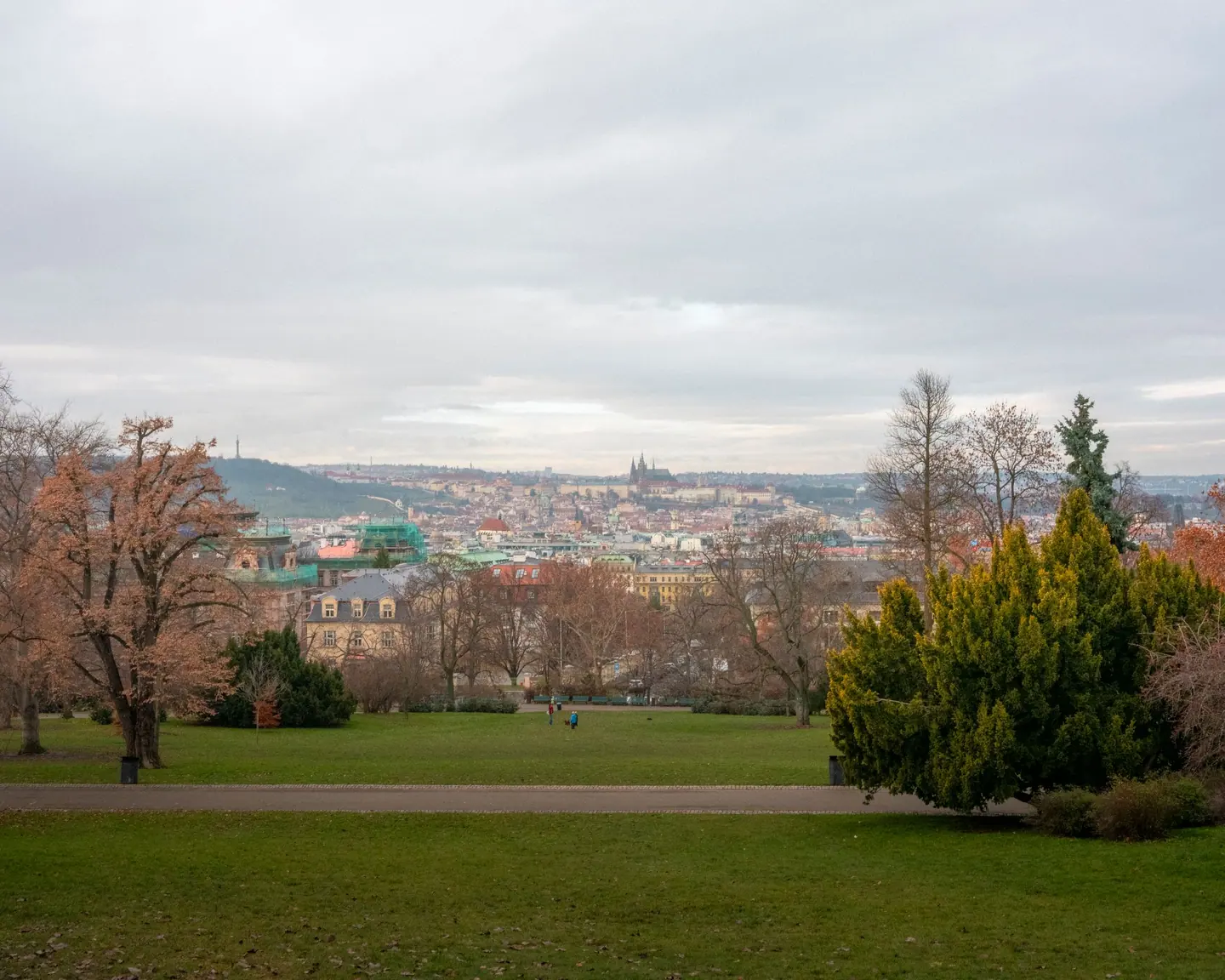
New Town (Nové Město), Wenceslas Square, National Theatre, Dancing House & Vyšehrad
Follow the Vltava south from Wenceslas Square and the National Theatre past the Dancing House and Emmaus Monastery to the clifftop fortress of Vyšehrad.
Wenceslas Square
Originally laid out in 1348 by Charles IV as a horse market, this broad boulevard transformed into the civic stage for modern Czech history. Demonstrations during the 1989 Velvet Revolution and the 1968 Prague Spring took place along its gentle incline. Today visitors can inspect architectural facades spanning historicism, Art Nouveau, and early modernist styles along both sides of the roadway.
National Museum
Designed by Josef Schulz and completed in 1891, this monumental institution houses vast collections of natural history, mineralogy, and archaeology. The central Pantheon displays bronze statues of Czech literary and cultural pioneers beneath an immense gilded dome. The exterior facade still displays stone patching covering damage sustained during the 1968 Warsaw Pact invasion.
Statue of Saint Wenceslas
Sculpted by Josef Václav Myslbek and erected between 1912 and 1924, this equestrian bronze shows Prince Wenceslas flanked by fellow Czech patron saints Ludmila, Prokop, Agnes, and Adalbert. The plinth serves as an enduring national focal point and traditional meeting ground during political rallies. The memorial nearby honours Jan Palach and Jan Zajíc, who immolated themselves here in 1969.
Lucerna Palace
Constructed between 1907 and 1921 by Vácslav Havel, grandfather of the future president, Lucerna was one of Prague's earliest reinforced concrete structures. Its central hall houses a concert venue, an ornate historic cinema, and upscale cafes under a glass dome. Suspended within the main atrium hangs David Černý's provocative sculpture of Saint Wenceslas sitting upon an upside-down dead horse.
Franciscan Gardens
Established in the early seventeenth century by the Order of Friars Minor, this sheltered green space offers respite from the busy shopping streets. The formal layout features neatly trimmed yew hedges, rose arbours, and metal benches set around a modest central fountain. Passersby use the garden as an attractive pedestrian corridor connecting Wenceslas Square with Jungmann Square.
Church of Our Lady of the Snows
Founded in 1347 by Emperor Charles IV as a coronation church, the planned grand basilica was never fully finished due to the Hussite Wars. What stands today is merely the intended choir, which ranks among the highest Gothic vaults in the Czech capital. The interior is distinguished by a towering seventeenth-century early Baroque column altar crowned with crucifix carvings.
National Theatre
Rising proudly over the Vltava riverbank, this institution symbolised the Czech National Revival and opened in 1881 before being rebuilt following a devastating fire that same year. Architect Josef Zítek created a landmark topped with a distinctive starry dome, gilded roof cresting, and allegorical bronze trigas. The lavish auditorium hosts premier productions of opera, ballet, and classical Czech theatrical drama.
Laterna Magika
Forming the modern wing of the National Theatre, the New Scene building was designed by Karel Prager and opened in 1983. Its exterior is cloaked in thousands of blown glass blocks that diffuse river light while dampening street noise. The stage became famous worldwide for pioneer multimedia theatre combining live-action acting, modern dance, and interactive cinematic projections.
Žofín Palace
Situated on Slovanský Island, this butter-yellow palace was reconstructed in 1886 into a distinguished municipal venue for balls, political assemblies, and orchestral performances. In 1848, the building hosted the first Slavic Congress, and composers Hector Berlioz and Franz Liszt performed concerts in its grand hall. The surrounding public park features leafy walking paths and hire boats.
Mánes Exhibition Hall
Constructed in 1930 for the Mánes Union of Fine Arts, this functionalist white pavilion bridges the mill race between the embankment and Slavic Island. Architect Otakar Novotný carefully incorporated the neighbouring late-Gothic Šítkovská water tower into the streamlined modern ensemble. Inside, the sunlit spaces host rolling exhibitions of contemporary sculpture, design, and painting beside sweeping river views.
Dancing House
Designed by architects Frank Gehry and Vlado Milunić on a site bombed during the Second World War, this building was completed in 1996. The deconstructivist design comprises two towers: one made of glass columns pinched inward, and a companion tower of sculpted concrete with undulating window frames. The top floor houses a public gallery and viewing terrace overlooking the castle.
Charles Square
Established in 1348 by Charles IV as the Cattle Market, this sprawling open area covers over eight hectares and is one of Europe's largest city squares. Landscaped in the mid-nineteenth century into an English-style municipal park, it features mature trees, walking avenues, and statues of Czech literary figures. Surrounding streets contain notable institutional buildings, baroque churches, and hospital complexes.
New Town Hall
Dominating the northern edge of Charles Square, this complex served as the administrative core of New Town from the fourteenth century until the municipal merger of 1784. The site is remembered for the First Defenestration of Prague in 1419, when Hussite reformers threw Catholic councillors from the council chamber windows. A soaring Gothic tower offers visitors views across the New Town rooftops.
Church of Saint Ignatius
Built between 1665 and 1670 by Carlo Lurago, this imposing place of worship was modelled on the Church of the Gesù in Rome. A statue of Saint Ignatius of Loyola, surrounded by a radiant golden halo, presides atop the main facade pediment above the entrance. The spacious interior displays elaborate stucco ceilings, carved side altars, and deep marble tones common to counter-reformation architecture.
Faust House
Anchoring the southern edge of Charles Square, this aristocratic mansion acquired its nickname from seventeenth-century alchemical residents, including court astrologer Edward Kelley. Prague legends subsequently associated the address with Doctor Faust and his bargain with the devil. The present facade features High Baroque remodelings by František Maxmilián Kaňka, complete with stucco decorations and painted internal sundials.
Cathedral of Saints Cyril and Methodius
Originally built by Kilian Ignaz Dientzenhofer as a retirement chapel for priests, this Baroque structure is the principal cathedral of the Czech Orthodox Church. In June 1942, Czechoslovak paratroopers who assassinated SS Obergruppenführer Reinhard Heydrich made their final stand against Nazi forces inside the crypt. Bullet scars remain visible around the basement ventilation window, and the crypt now serves as a moving memorial.
Emmaus Monastery
Founded in 1347 by Charles IV to revive Old Church Slavonic liturgy, this monastery remains famous for its fourteenth-century Gothic cloister frescoes depicting Old and New Testament pairings. Heavy bombing in 1945 destroyed the historical church roof and towers. Reconstruction in the 1960s added daring asymmetrical concrete spires with gilded tips, which now characterise the local river skyline.
Vyšehrad Fortress
Perched on a rocky promontory, this fortress was established in the tenth century and served as the royal residence of Vratislaus II, Bohemia's first king. Later fortified with massive brick bastions by the Habsburgs, the grounds now function as a park. Strolling the elevated ramparts allows visitors to observe the river valley, the bridges, and the distant silhouette of Prague Castle.
Basilica of Saint Peter and Saint Paul
Although founded in the eleventh century by King Vratislaus, this collegiate church received its dominant Neo-Gothic overhaul by Josef Mocker between 1885 and 1903. The church's twin filigree spires form a principal landmark visible along the river approach from the north. The interior is decorated with Art Nouveau wall paintings, floral motifs, and the eleventh-century Romanesque stone sarcophagus of Saint Longinus.
Vyšehrad Cemetery and Slavín Tomb
Established in 1869 beside the basilica, this cemetery serves as the national resting place for distinguished Czech writers, scientists, composers, and political figures. Notable graves include those of Antonín Dvořák, Bedřich Smetana, Karel Čapek, and Alfons Mucha. At its centre stands the Slavín monument, a collective tomb designed by Antonín Wiehl, crowned with a winged spirit of victory.
Navigating Prague’s Cobblestones and Trams
For neighbourhood accommodation notes, seasonal weather tables and airport transfer details, consult our Prague destination guide, or browse other city and regional walking routes across the atlas.