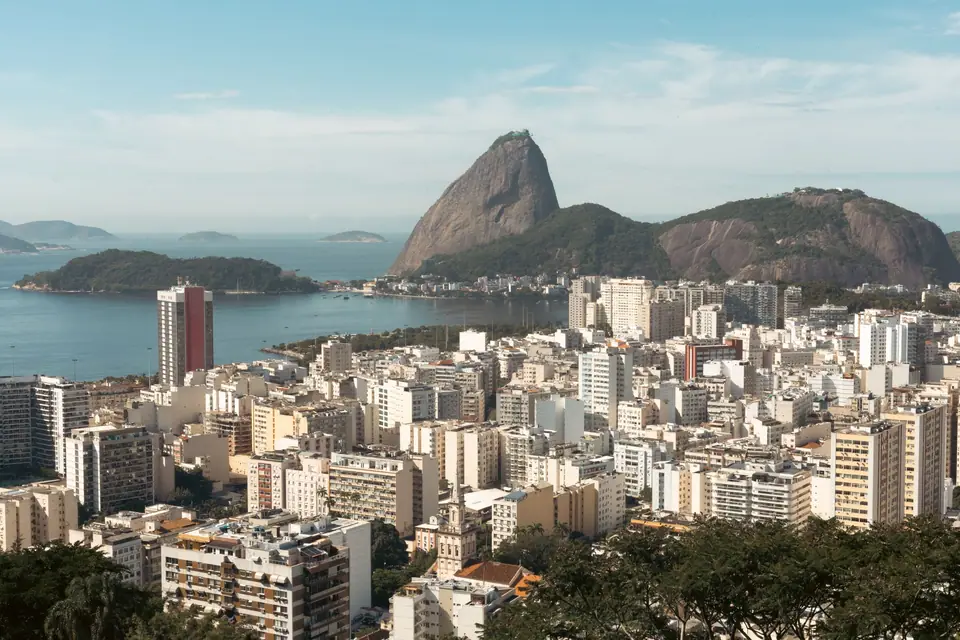
A 100-stop walking and tram route across Rio de Janeiro, connecting colonial Praça XV, the Real Gabinete Português de Leitura, Santa Teresa hills, Corcovado, and Atlantic beaches.
Portuguese Royal Court in the Americas and the Carioca Landscape
Named by Portuguese explorers who entered Guanabara Bay on 1 January 1502 and mistook its narrow mouth for a river estuary (River of January), São Sebastião do Rio de Janeiro was founded in 1565 by Estácio de Sá at the foot of Sugarloaf Mountain. In 1763 the colonial capital moved south from Salvador to Rio so the Portuguese crown could oversee gold and diamond shipments arriving along the Estrada Real from Minas Gerais.
In 1808, fleeing Napoleon's invasion of Lisbon, Prince Regent Dom João VI and the entire royal court relocated to Rio de Janeiro, making it the only European imperial capital ever governed from the Americas and endowing the city with royal libraries, neoclassical academies, and the Botanical Garden before Brazil's independence in 1822.
Praça XV, Cinelândia & Royal Centro Histórico
Praça XV de Novembro, Paço Imperial, Convento do Carmo, Igreja de Nossa Senhora da Candelária, Centro Cultural Banco do Brasil CCBB, Real Gabinete Português de Leitura, Confeitaria Colombo, and Theatro Municipal
Praça XV de Novembro
Originally known as the Largo do Paço, this vast waterside expanse served as the primary gateway to colonial Rio. The square witnessed the arrival of the Portuguese royal family in 1808 and the signing of the Golden Law that abolished slavery in 1888. Visitors can inspect the eighteenth-century Chafariz do Mestre Valentim fountain carved from local granite.
Paço Imperial
Constructed in 1743 as the residence of the colonial governors, this austere baroque complex subsequently housed Portuguese monarchs and Brazilian emperors. It was from its balcony that Prince Regent Pedro declared his refusal to return to Portugal in 1822, triggering Brazilian independence. Today, the restored interior rooms host rotating art exhibitions and architectural archives.
Palácio Tiradentes
Inaugurated in 1926 on the site of the former colonial prison where martyr Tiradentes was held, this grand edifice served as Brazil's national congress until 1960. The exterior features massive Corinthian columns, while the assembly chamber showcases an imposing stained-glass dome and historical allegorical murals. The building currently operates as a cultural centre and legislative archive.
Convento do Carmo
Erected by Carmelite friars in the seventeenth century, this religious complex was requisitioned to accommodate Queen Maria I of Portugal upon the royal court's arrival in 1808. The convent features stone cloisters and simple Portuguese colonial masonry typical of the era. It now accommodates university faculties and stands adjacent to two of the city's foremost historic churches.
Igreja de Nossa Senhora do Monte do Carmo
Constituted as Rio's royal chapel in 1808 and later its imperial cathedral, this baroque church hosted the coronation ceremonies of Brazil's emperors and royal weddings. Master woodcarver Inácio Ferreira Pinto executed the interior gilded woodwork, which exhibits fluid rococo flourishes throughout the nave. The leaden casket of navigator Pedro Álvares Cabral was long interred within its crypt.
Igreja da Ordem Terceira de Nossa Senhora do Monte do Carmo
Standing directly beside the Old Cathedral, this church was completed in the late eighteenth century for the Carmelite Third Order. Its striking exterior is notable for stone carvings completed by the Afro-Brazilian master sculptor Mestre Valentim. The interior displays rich gilded detailing, silver altarpieces, and oil paintings depicting episodes from the Old Testament.
Arco do Teles
Built in the 1750s to link the central square with the neighbouring commercial quarter, this granite arch survived a devastating fire in 1790 that consumed surrounding residences. Passing through the portal leads to the cobblestone lane of Travessa do Comércio, lined with preserved two-storey colonial merchant houses. The passageway retains iron street lamps and Portuguese stone paving.
Chafariz do Mestre Valentim
Designed by celebrated sculptor Mestre Valentim and unveiled in 1789, this stone fountain supplied freshwater to incoming vessels moored in Guanabara Bay. It stands as a four-sided granite pyramid crowned by the Portuguese royal coat of arms, incorporating classical urns and decorative escutcheons. The structure remains an enduring monument to Rio's colonial municipal engineering.
Centro Cultural Banco do Brasil
Completed in 1906 as the headquarters of the Commercial Association, this imposing neoclassical building was later converted into one of the country's most frequented cultural institutions. The central courtyard features a vast stained-glass dome and original marble colonnades. Inside, the institution houses exhibition galleries, two cinema auditoriums, a historical coin museum, and performing arts spaces.
Casa França-Brasil
Commissioned by King John VI in 1819 and opened in 1820, this balanced neoclassical edifice was designed by French Artistic Mission leader Auguste-Henri-Victor Grandjean de Montigny. It functioned as Rio's first commercial exchange and later as a customs depot. The cruciform interior exhibits high barrel vaults supported by Doric colonnades, now hosting contemporary art installations.
Igreja de Nossa Senhora da Candelária
Founded on a mariner's vow in the seventeenth century and constructed over more than a century, this immense church was officially dedicated in 1898. Its baroque facade contrasts with an Italianate interior decorated with fine polychrome marble imported from Europe. Above the crossing sits a heavy limestone dome from Lisbon, framed by German stained-glass windows.
Mosteiro de São Bento
Established by Benedictine monks in 1590 atop a granite hill overlooking the port, this complex presents a severe mannerist stone exterior. In contrast, the church interior is lined entirely with gold-leaf woodcarvings crafted by Brother Domingos da Conceição and Alexandre da Silva. The monastery maintains traditional Gregorian chant during daily liturgical services.
Igreja de Nossa Senhora da Lapa dos Mercadores
Erected in the mid-eighteenth century by an association of local merchants, this small church features an elegant baroque portal and a single central bell tower. The interior is decorated with silver candelabra, gilded carvings, and an elliptical nave roof that enhances acoustic resonance. During an 1893 naval rebellion, an artillery shell damaged the tower; the fallen statue survives on display inside.
Igreja de São Francisco da Penitência
Completed in 1773 on the Morro de Santo Antônio, this church represents one of Brazil's foremost triumphs of the baroque style. Virtually every interior surface is covered in ornate gilded woodcarvings produced by Manuel and Francisco Xavier de Brito. The wooden nave ceiling displays pioneering perspective paintings created by Portuguese artist Caetano da Costa Coelho.
Convento de Santo Antônio
Founded in 1608, this is one of Rio's oldest standing architectural ensembles, built by Franciscan friars on high ground to escape colonial swamp fevers. The compound includes traditional stone cloisters, an extensive colonial art museum, and carved jacaranda-wood furniture. Visitors can see the decorative azulejo tilework imported from Lisbon during the early eighteenth century.
Real Gabinete Português de Leitura
Founded in 1837 by Portuguese immigrants and opened in 1887, this institution is housed in a lavish Neo-Manueline structure designed by Rafael da Silva e Castro. The limestone facade features statues of Portuguese explorers, including Vasco da Gama and Pedro Álvares Cabral. Inside, three tiers of ornate dark-wood bookshelves rise beneath an iron chandelier and stained-glass skylight.
Confeitaria Colombo
Opened in 1894 on Rua Gonçalves Dias, this historic tea house served as the meeting ground for Brazilian politicians, writers, and artists during the First Republic. The interior is defined by grand mirrors framed in carved rosewood and brought directly from Antwerp. Overhead, an ornate stained-glass ceiling allows natural light to illuminate the original tiled floors and marble tables.
Theatro Municipal
Inaugurated in 1909 during the urban reforms of Mayor Pereira Passos, this lavish opera house was modelled closely on Charles Garnier's Paris Opera. The exterior is crowned by an eagle finished in gold leaf, flanked by Carrara marble statuary and gilded bronze ornaments. The interior houses painted panels by Eliseu Visconti and grand mosaic-lined grand staircases.
Praça Floriano
Formed during the early-twentieth-century opening of Avenida Central, this major public square became Rio's theatrical centre, earning the popular moniker Cinelândia for its concentration of picture palaces. At its centre stands a bronze monument to Marshal Floriano Peixoto, Brazil's second president. The perimeter is anchored by the Municipal Theatre, the National Library, and the City Council chambers.
Museu Nacional de Belas Artes
Constructed between 1906 and 1908 by architect Adolfo Morales de los Rios, this eclectic building mirrors neoclassical French academy architecture. The institution traces its origins to the collection brought to Brazil by King John VI in 1808. The museum preserves monumental canvases of nineteenth-century Brazilian history by Victor Meirelles and Pedro Américo, alongside French academic sculptures.
Porto Maravilha, Little Africa & São Bento Monastery
Mosteiro de São Bento, Museu do Amanhã Museum of Tomorrow, Museu de Arte do Rio MAR, Pedra do Sal, Valongo Wharf, Largo da Prainha, AquaRio, and Ilha Fiscal
Mosteiro de São Bento
Founded by Benedictine monks in 1590, this hilltop monastery features an austere Mannerist facade concealing elaborate Brazilian Baroque woodwork. Inside, visitors can admire intricate cedar carvings blanketed in gold leaf by Frei Domingos da Conceição and Mestre Valentim. The chancel houses historic silver lamps and solemn paintings by the German monk Frei Ricardo do Pilar.
Museu do Amanhã
Projecting directly over Pier Mauá, this science museum opened in 2015 as part of the Porto Maravilha renewal programme. Architect Santiago Calatrava designed the cantilevered roof with mobile solar panels that rotate towards the sun. The interior features interactive multimedia exhibits exploring sustainability, cosmic origins, and scientific forecasts for Earth's future climate.
Museu de Arte do Rio
Inaugurated in 2013, MAR unites the eclectic Palacete Dom João VI and an adjoining modernist terminal beneath a flowing concrete roof shaped like ocean waves. The institution displays extensive collections of paintings, photographs, and historical prints detailing the social history of Rio de Janeiro. An open-air terrace provides panoramic perspectives across the revitalised docks.
Praça Mauá
Named after the industrialist Irineu Evangelista de Sousa, Viscount of Mauá, this vast public square long served as the city's maritime gateway. Following the demolition of the elevated Perimetral highway, the plaza emerged as a grand pedestrian concourse lined with palm trees. At its centre stands a bronze monument honouring Mauá, surrounded by major cultural institutions.
Edifício A Noite
Rising twenty-two storeys above Praça Mauá, this milestone tower opened in 1929 as Latin America's tallest reinforced concrete skyscraper. Designed by Joseph Gire and Elisário Bahiana, it served as headquarters for the newspaper A Noite and later housed Rádio Nacional. Its stepped Art Deco pinnacle and historic radio studios represent an important era in Brazilian mass communications.
Largo da Prainha
Once touching the shoreline before modern land reclamations, this cobbled square preserves traditional tiled townhouses that now accommodate neighbourhood taverns. A bronze statue of celebrated samba composer Mercedes Baptista anchors the public space. The surrounding pedestrian lanes illustrate the historic urban fabric of the Saúde district, steeped in Afro-Brazilian music traditions.
Pedra do Sal
Carved with stone steps leading up Morro da Conceição, this large granite rock once served as a salt depot where enslaved dockers laboured. During the late nineteenth century, it became a cultural sanctuary for Bahian migrants who developed early forms of urban samba and choro here. Today, commemorative murals and weekly music circles celebrate its profound heritage.
Valongo Wharf
Unearthed during urban redevelopment work in 2011, this stone archaeological site was the primary arrival point for approximately one million enslaved Africans between 1811 and 1831. Excavations revealed multiple historical layers, including stone paving constructed for Empress Teresa Cristina's arrival in 1843. UNESCO inscribed the site to ensure remembrance of the transatlantic slave trade.
Jardim Suspenso do Valongo
Designed by landscape architect Luis Rey, this elevated park was constructed atop the slopes of Morro da Conceição to beautify the port district. The neoclassical terrace features balustrades, classical statues of Roman deities, and decorative iron street lamps alongside shaded benches. It offers elevated sightlines across the excavated Valongo Wharf and the neighbouring streets of Saúde.
Igreja de São Francisco da Prainha
Erected in 1696 and extensively rebuilt following the French corsair raid of 1710, this church sits picturesquely on a rocky shelf above Largo da Prainha. Its whitewashed Baroque exterior features twin bell towers and a curving pediment. The interior houses gilded altarpieces dedicated to Saint Francis of Assisi and an intricately painted wooden nave ceiling.
Fortaleza de Nossa Senhora da Conceição
Perched on the summit of Morro da Conceição, this fortified compound was established in 1718 to defend the northern approaches to Guanabara Bay. The complex retains its stone ramparts, historic ordnance, and former military prison cells. It now accommodates the Army Geographic Service, preserving rare historical cartography and offering sweeping views over the surrounding harbour.
Cais da Imperatriz
Constructed directly over the older Valongo Wharf in 1843, this stone embankment was built to welcome Princess Teresa Cristina of the Two Sicilies for her marriage to Emperor Dom Pedro II. Its fine masonry work contrasted intentionally with the rough cobblestones of the earlier slave wharf. Sections of its formal granite ramps are visible within the excavated archaeological park.
Centro Cultural José Bonifácio
Commissioned by Emperor Dom Pedro II in 1877 as the first public secondary school in Latin America, this elegant neoclassical building features arched windows and pedimented masonry. Following complete restoration in 2013, it reopened as a municipal cultural centre. The venue houses exhibition galleries, an extensive historical archive, and performance halls dedicated to Afro-Brazilian heritage.
Cemitério dos Pretos Novos
Accidentally discovered during domestic renovations in 1996, this harrowing archaeological site preserves the burial ground where tens of thousands of captive Africans who died after the transatlantic crossing were interred. Today, the Instituto de Pesquisa e Memória Pretos Novos operates a research library and gallery here. Visitors can view glass-covered floor sections revealing colonial-era human remains and personal artefacts.
AquaRio
Housed within a former port cold-storage warehouse, this facility opened in 2016 as South America's largest marine aquarium. The venue holds millions of litres of saltwater across dozens of enclosures exhibiting native Atlantic fauna. Its central oceanic enclosure features a panoramic walk-through acrylic tunnel that allows visitors to observe sand tiger sharks and giant stingrays swimming overhead.
Moinho Fluminense
Established in 1887 and inaugurated in the presence of Emperor Dom Pedro II, this colossal complex was Brazil's first industrial flour mill. The buildings display eclectic British-influenced industrial architecture featuring red-brick facades, arched timber windows, and decorative cast-iron supports. Now protected as a municipal monument, it stands as an enduring emblem of Rio's early manufacturing expansion.
Boulevard Olímpico
Stretching for three kilometres along the waterfront, this promenade replaced an elevated motorway ahead of the 2016 Olympic Games. It now serves as a lively public space for pedestrians, street performers, and cyclists. A major highlight along the route is Eduardo Kobra's colossal street mural, 'Etnias', which depicts indigenous portraits from five continents across warehouse walls.
Armazém da Utopia
Constructed in the early twentieth century as Armazém 6 of the federal port, this cavernous metal-frame warehouse showcases British industrial engineering. Spanning over five thousand square metres, the space now operates as an arts centre managed by the Ensaio Aberto theatre company. It hosts regular contemporary art fairs, independent theatrical productions, and cultural festivals.
Ilha Fiscal
Commissioned by the Ministry of Finance and designed by Adolfo Del Vecchio, this green stone palace was completed in 1889 on an islet in Guanabara Bay. It became legendary as the venue for the final imperial ball held six days before the proclamation of the Republic. The structure exhibits Gothic Revival turrets, stained glass, and intricate parquetry floors.
Espaço Cultural da Marinha
Occupying historic naval docks near Praça XV, this museum displays Brazil's maritime heritage through full-sized operational vessels. Visitors can step aboard the Second World War destroyer escort Bauru and explore the Riachuelo, an Oberon-class submarine launched in 1975. The dockyard also preserves the Galeota Dom João VI, an ornate wooden royal barge built in Bahia in 1808.
Lapa Aqueduct, Escadaria Selarón & Santa Teresa
Carioca Aqueduct Arcos da Lapa, Metropolitan Cathedral of Rio de Janeiro, Escadaria Selarón, Santa Teresa Tram Bondinho, Parque das Ruínas, Museu Chácara do Céu, and Largo dos Guimarães
Carioca Aqueduct
Engineered in the mid-eighteenth century to transport water from the Carioca River to downtown fountains, this monumental colonial structure comprises forty-two double-tiered Romanesque stone arches. In 1896, municipal authorities converted the disused waterway into a viaduct for electric streetcars. Travellers can examine the massive lime-and-mortar masonry while watching historic yellow trams glide across the upper deck.
Rio de Janeiro Cathedral
Dedicated to Saint Sebastian, this striking modern church was designed by architect Edgar de Oliveira da Fonseca and constructed between 1964 and 1979. Its conical concrete shell spans ninety-six metres in internal diameter without intermediate pillar support. Inside, four vertical stained-glass bands stretch sixty-four metres from floor to ceiling, directing vivid coloured light onto the vast central altar.
Escadaria Selarón
Chilean-born artist Jorge Selarón began renovating the dilapidated steps outside his home in 1990 as a personal tribute to the Brazilian people. Covering two hundred and fifteen steps across one hundred and twenty-five metres, the work features over two thousand ceramic tiles sourced from dozens of countries. Visitors can inspect numerous hand-painted tiles alongside salvaged fragments embedded in brilliant yellow and green ceramics.
Santa Teresa Tram
Operating continuously since the nineteenth century, this narrow-gauge electric tramway remains the principal heritage transit route linking the city centre with the upper hill districts. The line famously crosses the upper arches of the Carioca Aqueduct before climbing steep, winding cobbled streets. Passengers board the open-sided carriages to observe colonial mansions, bohemian workshops, and panoramic urban vistas along the ridgeline.
Parque das Ruínas
This public arts centre occupies the preserved ruins of Palacete Murtinho Nobre, a grand Belle Époque residence owned by salon hostess Laurinda Santos Lobo. In the 1990s, municipal architects stabilised the bare brick walls with modern steel beams, walkways, and glass enclosures. The site now hosts revolving art exhibitions, an outdoor amphitheatre, and an elevated terrace overlooking Guanabara Bay.
Chácara do Céu Museum
Bequeathed by industrialist and art collector Raymundo Ottoni de Castro Maya, this residential estate was redesigned in the modernist style by architect Wladimir Alves de Souza in the 1950s. The galleries display significant collections of European modernists, Jean-Baptiste Debret prints, and Brazilian painters including Candido Portinari. Landscaped gardens surround the house, offering views over the historic port district.
Largo dos Guimarães
Serving as the cultural and commercial heart of Santa Teresa, this hillside square converges around the neighbourhood tram tracks and turn-of-the-century townhouses. Artisans, culinary establishments, and independent bookshops flank the sloping pavement. It provides a primary orientation point for travellers exploring the surrounding maze of historic residences, studio cooperatives, and shaded stairways.
Igreja de Nossa Senhora do Carmo da Lapa do Desterro
Erected in the mid-1700s on the site of an earlier hermitage, this parish church features a traditional Portuguese colonial facade with whitewashed plaster and twin stone bell towers. The interior houses carved wooden altarpieces, historic religious statuary, and classical blue azulejo tiles. It stands directly opposite the Carioca Aqueduct, anchoring the neighbourhood historical boundary.
Convento de Santa Teresa
Founded in 1750 by Jacinta and Francisca Rodrigues Ayres, this enclosed Carmelite convent established the initial urban settlement upon the Morro do Desterro. Its austere colonial architecture incorporates thick granite perimeter walls, an interior cloister, and an unadorned chapel facade. While the convent remains an active cloistered community, its historical presence shaped the district street layout.
Largo do Curvelo
This cobbled junction marks the primary transit entrance to the Santa Teresa ridge from the surrounding plains of Glória and Lapa. Retaining walls, small shops, and leafy trees line the tram rails as they negotiate a dramatic incline. Travellers often alight here to follow side streets leading toward the Parque das Ruínas and local artist studios.
Sala Cecília Meireles
Constructed originally as a late-nineteenth-century hotel and theatre, this building in central Lapa was converted into a premier chamber music auditorium in 1965. Named after the Brazilian modernist poet Cecília Meireles, the hall is celebrated for its acoustic precision. The neoclassical exterior maintains traditional proportions, while the restored interior hosts international orchestras, recitals, and educational programmes.
Praça Cardeal Câmara
Bordered by the Carioca Aqueduct and historic avenues, this civic square serves as the primary outdoor gathering space in lower Lapa. The wide paved expanse accommodates open-air community events, weekend markets, and civic assemblies. From here, visitors can observe the colossal scale of the colonial arches from ground level and photograph the passing historic streetcars above.
Castelinho do Flamengo
Commissioned in 1916 as a private residence, this romantic mansion blends Art Nouveau, neo-Gothic, and Italian Renaissance stylistic features. The exterior presents elaborate stone relief work, wrought-iron balconies, and an asymmetrical corner tower with a conical roof. Repurposed as a municipal cultural centre, the building hosts temporary art exhibitions, poetry readings, and film screenings.
Monument to the Dead of World War II
Inaugurated in 1960 on the nearby Glória waterfront, this concrete memorial was designed by architects Mark Netto Konder and Hélio Ribas Marinho. A dramatic thirty-one-metre portal arches over the tomb of the unknown soldier and a crypt containing the remains of fallen troops. The complex includes monumental sculptures by Alfredo Ceschiatti and a granite mosaic wall by Roberto Burle Marx.
Church of Our Lady of the Glory of the Outeiro
Constructed in 1739 on a granite promontory near the foot of Santa Teresa, this church is considered a masterpiece of Brazilian colonial architecture. Its design features two interlocking octagonal volumes topped by a distinctive bulbous bell tower. Inside, travellers can view ornate Rococo wood carvings and eighteenth-century blue-and-white tile panels imported directly from Lisbon workshops.
Largo das Neves
Surrounded by pastel-painted single-storey houses and local taverns, this traditional square retains the tranquil village atmosphere of early-twentieth-century Rio de Janeiro. The small parish church of Nossa Senhora das Neves forms the focal point of the cobbled turnaround. It marks one of the historic terminus points for the neighbourhood tramline, away from commercial thoroughfares.
Museu da Imagem e do Som do Rio de Janeiro
Founded in 1965 in a historic building on Praça Rui Barbosa near Lapa, this institution preserves significant audiovisual records of Brazilian popular culture. The archive holds extensive collections of recorded music, oral history interviews, vintage radio broadcasts, and early Brazilian cinematography. Researchers and visitors consult documents chronicling the development of samba, bossa nova, and local urban heritage.
Praça Paris
Established in 1926 along the boundary between Glória and Lapa, this manicured public garden was created to reflect the classical proportions of seventeenth-century French parks. The grounds feature sculpted hedges, symmetrical gravel paths, reflecting pools with fountains, and marble statuary representing mythological figures. The perimeter offers an open green space buffered from heavy downtown traffic.
Passeio Público
Commissioned in 1779 by the Viceroy and completed in 1783, this historic park represents Brazil earliest landscaped public pleasure garden. Master craftsman Mestre Valentim designed the original iron gates, fountains, and granite pyramids that still decorate the grounds. The French landscape architect Auguste François Marie Glaziou later reordered the paths into an organic nineteenth-century romantic arboretum.
Centro Cultural Municipal Laurinda Santos Lobo
Occupying an elegant early-twentieth-century townhouse in Santa Teresa, this municipal arts centre was once home to salon patroness Laurinda Santos Lobo. The building retains original architectural features, including hardwood parquetry, moulded plaster ceilings, and arched sash windows. It now hosts community workshops, visual art galleries, theatrical performances, and photographic retrospectives exploring local neighbourhood history.
Glória, Flamengo, Sugarloaf Mountain & Corcovado
Igreja de Nossa Senhora da Glória do Outeiro, Catete Palace, Flamengo Park Burle Marx, Urca Wall Mureta da Urca, Sugarloaf Mountain Pão de Açúcar, Cosme Velho, Christ the Redeemer Corcovado, and Tijuca National Park Vista Chinesa
Igreja de Nossa Senhora da Glória do Outeiro
Constructed in 1739, this hillside sanctuary features an uncommon octagonal nave and whitewashed walls crowned with blue Portuguese azulejos. The imperial family favoured it for christenings, including that of Emperor Pedro II. Inside, visitors can examine detailed Jacaranda wood carvings and tile panels crafted by master Valentim.
Catete Palace
Completed in 1866 as a private mansion for the Baron of Novo Friburgo, the neoclassical residence served as Brazil's seat of executive power from 1897 to 1960. It now houses the Museu da República, displaying period furnishings, presidential memorabilia, and the bedroom where President Getúlio Vargas died in 1954.
Flamengo Park
Reclaimed from the sea and inaugurated in 1965, this immense coastal park resulted from a collaborative effort between urban planner Affonso Eduardo Reidy and landscape architect Roberto Burle Marx. The grounds incorporate thousands of native tree species, undulating green lawns, and wide recreational pathways flanking the shore of Guanabara Bay.
Monument to the Dead of World War II
Designed by architects Mark Netto Ceschiatti and Alfredo Ceschiatti, this austere concrete monument stands beside Flamengo Park. It houses an underground crypt containing the remains of 467 Brazilian service personnel who perished in Italy. A towering concrete pylon and an eternal flame mark the ceremonial platform above.
Palácio Tiradentes
Inaugurated in 1926, this grand eclectic palace hosted the National Congress before the federal capital moved to Brasília. The façade features massive Corinthian columns, allegorical statues, and a glass cupola decorated with motifs of Brazilian flora. It currently serves as the seat for the State Legislative Assembly of Rio de Janeiro.
Carmen Miranda Museum
Designed by modernist architect Affonso Eduardo Reidy, this round pavilion within Flamengo Park opened in 1976. The institution preserves over three thousand items belonging to the Portuguese-born singer and film star, including her trademark platform shoes, elaborate turbans, costumes, and sheet music from the golden age of Brazilian radio.
Largo do Machado
Originally an open marshland, this historic public plaza evolved into a central civic hub during the nineteenth century. Shaded by imperial palms and century-old fig trees, the square features a central marble fountain and offers a direct gateway to the monumental facade of the neighbouring Church of Our Lady of Glory.
Igreja Matriz de Nossa Senhora da Glória
Built between 1842 and 1872 to accommodate the growing population of the surrounding quarter, this parish church showcases a stern neoclassical portico with Doric columns. The interior contains painted ceiling panels, an imposing pipe organ, and high altars dedicated to Our Lady of Glory.
Palácio Guanabara
Constructed in 1853, this historic palace served as the private residence of Princess Isabel and the Count of Eu until the proclamation of the Republic. Flanked by tall imperial palms along Rua Pinheiro Machado, the mansion features ornate stucco ceilings, French tapestries, and now acts as the seat of the State Governor.
Villa-Lobos Museum
Founded in 1960 by the composer's widow, Arminda Neves d'Almeida, this museum occupies an elegant nineteenth-century townhouse in Botafogo. The collection includes original manuscripts, correspondence, personal musical instruments, and acoustic recordings detailing the life and output of Brazil's foremost classical music figure.
Mureta da Urca
Constructed in the early twentieth century to protect the reclaimed Urca residential district, this low stone barrier borders the bay. It serves as a traditional gathering place for residents who observe maritime traffic against the backdrop of Christ the Redeemer, accompanied by refreshments from local establishments across the street.
Fort São João
Established in 1565 by Estácio de Sá, this fortress marks the initial founding site of Rio de Janeiro during conflicts with French settlers. Rebuilt with masonry in the seventeenth century, the complex contains historical bastions, cannon batteries, and the Army Physical Education School set beneath Sugarloaf Mountain.
Sugarloaf Cable Car
Opened in 1912, this was the third aerial tramway built anywhere in the world. The engineering system operates in two stages, carrying passengers first from Praia Vermelha to Morro da Urca and then onward to the granite summit of Sugarloaf Mountain, offering 360-degree panoramas of the bay.
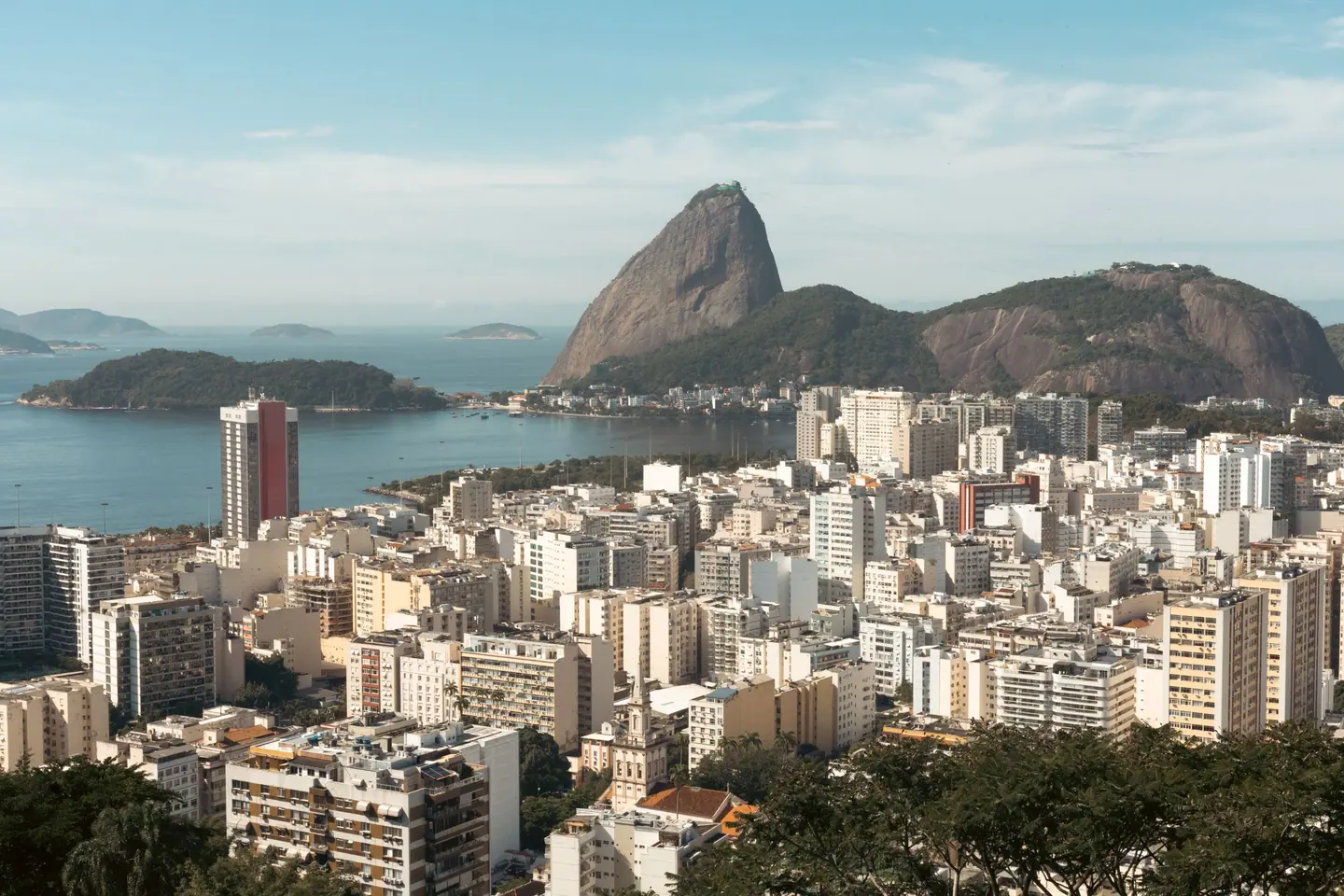
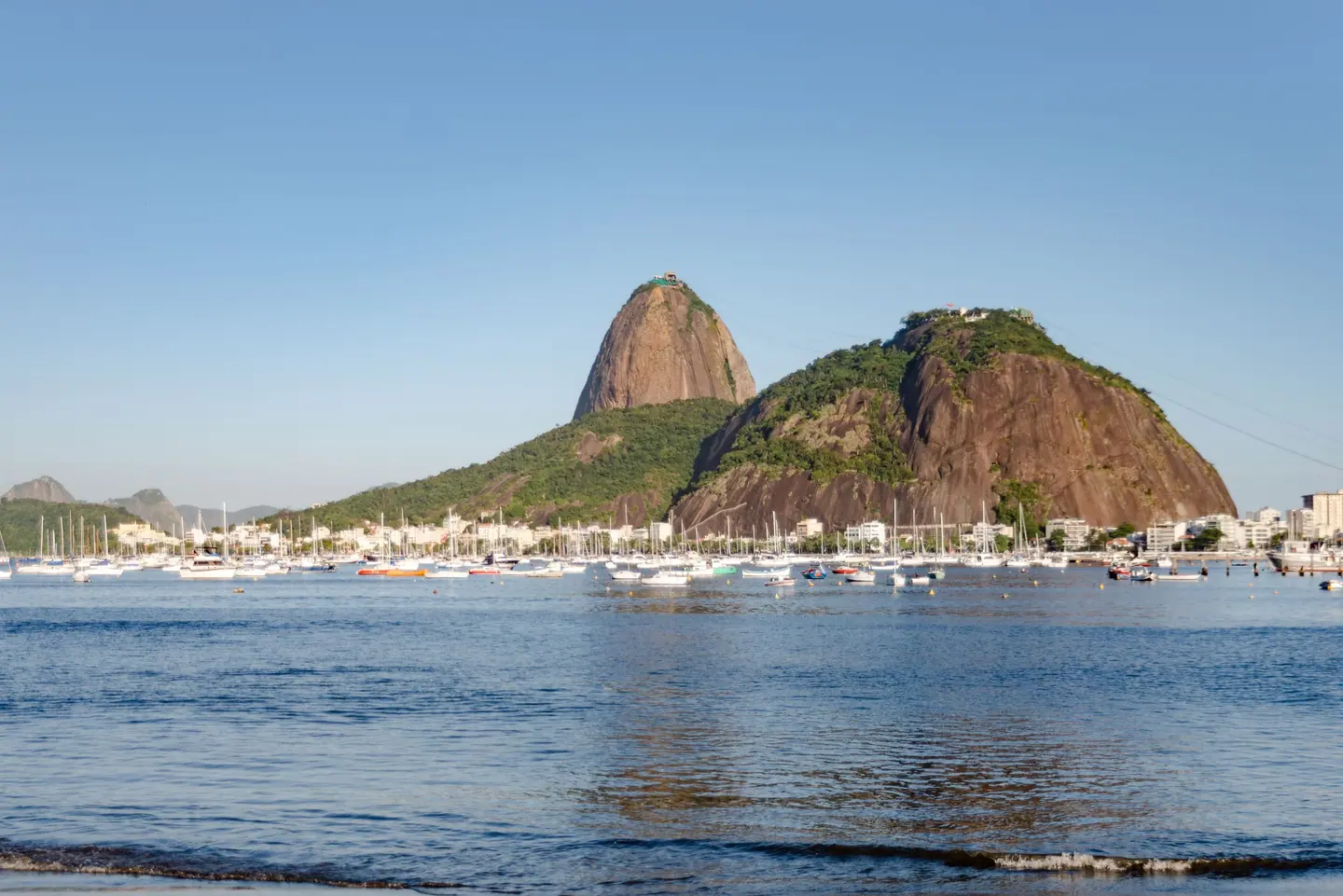
Sugarloaf Mountain
Rising 396 metres directly out of the Atlantic Ocean, this sheer geological inselberg dates from the Precambrian era. Its distinct conical shape resembles the traditional clay moulds used during the colonial sugar-cane trade, making it a prominent navigational landmark for mariners entering the bay for centuries.
Praia Vermelha
Positioned between two dramatic hillsides, this quiet cove is noted for its reddish coarse sand produced by local mineral weathering. The bay lacks heavy ocean surf due to its sheltered alignment, while its shore is enclosed by military academies and the starting point of the Cláudio Coutinho ecological trail.
Largo do Boticário
Surrounded by dense Atlantic rainforest alongside the Carioca River, this cobblestone square takes its name from Joaquim da Silva Souto, a nineteenth-century apothecary. In the 1920s, several houses were remodelled using authentic architectural components and glazed tiles salvaged from demolished colonial buildings in central Rio.
Corcovado Rack Railway
Inaugurated in 1884 by Emperor Pedro II, this metre-gauge cog railway preceded the construction of the mountaintop statue by nearly fifty years. The electric trains climb 3.8 kilometres through the dense canopy of Tijuca National Park, transporting travellers directly to the summit platform of Corcovado.
Christ the Redeemer
Standing thirty metres tall atop an eight-metre pedestal, this Art Deco monument was designed by Brazilian engineer Heitor da Silva Costa and sculpted by Paul Landowski. Finished in 1931 using reinforced concrete faced with thousands of triangular soapstone tiles, it commands panoramic views across Rio de Janeiro.
Vista Chinesa
Constructed in 1903 within the Tijuca National Park, this concrete pavilion mimics traditional Chinese pagoda architecture with bamboo-like pillars. The monument honours the nineteenth-century Chinese labourers brought to Brazil to establish tea cultivation, providing sweeping vistas across Rodrigo de Freitas Lagoon, Ipanema, and the Atlantic coastline.
Mesa do Imperador
Located along the winding mountain road through the Tijuca massif, this stone table marks a regular resting place used by Emperor Pedro II during his rides through the forest. The elevated clearing provides an expansive vantage over the southern coastline and demonstrates early imperial efforts to protect the city's watershed.
Copacabana, Ipanema, Lagoa & Jardim Botânico
Copacabana Palace, Copacabana Promenade, Fort Copacabana, Arpoador Rock, Ipanema Beach, Rodrigo de Freitas Lagoon, Parque Lage, Rio de Janeiro Botanical Garden, and Niterói Contemporary Art Museum Viewpoint
Copacabana Palace
Designed by French architect Joseph Gire, this Mediterranean-style palace introduced European luxury to the Atlantic shoreline. The stucco facade, broad marble salons, and oceanfront terrace have hosted royalty and international heads of state for a century. Visitors admire its preserved golden-age glamour and grand swimming pool courtyard.
Copacabana Promenade
Engineered using traditional Portuguese black and white limestone pavers, this four-kilometre promenade was redesigned in 1970 by landscape architect Roberto Burle Marx. The geometric waves create a visual rhythm that defines the waterfront. Walking the wide path reveals historic coastal kiosks and panoramic views of the curving bay.
Fort Copacabana
Completed in 1914 on a rocky headland, this coastal defence stronghold protected Guanabara Bay with massive Krupp artillery turrets. The underground bunker showcases thick reinforced concrete walls, vintage ammunition rooms, and historic military displays. The perimeter walk offers exceptional sightlines across the entire crescent of Copacabana beach.
Carlos Drummond de Andrade Statue
Cast by sculptor Leo Santana and installed in 2002, this life-size bronze monument portrays the contemplative poet seated on a seaside bench. Located near Posto 6, it commemorates Drummond's literary contributions and his quiet affection for the coastal neighbourhood. Travellers frequently pause beside the statue to appreciate the ocean horizon.
Dorival Caymmi Statue
Situated along the Copacabana waterfront, this bronze monument depicts the celebrated composer carrying his acoustic guitar across his shoulder. Caymmi immortalised the lifestyle of fishermen and Brazilian beach culture in his songs. The statue stands near the historic fishing colony where traditional wooden boats still land daily.
Church of Nossa Senhora de Copacabana
This parish traces its lineage to the historic seventeenth-century chapel that gave Copacabana its name. While the original seaside sanctuary was demolished to build Fort Copacabana, the present mid-century structure preserves the local devotion to the Virgin of Copacabana. Inside, visitors observe traditional devotional art and peaceful community chapels.
Arpoador Rock
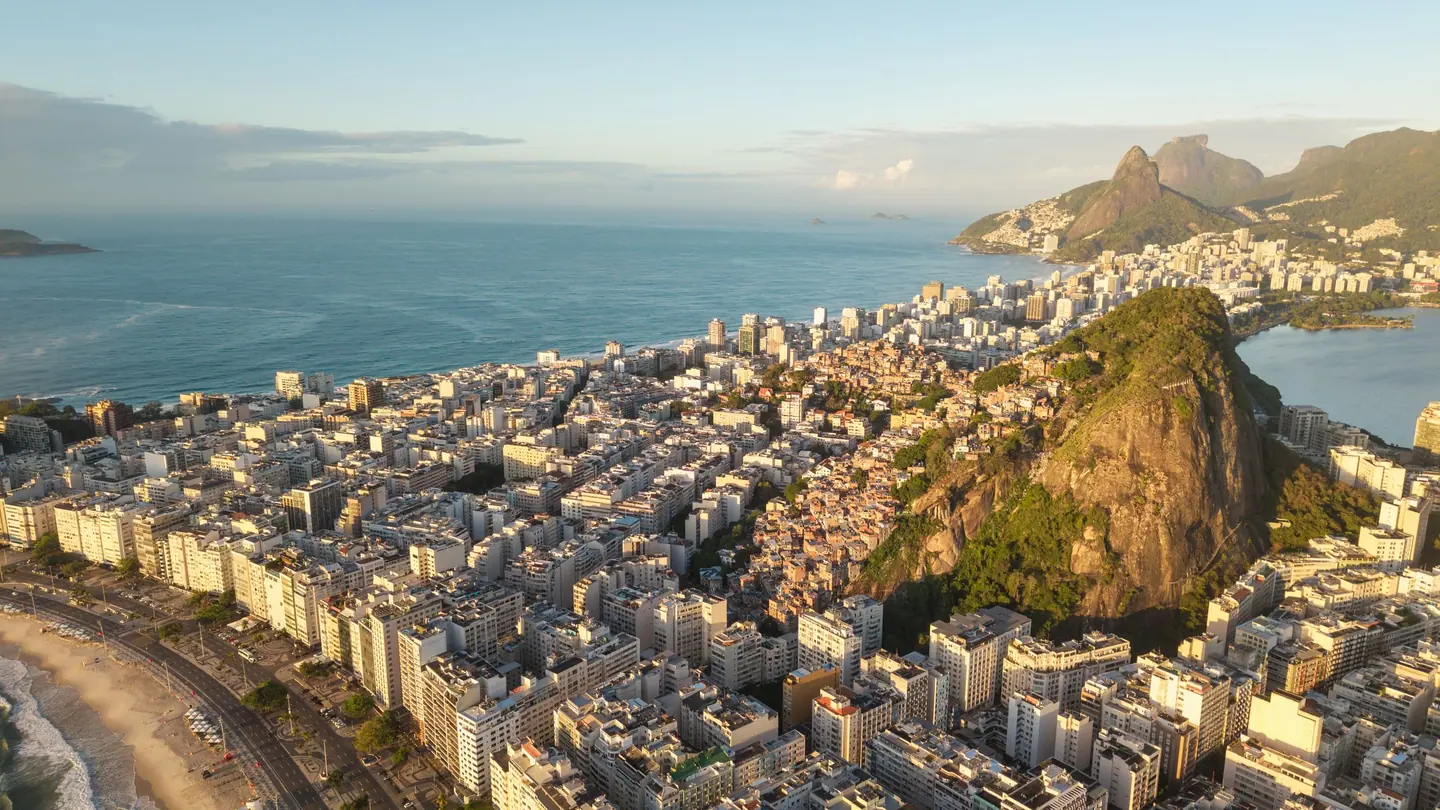
This rugged granite promontory juts boldly into the South Atlantic, serving as a geographic divide between two grand beaches. Walkways lead up the smooth stone ledges, where ocean waves crash against the bedrock below. It is particularly renowned for evening vistas looking west towards the Morro Dois Irmãos peaks.
Ipanema Beach
Framed by the dramatic twin peaks of Dois Irmãos, this broad coastal strip rose to global fame during the bossa nova era. The beach is organized by numbered lifeguard stations, each drawing distinct social groups of sports enthusiasts and sunbathers. Its seaside avenue closes on Sundays to allow walkers complete access.
Tom Jobim Statue
Unveiled in 2014 to mark the twentieth anniversary of his passing, this bronze sculpture portrays composer Antônio Carlos Jobim walking along the beach with his guitar. Sculpted by Christina Motta, it stands at the edge of Arpoador. The monument serves as a public homage to the creator of international musical masterworks.
Praça General Osório
This shaded public square serves as the social anchor of eastern Ipanema, surrounded by mid-century apartment buildings and cafes. Since 1968, it has hosted a massive open-air handicraft market every Sunday where artisans trade leather goods, ceramics, and paintings. Mature tropical trees, fountains, and metro connections make it an active gathering place.
Garota de Ipanema Park
Named after the world-famous song, this small municipal park occupies a gentle hill beside Arpoador Rock. Shaded stone pathways, native restinga vegetation, and quiet park benches provide shelter from coastal winds. The upper grounds offer elevated sightlines over the Atlantic surf and nearby sandy coves.
Church of Nossa Senhora da Paz
Fronting the central square of Ipanema, this imposing Catholic temple was consecrated in 1921. Its architectural composition draws on Italian Renaissance motifs, featuring balanced twin bell towers, pediments, and expansive stained-glass windows. The spacious nave contains marble altars and provides a quiet religious sanctuary within the busy neighbourhood.
Praça Nossa Senhora da Paz
Lined with ficus trees, palms, and decorative iron fencing, this leafy public square forms the urban centrepiece of the district. Designed with geometric paths and a central decorative fountain, it serves as a peaceful retreat for local residents. The surrounding avenues host established bookstores, bistros, and classic residential facades.
Rodrigo de Freitas Lagoon
Connected to the sea by an artificial tidal canal, this natural lagoon covers over two square kilometres against the backdrop of Corcovado mountain. A paved perimeter path of over seven kilometres accommodates rowers, runners, and cyclists. The shoreline features community boat houses, public sculptures, and waterside open-air kiosks.
Parque dos Patins
This public open-air facility along the Rodrigo de Freitas Lagoon contains skating rinks, play areas, and broad walking avenues. Shaded by imperial palms and coastal trees, it acts as a popular gathering spot for open-air cultural events. The waterside promenade looks directly towards the granite bulk of Christ the Redeemer.
Parque Lage
Once the private estate of industrialist Henrique Lage, this fifty-two-hectare public park showcases an eclectic early twentieth-century mansion designed by Mario Vodret. The central interior courtyard holds a turquoise pool framed by classical stone arcades, currently home to the School of Visual Arts. Formal English gardens, artificial grottoes, and Atlantic forest surround the villa.
Rio de Janeiro Botanical Garden
Spanning one hundred and forty hectares at the foot of Corcovado, this scientific institution preserves thousands of rare tropical plant species. Visitors walk along the grand Avenue of Royal Palms, which features monumental trees planted over two centuries ago. Highlights include the iron-framed orchid house, historical gunpowder factory ruins, and tranquil Amazonian lily ponds.
Solar da Imperatriz
Dating back to the eighteenth century, this whitewashed rural manor house represents fine Portuguese colonial architecture with tiled roofs and veranda posts. It once hosted Empress Teresa Cristina during royal visits to the neighbouring botanical collections. Today the restored heritage building houses environmental research units and quiet botanical reference libraries.
Museu do Meio Ambiente
Located inside the main entrance gates of the Botanical Garden, this museum occupies a restored nineteenth-century mansion. It presents temporary exhibitions focusing on biodiversity conservation, ecological history, and Brazilian biomes. The exterior neoclassical pillars and wrap-around galleries integrate harmoniously with the surrounding imperial arboretum.
Mirante Dona Marta
Perched three hundred and sixty metres above sea level, this granite ledge provides exceptional panoramas of the Southern Zone. Looking outward reveals Sugarloaf Mountain, Botafogo inlet, and the waters of Rodrigo de Freitas Lagoon in one clear sweep. The spot offers an unobstructed perspective on Christ the Redeemer crowning the ridge above.
VLT Light Rail, Cog Trains and Beach Promenades in Rio
You can combine these stops with the district-by-district where-to-stay notes and seasonal planning tables on our Rio de Janeiro Guanabara Bay, Corcovado & Santa Teresa destination page, or explore further regional and neighbourhood guides.