A 100-stop harbour and coastal route through Sydney, linking Bennelong Point, The Rocks convict quarter, Victorian civic landmarks, Manly Ferry coves, and the Bondi cliffs.
Eora Headlands, Convict Quarries in The Rocks and Harbour Engineering
For tens of thousands of years before European arrival, the Gadigal and neighbouring clans of the Eora Nation lived around the sandstone headlands, bays, and estuaries of Port Jackson, naming Bennelong Point Tubowgule. In January 1788, the First Fleet under Captain Arthur Phillip established a British convict colony at Sydney Cove, where sandstone warehouses, cottages, and barracks were quarried into the steep ridges of The Rocks.
Under Governor Lachlan Macquarie and convict architect Francis Greenway in the early nineteenth century, Sydney acquired Georgian churches, stables, and public parks, followed by opulent Victorian arcades funded by the Australian gold rushes and twentieth-century icons led by the 1932 Sydney Harbour Bridge and Jørn Utzon's 1973 Sydney Opera House.
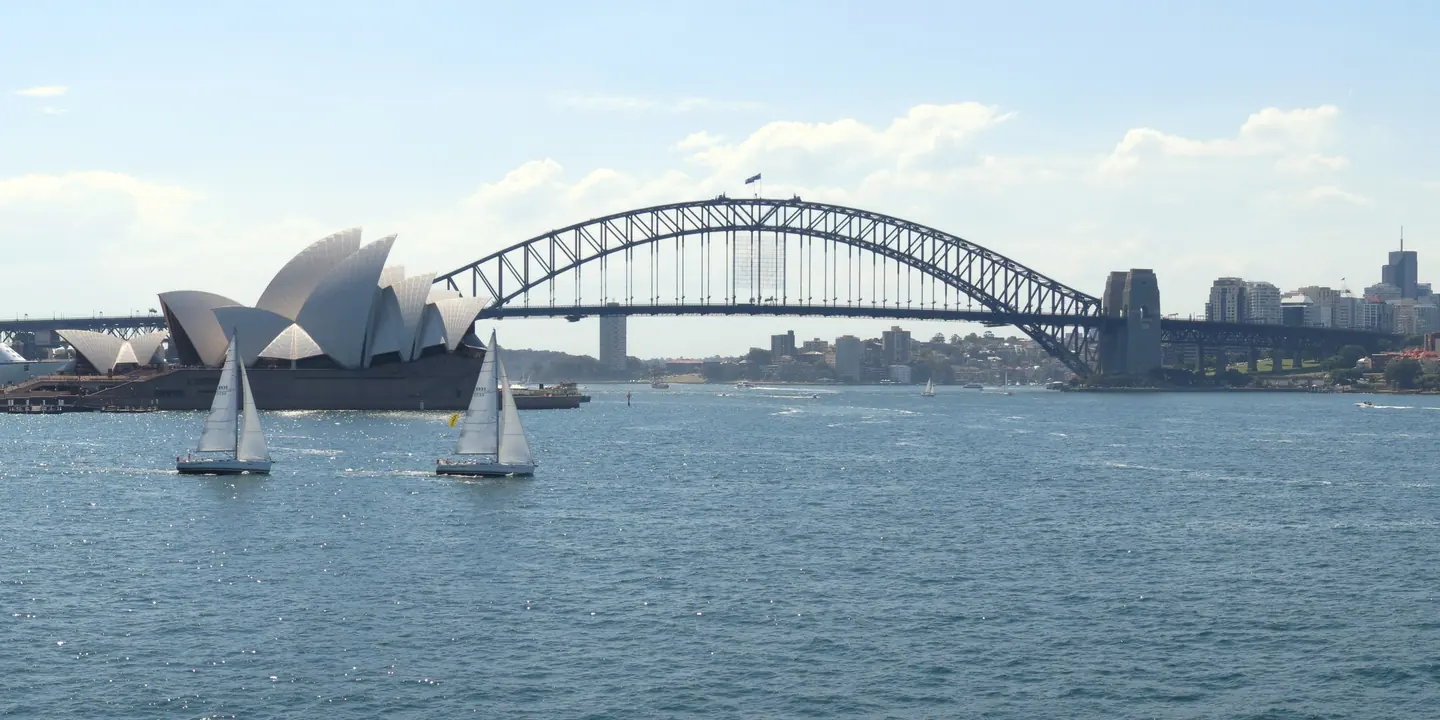
Circular Quay, Sydney Opera House & Royal Botanic Garden
Sydney Opera House, Bennelong Point, Circular Quay, Customs House Sydney, Museum of Contemporary Art, Royal Botanic Garden Sydney, Mrs Macquarie’s Chair, and Government House
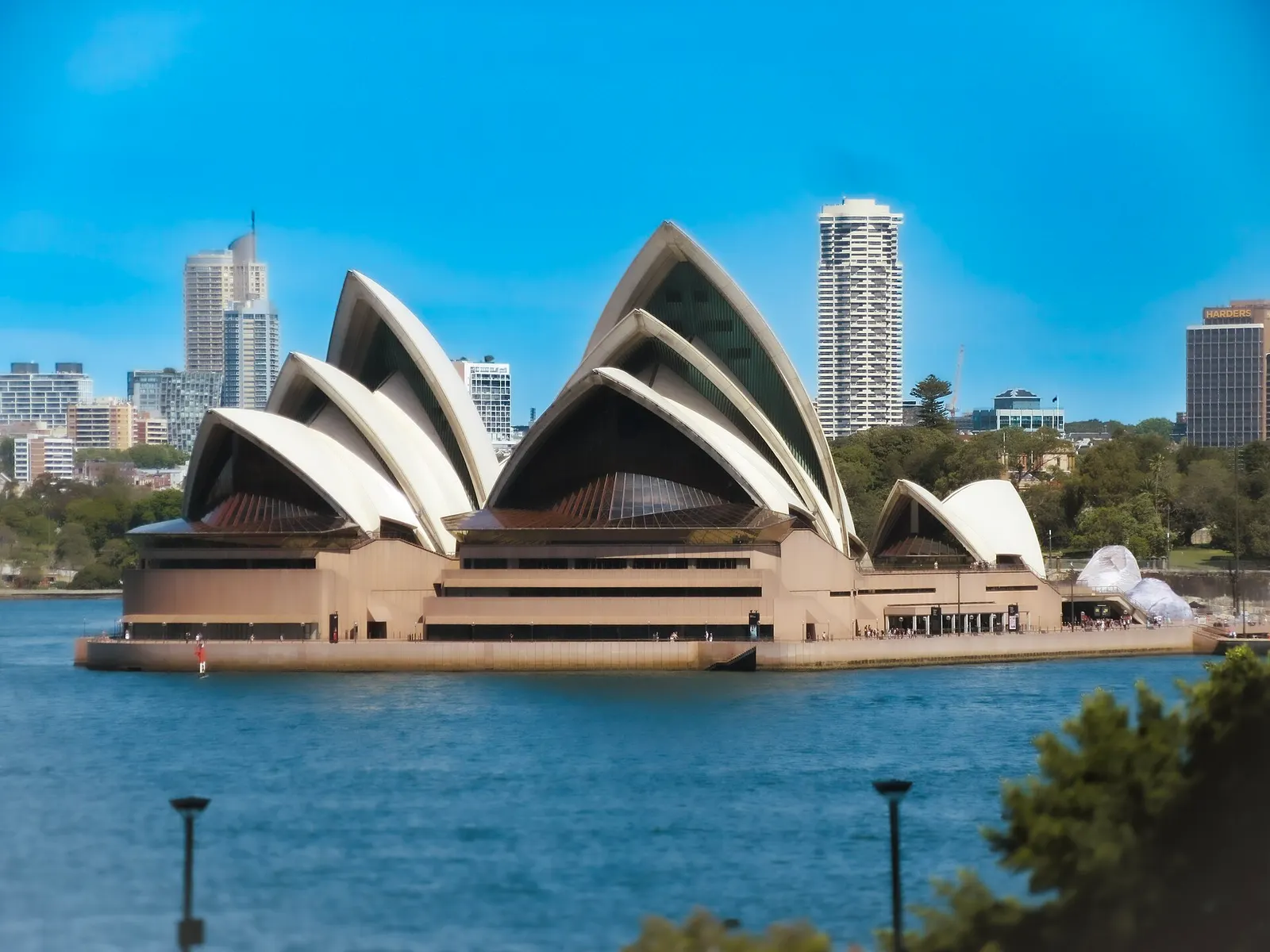
Sydney Opera House
Designed by Danish architect Jørn Utzon, this performing arts centre opened in 1973 after decades of planning. Its vaulted roof shells rest on an enormous granite platform, clad in chevron-patterned Swedish ceramic tiles. We recommend admiring the intricate bronze glass curtain walls facing the harbour, which frame views across the water.
Bennelong Point
Known to traditional custodians as Tubowgule, this headland takes its English name from Woollarawarre Bennelong, a senior Wangal man who served as an interlocutor for early colonial officers. Governor Arthur Phillip constructed a small brick hut here for Bennelong in 1790. Today the promontory anchors cultural festivals and harbourside walking promenades.
Fort Macquarie Site
Completed in 1821 under Governor Lachlan Macquarie, this crenellated square stone fortress originally housed naval cannon batteries defending the harbour approaches. Demolished in 1901 to make way for a Gothic-revival tram depot, it was ultimately cleared to build modern cultural infrastructure. Brass historical markers near the western boardwalk explain the site's military transitions.
Circular Quay Ferry Wharves
Constructed along the original shoreline of Sydney Cove, Circular Quay serves as the primary terminus for passenger ferry transport across Port Jackson. The timber and steel wharves were continually remodelled from the 1850s onward to support expanding maritime commuter networks. Visitors observe heritage vessels docking alongside double-ended catamarans throughout the day.
Customs House, Sydney
Dating back to 1845, this colonial administrative building features a neo-classical facade carved from Sydney sandstone by architect Mortimer Lewis, later modified by James Barnet. It served as the central point for maritime cargo clearance and tax collection for over a century. Inside, a miniature scale model of the city sits beneath the atrium floor.
Museum of Contemporary Art Australia
Occupying the former Maritime Services Board building on the western edge of the quay, this gallery showcases Australian and international contemporary art. The original 1952 edifice exhibits austere Art Deco lines and local pink granite, complemented by a modular northern wing added in 2012. Large public sculpture installations frequently occupy the front lawn.
First Fleet Park
Bordering Sydney Cove, this landscaped open space marks the immediate vicinity where British settlers and convicts disembarked in January 1788. It previously accommodated hospital tents, convict quarters, and naval dockyards before transforming into recreational parkland. Commemorative plaques identify the historic shoreline and recount early encounters with the local Gadigal people.
Tank Stream Fountain
Sculpted by Stephen Walker in 1981, this bronze monument stands directly above the course of the Tank Stream, the freshwater brook that dictated Sydney's founding location. The fountain incorporates cast bronze representations of native Australian fauna, including water dragons, frogs, and platypuses. Informative ground markers chart the path of the stream under city pavement.
Justice and Police Museum
Constructed from dressed sandstone between 1856 and 1886, this compound comprises two historic courthouses and the Water Police Station. It originally monitored maritime trade and prosecuted dockside crime during the harbour's peak commercial shipping era. The museum preserves original holding cells, weapons, mugshots, and nineteenth-century courtroom furniture.
Paragon Hotel, Circular Quay
Constructed in 1865, this heritage-listed public house remains one of the oldest surviving commercial taverns in the maritime precinct. The building displays Victorian Free Classical detailing, featuring rendered brickwork, arched fenestration, and timber joinery that catered to generations of dockworkers and sailors. Its corner orientation reflects the original parcel subdivisions of colonial maritime Sydney.
Government House, Sydney
Designed by British royal architect Edward Blore and completed in 1845, this grand Gothic Revival manor features castellated towers, crenellated parapets, and formal verandas. It remains the vice-regal seat for the state governor, retaining historic state rooms lined with colonial oil portraits. The landscaped grounds contain mature Moreton Bay fig trees and native borders.
Royal Botanic Garden, Sydney
Established in 1816, this 30-hectare garden wraps around Farm Cove on land that sustained the earliest European agriculture in Australia. It maintains an extensive living collection of tropical, arid, and temperate plants, including ancient cycads, heritage rose gardens, and towering palms. Paved walkways offer clear perspectives across the water toward the harbour bridge.
The Calyx
Opening in 2016 on the site of the former Tropical Centre, The Calyx functions as a specialist exhibition hub focused on living botanical displays. The building incorporates a circular design centred around the largest interior living green wall in the Southern Hemisphere. Rotating thematic plant exhibitions introduce visitors to evolutionary botany and ecosystem conservation.
Palm Grove, Royal Botanic Garden
Begun in the 1860s, the Palm Grove contains some of the oldest cultivated plantings within the garden grounds, including rare specimens from the South Pacific. The shaded understorey protects historic ferns, cycads, and an original wishing tree planted in the nineteenth century. Winding gravel paths guide pedestrians beneath dense canopies of cabbage tree palms.
Farm Cove, Sydney
Known traditionally as Woccanmagully, this crescent-shaped inlet was selected by Governor Arthur Phillip for the first colonial vegetable crops and cereal farms. Though agricultural efforts failed due to sandy soil, the shoreline was permanently retained as public parkland. The sandstone seawall, hand-chiselled by convict labourers, provides a continuous harbourside pedestrian path.
Mrs Macquarie's Chair
Hand-carved directly into an exposed sandstone shelf in 1810, this bench was prepared for Elizabeth Macquarie, the wife of Governor Lachlan Macquarie. She reportedly sat here to view incoming British ships and observe the natural movements of the harbour. An inscription cut above the seat records the road's completion date under colonial administrators.
Mrs Macquarie's Point
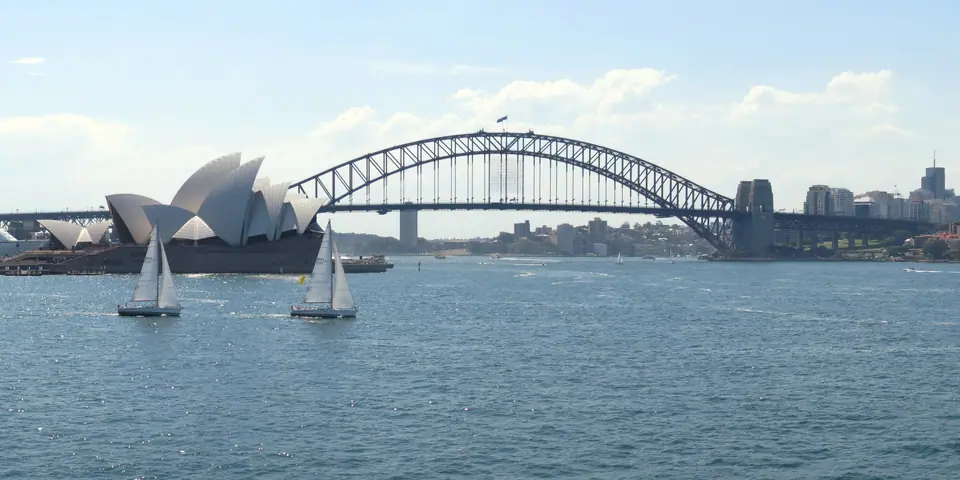
Marking the northeastern tip of the Botanic Garden peninsula, this promontory divides Farm Cove from neighbouring Woolloomooloo Bay. The open grassland provides a vantage point where both the Sydney Opera House and the Sydney Harbour Bridge align in a single vista. Native eucalypts and banksias frame the perimeter rocks where anglers gather.
Sydney Conservatorium of Music
Commissioned in 1815 by Governor Macquarie and designed by convict architect Francis Greenway, this castellated sandstone structure originally served as the Government House stables. Converted into a music school in 1915, it now combines colonial turrets with subterranean contemporary concert auditoriums. Visitors frequently attend public lunchtime chamber music recitals held within the restored stone hall.
Macquarie Street, Sydney
Established in 1810 to serve as the city's pre-eminent ceremonial avenue, Macquarie Street lines the western perimeter of the Royal Botanic Garden. It hosts Parliament House, the State Library of New South Wales, and early medical institutions behind uniform sandstone facades. Broad pedestrian footpaths pass rows of London plane trees and bronze statuary commemorating state figures.
State Library of New South Wales
Opening its classical Mitchell Wing in 1910, the library preserves extensive collections relating to Australian history, exploration, and literature. The Mitchell Library reading room features soaring coffered ceilings, multi-tiered brass book galleries, and a vestibule with a marble mosaic reproduction of the Tasman Map. Rotating exhibition halls display early navigational charts and original convict journals.
The Rocks, Harbour Bridge & Barangaroo Reserve
Sydney Harbour Bridge, Pylon Lookout, Cadmans Cottage, Susannah Place, Rocks Discovery Museum, Argyle Cut, Observatory Hill, Dawes Point, and Barangaroo Reserve
Sydney Harbour Bridge
Engineered by John Bradfield and opened in 1932, this massive steel structure connects the central business district with the North Shore. Travellers walking the eastern pedestrian footpath can inspect six million hand-driven rivets and heavy granite-faced pylons. The bridge remains a pivotal engineering achievement of early twentieth-century Australia.
Sydney Harbour Bridge Pylon Lookout
Rising inside the south-eastern support tower, this granite-clad pylon houses three levels of historical displays detailing the hazardous labour endured by bridge construction workers. Visitors climb two hundred steps through the interior to reach the open viewing parapet, where sweeping vistas of Port Jackson and the surrounding shoreline unfold.
Cadmans Cottage
Constructed in 1816 from local sandstone, this modest cottage originally housed government coxswains and water police on the water's edge of Sydney Cove. Successive land reclamations pushed the shoreline eastward, leaving the structure stranded inland. The building exhibits early colonial vernacular architecture and regular sandstock brick repairs.
Susannah Place Museum
Built by Irish immigrants in 1844, this terrace row retains its original brickwork, modest basement kitchens, and a traditional corner shop. Preserved in its unrenovated state, the museum documents the domestic lives of ordinary working families across 150 years. Visitors can examine corrugated iron wash-houses, outdoor privies, and layered wallpapers.
The Rocks Discovery Museum
Housed within three connected colonial cargo stores, this museum covers local maritime and social history across four distinctive eras. Exhibits display Indigenous stone tools, convict leg irons, and domestic artefacts recovered from nearby archaeological digs. The interior exposes massive ironbark structural beams and raw sandstone walls.
Argyle Cut
Commenced by convict chain gangs using picks and chisels in 1843, this deep roadway chasm was later finished using explosives to connect Sydney Cove with Darling Harbour. Massive sheer stone walls rise on both flanks beneath the arched Bradfield Highway and Cumberland Street bridges. Distinctive chisel markings left by convict labourers remain visible today.
Sydney Observatory
Erected in 1858 in the Italianate style, the complex served maritime navigation through astronomical observations and its daily time-ball drop. The site features copper domes housing historic refracting telescopes alongside weather recording instruments. Visitors can walk the grounds to observe the central tower and examine surviving Victorian navigational equipment.
Observatory Hill Park
This prominent natural rise served as the colony's first windmill site and early defensive fort before conversion into public parkland. Shaded by mature Moreton Bay fig trees, the ridge offers vantage points over the harbour waterway and modern western piers. A restored Edwardian rotunda stands amid sweeping grassy slopes.
Dawes Point Battery
Named after Lieutenant William Dawes who established an astronomical station here in 1788, the headland later accommodated defensive artillery batteries. Excavated stone footings, underground powder magazines, and reconstructed cannon emplacements sit directly beneath the southern pylon of the bridge. The site provides close-up perspectives of the massive steelwork overhead.
Barangaroo Reserve
Transforming a former concrete shipping terminal into undulating natural parkland, this foreshore reserve features thousands of native trees and large blocks of Sydney sandstone. Walking tracks line the shoreline, tracing the original pre-industrial coastline of the harbour. The vast Cutaway cultural cavern sits concealed directly beneath the grassy knoll.
Campbell's Stores
Constructed between 1851 and 1861 by merchant Robert Campbell, this uninterrupted row of eleven gabled bays represents early waterfront commerce. The heavy sandstone construction supported storage for tea, sugar, and wool destined for international trade. Today, the bays accommodate waterfront dining spaces preserving exposed stone interiors and timber hoist frames.
Garrison Church, Sydney
Officially named Holy Trinity, this 1840 church was designed by Edmund Blacket and constructed using volunteer labour and military stonecutters. Soldiers stationed at nearby Dawes Point battery worshipped in the nave, giving the church its traditional title. The interior contains military colours, carved cedar furnishings, and early memorial plaques.
Hero of Waterloo Hotel
Built from stone quarried during the cutting of the Argyle Cut, this public house has operated continuously since 1843. The cellular basement contains old holding cells and an alleged tunnel used for shanghaiing patrons onto merchant sailing vessels. The ground floor displays open fireplaces and traditional timber fittings.
Lord Nelson Hotel, Millers Point
Operating continuously under a pub licence since 1841, this corner hotel exemplifies Georgian colonial architecture with fine dressed sandstone and small-pane windows. Originally constructed as a private residence, it became a social hub for dock workers and sailors. Today it operates an in-house microbrewery, serving cask ales within historic timber-lined parlours.
Fort Denison
Constructed during the Crimean War to defend Sydney Harbour from potential naval raids, this stone island fortress retains the only Martello tower built in Australia. Dressed sandstone blocks sourced from Kurraba Point form the defensive gun batteries and barracks. The island preserves historical cannons, navigational lights, and colonial maritime signal equipment.
Cumberland Street Archaeological Site
Excavations on this city block unearthed extensive remnants of over thirty convict-era homes, shops, and cesspits dating from the 1790s onwards. Raised walkways suspended above the site allow visitors to examine stone wall footings, brick fireplaces, and original drainage channels. The adjacent education centre interprets the daily life of colonial residents.
The Rocks Markets
Occupying George and Playfair streets on weekends, these market canopies stand against a backdrop of Victorian terrace facades and colonial bond stores. Artisans and craftspeople gather beneath white sails to sell jewellery, ceramics, and prints. The pedestrian route allows visitors to inspect surrounding heritage facades while walking the original street alignment.
Argyle Terrace
Built in the late 1870s, this neat row of double-storey sandstone terraces reflects the residential development of The Rocks following the gold rush era. Characterised by uniform timber balconies, iron railings, and shared party walls, the buildings housed generations of dock labourers. The facades remain well preserved, housing boutique shops and cafes.
Unwins Stores
Erected in the 1840s for merchant Frederick Unwin, this group of three-storey sandstone buildings displays classical Georgian proportions. Surviving through bubonic plague resumptions and subsequent redevelopment schemes, the complex represents surviving mid-colonial retail architecture. The exterior features dressed ashlar masonry, multi-pane sash windows, and simple parapets along George Street.
Sydney Harbour Bridge Visitor Centre
Located near the southern bridge approach along Cumberland Street, this visitor centre documents the ongoing maintenance and operations of the harbour span. Interpretive boards explain the engineering work undertaken daily across the road and rail corridors. Travellers access the pedestrian walkway and official climb expeditions directly from this site.
Macquarie Street, Hyde Park & Queen Victoria Building
Art Gallery of New South Wales, State Library of NSW, Hyde Park Barracks, St Mary’s Cathedral Sydney, Australian Museum, Anzac Memorial, Queen Victoria Building, and Sydney Town Hall
State Library of New South Wales
Founded in 1826 as the Australian Subscription Library, this major institution occupies a grand sandstone complex on Macquarie Street. The Mitchell Library reading room features classical galleries, coffered ceilings and stained glass depicting prominent European writers. Visitors can inspect rare Australian maps, historical manuscripts and rotating exhibitions mounted across the adjoining modern wings.
Parliament House
This complex stands as the seat of the Parliament of New South Wales, the oldest continuing legislature in Australia. The frontage originally formed the northern wing of Governor Lachlan Macquarie's Rum Hospital, constructed between 1811 and 1816 using convict labour. Inside, two historic legislative chambers preserve green and red furnishings reminiscent of the British Parliament at Westminster.
Sydney Hospital
Thomas Rowe designed the present Victorian classical brick buildings between 1879 and 1894 to replace the dilapidated central wing of the Rum Hospital. Florence Nightingale sent trained nursing staff here in 1868, helping to formalise modern Australian clinical care. Outside the entrance sits Il Porcellino, a bronze wild boar whose snout travellers polish for good fortune.
The Mint
Completed in 1816 as the southern wing of the Rum Hospital, this handsome colonnaded building is one of central Sydney's oldest public structures. In 1855, the British government established the first overseas branch of the Royal Mint on the site to process gold rush bullion. Today, restored administrative rooms and an educational museum tell the story of colonial coinage.
Hyde Park Barracks
Governor Lachlan Macquarie commissioned emancipist architect Francis Greenway to build this Georgian brick compound in 1819 to house male convicts. It later served as an immigration depot for unmarried women, an asylum for destitute females and government courts. The museum preserves original hammocks, personal artefacts found beneath floorboards and immersive audio displays tracing convict transport.
St James' Church
Francis Greenway designed this Georgian church, consecrated in 1824 and distinguished by its tall copper-clad spire rising above Queen's Square. Originally intended as a courthouse, the interior houses fine memorial wall tablets and a neoclassical altar designed by John Verge. The crypt beneath contains an early twentieth-century children's chapel decorated with painted murals depicting the Nativity.
Art Gallery of New South Wales
Dating to 1871, the main neoclassical building displays classical porticos and grand vestibules designed by Walter Liberty Vernon. The gallery holds comprehensive collections of Indigenous Australian bark paintings, colonial landscapes, European masters and contemporary Asian art. An adjacent modern expansion, the Sydney Modern Project, features low-carbon pavilions and an underground contemporary gallery converted from naval fuel tanks.
Queen's Square
This civic plaza anchors the southern terminus of Macquarie Street and connects the commercial district with Hyde Park. At its centre stands Thomas Woolner's bronze statue of Queen Victoria, unveiled in 1888 to celebrate her Golden Jubilee. A companion bronze of Prince Albert and the Supreme Court of New South Wales frame this historic legal precinct.
Supreme Court of New South Wales
Francis Greenway drew up the original plans for this sandstone and red-brick legal complex, which opened for judicial hearings in 1828. Standout features include the Doric portico on Elizabeth Street and wood-panelled courtrooms that have hosted significant trials for nearly two centuries. It remains an active judicial centre representing the evolution of the British common law tradition in Australia.
St Mary's Cathedral
Architect William Wardell designed this grand cathedral in the geometric English Gothic style following a disastrous fire that destroyed an earlier chapel in 1865. Built of warm local honey-coloured Hawkesbury sandstone, the structure features two soaring southern spires completed in 2000. Inside, visitors encounter expansive stained glass windows imported from Birmingham and an intricate crypt with terrazzo floor mosaics.
Archibald Fountain
Unveiled in 1932 in northern Hyde Park, this monument honours the First World War alliance between Australia and France. French sculptor François-Léon Sicard cast the bronze figures, drawing inspiration from classical Greek and Roman mythology. A central statue of Apollo overlooks surrounding figures of Diana, Pan and Theseus conquering the Minotaur, set against spraying water arcs.
Hyde Park
Governor Macquarie set aside this 16-hectare common in 1810 for recreation and military drills, naming it after London's Hyde Park. A central promenade of mature Moreton Bay fig trees runs north to south, creating shaded canopies over broad walkways. The gardens house historical monuments, reflecting pools and manicured flower beds that buffer the surrounding city streets.
The Great Synagogue
Dedicated in 1878, this place of worship was designed by architect Thomas Rowe, blending Byzantine domes, Moorish touches and Gothic tracery. The sandstone facade faces Hyde Park and displays two prominent octagonal towers flanking a great wheel window. The interior contains cast-iron columns, painted star-patterned ceilings, carved timber galleries and an ornate stone ark housing sacred Torah scrolls.
Australian Museum
Founded in 1827 and housed in an imposing classical sandstone building designed by Mortimer Lewis, this institution preserves millions of scientific specimens. The galleries showcase dinosaur fossils, preserved native Australian fauna and extensive cultural collections from First Nations and Pacific communities. The grand neoclassical Long Gallery remains an impressive nineteenth-century exhibition hall.
Anzac Memorial
Architect C. Bruce Dellit designed this striking Art Deco memorial, which opened in 1934 to honour the Australian Imperial Force. The exterior features red granite cladding, stepped buttresses and relief sculptures by Rayner Hoff. Inside the Hall of Memory, visitors look down onto Hoff's evocative bronze sculpture, Sacrifice, surrounded by sixteen stained glass amber windows.
Downing Centre
Constructed in 1927 for the Mark Foy's department store, this building was known as the Piazza store and drew inspiration from the Bon Marché in Paris. Its exterior displays glazed white and yellow terracotta tiles, classical pediments and decorative cornices. In the 1980s, the state converted the interior into a major courthouse complex while retaining its striking interwar facade.
Sydney Town Hall
Completed in 1889 on the site of an early colonial cemetery, this civic hall exemplifies High Victorian Second Empire style with mansard roofs and an ornate clock tower. The Centennial Hall inside features a vast unsupported zinc ceiling and an enormous Grand Organ containing over 8,000 pipes. Stained glass windows celebrate British Empire themes and Australian flora.
St Andrew's Cathedral
Adjacent to Sydney Town Hall, this cathedral was designed in the Perpendicular Gothic Revival style by Edmund Blacket and consecrated in 1868. Built from Sydney sandstone, the exterior displays twin towers and delicate tracery. The intimate interior contains richly carved oak choir stalls, medieval-style stone arcades and a set of early English stained glass panels by Hardman & Co.
Queen Victoria Building
Designed by George McRae and completed in 1898, this sandstone shopping landmark honours Queen Victoria's diamond jubilee. The building features twenty small domes, stained glass arches, wrought-iron balustrades and a massive copper-clad central dome. Inside the gallerias hang the Royal Clock and the Great Australian Clock, which present mechanical historical dioramas on the hour.
State Theatre
Henry Eli White designed this picture palace, which opened in 1929 to present films and musical revues. The interior blends Gothic groined vaults, Venetian torchères, marble staircases and an enormous bronze and cut-crystal chandelier. It houses an original Wurlitzer theatre organ, serving today as a prestigious venue for concerts, comedy and the Sydney Film Festival.
Darling Harbour, Chinatown, Paddington & Surry Hills
Australian National Maritime Museum, Chinese Garden of Friendship, Capitol Theatre, Central Station Clocktower, Victoria Barracks Paddington, Paddington Reservoir Gardens, and Brett Whiteley Studio
Australian National Maritime Museum
Opened in 1991, this waterfront museum showcases Australia's connection to the oceans through indigenous watercraft, naval vessels, and immigration artefacts. Philip Cox designed the main building with sweeping roofs that evoke billowing ship sails. The open-air wharf hosts museum vessels including the naval destroyer HMAS Vampire and a replica of James Cook's Endeavour.
Chinese Garden of Friendship
Gifted by Sydney's sister city Guangzhou during the 1988 Australian Bicentenary, this walled sanctuary adheres to classical Taoist principles of balance. Visitors can trace winding stone pathways past koi ponds, ornate pavilions, and granite bridges. The Water Pavilion of Lotus Fragrance and the Dragon Wall highlight traditional southern Chinese garden design within the city.
Pyrmont Bridge
Engineered by Percy Allan and completed in 1902, Pyrmont Bridge is one of the oldest surviving electrically powered swings in the world. Its central steel span rotates ninety degrees to permit maritime traffic into the bay. Today reserved for pedestrians and cyclists, the structure offers expansive vantage points over Darling Harbour.
Chinatown Gates
Erected in 1980 at both ends of the Dixon Street pedestrian mall, these ornate paifang arches formally demarcate Sydney's historic Chinatown precinct. Adorned with traditional glazed ceramic tiles, gold Chinese inscriptions, and guardian stone lions, they symbolise goodwill and prosperity. The pedestrian mall retains traditional streetlamps and stands as a centre of the local Chinese community.
Paddy's Markets
Operating since 1834, Paddy's Markets has occupied several sites before establishing itself in the historic red-brick Market City complex. It continues a centuries-old tradition of market trading, offering fresh produce, textiles, and household goods. The surviving nineteenth-century perimeter walls preserve an industrial character amidst the modern redevelopment of Haymarket.
Capitol Theatre
Designed by John Eberson and Henry White, this 1928 palace was Australia's premier atmospheric cinema, built inside the shell of an 1893 market building. The internal auditorium reproduces an open-air Florentine garden complete with classical statues, painted arches, and twinkling ceiling stars. Saved from demolition in the 1990s, it functions today as a primary venue for stage productions.
Central Station Clocktower
Rising seventy-three metres above the terminal, this sandstone clocktower was added to the 1906 station building under the direction of government architect Gorrie McLeish Blair. Its design recalls an Italian Renaissance campanile, crowned by four large clock faces facing across Sydney. The tower remains a primary orienting landmark for travellers entering through the southern railway gates.
Prince Alfred Park
Dedicated in 1865, Prince Alfred Park was the site of the 1870 Intercolonial Exhibition, which featured the temporary Exhibition Building. The grounds preserve historic Moreton Bay fig trees, nineteenth-century pathways, and ornamental plantings alongside a contemporary green-roofed swimming facility. It provides open recreational space between Surry Hills and the railway corridor.
Surry Hills Police Station
Erected in the late nineteenth century on Campbell Street, this substantial brick building reflects the municipal administration of Surry Hills during a period of urban expansion. Characterised by classical arched windows and sturdy stone trims, it served law enforcement for generations. The facade remains an intact example of Victorian civic architecture in the area.
Brett Whiteley Studio
Occupying a former industrial warehouse on Raper Street, this converted studio was the home and creative base of artist Brett Whiteley from 1987 until his death in 1992. Maintained by the Art Gallery of New South Wales, the interior keeps his unfinished canvases, paintbrushes, books, and musical records intact. Changing exhibitions display his paintings and drawings downstairs.
Belvoir St Theatre
Housed within an industrial brick factory built in 1912, this cultural venue was rescued by performing artists and theatre patrons in 1984. The bare-brick interior retains industrial steel trusses and exposed structural fabric, creating an intimate theatrical space. It has staged works by renowned Australian playwrights and helped establish Surry Hills as a theatrical hub.
Shannon Reserve
Situated along Crown Street, this public reserve has long served as a meeting area for the neighbourhood. Shaded by mature trees, it provides an open green clearing surrounded by rows of historic terrace houses. On weekends it regularly hosts community markets selling vintage clothing, handcrafted goods, and local produce.
Paddington Reservoir Gardens
Built between 1866 and 1878 to supply Sydney with water, this subterranean public chamber was decommissioned in 1899. A celebrated conservation project transformed the ruined brick vaults and iron columns into a sunken garden reminiscent of Roman ruins. Visitors can wander boardwalks above reflection pools surrounded by hanging gardens and original masonry.
Victoria Barracks
Designed by Lieutenant-Colonel George Barney and constructed using local sandstone quarried on site, Victoria Barracks is considered one of the finest examples of British military architecture in Australia. Convict labour completed the perimeter walls and officers' quarters. The Barracks Army Museum on site interprets colonial garrison history through collections of uniforms and vintage weaponry.
Paddington Town Hall
Constructed in 1891 in the Victorian Free Classical style, this grand civic hall served as the seat of local municipal government for Paddington. Its thirty-two-metre clocktower was completed in 1897 to commemorate the Diamond Jubilee of Queen Victoria. The building contains an expansive timber-floored ballroom and now accommodates local community facilities.
St John's Anglican Church
Founded in 1845 to serve the expanding suburban population, St John's was constructed from Sydney sandstone in the traditional English Gothic style. Its striking spire and lancet windows form a visible landmark on the crest of Paddington ridge. The churchyard grounds retain nineteenth-century funerary monuments and mature shade trees.
Juniper Hall
Commissioned by gin distiller Robert Cooper, Juniper Hall is the oldest surviving residential mansion in Paddington. Built in the Georgian style with fine symmetry and stone dressings, it originally overlooked valley slopes leading down to Rushcutters Bay. After serving as an asylum and children's home, the property was conserved to showcase early colonial residential grandeur.
Chauvel Cinema
Established in 1977 within the former Paddington Town Hall auditorium, this historic cinema honours pioneering Australian film director Charles Chauvel. The venue features a classic barrel-vaulted ceiling, decorative plasterwork, and a historic curved proscenium arch. It functions as a venue for independent, foreign-language, and documentary film screenings.
Five Ways
Named for the junction of five suburban streets, this historic hub developed during the building boom of the 1880s and 1890s. The perimeter features two- and three-storey Victorian shopfronts, cast-iron lace balconies, and the prominent Royal Hotel. It presents an authentic glimpse of nineteenth-century inner-city suburban street planning.
Paddington Markets
Operating since 1973 in the courtyard of the Uniting Church on Oxford Street, this outdoor market has served as a launchpad for local fashion designers and craft makers. Stalls stand beneath the shade of broad trees, offering Australian-made clothing, jewellery, and ceramics. The market retains an important position in the creative and retail heritage of Paddington.
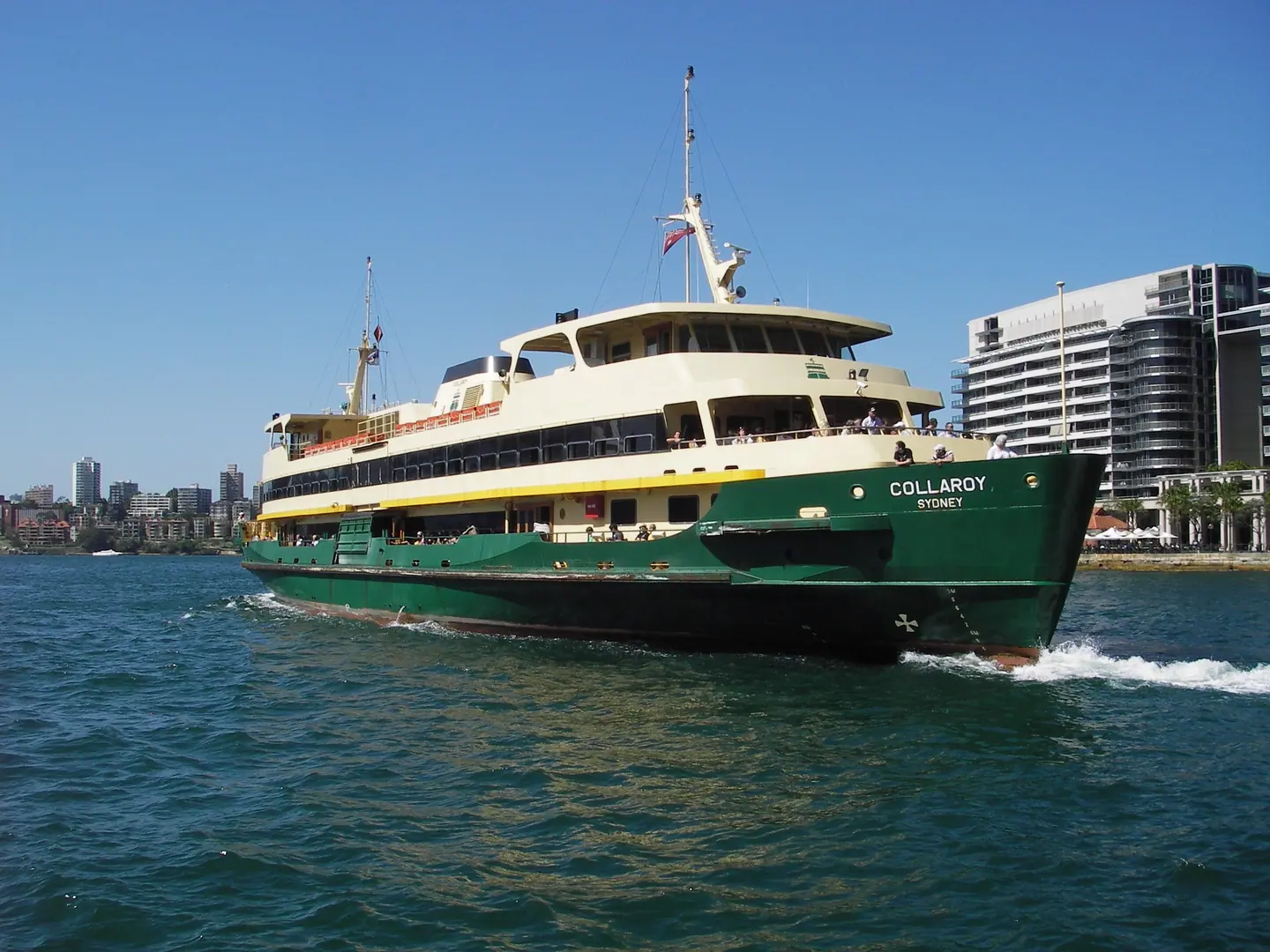
Bondi to Coogee Coastal Walk, Manly & Taronga Harbour Coves
Bondi Beach, Bondi Icebergs Pool, Tamarama Beach, Bronte Baths, Waverley Cemetery, Coogee Beach, Watsons Bay Hornby Lighthouse, Taronga Zoo Wharf, and Manly Beach
Bondi Pavilion
Constructed in 1928, this heritage-listed complex originally provided dressing cubicles and lockers for thousands of beachgoers. Its colonnades, terracotta tiled roofs and arched loggias reflect Mediterranean revival architecture. We can inspect the restored central courtyard, community galleries, theatre and decorative masonry that face the Pacific breakers.
Bondi Icebergs Pool
Perched at the southern end of the bay, this saltwater pool has hosted winter swimming enthusiasts for nearly a century. Waves frequently crash over the outer concrete ledge directly into the fifty-metre basin. Visitors observe club members competing in traditional winter races and examine memorabilia documenting early Australian lifesaving culture.
Mackenzies Bay
Located between Bondi and Tamarama, this narrow marine cove is bounded by sandstone platforms and weathered cliff faces. Sand accumulates irregularly across the rocky base, occasionally creating a short-lived beach during specific swell conditions. Walkers along the coastal path study natural erosion patterns and offshore reef systems from the elevated ledge.
Tamarama Beach
Known historically as the site of an 1880s amusement park and roller coaster, the cove features a narrow sandy floor flanked by high cliffs. Strong currents and powerful shore breaks define the maritime environment. The shoreline serves annually as a primary exhibition space for outdoor sculptural installations along the walking track.
Bronte Baths
Carved into the southern rock ledge of Nelson Bay, this ocean pool remains one of the oldest municipal aquatic facilities in the state. Wooden retaining walls and natural sandstone ledges shield swimmers from the open sea. Wooden deck seating and a perimeter barrier allow views of the surrounding headlands.
Waverley Cemetery
Established in 1877 on dramatic clifftops, the cemetery contains thousands of Victorian and Edwardian monuments carved from imported Carrara marble and local sandstone. Notable figures interred here include poet Henry Lawson and swimming pioneer Sarah Durack. We note the grand angel statuary and iron railings lining the perimeter path.
Clovelly Bay
During the 1930s, municipal works enclosed this natural coastal inlet with concrete platforms and stairs, creating a calm swimming channel. The sheltered water sustains abundant marine life, including blue groper, within an aquatic reserve. The site also hosts the Clovelly Surf Life Saving Club, founded in 1906.
Gordons Bay
Enclosed by steep sandstone cliffs and pockets of coastal vegetation, this secluded bay features an underwater nature trail marked by concrete plinths. Racks of wooden dinghies belonging to local fishers line the western rocks. Coastal walkers observe native flora including coastal tea tree and banksia flourishing along the timber boardwalks.
Coogee Beach
First developed as an ocean resort in the nineteenth century, the beach extends between Dolphin Point and Grant Reserve. The foreshore promenade displays the historic 1928 surf life saving pavilion alongside commemorative plaques honouring Australian lifeguards. From the shoreline, Wedding Cake Island is visible eight hundred metres offshore, buffering rough ocean swells.
Wylie's Baths
Established in 1907 by champion swimmer Henry Wylie, this complex features an expansive raised wooden sundeck supported by stout timber posts over the rock platform. The tidal pool fills naturally with ocean water across every tide. Visitors view historic photographs of early long-distance swimming champions displayed near the timber turnstiles.
Hornby Lighthouse
Erected in 1858 at South Head following the tragic wreck of the passenger vessel Dunbar, this circular sandstone tower stands nine metres high. Distinctive red and white vertical stripes provide daytime visibility to approaching maritime traffic. The surrounding reserve contains sandstone gun emplacements dating from late nineteenth-century harbour defence schemes.
The Gap
This sheer sandstone cliff formation drops directly into the churning ocean waters below, separating Port Jackson from the Pacific. A formal anchor monument commemorates the Dunbar, wrecked against these cliffs in 1857. Paved walking tracks and safety barriers allow safe observation of geological layering across the Sydney Basin sandstone.
Dunbar Memorial at St Peter's
Designed by colonial architect Edmund Blacket and consecrated in 1864, this stone church stands closely tied to Watsons Bay maritime history. It preserves relics and memorials associated with the Dunbar disaster, including the ship's bell recovered from the ocean floor. The modest interior features carved timber trusses and heritage stained glass windows.
Camp Cove Beach
Governor Arthur Phillip spent his first night inside Sydney Harbour here in 1788 before selecting Sydney Cove for settlement. The calm beach faces inward towards the harbour, backed by historic cottages and native fig trees. Modern visitors inspect informational plaques explaining both Indigenous marine culture and the First Fleet expedition.
Taronga Zoo Wharf
Operating since the zoo relocated to Mosman in 1916, this ferry terminal connects passengers to the botanical gardens above. The wharf provides wide vistas across Port Jackson towards the Harbour Bridge and Opera House. A cable-car terminal and historic bus loop connect maritime commuters directly to the hillside entrance.
Bradleys Head Amphitheatre
Located within Sydney Harbour National Park, this headland preserves military installations constructed in the nineteenth century to repel foreign naval invasions. It features the mast of the light cruiser HMAS Sydney, erected as an official memorial to fallen sailors. Stone steps, gun pits and panoramic harbour viewpoints line the shoreline.
Manly Wharf
Serving commuter and leisure ferries since 1855, this timber-piled terminal is central to northern beaches transport history. The structure was rebuilt several times to accommodate massive double-ended vessels transporting day-trippers. Today, the surrounding concourse features heritage dining rooms and views across the calm waters of Manly Cove.
The Corso, Manly
Constructed in the 1850s by entrepreneur Henry Gilbert Smith, this car-free promenade forms the main pedestrian axis of the peninsula. Lined with mature Norfolk Island pines and water features, it links the harbour wharf to the ocean surf. We can observe late-nineteenth-century commercial facades alongside outdoor cafes and surf shops.
Manly Beach
Stretching northward from South Steyne to Queenscliff, this sweeping shoreline played a central role in Australian surfing history, hosting the first world championships in 1964. A grand line of Norfolk Island pines lines the seawall promenade. The public path offers views of ocean breaks and heritage surf lifesaving pavilions.
Shelly Beach
Shelly Beach faces west towards the Pacific, a rare geographic orientation that ensures calm conditions protected from southerly swells. It forms part of the Cabbage Tree Bay Aquatic Reserve, protecting endangered marine species such as wobbegong sharks and giant cuttlefish. The coastal path leading here exhibits public bronze sculptures illustrating local wildlife.
Harbour Ferries and Cliff Walks in Sydney
Our main Sydney Harbour, The Rocks & Coastal Walk guide covers airport arrivals, neighbourhood bases and multi-day pacing to complement this walk; see also our full collection of city route guides.