A detailed walking route through the Mtkvari River gorge in Tbilisi: brick-domed Abanotubani hot springs, carved wooden balconies in Kala, Narikala ridge, and Sololaki Art Nouveau.
Warm Springs of King Vakhtang Gorgasali and Caucasus Caravan Courtyards
According to Georgian chronicles, fifth-century King Vakhtang I Gorgasali of Iberia was hunting with a falcon in the forested gorge of the Mtkvari (Kura) River when his bird plunged into natural sulfurous hot springs; naming the place Tbili (Warm), his son Dachi moved the royal capital here from ancient Mtskheta around AD 500. Positioned on the Silk Road narrows between the Greater and Lesser Caucasus, Tbilisi's walled Kala district became a multi-confessional crossroads where Georgian Orthodox cathedrals, Armenian churches, a Sunni-Shia brick mosque, and synagogues stood within a few hundred metres.
In the nineteenth and early twentieth centuries, carved wooden openwork balconies (shushabandi) and painted Art Nouveau entrance halls in Sololaki and Chugureti expanded the city outward along Rustaveli Avenue.
Abanotubani Sulfur Baths, Narikala Fortress & Botanical Gorge
Abanotubani Brick-Domed Sulfur Baths, Orbeliani Chreli Abano Tiled Facade, Leghvtakhevi Waterfall Canyon, Juma Mosque of Tbilisi, Narikala Fortress Walls & St Nicholas Church, Kartlis Deda Mother of Georgia, and National Botanical Garden of Georgia
Abanotubani Brick-Domed Bathhouses
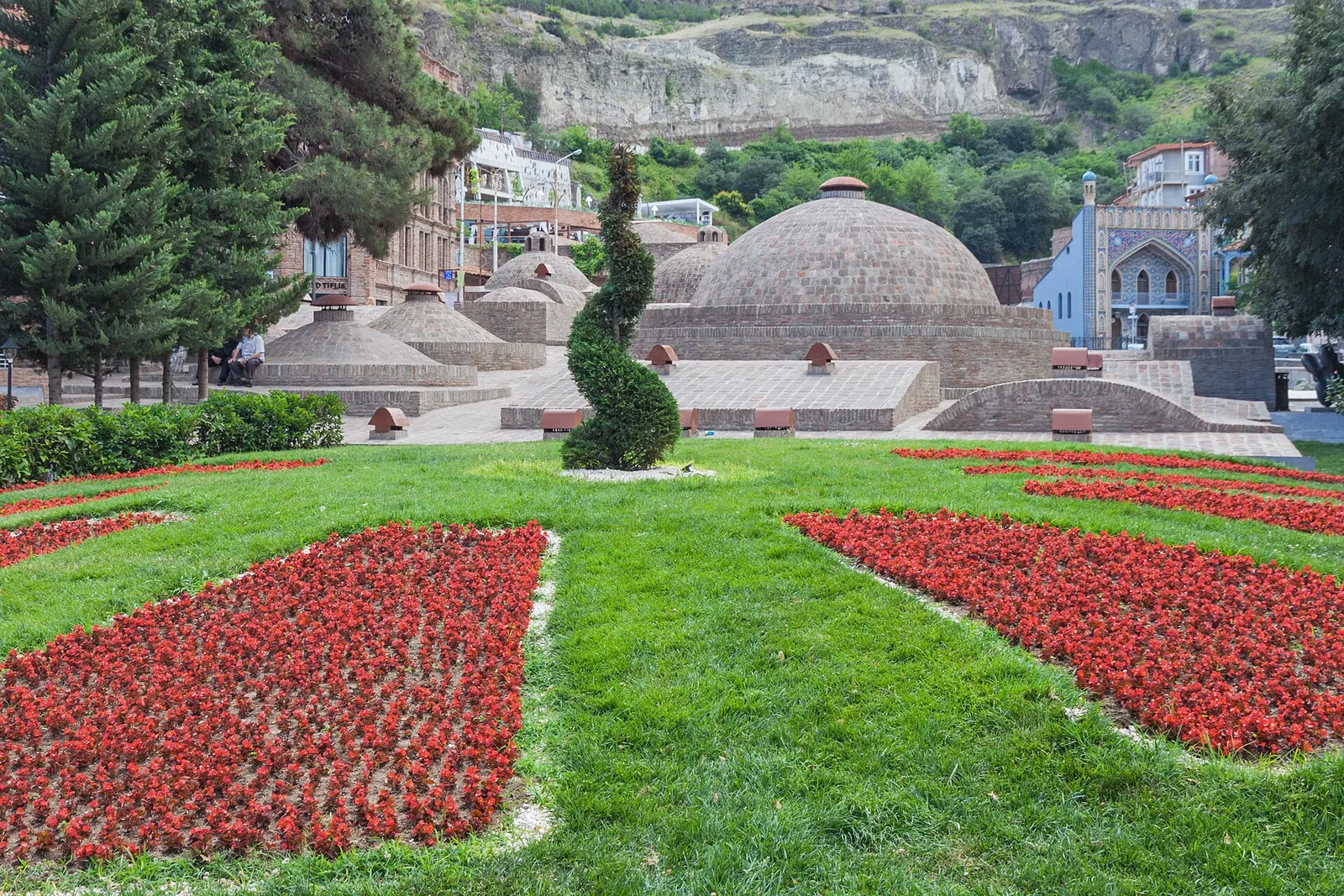
Fed by naturally hot mineral springs rich in sulfur, these subterranean brick chambers have defined the district for centuries. Visitors can walk directly across the street level domes, which feature raised stone chimneys that vent steam from the pools below. The surrounding stonework reflects Persian architectural influences introduced during centuries of regional trade.
Orbeliani Bathhouse
Also known as the Chreli Abano, this structure stands out among the low brick domes with its ornate, blue-tiled exterior reminiscent of Central Asian madrasas. The entrance facade displays elaborate calligraphic and floral tilework flanked by pointed minaret-like turrets. Writers Alexandre Dumas and Alexander Pushkin both bathed here during their travels across the Caucasus.
Leghvtakhevi Waterfall
The Tsavkisistskali stream cuts through a deep gorge behind the bathhouse district, terminating at a 22-metre natural cascade. Wooden walkways and footbridges guide walkers past steep shale cliff faces adorned with overhanging fig trees and carved rock terraces. The ravine was buried beneath industrial infrastructure for decades before being excavated and restored for pedestrians.
Juma Mosque of Tbilisi
Rebuilt in the late nineteenth century by architect Giovanni Scudieri, this red-brick mosque features an eight-sided minaret overlooking the botanical ravine. Inside, the sanctuary accommodates both Sunni and Shia Muslims praying together under a single vaulted roof, a rare practice in the Islamic world. The interior contains painted geometric borders, arched niches, and traditional Persian carpets.
Narikala Fortress
First established as a Persian citadel in the fourth century, Narikala was expanded by Arab emirs, Georgian kings, and Ottoman forces. Most of the extant stone masonry dates to the sixteenth and seventeenth centuries, crowning the ridge above the thermal baths. Walking paths follow the surviving curtain walls, offering broad perspectives over the river bend and historic district.
St Nicholas Church at Narikala
Standing inside the lower fortress courtyard, this church replaces an original thirteenth-century sanctuary that was destroyed by an explosion in 1847. Built between 1996 and 1997, it follows classical Georgian ecclesiastical architecture with carved stone reliefs and a central dome. Inside, visitors can view frescoes depicting scenes from the Bible alongside portraits of Georgian historical rulers.
Kartlis Deda
Erected on Sololaki ridge in 1958 to mark the city's 1,500th anniversary, this 20-metre figure was sculpted by Elguja Amashukeli. Dressed in traditional national costume, she holds a bowl of wine in her left hand to welcome friends and a sword in her right to ward off invaders. The monument remains a defining silhouette above the river valley.
National Botanical Garden of Georgia
Spanning over 160 hectares along the gorge behind Narikala Fortress, this garden evolved from royal orchards first documented in the seventeenth century. Formally organised as a scientific botanical park in 1845, it preserves over 4,500 species of flora from the Caucasus and abroad. Winding pathways lead through cypress groves, bamboo thickets, and landscaped rockeries.
Queen Tamar Bridge in Botanical Garden
Constructed across the Tsavkisistskali stream during the twelfth century, this stone bridge represents medieval civil engineering in the Caucasus. Built from local river cobblestone and lime mortar, the narrow arch has survived centuries of seasonal flooding. It continues to serve as an active pedestrian crossing connecting the northern terraces of the botanical reserve.
Metekhi Church
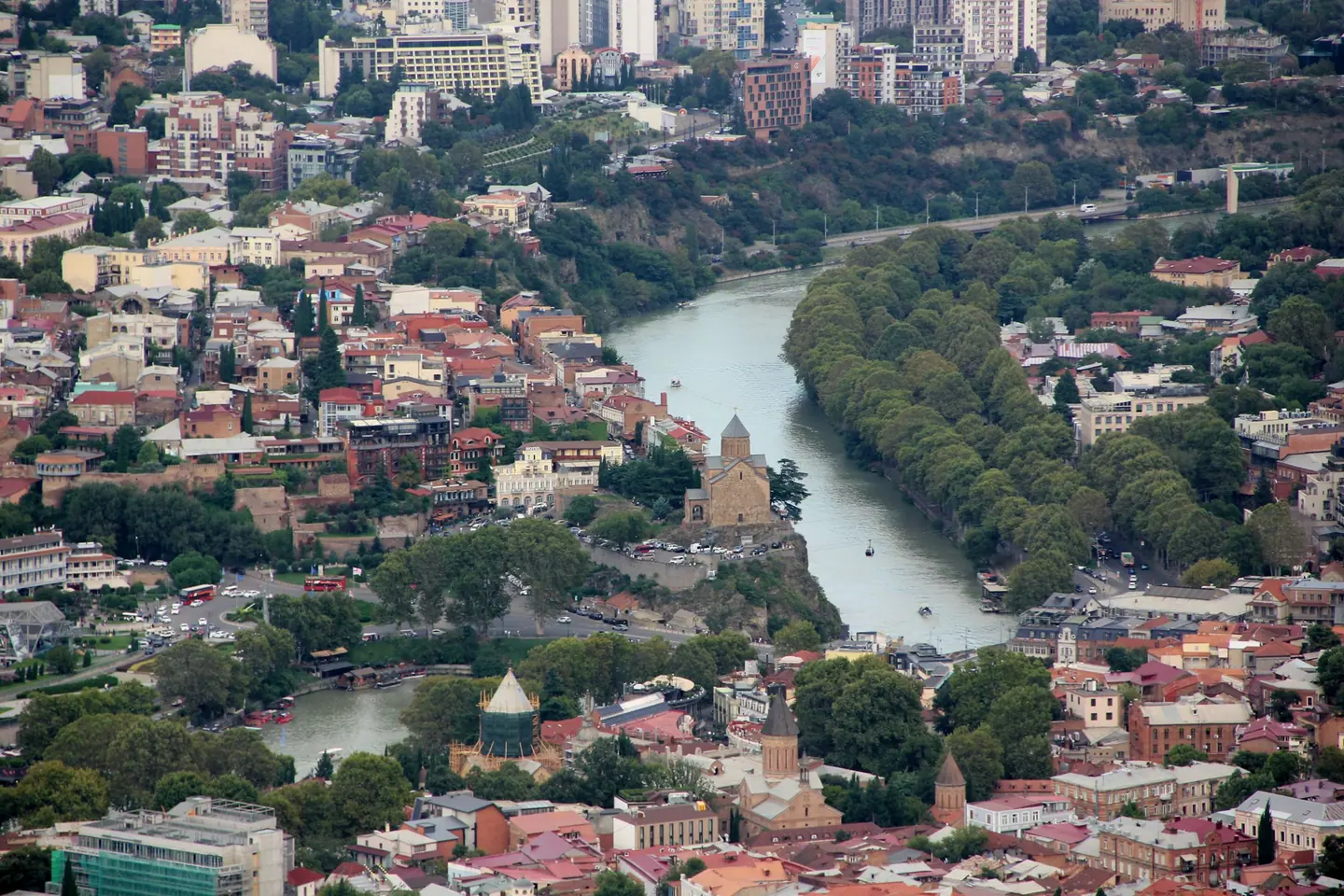
Perched above the Mtkvari river opposite Abanotubani, this brick and stone cross-domed church was erected by King Demetre II between 1278 and 1284. It stands on the site of an earlier royal residence and holds the tomb of Saint Shushanik, an early Christian martyr. The external walls exhibit classic Georgian decorative stonework around the windows and drum.
Monument to King Vakhtang Gorgasali
Positioned on the Metekhi clifftop plateau, this monument sculpted by Elguja Amashukeli was installed in 1967. It depicts King Vakhtang I of Iberia astride his horse, raising his hand toward the thermal springs that legend credits him with discovering. The plaza provides panoramic viewpoints directly across to the Narikala battlements and the bathhouse roofs.
Metekhi Bridge
The current reinforced concrete bridge was built in 1951, replacing older timber and iron structures that historically served as the city's primary river crossing. Located immediately between Metekhi rock and the thermal quarter, this site witnessed numerous battles throughout the city's turbulent history. Pedestrian pavements along the spans connect the bathhouses to the northern riverbank.
Tbilisi Cable Car Lower Station
Operating from Rike Park across the Mtkvari river, this modern aerial tramway ascends over the historical core to the top of Narikala ridge. The glazed cabins offer passengers unobstructed views over the domed baths of Abanotubani and the steep Leghvtakhevi gorge. It provides quick access between low-lying public gardens and the highland fortress trails.
Atashgah of Tbilisi
Recognised as one of the northernmost Zoroastrian sites in the world, this brick and stone structure likely dates to the fifth or sixth century when Sasanian Persia held influence. Enclosed by domestic dwellings on the slopes of Sololaki, the building features an arched quadrangular chamber topped with a brick dome. It was later repurposed as a defensive watchtower and mosque.
Saint George's Armenian Cathedral
Founded in 1251 by Prince Umek of Karin, this stone cathedral functions as the episcopal seat of the Armenian Apostolic Diocese in Georgia. The interior features eighteenth-century biblical frescoes painted by Hovnatan Hovnatanian alongside elaborate gilded altars. In the exterior courtyard, travellers can inspect the tomb of Sayat-Nova, the celebrated eighteenth-century royal court poet and musician.
Vakhtang Gorgasali Square
Commonly known as the Meidan, this open square has served as the commercial nexus of the old town since the Middle Ages. Historically lined with caravan offices, craft stalls, and taverns, the plaza now forms the entrance corridor to Abanotubani and the ascending alleys of Kote Afkhazi Street. Traditional carved wooden balconies line the multi-storey townhouses facing the square.
Saint Gevorg of Mughni Church
Constructed in 1356 and substantially enlarged in 1756, this classic brick church stands on the steep hillside between Narikala and the residential quarter below. Its external walls incorporate regional Georgian brickwork with Armenian decorative tympanums above the portals. The structure suffered a major structural collapse in 2009, making its surviving masonry an important subject of heritage preservation.
Betlemi Church
Positioned high on the rocky flanks of Sololaki, the Upper Betlemi Church was founded in the late fifteenth century and rebuilt during the eighteenth century. A long stone staircase climbs from the lower streets to the terrace, where a separate two-storey brick belfry overlooks the urban expanse. The interior houses nineteenth-century carved iconostases and painted wall surfaces.
Sioni Cathedral
Initially erected between the sixth and seventh centuries along the riverbank, Sioni was rebuilt several times following regional wars, with the current structure primarily dating to the thirteenth century. Its golden tufa stone facade reflects traditional medieval Georgian proportions beneath a conical central dome. Inside, the church preserves the revered Grapevine Cross, credited to Saint Nino during the fourth century.
Tbilisi History Museum
Housed within the restored Artsruni Caravanserai near Sioni Cathedral, this museum chronicles the city's development from the Bronze Age through the twentieth century. The three-storey brick warehouse retains its central open courtyard, arched arcades, and former trading chambers. Exhibits feature archaeological relics, historical photographs, artisanal ironwork, and detailed scale models of old residential neighbourhoods.
Kala Old Town, Sioni Cathedral & Anchiskhati Basilica
Meidan Square Vakhtang Gorgasali, Betlemi Stairs & Upper Bethlehem Church, Ateshgah Zoroastrian Fire Temple, Great Synagogue of Tbilisi, Sioni Cathedral Saint Nino Cross, Heraclius II Street, Peace Bridge, Anchiskhati 6th-Century Basilica, and Gabriadze Puppet Theatre Clock Tower
Meidan Square
Positioned where traditional trade caravans crossed the Mtkvari river, this triangular plaza was the commercial pulse of medieval Tbilisi. Merchants from Persia, Armenia, and Europe historically gathered here to exchange regional wares. Today it serves as the primary gateway into Old Town alleyways, with underground craft stalls preserving the site's market roots.
Monument to King Vakhtang Gorgasali
Standing prominently on the Metekhi cliff opposite Kala, this bronze monument honours the fifth-century monarch credited with founding the city. Sculpted by Elguja Amashukeli in 1967, the sovereign raises his right hand towards the Old Town riverfront. Visitors often admire the powerful proportions and the clear vantage point over the historical core below.
Betlemi Street Stairs
Constructed in the nineteenth century, this steep limestone staircase links the lower riverbanks to the high terraces of Kldisubani. The steps thread between overhanging carved wooden balconies and brick facades. Climbing the stairs rewards travellers with sweeping perspectives over the rooftops and cupolas of the ancient quarter.
Upper Bethlehem Church
Perched on the rocky slopes beneath Narikala, this brick sanctuary was reconstructed in the eighteenth century on an older foundation. Originally an Armenian church known as Zemo Betlemi, it now serves the Georgian Orthodox Church with restored frescoes and traditional liturgical furnishings. Its surrounding platform provides an exceptional overview of the Old Town.
Lower Bethlehem Church
Set midway up the Betlemi staircase, this brick sanctuary was established in the nineteenth century on medieval foundations. The exterior exhibits classic Caucasus masonry accented by pointed arched windows and a modest bell gable. Within, light filters across clean plasterwork and traditional iconography, reflecting its continued spiritual role in Kldisubani.
Tbilisi Ateshgah
Regarded as one of the northernmost surviving Zoroastrian sites, this compact brick and stone structure dates back to the Sasanian era. Concealed within the courtyard of private dwellings, it features an arched dome design typical of early fire chambers. Conservation projects have safeguarded its ancient masonry, highlighting centuries of multi-religious coexistence.
Great Synagogue of Tbilisi
Erected from red brick at the turn of the twentieth century, this grand synagogue serves the historic Georgian Jewish community. The exterior showcases arched portals and decorative cornice work, while the dual-level interior displays hand-painted ceilings and Hebrew calligraphy. It stands as an active centre for worship, complete with traditional kosher facilities on site.
Chakhrukhadze Street
We recommend strolling this quiet Old Town artery, named after the twelfth-century poet Chakhrukhadze. The narrow corridor is lined with typical Tbilisi townhouses, celebrated for their elaborate pierced-wood balconies and brick arched entryways. Its peaceful atmosphere contrasts with the lively café rows situated just around the neighbouring corners.
Sioni Cathedral
Initially founded in the sixth century and rebuilt multiple times after foreign invasions, Sioni served as Georgia's primary religious seat for centuries. Inside, travellers can view the revered grapevine cross of Saint Nino, bound according to tradition with her own hair. Grigoriy Gagarin's mid-nineteenth-century Russian-Byzantine wall paintings adorn the interior arches and central cupola.
Sioni Bell Tower
Standing directly across from Sioni Cathedral, this freestanding bell tower was constructed in 1812. It represents one of the earliest examples of Russian Neoclassical architecture introduced to the Georgian capital. The refined columned upper tier and pediments create a striking stylistic dialogue with the medieval stone forms of the church opposite.
Heraclius II Street
Named after the eighteenth-century king of Kartli and Kakheti, this pedestrian lane acts as a primary social vein through Kala. Low-rise townhouses with renovated fretwork balconies accommodate art workshops, wine bars, and craft boutiques. Its stone pavement leads visitors directly between Sioni Cathedral and the northern Anchiskhati sector.
Shavteli Street
Dedicated to the medieval poet Ioane Shavteli, this flagstone street winds gently through the upper section of Kala Old Town. Shaded by mature plane trees, the route features quiet courtyards and restored nineteenth-century facades. It provides pedestrian access to several foundational monuments, including the city's oldest basilica and intimate theatrical workshops.
Anchiskhati Basilica
Erected by King Dachi of Iberia during the early sixth century, this three-nave basilica remains the oldest surviving ecclesiastical structure in the city. The interior houses surviving seventeenth-century frescoes alongside an ancient stone floor polished smooth by centuries of footsteps. Its simple, low-slung stone architecture offers a rare window into early Christian building practices.
Anchiskhati Bell Tower
Built from yellow brick in 1675 by Catholicos Domentius, this defensive bell tower also functions as the gateway into the Anchiskhati churchyard. The structure displays Persian architectural influences, seen in its pointed arches and patterned brickwork. An original stone inscription over the portal details the historical patronage behind the tower's erection.
Gabriadze Puppet Theatre
Founded in 1981 by the celebrated Georgian artist and film writer Rezo Gabriadze, this boutique theatre stages world-travelled marionette productions. The intimate auditorium seats only eighty spectators, creating an atmosphere steeped in poetic storytelling. Its decorative interior mirrors the eccentric artistic vision that defines Gabriadze's wider contribution to Georgian theatrical history.
Gabriadze Clock Tower
Completed in 2010, this deliberately crooked, fairy-tale tower has quickly become a defining landmark of Shavteli Street. An angel emerges from an upper shutter hourly to strike a bell with a small hammer, delighting gathered crowds. Hundreds of ceramic tiles painted personally by Gabriadze encircle the base, depicting poignant motifs of love and mortality.
Bridge of Peace
Spanning 150 metres across the Mtkvari, this undulating footbridge was designed by Italian architect Michele De Lucchi and opened in 2010. Its marine canopy features thousands of integrated LED fixtures that illuminate the river waters after sunset. The structure establishes a modern visual axis linking the ancient Kala district with Rike Park.
Tbilisi History Museum
Situated within the nineteenth-century Artsruni Caravanserai near Sioni, this museum documents urban life in Tbilisi from ancient times to the modern era. The expansive brick building retains its central covered courtyard, once used for merchant storage. Inside, exhibits display archaeological finds, historic photographs, artisanal guild banners, and detailed architectural models of the old quarters.
Gudiashvili Square
Named after the prominent painter Lado Gudiashvili, this tranquil square sits at a junction of gentle Old Town streets. Meticulous conservation programmes have preserved its remarkable ensemble of nineteenth-century residences, which feature layered turquoise balconies and ornate cornices. Shaded benches and tall deciduous trees make it a peaceful enclave away from main roadways.
Norashen Church
Constructed in the fifteenth century and substantially rebuilt during the late eighteenth century, Norashen displays classic Armenian basilica proportions. The red-brick exterior features slender pilasters, blind arches, and finely sculpted stone details beneath the main dome. It sits closely alongside Sioni Street, exemplifying the rich architectural polyphony characteristic of Kala's historical core.
Metekhi Cliff, Avlabari, Sameba & Rike Park
Metekhi Virgin Mary Church & King Vakhtang Statue, Darejan Palace Sachino Balcony, Rike Park Cable Car, Queen Ketevan Avenue, Holy Trinity Cathedral of Tbilisi Sameba, and Chronicle of Georgia Monument overlooking Tbilisi Sea
Metekhi Church of the Assumption
Commissioned by King Demetrius II in the 1270s, this cross-cupola brick sanctuary replaced an earlier fifth-century royal chapel. The structure survived Mongol raids, Persian occupations, and Tsarist conversion into a barracks prison. Visitors admire the carved stone facades and sweeping views towards Narikala Fortress from the rocky clifftop terrace.
King Vakhtang Gorgasali Monument
Sculpted by Elguja Amashukeli and unveiled in 1967, this imposing bronze monument depicts the Iberian monarch who relocated the realm's capital from Mtskheta. Positioned right beside Metekhi Church, the king sits astride his steed with an outstretched hand blessing the river valley. The terrace platform serves as an orientation point for central Tbilisi.
Metekhi Bridge
Spanning the narrowest gorge of the Mtkvari River, this crossing point witnessed centuries of trade and warfare, including the 1227 massacre of Georgian Christians by Jalal al-Din. The present reinforced concrete two-span bridge dates from 1951, replacing older wooden and iron predecessors. It provides direct pedestrian access between Gorgasali Square and the Metekhi cliffside.
Rike Park
Laid out along the eastern floodplains of the Mtkvari River, Rike Park transformed former marshland into a manicured civic leisure space. Curving stone paths link ornamental fountains, children's playgrounds, and an oversized chess board against the backdrop of the presidential hill. The park serves as the base terminal for the aerial cable car to Narikala.
Bridge of Peace
Constructed in 2010, this undulating footbridge spans 150 metres across the Mtkvari River, linking Rike Park with the historic alleys of central Tbilisi. The canopied steel framework incorporates thousands of embedded LED lights that pulse in programmed sequences after dusk. Pedestrians cross the glass deck for panoramic views of river traffic and Metekhi Cliff.
Tbilisi Cable Car Lower Station
Opened in 2012, this cable lift terminal in Rike Park whisks visitors upward to the Sololaki ridge in glass-bottomed gondolas. The flight path glides directly over the ancient rooftops and stone walls of the old town, providing unobstructed sightlines across Avlabari. The upper station deposits passengers right beside Narikala Fortress and the Mother of Georgia statue.
Sachino Palace of Queen Darejan
Erected in 1776 for Queen Darejan, wife of King Erekle II, this royal estate rests atop the Avlabari cliff edge. The complex includes fortified stone perimeter walls, a domed household church dedicated to Saints Irakli and Daria, and a distinctive turquoise wooden loggia. The wraparound balcony affords views across Rike Park and the river.
Church of the Transfiguration at Sachino
Now serving as an active nunnery, this compact brick church was commissioned alongside Darejan's palace in the late eighteenth century. The interior houses modest liturgical furnishings and restored Orthodox icons, while its courtyard features a walled rose garden tended by the resident sisters. Travellers can observe traditional monastic routines within the heart of Avlabari.
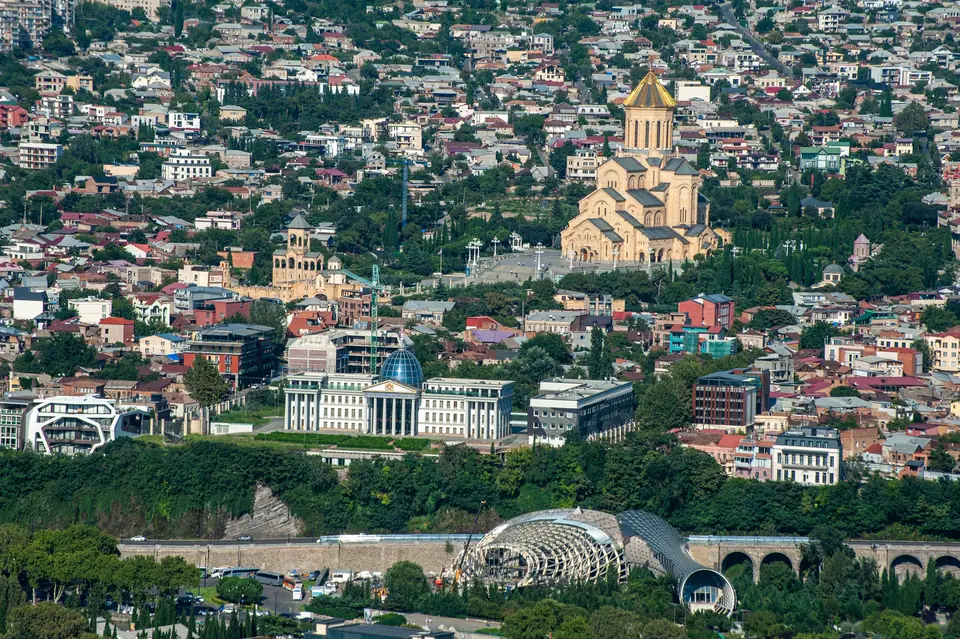
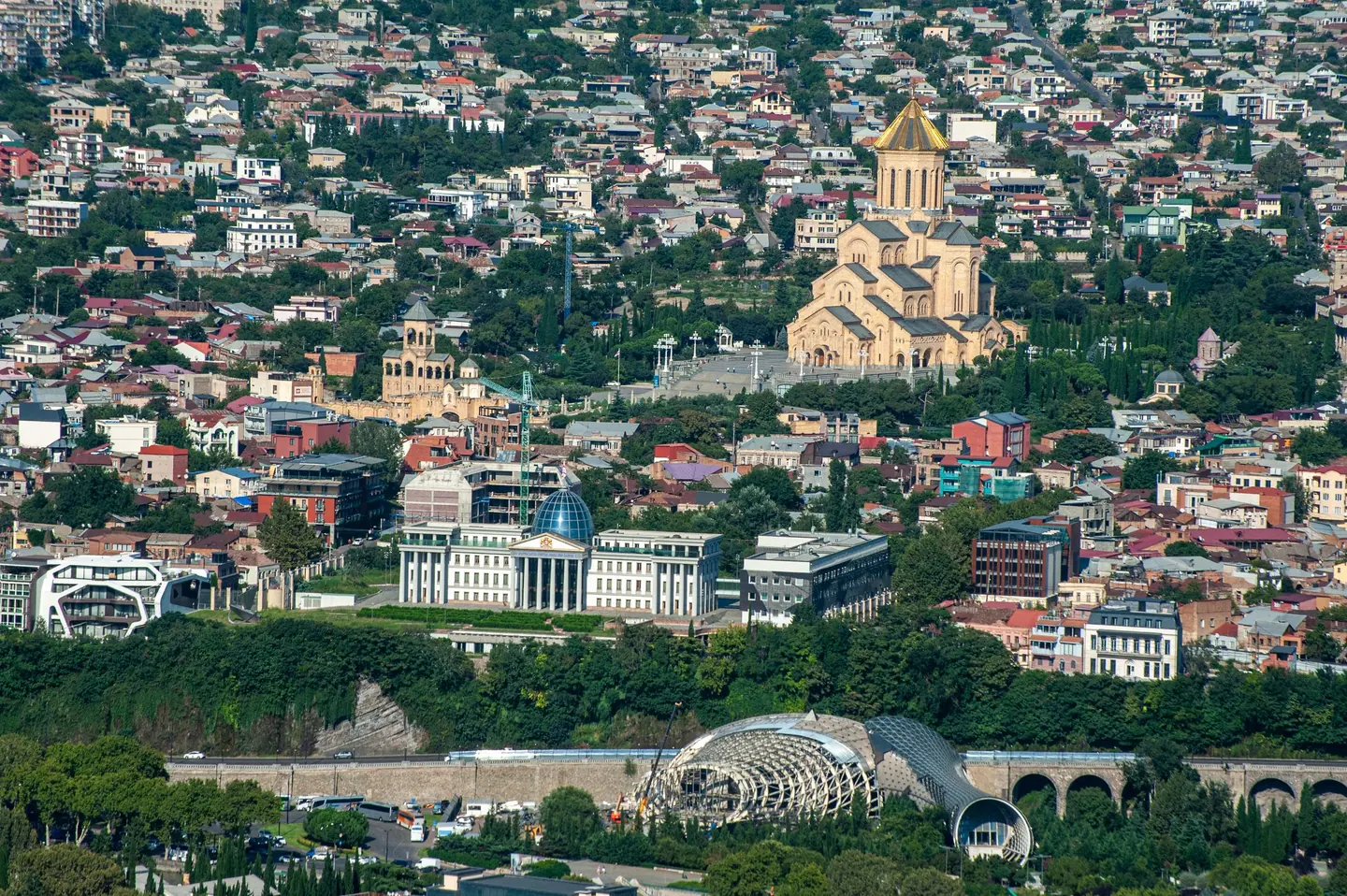
Holy Trinity Cathedral of Tbilisi
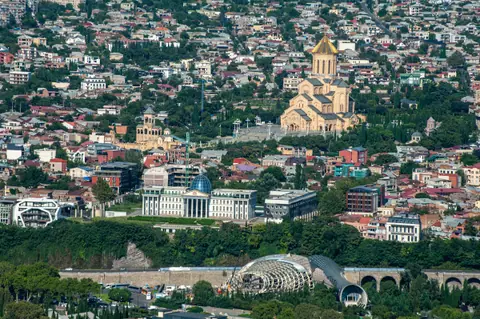
Known locally as Sameba, this massive cruciform sanctuary was built between 1995 and 2004 to commemorate two millennia of Christianity. Designed by Archil Mindiashvili, its gold-plated dome rises 87 metres, making it one of the tallest Eastern Orthodox cathedrals worldwide. Inside, nine subterranean chapels, intricate marble paving, and large modern icons fill the echoing hall.
Avlabari Square
Avlabari Square forms the social hub of this centuries-old district on the left bank of the Mtkvari River. Surrounded by bakeries, market stalls, and a Soviet-era metro station, the square serves as the gateway to Queen Ketevan Avenue. It retains a distinct community character shaped by generations of Armenian, Georgian, and Jewish residents.
Monument to the Characters of Mimino
Crafted by sculptor Zurab Tsereteli and installed in 2011, this monument honours Georgiy Daneliya's celebrated comedy film Mimino. The bronze ensemble portrays the central characters played by Vakhtang Kikabidze, Frunzik Mkrtchyan, and Yevgeny Leonov, alongside the director himself. Situated in a small park near Avlabari metro, it draws film enthusiasts from across the Caucasus.
Saint Echmiadzin Church
Built between 1805 and 1808 by Armenian migrants from Etchmiadzin, this red-brick basilica underscores the district's Armenian heritage. The interior contains traditional stone khachkars (cross-stones) and an elevated altar, restored thoroughly in 2010. Its quiet courtyard offers a peaceful respite from the nearby road traffic of Queen Ketevan Avenue.
Queen Ketevan Avenue
Stretching eastwards from Metekhi Cliff toward the outer suburbs, this wide boulevard carries the name of Queen Ketevan, tortured in Shiraz in 1624. Lined with nineteenth-century residential blocks, traditional bakeries producing shoti bread, and small fruit shops, it represents everyday district life. The avenue connects key religious landmarks across Avlabari with the broader transport grid.
Avlabari Metro Station
Inaugurated as part of the original Didube-Rustaveli metro line extension, this station remains an important transport hub for passengers crossing the river. Its upper entrance vestibule incorporates glass walls, while the deep underground platform features granite pillars and vaulted lighting. The surrounding plaza is lined with taxis and street vendors selling fresh churchkhela.
Underground Printing House of Avlabari
Between 1903 and 1906, illegal socialist newspapers such as Brdzola were printed in a secret cellar 17 metres underground, accessed via a fake water well. Co-managed by a young Joseph Stalin, the facility was eventually raided by imperial police. Today, the reconstructed wooden house and subterranean machinery serve as a unique historical museum of revolutionary activity.
Presidential Palace of Georgia
Constructed between 2004 and 2009 by Italian architect Michele De Lucchi, this monumental residence stands prominently on the Avlabari river bluff. The building combines strict neoclassical porticos with a central glass cupola that reflects the midday light. It now serves as the official palace for the President of Georgia and hosts ceremonial state functions.
Church of Saint George at the Metekhi Gate
Positioned along the steep pedestrian ramp leading up from the river bridge, this stone chapel honours Saint George. The small building marks the former gateway into the defensive garrison that once occupied the entire promontory. Visitors pass its threshold while ascending towards the Metekhi churchyard, catching framed perspectives of the bath district opposite.
Kojori Gate Foundations
Visible along the lower rock ledges of Metekhi, these excavated stone remains indicate where historic fortified gates guarded the bridgehead into eastern Tbilisi. Archaeologists uncovered thick mortar walls that repelled invasions through the fourteenth and eighteenth centuries. The masonry reveals layers of stone, brick, and defensive arrow slits integrated into the living cliff.
Rike Park Concert Hall and Exhibition Centre
Designed by Massimiliano and Doriana Fuksas, these striking metallic dual-tube structures resemble oversized periscopes facing the river. Originally intended as a 560-seat music auditorium and cultural exhibition centre, the unfinished pavilions remain an intriguing monument of contemporary architecture. Visitors observe the mirrored stainless steel panels and sweeping curved silhouettes while walking through northern Rike Park.
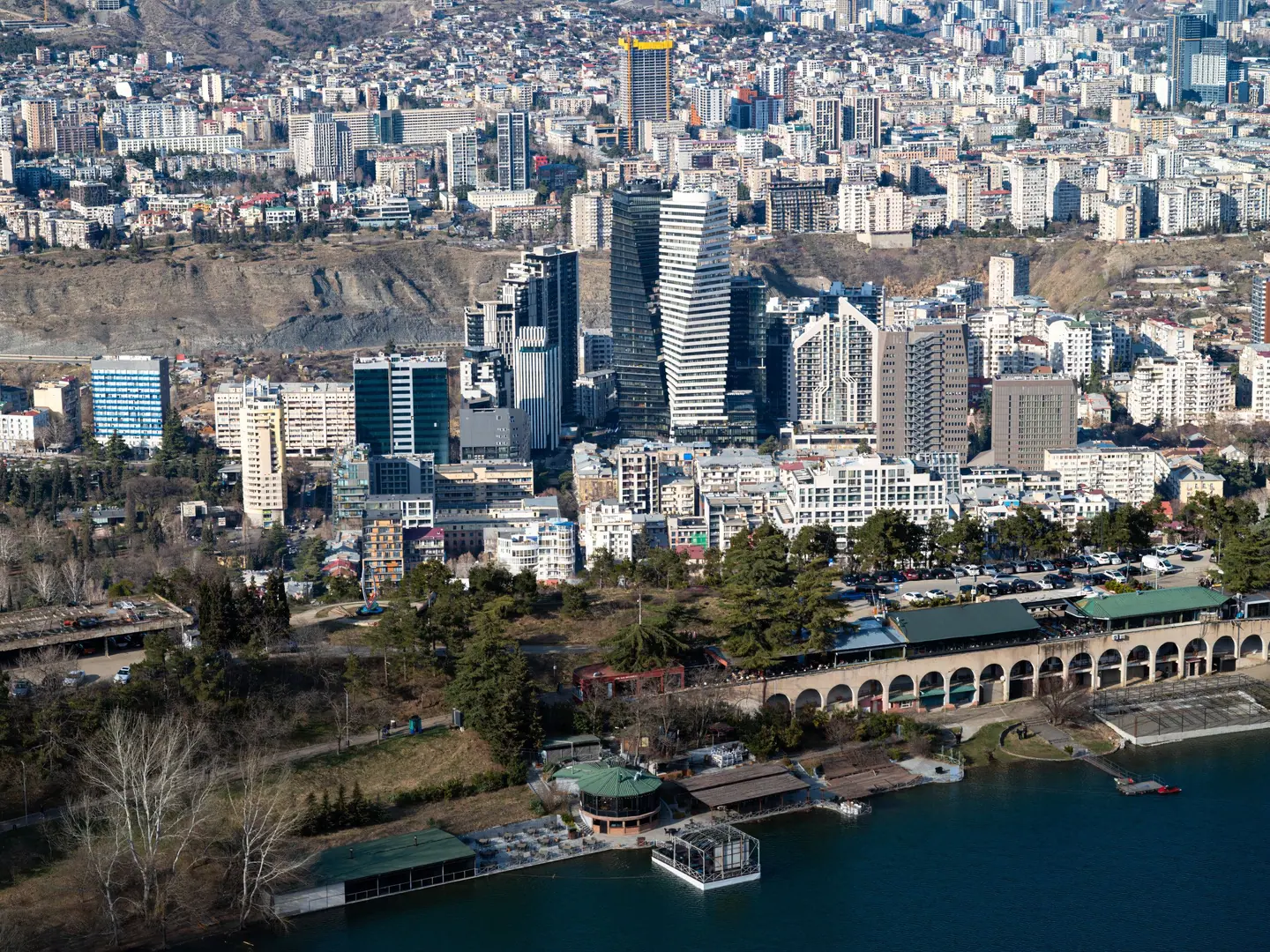
The Chronicle of Georgia
Created by sculptor Zurab Tsereteli in 1985, this massive hilltop monument consists of sixteen pillars rising over thirty metres high. The lower bronze reliefs narrate biblical events, while the upper bands document the kings, queens, and military victories of Georgian history. The breezy vantage point provides views across the Tbilisi Sea reservoir and northern districts.
Freedom Square, Sololaki Courtyards & Rustaveli Avenue
Freedom Square St George Column, Pushkin Street Medieval City Wall Excavations, Writer’s House of Georgia David Sarajishvili Mansion, Kaleidoscope House Gallery 27, Georgian National Museum Gold Treasury, Kashveti Church, Rustaveli Theatre, and Tbilisi Opera and Ballet Theatre
Freedom Monument
Standing at the centre of Freedom Square, this granite column is topped with a bronze figure of Saint George slaying the dragon. Designed by sculptor Zurab Tsereteli, the monument replaced a statue of Vladimir Lenin in 2006. We recommend admiring the detailed metalwork from the perimeter gardens before continuing along Rustaveli Avenue.
Pushkin Street City Wall Excavations
Unearthed during road renovations in 2012, these stone foundations reveal parts of the medieval fortifications that protected old Tbilisi. Elevated walkways allow visitors to look down into defensive towers, gates, and domestic structures dating between the eleventh and thirteenth centuries. Explanatory plaques outline how these ancient bastions integrated with later eighteenth-century brick reconstructions.
Writers' House of Georgia
Constructed in 1905 by brandy magnate David Sarajishvili, this Sololaki residence unites German art nouveau curves with traditional wooden balconies. The interior features restored ceramic tiles manufactured by Villeroy and Boch, alongside wood-panelled dining rooms. Today, it operates as a literary venue hosting readings, temporary art exhibitions, and a quiet courtyard garden café.
Gallery 27
This late nineteenth-century townhouse on Betlemi Street displays one of the finest carved timber staircases in old Tbilisi. Its entranceway is framed by multicoloured stained-glass panels that cast jewel-toned reflections across the steps during morning hours. Inside, a local craft collective sells handmade textiles, felted apparel, and ceramics crafted by regional artisans.
Georgian National Museum
Founded through the unification of several cultural institutions, this grand neoclassical museum anchors the start of Rustaveli Avenue. The basement houses the Archaeological Treasury, which showcases fifth-century BC Colchian jewellery, filigree pendants, and engraved drinking horns. Higher floors document Caucasian natural history alongside the twentieth-century Soviet Occupation Exhibition.
Kashveti Church
Designed by architect Leopold Bilfeldt between 1904 and 1910, this stone sanctuary replicates the medieval masterpiece of Samtavisi Cathedral. The interior is noted for its twentieth-century apse frescoes, completed by prominent Georgian painter Lado Gudiashvili under controversial Soviet-era circumstances. We can observe delicate stone filigree carving on the exterior window frames.
Rustaveli Theatre
Completed in 1901 by architects Korneli Tatishchev and Aleksander Szymkiewicz, this ornate theatre blends rococo embellishments with baroque pilasters. Originally housing the Tbilisi Artists' Society, the venue now serves as Georgia's preeminent drama theatre. Look closely at the facade to spot carved theatrical masks, whimsical harlequin reliefs, and classical stone pediments.
Tbilisi Opera and Ballet Theatre
Rebuilt by Victor Schröter following an 1874 fire, this opera house exhibits striking neo-Moorish architecture defined by horseshoe arches and polychromatic stripes. The cavernous auditorium contains an enormous crystal chandelier manufactured in Austria and six tiers of gilded boxes. Notable composers, including Pyotr Tchaikovsky, conducted performances on this historic stage.
Former Parliament of Georgia
Constructed across the 1930s and 1950s on the site of a demolished military cathedral, this monumental complex features a vast colonnade faced with yellow tufa stone. The steps served as the focal point for modern Georgian statehood, witnessing both the 1989 tragedy and the 1991 independence declaration. Today, it hosts committee sessions.
National Parliamentary Library of Georgia
Built between 1913 and 1916 as the Noble Agrarian Bank, this structure combines Italian Renaissance palazzo styling with traditional Georgian decorative elements. Architect Anatoly Kalgin and master stonecarver Neophit Agladze integrated elaborate floral motifs into the ashlar facade. Inside, researchers consult extensive archives, rare manuscripts, and collections of early regional periodicals.
Sololaki Courtyard Houses on Asatiani Street
Lado Asatiani Street serves as the architectural heart of Sololaki, lined with residences commissioned by wealthy merchant families around 1900. Entering open archways reveals typical Tbilisi courtyards featuring carved wooden galleries, spiralling external staircases, and communal balconies. Many entrance halls retain hand-painted ceiling murals and wrought-iron balustrades imported from central Europe.
Tbilisi City Assembly
Occupying the southern flank of Freedom Square, this civic building dates from the 1830s with later renovations completed by Albert Salzmann. The structure features a classical pediment, tall arched portals, and a delicate clock tower that anchors the street corner. It remains an active government building, housing the elected representatives of the Tbilisi municipality.
Youth Palace
Constructed in 1868 by architect Otto Simonson, this grand classical palace was the residence of the Imperial Russian Viceroy of the Caucasus. The Democratic Republic of Georgia declared independence within its white salon on 26 May 1918. Surrounded by plane trees and landscaped lawns, the complex now functions as a children's creative arts centre.
Georgian Museum of Fine Arts
Opened in 2018, this modern institution occupies a contemporary limestone building situated directly opposite Kashveti Church on Rustaveli Avenue. The collection comprises thousands of artworks created by hundreds of Georgian painters, sculptors, and graphic artists working from the mid-twentieth century onward. Spacious white-cube galleries display post-war modernism alongside contemporary abstract works.
Tbilisi Marriott Hotel
Designed by architect Gabriel Ter-Mikelov, this monumental edifice opened in 1915 as the Hotel Majestic before suffering fire damage during later conflicts. Its curved facade complements the street corner with rusticated stonework, ionic columns, and classical balconies. The opulent interior features a soaring central atrium illuminated by crystal chandeliers, reflecting grand twentieth-century hospitality architecture.
Tbilisi State Academy of Arts
Located just off Rustaveli Avenue on Griboedov Street, this former mansion of merchant Vano Kobalashvili houses Georgia's primary academy of fine arts. The interior preserves the famous Mirror Halls, decorated in the 1850s by Iranian artisans using intricate Qajar-style cut-glass mosaic techniques. The academy's gallery regularly exhibits experimental student works, ceramics, and sculpture.
Alexander's Garden
Laid out in the 1850s by Prussian gardener Heinrich Scharrer, this terraced green park was the first public pleasure ground in Tbilisi. Descending from Rustaveli Avenue toward the Mtkvari River, it contains stone stairways, classical fountains, and memorials to Georgian writers. Shaded benches provide a tranquil vantage point away from the heavy city traffic.
Rustaveli Cinema
Opened in 1939, this prominent entertainment venue was designed by architect Nikolay Severov in a blend of Soviet constructivism and classicism. The facade features colossal pilasters flanked by expressive stone statues representing actors, athletes, and workers carved by Valentin Topuridze. Inside, modernized screening halls show contemporary cinema behind a preserved historical street front.
Tabidze Street Mansions
Named after the acclaimed poet Galaktion Tabidze, this street showcases the peak of nineteenth-century Sololaki prosperity. Many facades feature eclectic mixtures of neo-Gothic, baroque, and renaissance forms commissioned by oil magnates and silk traders. Several doorways reveal intact entryway murals illustrating mythological themes, alongside decorative iron boot-scrapers preserved outside the gates.
Georgian National Academy of Sciences
Constructed in 1953 by architects Mikael Chkhikvadze and Konstantin Chkheidze, this immense stone complex terminates the western sweep of Rustaveli Avenue. A soaring fifty-five-metre tower capped by an open spire and decorative colonnade dominates the surrounding square. The lower loggia hosts outdoor vendors selling regional souvenirs, handcrafted wool goods, and geological mineral specimens.
Mtatsminda Pantheon, Chugureti Fabrika & Ancient Mtskheta
Mtatsminda Funicular, Mama Daviti Church & Writers’ Pantheon, Dry Bridge Flea Market, Agmashenebeli Avenue Chugureti, Fabrika Courtyard, Open Air Museum of Ethnography, Jvari Monastery Confluence View, and Svetitskhoveli Cathedral Mtskheta
Tbilisi Funicular
Engineered by Belgian firm Blanche et Cie, this cliff railway opened in 1905 to link central Tbilisi with the summit plateau. The route incorporates three stations along a steep gradient, paused midway near the historic churchyard. Today modern glass-fronted carriages ascend the tracks, offering sweeping views across the urban expanse below.
Mtatsminda Pantheon
Established around the church of Saint David in 1929, this hillside terrace serves as the national burial ground for literary figures, scholars and national heroes. Among the tombs rests Russian diplomat and playwright Alexander Griboyedov alongside his wife Nino Chavchavadze. Sculptural memorials across the quiet terraced gardens document two centuries of Georgian civic identity.
Mama Daviti Church
Erected in the nineteenth century, this brick church occupies the site where David Gareja, one of the Thirteen Assyrian Fathers, established a hermitage during the sixth century. The current cross-domed building showcases traditional Georgian ecclesiastic architecture surrounded by stone perimeter walls. Three sacred springs nearby remain traditional pilgrimage destinations for local families.
Mtatsminda Park
Perched atop Mount Mtatsminda at over seven hundred metres altitude, this public park was created during the Soviet era and later renovated. The grounds feature broad shaded promenades, ornamental pavilions, cafes and a towering Ferris wheel near the skyline television mast. From its southern balustrades, visitors enjoy uninterrupted panoramic views of the entire Mtkvari river valley.
Dry Bridge Market
Spread across pavements and park paths near the nineteenth-century stone viaduct engineered by Giovanni Scudieri, this market emerged out of the economic hardship of the 1990s. Today, vendors display vintage Soviet cameras, porcelain, vinyl records, traditional daggers and hand-painted canvases on felt carpets. It provides a fascinating, tactile window into the material culture of Georgia.
Dedaena Park
Bordering the Mtkvari River, this municipal green space takes its name from the traditional Georgian literacy primer compiled by Iakob Gogebashvili. It commemorates the demonstrations of 14 April 1978, when citizens successfully resisted Soviet efforts to strip Georgian of its constitutional status. Modern stone installations, shaded avenues and open lawns host book fairs, skaters and seasonal gatherings.
David Agmashenebeli Avenue
Lined with ornate Classical, Baroque Revival and Art Nouveau buildings, this grand avenue serves as the spine of the historic Chugureti district. Originally developed by German settlers and imperial merchants, the southern end features a restored pedestrian zone of cafes, bistros and restored stucco facades. Detailed iron balconies, carved wooden doorways and leafy side streets define the surrounding neighbourhood.
Fabrika Tbilisi
Housed inside a sprawling Soviet-era garment factory, this creative compound represents the vanguard of modern urban regeneration in Chugureti. The bare concrete structure retains its industrial architecture, adorned with colourful murals created by local and international street artists. Its central open-air courtyard contains independent craft shops, artist studios, cafes, print shops and casual gathering spaces.
Tbilisi State Academy of Arts
Founded in 1922 within the former mansion of merchant Vano Kobalashvili, this academy remains Georgia's primary school of fine arts. The interior preserves the famous Mirror Halls, crafted by Persian artisans who covered high ceilings and walls in intricate plasterwork, painted stucco and miniature reflective glass facets. The restored building regularly exhibits masterworks and student creations in painting, sculpture and applied arts.
Marjanishvili Square
Situated in the heart of Chugureti, this circular plaza reflects the ambitious mid-twentieth-century urban planning of the city. The square is framed by monumental stone facades, including the historic building of TBC Bank and the eponymous drama theatre named after director Kote Marjanishvili. It functions as a key transit crossroads linking left-bank residential quarters with central transit corridors.
Marjanishvili Theatre
Originally built at the dawn of the twentieth century as the Zubalashvili Brothers Public House, this venue later became the home of the Second State Drama Troupe. The auditorium features neoclassical proportions with ornate balconies and acoustic plaster detailing. The institution retains an esteemed place in Georgian cultural history, staging classic and contemporary plays continuously for generations.
Open Air Museum of Ethnography
Founded in 1966 by ethnographer Giorgi Chitaia, this open-air museum occupies over fifty hectares on the slopes above Vake Park. It features roughly seventy authentic timber and stone domestic dwellings transported from diverse regions across the country, complete with carved wooden balconies and traditional hearths. Visitors walk among Svanetian defensive towers, Kakhetian wine cellars and Western Georgian open-timbered farmhouses.
Turtle Lake
Known locally as Kus Tba, this small body of water occupies a wooded depression on the northern ridge of Mount Mtatsminda. Named after the freshwater tortoises that historically inhabited its banks, the area is surrounded by wooded running trails, rental pedalo docks and outdoor terraced cafes. It provides a cooler mountain climate and connects via aerial tramway down to Vake Park.
Sioni Cathedral
First erected during the sixth and seventh centuries along the bank of the Mtkvari River, this cathedral was rebuilt multiple times following foreign incursions. The existing structure features yellow tufa cladding from the thirteenth century and interior frescoes completed in the 1850s by Russian painter Grigory Gagarin. Its southern chapel protects the sacred Grapevine Cross, the most revered relic in the country.
Jvari Monastery
Perched atop a rocky promontory, this sixth-century sanctuary stands where Saint Nino originally erected a large wooden cross over a pagan temple site. The tetraconch stone church exemplifies early medieval Georgian ecclesiastic architecture, featuring stone relief sculptures on its eastern facade. From its windy cliff edge, travellers look down upon the dramatic meeting of the emerald Aragvi and grey Mtkvari rivers.
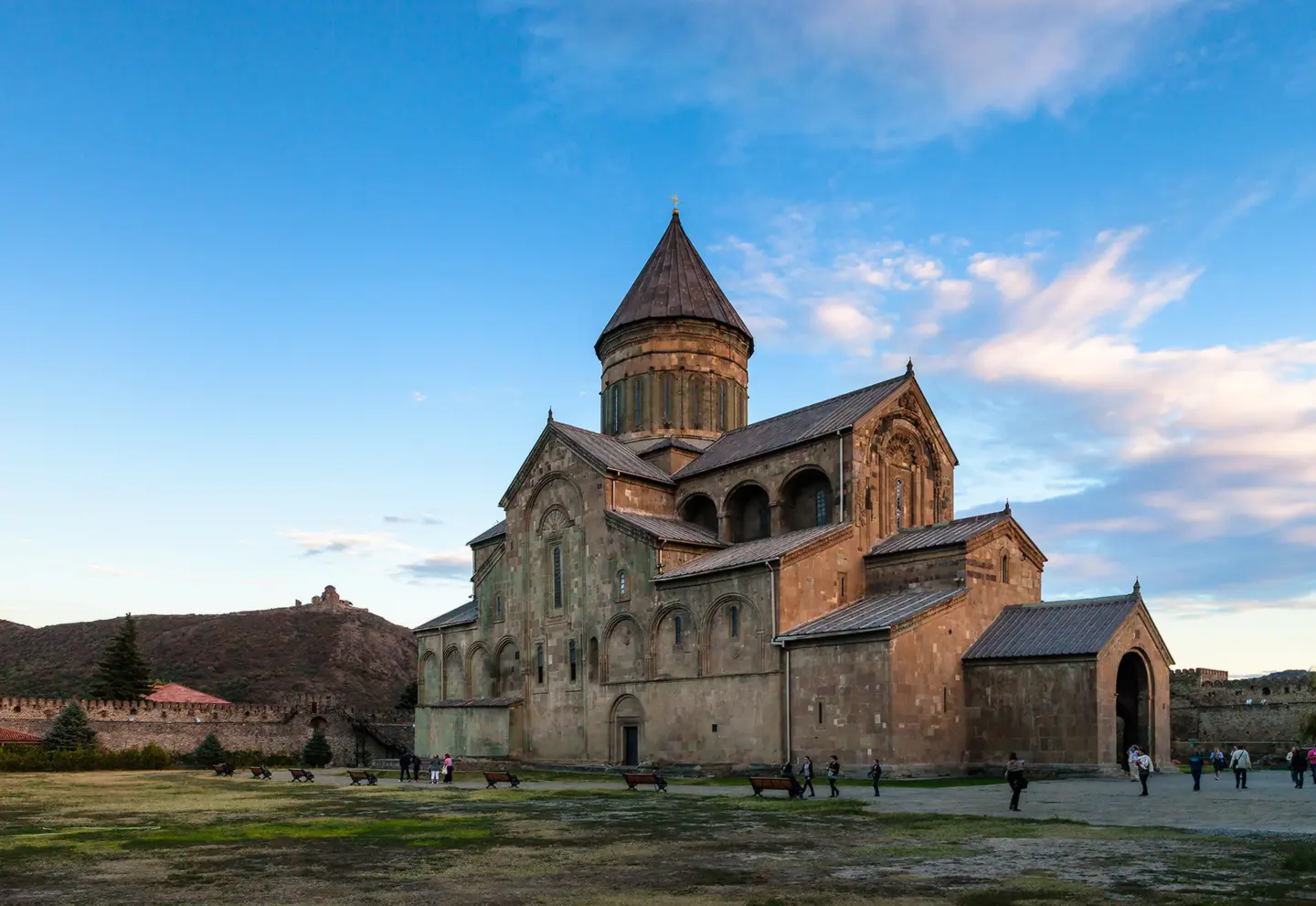
Svetitskhoveli Cathedral
Constructed between 1010 and 1029 by royal architect Arsukisdze, this cathedral served for centuries as the coronation and burial site of the Bagrationi monarchs. Believed to enshrine Christ's mantle beneath a decorative stone ciborium, the sanctuary features soaring arches, carved stone peacock motifs and fragmentary medieval frescoes. The fortified perimeter stone wall protects a serene cloistered courtyard in ancient Mtskheta.
Samtavro Monastery
Established in the fourth century near the spot where Saint Nino took refuge beside a blackberry bush, Samtavro comprises a major domed church and small chapel. The main church holds the marble tombs of King Mirian III and Queen Nana, the monarchs who adopted Christianity in 326. The monastery also remains an active pilgrimage centre honouring the twentieth-century confessor Saint Gabriel.
Bebris Tsikhe
Positioned on a rocky bluff at the northern approach to Mtskheta, this fortress protected the ancient capital from incursions descending from the Caucasus Mountains. Archaeological excavations reveal foundation layers dating to the first century BC, although the surviving crenellated curtain walls are primarily medieval. The ruin provides extensive views over the Aragvi river valley and northern approaches to the historic settlement.
Armaztsikhe
Located along the southern slopes opposite Mtskheta, this extensive archaeological park preserves the remains of the primary citadel of ancient Caucasian Iberia. Fieldwork uncovered stone palace foundations, bathhouses with ceramic hypocausts, wine cellars and royal sarcophagi dating from the third century BC to the sixth century AD. It yielded the famous Armazi bilingual inscription, written in both Greek and ancient Aramaic script.
Shiomgvime Monastery
Tucked deep inside a limestone gorge northwest of Mtskheta, this monastic retreat was established around 560 by Shio, a disciple of Saint John of Zedazeni. The complex features a primitive cross-shaped church built directly over the founder's original cavern cell, as well as a twelfth-century refectory. The honeycombed cliffs around the monastery still contain dozens of rock-cut hermit caves used by medieval ascetics.
Funicular Rides and Mtskheta Confluence Trips from Tbilisi
You can combine these stops with the district-by-district where-to-stay notes and seasonal planning tables on our Tbilisi destination page, or explore further regional and neighbourhood guides.