The Casbah of Algiers, Ketchaoua Mosque and Bastion 23
Walking downhill through the UNESCO Casbah to Ketchaoua Mosque, Ottoman tiled palaces and Bastion 23.
Climbing a steep triangular hillside from the edge of the Mediterranean harbour to an altitude of 118 metres, the Casbah of Algiers was inscribed as a UNESCO World Heritage site in 1992. Built over ancient Phoenician Icosium and expanded under 10th-century Zirid rulers and 16th- to 19th-century Ottoman Deys, its cascading whitewashed cube houses, corbelled doorways and hidden tiled courtyards form one of the great urban landscapes of the Mediterranean.
Walking downhill from the Upper Casbah
The smartest way to explore the Casbah is from top to bottom. Take a taxi up to the northern crest near the Citadel of Algiers (Dar es-Sultan), where the Ottoman Dey moved his residence in the early 19th century, and walk downhill with a licensed local guide. Because space inside the ramparts was tight, builders projected upper floors outward over the narrow stepped lanes on angled logs of fragrant Atlas cedarwood (encorbellements), creating shaded tunnels where neighbours can almost shake hands across the street. Along the way you will pass neighbourhood copper-smiths, cabinetmakers, communal bread ovens and historic houses such as Dar Khedaoudj el-Amia (housing the Museum of Popular Arts and Traditions).
Place des Martyrs, Ketchaoua Mosque and the Ottoman Palaces
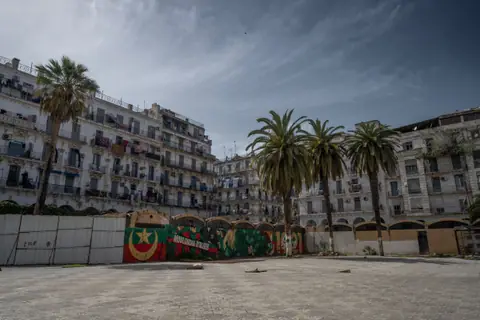
At the bottom of the hill, the Casbah opens onto Place des Martyrs (served directly by Algiers Metro Line 1), where a dense cluster of monuments spans nine centuries:
- Ketchaoua Mosque: originally built in the Ottoman era, reshaped with twin Neo-Byzantine/Moorish bell towers during the French period when it served as the Cathedral of St Philip, and returned to a mosque in 1962; its grand flight of steps and black-and-white marble arcades anchor the square.
- Palais Mustapha Pacha and Dar Aziza: right beside Ketchaoua, the 1798 residence of Dey Mustapha Pacha (now the National Museum of Illumination, Miniature and Calligraphy) dazzles with half a million Dutch, Italian, Tunisian and Spanish ceramic tiles, a marble fountain courtyard and carved cedar ceilings. Across the square stands 16th-century Dar Aziza.
- Djamaa el-Kebir and Djamaa el-Djedid: side by side along the seaward boulevard sit the Great Mosque (1097), featuring scalloped white Almoravid arches, and the whitewashed 1660 New Mosque (Mosquée de la Pêcherie), built on an Ottoman cruciform plan with an ovoid dome.
Bastion 23 (Palais des Raïs)
Finish your walk ten minutes north along the coast at Bastion 23 (Palais des Raïs), the last surviving lower-Casbah quarter standing directly on the sea rocks. This restored complex of three Ottoman corsair admirals' palaces (Palaces 17, 18 and 23) and fishermen's houses lets you wander through marble hammams, tiled domes and sea-facing cannon terraces. Pair your morning here with an afternoon along the white boulevards and Notre-Dame d'Afrique.
Traveller tips
Real advice from people who have been to The Casbah of Algiers, Ketchaoua Mosque and Bastion 23. Every tip is read by our team before it goes live.
No tips yet. Been here? Yours could be the first.
Thank you! Your tip will appear here after a quick review.
More in Algiers
Continue exploring Algiers with related neighbourhood, food, and planning guides