


























Monasterio de Santa Catalina & Barrio de San Lázaro Guide, Arequipa
Explore the 20,000-square-metre walled citadel of the Monasterio de Santa Catalina (1579) in Arequipa, and walk the white volcanic-stone alleys of Barrio de San Lázaro.
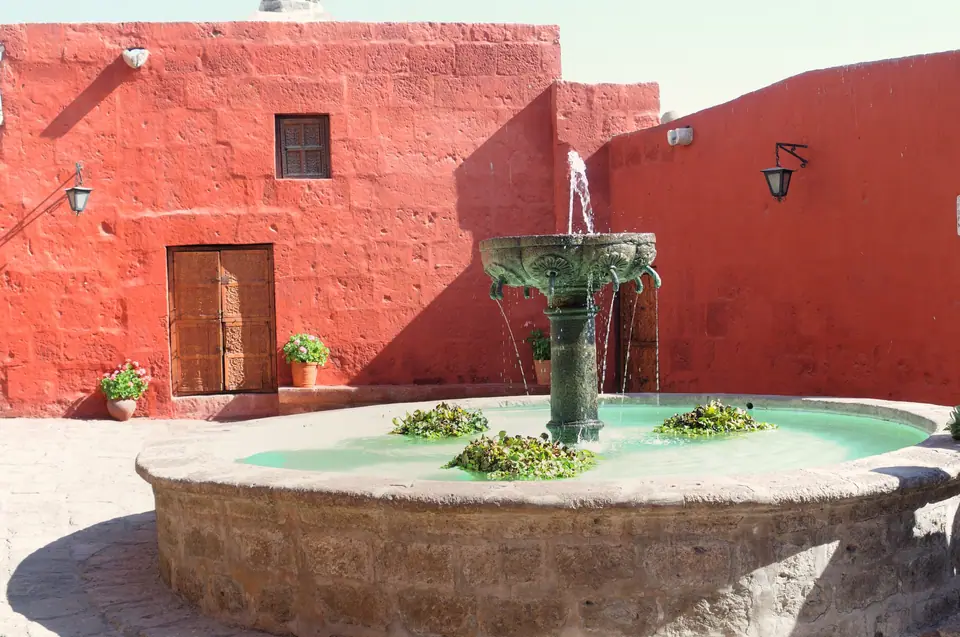
Three blocks north of the Plaza de Armas behind high, windowless walls of volcanic sillar stone stands the single most extraordinary colonial monument in Peru: the Monasterio de Santa Catalina de Siena. Founded on 10 September 1579 by wealthy young widow Doña María de Guzmán with the backing of Viceroy Francisco de Toledo, this cloistered Dominican convent operated for nearly four centuries as a self-contained 20,000-square-metre (two-hectare) citadel within the city, housing the second-born daughters of southern Peru's noble Spanish and Creole families in strict enclosure until its historic streets opened to the public on 15 August 1970.
1. The Three Cloisters: Novicias, Los Naranjos & Claustro Mayor
Entering through the silent Patio del Silencio, your walk traces the spiritual progression of the nuns through three vaulted sillar cloisters:
- Claustro de las Novicias: Austere white volcanic-stone arches where teenage novices spent four years in prayer and study before taking perpetual vows or returning to secular life.
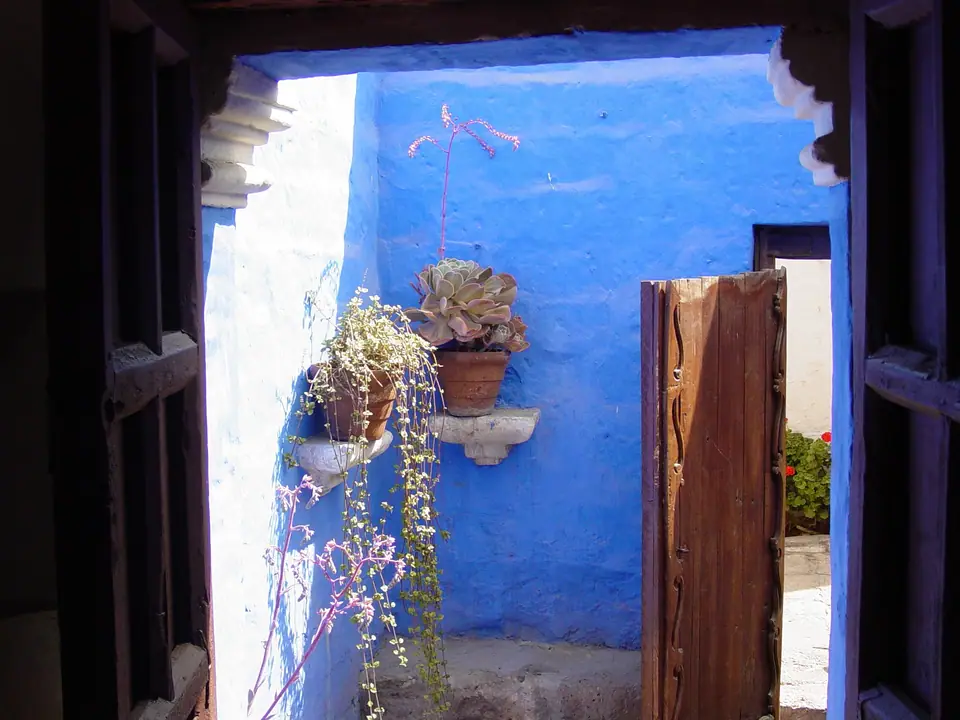
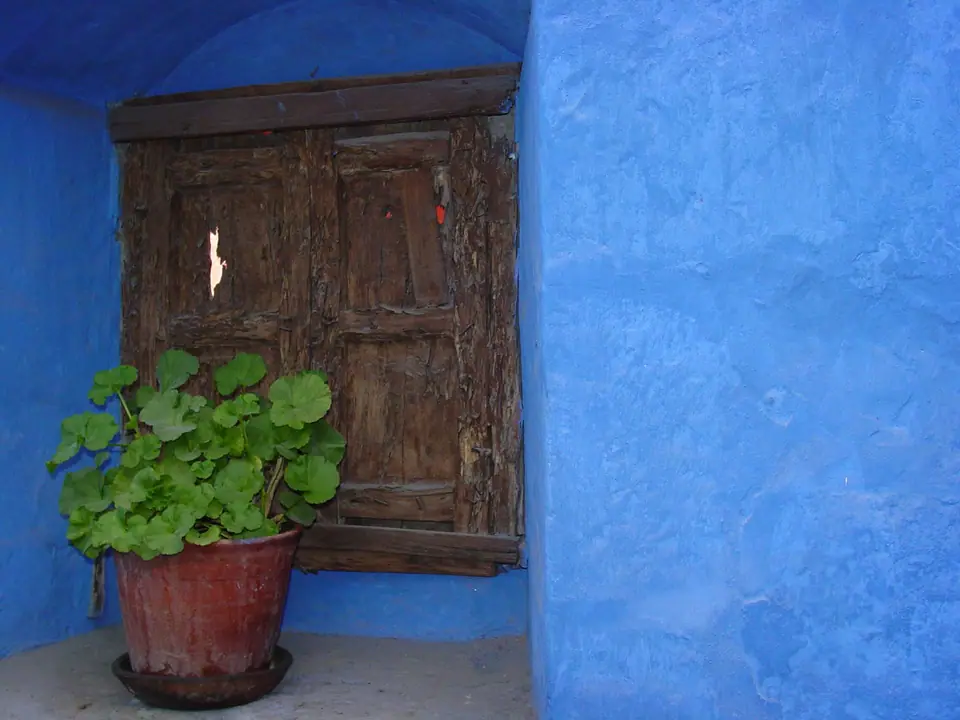
- Claustro de los Naranjos (1738): Painted in intense colonial indigo-blue around courtyard orange trees (symbols of renewal), this cloister houses the Sala de Profundis (wheredeceased nuns lay in state surrounded by life-size portraits) and three small chapels adorned with eighteenth-century biblical murals.
- Claustro Mayor (1715 to 1723): The largest cloister in the convent, lined with twenty-five monumental devotional paintings preparing the community for the sacraments.
2. The Andalusian Streets, Nuns' Townhouses & the Clay Lavandería
Unlike European monasteries where nuns slept in shared dormitories, wealthy families in colonial Arequipa purchased private mini-townhouses (celdas) for their daughters along six cobblestone streets named after Spanish cities (Calle Córdova, Calle Toledo, Calle Burgos, Calle Sevilla, Calle Granada, and Calle Málaga):
- Calle Córdova, Calle Toledo & Plaza Zocodover: Walk between blinding white and deep terracotta-red walls draped in blooming red geraniums, stepping inside multi-room residences complete with parlours, private chapels, servant quarters, and soot-blackened wood-fired stone kitchens.
- The Communal Lavandería (1770) & Rooftop Mirador: At the end of Calle Toledo, a central stone water canal feeds twenty giant half-buried clay wine jars (tinajones) used as individual washing tubs. Climb the adjacent stone staircase to the roof terrace for a panoramic 360-degree view of the convent domes framed by Volcán Misti (5,822 m) and Chachani (6,057 m), and finish inside the cross-shaped vaulted Pinacoteca housing over 400 Cuzco School paintings.
- Candlelit Evening Visits (Tuesdays & Thursdays): Twice a week, the monastery remains open into the evening when wood fires and oil lamps illuminate the sillar streets without electric floodlights; check the official Santa Catalina portal for current daytime and evening hours.
3. Barrio de San Lázaro and Mundo Alpaca
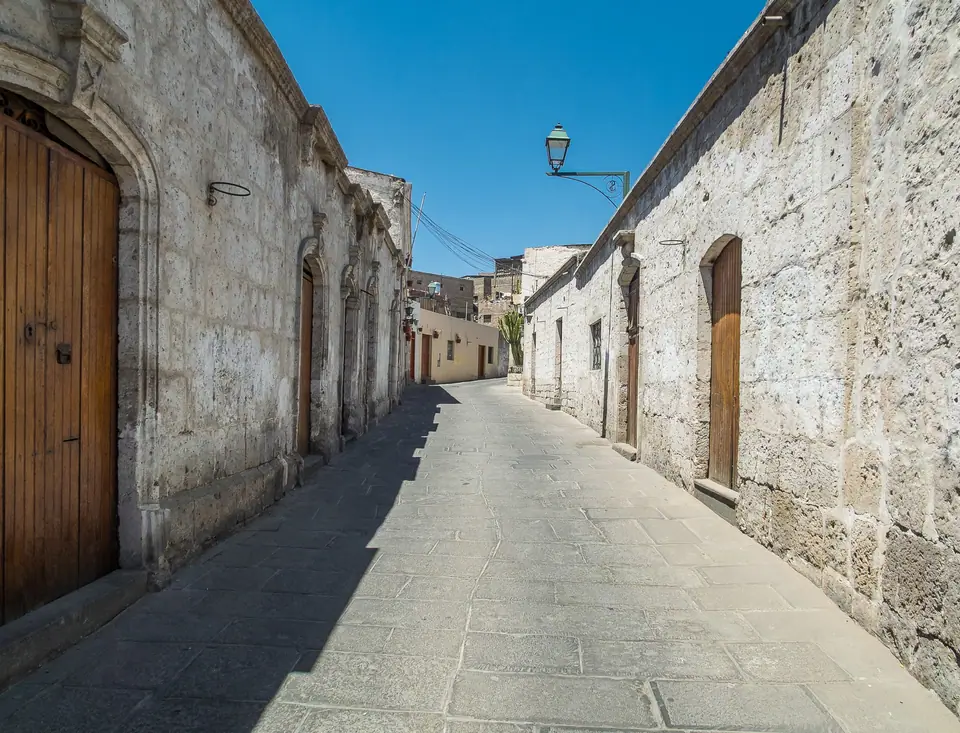
Exit Santa Catalina and walk two blocks north into Barrio de San Lázaro, where pre-Inca Yarabaya irrigation channels and the 1538 Dominican hermitage mark Arequipa's birthplace. Stroll the white pedestrian alleys of Cristales and Bayoneta, then step into free-entry Mundo Alpaca (Alameda San Lázaro 101) to meet live Suri and Huacaya alpacas, watch Quechua weavers work traditional backstrap looms, and visit the Pre-Columbian Textile Museum.
Traveller tips
Real advice from people who have been to Monasterio de Santa Catalina & Barrio de San Lázaro Guide, Arequipa. Every tip is read by our team before it goes live.
No tips yet. Been here? Yours could be the first.
Thank you! Your tip will appear here after a quick review.
More in Arequipa
Continue exploring Arequipa with related neighbourhood, food, and planning guides
12 Best Things to Do in Arequipa: Santa Catalina, Juanita, Sillar & Colca Canyon
Arequipa, Peru
How to Get to Arequipa: Rodríguez Ballón Airport (AQP), Buses & Andean Train
Arequipa, Peru
Best Time to Visit Arequipa: 300 Sunny Days, Dry Season & August Festival
Arequipa, Peru
Where to Stay in Arequipa: UNESCO Centro Histórico, San Lázaro & Yanahuara
Arequipa, Peru
