Banjul: What to Know Before You Go
How Banjul Island connects to the coastal beaches, cash rules, greetings and birdwatching etiquette.
Short answer: understand that historic Banjul sits on a sandbank island linked by Denton Bridge to the Atlantic beach resorts 10 to 20 km west, carry cash for almost all daily transactions, check whether your flight ticket includes the airport security fee, and start every interaction with a warm greeting.
Banjul Island versus the Kombo Atlantic Coast
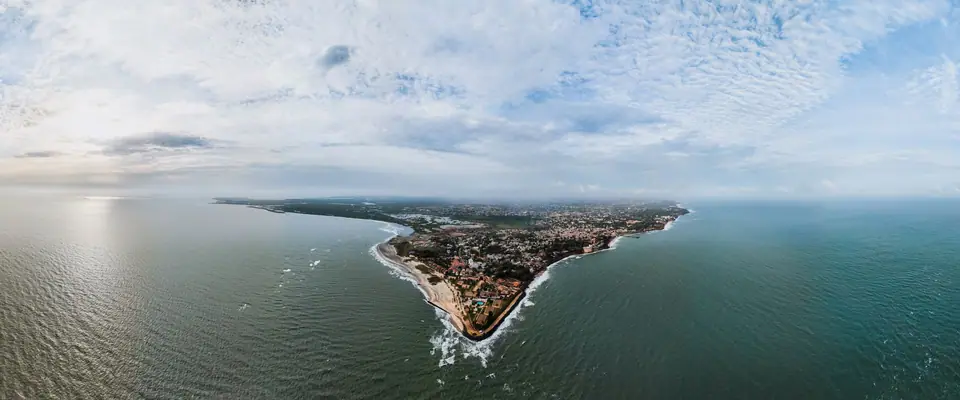
When planning your days, keep the geography of Greater Banjul clear in your mind. The official capital, Banjul (formerly Bathurst), occupies compact St Mary's Island at the mouth of the Gambia River, home to Arch 22, the National Museum, Albert Market and the Barra ferry terminal. Separated from the island by the mangrove channels of Oyster Creek and Denton Bridge lies the mainland Kombo peninsula, where you will find the coastal hotel neighbourhoods of Bakau, Cape Point, Fajara, Kotu and Kololi as well as Abuko Nature Reserve and Bijilo Forest Park. You can easily explore Banjul Island in half a day from any coastal hotel.
Cash economy, airport fees and official guides
The Gambia remains overwhelmingly a cash economy. Aside from a handful of large resort hotels in Kololi and Kotu that accept Visa cards (often with a card surcharge), restaurants, craft markets, reserve entry gates, riverboats and taxis require cash in local notes. Bring clean, untorn foreign banknotes (issued in recent years) to exchange at licensed bureaux in Bakau, Kotu or Senegambia, or use Visa-compatible ATMs. At Banjul International Airport, international passengers on certain charter or regional flights may be asked to pay a mandatory arrival/departure airport security fee if it is not already bundled into their airline ticket; keep a crisp banknote in your travel wallet just in case.
Greetings on the Smiling Coast
English is the official language and is spoken widely everywhere. Adding a few words of Mandinka (I beenday for good morning, Kayraba for peace, Abaraka for thank you) or Wolof (Nanga def? for how are you, Jërëjëf for thank you) is warmly appreciated across the country.
Traveller tips
Real advice from people who have been to Banjul: What to Know Before You Go. Every tip is read by our team before it goes live.
No tips yet. Been here? Yours could be the first.
Thank you! Your tip will appear here after a quick review.
More in Banjul
Continue exploring Banjul with related neighbourhood, food, and planning guides