


























Photo: Vaivoda Vlad · CC BY-SA 3.0 ro
Arcul de Triumf, the Village Museum and Bucharest Parks
Timber farmsteads and Maramures steeples beside Herastrau Lake, monumental Kiseleff avenues, Cismigiu rowboats, and southern Carol Park.
Stepping northwest off Piata Victoriei reveals a calmer, leafy Bucharest built for shaded walking rather than tight cobblestone dodging. Laid out in 1832 beside diplomatic embassies and Neo-Romanian villas by Pavel Kiseleff, broad chestnut-lined Soseaua Kiseleff runs from Dorobanti past the Arcul de Triumf toward King Michael I Park and the National Village Museum. Gentle residential garden blocks contrast sharply with crowded medieval streets south of Piata Revolutiei. Combining northern parklands with central Cismigiu Gardens balances dense city sightseeing cleanly across warm weekends.
Arcul de Triumf and roundabout crossing safety
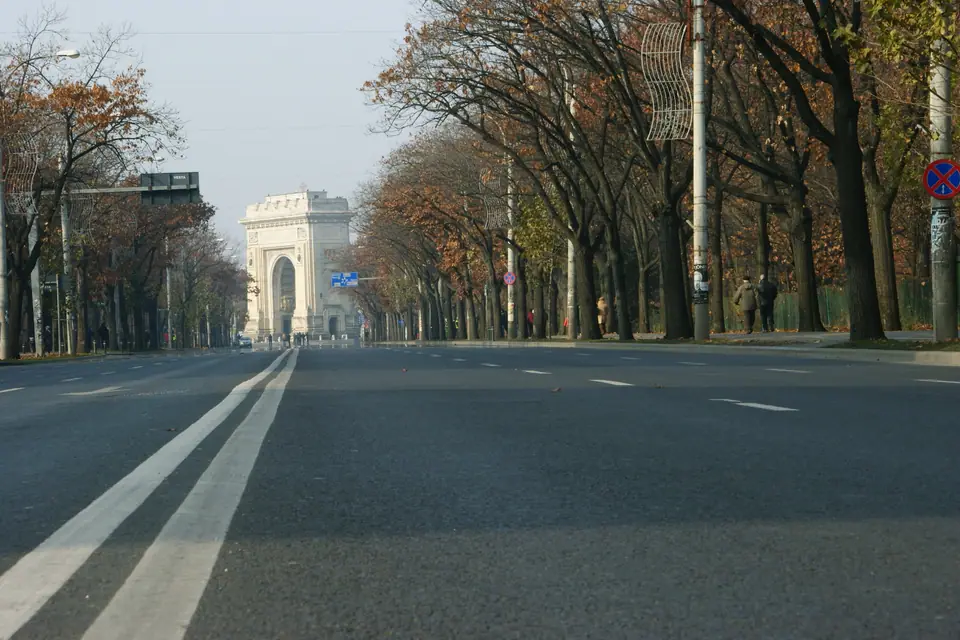
Bucharest's stone triumphal arch rises 27 metres above a fast roundabout. Commissioned to honour First World War soldiers and Romania's 1918 national unification, the Ruschita-marble monument succeeded two temporary predecessors. An 1878 timber independence arch preceded architect Petre Antonescu's stuccoed concrete structure erected in 1922. Antonescu returned to inaugurate today's permanent carved stone arch on 1 December 1936. Busy multi-lane traffic streams continuously across Piata Arcul de Triumf, linking Soseaua Kiseleff, Bulevardul Constantin Prezan, Bulevardul Alexandru Averescu, and Bulevardul Maresal Alexandru Averescu. Never dart across circular lanes toward central stonework. Wait at signalised pedestrian crossings to reach inner pavement safely. Interior spiral stairs open to the rooftop terrace on selected fair-weather weekends and national holidays via the Bucharest Municipality Museum, whereas 1 December military parades seal surrounding avenues completely.
Dimitrie Gusti National Village Museum
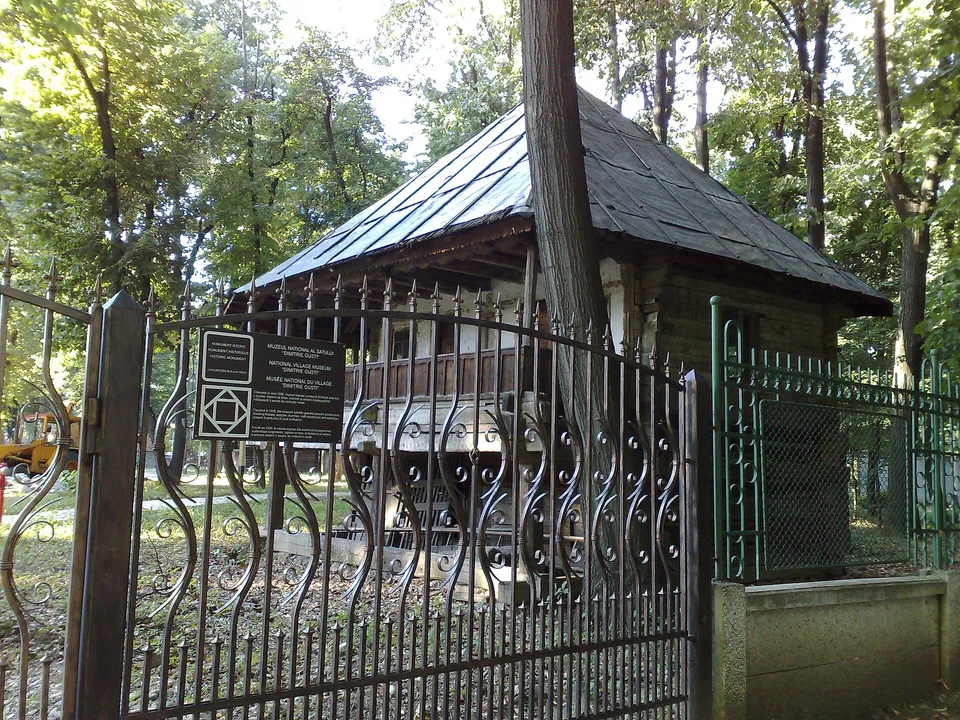
Steps northeast down Soseaua Kiseleff 28-30 opens one of Europe's earliest open-air ethnographic reserves. Sociologist Dimitrie Gusti, ethnographer Henri H. Stahl, and playwright Victor Ion Popa founded the collection under Royal Foundation patronage (Fundatia Culturala Regala Principele Carol). Gates welcomed visitors on 10 May 1936 along a shady western bank beside Lake Herastrau. Spanning over 10 hectares, Muzeul National al Satului preserves more than 300 authentic cottages, timber windmills, watermills, and wooden churches carried piece by piece across rural Romania. Walkers compare centuries of contrasting regional timber and masonry craft during one quiet afternoon stroll. Peer inside half-subterranean Castranova bordei earth dwellings built low against fierce plain winter winds. Climb whitewashed Oltenian fortified manor steps (cule), inspect thatched Danube Delta fisherman huts, and gaze up beneath steep shingled Maramures wooden churches brought from Dragomiresti.
Broad gravel and compacted earth paths suit sturdy trainers comfortably while offering dense oak canopy shade across warm months discussed in our seasonal calendar. Most timber and stone farmsteads open front porches or wide windows along primary lakeside routes for close architectural study without climbing awkward thresholds. Allow at least two unhurried hours to walk cleanly between contrasting mountain valleys and southern plains sections. Traditional folk craft fairs routinely draw regional potters, woodcarvers, and textile weavers onto grassy open-air compounds on spring and autumn weekends. Check daily building access on muzeul-satului.ro ahead of Monday visits, when attendants traditionally pause indoor house access even while shaded outdoor park trails remain open.
King Michael I Park (Herastrau Lake)
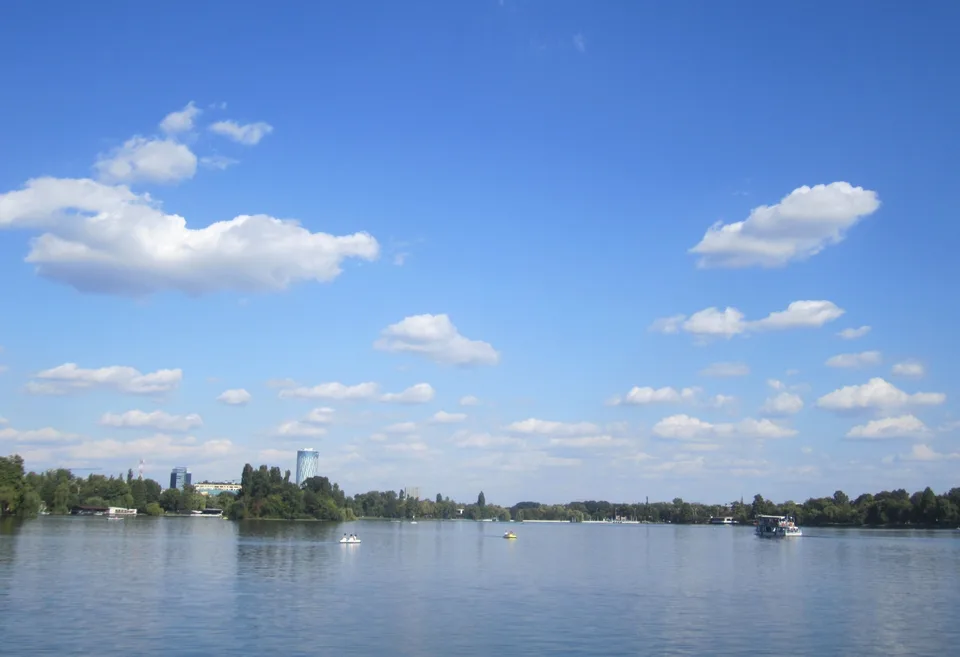
King Michael I Park wraps 74-hectare Lake Herastrau immediately east of the Village Museum. Fed by the Colentina river chain and spoken of universally by residents as Herastrau Park, it stands as Bucharest's largest continuous urban parkland at roughly 187 hectares. Inaugurated in 1936 after extensive marshland drainage directed by engineer Nicolae Caranfil, contrasting shorelines suit distinct daily paces. Open-air lakeside cafés, cycle hires, and excursion boat piers cluster along lively northern docks and the eastern gateway near Charles de Gaulle Square by Aviatorilor Metro (M2). Quieter visitors stroll west onto tranquil Insula Trandafirilor flower lawns or trace the paved six-kilometre perimeter loop well clear of amplified weekend terraces. Dense riverside plane and willow trees offer cool waterside air whenever wide avenues across central sectors bake beneath hot afternoon sun.
Central shade in Cismigiu Gardens
Central stays near Calea Victoriei enjoy instant tree shade without stepping aboard a metro train. Laid out between 1845 and 1847 by German landscape architect Karl Friedrich Wilhelm Meyer and officially opened on 23 September 1847, 14.6-hectare Cismigiu Gardens remains Bucharest's oldest public park garden. Friedrich Rebhuhn added formal geometric flower beds in 1910 between Bulevardul Regina Elisabeta and Bulevardul Schitu Magureanu. Winding lakeside walkways pass curved stone bridge viewpoints, the circular Writers' Rotunda honouring Romanian authors, and quiet tree-shaded chess tables where regular locals linger every afternoon. Wooden rowboats hire from spring through autumn across the central water basin just a five-minute walk west of Universitate (M2).
Quieter gardens in Carol Park and Cotroceni
Two peaceful historic sanctuaries sit well clear of busy Sunday boat piers around Herastrau Lake:
- Parcul Carol I (Sector 4): inaugurated in 1906 to plans by French landscape designer Edouard Redont south of Piata Unirii. Formal granite and stone terraces climb past quiet reflecting basins toward the Tomb of the Unknown Soldier, framed by sweeping hilltop panoramas across central church domes.
- Dimitrie Brandza Botanical Garden: laid out across 18.2 hillside hectares at Soseaua Cotroceni 32 in 1884 right next door to quiet Cotroceni villas. Restored Victorian iron greenhouses, labelled specimen trees, and fragrant seasonal rose beds sit within an easy five-minute walk from Grozavesti or Eroilor stations.
Where it is
- 1Arcul de Triumf, the Village Museum and Bucharest Parks
- Bucharest Henri Coandă International Airport (OTP) · about 11 km from here in a straight line
- Directions in Google Maps
Stations and taxi ranks: OpenStreetMap. Airports: OurAirports. Distances are in a straight line.
Traveller tips
Real advice from people who have been to Bucharest. Every tip is read by our team before it goes live.
No tips yet. Been here? Yours could be the first.
Thank you! Your tip will appear here after a quick review.
More in Bucharest
Continue exploring Bucharest with related neighbourhood, food, and planning guides
What to Eat in Bucharest: Mititei, Ciorba and Historic Halls
Bucharest, Romania
Palace of the Parliament: History, Scale and Booking Rules
Bucharest, Romania
Lipscani Old Town and the Romanian Athenaeum: Historic Walk
Bucharest, Romania
Sinaia, Peles Castle and Bran Excursions from Bucharest
Bucharest, Romania
