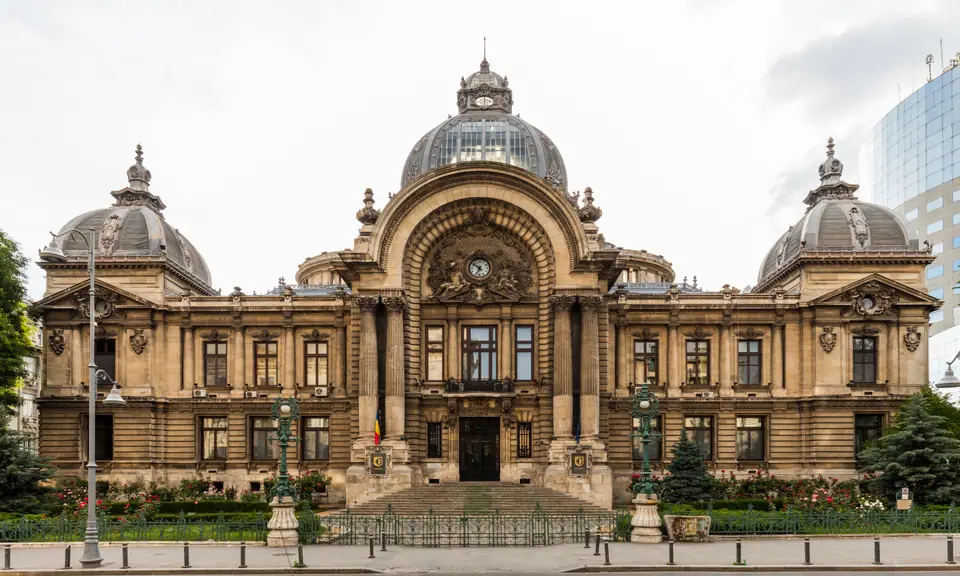
Photo: Diego Delso · CC BY-SA 4.0
Bucharest: Palaces, Concrete and Hidden Courtyards
How to read Bucharest without rushing: four architectural eras, current museum realities, everyday cash habits, and a clear plan across central avenues.
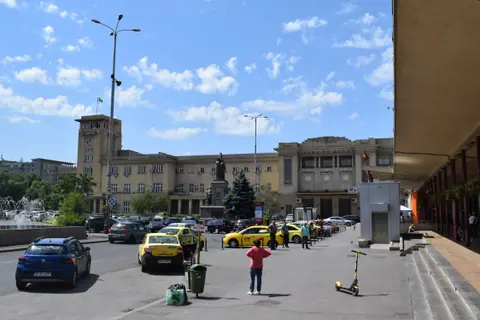
No single skyline view prepares a newcomer for Bucharest (boo-koo-RESHT). Documented in a 20 September 1459 charter issued by Prince Vlad III, Romania's capital wears five centuries of upheaval openly along its wide boulevards. Within a twenty-minute walk, painted 18th-century Orthodox courtyards tuck behind French Beaux-Arts domes. Weathered interwar Bauhaus terraces stand beside specialty espresso bars, while colossal 1980s concrete avenues frame views toward the Dambovita canal.
Reading the city's four urban layers
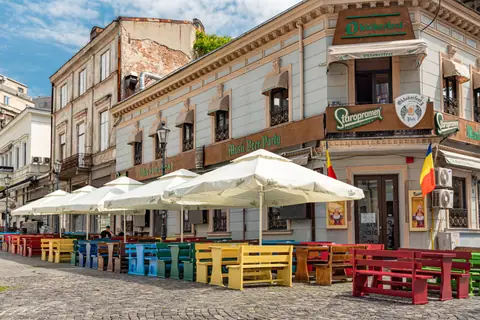
Four distinct building eras explain the streetscape fast. South of Bulevardul Regina Elisabeta, Lipscani keeps the winding lane plan of medieval guild merchants. That compact quarter is anchored by 1724 Brancovenesc stone carving at Stavropoleos Monastery and the 1808 merchant inn at Hanu' lui Manuc. Northward stretches 2.7-kilometre Calea Victoriei, laid down in 1692 as oak-paved Podul Mogosoaiei.
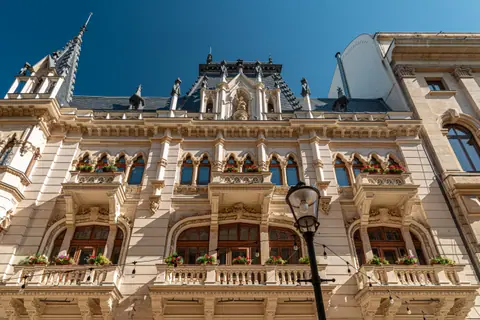
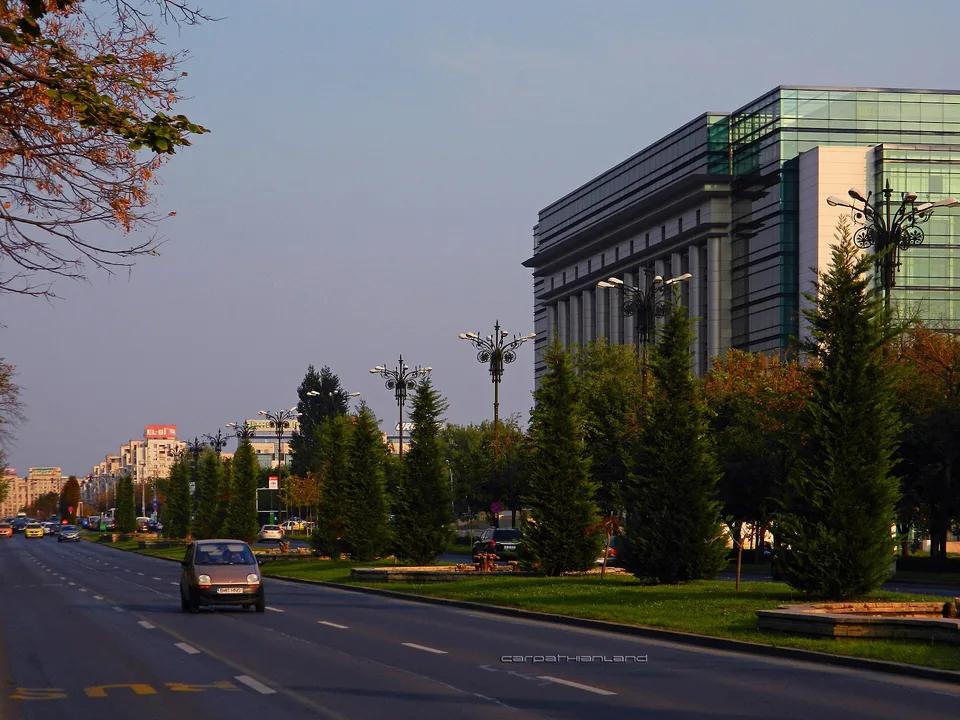
Wealthy nineteenth-century financiers hired Parisian-trained architects such as Albert Galleron and Paul Gottereau to raise banking palaces and concert rotundas along its curve. Between the two World Wars, local architects shifted toward sleek Modernist flats around Bulevardul Magheru and garden villas across Cotroceni and Dorobanti. Finally, the 1980s Centrul Civic campaign razed roughly seven square kilometres of southern hillsides to build Bulevardul Unirii and the Palace of the Parliament.
Getting oriented across six sectors and one central spine
Bucharest divides radially into six counter-clockwise sectors. Sector 1 occupies the north, spinning smoothly around to Sector 6 in the west. All six borders meet near Piata Unirii and University Square. Forget memorising every lane on paper and anchor instead to two north-south corridors stitched together by Metrorex Blue Line M2. On the eastern rim of the centre, M2 runs straight beneath Piata Victoriei, Piata Romana, Piata Universitatii, and Piata Unirii. Paralleling M2 a few hundred metres west sits Calea Victoriei, where fair-weather weekends from April through October host Strazi Deschise and clear motor cars off the carriageway.
- Begin at Piata Unirii: stand beside the sweeping fountains where Metro lines M1, M2, and M3 intersect Airport Express Bus 100.
- Thread north through Lipscani: pass Hanu' lui Manuc, peek at fenced exterior ruins at Curtea Veche from Strada Franceza, and step inside quiet Stavropoleos Monastery.
- Cross onto Calea Victoriei: pause opposite the 1900 CEC Palace dome, wander amber-roofed Macca-Vilacrosse Passage, and inspect Piata Revolutiei beside the former Royal Palace.
- Finish at the Athenaeum: catch warm afternoon light across the Ionic portico of Ateneul Roman before riding M2 north toward Herastrau Park.
Schengen borders, lei currency, and phonetic basics
Cross-border travel smoothed out in 2024 and 2025. Romania joined Schengen air and sea corridors on 31 March 2024 and ended internal Schengen land border checks on 1 January 2025. Overland rail services from Budapest and international coaches cross western frontiers without routine passport halts. Physical photo identification stays compulsory for hotel registration and security-screened landmarks, however. Despite EU membership, daily spending uses the Romanian leu (RON, plural lei), never the euro.
Contactless Visa and Mastercard cards plus phone wallets work seamlessly across Metrorex gates, blue surface validators, bookshops, and dining halls. Keeping a modest pocketful of small RON notes still helps at Piata Obor market stalls and corner simigeria pastry windows. Basic street phonetics make station calls easier to catch. Calea Victoriei reads KAH-lyah veek-TOHR-yay, Piata Unirii sounds like PYAH-tsah oo-NEE-ree, Lipscani runs leep-SKAHN, and Gara de Nord stays close to GAH-rah deh nohrd. In any urgent medical, fire, or police emergency, dial 112.
Important 2025 and 2026 visitor caveats
- Curtea Veche stays closed indoors: Bucharest's Old Princely Court Museum shut its underground rooms on 18 November 2015 due to structural degradation. Conservation fencing remains in place, leaving perimeter stonework and the Vlad Tepes bust visible from Strada Franceza outside.
- National Museum of History partial openings: inside the former Postal Palace at Calea Victoriei 12, MNIR operates partial galleries. Displays feature its Historical Treasury gold, Lapidarium, and plaster Trajan's Column cast ahead of major restoration planned toward 2028.
- Parliament tour paperwork: Palace of the Parliament guided tours admit guests strictly through Strada Izvor 2-4 after telephone or email booking. Guards enforce original passports or EU national identity cards, rejecting photocopies and driving licences outright.
- Drinking water habits: municipal water meets European treatment rules, yet residents routinely pour filtered or bottled water because ageing apartment plumbing imparts a mild mineral taste.
Pacing your stay across city and mountains
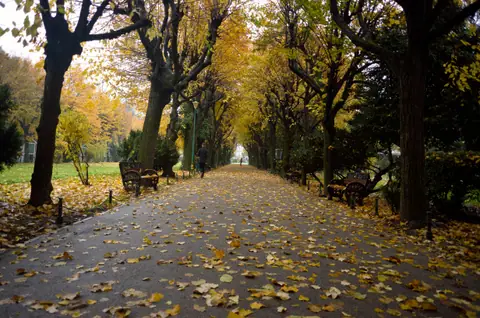
Three full days give Bucharest comfortable breathing room. Dedicate day one to Lipscani cobblestones, Stavropoleos courtyard, and Calea Victoriei art collections. Spend day two inside the Palace of the Parliament before afternoon shade in Cotroceni or Cismigiu Gardens. Devote day three to the Arcul de Triumf, Herastrau Park, and the rural cottages of the Dimitrie Gusti National Village Museum. Stretching a stay to four or five nights leaves ample morning train space via Gara de Nord into Carpathian Sinaia and Brasov without weekend road delays.
Regional gateways beyond Romania
Overnight sleepers out of Gara de Nord link cleanly into Europe. Trains roll northwest toward Budapest and Vienna, while seasonal direct coaches and rail links head south to Istanbul. Short regional flights reach Krakow and Prague swiftly, bridging Habsburg boulevards and Ottoman heritage.
Where it is
- 1Bucharest
- Bucharest Henri Coandă International Airport (OTP) · about 16 km from Bucharest in a straight line
- Directions in Google Maps
Stations and taxi ranks: OpenStreetMap. Airports: OurAirports. Distances are in a straight line.
Traveller tips
Real advice from people who have been to Bucharest. Every tip is read by our team before it goes live.
No tips yet. Been here? Yours could be the first.
Thank you! Your tip will appear here after a quick review.
More in Bucharest
Continue exploring Bucharest with related neighbourhood, food, and planning guides