Colombo
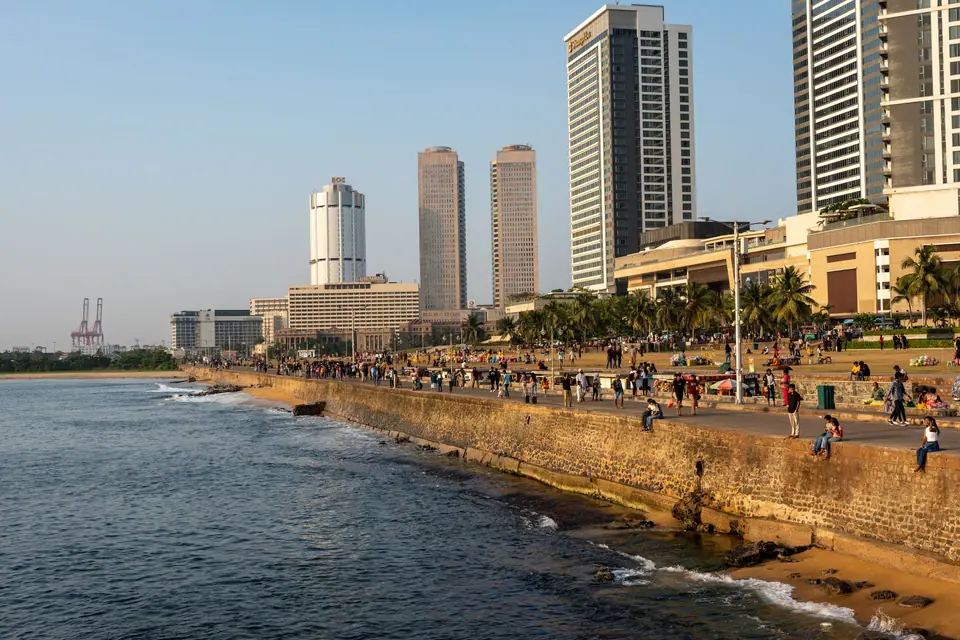
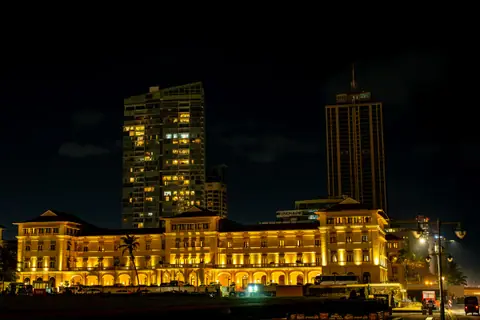
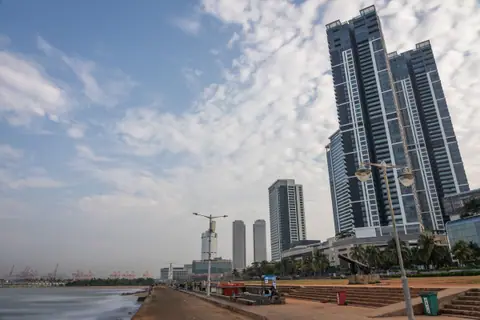
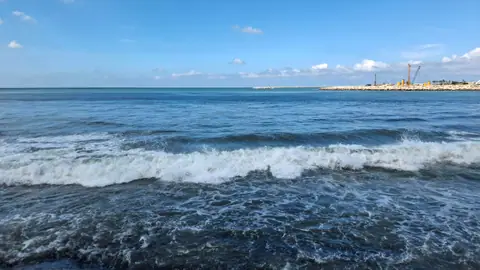
Indian Ocean breezes sweeping across Galle Face Green, candy-striped brickwork in Pettah Bazaar, Geoffrey Bawa's lakeside pavilions, colonial verandahs in Fort and spicy hopper feasts.
Quick decisions
How many days?
2 to 3 days: Fort, the Old Dutch Hospital, Pettah Bazaar and Galle Face Green on day one, Gangaramaya Temple, Seema Malaka and Cinnamon Gardens on day two, plus Geoffrey Bawa's Number 11 and Mount Lavinia or a train south on day three. Follow our three-day route.
Where should I stay?
Galle Face and Fort (Colombo 1 & 3): ocean sunsets and walking access to the station. Cinnamon Gardens (Colombo 7): leafy embassy avenues and boutique bungalows. Compare areas in our neighbourhood overview.
Do I need a car?
No. Within numbered city zones, app-hailed three-wheelers (PickMe and Uber) are cheap, metered and quick, while Colombo Fort Railway Station connects you directly to Kandy, Ella and Galle.
Best for
Tropical modernism: the architectural legacy of Geoffrey Bawa around Beira Lake and Colombo 3. Street food lovers: crisp bowl-shaped hoppers, kottu roti and spicy isso vade by the sea. Rail travellers: starting highland and coastal train journeys.
Before you go
Download PickMe and book highland trains ahead: app tuk-tuks spare you street bargaining, and reserved seats on Kandy and Ella trains sell out early. Read our practical briefing.
Getting around
From Bandaranaike Airport (CMB): the Katunayake Expressway (E03) brings airport taxis and express buses straight into Colombo in about 45 minutes. Details in arrival and transport.
Continue your trip
Colombo Fort Railway Station is the hub of Sri Lanka Railways, with scenic coastal trains running south along the Indian Ocean to Bentota and Galle, and Main Line trains climbing into the tea country of Kandy, Nanu Oya and Ella.
Overview
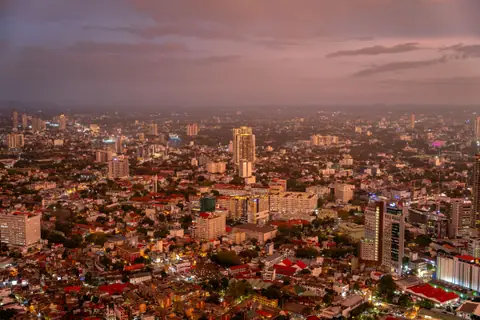
Too many travellers treat Sri Lanka's oceanfront capital solely as a transit stop between the airport and the southern beaches or highland tea estates. Give Colombo forty-eight hours and a far richer portrait emerges: trading lanes in Pettah shaped by Moorish, Tamil, Dutch and British merchants, kite-flyers and prawn-cake carts along the seafront lawn of Galle Face Green, and the tranquil tropical modernism of architect Geoffrey Bawa floating on Beira Lake.
Organized into fifteen numbered postal districts from Colombo 1 (Fort) south along the Indian Ocean coast and inland through leafy Colombo 7 (Cinnamon Gardens), the city is easy to navigate by app tuk-tuk. Start with our first-timer briefing and Sri Lankan food overview.
Getting there
Bandaranaike International Airport (CMB) at Katunayake lies 32 kilometres north of central Colombo and connects via the modern E03 toll expressway in 40 to 50 minutes. For onward island travel, historic Colombo Fort Railway Station sits right between the harbour district and Pettah Bazaar, serving both the Main Line up to Kandy and Ella and the Coastal Line down to Galle. See how to get to Colombo and around.
Where to stay
Sleeping along the Galle Face oceanfront or in Fort puts evening sea breezes, the Old Dutch Hospital restaurants and the main railway station within easy walking distance, whereas leafy Cinnamon Gardens (Colombo 7) and Kollupitiya (Colombo 3) offer quiet garden boutiques and gallery cafes. Compare all main postal zones in where to stay in Colombo.
Things to do
Wander the specialist merchant streets of Pettah Bazaar to the pomegranate-red domes of Jami Ul-Alfar Mosque, walk across the wooden bridges of Geoffrey Bawa's Seema Malaka shrine on Beira Lake beside Gangaramaya Temple and the National Museum, and join families at sunset on Galle Face Green. See the full list in things to do in Colombo.
Food and drink
Colombo is the finest place on the island to explore every strand of Sri Lankan cooking in a single day: fermented rice-and-coconut appa (hoppers) cradling a soft egg, chopped flatbread kottu roti rhythmic on iron griddles, banana-leaf lamprais parcels inherited from the Dutch Burgher community, fiery Jaffna crab curry and lentil-and-prawn isso vade fritters on the seawall. Read where to eat in hoppers, kottu and lagoon crab in Colombo.
Culture
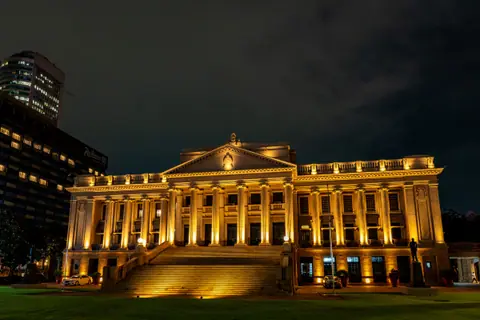
For over two thousand years, Colombo's natural harbour near the mouth of the Kelani River drew Arab, Persian, Chinese and South Indian cinnamon traders before successive Portuguese, Dutch and British administrations left behind Verandah courtyards, red-brick colonnades and railway stations. In the mid-20th century, Colombo-born architect Geoffrey Bawa fused those courtyard traditions with clean modernist lines, inventing the indoor-outdoor tropical style now copied across Asia.
Weather by month
Colombo is warmest in March, with average highs around 32°C, and coldest in January, when nights drop to about 23°C. October is the wettest month, with rain on about 19 days.
| Month | Low | Range | High | Rain | Rainy days |
|---|---|---|---|---|---|
| Jan | 23°C | 31°C | 68 mm | 5 d | |
| Feb | 23°C | 31°C | 62 mm | 5 d | |
| Mar | 24°C | 32°C | 118 mm | 8 d | |
| Apr | 25°C | 32°C | 234 mm | 14 d | |
| May | 26°C | 31°C | 348 mm | 18 d | |
| Jun | 26°C | 30°C | 212 mm | 16 d | |
| Jul | 26°C | 30°C | 138 mm | 12 d | |
| Aug | 26°C | 30°C | 116 mm | 11 d | |
| Sep | 25°C | 30°C | 224 mm | 15 d | |
| Oct | 24°C | 30°C | 356 mm | 19 d | |
| Nov | 24°C | 30°C | 308 mm | 16 d | |
| Dec | 23°C | 31°C | 152 mm | 10 d |
Averages of daily values from 2015 to 2024. Rainy days are days with at least 1 mm of rain. Source: Open-Meteo · Compare destinations by month.
Colombo on the map
Every place we cover in Colombo. Tap a category or pin to explore.
In-depth Colombo guides
Browse the guides grouped by topic: sights, neighbourhoods, food, transport, day trips and trip planning.
Sights, Landmarks & Parks
Key monuments, viewpoints, museums and nature trails.
- Best Things to Do in ColomboOceanfront sunset walks, striped mosques in Pettah, lakeside Buddhist pavilions and tropical modernism.
- Fort, the Old Dutch Hospital, Pettah Bazaar and Galle Face GreenExploring colonial Fort, the merchant streets of Pettah and sunset along Galle Face Green.
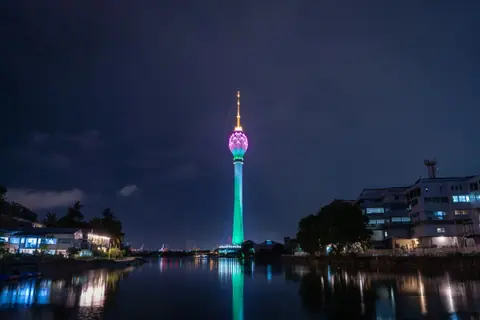
- Gangaramaya Temple, Seema Malaka, Geoffrey Bawa and Cinnamon GardensLakeside temples, Geoffrey Bawa's tropical modernist architecture and the museums of Colombo 7.
Neighbourhoods & Where to Stay
Districts, historic quarters and the best bases for your stay.
Food & Drink
Local dishes, markets, cafés and dining districts.
Getting Around & Arrival
Airport transfers, public transit, passes and driving rules.
Trip Planning & Itineraries
When to visit, what to pack and day-by-day routes.
- Colombo: What to Know Before You GoNavigating Colombo's numbered postal districts, app-hailed tuk-tuks, Poya day customs and train tickets.
- Best Time to Visit ColomboChoosing between the sunny January to March dry season, festive February and May, and monsoon months.
- What to Wear in ColomboLightweight natural fabrics for equatorial warmth, temple dress etiquette and slip-on footwear.
- Colombo 3-Day Itinerary: Pettah, Bawa Architecture and Ocean SunsetsA balanced three-day route covering historic Fort and Pettah, Beira Lake, Geoffrey Bawa and coastal rail.
Need your embassy or consulate in Sri Lanka? See embassies and consulates in Sri Lanka.
Reviews
Log in to write a review.
No reviews yet.