


























Dubai
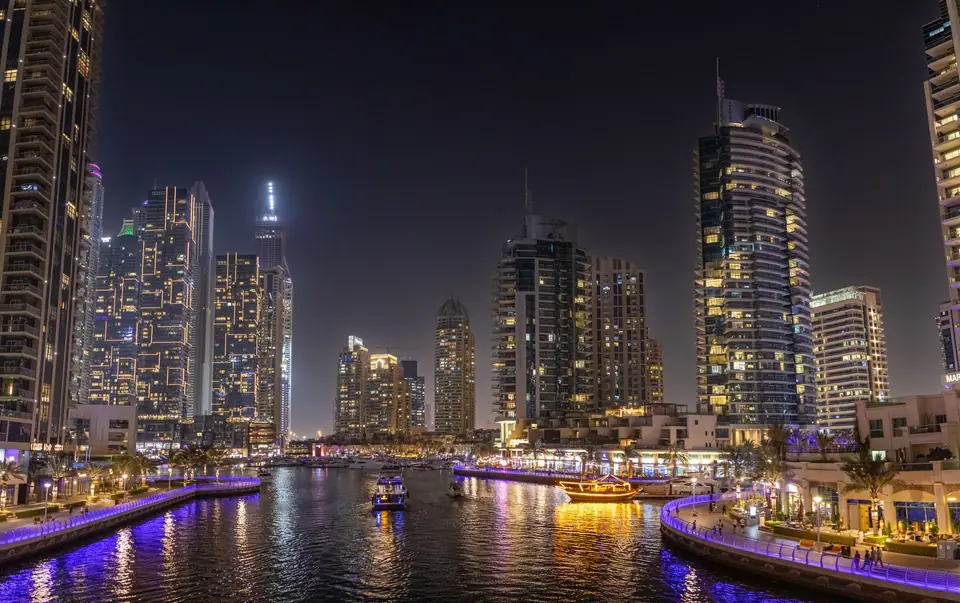
Record-breaking glass towers around the Burj Khalifa, coral-stone wind-tower lanes and wooden abra boats on Dubai Creek, and red desert dunes an hour inland.
Quick decisions
How many days?
3 to 4 days: Old Dubai and Dubai Creek abras, Downtown and Burj Khalifa, Dubai Marina and the Palm, plus an afternoon and evening in the desert conservation dunes. Follow our three-day route.
Where should I stay?
Downtown Dubai: central for Burj Khalifa, the Metro and Old Dubai. Dubai Marina or JBR: walkable waterfront promenades and beach clubs. Al Seef / Creek: heritage charm and lower nightly rates. Compare districts in our neighbourhood guide.
Do I need a car?
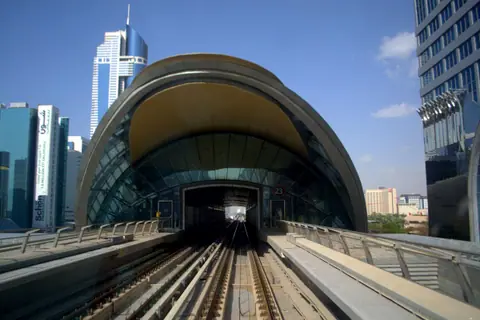
No. Dubai is stretched out along a 35 km coastal highway, but the driverless Red and Green Metro lines, regulated RTA taxis and ride apps (Careem and Uber) are fast, air-conditioned and far easier than navigating multi-lane interchanges.
Best for
Winter sun: warm beach and pool weather from November to March. Architecture: the world's tallest tower and the calligraphy-carved Museum of the Future. Old-meets-new contrast: spice souks and wooden boats twenty minutes from futuristic skyscrapers.
Before you go
Book timed slots ahead: both the Museum of the Future and sunset slots at Burj Khalifa (At the Top) sell out days or weeks early. Metro rules: carry a Silver or Gold Nol card and watch which carriage you board. Read our practical briefing.
Getting around
From Dubai International Airport (DXB): the Red Line Metro runs straight from Terminals 1 and 3 into Deira, Downtown and Dubai Marina, or take a metered cream RTA taxi. Details in arrival and transport.
Continue your trip
Abu Dhabi (for the Sheikh Zayed Grand Mosque and Louvre Abu Dhabi) is 90 minutes south-west by E100/E101 intercity coach or taxi, and the rocky Hajar Mountains of Hatta sit 90 minutes east near the Omani border.
Overview
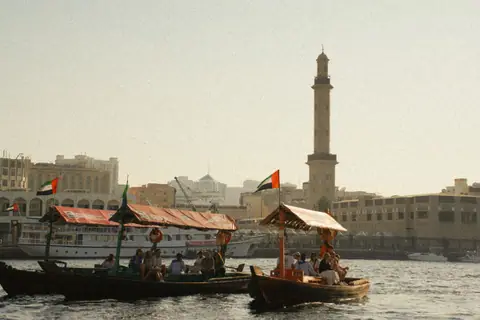
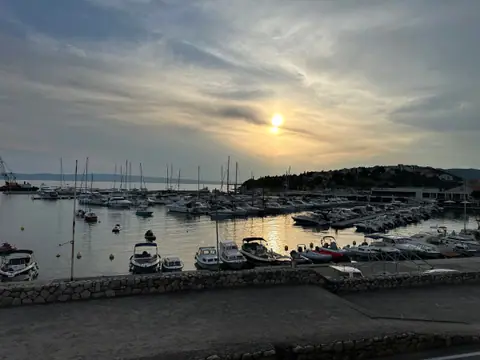
Dubai is really two cities strung along the Arabian Gulf coast. At the northern end sits historic Old Dubai around the saltwater Khor Dubai (Dubai Creek), where wooden dhows still tie up three deep at the wharf, coral-and-gypsum wind-tower houses shade the alleys of Al Fahidi, and traditional wooden abras ferry passengers between the Gold and Spice Souks of Deira and the textile lanes of Bur Dubai.
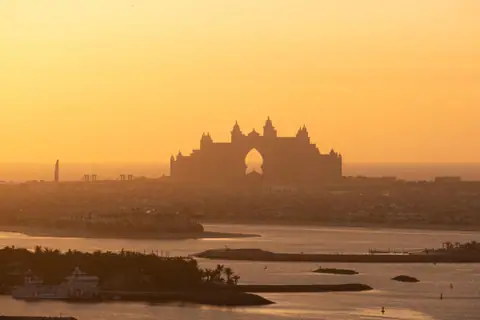
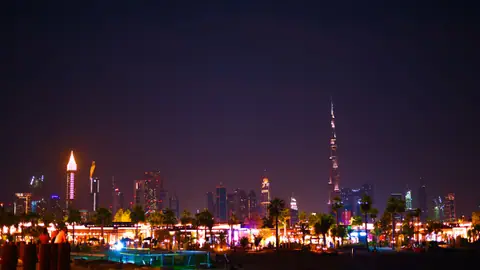
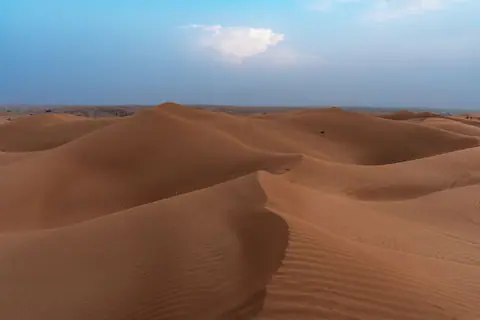
Drive twenty minutes south down Sheikh Zayed Road and the scale leaps into the 21st century: first the torus-shaped Museum of the Future and the soaring needle of the Burj Khalifa in Downtown Dubai, then the man-made fronds of Palm Jumeirah and the high-rise canal of Dubai Marina, with rolling red desert dunes forty-five minutes inland. Start with our first-timer briefing.
Getting there
Dubai International Airport (DXB) sits remarkably close to the city (just 15 minutes from Old Dubai and 20 minutes from Downtown), with Red Line Metro stations built directly into Terminal 1 and Terminal 3. A second airport, Al Maktoum International (DWC) in Dubai South, lies further south near Expo City. All airport links, Nol card rules and Careem tips are in how to get to Dubai.
Where to stay
Because Dubai stretches over 35 kilometres from Deira in the north-east to Dubai Marina in the south-west, picking the wrong base means spending hours in evening traffic. Stay in Downtown Dubai for sightseeing and Metro access, Dubai Marina/JBR for beachfront walks, or Al Seef/Jumeirah for quieter character. We compare six areas in where to stay in Dubai.
Things to do
Cross Dubai Creek on a traditional wooden abra and walk the Al Fahidi Historic District, book sunset or morning views at the Burj Khalifa and the Museum of the Future, ride the monorail out to The View at The Palm, and spend an evening in the Dubai Desert Conservation Reserve. See the full list in things to do in Dubai.
Food and drink
Dubai's kitchen reflects its population of more than 200 nationalities: slow-cooked Emirati spiced lamb machboos and saffron-cardamom luqaimat dumplings poured with date syrup in Al Fahidi, Levantine charcoal grills and hot garlic shawarma on Al Dhiyafah Road, and Pakistani karahi, Kerala fish curries and Iranian kebabs along the Creek. We cover where to eat in our Old Dubai and food guide.
Culture
Long before oil was discovered offshore in 1966, Dubai Creek was a thriving free-trade port for pearl divers, Bedouin traders and merchants from Persia and India. Emirati hospitality still revolves around gahwa (lightly roasted Arabic coffee infused with cardamom and saffron, poured from a brass dallah pot into handleless cups alongside soft dates) and the cultural houses of the Sheikh Mohammed bin Rashid Centre for Cultural Understanding.
Weather by month
Dubai is warmest in July, with average highs around 42°C, and coldest in January, when nights drop to about 16°C. February is the wettest month, with rain on about 2 days.
| Month | Low | Range | High | Rain | Rainy days |
|---|---|---|---|---|---|
| Jan | 16°C | 24°C | 16 mm | 2 d | |
| Feb | 17°C | 26°C | 18 mm | 2 d | |
| Mar | 20°C | 30°C | 14 mm | 2 d | |
| Apr | 23°C | 34°C | 6 mm | 1 d | |
| May | 27°C | 39°C | 1 mm | 0 d | |
| Jun | 30°C | 41°C | 0 mm | 0 d | |
| Jul | 32°C | 42°C | 1 mm | 0 d | |
| Aug | 32°C | 42°C | 1 mm | 0 d | |
| Sep | 29°C | 39°C | 0 mm | 0 d | |
| Oct | 25°C | 36°C | 2 mm | 0 d | |
| Nov | 21°C | 31°C | 8 mm | 1 d | |
| Dec | 18°C | 26°C | 14 mm | 2 d |
Averages of daily values from 2015 to 2024. Rainy days are days with at least 1 mm of rain. Source: Open-Meteo · Compare destinations by month.
Dubai on the map
Every place we cover in Dubai. Tap a category or pin to explore.
In-depth Dubai guides
Browse the guides grouped by topic: sights, neighbourhoods, food, transport, day trips and trip planning.
Sights, Landmarks & Parks
Key monuments, viewpoints, museums and nature trails.

Neighbourhoods & Where to Stay
Districts, historic quarters and the best bases for your stay.
- Old Dubai: Al Fahidi, Dubai Creek Abras, Souks and Emirati FoodA walking and boat route through Al Fahidi's wind-tower alleys, Dubai Creek and Deira's souks.
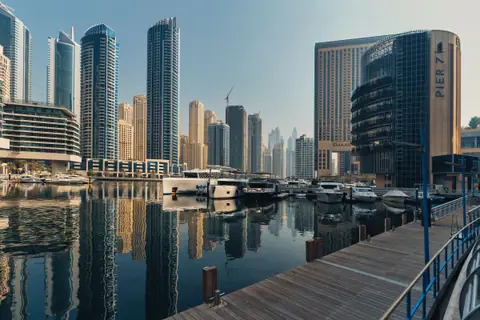
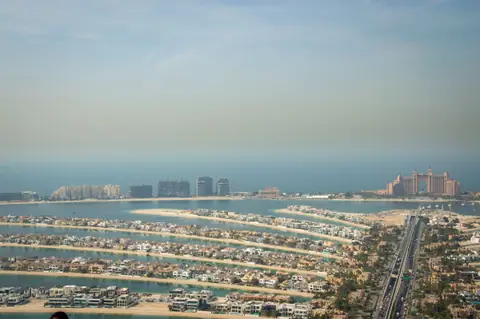
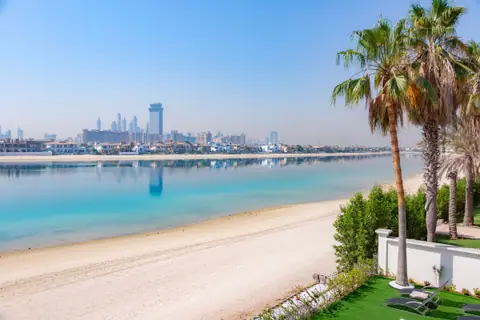
- Dubai Marina, Palm Jumeirah, Kite Beach and the Desert DunesWaterfront walks in Dubai Marina, aerial views of Palm Jumeirah and ethical desert safaris.
- Where to Stay in Dubai: Downtown, Marina, Palm and Old Dubai ComparedFive very different Dubai areas compared so you pick the right base for beaches or sightseeing.
Getting Around & Arrival
Airport transfers, public transit, passes and driving rules.
Trip Planning & Itineraries
When to visit, what to pack and day-by-day routes.
- Dubai: What to Know Before You GoUnderstanding Dubai's linear geography, advance tickets, Metro rules and everyday etiquette.
- Best Time to Visit DubaiSunny winter beach months, desert evenings and how to plan around summer heat or Ramadan.
- What to Wear in DubaiBalancing respectful dress codes in malls and souks with beach days and icy indoor air-conditioning.
- 3 Days in Dubai: Old Creek, Skyscrapers and the Desert DunesThree days organised geographically from north to south so you cover Old Dubai, Downtown skyscrapers and the desert dunes without sitting in traffic.
Need your embassy or consulate in United Arab Emirates? See embassies and consulates in United Arab Emirates.
Reviews
Log in to write a review.
No reviews yet.
