Old Dubai: Al Fahidi, Dubai Creek Abras, Souks and Emirati Food
A walking and boat route through Al Fahidi's wind-tower alleys, Dubai Creek and Deira's souks.
Before glass skyscrapers rose along Sheikh Zayed Road, all of Dubai lived and traded along the banks of Khor Dubai (Dubai Creek), a natural saltwater inlet curving inland from the Arabian Gulf. Dedicating a full morning and afternoon (or late afternoon into evening) to the two historic banks (Bur Dubai on the south-west side and Deira on the north-east side) shows you the maritime trading town that built the modern emirate.
Bur Dubai: Al Fahidi, SMCCU and Al Shindagha
Take the Green Line Metro to Sharaf DG or Al Ghubaiba and start in the Al Fahidi Historical Neighbourhood (formerly Al Bastakiya), built in the late 19th and early 20th centuries by textile and pearl merchants from Bastak in southern Persia. The narrow pedestrian lanes are flanked by houses made of coral stone, gypsum and teak wood, topped with square four-sided wind towers (barjeel), an ingenious pre-electric air-conditioning system that caught any breeze above the rooftops and funnelled it down onto the rooms below:
- Sheikh Mohammed bin Rashid Centre for Cultural Understanding (SMCCU): housed in a restored wind-tower residence, hosting open-conversation Emirati breakfasts and lunches on carpets in the courtyard under the motto "Open Doors, Open Minds".
- Coffee Museum and Arabian Tea House: step into the Coffee Museum to trace coffee history from Ethiopian highlands and Yemeni Sufi monasteries to Bedouin dallah pots, then sit under the white canopies and trees of the Arabian Tea House for fresh mint lemonade and date cake.
- Al Shindagha Museum and Perfume House: walk west along the Creek mouth to the restored neighbourhood of Al Shindagha (including the former residence of the ruling Al Maktoum family) and the Perfume House, which explains the ancient Emirati art of blending oud (agarwood), ambergris, rose and frankincense oils.
Across the Creek by Abra to the Deira Souks
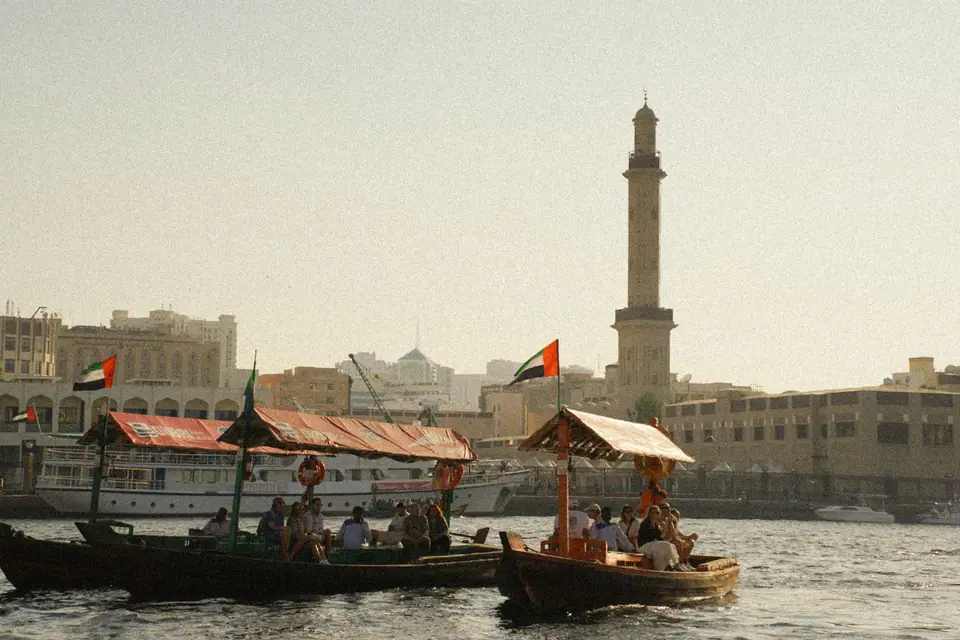
Walk through the arched wooden roofs of the Bur Dubai Textile Souk to the Bur Dubai Abra Station and pay a single dirham coin to cross the Creek on a motorised wooden abra to Deira Old Souk Station. On the Deira bank, weave through the fragrant burlap sacks of saffron, Iranian dried limes, sumac, cardamom and frankincense tears in the Spice Souk, then walk north into the covered arcades of the Dubai Gold Souk (where digital screens display the live international gold weight price; you bargain only on the craftsmanship charge, known as "making charges"). For a calm late-afternoon view before dinner, take a short taxi ride to the southern end of the Creek for sunset over the lagoon and flamingos at Dubai Creek Harbour.
What and where to eat in Old Dubai
Skip hotel buffets when you are in Old Dubai: try spiced Emirati lamb or chicken machboos and crunchy golden luqaimat dumplings drizzled with date syrup (dibs) in Al Fahidi; freshly baked Iranian sangak flatbread and saffron chelow kebab along the Creek; or walk 2nd December Street (Al Dhiyafah Road) in nearby Satwa for Levantine shawarma, falafel and sizzling Pakistani karahi.
Traveller tips
Real advice from people who have been to Old Dubai: Al Fahidi, Dubai Creek Abras, Souks and Emirati Food. Every tip is read by our team before it goes live.
No tips yet. Been here? Yours could be the first.
Thank you! Your tip will appear here after a quick review.
More in Dubai
Continue exploring Dubai with related neighbourhood, food, and planning guides