The Uffizi, the Accademia and Florence's Renaissance Sculpture
How to see Botticelli at the Uffizi, Michelangelo's David at the Accademia and Donatello at the Bargello.
Seeing Renaissance art in Florence without burning out comes down to timing and selection. Both the Uffizi and the Accademia are closed on Mondays, both require advance timed tickets, and both are far calmer at 08:15 than at 11:00. Book them on separate mornings, or do one at 08:15 and the other late in the afternoon.
The Uffizi Gallery: work from the top floor down
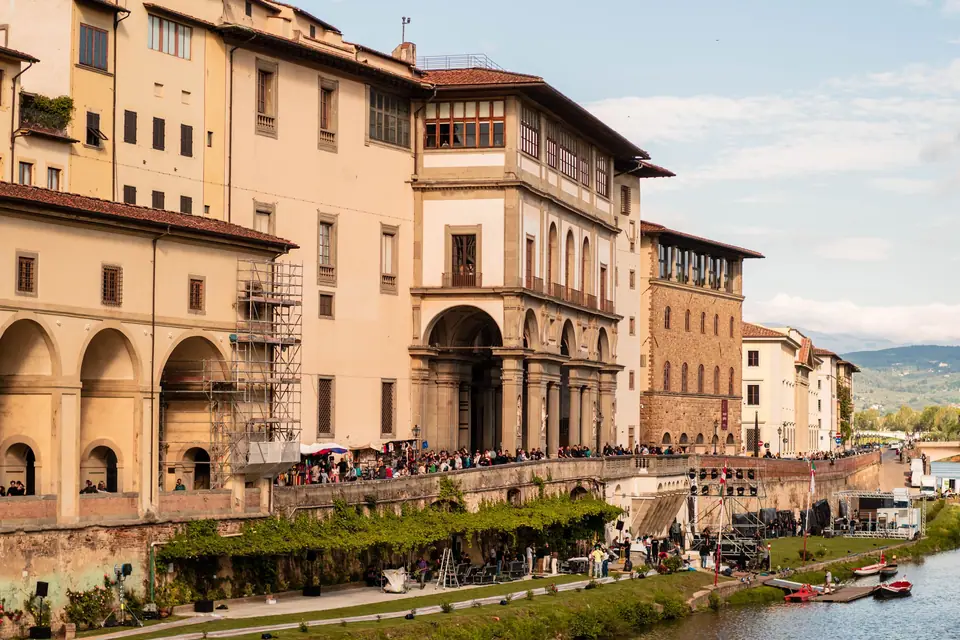
Built by Giorgio Vasari in 1560 as the administrative offices (uffizi) of Cosimo I de' Medici, the Uffizi wraps around a long narrow courtyard stretching from Piazza della Signoria to the Arno. Pick up your pre-booked ticket at Door 3, clear security at Door 1 and climb straight to the Second Floor (Top Floor), where the chronological story of Italian painting begins:
- Giotto and the 14th century (Room 2): three monumental gilded Virgin and Child altarpieces by Cimabue, Duccio and Giotto hanging side by side, showing the exact moment medieval flat icons gave way to human weight and emotion.
- The Botticelli Rooms: Sandro Botticelli's Primavera and The Birth of Venus, alongside Filippo Lippi's tender Madonna and Child with Two Angels and Piero della Francesca's profile double portrait of the Duke and Duchess of Urbino.
- The Tribune and Leonardo da Vinci: peek into the octagonal pearl-inlaid Tribuna, then continue to the Leonardo rooms for his early Annunciation and unfinished Adoration of the Magi, followed by Michelangelo's only surviving completed panel painting, the circular Doni Tondo.
- First Floor (Titian, Raphael and Caravaggio): descend to the lower gallery for Titian's Venus of Urbino, Raphael's Madonna of the Goldfinch and Caravaggio's visceral Medusa and Bacchus.
The Galleria dell'Accademia: more than twenty minutes with David
Most visitors rush down the main hall of the Accademia, snap a photo of Michelangelo's David under the sunlit rotunda and walk straight out. Slow down on the approach: the hall leading to David is lined with Michelangelo's four unfinished Prisoners (or Slaves), originally intended for the tomb of Pope Julius II, where you can still see the marks of his claw chisel as the figures twist out of raw marble. Before leaving, step into the cool Gipsoteca (Plaster Cast Gallery) and the room of historic Stradivari and Medici musical instruments.
Two quieter sculpture palaces: the Bargello and Medici Chapels
What the Uffizi is to painting, the Museo Nazionale del Bargello (housed in a 13th-century fortress near Piazza della Signoria) is to Renaissance sculpture: it holds Donatello's groundbreaking bronze David, Michelangelo's early Bacchus and the competition panels by Brunelleschi and Ghiberti that launched the Renaissance, almost always without a queue. Across town behind San Lorenzo, the Medici Chapels (Cappelle Medicee) let you stand inside a room entirely designed and sculpted by Michelangelo. See our booking tips before reserving slots.
Traveller tips
Real advice from people who have been to The Uffizi, the Accademia and Florence's Renaissance Sculpture. Every tip is read by our team before it goes live.
No tips yet. Been here? Yours could be the first.
Thank you! Your tip will appear here after a quick review.
More in Florence
Continue exploring Florence with related neighbourhood, food, and planning guides