Kathmandu
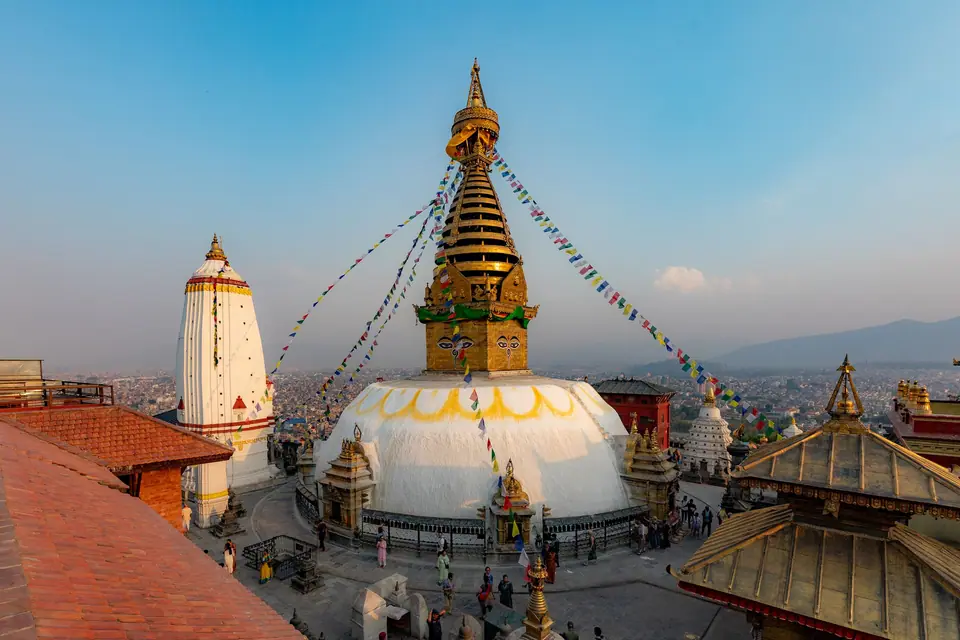
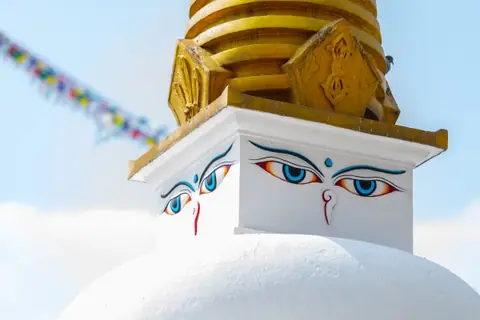
Painted Buddha eyes watching from whitewashed stupas, carved Newari teak windows in three royal Durbar Squares, fluttering prayer flags and steaming plates of momos in the Himalayan foothills.
Quick decisions
How many days?
3 to 4 days: Kathmandu Durbar Square, Swayambhunath and Thamel on day one, Boudhanath Stupa and Pashupatinath on day two, plus the sister royal cities of Patan and Bhaktapur on day three. Follow our three-day route.
Where should I stay?
Thamel & Lazimpat: central garden courtyards, trekking shops and cafes. Boudha: peaceful monasteries around the Great Stupa. Patan (Lalitpur): restored Newari heritage inns. Compare areas in our neighbourhood comparison.
Do I need a car?
No. Walk within historic cores and use Pathao or InDrive ride-hailing apps or private half-day drivers to link sites across the Kathmandu Valley.
Best for
Living heritage: seven UNESCO World Heritage monument zones in a single valley. Sacred pilgrimage: Tibetan Buddhist kora walks at Boudha and Hindu rituals along the Bagmati. Newari craft: lost-wax bronze casting, woodcarving and thangka painting.
Before you go
Always walk clockwise around Buddhist stupas and carry Nepali rupee cash for heritage square entry tickets: remove shoes before entering temple sanctums and bring a light dust mask or buff for busy ring-road intersections. Read our practical briefing.
Getting around
From Tribhuvan International Airport (KTM): just six kilometres east of central Kathmandu; pre-paid airport taxis and ride apps reach Thamel or Boudha quickly. Details in arrival and transport.
Continue your trip
Kathmandu is the launchpad for domestic flights to Pokhara and Lukla, wildlife safaris in Chitwan and hilltop sunrise stays in Nagarkot or Dhulikhel.
Overview
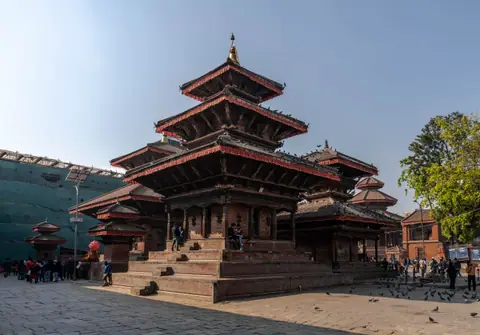
Set in a high, bowl-shaped valley at 1,400 metres on the southern slopes of the Himalaya, Kathmandu is not a single city so much as an ancient constellation of three rival Newari kingdoms, Kathmandu (Kantipur), Patan (Lalitpur) and Bhaktapur (Bhadgaon), that have grown toward one another over two millennia. Seven separate monument zones inside this single valley hold collective UNESCO World Heritage status, and unlike museum pieces behind glass, every tiered pagoda roof, stone watering spout (hiti) and sunken courtyard monastery (bahal) remains part of daily worship.
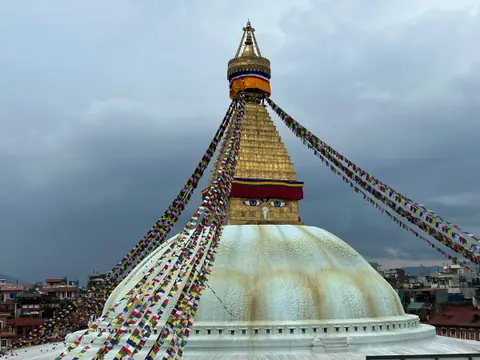
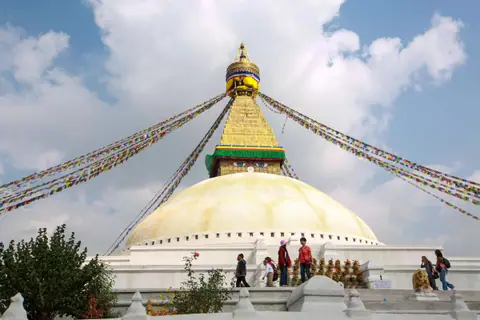
In the morning, butter lamps flicker as pilgrims spin copper prayer wheels clockwise around the white dome of Boudhanath Stupa and climb the eastern staircase of Swayambhunath above the valley floor. By afternoon, woodcarvers and bronze smiths hammer away in the brick lanes of Patan and Bhaktapur over bowls of spiced buffalo momo and creamy clay-pot yoghurt (juju dhau). Start with what to know before you go and top experiences.
Getting there
International flights land right inside the eastern valley rim at Tribhuvan International Airport (KTM), less than twenty minutes from Boudhanath and thirty minutes from Thamel or Patan outside peak traffic. Download the Pathao or InDrive apps with a local SIM card at the arrivals hall to hail fixed-fare cars and motorbikes across the valley. See how to get to Kathmandu.
Where to stay
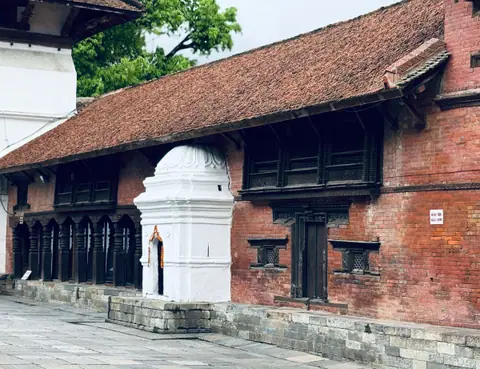
First-time visitors and trekkers gravitate toward the quiet garden hotels around Thamel, Jyatha and Lazimpat; travellers seeking calm mornings choose guesthouses overlooking Boudhanath Stupa; and architecture lovers stay inside restored Newari brick townhouses around Patan Durbar Square. Compare five valley bases in where to stay in Kathmandu.
Things to do
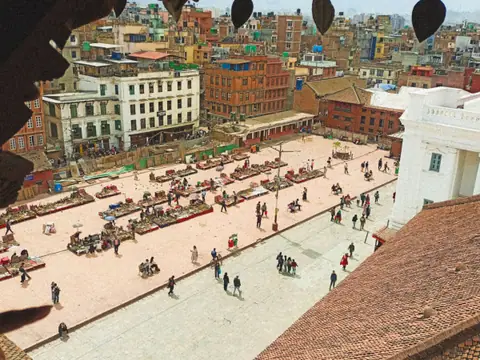
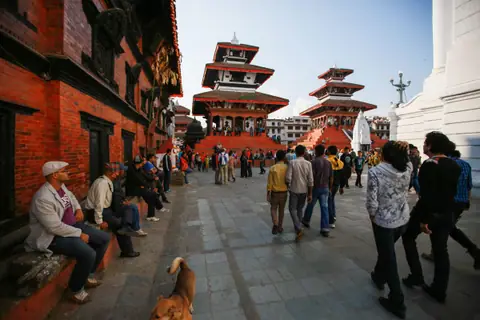
Explore the carved timber palaces and Kumari courtyard of Kathmandu Durbar Square and climb to Swayambhunath (Monkey Temple); join the sunset kora walk at Boudhanath Stupa and visit riverside Pashupatinath; and spend a full day admiring the golden metalwork of Patan Durbar Square and the car-free brick squares of Bhaktapur. Browse the full list in things to do in Kathmandu.
Food and drink
Kathmandu Valley cuisine combines Himalayan Tibetan comfort with rich indigenous Newari feasting: order steamed or soup-drowned jhol momo dumplings, hearty lentil-and-rice dal bhat thali refilled at the table, savoury Newari lentil pancakes (bara), crispy flattened rice (chiura) with spiced meats, and Bhaktapur's famous juju dhau ("king curd"). Read what to eat in Kathmandu.
Culture
Hinduism and Vajrayana Buddhism intertwine effortlessly in the Kathmandu Valley: the same Newari artisan families worship both Shiva and the Bodhisattva Avalokitesvara (Karunamaya), marigold garlands hang beside Tibetan five-colour prayer flags, and the Living Goddess (Royal Kumari) is selected from a Buddhist Shakya goldsmith clan to bless Hindu kings and citizens alike.
Weather by month
Kathmandu is warmest in June, with average highs around 29°C, and coldest in January, when nights drop to about 4°C. July is the wettest month, with rain on about 23 days. For mild weather with fewer rainy days, aim for January, February, March, October, November and December.
| Month | Low | Range | High | Rain | Rainy days |
|---|---|---|---|---|---|
| Jan | 4°C | 18°C | 14 mm | 2 d | |
| Feb | 6°C | 21°C | 22 mm | 3 d | |
| Mar | 10°C | 25°C | 35 mm | 4 d | |
| Apr | 13°C | 28°C | 62 mm | 6 d | |
| May | 17°C | 29°C | 140 mm | 12 d | |
| Jun | 20°C | 29°C | 245 mm | 18 d | |
| Jul | 21°C | 28°C | 375 mm | 23 d | |
| Aug | 21°C | 28°C | 335 mm | 22 d | |
| Sep | 19°C | 28°C | 185 mm | 15 d | |
| Oct | 14°C | 26°C | 42 mm | 4 d | |
| Nov | 9°C | 23°C | 8 mm | 1 d | |
| Dec | 5°C | 19°C | 10 mm | 1 d |
Averages of daily values from 2015 to 2024. Rainy days are days with at least 1 mm of rain. Source: Open-Meteo · Compare destinations by month.
Kathmandu on the map
Every place we cover in Kathmandu. Tap a category or pin to explore.
In-depth Kathmandu guides
Browse the guides grouped by topic: sights, neighbourhoods, food, transport, day trips and trip planning.
Sights, Landmarks & Parks
Key monuments, viewpoints, museums and nature trails.
- Best Things to Do in KathmanduThree royal Durbar Squares, giant hilltop and valley stupas, riverside shrines, bazaar lanes and Newari craft.
- Kathmandu Durbar Square, Swayambhunath (Monkey Temple) and Asan ToleWalking from the Garden of Dreams through Asan Tole bazaar to Kathmandu Durbar Square and climbing Swayambhunath.
- Boudhanath Stupa, Pashupatinath and Kopan MonasteryWalking the clockwise kora at Boudhanath Stupa, visiting Pashupatinath on the Bagmati River and climbing to Kopan.
Neighbourhoods & Where to Stay
Districts, historic quarters and the best bases for your stay.

Getting Around & Arrival
Airport transfers, public transit, passes and driving rules.
Day Trips & Excursions
Easy half-day and full-day trips from the city.
Trip Planning & Itineraries
When to visit, what to pack and day-by-day routes.
- Kathmandu: What to Know Before You GoClockwise stupa etiquette, Hindu temple rules, heritage ticket passes, Nepali rupees and ride-hailing apps.
- Best Time to Visit Kathmandu: Clear Himalayan Skies and FestivalsChoosing between crisp post-monsoon autumn skies, warm spring blossom months and sunny winter days.
- What to Wear in Kathmandu: Layers, Slip-Off Shoes and Temple DressDressing for cool mornings, warm afternoons, temple shoe rules and uneven brick courtyards.
- Kathmandu 3-Day Itinerary: Three Royal Cities and Sacred StupasA geographical three-day route across the Kathmandu Valley pairing old Kathmandu with Boudhanath, Bhaktapur and Patan.
Need your embassy or consulate in Nepal? See embassies and consulates in Nepal.
Reviews
Log in to write a review.
No reviews yet.