


























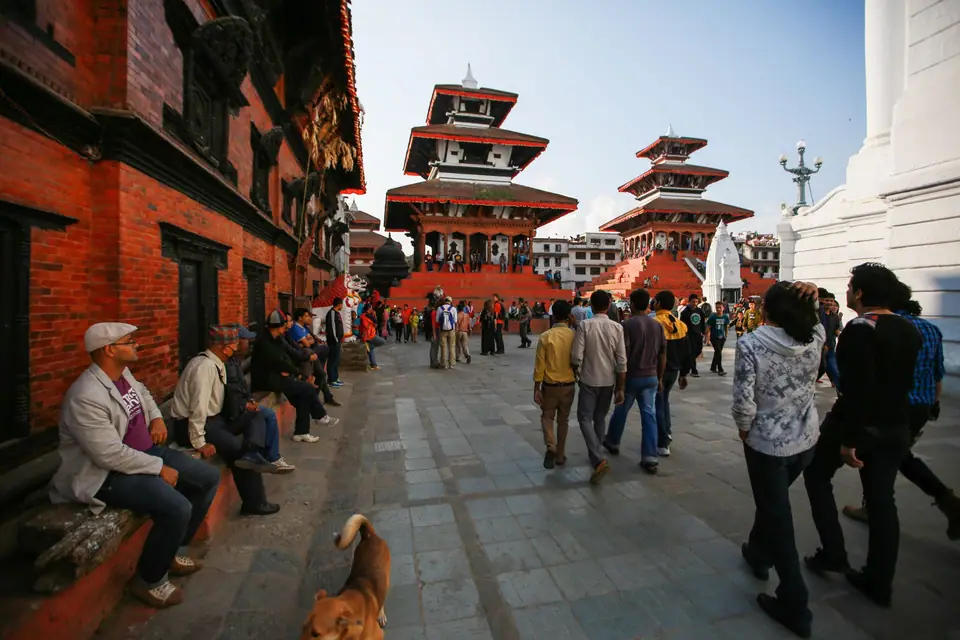
Boudhanath Stupa, Pashupatinath and Kopan Monastery
Walking the clockwise kora at Boudhanath Stupa, visiting Pashupatinath on the Bagmati River and climbing to Kopan.
In the northeastern quadrant of Kathmandu, less than two kilometres apart, stand the two holiest pilgrimage hubs in Nepal: Boudhanath (Boudha), the beating heart of Himalayan Tibetan Buddhism in the valley, and Pashupatinath, the most sacred Shiva temple complex in the country along the banks of the Bagmati River.
Boudhanath Stupa: the Great Mandala and evening kora
Built along the ancient caravan trail linking Lhasa with the Kathmandu Valley, Boudhanath Stupa (Jarung Khashor) is one of the largest spherical stupas in the world, laid out from above in the exact geometric proportions of a giant three-dimensional Buddhist mandala. A circular ring of townhouse shopfronts, thangka-painting studios and rooftop cafes completely encloses the paved plaza, screening out city traffic so the interior feels like an island of calm. Over fifty Tibetan Buddhist monasteries (gompas) representing all four major lineages cluster in the surrounding lanes, including the whitewashed Guru Lhakhang right on the plaza and the gilded prayer halls of Shechen Monastery five minutes' walk down a quiet garden lane.
While you can climb the northern steps onto the lower whitewashed terraces of the stupa during the day, the unforgettable hour at Boudha is late afternoon into dusk. Join the stream of robed monks, nuns and local residents walking clockwise (kora) around the base wall, spinning the 147 niches of copper prayer wheels as thousands of butter lamps are lit and deep horns and chanting echo from monastery upper floors.
Pashupatinath Temple and the Bagmati River Aarati
Thirty minutes' walk south (or ten minutes by taxi) where the sacred Bagmati River cuts through a wooded gorge stands Pashupatinath, dedicated to Shiva as Pashupati, Lord of All Living Beings. Although the central pagoda courtyard on the west bank is reserved for Hindus, foreign visitors explore the extensive eastern bank terraces, stone shivalinga shrines climbing the hillside toward Guhyeshwari Temple, and the elevated viewpoints overlooking the river ghats. Because open-air Hindu cremations take place along the stone river steps as a sacred passage releasing the soul into the Bagmati (which flows eventually into the Ganges), observe quietly and respectfully from across the water without intrusive close-up photography. Stay until sunset on the eastern stone steps opposite the main temple for the moving Bagmati Aarati, when three priests wave tiered brass oil lamps in synchronized circles to the sound of bells, drums and devotional bhajan singing.
Traveller tips
Real advice from people who have been to Boudhanath Stupa, Pashupatinath and Kopan Monastery. Every tip is read by our team before it goes live.
No tips yet. Been here? Yours could be the first.
Thank you! Your tip will appear here after a quick review.
More in Kathmandu
Continue exploring Kathmandu with related neighbourhood, food, and planning guides
Kathmandu Durbar Square, Swayambhunath (Monkey Temple) and Asan Tole
Kathmandu, Nepal
Patan, Bhaktapur and What to Eat in the Kathmandu Valley
Kathmandu, Nepal

Where to Stay in Kathmandu: Thamel, Boudha, Patan and Lazimpat
Kathmandu, Nepal
Kathmandu 3-Day Itinerary: Three Royal Cities and Sacred Stupas
Kathmandu, Nepal
