Madrid
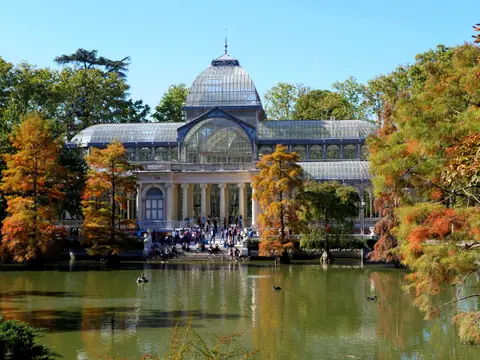
Three of Europe's great art museums, a royal palace, a huge city park and a food culture built around late nights and small plates.
Quick decisions
How many days?
3 days: the Prado, the Royal Palace and old Madrid, Retiro and one evening of tapas. 4 to 5 days: add the Reina Sofía or the Thyssen and a day in Toledo or Segovia. 6 days or more: both day trips, and a Sunday at the Rastro.
Where should I stay?
Sol and Centro: in the middle of everything, and noisy. Barrio de las Letras: between the museums and the old town. Malasaña and Chueca: bars and late nights. Salamanca: quieter and smarter. More in our where to stay guide.
Do I need a car?
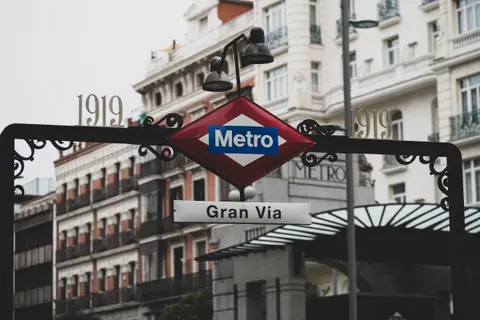
No. The Metro is fast and the centre is walkable, and a low-emission zone limits driving and parking in the historic centre. For Toledo and Segovia, the high-speed train beats the motorway.
Best for
Art lovers: Velázquez, Goya and Picasso within a short walk of each other. Food lovers: tapas bars, markets and long lunches. Night owls: nobody eats dinner early. Beach lovers: look elsewhere, the sea is hours away.
Before you go
Entry: Spain is in the Schengen area, and non-EU visitors now register at the EU's automated border checks. Book ahead: the Royal Palace and a timed Prado ticket. Pay: contactless bank cards now work at Metro turnstiles.
Getting around
From the airport: Metro line 8, the Cercanías C1 train from Terminal 4, or the yellow express bus. In the city: Metro and walking. Details in our getting there guide.
Continue your trip
High-speed trains reach Barcelona and Seville in around two and a half hours and Valencia in under two, so Madrid sits at the centre of most Spain itineraries. Toledo and Segovia are each about half an hour away.
Overview
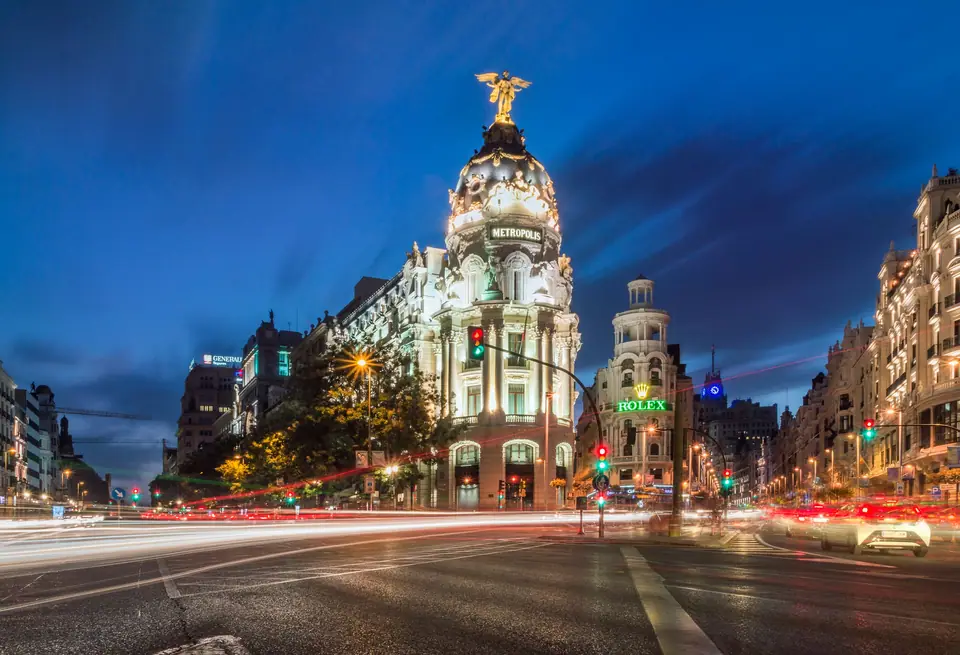
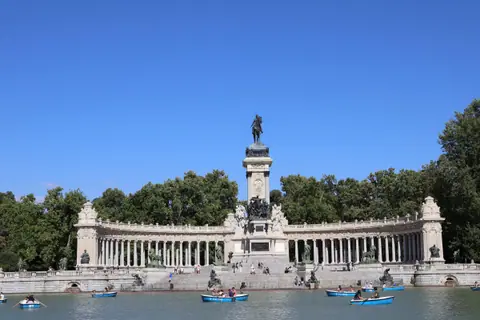
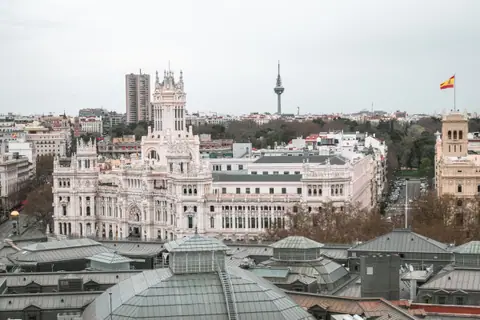
Madrid doesn't have a single postcard view, and it doesn't try to. Its pleasures are spread out and easy to miss on a quick visit: the Velázquez rooms at the Prado, a plate of fried squid in a bar near the Plaza Mayor, a Sunday afternoon of rowing boats in Retiro, and streets that are still full at midnight on a weeknight. It is a city to live in for a few days rather than to tick off.
The layout helps. The Royal Palace and the old Habsburg town sit on the west side, the great museums line the Paseo del Prado on the east, and Sol lies between them, about twenty minutes' walk from each. Three or four days is a comfortable first visit, with one more for Toledo or Segovia. Start with our Madrid travel guide.
Getting there
Madrid-Barajas airport is about twelve kilometres northeast of the centre and linked by Metro, a commuter train and a round-the-clock express bus. High-speed trains arrive at Atocha and Chamartín from across Spain. Our getting there guide explains which option suits which part of the city.
Where to stay
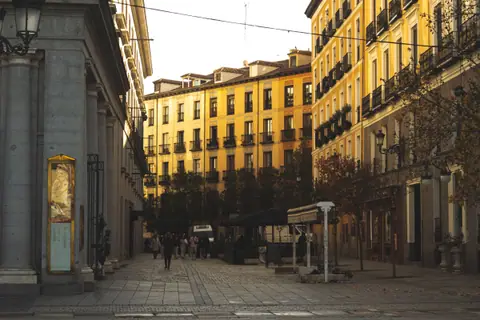
Most first-timers should stay inside the old centre, between the Royal Palace and the Paseo del Prado, so the main sights are on foot. Barrio de las Letras suits museum trips, Malasaña and Chueca suit night owls, and Salamanca is calmer. Our where to stay guide compares them.
Things to do
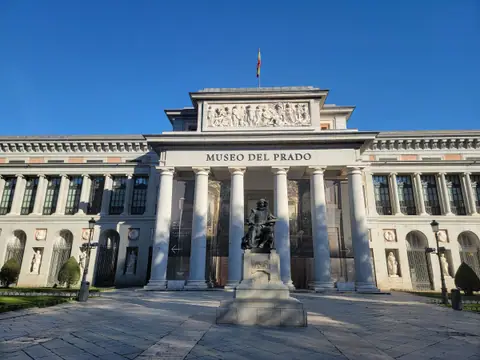
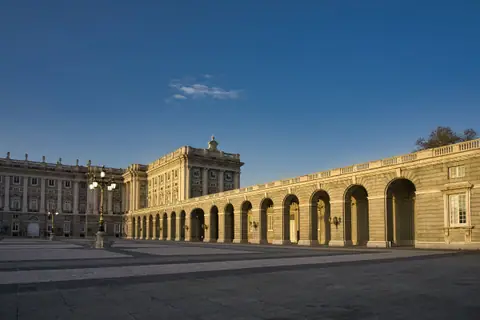
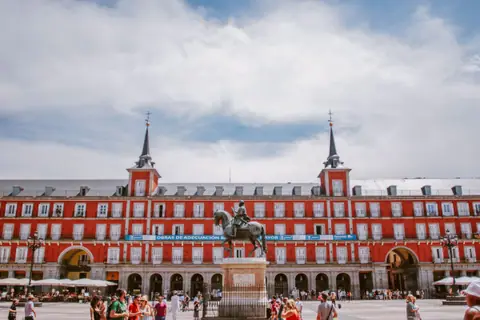
The Prado comes first for most visitors, and our museums guide covers it with the Reina Sofía and the Thyssen. The Royal Palace and the old streets around the Plaza Mayor have their own walking guide, and the rest is in our things to do list.
Food and drink
Madrid eats late and in stages: a vermouth before lunch, a long weekday menú del día, then tapas bar to tapas bar at night. Try cocido madrileño, a chickpea and meat stew served in courses, and a bocadillo de calamares, a fried squid sandwich. La Latina's Cava Baja is the classic tapas street. Tipping is small and optional.
Culture
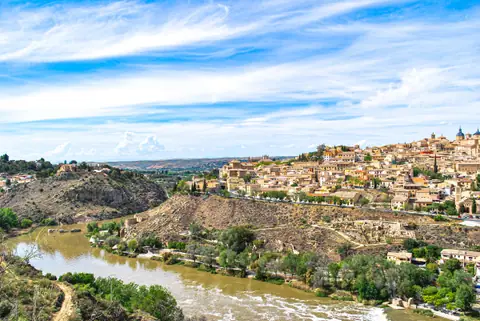
Madrid began as Mayrit, a Moorish fortress above the Manzanares river, and a stretch of its ninth-century wall survives below the cathedral. Philip II made it the capital in 1561 for its central position, not its beauty. The Bourbons built the Royal Palace after the old fortress burned in 1734, and the Movida, the cultural burst that followed Franco's death, gave the city its all-night reputation in the 1980s.
Weather by month
Madrid is warmest in July, with average highs around 34°C, and coldest in January, when nights drop to about 1°C. October is the wettest month, with rain on about 9 days. For mild weather with fewer rainy days, aim for May and September.
| Month | Low | Range | High | Rain | Rainy days |
|---|---|---|---|---|---|
| Jan | 1°C | 10°C | 38 mm | 7 d | |
| Feb | 3°C | 13°C | 25 mm | 5 d | |
| Mar | 5°C | 16°C | 58 mm | 9 d | |
| Apr | 7°C | 19°C | 59 mm | 9 d | |
| May | 12°C | 24°C | 31 mm | 6 d | |
| Jun | 16°C | 30°C | 21 mm | 5 d | |
| Jul | 20°C | 34°C | 7 mm | 1 d | |
| Aug | 20°C | 33°C | 12 mm | 2 d | |
| Sep | 15°C | 27°C | 52 mm | 5 d | |
| Oct | 11°C | 22°C | 66 mm | 9 d | |
| Nov | 6°C | 15°C | 49 mm | 8 d | |
| Dec | 3°C | 12°C | 42 mm | 7 d |
Averages of daily values from 2015 to 2024. Rainy days are days with at least 1 mm of rain. Source: Open-Meteo · Compare destinations by month.
Madrid on the map
Every place we cover in Madrid. Tap a category or pin to explore.
In-depth Madrid guides
Browse the guides grouped by topic: sights, neighbourhoods, food, transport, day trips and trip planning.
Sights, Landmarks & Parks
Key monuments, viewpoints, museums and nature trails.
- Best Things to Do in MadridThe art, the palace, the park and the evenings, plus a few things we'd skip.
- Madrid Museums Guide: the Prado, Reina Sofía and ThyssenThe three museums of the Paseo del Arte, what to see in each and how to fit them in.
- Royal Palace and Old Madrid Walking GuideThe palace rooms that deserve time, and a walk through the oldest part of the city.
Neighbourhoods & Where to Stay
Districts, historic quarters and the best bases for your stay.
Getting Around & Arrival
Airport transfers, public transit, passes and driving rules.
Day Trips & Excursions
Easy half-day and full-day trips from the city.
Trip Planning & Itineraries
When to visit, what to pack and day-by-day routes.
- Madrid: What to Know Before You GoHow the city is laid out, when Madrid eats, and the rules nobody explains.
- Best Time to Visit MadridSpring and autumn, and why August is a strange month to visit.
- What to Wear in MadridDress for sun, altitude and late evenings, and pack better shoes than you think.
- Madrid 3-Day ItineraryThree days, one side of the centre at a time, with time for late dinners.
Need your embassy or consulate in Spain? See embassies and consulates in Spain.
Reviews
Log in to write a review.
No reviews yet.