








Barcelona
Gaudí's buildings, a medieval old town and a city beach, all within one metro ride of each other.
Quick decisions
How many days?
3 days: Sagrada Família, Park Güell, the Gothic Quarter and an evening on the beach. 4 to 5 days: add Montjuïc, a second Gaudí house and slow mornings in Gràcia. 6 days or more: add a day trip to Montserrat, Girona or Sitges.
Where should I stay?
Eixample: central, calm, near the Gaudí houses. Gothic Quarter or El Born: old streets and nightlife on your doorstep. Gràcia: a neighbourhood feel, a little further out. More in our where to stay guide.
Do I need a car?
No. The metro, buses and your feet cover the whole city, and parking is scarce and expensive. Trains handle most day trips too.
Best for
First-timers: an easy city to start with. Couples: late dinners and rooftop bars. Families: yes, with beach time built in. Architecture fans: nowhere else has this much Gaudí in one place.
Before you go
Book ahead: Sagrada Família and Park Güell both sell timed tickets online only. Tourist tax: it roughly doubled in April 2026 and is charged per person, per night. Pockets: Las Ramblas and the metro are pickpocket territory.
Getting around
From the airport: the Aerobús to Plaça de Catalunya, the R2 Nord train from Terminal 2, or metro L9 Sud. In the city: a T-casual card for ten metro and bus trips. Details in our getting there guide.
Continue your trip
High-speed trains reach Girona in under 40 minutes and Madrid in about two and a half hours. Montserrat is an hour or so away by train, and ferries leave the port for Mallorca and Menorca.
Overview
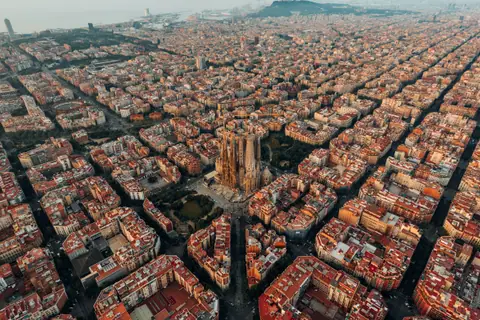
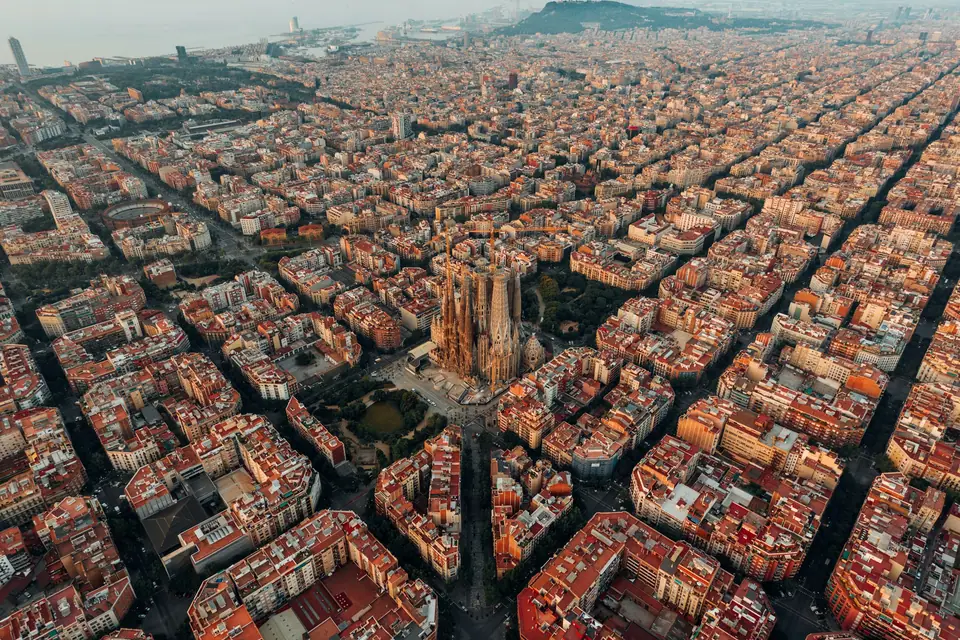
Barcelona gives you a lot in a small space. A Roman and medieval core, a 19th-century grid of wide avenues lined with Modernista buildings, two city hills with views, and a long sandy beach, all within a few metro stops. Then there's Gaudí, whose work you can't avoid and wouldn't want to: a basilica still being finished, apartment blocks with rooftops like sculpture gardens, a park that looks half built by gingerbread bakers.
The city runs late. Lunch is at two, dinner at nine or after, and the streets of Gràcia and El Born stay full past midnight. Plan four days if you can, book the big Gaudí tickets before you land, and leave space for doing very little. Start with our Barcelona travel guide.
Getting there
Barcelona El Prat airport is about 15 km south-west of the centre, linked by the Aerobús, the R2 Nord train and metro line L9 Sud. High-speed trains from Madrid and France arrive at Sants. Our getting there guide compares every option.
Where to stay
Eixample is the easy choice for a first trip: central, well connected and quieter at night. The Gothic Quarter and El Born put you in the old streets, Gràcia feels like a small town, and Poble-sec has some of the best tapas bars. We compare them in our where to stay guide.
Things to do
Most trips are built around Gaudí and the old town. We have full guides to the Sagrada Família, Park Güell and the Gothic Quarter. For Montjuïc, the Picasso Museum, the markets and the beaches, see our things to do list.
Food and drink
Start with pa amb tomàquet, bread rubbed with ripe tomato, olive oil and salt, which comes with almost everything. At lunch on weekdays look for the menú del dia, a fixed two-course meal with a drink. Sunday before lunch is for vermut, sweet red vermouth over ice with olives and crisps.
Culture
Barcelona is the capital of Catalonia, and Catalan, not Spanish, is the first language on street signs, menus and in schools. The city's great building boom came in the late 19th century, when a rich industrial class paid Gaudí, Domènech i Montaner and Puig i Cadafalch to outdo each other. That rivalry is why a single block of Passeig de Gràcia holds three famous façades.
In-depth Barcelona guides
Practical guides for planning your visit.
- Barcelona Travel Guide: What to Know Before You Go
- Best Things to Do in Barcelona
- How to Get to Barcelona
- Best Time to Visit Barcelona
- What to Wear in Barcelona
- Sagrada Família Guide: Tickets, Towers and Timing
- Park Güell Guide: Tickets, Route and Views
- Gothic Quarter Walking Guide
- Where to Stay in Barcelona: A Neighborhood Guide
- Barcelona 3-Day Itinerary
Reviews
Log in to write a review.
No reviews yet.