Seville
Andalusian courtyards, tiled plazas and late-night tapas around a vast Gothic cathedral, royal palace gardens and the Guadalquivir.
Quick decisions
How many days?
2 days: the Cathedral and Giralda, Real Alcázar, Santa Cruz and an evening of tapas. 3 days: add Triana, Plaza de España and a flamenco show. 4 or 5 days: slow down, add more neighbourhoods and use a day for Córdoba or the Roman ruins at Italica.
Where should I stay?
Santa Cruz: beautiful and central, but busy. Alfalfa and Encarnación: lively, walkable and good for eating. El Arenal: central, polished and close to the river. Triana: more neighbourhood life, ceramics, bars and flamenco. More in our where to stay guide.
Do I need a car?
No for Seville itself. The historic centre is made for walking, with buses, tram and metro for longer hops. A car becomes useful mainly for day trips where rail or organised tours are less convenient.
Best for
History: Islamic, Gothic, Renaissance and Baroque layers in the same few streets. Food: tapas bars, markets and Andalusian classics. Couples: courtyards, river walks and late dinners. Culture: flamenco and some of Spain's great religious and civic festivals.
Before you go
Book the big sights: the Alcázar and Cathedral can be busy, especially in spring. Plan around heat: midsummer afternoons are better spent indoors or in shade. Check festival dates: Holy Week and the April Fair can change the feel, availability and cost of a trip.
Getting around
From the airport: the EA airport bus runs into the city, and taxis wait outside arrivals. In the centre: walk first, then use TUSSAM buses, tram or metro when the distances grow. At night: taxis are useful after late flamenco or dinners.
Continue your trip
Córdoba: an easy rail day trip. Cádiz: for Atlantic air and a different Andalusian rhythm. Italica: Roman ruins just outside the city. Jerez: for sherry and equestrian culture.
Overview
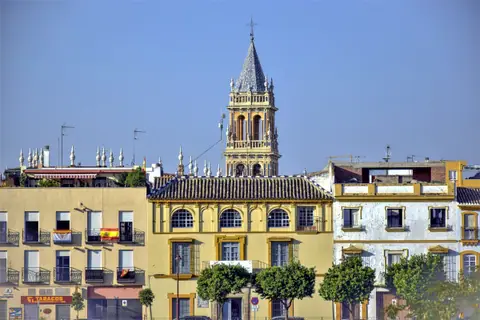
Seville rewards people who stop trying to see it all. The monumental centre is compact enough to cross on foot, yet almost every street opens onto another layer: an Almohad wall, a tiled courtyard, a Baroque church, a palace garden or a bar where lunch stretches into the afternoon.
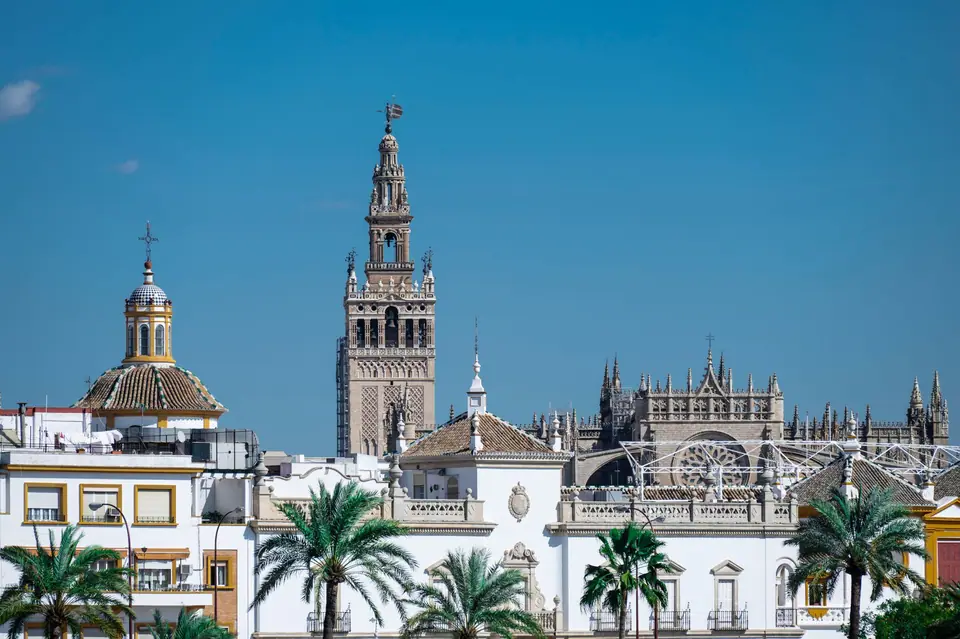
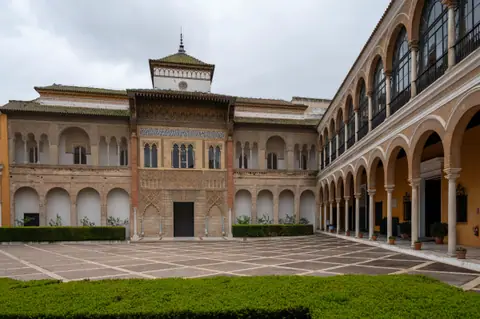
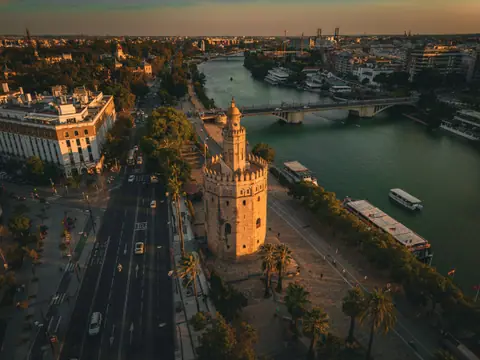
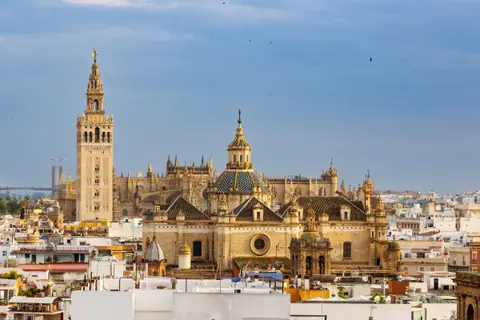
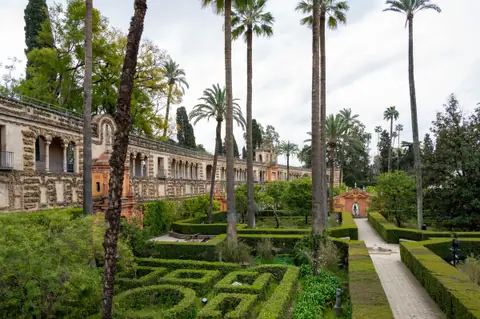
The great sights cluster around the Plaza del Triunfo. Here the Cathedral and Giralda, the Real Alcázar and the Archivo de Indias form Seville's UNESCO-listed monumental core. The ensemble brings Islamic, Christian and Renaissance histories into a remarkably small space; the Giralda began as an Almohad minaret, while the Alcázar retains palaces and gardens shaped by many periods. Start with our Seville travel guide.
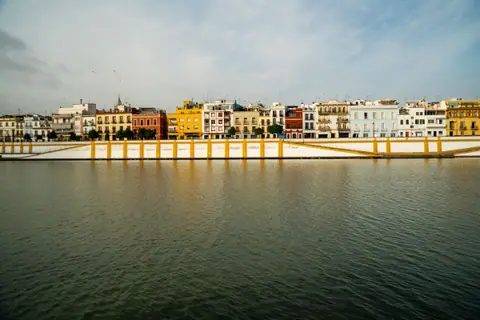
Then move away from the postcard centre. Santa Cruz is all narrow lanes and hidden squares, El Arenal follows the Guadalquivir, and Triana has a stronger neighbourhood identity across the river. The city also changes after dark: tapas hopping, outdoor terraces and flamenco are not add-ons here but part of how Seville is experienced. For a broader planning view, see things to do and our Triana guide.
Getting there
Seville Airport is close enough to the city to make arrival straightforward: the EA airport bus runs into the centre and taxis wait outside arrivals, while Santa Justa railway station is the main rail gateway for high-speed and regional connections. See how to get to Seville.
Where to stay
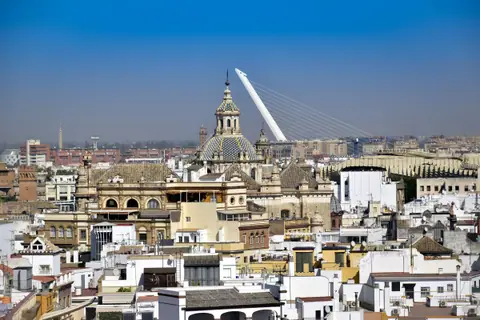
For a first trip, the choice is mostly about atmosphere rather than transport. Santa Cruz puts the big monuments outside your door; Alfalfa and Encarnación are better for a busy food-and-drinks rhythm; El Arenal balances the centre with the river; Triana trades some postcard proximity for more neighbourhood character. The city's official tourism map now presents ten districts as different ways of experiencing Seville, which is useful when deciding where to base yourself.
See where to stay in Seville for the trade-offs.
Things to do
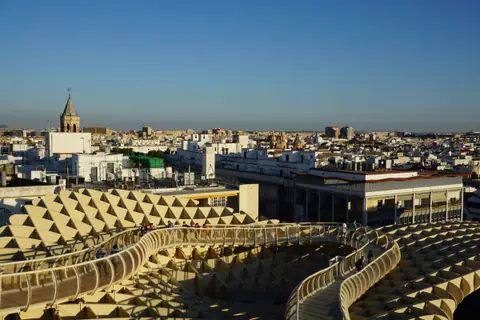
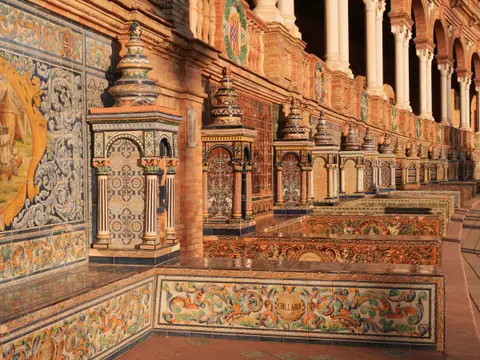
Give the UNESCO core a full half-day: the Cathedral and Giralda, the Royal Alcázar and the Archivo de Indias sit beside one another. Add Plaza de España and María Luisa Park, then cross into Triana for ceramics and the riverfront. The city also has plenty beyond monuments: the Setas and Alameda axis, the markets, modern galleries and flamenco spaces make the itinerary feel less like a museum circuit. Start with best things to do in Seville.
Food and drink
Seville is built for small orders and second rounds. Look for salmorejo, espinacas con garbanzos, adobo, carrillada, pringá, croquettes and seasonal fish. The city's tourism office describes tapas hopping as a social way of moving through the city, and its food markets remain useful places to see everyday produce as well as eat.
For a practical rule, do not plan a three-course restaurant meal every night. One good strategy is a proper lunch, then a few tapas in two or three bars later on.
Culture
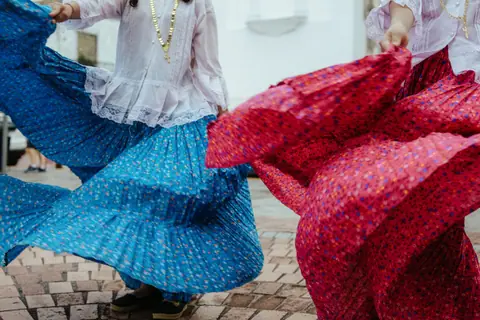
Seville's identity is layered rather than singular. The historic centre preserves traces of Almohad Seville, Christian kingdoms, the city's role in Atlantic trade and later Baroque wealth. Triana adds ceramics and flamenco, while the great annual festivals turn public space into a stage. Flamenco is especially rooted in the city: Seville tourism highlights the tradition of tablaos, peñas and the Bienal Flamenco, held every two years in even-numbered years.
The city's biggest festivals can dominate a visit. Holy Week fills the historic centre with processions; the April Fair turns Los Remedios into a temporary city of casetas, music, dancing and food.
Weather by month
Seville is warmest in July, with average highs around 37°C, and coldest in January, when nights drop to about 7°C. October is the wettest month, with rain on about 7 days. For mild weather with fewer rainy days, aim for February.
| Month | Low | Range | High | Rain | Rainy days |
|---|---|---|---|---|---|
| Jan | 7°C | 16°C | 39 mm | 5 d | |
| Feb | 8°C | 18°C | 31 mm | 5 d | |
| Mar | 10°C | 21°C | 80 mm | 9 d | |
| Apr | 12°C | 23°C | 52 mm | 7 d | |
| May | 16°C | 29°C | 28 mm | 4 d | |
| Jun | 19°C | 33°C | 10 mm | 1 d | |
| Jul | 22°C | 37°C | 1 mm | 0 d | |
| Aug | 22°C | 37°C | 3 mm | 0 d | |
| Sep | 19°C | 32°C | 24 mm | 3 d | |
| Oct | 16°C | 27°C | 87 mm | 7 d | |
| Nov | 11°C | 20°C | 59 mm | 7 d | |
| Dec | 8°C | 17°C | 60 mm | 6 d |
Averages of daily values from 2015 to 2024. Rainy days are days with at least 1 mm of rain. Source: Open-Meteo · Compare destinations by month.
Seville on the map
Every place we cover in Seville. Tap a category or pin to explore.
In-depth Seville guides
Browse the guides grouped by topic: sights, neighbourhoods, food, transport, day trips and trip planning.
Sights, Landmarks & Parks
Key monuments, viewpoints, museums and nature trails.
Neighbourhoods & Where to Stay
Districts, historic quarters and the best bases for your stay.
Getting Around & Arrival
Airport transfers, public transit, passes and driving rules.
Trip Planning & Itineraries
When to visit, what to pack and day-by-day routes.
- Seville: What to Know Before You GoHow Seville works, what to see first, when the heat matters and how to build a trip around the city's rhythm.
- Best Time to Visit SevilleA season-by-season guide to heat, crowds, festivals, prices and the best hours for walking.
- What to Wear in SevilleA practical packing guide for hot afternoons, cool winter evenings, stone streets, churches and long walking days.
- Flamenco in Seville: How to Choose a ShowTablao, peña or small cultural centre: which kind of show suits your evening.
- Seville 3-Day ItineraryThree days that group nearby sights and keep the hottest hours for a break.
Need your embassy or consulate in Spain? See embassies and consulates in Spain.
Reviews
Log in to write a review.
No reviews yet.