


























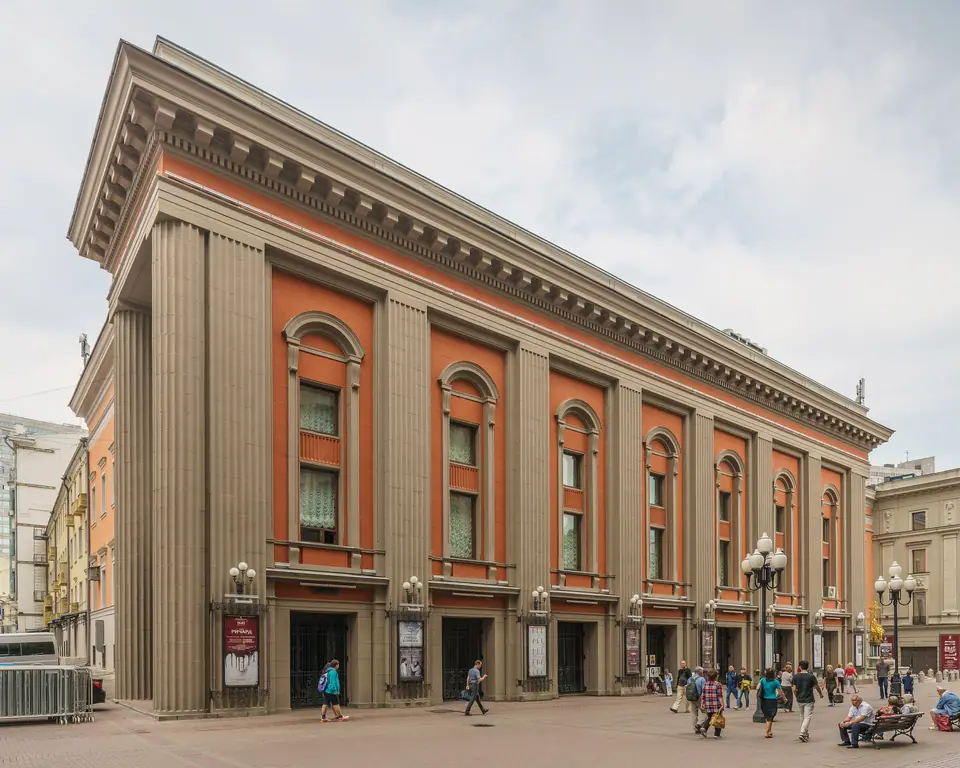
Arbat Street, Patriarch's Ponds and Zamoskvorechye walking guide
Stroll Old Arbat's nineteenth-century literary landmarks, the leafy basin of Patriarch's Ponds, and the quiet merchant streets of Zamoskvorechye.
Away from the ceremonial scale of Red Square and Tverskaya Street, three central neighbourhoods preserve the human-scale street life of nineteenth- and early twentieth-century Moscow: the pedestrianised kilometre of Old Arbat Street west of the Kremlin, the literary quarter around Patriarch's Ponds to the north, and the low-rise merchant district of Zamoskvorechye south of the Moskva River.
Old Arbat Street: from Arbatskaya Square to Smolenskaya
Running roughly one kilometre between Arbatskaya Square on the Boulevard Ring and Smolenskaya Square on the Garden Ring, Arbat Street has existed since at least the fifteenth century, when it served as the western trade road toward Smolensk and housed royal court craftsmen and artisans. Almost completely destroyed during the great fire of 1812 associated with Napoleon's occupation of Moscow, the thoroughfare was rebuilt in Empire and late nineteenth-century eclectic styles, becoming the favoured residential neighbourhood of Moscow's gentry, writers, academics, and composers before its conversion into a traffic-free pedestrian promenade in the 1980s.
Walking west from Arbatskaya Metro station along the brick-paved street brings you past four notable stops:
- Vakhtangov Theatre and Princess Turandot Fountain (26 Arbat Street): Outside the colonnaded drama theatre stands a gilded bronze fountain depicting Princess Turandot on a stone pedestal, commemorating Yevgeny Vakhtangov's famous 1922 stage production.
- Viktor Tsoi Memorial Wall (37 Arbat Street): A stucco courtyard wall covered in lyrics, portraits, and tributes to Soviet rock musician Viktor Tsoi and the band Kino.
- Melnikov House (10 Krivoarbatsky Lane): Just off the main street stands architect Konstantin Melnikov's experimental 1927 to 1929 Avant-Garde residence composed of two intersecting brick cylinders pierced by hexagonal windows (exterior viewing and pre-booked architectural tours only; check the official site).
- Pushkin Memorial Apartment (53 Arbat Street): The pale-blue mansion where poet Alexander Pushkin and Natalia Goncharova rented upper-floor rooms from February to May 1831 immediately after their wedding, opposite the bronze statue of the couple. At the western end of the street on Smolenskaya Square rises the 172-metre Stalinist skyscraper of the Ministry of Foreign Affairs.
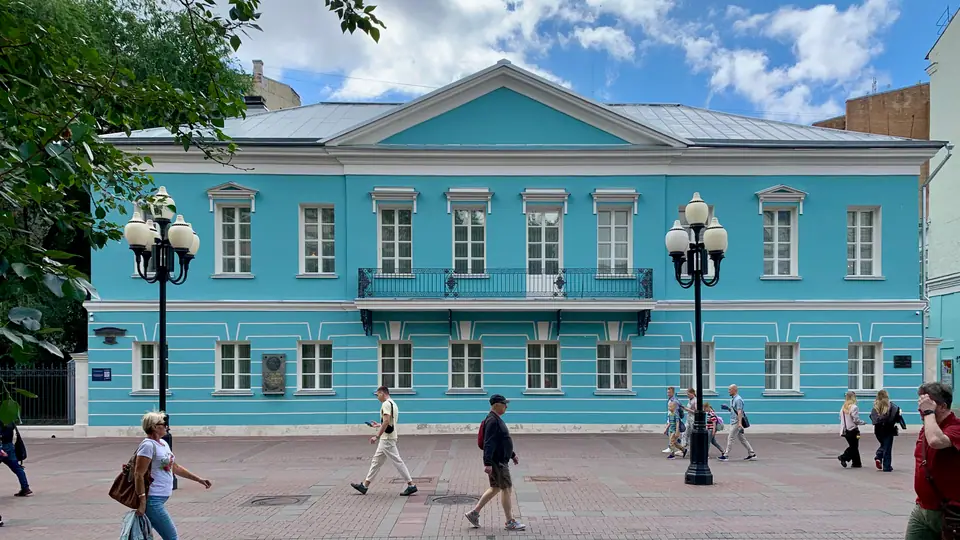
Patriarch's Ponds (Patriarshiye Prudy)
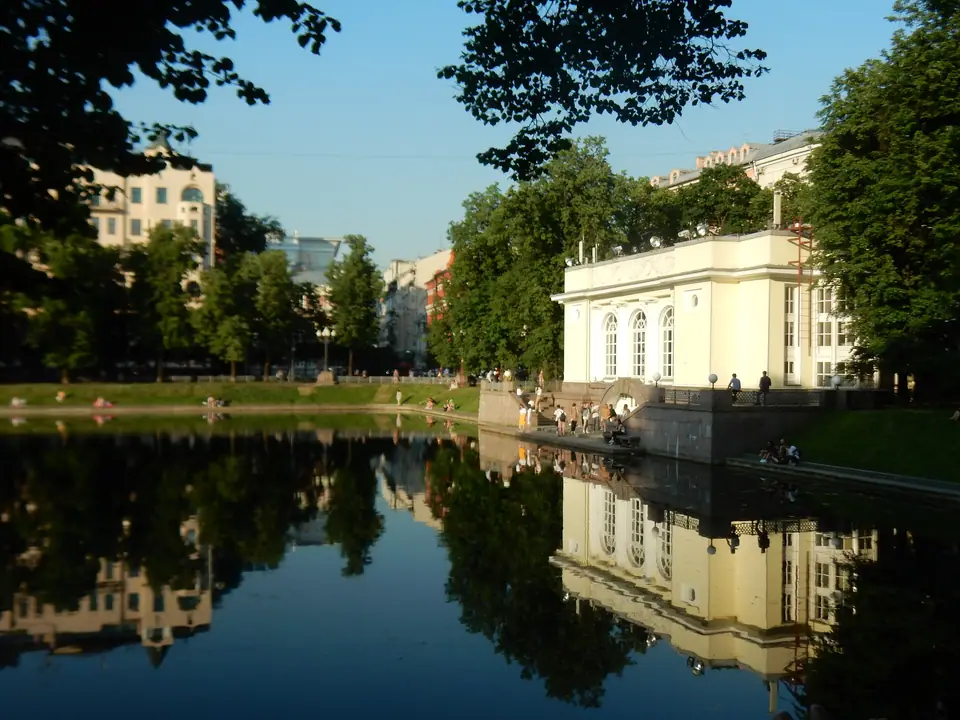
North of the Arbat across Bolshaya Nikitskaya Street (a short walk from Mayakovskaya Metro on the Zamoskvoretskaya Line), Patriarch's Ponds centres on a single tree-lined rectangular pond surrounded by early twentieth-century apartment houses, shaded benches, and independent bistros. The park is the opening setting of Mikhail Bulgakov's novel The Master and Margarita, and a bronze monument to the fabulist Ivan Krylov, surrounded by sculptures of characters from his fables, stands beside the waterside walk; nearby at 10 Bolshaya Sadovaya Street, Apartment 50 houses the Bulgakov Museum in the former communal flat where the writer lived in the 1920s.
Zamoskvorechye: Pyatnitskaya and Bolshaya Ordynka Streets
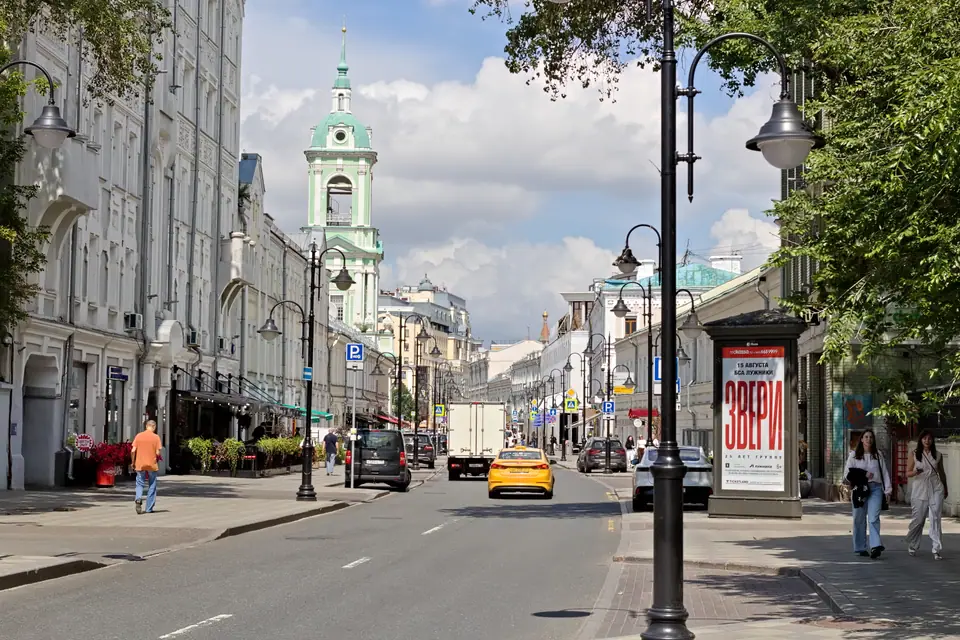
Directly south of the Kremlin across the Moskva River and Vodootvodny Canal lies Zamoskvorechye ("Beyond the Moskva River"), a historic district in the Central Administrative Okrug that developed from thirteenth-century settlements of merchants and archers along the southern roads to Kaluga, Serpukhov, and the Golden Horde. Unlike the northern centre, Zamoskvorechye escaped many twentieth-century avenue widenings, retaining two-storey pastel merchant mansions, wrought-iron gates, and Baroque parish bell towers.
Start at Novokuznetskaya or Tretyakovskaya Metro after visiting the State Tretyakov Gallery on Lavrushinsky Lane and walk along two parallel north-south streets: Bolshaya Ordynka Street, home to the whitewashed Marfo-Mariinsky Convent (whose church was designed by Alexey Shchusev between 1908 and 1912), and Pyatnitskaya Street, whose wide granite pavements pass the maroon-and-white belfry of the Church of Saint Clement and lively neighbourhood cafés described in where to stay in Moscow.
Traveller tips
Real advice from people who have been to Arbat Street, Patriarch's Ponds and Zamoskvorechye walking. Every tip is read by our team before it goes live.
No tips yet. Been here? Yours could be the first.
Thank you! Your tip will appear here after a quick review.
More in Moscow
Continue exploring Moscow with related neighbourhood, food, and planning guides
VDNKh, Memorial Museum of Cosmonautics, Kolomenskoye and Tsaritsyno
Moscow, Russia
Moscow Metro stations and transport: architecture route and Troika card
Moscow, Russia
What to eat in Moscow: Russian dishes, food halls and historic cafés
Moscow, Russia
How to get to Moscow: airports, Aeroexpress trains and rail terminals
Moscow, Russia
