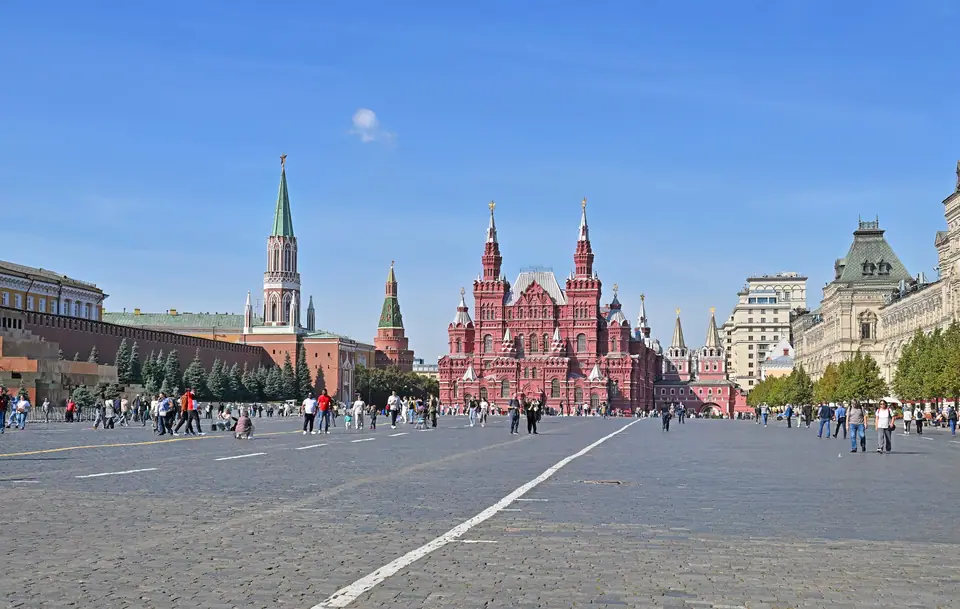
Moscow
Concentric boulevards, red-brick Kremlin fortifications, polychrome cathedrals, and deep marble Metro halls along the winding Moskva River.
Quick decisions
How many days?
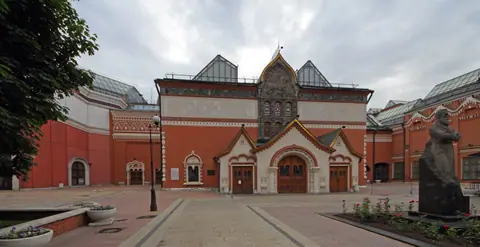
3 to 4 days: Red Square and the Kremlin on Day 1, the Tretyakov Gallery and Pushkin Museum on Day 2, and VDNKh plus Sparrow Hills on Day 3.
Where should I stay?
Tverskoy and Theatre Square: steps from the Kremlin. Kitay-gorod: historic lanes and cafés. Zamoskvorechye: quiet merchant streets near the Tretyakov Gallery.
Do I need a car?
No. Central traffic is dense and street parking is restricted; the Moscow Metro and orbital rail lines reach every sight with peak intervals under two minutes.
Best for
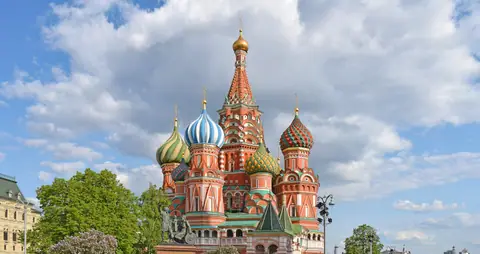
Architecture: Saint Basil's Cathedral and the Kremlin. Art: Tretyakov and Pushkin museums. Space history: VDNKh.
Before you go
Reserve timed tickets in advance on the official websites for the Kremlin Armoury Chamber and the Bolshoi Theatre Historic Stage, and note that the Kremlin closes on Thursdays while major art museums close on Mondays.
Getting around
Pick up a reusable Troika smart card at any station to tap across the Moscow Metro, Moscow Central Circle, and surface buses.
Continue your trip
High-speed Sapsan and overnight express trains from Leningradsky Station on Komsomolskaya Square connect Moscow directly to Saint Petersburg, while Yaroslavsky and Kazansky stations serve the Golden Ring, Kazan, and the Trans-Siberian route.
Overview
Set along a broad series of bends in the Moskva River in Central Russia, Moscow is the capital of Russia and the largest city entirely on the European continent, covering 2,511 square kilometres with more than 13 million residents within city limits. First documented in chronicles in 1147, the settlement rose as the seat of the Grand Principality of Moscow before becoming the capital of the unified Tsardom of Russia in 1547. Although Peter the Great moved the imperial capital to Saint Petersburg in 1712, Moscow remained the coronation seat of the Russian monarchs and regained its status as national capital in 1918.
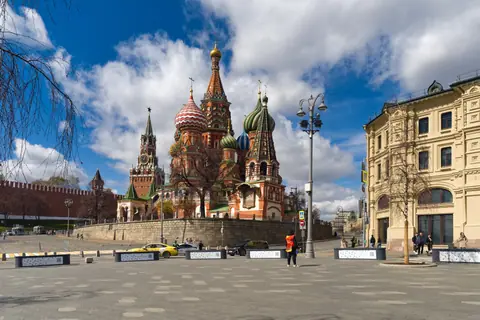
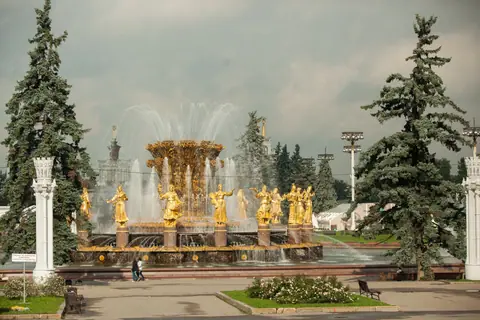
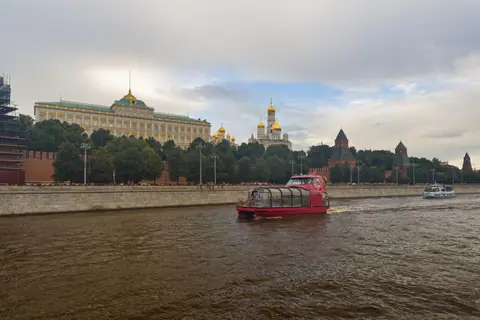
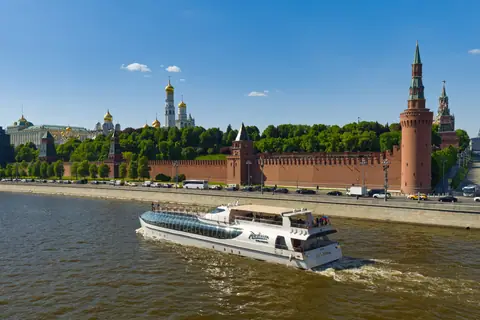
For visitors, the city's layout is organised by concentric rings radiating outward from the triangular brick fortress of the Moscow Kremlin and the Armoury Chamber and the cobblestones of Red Square and Saint Basil's Cathedral. The tree-lined Boulevard Ring, the wider Garden Ring, and the 54-kilometre Moscow Central Circle orbital railway connect medieval white-stone churches in Kitay-gorod and Zaryadye Park, nineteenth-century merchant mansions in Arbat Street and Zamoskvorechye, Stalinist skyscrapers on Sparrow Hills, and the monumental fountains and space pavilions of VDNKh and Kolomenskoye.
Getting there
Flights arrive at Sheremetyevo (SVO), Domodedovo (DME), and Vnukovo (VKO) airports, linked to Circle Line rail terminals by double-decker Aeroexpress trains and, at Vnukovo, directly by Metro Line 8A. Intercity and high-speed trains arrive at the three terminals of Komsomolskaya Square (Leningradsky, Yaroslavsky, and Kazansky) and six other central stations. See the how to get to Moscow guide for transfer details.
Where to stay
Staying inside the Boulevard Ring or Garden Ring keeps daily transit short: Tverskoy and Theatre Square put you within walking distance of the Kremlin, Kitay-gorod and Pokrovka offer historic lanes and lively cafés, and Zamoskvorechye provides a quieter base beside the Tretyakov Gallery. Compare districts in the where to stay in Moscow guide.
Things to do
Pair Red Square and the Moscow Kremlin on Day 1, cross the river between the Tretyakov Gallery and Pushkin Museum on Day 2, and tour the historic Metro stations, VDNKh, and Novodevichy Convent on Day 3. Follow the things to do guide and 3-day itinerary.
Food and drink
Traditional Muscovite and Russian dining centres on hot beetroot borscht with smetana, cabbage shchi, Siberian pelmeni dumplings, beef Stroganoff, buckwheat blini, and curd-cheese syrniki, served across historic boulevard dining rooms and modern domed market halls such as Danilovsky Market; see what to eat in Moscow.
Culture
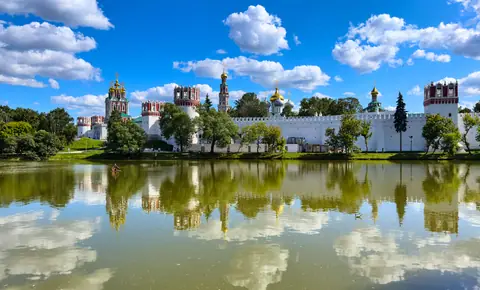
Three UNESCO World Heritage Sites stand within city limits: the Kremlin and Red Square (inscribed in 1990), the white-stone tent-roofed Church of the Ascension at Kolomenskoye (inscribed in 1994), and the sixteenth- and seventeenth-century ensemble of Novodevichy Convent (inscribed in 2004).
Weather by month
Moscow is warmest in July, with average highs around 25°C, and coldest in February, when nights drop to about -9°C. July is the wettest month, with rain on about 15 days.
| Month | Low | Range | High | Rain | Rainy days |
|---|---|---|---|---|---|
| Jan | -9°C | -4°C | 53 mm | 8 d | |
| Feb | -9°C | -3°C | 44 mm | 6 d | |
| Mar | -4°C | 3°C | 39 mm | 9 d | |
| Apr | 2°C | 12°C | 37 mm | 15 d | |
| May | 8°C | 19°C | 61 mm | 16 d | |
| Jun | 12°C | 22°C | 78 mm | 16 d | |
| Jul | 15°C | 25°C | 84 mm | 15 d | |
| Aug | 13°C | 23°C | 78 mm | 16 d | |
| Sep | 8°C | 16°C | 66 mm | 16 d | |
| Oct | 3°C | 9°C | 70 mm | 17 d | |
| Nov | -2°C | 2°C | 52 mm | 13 d | |
| Dec | -6°C | -2°C | 51 mm | 8 d |
Averages of daily values from 2015 to 2024. Rainy days are days with at least 1 mm of rain. Source: Open-Meteo · Compare destinations by month.
Moscow on the map
Every place we cover in Moscow. Tap a category or pin to explore.
In-depth Moscow guides
Browse the guides grouped by topic: sights, neighbourhoods, food, transport, day trips and trip planning.
Sights, Landmarks & Parks
Key monuments, viewpoints, museums and nature trails.
- Things to do in Moscow: landmarks, art collections and parksThe essential sights and experiences in Moscow, from Red Square and the Kremlin cathedrals to VDNKh, Tretyakov icons, and Metro architecture.
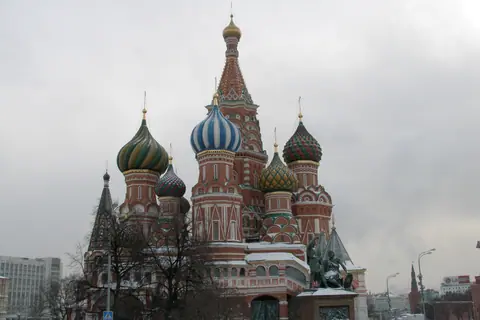
- Red Square, Saint Basil's Cathedral, GUM and the State Historical MuseumA detailed walking guide to Red Square's monuments, including Saint Basil's ten chapels, GUM's Shukhov glass roof, and the State Historical Museum.
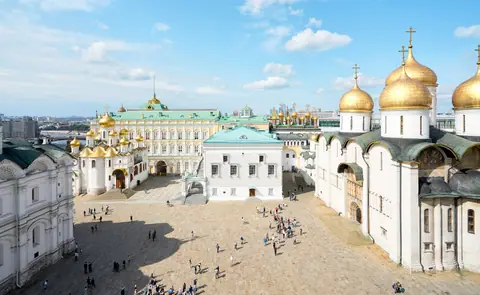
- Moscow Kremlin, Cathedral Square and the Armoury ChamberHow to visit the Moscow Kremlin: ticketing for Cathedral Square and the Armoury Chamber, plus the Dormition Cathedral, Tsar Bell, and Tsar Cannon.
- Tretyakov Gallery, Pushkin Museum of Fine Arts and Christ the SaviourGuide to Moscow's premier art museums on opposite banks of the Moskva River, plus the Cathedral of Christ the Saviour and Patriarshy Bridge.
- Gorky Park, Sparrow Hills, Moscow State University and Novodevichy ConventFollow the southwestern bend of the Moskva River from Gorky Park to the Sparrow Hills viewpoint, Moscow State University, and Novodevichy Convent.
- VDNKh, Memorial Museum of Cosmonautics, Kolomenskoye and TsaritsynoVisit northern Moscow's VDNKh pavilions and Cosmonautics Museum, then head south to the royal estates of Kolomenskoye and Tsaritsyno.
- Best time to visit Moscow: monthly weather, daylight and seasonsMonth-by-month Moscow climate guide using 1991 to 2020 VDNKh weather normals, comparing summer river evenings, golden autumn parks, and snowy winters.
- Moscow 3-day itinerary: Kremlin, art museums, Metro and VDNKhA logical 3-day Moscow route pairing Red Square and the Kremlin on Day 1, the Tretyakov and Pushkin museums on Day 2, and VDNKh plus Sparrow Hills on Day 3.
Neighbourhoods & Where to Stay
Districts, historic quarters and the best bases for your stay.
- Moscow: how the concentric rings and districts fit togetherUnderstand Moscow's concentric ring layout, museum booking rules, Metro navigation, and key districts before you arrive.
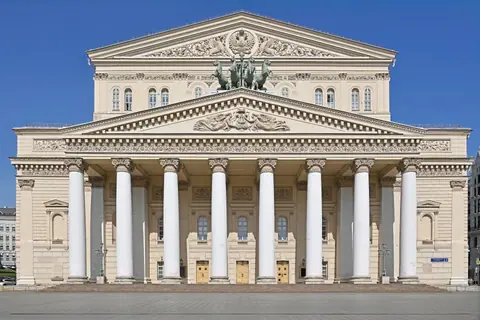
- Bolshoi Theatre, Tverskaya Street, Kitay-gorod and Zaryadye ParkWalk from Tverskaya Street and Theatre Square past the Bolshoi Theatre and Hotel Metropol into medieval Kitay-gorod and Zaryadye Park.
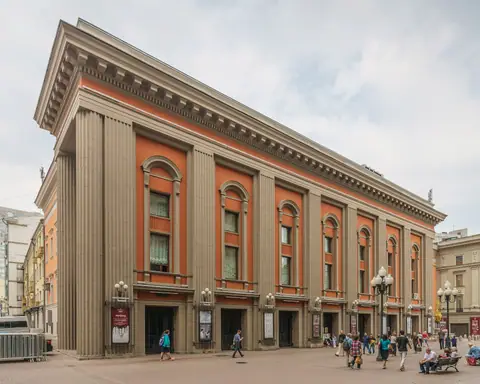
- Arbat Street, Patriarch's Ponds and Zamoskvorechye walking guideStroll Old Arbat's nineteenth-century literary landmarks, the leafy basin of Patriarch's Ponds, and the quiet merchant streets of Zamoskvorechye.
- Where to stay in Moscow: best neighbourhoods for sightseeingCompare Moscow's top central districts for visitors: Tverskoy and Theatre Square, Kitay-gorod and Pokrovka, Zamoskvorechye, and Khamovniki.
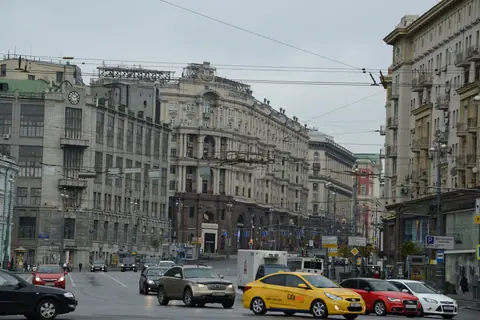
Food & Drink
Local dishes, markets, cafés and dining districts.
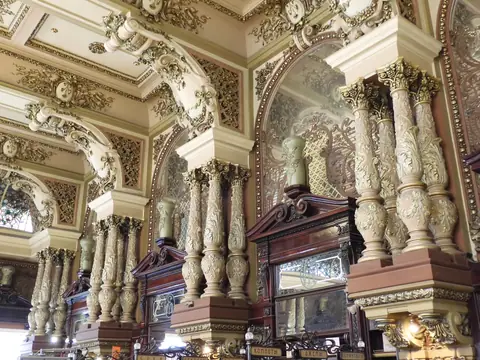
Getting Around & Arrival
Airport transfers, public transit, passes and driving rules.
- Moscow Metro stations and transport: architecture route and Troika cardHow to use the Troika smart card, Moscow Central Circle, and river trams, plus a self-guided architectural tour of Moscow's historic Metro stations.
- How to get to Moscow: airports, Aeroexpress trains and rail terminalsPractical arrival guide for Sheremetyevo (SVO), Domodedovo (DME), and Vnukovo (VKO) airports, Aeroexpress links, and Moscow's ten rail terminals.
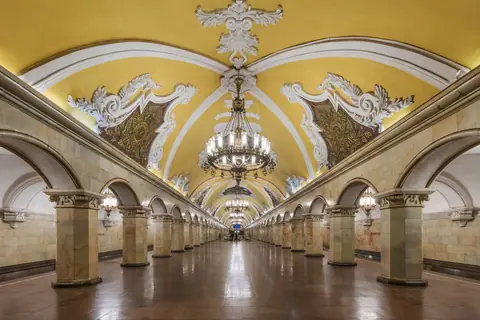
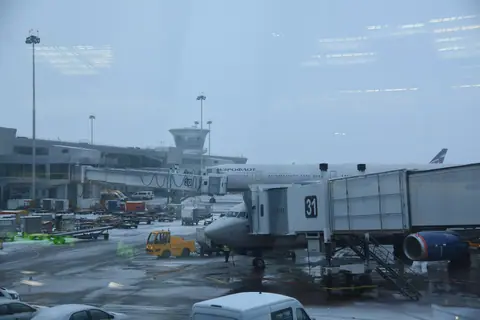
Need your embassy or consulate in Russia? See embassies and consulates in Russia.
Reviews
Log in to write a review.
No reviews yet.