Ribeira, the Dom Luis I Bridge and Upper Baixa
Walking downhill from Avenida dos Aliados and Sao Bento through the Sé Cathedral to Ribeira and the bridge.
The UNESCO-listed historic core of Porto drops down a steep granite amphitheatre from the civic boulevards of the upper Baixa to the medieval waterfront of Ribeira on the Douro River. Because the slope is severe, start at the top around Avenida dos Aliados and Sao Bento in the morning, work your way downhill through the cathedral quarter to the river, and ride the funicular or upper-deck Metro back up later.
Avenida dos Aliados, Sao Bento Station and the Sé Cathedral
Begin on Avenida dos Aliados, the grand granite boulevard framed by early-20th-century bank buildings and crowned at the top by City Hall. At its southern foot stands Sao Bento Station, built on the site of a former Benedictine convent. Even if you are not catching a train, step into the front passenger hall: its walls are covered in 20,000 blue-and-white tin-glazed azulejo tiles painted by Jorge Colaço, contrasting rural northern scenes of vintage carts and festivals with historical panels of the 1140 Battle of Valdevez and King João I's 1387 entry into Porto.
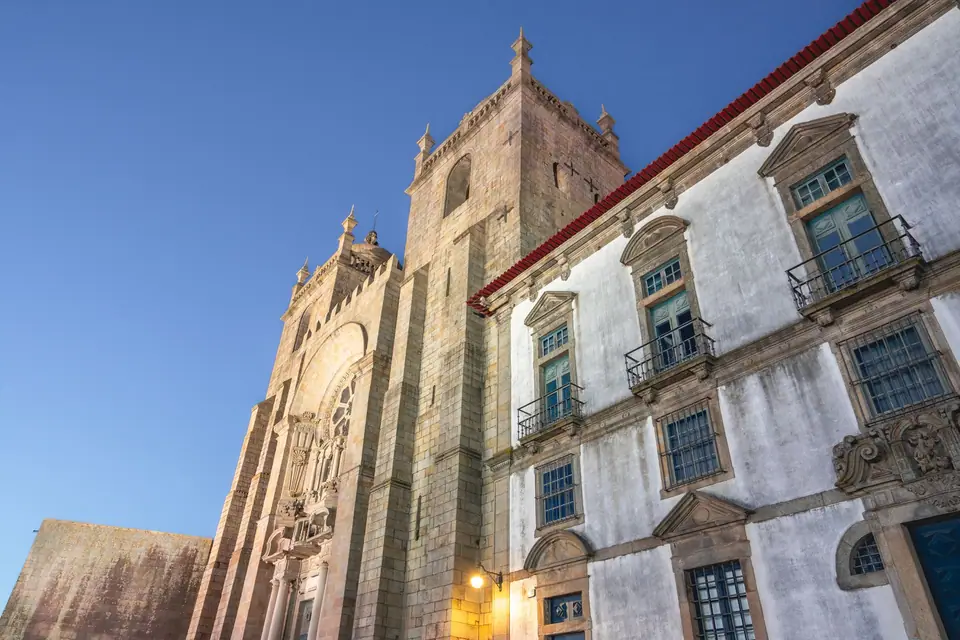
From Sao Bento forecourt, walk five minutes uphill to the Sé do Porto, the 12th-century Romanesque cathedral that looks half church, half granite fortress with its crenellated towers and rose window. Stand on the wide Terreiro da Sé terrace alongside the twisted baroque pillory for sweeping views across red-tiled roofs toward the Clerigos Tower, then step inside to see the 14th-century Gothic cloister lined with 18th-century blue tile scenes.
Barredo steps, Cais da Ribeira, Sao Francisco and Palácio da Bolsa
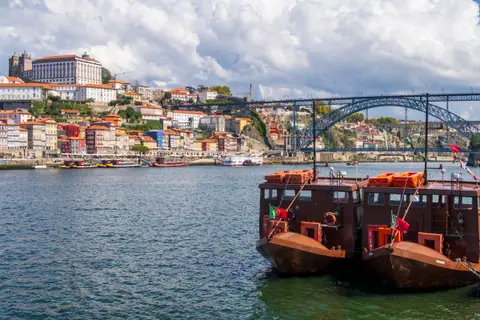
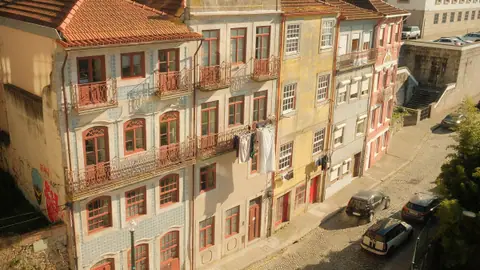
Immediately below the cathedral terrace, duck into the labyrinth of Barredo, the oldest residential quarter of Porto, where narrow stone steps wind between ochre and terracotta houses. The steps emerge onto Praça da Ribeira and the sunlit Cais da Ribeira promenade along the Douro, where wooden rabelo boats moor below arcaded granite facades. Walk five minutes west to Praça do Infante Dom Henrique to visit two landmarks side by side:
- Igreja de Sao Francisco: a 14th-century Gothic Franciscan church whose interior was transformed in the 1700s into a dazzling cavern of talha dourada (gilded baroque woodcarving) covering every column, vault and altarpiece, including the carved Tree of Jesse.
- Palácio da Bolsa (Stock Exchange Palace): the neoclassical headquarters of Porto's Commercial Association (visited by guided tour), culminating in the glass-domed Pátio das Nações and the 19th-century Salão Árabe (Arab Room) decorated in stucco and gold leaf inspired by the Alhambra.
Crossing both levels of the Dom Luis I Bridge
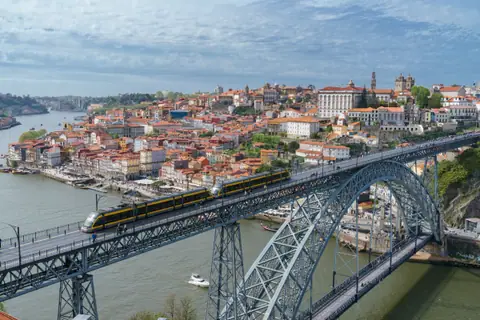
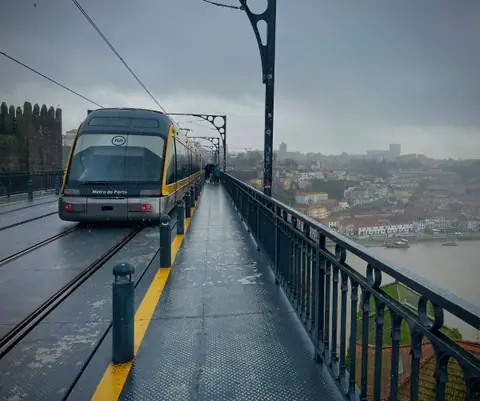
Designed by Teófilo Seyrig (a disciple of Gustave Eiffel) and opened in 1886, the Ponte Luís I spans the Douro with a 172-metre wrought-iron arch supporting two roadways. Pedestrians can walk across both: use the lower deck to cross directly from Cais da Ribeira to the wine lodges of Vila Nova de Gaia, and cross the upper deck 60 metres above the river beside the Metro trains for the ultimate view of Porto. To return from river level to the upper town without climbing stairs, ride the Funicular dos Guindais beside the bridge.
Traveller tips
Real advice from people who have been to Ribeira, the Dom Luis I Bridge and Upper Baixa. Every tip is read by our team before it goes live.
No tips yet. Been here? Yours could be the first.
Thank you! Your tip will appear here after a quick review.
More in Porto
Continue exploring Porto with related neighbourhood, food, and planning guides