Azulejo Churches, Livraria Lello, Clerigos and Northern Food
Exterior blue-and-white tiled churches, visiting Livraria Lello without the crush, and northern tascas.
On the upper plateau north of Sao Bento Station, three of Porto's signature pleasures sit within a fifteen-minute walk: baroque churches wrapped on the outside in blue-and-white ceramic tiles, the twin icons of the Clerigos Tower and Livraria Lello, and traditional food markets and taverns serving the hearty cuisine of northern Portugal.
Why Porto's churches wear their azulejos on the outside
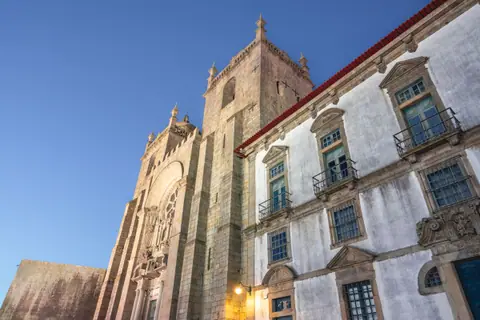
In Lisbon and southern Portugal, glazed tiles (azulejos) traditionally lined interior cloisters and halls. In 19th- and early-20th-century Porto, builders began cladding entire exterior granite church facades in tin-glazed tiles both to insulate walls against driving Atlantic damp and to brighten dark grey stonework. Beyond Sao Bento Station, seek out three tiled churches in the upper town:
- Capela das Almas (on pedestrian Rua de Santa Catarina): covered in 1929 with nearly 16,000 cobalt-blue and white tiles by Eduardo Leite, illustrating scenes from the lives of St Francis of Assisi and St Catherine of Alexandria right beside Bolhao Metro station.
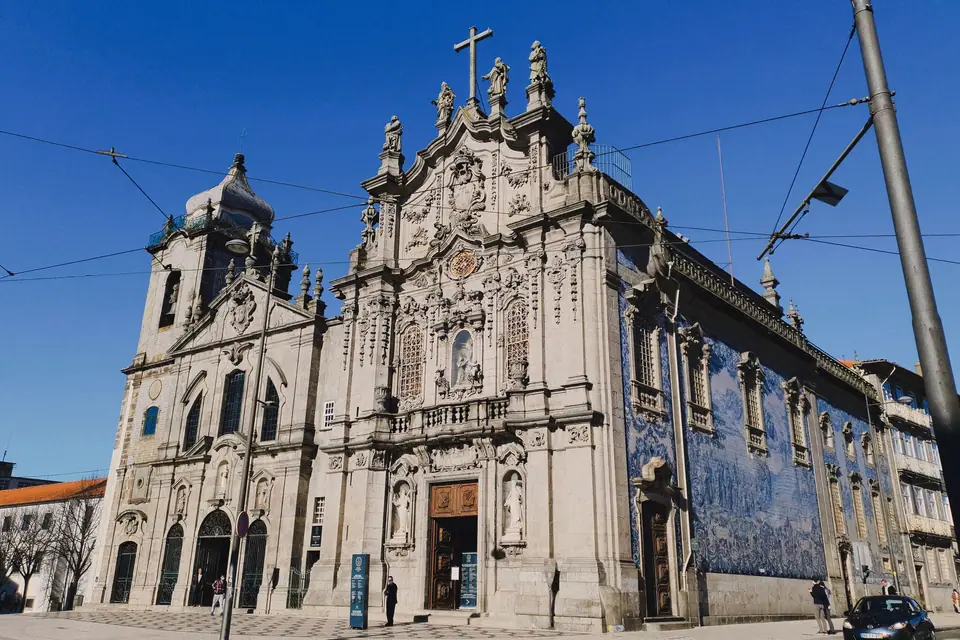
- Igreja do Carmo and Igreja dos Carmelitas: two side-by-side churches separated by a one-metre-wide hidden house (Casa Escondida), whose eastern flank gleams with a giant 1912 tile panel above rococo carved stone.
- Igreja de Santo Ildefonso (near Batalha): an 18th-century granite church framed by twin bell towers and over 11,000 tiles by Jorge Colaço (who also tiled Sao Bento).
Torre dos Clerigos, Livraria Lello and Palácio de Cristal
Between Sao Bento and Igreja do Carmo rises the 75-metre granite needle of the Torre dos Clerigos (1763), designed by Italian architect Nicolau Nasoni; climb its 225 spiral steps for a 360-degree view over Porto. Just across Praça de Lisboa stands Livraria Lello (1906), famous for its fork-shaped crimson staircase, carved neo-Gothic woodwork and stained-glass skylight. Book your timed entry voucher online on the official Livraria Lello website days ahead (the standard voucher is deductible against a book purchase) and pick the first morning slot at opening time. Afterwards, walk fifteen minutes west to the Jardins do Palácio de Cristal for peaceful camellia avenues and Douro river balconies.
Mercado do Bolhao, francesinha and what to eat in Porto
Start a food walk at the restored 1914 Mercado do Bolhao, grazing on sheep's cheese, olives and tinned sardines with a cold glass of crisp Vinho Verde. In a traditional tavern (tasca) or snack counter, look for five northern classics:
- Francesinha: Porto's knife-and-fork sandwich layered with beef steak, cured ham, fresh linguiça and smoked sausage, encased in melted cheese, crowned with a fried egg and ladled with a hot, spiced tomato-and-beer gravy.
- Bacalhau à Gomes de Sá: flakes of salt cod baked in a casserole with sliced potatoes, caramelised onions, black olives and hard-boiled egg.
- Tripas à moda do Porto: slow-simmered tripe with white beans, smoked chouriço and cumin over rice, the dish behind the proud local nickname Tripeiros.
- Cachorrinho and Bifana: a crispy griddled mini baguette filled with spicy sausage and cheese at Gazela near Batalha, or a garlicky pork bifana at Conga.
- Pastel de nata and a cimbalino: a warm custard tart dusted with cinnamon alongside an espresso, called a cimbalino in Porto.
Traveller tips
Real advice from people who have been to Azulejo Churches, Livraria Lello, Clerigos and Northern Food. Every tip is read by our team before it goes live.
No tips yet. Been here? Yours could be the first.
Thank you! Your tip will appear here after a quick review.
More in Porto
Continue exploring Porto with related neighbourhood, food, and planning guides