Rabat
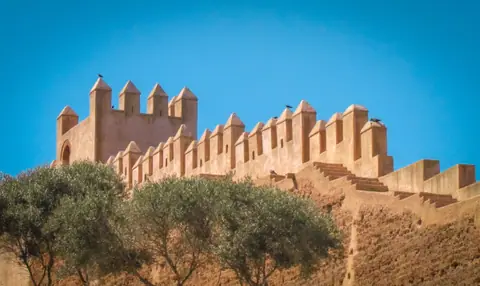
Morocco's oceanfront capital at the mouth of the Bou Regreg River, pairing the blue-and-white Kasbah of the Udayas, Almohad walls and Roman-Merenid Chellah with leafy Ville Nouvelle avenues and the Rabat-Sale tramway.
Quick decisions
How many days?
3 days: the Kasbah of the Udayas, Rue des Consuls and the Andalusian Gardens on day one, Hassan Tower, the Mausoleum of Mohammed V and the Chellah necropolis on day two, plus the Mohammed VI Museum of Modern and Contemporary Art and a boat or tram crossing to Sale on day three. Follow our three-day route.
Where should I stay?
Medina and Rue des Consuls: courtyard riads close to the ocean and river. Hassan and Centre Ville: leafy French-era boulevards beside the tramway and train station. Agdal or Souissi: contemporary hotels and cafe terraces. Compare areas in our neighbourhood overview.
Do I need a car?
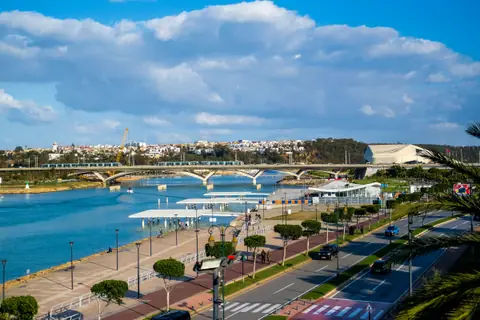
No. Two modern Rabat-Sale tramway lines, petit taxis in blue livery and walkable central avenues connect every historic monument, while ONCF Al Boraq high-speed trains link Rabat directly with Tangier and Casablanca.
Best for
History and architecture: 12th-century Almohad gates, Roman forum ruins and Art Deco civic avenues. Calm Medina shopping: fixed-feel craft lanes without intense touting. Coastal walks: Atlantic surf below fortress bastions.
Before you go
Know your two train stations: Rabat Ville sits right in the central Avenue Mohammed V quarter, whereas Rabat Agdal serves most Al Boraq high-speed services further south. Read our practical briefing.
Getting around
Rabat-Sale Airport (RBA) and Casablanca Airport (CMN): RBA sits across the river near Sale, while frequent ONCF trains connect Casablanca's main international hub to Rabat. Details in arrival and transport.
Continue your trip
High-speed Al Boraq trains reach Tangier to the north and Casablanca to the south, while mainline ONCF trains run inland to Meknes and Fez or south to Marrakech.
Overview
Rabat stands where the Bou Regreg River meets the Atlantic Ocean, a UNESCO World Heritage capital that blends 12th-century Almohad fortifications with wide palm-lined boulevards and contemporary cultural institutions. Because it serves as Morocco's administrative and diplomatic seat rather than a mass package resort, its rhythm is noticeably calmer than Marrakech or Fez: you can wander the indigo-and-white lanes of the Kasbah of the Udayas and the old Medina without persistent touts, then step straight onto a sleek low-floor tram into the Art Deco heart of the Ville Nouvelle.
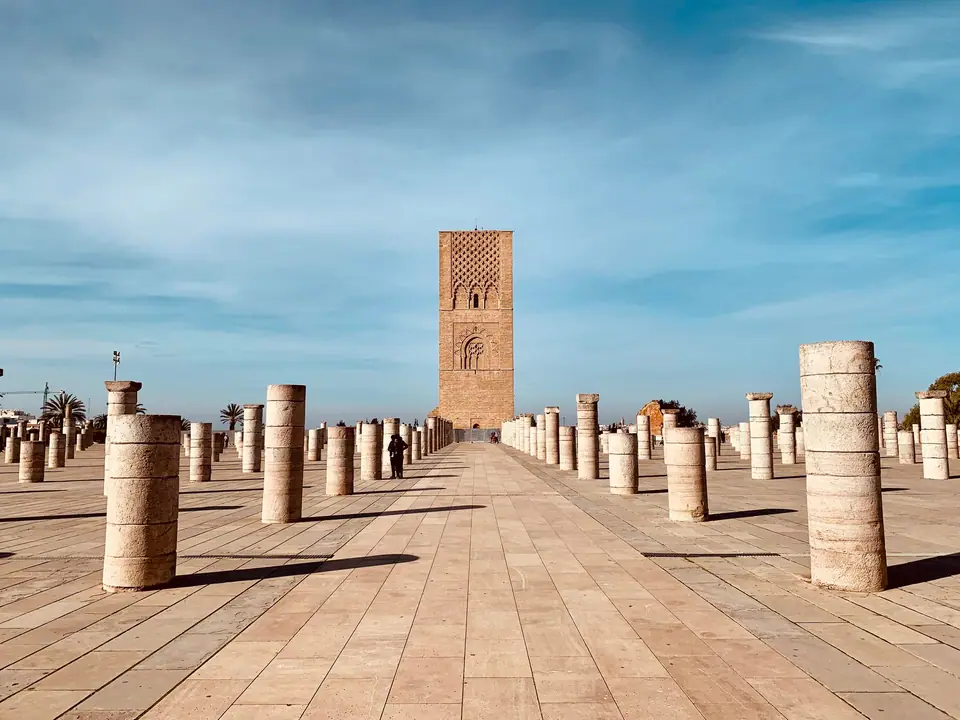
Across the city, layers of North African history sit in open view, from the unfinished red sandstone minaret of Hassan Tower and the Roman-Merenid ruins of Chellah to the galleries of the Mohammed VI Museum of Modern and Contemporary Art. Start with our before-you-go briefing and top things to do in Rabat.
Getting there
Travellers arrive either via Rabat-Sale Airport (RBA) just north-east of the Bou Regreg estuary or by flying into Casablanca Mohammed V Airport (CMN) and riding the ONCF rail link north into Rabat Ville or Rabat Agdal station. Within Morocco, the Al Boraq high-speed train links Tangier and Casablanca through Rabat Agdal, while the two-line Rabat-Sale tramway and metered blue petit taxis handle urban hops. See how to get to Rabat and around.
Where to stay
Choosing between traditional courtyard architecture and modern convenience is simple here: the Medina and the Kasbah of the Udayas offer intimate restored riads within walking distance of the ocean and riverfront, while the tree-lined avenues of Hassan, Centre Ville and Agdal provide elevator hotels right on the tram network. Compare six bases in where to stay in Rabat.
Things to do
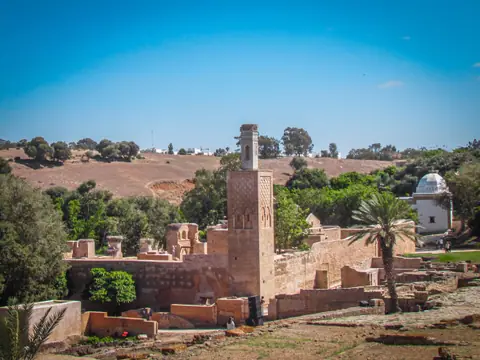
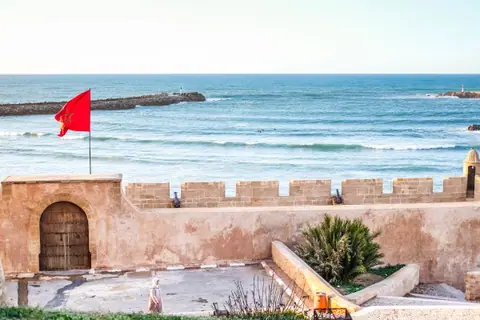
Walk through the monumental Almohad horseshoe arch of Bab Oudaia into the Kasbah of the Udayas for mint tea overlooking the Bou Regreg estuary, inspect the forest of columns around Hassan Tower and the Mausoleum of Mohammed V, watch white storks nesting atop the Roman columns and Merenid minarets of Chellah, and pair Rue des Consuls craft workshops with the Archeological Museum and modern art galleries. Full list in things to do in Rabat.
Food and drink
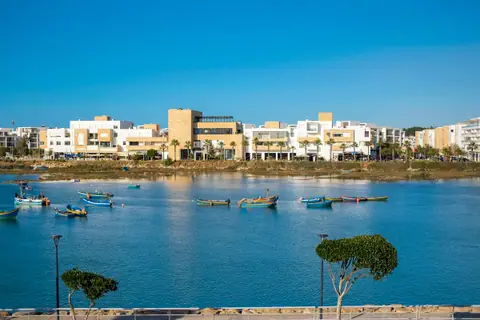
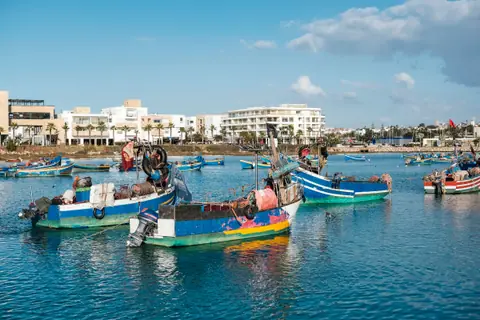
Rabat's kitchen reflects both its imperial court heritage and its Atlantic fishing harbour: slow-braised lamb or chicken tagines perfumed with saffron and preserved lemon, flaky pastilla pies, Friday couscous Tfaya topped with caramelised onions and raisins, and platters of crisp fried sole, sardines and squid along the Bou Regreg marina and ocean cornice. Read where and what to eat in our Ville Nouvelle and food overview.
Culture
Founded in the 12th century by the Almohad Caliph Abd al-Mu'min as a fortified monastery-camp (ribat) and expanded by his grandson Yaqub al-Mansur as Ribat al-Fath, the city later welcomed Morisco refugees expelled from 17th-century Spain and became a fiercely independent maritime republic alongside neighbouring Sale before Sultan Mohammed ben Abdallah and the 20th-century French Protectorate shaped it into modern Morocco's capital.
Weather by month
Rabat is warmest in August, with average highs around 28°C, and coldest in January, when nights drop to about 8°C. November is the wettest month, with rain on about 8 days. For mild weather with fewer rainy days, aim for May, June, September and October.
| Month | Low | Range | High | Rain | Rainy days |
|---|---|---|---|---|---|
| Jan | 8°C | 18°C | 74 mm | 8 d | |
| Feb | 9°C | 18°C | 62 mm | 7 d | |
| Mar | 11°C | 20°C | 58 mm | 7 d | |
| Apr | 12°C | 22°C | 44 mm | 6 d | |
| May | 15°C | 24°C | 21 mm | 3 d | |
| Jun | 17°C | 26°C | 5 mm | 1 d | |
| Jul | 19°C | 27°C | 1 mm | 0 d | |
| Aug | 19°C | 28°C | 1 mm | 0 d | |
| Sep | 18°C | 27°C | 14 mm | 2 d | |
| Oct | 15°C | 25°C | 46 mm | 5 d | |
| Nov | 12°C | 21°C | 82 mm | 8 d | |
| Dec | 9°C | 18°C | 79 mm | 8 d |
Averages of daily values from 2015 to 2024. Rainy days are days with at least 1 mm of rain. Source: Open-Meteo · Compare destinations by month.
Rabat on the map
Every place we cover in Rabat. Tap a category or pin to explore.
In-depth Rabat guides
Browse the guides grouped by topic: sights, neighbourhoods, food, transport, day trips and trip planning.
Sights, Landmarks & Parks
Key monuments, viewpoints, museums and nature trails.
- Best Things to Do in RabatFortress gates, indigo alleyways, Almohad minarets, stork-topped Roman ruins and river rowboats.
- Kasbah of the Udayas, Andalusian Gardens and the MedinaWalking through the 12th-century cliffside fortress, ocean lookouts, mint tea terraces and craft lanes.
- Hassan Tower, the Mausoleum of Mohammed V, Chellah and SaleAlmohad imperial ambition at Hassan Tower, royal tombs, Roman Sala Colonia at Chellah and crossing to Sale.
Neighbourhoods & Where to Stay
Districts, historic quarters and the best bases for your stay.
Food & Drink
Local dishes, markets, cafés and dining districts.
Getting Around & Arrival
Airport transfers, public transit, passes and driving rules.
Trip Planning & Itineraries
When to visit, what to pack and day-by-day routes.
- Rabat: What to Know Before You GoHow Rabat's two railway stations, tramway, calm Medina souks and Atlantic microclimate work in practice.
- Best Time to Visit RabatWhy Rabat stays cooler in summer than inland Morocco, plus spring storks at Chellah and autumn light.
- What to Wear in RabatDressing for Rabat's polished capital avenues, breezy ocean cliffs and royal religious monuments.
- Rabat 3-Day Itinerary: Kasbah, Chellah, Museums and SaleThree unhurried days covering Rabat's ocean fortress, Almohad monuments, Roman ruins, art museums and Sale.
Need your embassy or consulate in Morocco? See embassies and consulates in Morocco.
Reviews
Log in to write a review.
No reviews yet.