


























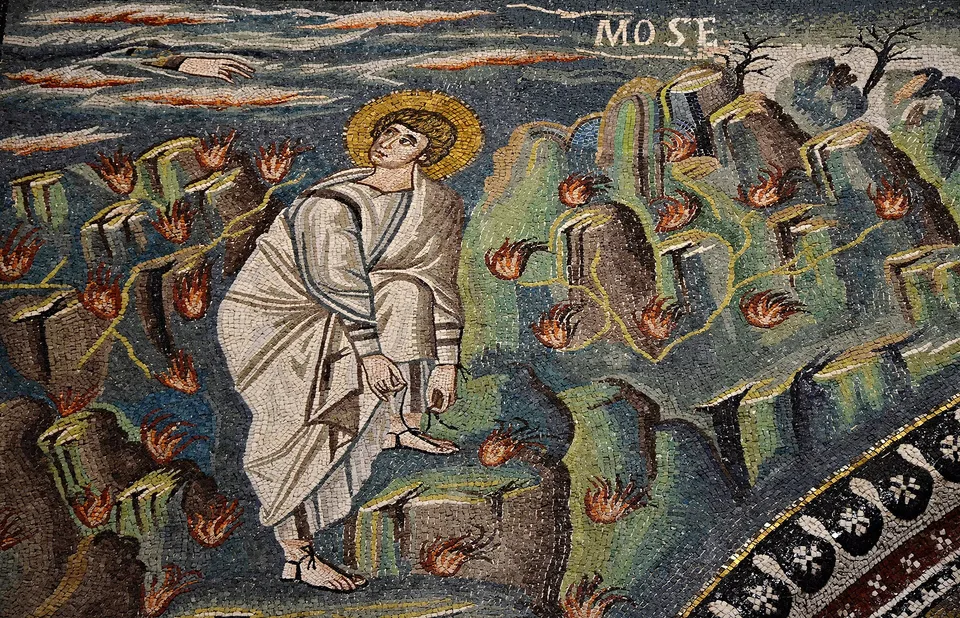
Photo: Carole Raddato · CC BY-SA 2.0
San Vitale and Ravenna's Fifth- and Sixth-Century Mosaics
Eight UNESCO monuments in Ravenna preserve luminous fifth- and sixth-century mosaic cycles that span three distinct imperial eras.
Ravenna's eight UNESCO World Heritage monuments trace three imperial eras across 1.32 hectares. The sequence begins with the Western Roman capital from 402 AD under Honorius. It continues through the Ostrogothic kingdom between 493 and 553 AD, concluding with Byzantine rule from 568 to 751 AD. Begun in 525 to 526 AD under Bishop Ecclesius, the Basilica of San Vitale was funded with 26,000 gold coins by Giuliano Argentario. Archbishop Maximian consecrated the church in 547 AD. The design uses two concentric octagonal brick blocks with a two-storey ambulatory, upper matroneo gallery, slanted narthex, and polygonal apse. Walking through the central space reveals how daylight illuminates the complex arches and presbytery vaults.
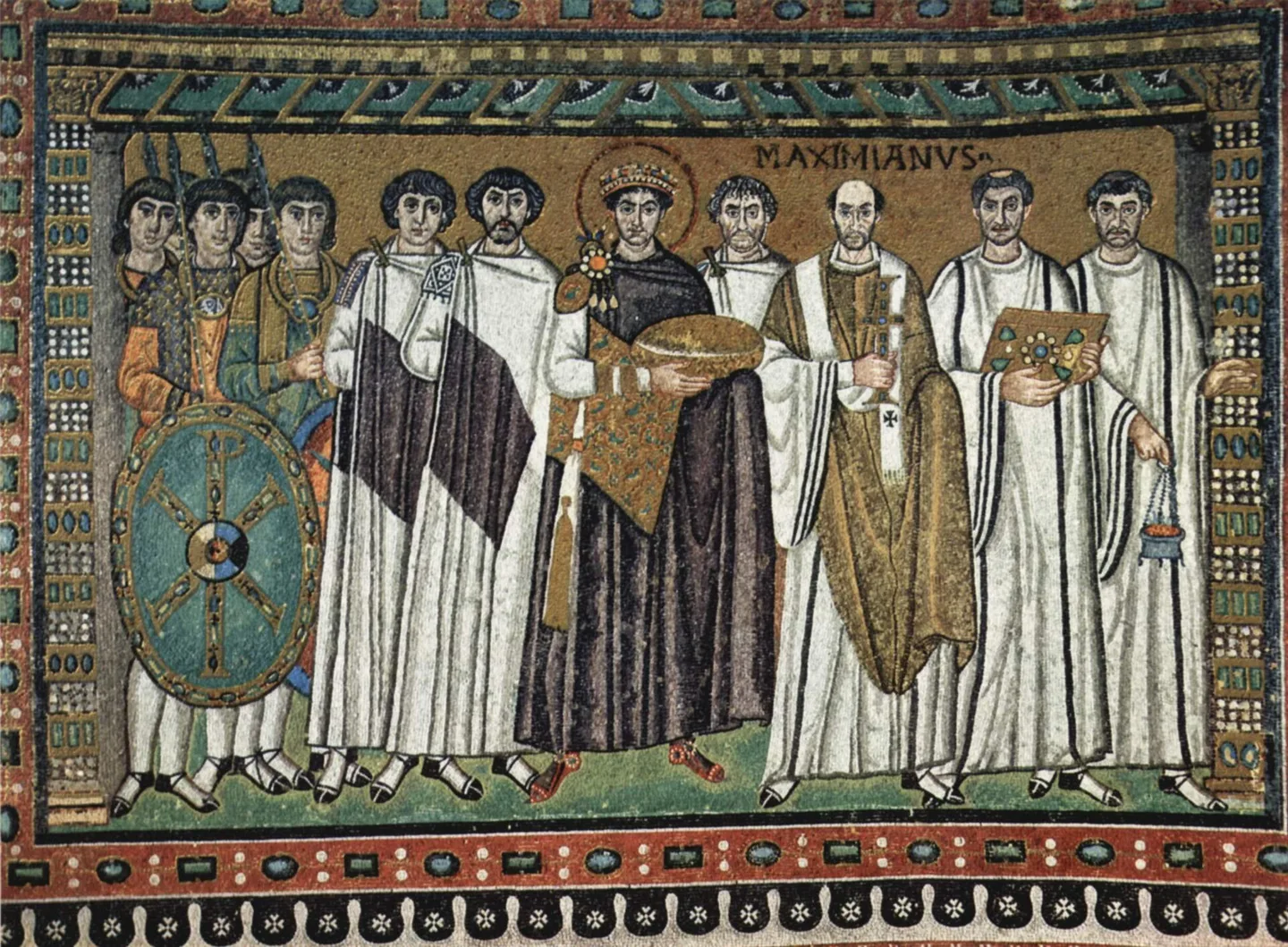
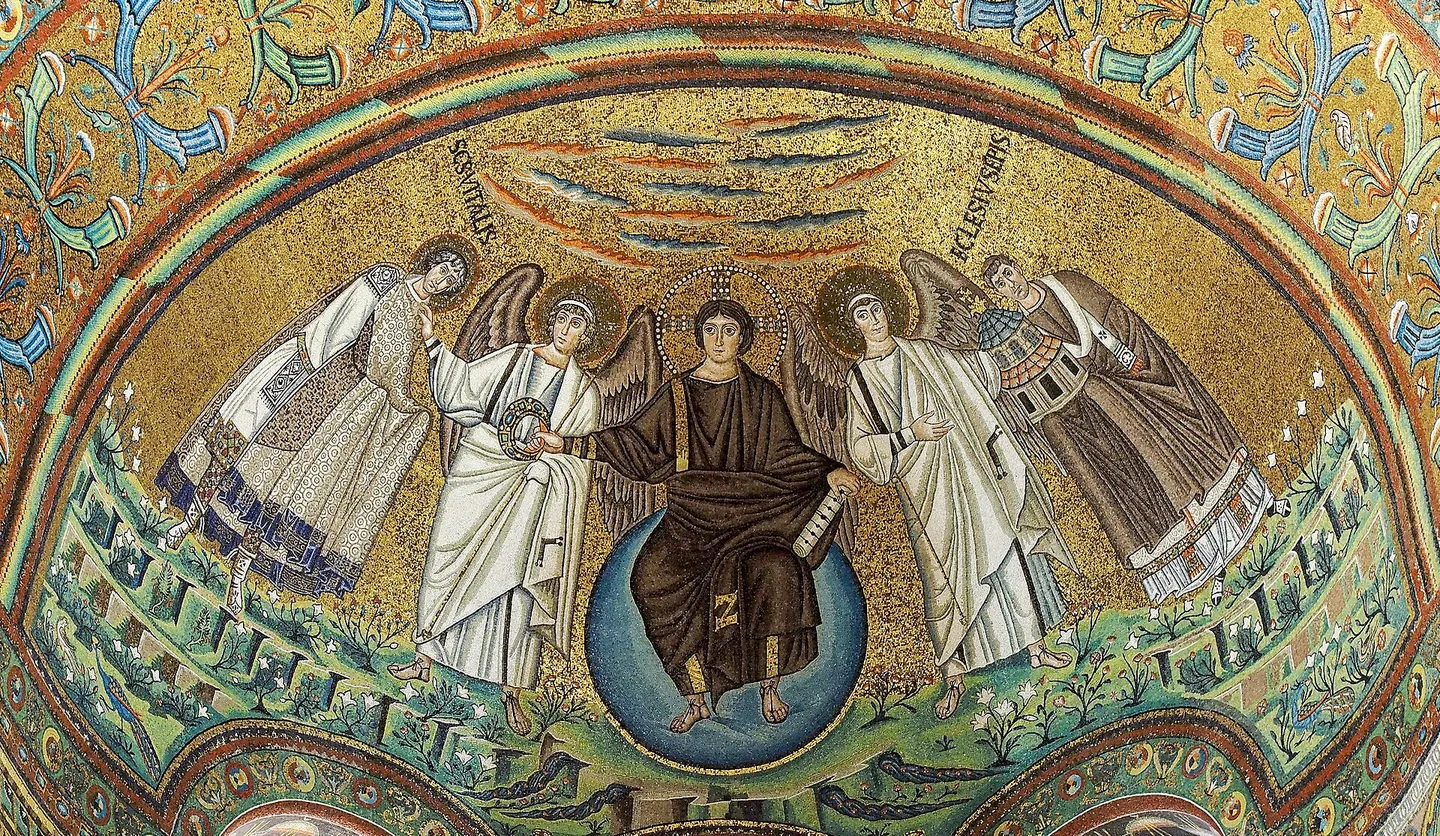
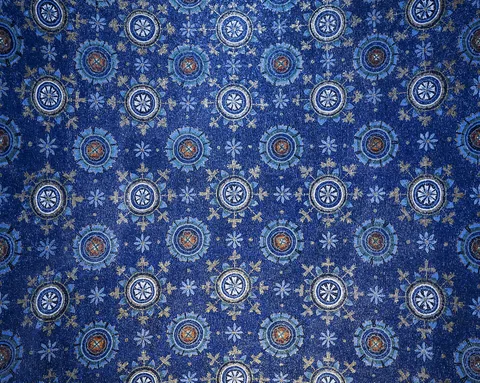
Inside the presbytery, twin mosaic panels portray Emperor Justinian alongside Archbishop Maximian and court officials bearing liturgical gifts. Facing them across the chancel, Empress Theodora stands draped in royal purple with her retinue, carrying a golden chalice. These imperial representations look toward Old Testament scenes and Christ Pantocrator in the apse. Directly behind San Vitale, the Mausoleum of Galla Placidia was commissioned after 426 AD by the daughter of Emperor Theodosius. Although she died in 450 AD and was not buried there, the plain brick exterior hides deep indigo starry vaults. The Good Shepherd lunette above the entrance depicts Christ amidst sheep.
The Twin Baptisteries and Archiepiscopal Treasures
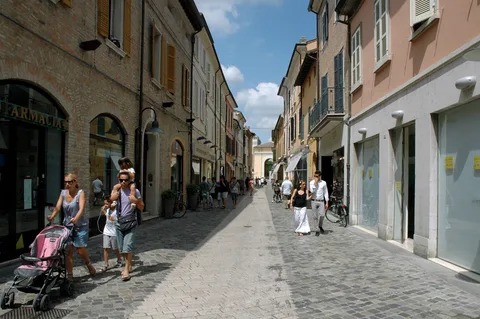
A short walk south through the pedestrianised historic district brings travellers to the octagonal Neonian Baptistery, adjacent to Ravenna Cathedral. Begun under Bishop Ursus in the early 5th century, the building received its dome mosaics under Bishop Neon between 450 and 475 AD. Due to coastal subsidence, the structure now sits roughly 3 metres below original ground level. Looking upward, the dome mosaic shows Saint John baptising Christ in the Jordan River, encircled by twelve apostles. A short walk north leads to the Archiepiscopal Museum and the Chapel of Saint Andrew. The chapel preserves gold-ground warrior Christ mosaics alongside the 6th-century Ivory Throne of Maximian.
The nearby Arian Baptistery, constructed in the late 400s, reflects the theology of King Theodoric's Ostrogothic royal court. Its central dome medallion depicts Christ's baptism ringed by twelve apostles. Emperor Justinian converted this structure to Orthodox worship during the mid-6th century. Comparing the two baptisteries demonstrates how early Christian communities visualised theology across shifting political regimes. Those pacing a two-day cultural route through Ravenna will find both baptisteries easy to connect on foot.
Theodoric's Palatine Church and Stone Tomb
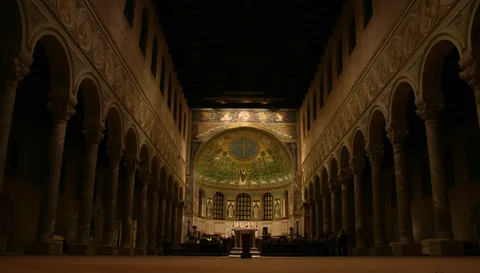
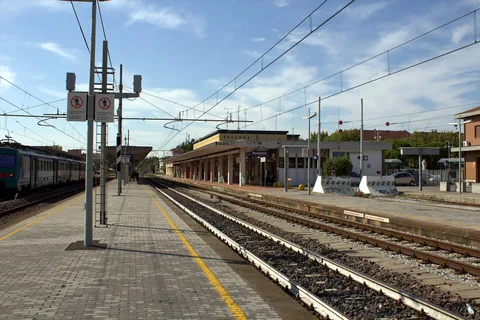
King Theodoric governed his kingdom from 493 to 526 AD and built Sant'Apollinare Nuovo as his palatine church. Standing near the railway station, the basilica features processions of Virgins and Martyrs along the nave walls. Mosaic cityscapes preserve representations of the ancient Classis port and Theodoric's Palace. The church offers rare visual evidence of fifth- and sixth-century architecture surviving in Italy.
Northeast of the rail lines, Theodoric planned his final resting place by commissioning his two-storey decagonal mausoleum in 520 AD. Unlike Ravenna's brick traditions, the structure stacks dry-laid blocks of Aurisina stone. Its upper chamber is capped by a single monolithic roof slab measuring 10.76 metres across and weighing 290 tons. Twelve handles carved along the outer rim allowed workers to hoist this enormous stone block into place. The tomb stands as a striking testament to royal ambition set within late antique engineering traditions.
Sant'Apollinare in Classe and Timed-Entry Practicalities
Eight kilometres south of central Ravenna by road, the settlement of Classe preserves the ancient naval station's principal basilica. The 30-metre-tall Basilica of Sant'Apollinare in Classe was constructed between 533 and 536 AD and consecrated in 549 AD. Giuliano Argentario financed this vast church, which displays an emerald meadow apse under 99 gold and silver stars. Visiting this monument completes the survey of the Early Christian Monuments of Ravenna inscribed across the territory.
Managing entry times is helpful for seeing these fragile sites smoothly during your visit to historic Ravenna's cobbled quarters. The central five monuments are administered by the Opera di Religione on seven-day passes that require advance online reservations.
- Mausoleum of Galla Placidia: strict 5-minute timed entry window.
- Neonian Baptistery: strict 5-minute timed entry window.
- Archiepiscopal Museum and St Andrew's Chapel: 25-minute gallery slot.
- Basilica of San Vitale: flexible visit duration within regular opening.
- Basilica of Sant'Apollinare Nuovo: flexible visit duration within regular opening.
Official prices and opening hours
- Opera di Religione 5-Monument PassOfficial site ↗
- Opera di Religione 2-Monument Pass (San Vitale + Sant'Apollinare Nuovo)Official site ↗
- Arian BaptisteryOfficial site ↗
- Mausoleum of TheodoricOfficial site ↗
- Basilica of Sant'Apollinare in ClasseOfficial site ↗
Where it is
- 1San Vitale and Ravenna's Fifth- and Sixth-Century Mosaics
- Bologna Guglielmo Marconi Airport (BLQ) · about 73 km from here in a straight line
- Directions in Google Maps
Stations and taxi ranks: OpenStreetMap. Airports: OurAirports. Distances are in a straight line.
Traveller tips
Real advice from people who have been to Ravenna. Every tip is read by our team before it goes live.
No tips yet. Been here? Yours could be the first.
Thank you! Your tip will appear here after a quick review.
More in Ravenna
Continue exploring Ravenna with related neighbourhood, food, and planning guides
Monuments, Dante Sites, and Coastal Trails in Ravenna
Ravenna, Italy
Where to Stay in Ravenna: Quarters, Rail Access, and ZTL Limits
Ravenna, Italy
Two Days in Ravenna: A Paced Route Through Mosaics and Classe
Ravenna, Italy
Ravenna Travel Logistics: Rail Links, Combined Passes, ZTL Cameras, and Seasons
Ravenna, Italy
