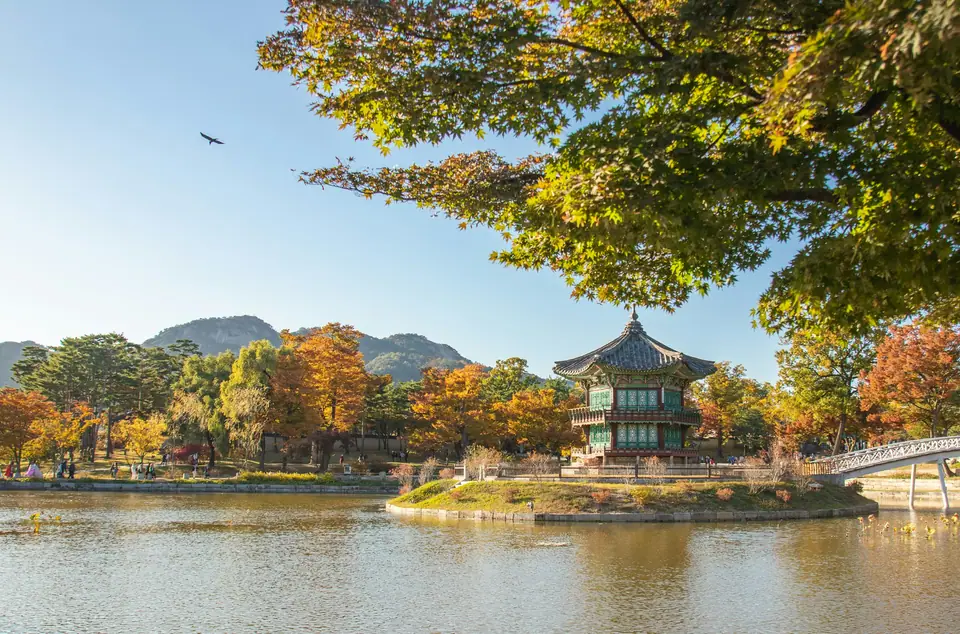
Photo by INHYEOK PARK on Unsplash
Seoul Palaces Guide: Gyeongbokgung, Changdeokgung and Bukchon
The royal palaces of the Joseon kings, and the hanok lanes between them.
Seoul has five royal palaces from the Joseon dynasty, which ruled Korea from 1392 to 1910. All of them were burned, dismantled or rebuilt at least once, first in the Japanese invasions of the 1590s, then under colonial rule in the 20th century. What stands today is largely restoration, done with great care and still going on. Two palaces matter most for a first visit, and they are a twenty-minute walk apart through Bukchon. Deoksugung and Changgyeonggung can wait for a second trip, unless your hotel is next to one of them.
Gyeongbokgung
The first and largest palace, built in 1395. You enter through Gwanghwamun, where guards in red and blue Joseon uniforms carry out the changing of the guard ceremony several times a day. Inside, a sequence of gates leads to Geunjeongjeon, the throne hall, with stone rank markers in the courtyard where officials stood in order. To the west, Gyeonghoeru is a banquet pavilion on 48 stone pillars in a square pond. At the back, Hyangwonjeong is a small hexagonal pavilion on an island, reached by a wooden bridge. The National Folk Museum sits inside the grounds, and the National Palace Museum is by the main gate.
Arrive at opening time and walk straight to the back. The front courtyards fill with tour groups first. Visitors wearing hanbok enter for free, and dozens of rental shops around the palace will dress you in an hour (many are in Jongno, where we'd sleep for an early start). The government is considering the first rise in palace fees in twenty years, and the hanbok rule may change with it, so check the Royal Palaces website for current rules.
Changdeokgung and the Secret Garden
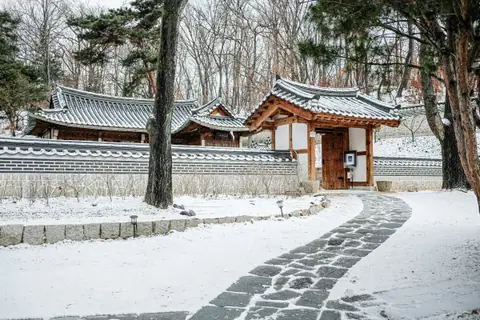
The palace the kings actually preferred, and a UNESCO World Heritage Site. Its buildings follow the slope of the hills instead of a strict grid, which makes it feel more lived in. Behind it is Huwon, the Secret Garden: pavilions, a library and lotus ponds in about 78 acres of woodland. It can only be seen on a guided tour with a limited number of places, including tours in English. Tickets go on sale in advance, and autumn slots, when the maples around Buyongji pond turn red, vanish first.
A short walk south, Jongmyo is the royal ancestral shrine, a long, severe hall that is one of the most striking buildings in Korea. Most days it's open by guided tour only.
The Bukchon walk
Between the palaces, Bukchon's hanok climb the hillside. From Anguk station exit 2, walk uphill to the lanes of Bukchon-ro 11-gil, where the rooftops ripple down towards the office towers. Since 2025, visitors aren't allowed into this core area from 5pm to 10am, and fines apply. Continue west to the cafés of Samcheong-dong and back down to Gyeongbokgung. A three-day plan fits all of this into the first day.
Traveller tips
Real advice from people who have been to Seoul Palaces Guide: Gyeongbokgung, Changdeokgung and Bukchon. Every tip is read by our team before it goes live.
No tips yet. Been here? Yours could be the first.
Thank you! Your tip will appear here after a quick review.
More in Seoul
Continue exploring Seoul with related neighbourhood, food, and planning guides