


























Trastevere Food Tour in Rome
Three hours of supplì, pizza by the slice, cured meats and a proper Roman pasta across the river, and what separates a good tour from a walk between tourist restaurants.
Overview
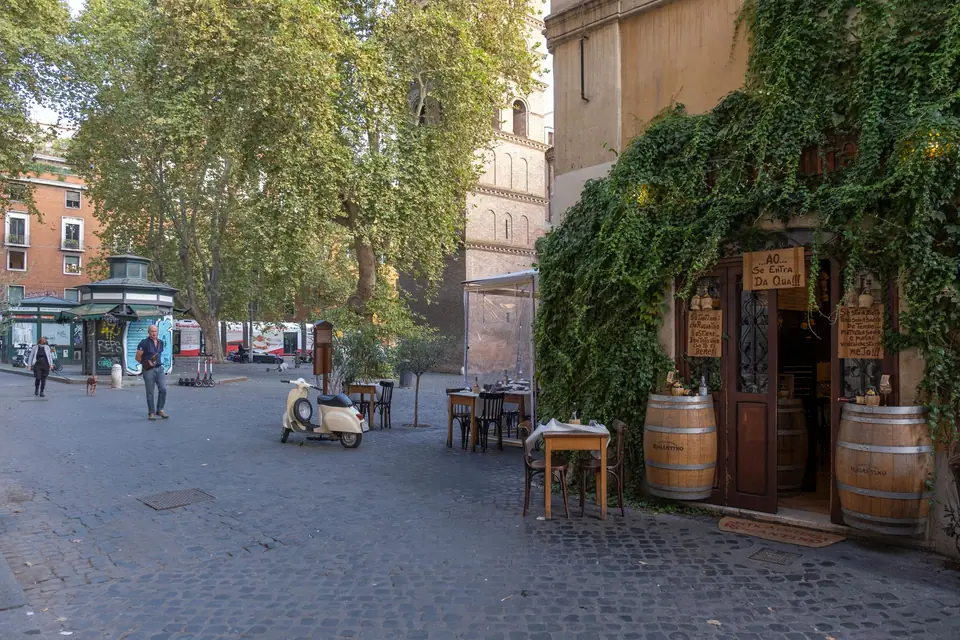
Trastevere is where most Rome food tours happen, and for a simple reason: the neighbourhood across the Tiber packs bakeries, delis, pizza-by-the-slice counters and old trattorias into a few cobbled streets, so a guide can walk you through a whole Roman meal in a couple of kilometres. It is also the most touristy food district in the city. Both things are true, and a tour is one answer to the second one.
What a typical evening looks like
Most tours meet near Piazza Trilussa or the river and start with something fried: supplì, the rice croquette with melting mozzarella inside, and often a slice of pizza al taglio. Then a deli stop for pecorino romano, cured meats such as guanciale or porchetta, and a glass of wine from Lazio, the region around Rome. The centre of the tour is a sit-down stop at a trattoria for one or two of the classic pastas, usually cacio e pepe, carbonara or amatriciana. It finishes with gelato, or sometimes a maritozzo, the cream-filled bun. Our Rome food guide explains each of these dishes and how Romans order them; the value of the tour is eating them in the right places, in the right order, with someone who can tell you why they taste that way.
Many operators combine Trastevere with the old Jewish Ghetto across the river, reached over the Tiber Island. That adds carciofi alla giudia, the deep-fried artichokes, and the Ghetto's bakeries, and gives the evening a stronger story. It also makes it longer on foot.
Who it suits
First-time visitors on a short stay who want to eat well without researching every restaurant, solo travellers who like company at dinner, and anyone curious about why Roman food is so strict about its rules. By the end you know what a proper carbonara looks like, which helps for the rest of the trip.
Who should skip it
Travellers who already know Italian food well, and those staying a week or more. With time, you will eat just as well by picking your own trattorias, and the tour's portions (small plates at every stop) mean a lot of standing between bites. Visitors who want fewer tourists should look at a Testaccio tour instead. Testaccio, the old slaughterhouse district south of the Aventine, is where Roman offal dishes come from, the covered market is used by locals, and daytime tours there feel more like a real neighbourhood than a stage.
How to Book
Tours are sold by small local companies and larger agencies, online and through hotels. The differences that matter are all in the small print:
- Group size. Ten or twelve is comfortable in narrow streets and small shops. Twenty people in a deli is not a tasting, it is a queue.
- A sit-down stop. The better tours include at least one proper seat at a trattoria. Tours that stay on the street are lighter and shorter.
- Named stops. Good operators work with family businesses that have been there for decades and are happy to say which. Vague descriptions like "a local bakery" tell you less.
- Drinks included, and whether children or non-drinkers get a lower rate.
- Dietary needs. Vegetarian versions are easy to arrange. Gluten-free and allergy requests need notice when you book, because much of the food is fried or bread-based.
Cancellation windows are often 24 to 48 hours, but check yours before paying. Rain rarely cancels a tour; it just moves more of it indoors.
Tips
- Keep lunch light. Skip a big lunch; the tastings add up to a full dinner.
- Get there by tram 8, which crosses the river from Largo di Torre Argentina. Track works on the line have replaced trams with buses on the same stops for weeks at a time in 2026, so check the ATAC site before relying on it. Our getting there guide explains tickets, and from the Centro Storico the walk over Ponte Sisto is often quicker anyway.
- Wear shoes with grip. The cobbles (sampietrini) are uneven and slippery when wet.
- Pace the wine. Pours are small but come at most stops, and they add up over three hours.
- Ask for the list. Most guides will share the names of the places you visited. Use it to come back for a full meal.
- Stay out afterwards. The tour usually ends when the neighbourhood is at its liveliest. If you would rather sleep near the quiet end of it, our where to stay guide explains which part.
Reviews
Log in to write a review.
No reviews yet.
You might also like
Vatican Museums and Sistine Chapel Visit
About 3 to 4 hours for the main route, half a day with an early entry tour, plus an hour or more if you continue to St Peter's · Rome
Colosseum Underground Tour
About 1.5 hours inside the Colosseum, plus 2 to 3 hours for the Forum and Palatine on the same ticket · Rome
