Photo by Travis Fish on Unsplash
Santorini Wine Tasting
An afternoon among basket-shaped vines and old wineries in the south of the island, tasting some of the most distinctive white wine in Greece.
Overview
Santorini was a wine island long before it was a honeymoon island, and a tasting afternoon is one of the few things here that shows you the place behind the postcard. The vineyards are in the south and centre, around Pyrgos, Megalochori, Episkopi Gonia and Vothonas, with a few more on the flatter land towards Oia. Most visitors never see them, which is part of the appeal.
Why the wine tastes the way it does
The soil is volcanic ash, pumice and grit left by the great Bronze Age eruption, with almost no clay and very little organic matter. It holds so little that phylloxera, the root-eating insect that destroyed most of Europe's vineyards in the 19th century, never took hold. The vines were never grafted, and many root systems are far older than the plants you see above ground. Summers are almost rainless, and the vines live on winter rain and the moisture that comes off the sea at night.
Look at a vineyard and you won't see rows on wires. You'll see low, round baskets sitting on the ground. Growers wind each vine into a coil called a kouloura (basket), with the grapes growing inside, sheltered from the summer wind and the sun. A guide or a winemaker will usually walk you into a vineyard to show you one. Ask if they don't.
What you'll taste
- Assyrtiko: the island's main white grape and the reason wine lovers know Santorini. Bone dry, high in acidity, with a salty, stony edge. A glass with grilled fish is the whole point.
- Nykteri: Assyrtiko picked at night, traditionally, and aged in oak. Richer and rounder.
- Vinsanto: the sweet wine. Mostly Assyrtiko, with some Aidani, the grapes laid out in the sun for a week or two after harvest until they shrivel, then fermented and aged for years in oak. It comes out dark amber, with flavours of dried fruit, coffee and caramel.
- A red or two: Mavrotragano and Mandilaria, grown in small amounts. Interesting rather than essential.
Sunset tastings
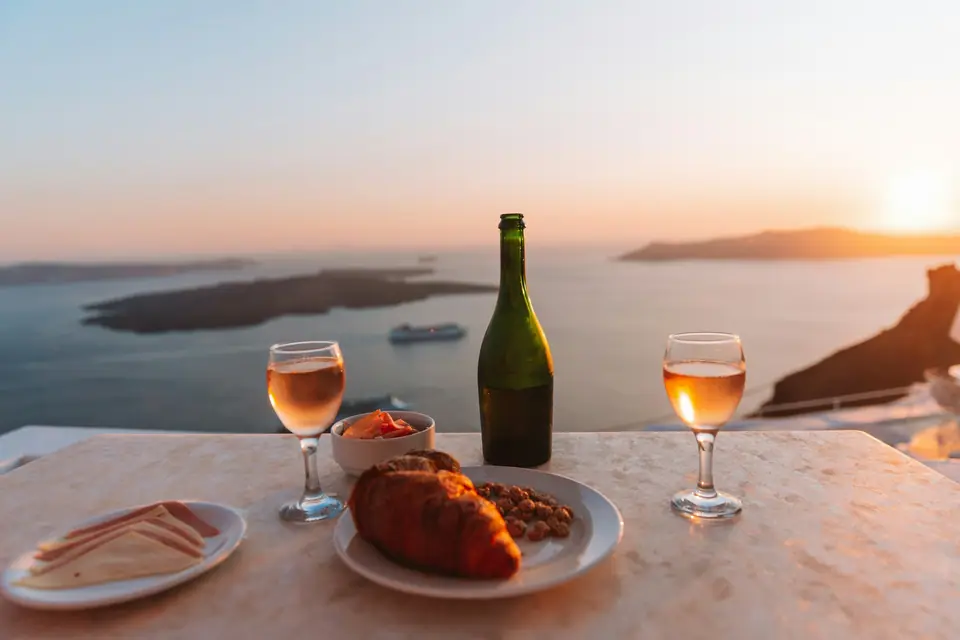
Several wineries sit on the caldera edge between Fira and Megalochori and run tastings timed for sunset. You get the view with a seat and a glass in your hand, and without the shoving in Oia. The catch: these slots are the most popular of the day, the terraces are big and busy, and the focus is the sunset more than the wine. For a proper look at how wine is made here, book a daytime visit to a smaller estate inland, then finish at a caldera terrace. Our Oia sunset guide has other places to watch from.
Who it suits
Couples, anyone who likes food and wine, and repeat visitors who have already done the caldera walk. It is a good plan for a windy day, when boat trips are cancelled. It suits children and non-drinkers less well, though most wineries serve local produce plates and some offer grape juice.
How to Book
Decide first how you will get around. Greece's drink-driving limit is lower than in some countries, and lower still for new drivers, and police do check on the island's roads. Tasting pours add up over three wineries. Don't drive.
That leaves three options:
- A guided wine tour. Small-group or private tours pick you up from your hotel, visit two to four wineries and bring you back. Check how many wineries and tastings are included, whether food comes with them, the group size, and the cancellation terms.
- Taxis. Book one for the afternoon, or a ride out and a ride back. Taxis are scarce in summer, so arrange the return before you start.
- The bus. The KTEL line from Fira to Perissa stops at or near Vothonas, Pyrgos and Megalochori, and the Kamari line passes Episkopi Gonia. It works for one or two wineries close to a stop. Check the times of the last buses back to Fira. Our getting there guide explains how the network works.
Most wineries ask you to reserve a tasting, particularly in summer and for sunset slots. Book on their official sites, and check what each tasting includes before you pick.
Tips
- Two or three wineries is plenty. After that, the wines start to blur.
- Eat something first, or choose a tasting with food. Fava and tomato fritters go well with Assyrtiko.
- Mix big and small. A large winery with a terrace, and a family estate where you might meet the person who made the wine.
- Visit in late August or September to see the harvest and the grapes drying for Vinsanto.
- Book the afternoon, not the morning. Tasting at ten in the morning is hard work, and the light over the vineyards is softer later in the day.
- Carry bottles home carefully. Many wineries ship abroad, which saves space in your bag.
- Build it into a day in the south. Our 3-day itinerary pairs wineries with Akrotiri and a beach, and our wine tasting guide has more on the estates.
Reviews
Log in to write a review.
No reviews yet.