


























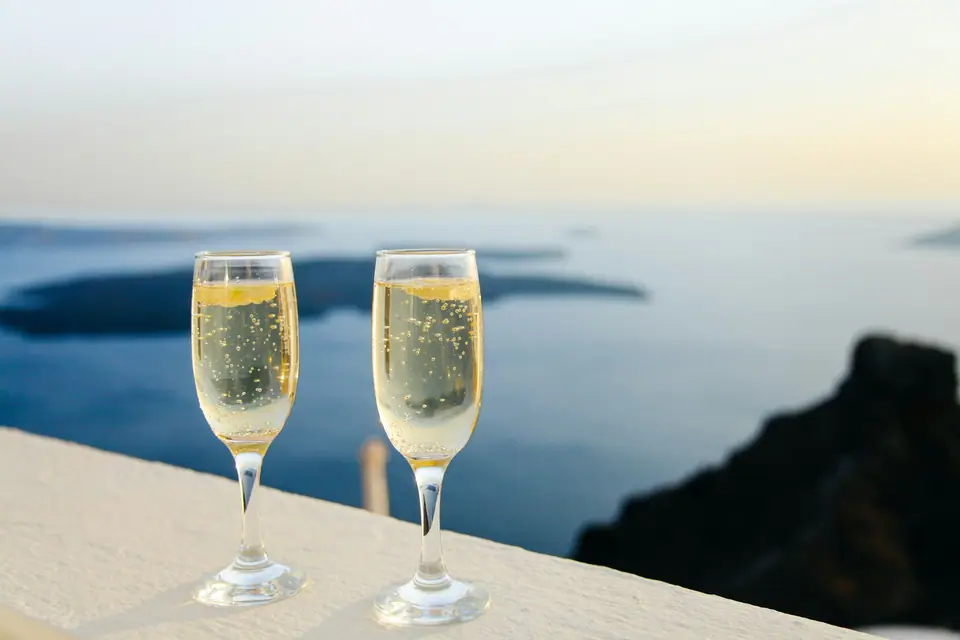
Photo by Anthony DELANOIX on Unsplash
Santorini Wine Tasting Guide: Assyrtiko, Basket Vines & Wineries
Why Santorini's pre-phylloxera volcanic vineyards are among the oldest on earth, which wines to order, and how to visit 2 or 3 estates without driving.
Long before infinity pools were carved into the caldera cliffs, Santorini was one of the most celebrated wine islands in the Mediterranean. Cultivated continuously for over 3,500 years since before the 1600 BCE Minoan eruption buried clay wine presses at Akrotiri, Santorini's 1,200 hectares of vineyard represent a miracle of extreme viticulture. There are no rivers or springs on the island, summer rainfall is virtually zero, and fierce Aegean winds batter the slopes. Yet these harsh volcanic soils produce Assyrtiko (ah-SEER-tee-koh), widely regarded by sommeliers as Greece's greatest indigenous white grape.
Why Santorini Vines Grow in Woven Baskets (Kouloura) on Ancient Roots
When you walk past a vineyard around Megalochori, Pyrgos, or Oia, you will not see neat vertical rows of vines tied to wooden posts and wires. Instead, the dusty grey field looks scattered with low, circular bird's nests sitting directly on the ground. Two unique geological facts explain why.
- Volcanic Pumice Soil (Aspa) / Immune to the Phylloxera Louse. Santorini's topsoil consists entirely of volcanic ash, pumice stone, lava pebbles, and sand, with zero organic clay. The microscopic phylloxera root louse destroyed almost every vineyard in Europe in the late nineteenth century, yet it cannot survive in sandy volcanic ash. Because of that natural immunity, Santorini's vines were never grafted onto American rootstock. Many gnarled vines on the island grow on ungrafted, pre-phylloxera root systems between 100 and 300 years old. That makes them some of the oldest continuously producing grapevines in the world.
- The Kouloura (Basket) Training System & Nighttime Sea Mist. To protect tender grape clusters from being snapped off by the 50 km/h spring and summer winds or sunburned by the Aegean sun, growers prune and weave the woody canes into a spiral ring on the ground called a kouloura (koo-LOO-rah, or ambelia). The grapes grow tucked safely inside the shady centre of the basket. Once a vine crown grows too thick after 70 or 80 years, the viticulturist cuts it back above the root so a fresh cane can begin a new basket on the same ancient root system. During summer nights, thick humid fog rises out of the caldera lagoon. The porous pumice stones and coiled vine leaves absorb that moisture like a sponge and release it to the roots by day.
The 4 PDO Santorini Wines You Must Taste
Order a three- or four-glass tasting flight covering these traditional island styles.
- PDO Santorini Assyrtiko (Dry White, Minimum 85% to 100% Assyrtiko). Unlike fruity Sauvignon Blanc or buttery Chardonnay, pure volcanic Assyrtiko is bone-dry, full-bodied (often 13.5% to 14.5% alcohol), and electric with razor-sharp citrus acidity and a distinct salty, smoky flint minerality. It pairs effortlessly with grilled octopus, sea bass, and local fava.
- Nykteri (neek-TEH-ree, Oak-Aged Dry White). Named after the Greek word for "night" (nychta), Nykteri was traditionally harvested before dawn to keep the grapes cool, pressed before sunrise, and aged for at least three months in oak barrels. Richer and rounder than stainless-steel Assyrtiko, it develops notes of baked lemon, honeycomb, and toasted nuts.
- Vinsanto (Vino di Santorini, Sun-Dried Sweet Amber Wine). Not to be confused with Italian Vin Santo, Santorini's historic Vinsanto (exported to Venice and the Russian Imperial Court for centuries) is crafted from late-harvested Assyrtiko and Aidani grapes. Growers lay the clusters out on straw mats in the sun for 8 to 14 days until raisined. They then age the wine in oak barrels for a minimum of two years, and often for 8 to 20 years. Dark mahogany in colour, it balances intense fig, espresso, raisin, and caramel sweetness with Assyrtiko's signature high acidity.
- Mavrotragano & Mandilaria (Indigenous Red Varieties). Once nearly extinct, thick-skinned red Mavrotragano (mahv-roh-trah-GAH-noh) has been revived by top island winemakers to produce structured, spicy red wines with wild berry, dark chocolate, and mineral notes.
The 5 Best Wineries to Visit on Santorini
Rather than rushing through five cellars, pick two or three wineries that contrast a cliffside caldera view with a serious architectural or historic estate.
- Caldera Cliff Views (Santo Wines & Venetsanos Winery). Perched directly on the caldera edge above Athinios port near Pyrgos, the island cooperative of Santo Wines (founded in 1947) offers a vast multi-tiered sunset terrace. There you can order 6-, 12-, or 18-wine tasting flights paired with local Cycladic cheeses. Five minutes south on the cliff rim above Megalochori sits historic Venetsanos Winery. Built into the rock in 1947 as the island's first industrial gravity-fed winery, it used gravity to move wine downhill through four cliff levels to ships waiting below.
- Serious Wine Estates (Estate Argyros, Domaine Sigalas & Gavalas). For wine lovers focused on world-class viticulture, book a seated tasting at Estate Argyros in Episkopi Gonia. Founded in 1903, it owns some of the oldest 150-to-200-year-old ungrafted Assyrtiko parcels on the island inside a serene contemporary limestone estate. At the northern tip of the island in the plain of Baxedes below Oia, Domaine Sigalas serves benchmark single-vineyard Assyrtiko under a shaded vine pergola. Inside the traditional village lanes of Megalochori, family-run Gavalas Winery lets you taste rare indigenous whites like Katsano and Voudomato inside a nineteenth-century canava (cave cellar).
- Koutsoyannopoulos Wine Museum (Vothonas) & Vassaltis (Vourvoulos). Built inside a natural 300-metre-long underground cave eight metres below ground in Vothonas, the Koutsoyannopoulos Wine Museum traces four generations of winemaking since 1880. Modern boutique Vassaltis Vineyards near Vourvoulos pairs sleek architecture with gastronomic lunch pairings.
How to plan your tasting afternoon. Greek drink-driving enforcement is strict, and Assyrtiko averages 14% ABV. Never drive a rental car between tastings. Either book a small-group half-day sommelier wine tour with hotel pickup, or take a taxi or KTEL bus to Megalochori and Pyrgos. There Venetsanos, Gavalas, Boutari, and Santo Wines sit within five minutes of one another, as built into Day 2 of our 3-day Santorini itinerary. Always book tasting slots online 3 to 7 days ahead from May to October, and check our seasonal guide if you want to see the late-August grape harvest.
Where it is
- 1Santorini
- Santorini International Airport (JTR) · about 4 km from Santorini in a straight line
- Heraklion International Nikos Kazantzakis Airport (HER) · about 119 km from Santorini in a straight line
- Directions in Google Maps
Stations and taxi ranks: OpenStreetMap. Airports: OurAirports. Distances are in a straight line.
Traveller tips
Real advice from people who have been to Santorini. Every tip is read by our team before it goes live.
No tips yet. Been here? Yours could be the first.
Thank you! Your tip will appear here after a quick review.
More in Santorini
Continue exploring Santorini with related neighbourhood, food, and planning guides
What to Wear in Santorini: Cliff Steps, Wind, Hot Black Sand & List
Santorini, Greece

Oia Sunset Guide: Best Viewpoints, Timing, Buses & Calm Alternatives
Santorini, Greece
Santorini Beaches Guide: Kamari, Perissa, Vlychada & Red Beach Status
Santorini, Greece
Where to Stay in Santorini: Caldera Villages vs Black-Sand Beaches
Santorini, Greece
