All 100 essential sights across the Old Centre (Oudezijde & Nieuwezijde), the Golden Age Canal Ring, the Jordaan, Museumplein and Plantage mapped in walking order.
Dam on the Amstel: Herring Fleets, Polders and Seventeenth-Century Gables
Amsterdam took its name in the late thirteenth century from a flood-control dam and lock built across the mouth of the Amstel River where it met the tidal IJ bay (Amstelredamme). Granted a toll exemption in 1275 by Count Floris V of Holland, the fishing and herring-curing settlement grew into a major Baltic grain and timber port. In the seventeenth century, the Dutch Golden Age, Amsterdam became the financial and maritime hub of world trade, home to the Dutch East India Company (VOC), the world first stock exchange and Bank of Amsterdam, and the studios of Rembrandt van Rijn and Johannes Vermeer.
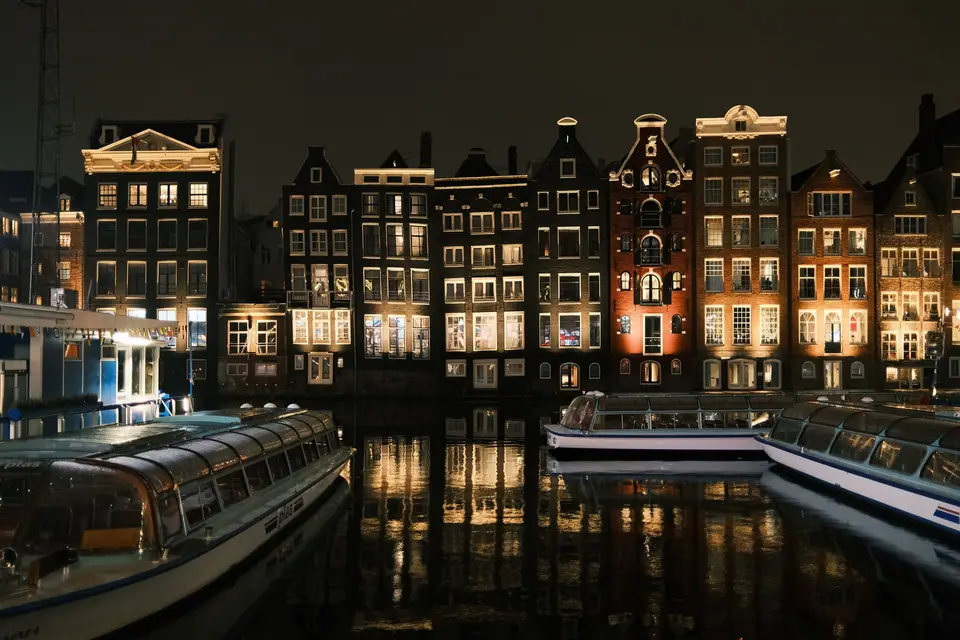
Beginning in 1613, city planners executed one of Europe boldest urban expansions: the concentric semicircle of the Grachtengordel (Herengracht, Keizersgracht and Prinsengracht), lined with narrow brick-gabled merchant houses supported on wooden piles and recognised today as a UNESCO World Heritage Site.
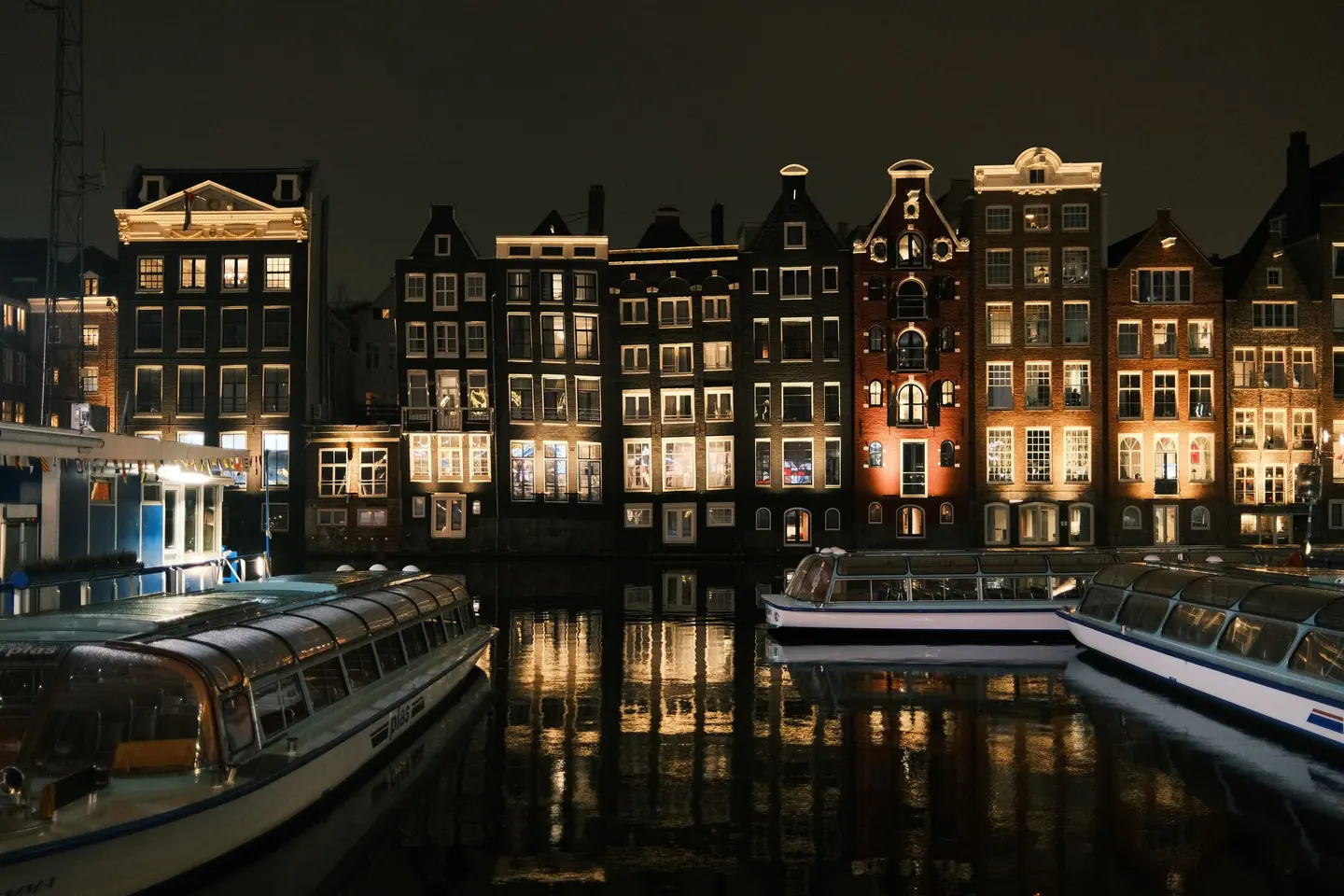
Dam Square, Royal Palace, Begijnhof & Medieval Old Centre
Start at Centraal Station, the Oude Kerk, Museum Ons Lieve Heer op Solder, Dam Square, the Royal Palace and the hidden courtyard of the Begijnhof.
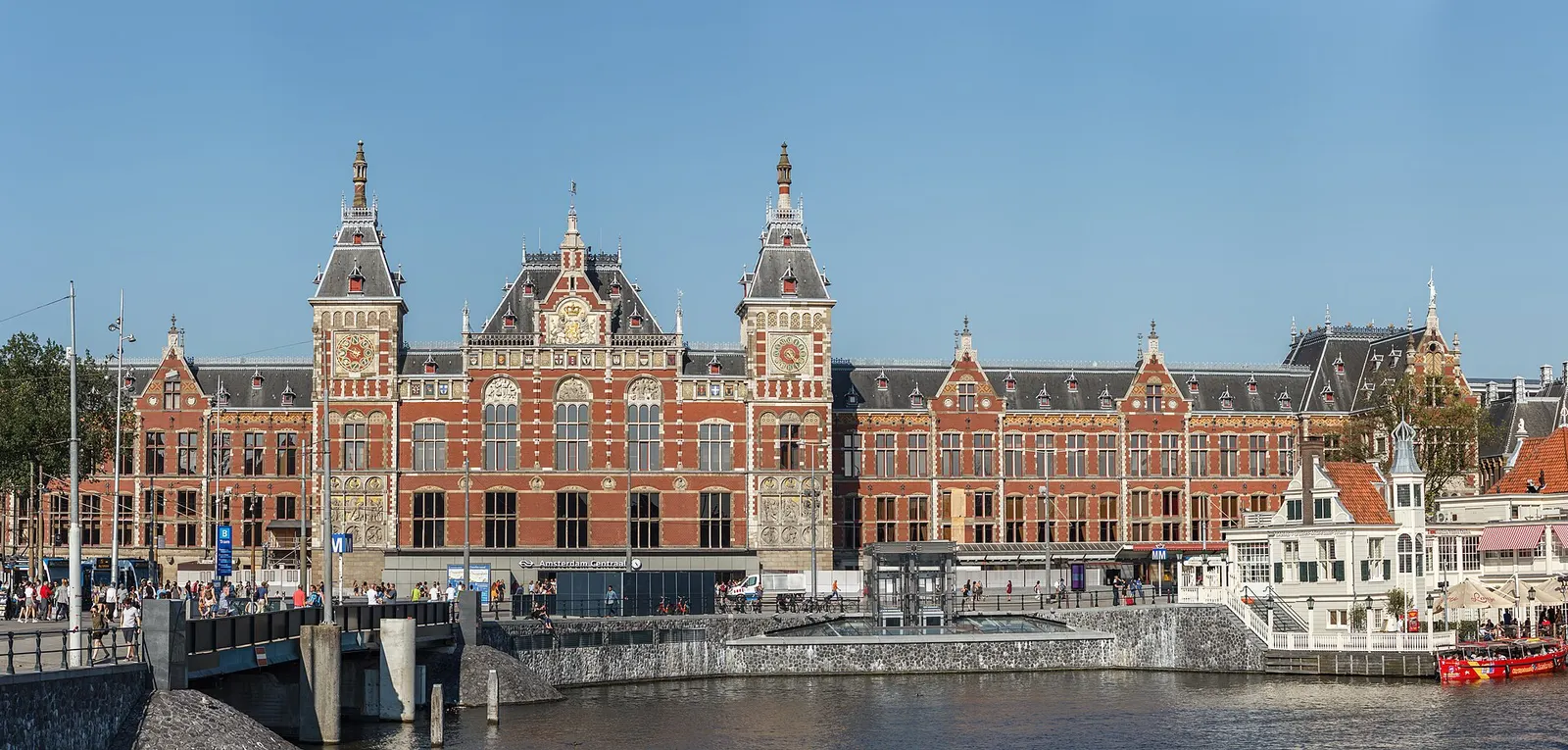
Amsterdam Centraal Station
Designed by Pierre Cuypers and opened in 1889, this monumental station rests upon thousands of wooden piles driven into an artificial island. Its red-brick facade combines Gothic and Renaissance motifs, echoing the Rijksmuseum. Visitors can admire the decorative cast-iron platform roofs and ornate weather vanes celebrating maritime trade.
Schreierstoren
Built around 1487 as part of the medieval town wall, this semicircular tower overlooked the old harbour. Legend tells that women wept here as their sailor husbands departed on dangerous sea voyages. Today, original masonry features and commemorative plaques detailing Henry Hudson's 1609 voyage across the Atlantic remain visible.
Basilica of Saint Nicholas
Completed in 1887 by architect Adrianus Bleijs, this Roman Catholic basilica integrates Neo-Baroque and Neo-Renaissance styles. Two symmetrical towers and a central octagonal dome dominate the northern skyline opposite Centraal Station. Inside, visitors find ornate stained-glass windows, a nineteenth-century Sauer organ, and paintings depicting the patron of seafarers.
Museum Ons' Lieve Heer op Solder
Following the Protestant Reformation, Catholic worship was forbidden in public, prompting merchant Jan Hartman to construct this secret chapel across three upper attic floors in 1663. The remarkably preserved interior features narrow staircases, seventeenth-century domestic living rooms, and an ornate pink-painted church nave complete with a Baroque altar.
Oude Kerk
Consecrated in 1306, this sprawling Gothic hall church began as a modest wooden chapel before evolving into the city central religious edifice. Notable details include the wooden barrel-vaulted ceiling, medieval choir stalls, and gravestones beneath the floor, including that of Rembrandt's wife Saskia van Uylenburgh.
De Waag
Originally known as the Sint Anthoniespoort, this castellated brick building served as an integral fortified entrance in the medieval defences. After the walls expanded, it became the municipal weigh house and hosted various professional guilds. Rembrandt painted The Anatomy Lesson of Dr. Nicolaes Tulp for the surgeons guild stationed here.
Zuiderkerk
Erected between 1603 and 1611 under town architect Hendrick de Keyser, this was the first purpose-built Protestant church in the city. Its distinctive spire features classical balustrades and an octagonal lead-clad cupola. Claude Monet painted the tower reflected in the Groenburgwal canal during his nineteenth-century travels.
Rembrandt House Museum
The painter resided in this handsome gabled townhouse between 1639 and 1658, establishing his private studio and print workshop. Modern restorations have reconstructed the interior using period inventories, allowing travellers to observe reconstructed living quarters, an etching press, and an extensive collection of seventeenth-century curiosities and pigments.
Trippenhuis
Designed by Justus Vingboons in 1662 for the merchant brothers Louis and Hendrick Trip, this double mansion displays Dutch Classical architecture. The grey sandstone facade features Corinthian pilasters and chimneys sculpted like cannon barrels, alluding to the family fortune in munitions. It now accommodates the Royal Netherlands Academy of Arts and Sciences.
Bushuis and Oost-Indisch Huis
Constructed in 1606, this sprawling brick complex functioned as the central administrative hub for the Dutch East India Company. Directors gathered in the council chamber to coordinate trading fleets and overseas commerce. Today the building belongs to the University of Amsterdam, maintaining an inner courtyard filled with Renaissance ornamental details.
Agnietenkapel
Dating from 1470, this brick chapel was once part of a Franciscan convent of Saint Agnes. In 1632 it housed the Athenaeum Illustre, which subsequently grew into the University of Amsterdam. The intimate interior retains an early seventeenth-century lecture hall adorned with historic portraits of humanist scholars.
Beurs van Berlage
Completed in 1903 as a commodities and stock exchange, this massive structure represents a turning point in modern Dutch architecture. Hendrik Petrus Berlage utilised bare orange bricks, natural stone accents, and exposed iron trusses to create rationalist public spaces. The building clock tower, known as the Beurstoren, overlooks Damrak.
De Bijenkorf
Constructed between 1912 and 1915 by architects J.A. van Straaten and B.A. Lubbers, this commercial flagship helped anchor modern shopping in the city centre. The building exhibits stone relief work and classical detailing, complementing the neighbouring monumentality of Dam Square while providing vast interior retail floors.
Dam Square
Created in the thirteenth century when a dam was constructed across the River Amstel, this civic square serves as the focal point of city life. The open cobbled expanse brings together political protests, street performances, and national ceremonies. Surrounding landmarks include the Royal Palace, the Nieuwe Kerk, and the National Monument.
National Monument
Unveiled in 1956 and designed by J.J.P. Oud, this 22-metre-high white travertine obelisk serves as the central site for the annual Remembrance of the Dead on 4 May. Sculptor John Rädecker created the allegorical figures, which depict war, resistance, peace, and liberated citizens standing before a curved memorial wall containing urns of soil.
Royal Palace of Amsterdam
Commissioned in 1648 and designed by Jacob van Campen, this classical sandstone palace initially celebrated civic governance during the Dutch Golden Age. King Louis Bonaparte transformed it into a royal palace in 1808. Highlights include the vast central Burgerzaal, adorned with marble maps of the world, and monumental Atlas sculptures.
Nieuwe Kerk
Constructed from 1408 to accommodate the growing medieval populace, this late-Gothic basilica features high vaulted arches and elaborate woodcarvings. It serves as the traditional venue for Dutch royal inaugurations and royal weddings. Inside, visitors encounter a seventeenth-century brass choir screen, a monumental pipe organ, and memorials to naval heroes.
Begijnhof
This tranquil enclosed court dates to the fourteenth century, originally established for religious laywomen called Beguines who lived semi-monastic lives. Elegant seventeenth- and eighteenth-century gabled houses line a manicured green lawn. The complex includes the English Reformed Church and the Begijnhofkapel, a concealed Catholic place of worship.
Het Houten Huys
Located at Begijnhof 34, this modest dwelling was built around 1465 and ranks among the oldest houses in the Netherlands. Following devastating fires in the fifteenth century, city ordinances banned wooden construction, making this timber-framed facade exceptionally rare. The building displays traditional Gothic timber cantilevering and simple wooden shutters.
Amsterdam Museum
Occupying a sprawling seventeenth-century orphanage complex renovated by Hendrick and Pieter de Keyser, this museum explores municipal history through civic art and artefacts. The entrance courtyard displays historical wall reliefs and stone entrance portals. An adjacent covered passageway, the Civic Guards Gallery, historically presented life-size militia group portraits to passing citizens.
Western Canal Ring (Herengracht, Keizersgracht, Prinsengracht) & Nine Streets
Stroll the Western Grachtengordel past the Anne Frank House, Westerkerk, the Homomonument and the bridges and boutiques of the Nine Streets (De Negen Straatjes).
Anne Frank House
Set along the Prinsengracht, this 17th-century canal house sheltered diarist Anne Frank and her family from Nazi persecution between 1942 and 1944. The museum preserves the hidden quarters behind a movable bookcase, displaying original artefacts, family photographs and authentic diary pages. Visitors observe the stark, darkened rooms preserved in their stripped post-raid state according to Otto Frank's wishes.
Westerkerk
Designed by master architect Hendrick de Keyser, this monumental Protestant house of worship was erected between 1620 and 1631. Its 85-metre spire, known locally as the Westertoren, is capped with the blue imperial crown of Emperor Maximilian I. Inside, visitors encounter vast whitewashed nave walls, an ornate Duyschot organ and the unmarked burial site of painter Rembrandt van Rijn.
Homomonument
Unveiled in 1987 on the Westermarkt beside the Keizersgracht, this pioneering memorial was designed by artist Karin Daan. The design forms three linked pink granite triangles that collectively trace a much larger 36-metre triangle across the square and waterfront. One point descends directly into the canal waters, creating an enduring space for reflection and floral tributes.
De Negen Straatjes
Constructed during the early 17th century, the Nine Streets link the Singel, Herengracht, Keizersgracht and Prinsengracht across three parallel axes. Originally populated by craftspeople, furriers and leather tanners, the quarter retains an exceptionally cohesive urban plan. Today, these narrow thoroughfares feature specialist bookshops, independent fashion boutiques and impeccably maintained Dutch Renaissance facades.
Huis met de Hoofden
This grand canal house at Keizersgracht 123 was constructed in 1622 for the wealthy art dealer Nicolaas Sohier. Its ornate Dutch Renaissance brick facade, attributed to Hendrick de Keyser, is adorned with carved stone busts depicting six Roman gods, including Mars, Minerva and Apollo. The building currently accommodates the Embassy of the Free Mind, a centre dedicated to free thought and hermetic philosophy.
Felix Meritis
Erected in 1788 to plans by architect Jacob Otten Husly, this grand temple of science and art represented the intellectual vanguard of the Dutch Enlightenment. The monumental facade features five colossal Corinthian pilasters and carved reliefs representing the society's departments. Inside, its historic oval concert hall hosted prestigious performances by Robert Schumann and Johannes Brahms, setting a standard for acoustics.
Huis Bartolotti
Constructed around 1617 for the wealthy merchant and banker Willem Bartolotti, this double residence curves gracefully along the Herengracht's natural bend. Hendrick de Keyser designed its exuberant Dutch Renaissance facade, complete with balustrades, pilasters, decorative cartouches and ornamental vases. The interior features restored ceiling paintings and stuccowork created during the 18th century by artist Jacob de Wit.
The Dylan Amsterdam
Occupying a prime position on the Keizersgracht, this site housed the Schouwburg van Campen, the city's first permanent public theatre, opened in 1637. After the original wooden playhouse burned to the ground in 1772, the Roman Catholic Poor Board constructed the current classical brick building. Visitors can still enter through the preserved 1638 stone archway, which bears verses written by poet Joost van den Vondel.
Museum of the Canals
Housed within an elegant 1665 patrician residence on the Herengracht, this museum presents the grand civil engineering and urban expansion of Amsterdam's Golden Age. Philips Vingboons designed the original house, which features rare 18th-century wall paintings executed by Jurriaan Andriessen. The exhibitions use detailed scale models, multimedia displays and original architectural drawings to chart the city's aquatic transformation.
Westergasfabriek
Constructed in 1883 by the Imperial Continental Gas Association, this sprawling red-brick complex supplied Amsterdam with coal gas for public illumination. Architect Isaac Gosschalk designed the striking Dutch neo-Renaissance structures, including monumental purifying plants and iron gasholders. Following an extensive environmental remediation, the estate was repurposed as a cultural park encompassing cinema screens, artist studios and exhibition galleries.
Woonbootmuseum
Moored on the Prinsengracht near the corner of Elandsgracht, this educational ship offers a rare glimpse into the practical realities of canal living. The vessel, named the Hendrika Maria, was originally built in 1914 as a sailing freighter to transport sand and gravel. During the 1960s, it was refitted as a comfortable houseboat, preserving its authentic living quarters, skipper's deck and vintage galley.
Theo Thijssen Museum
Situated on the first canal street bordering the Jordaan, this modest museum occupies the 1879 birthplace of author, teacher and socialist politician Theo Thijssen. The collection documents his best-known novel, Kees de Jongen, alongside his tireless trade union advocacy for improved education and working-class conditions. Exhibits display original manuscripts, vintage school desks and period photographs illustrating late 19th-century neighbourhood life.
De Duif
Erected in 1858 to replace a covert Catholic church originally concealed within a sugar refinery, De Duif features a commanding neoclassical portico. Architect Theo Molkenboer devised the grand interior, which is framed by white Corinthian columns and capped by a coffered barrel-vaulted ceiling. The building boasts a remarkable Smits pipe organ, making it a prominent centre for classical concerts and lectures.
Stadsarchief Amsterdam
Located along the Vijzelstraat within the canal belt, this colossal edifice was completed in 1926 as headquarters for the Nederlandsche Handel-Maatschappij. Architect K.P.C. de Bazel combined Dutch brick expressionism with Mayan-inspired detailing, featuring granite bands and intricate stained glass. The building houses municipal archives stretching back seven centuries, with visitors able to inspect historic documents inside the subterranean safe-deposit vault.
Noorderkerk
Completed in 1623 at the northern apex of the Prinsengracht, this church was built primarily for the working-class residents of the neighbouring Jordaan. Its ground plan forms a symmetrical Greek cross around a central pulpit, dispensing with the traditional Latin basilica layout. Hendrick de Keyser's practical design provided uninterrupted views and clear acoustics, fostering communal worship beneath towering timber vaults.
Noordermarkt
Surrounding the base of the Noorderkerk, this market square dates back to 1616, when it served as a historic trading centre for earthenware and poultry. A bronze monument on the church facade commemorates the February Strike of 1941, when citizens protested Nazi deportations of Jewish neighbours. Today, the square accommodates weekly organic farmers' markets, antique stalls and traditional Dutch cafes serving warm apple pie.
Pianola Museum
Situated in a former police station just off the Prinsengracht, this intimate museum preserves an extraordinary archive of automatic musical instruments and player pianos. The collection comprises over fifty operational instruments alongside twenty thousand perforated paper music rolls spanning the late 19th and early 20th centuries. Visitors can attend live demonstration recitals that recreate authentic ragtime and classical performances without a human pianist.
Museum Van Loon
Erected in 1672 along the Keizersgracht, this stately home was first leased by painter Ferdinand Bol, a pupil of Rembrandt. The Van Loon family, co-founders of the Dutch East India Company, took residence in the 19th century and preserved its neoclassical finery. The estate includes a formal boxwood parterre garden and a classical coach house terminating the long visual axis.
Museum Geelvinck Hinlopen Huis
Constructed in 1687 for Albert Geelvinck and Sara Hinlopen, this double canal residence stood as an emblem of late 17th-century regency power. Though the physical museum trust has relocated its historic piano recitals to broader venues, the building remains a landmark of Herengracht classical architecture. Its preserved private garden was historically celebrated as one of the largest within the canal ring.
Greenpeace Headquarters Amsterdam
Located at Keizersgracht 174, this striking commercial building was constructed in 1905 for the insurance firm De Eerste Hollandsche Levensverzekering Bank. Architect Gerrit van Arkel employed Dutch Art Nouveau principles, integrating glazed green bricks, sweeping masonry curves, wrought-iron balconies and an open-work stone tower. The premises now serve as the international coordinating headquarters for the global environmental organisation.
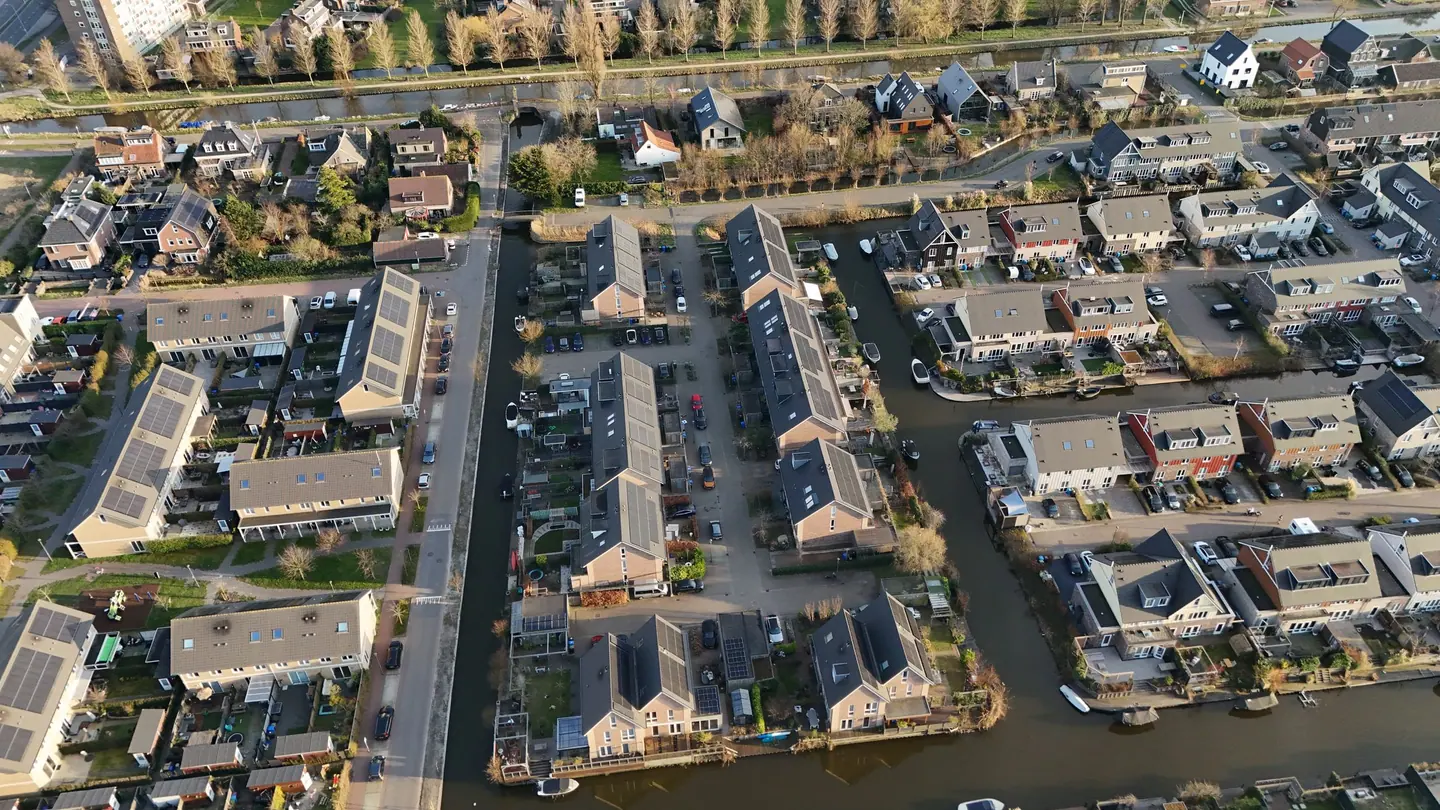
The Jordaan, Noordermarkt, Brouwersgracht & Western Islands
Explore the seventeenth-century artisans quarter of the Jordaan, hidden hofjes (almshouse courtyards), Noordermarkt and the picturesque locks of Brouwersgracht.
Noorderkerk
Built between 1620 and 1623 to plans by Hendrick de Keyser, this symmetrical stone sanctuary was designed specifically for Calvinist services. The building forms a Greek cross layout surrounding a central pulpit, creating equal sightlines for the working-class congregation. Today visitors can observe its timber barrel vaulting and austere whitewashed walls, which contrast with older Catholic structures across the city.
Noordermarkt
Dating to the early seventeenth century, this public square developed alongside the Jordaan to supply labourers with food, textiles, and household hardware. During the Second World War, citizens gathered here in February 1941 to organise the historic strike protesting Jewish deportations, an event commemorated by a bronze plaque on the church wall. The square retains its centuries-old role, accommodating book stalls, antique vendors, and organic traders.
Westergasfabriek
Constructed in 1883 by the Imperial Continental Gas Association, this sprawling complex was engineered by Dutch architect Isaac Gosschalk in Dutch Neo-Renaissance style. Its red-brick gables, decorative ironwork, and cylindrical gasholders produced lighting fuel until closing in the mid-twentieth century. Following soil remediation, the buildings and grounds were transformed into public exhibition halls, independent cinema spaces, and communal parkland.
Brouwersgracht
Serving as the northern terminus of the canal ring, the Brouwersgracht was dug in 1612 to accommodate breweries, distilleries, and storehouses for maritime cargo. The channel is spanned by stone bridges and flanked by monumental gabled warehouses with distinctive wooden loading doors and iron hoisting beams. We can observe how former grain, spice, and leather depots have been converted into residential lofts.
Het Karminckel
This narrow brick townhouse stands as a preserved example of seventeenth-century residential architecture built for Jordaan tradesmen. Named for the carved stone plaque above the doorway, the residence retains its ornamental stepped gable and traditional timber-framed transom window. Walking along Lindenstraat, we notice the distinctive architectural modesty that defines the quarter compared to the grand patrician mansions on the Herengracht.
Zon's Hofje
Founded in 1765 by the Mennonite community on the site of an earlier church, this peaceful courtyard was endowed to shelter elderly unmarried women. Two neat rows of low brick cottages face an enclosed central lawn, shielded from the canal traffic behind an unassuming street doorway. The classical pediment over the entrance and small leaded windows reflect traditional charitable housing of the Dutch Golden Age.
Karthuizerhofje
Erected in 1650 on land once occupied by a medieval Carthusian monastery, this is one of the largest historic courtyards in the city. Architect Daniël Stalpaert designed the square to house widows of working men, incorporating central water pumps, sculpted stone coats of arms, and manicured gardens. The perimeter buildings retain their uniform multi-paned sash windows, clay roof tiles, and quiet contemplative atmosphere.
Pianola Museum
Housed within a former police post along Westerstraat, this independent collection preserves automatic musical instruments produced during the late nineteenth and early twentieth centuries. The gallery features over one hundred mechanical pianos, pianolas, and orchestrions, alongside twenty thousand perforated paper rolls containing rare historical performances. Curators demonstrate the pneumatic systems that allowed instruments to play automatically before modern recorded sound.
Theo Thijssen Museum
This intimate museum occupies the birthplace of author and trade unionist Theo Thijssen, who chronicled the everyday life of the working-class Jordaan in the early 1900s. Inside the traditional narrow residence on Eerste Leliedwarsstraat, exhibits display original manuscripts, vintage schoolroom equipment, personal photographs, and first editions of his famous novel Kees de jongen. The rooms illustrate the modest domestic quarters typical of local artisans.
Huis met de Hoofden
Erected in 1622 for merchant stocking trader Nicolaas Sohier, this grand canal house on the Keizersgracht border of the Jordaan was designed by Hendrick de Keyser. The facade features rich Renaissance ornamentation, double stepped gables, and six sculpted stone heads representing Roman deities including Mercury, Minerva, and Mars. The building later hosted the Bibliotheca Philosophica Hermetica, a noted collection of historic manuscripts.
Raepenhofje
Founded in 1648 through the bequest of merchant Pieter Adriaensz Raep, this intimate residential enclosure was established to provide free lodging for poor widows. The modest brick cottages face a small central pathway decorated with seasonal plants and an antique communal pump. A classical carved stone tablet set into the exterior brickwork preserves the coat of arms of the founding benefactor.
Prinseneiland
Created around 1615 during municipal expansions, Prinseneiland served as a maritime industrial hub dedicated to tar storage, timber seasoning, and vessel repair. Today the island preserves a distinct village atmosphere, connected to the mainland solely by wooden drawbridges and narrow cobbled lanes. Many monumental brick warehouses retain their heavy timber shutters, iron winches, and slipways where traditional wooden boats are still repaired.
Realeneiland
Named after merchant and Amsterdam burgomaster Reynier Reael, this artificial island was reclaimed in the seventeenth century to store hazardous and bulk shipping freight. The waterfront retains a line of tall warehouses, including the famous Gouden Reael estate, where herring, salt, and tobacco were packed. Wandering along the Zandhoek quay, we observe well-preserved seventeenth-century gables overlooking moored sailing barges and historic maritime infrastructure.
Drieharingenbrug
This classic double-beam wooden drawbridge connects Prinseneiland with Realeneiland across the Realengracht, providing a clear example of seventeenth-century Dutch hydraulic engineering. Painted in traditional white timber with iron counterweights, the structure can be raised manually to allow tall-masted vessels to pass into the interior boat basins. The bridge offers views down the canal, framed by overhanging weeping willows and preserved warehouse facades.
Bickerseiland
Purchased and developed in 1631 by merchant Jan Bicker, this island once accommodated numerous private wharves, ropewalks, and sail lofts catering to Baltic trade. While several original timber structures made way for rail expansion in the nineteenth century, the island retains several monumental brick storehouses. A short walk along the water reveals surviving slipways, former iron foundries, and scenic vantage points overlooking the Westerdok harbour.
Claes Claesz Hofje
Established in 1616 by draper Claes Claesz Anslo, this picturesque complex consists of several restored almshouse courts situated between Egelantiersstraat and Tuinstraat. Threatened with demolition in the twentieth century, the buildings were saved and comprehensively renovated by a civic heritage trust in the 1970s. The quiet gardens are connected by narrow vaulted brick passages, featuring authentic hand-pump fountains, climbing roses, and leaded casement windows.
Plancius
Named after astronomer and East India Company cartographer Petrus Plancius, who lived and worked in this district, the site recalls the golden age of Dutch seafaring charts. Plancius trained master navigators such as Willem Barentsz and mapped uncharted celestial skies from the northern edge of the city. Architectural markers and plaques along the route highlight the neighbourhood's pivotal role in seventeenth-century cartographic production.
Eenhoornsluis
Constructed in the seventeenth century, this wide stone water gate was an essential component of Amsterdam's complex system of defensive and tidal fortifications. The bridge above the lock gates accommodates roadway traffic while allowing lockkeepers to control water levels and flush canal sediments. Today travellers can stand atop the wide brick parapet to watch pleasure craft and canal cruisers navigate the narrow timber-sided chamber.
De Gooyer Molen
Originally built in the seventeenth century and moved to its present stone base in 1814, this historic corn mill served city grain merchants on the canal perimeter. The wooden octagonal superstructure stands upon a brick substructure, complete with turning cap and massive sail assembly. Situated beside the canal, the structure provides an authentic look at the wind-driven industrial machinery that supported Amsterdam's brewing and flour trades.
Westerdok
Excavated in the 1830s when a stone dyke was built to separate the city canals from the tidal IJ, this harbour sheltered deep-draft merchant ships. The basin provided modern berths away from treacherous currents, facilitating the transfer of colonial imports into inland barges. Today the waters house a large marina for historic barges and classic sailing yachts, flanked by bold contemporary residential architecture on the western pier.
Golden Bend, Spiegelkwartier, Rijksmuseum, Van Gogh Museum & Vondelpark
Follow the grand mansions of the Golden Bend and the antique shops of Nieuwe Spiegelstraat to the Rijksmuseum, Van Gogh Museum, Stedelijk Museum and Vondelpark.
Gouden Bocht
Engineered during the city expansion of 1663, this prestigious curve along the Herengracht became home to Amsterdam's wealthiest merchants and regents. The double-width plots permitted classical sandstone facades rather than standard brickwork. Look for elevated staircases, Corinthian pilasters and elaborate pediments that reflect the zenith of Dutch Golden Age residential architecture.
Museum Van Loon
Built in 1672 by architect Adriaen Dortsman, this residence preserves the aristocratic lifestyle of the co-founding Van Loon family. Inside, period rooms feature portraits, gilded mirrors and fine plasterwork above authentic eighteenth-century furnishings. Across the symmetric French parterre garden, visitors can inspect the classical coach house containing vintage carriages.
Museum Willet-Holthuysen
Bequeathed to the municipality in 1895, this opulent residence reveals the lavish domestic life of art collector Abraham Willet and Louisa Holthuysen. The interior showcases a Louis XVI ballroom, historic kitchens and a notable collection of silverware and Venetian glass. A formal French formal garden borders the back of the property.
Museum Geelvinck Hinlopen Huis
Constructed in 1687 for Albert Geelvinck and Sara Hinlopen, this estate stands out for its large interior footprint and private garden. The central hall displays ornate stucco work and classical ceiling frescoes typical of the late seventeenth century. Visitors can admire the unified layout linking the main canal facade to the rear carriage gate.
Mayor's Official Residence
Erected in 1672 for civic dignitary Paulus Godin, this grand house serves as the official residence of Amsterdam's mayor. Designed in a formal classical style, the sandstone frontage displays Corinthian pilasters and decorative window enframements. The building represents the enduring administrative and political importance of the Herengracht canal mansions.
Spiegelkwartier
Established along the Nieuwe Spiegelstraat following the seventeenth-century canal ring expansion, this neighbourhood evolved into the city's premier art trading quarter. The gabled townhouses accommodate antique dealers, print sellers and art specialists. Strolling along the cobblestones reveals storefronts full of delftware, rare clocks, Asian porcelain and historic regional furniture.
Spiegelgracht
Dug in the late seventeenth century, this quiet waterway joins the Prinsengracht directly to the Weteringschans ring. Distinct neck and bell gables top the narrow residential facades that line both quays. The canal provides an appealing perspective toward the distant towers of the Rijksmuseum framed by small brick bridges.
Fo Guang Shan He Hua Temple
Constructed in 2000, this building represents the largest traditional Chinese Buddhist complex in mainland Europe. Built in the imperial palace style of the Tang and Ming dynasties, it features traditional curved roof tiles, carved dragons and guardian lions. Inside the main shrine, visitors can observe golden statues of Guanyin surrounded by delicate offerings.
Paradiso
Originally built in 1880 as a meeting hall for the Free Congregation church, this neo-Romanesque structure features high arched windows and a cavernous hall. During the late 1960s, counterculture pioneers transformed the religious sanctuary into a celebrated concert hall. The original organ loft and stained-glass fixtures remain prominent behind modern performance stages.
De La Mar Theater
Opening in its current expanded form in 2010, this cultural institution occupies a site steeped in Dutch vaudeville and theatrical history. Architects blended historical adjacent brick facades with glass galleries and copper cladding. Inside, visitors encounter extensive photographic collections along the foyer corridors leading to two modern auditoriums.
Rijksmuseum
Designed by Pierre Cuypers and opened in 1885, this palatial landmark blends Neo-Gothic and Dutch Renaissance architectural forms. The grand central passage allows cyclists to pass directly through the building's historic brick arches. Within the Great Hall and Gallery of Honour hang masterpieces by Rembrandt, Vermeer and Frans Hals.
Cuypers Library
Integrated into the Rijksmuseum complex, this multi-tier reading room is the oldest and largest art historical library in the Netherlands. Iron spiral staircases, cast-metal balconies and a large glass skylight illuminate rows of antique folios and modern academic periodicals. Readers work silently surrounded by centuries of municipal architectural history.
Rijksmuseum Gardens
Arranged around the museum perimeter, these landscaped grounds serve as an open-air exhibition space for saved architectural elements from demolished Dutch buildings. Stone arches, Gothic window frames and Renaissance gateposts sit among trimmed box hedges and water basins. Seasonal modern sculpture displays complement permanent installations like the historic fountain.
Museumplein
Redesigned by landscape architect Sven-Ingvar Andersson in 1999, this expansive lawn accommodates major public gatherings, fairs and civic events. A long rectangular pond converts into an open-air ice rink during winter months. The park creates a broad vista linking the Rijksmuseum, the Concertgebouw and neighbouring modern art institutions.
Van Gogh Museum
Opening in 1973 with a main pavilion designed by Gerrit Rietveld, the complex gained an elliptical exhibition wing by Kisho Kurokawa in 1999. A striking glass entrance hall connects the distinct structures beneath the Museumplein lawn. The galleries chart the painter's artistic journey through canvases, letters and works by contemporary Impressionists.
Stedelijk Museum Amsterdam
Adriaan Willem Weissman designed the original red-brick neo-Renaissance building, which was extended in 2012 by an eye-catching white composite wing nicknamed the Bathtub. Inside, expansive white-cube galleries display twentieth-century art movements including De Stijl, Bauhaus and Pop Art. Major collections feature works by Kazimir Malevich, Piet Mondrian and modern industrial designers.
Royal Concertgebouw
Opened in 1888 to designs by Adolf Leonard van Gendt, this grand venue draws music lovers from across the globe. The exterior presents a neoclassical colonnade topped by a gilded lyre on the pediment apex. The Main Hall features legendary resonant acoustics, while the Oval Grote Zaal hosts leading international symphony orchestras.
Vondelpark
Laid out by landscape architect Jan David Zocher, this public urban park extends across forty-seven hectares of meadows, winding ponds and wooded pathways. Cyclists, runners and walkers follow meandering paths beneath weeping willows and horse chestnut trees. Designated a national heritage monument, it remains the city's central outdoor recreational gathering ground.
Vondelpark Openluchttheater
Operating since 1974, this circular outdoor stage provides summer programming including classical concerts, modern dance, cabaret and children's theatre. Tiered benches curve around the central performance ring, framed by mature trees and park lawns. Audiences gather informally on surrounding turf when seating fills during clear weekend afternoons.
Vondel Monument
Erected in 1867, this bronze statue by sculptor Louis Royer honors the playwright Joost van den Vondel, from whom the surrounding park takes its name. The poet sits in a draped chair atop a tall carved stone pedestal, pen in hand. It represents one of the earliest public memorial statues raised to a literary figure in Amsterdam.
Amstel River, Skinny Bridge, Rembrandt House, Plantage & De Pijp
Cross the Magere Brug (Skinny Bridge) on the Amstel to the Rembrandt House, the Portuguese Synagogue, Hortus Botanicus, Artis and the Albert Cuyp Market in De Pijp.
Magere Brug
Spanning the Amstel, this whitewashed wooden bascule bridge dates back in its current form to 1934, replacing an earlier seventeenth-century crossing. Visitors can watch the central section open for passing canal boats and observe hundreds of electric bulbs illuminating its timber beams after dusk.
Amstel Hotel
Architect Cornelis Outshoorn designed this palatial landmark, which opened along the riverbank in 1867. The building features an imposing neoclassical colonnade, stately reception halls, and elaborate riverside terraces that have accommodated visiting royalty and foreign dignitaries for more than a century.
Carré Theatre
Established in 1887 by circus director Oscar Carré, this grand theatre displays a neo-Renaissance brick facade fronting the Amstel. Inside, the vast auditorium retains elements of its circus heritage alongside classical plasterwork, functioning today as a prestigious venue for theatrical productions and concerts.
Hermitage Amsterdam (H’ART Museum)
Constructed in 1681 as the Amstelhof retirement home, this expansive classical building features a classical facade stretching along the river. The complex surrounds a tranquil courtyard garden and now displays international art collections following substantial architectural renovations completed in 2009.
Rembrandt House Museum
Rembrandt lived and worked in this handsome brick house on Jodenbreestraat between 1639 and 1658. Careful restoration has recreated the master's studio, living quarters, and print room using historical inventories, providing insight into the daily routine and etching techniques of the Dutch Golden Age.
Pinto House
Acquired in 1651 by the wealthy Jewish merchant Isaac de Pinto, this stately residence features a classical white sandstone facade designed by Elias Bouman. Saved by community campaigners during urban redevelopment in the 1970s, the interior preserves painted ceiling beams and serves as a local cultural centre.
Waterlooplein Market
Created in 1882 after the infill of two city canals, Waterlooplein quickly became the centre of Jewish street commerce. Hundreds of open-air stalls continue to trade six days a week, offering vintage clothing, antique books, military surplus, and historical curiosities beside the city hall complex.
Portuguese Synagogue
Completed in 1675 for the Sephardic Jewish community, this massive brick sanctuary drew inspiration from the Temple of Solomon. The interior features colossal wooden barrel vaulting, fine jacaranda wood furnishings, and hundreds of candleholders that remain the building's sole source of lighting during evening services.
Jewish Historical Museum
Set within four interconnected Ashkenazi synagogues built between the seventeenth and eighteenth centuries, this museum chronicles Jewish life in the Netherlands. Exhibits present ceremonial silverware, textile works, and personal archives, connected by glass walkways that overlook the original bimahs and prayer halls.
De Dokwerker
Sculpted by Mari Andriessen and unveiled in 1952 on Jonas Daniël Meijerplein, this powerful bronze figure depicts a local dockworker. The monument commemorates the historic general strike launched by Amsterdam workers in February 1941 to protest against Nazi persecution of the city's Jewish population.
National Holocaust Museum
Housed within the former Reformed Teachers' Training College, this museum occupies the site where resistance workers smuggled hundreds of Jewish children to safety. Permanent displays tell the history of deportations through authentic artefacts, recorded testimonies, and photographic records from the wartime occupation.
Hollandsche Schouwburg
Originally an elegant nineteenth-century playhouse, the building was requisitioned during the Second World War as a detention centre for tens of thousands of Jewish citizens. Today, the roofless former auditorium serves as an open courtyard containing an eternal flame and an inscribed memorial wall.
Hortus Botanicus Amsterdam
Founded in 1638 as a medicinal herb garden for doctors and apothecaries, the Hortus Botanicus houses over four thousand plant species. Notable highlights include a monumental nineteenth-century palm house, a tropical glass pavilion with three climatic zones, and an ancient cycad specimen.
Artis Royal Zoo
Founded in 1838, Artis is the oldest zoological garden in the Netherlands, combining historical monuments with verdant parkland. Its grounds preserve significant nineteenth-century architecture, including an aquarium completed in 1882, neoclassical animal pavilions, and a prominent public planetarium.
Micropia
Located within the restored Ledenlokalen building on Artisplein, this specialised museum focuses on the invisible world of microbes. Interactive displays, high-powered scanning electron microscopes, and live laboratory cultures illustrate the indispensable role of bacteria, fungi, and viruses in ecosystems and human biology.
De Gooyer Windmill
Originally erected in the seventeenth century and relocated to its current stone base in 1814, this towering wooden structure is registered as a national monument. Its four large sails rise over the Nieuwe Vaart canal, standing adjacent to a craft brewery situated in a former public bathhouse.
Sarphatipark
Designed by city engineer Leonard Anthony Springer and opened in 1888, this tranquil park features meandering footpaths, weeping willows, and winding ponds. A prominent temple-like monument with a bust honours Samuel Sarphati, the physician whose sanitation and educational projects transformed Amsterdam.
Albert Cuyp Market
Established in 1905, this historic thoroughfare accommodates more than two hundred stalls selling Dutch cheeses, fresh stroopwafels, flowers, fabrics, and international foods. Walking down Albert Cuypstraat offers an authentic experience of local street life in this historically working-class southern neighbourhood.
Heineken Experience
Constructed in 1867 as the primary production facility for the Heineken brewery, this industrial brick complex operated until 1988. Visitors can explore the heritage brew house with its enormous copper boiling coppers, the vintage stables, and multimedia exhibitions illustrating nineteenth-century brewing traditions.
Vredeskerk (Peace Church)
Formally named the Church of Our Lady Queen of Peace, this 1924 structure was designed by Jos Bekkers in the expressive Amsterdam School style. The exterior features decorative dark brickwork and a square tower, while the vaulted interior retains original stone carvings, stained glass, and liturgical furniture.
Practical Notes for Exploring Amsterdam by Foot and Ferry
Before setting out, check local transit connections, museum booking notes and monthly weather data in our Amsterdam city guide, and compare other walking itineraries.