Amsterdam
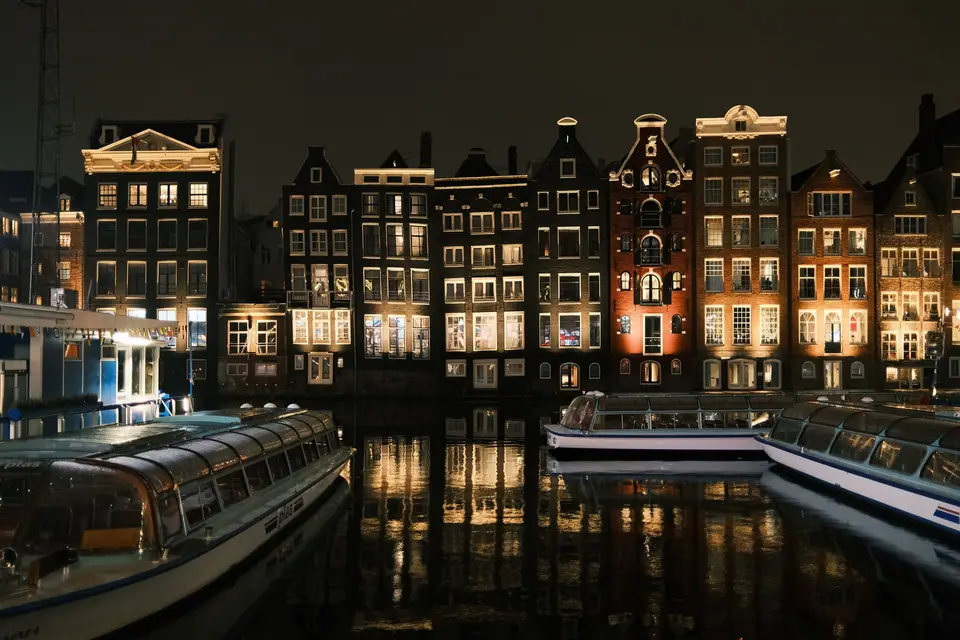
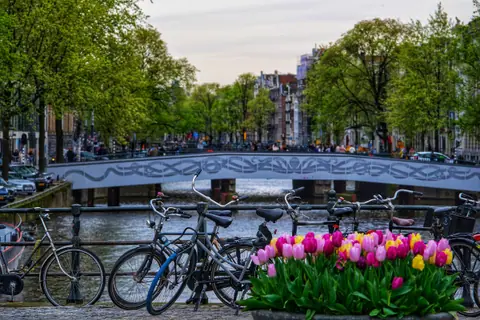
Gabled brick houses reflected in concentric 17th-century canals, world-leading Golden Age art museums and neighbourhood streets built around cycling.
Quick decisions
How many days?
3 days: the Canal Ring and Jordaan, Museumplein (Rijksmuseum and Van Gogh Museum), and a ferry across the IJ to Noord or a canal boat ride. 4 to 5 days: add De Pijp, the Plantage district and a quick train trip to Haarlem or Zaanse Schans. See our three-day plan.
Where should I stay?
Jordaan or Western Canal Ring: quiet canalside streets and brown cafés. De Pijp: restaurants, the Albert Cuyp Market and walking distance to Museumplein. Oud-West or Noord: better value and more space. Compare all areas in our neighbourhood breakdown.
Do I need a car?
No. Street parking is among the most expensive in Europe and the canal streets are narrow and one-way. Walking, trams, the North/South metro line and bikes cover the entire city.
Best for
Art lovers: Rembrandt, Vermeer and Van Gogh in two neighbouring museums. Walkers and cyclists: flat canal paths and brick bridges. Spring trips: tulip season and King's Day in April.
Before you go
Book weeks ahead: the Anne Frank House (tickets release six weeks out on Tuesdays) and the Van Gogh Museum sell out completely. Watch the bike lanes: red tarmac paths belong to cyclists, not pedestrians. Details in our first-timer briefing.
Getting around
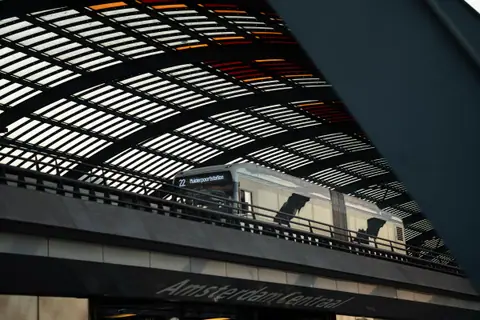
From Schiphol Airport: NS trains reach Amsterdam Centraal in about 15 minutes, or bus 397 runs straight to Museumplein and Leidseplein. In town: tap in and out with any contactless card using OVpay on GVB trams, buses and metro. Read arrival and transport.
Overview
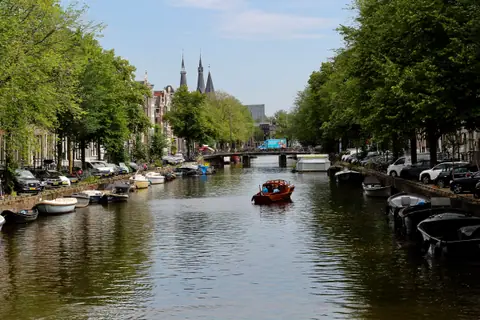
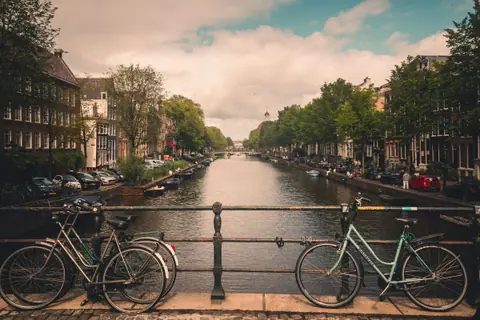
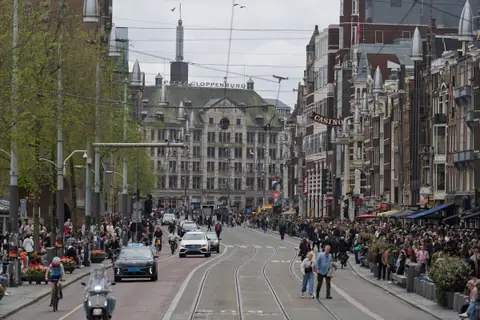
Amsterdam is much smaller, flatter and calmer than its loud nightlife reputation suggests once you step three streets away from Damrak and the Red Light District (De Wallen). Radiating outward from Amsterdam Centraal Station like a crescent fan, the historic heart of the city is the seventeenth-century UNESCO Canal Ring (Grachtengordel) and the Jordaan, where four concentric waterways, Singel, Herengracht, Keizersgracht and Prinsengracht, curve in a horseshoe around the medieval core, lined with narrow brick merchant houses topped with stepped and bell gables, hoisted with iron roof hooks and shaded by tall elms.
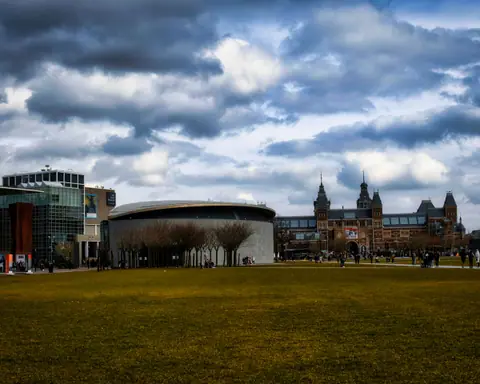
Immediately south of the outer canal sits Museumplein and Vondelpark, holding the Rijksmuseum, the Van Gogh Museum and the Stedelijk Museum around a single green lawn. Beyond it lies De Pijp, the former nineteenth-century workers' quarter that now serves as Amsterdam's busiest daytime street market and evening dining neighbourhood, while free passenger ferries behind Centraal Station cross the IJ waterway in five minutes to the creative hangars of Amsterdam Noord. Read our practical briefing before you book museum slots.
Getting there
Amsterdam Airport Schiphol (AMS) lies fifteen kilometres south-west of the centre and has a mainline underground railway station directly below the terminal hall. Frequent NS trains reach Amsterdam Centraal in fifteen minutes and Amsterdam Zuid in under ten minutes (connecting with North/South Metro Line 52 for De Pijp), while the red Airport Express Bus 397 runs direct from the terminal forecourt to Museumplein and Leidseplein. International Eurostar services from London, Paris and Brussels and ICE trains from Germany pull straight into Amsterdam Centraal.
Inside the city, you do not need paper tickets or a separate card for single journeys: using the national OVpay system, simply tap any contactless bank card or phone wallet on the reader when boarding and exiting all GVB trams, buses and metro gates, as well as NS trains. The blue-and-white GVB passenger ferries crossing the IJ behind Centraal Station are free. Everything is covered in our transport guide.
Where to stay
Hotel rooms in historic seventeenth-century canal houses are atmospheric but often compact, with steep wooden stairs and no lift. For classic bridge and water views, stay in the Jordaan or along Herengracht, Keizersgracht and Prinsengracht; if you travel with heavy bags, confirm lift access beforehand and pack rain-ready layers as outlined in what to wear in Amsterdam.
For larger modern rooms, lifts and lower nightly rates within easy reach of the canals, look just outside the outer ring in three connected neighbourhoods: De Pijp (steps from the Albert Cuyp Market, Museumplein and Metro Line 52), Oud-West (beside Vondelpark and the De Hallen food hall) or leafy Plantage in the east. Across the IJ waterway behind Centraal Station, Amsterdam Noord offers contemporary design hotels connected to the centre 24 hours a day by free three-minute ferries. Avoid the noisy streets immediately around Damrak and Warmoesstraat, and check best time to visit Amsterdam if arriving during April's tulip and King's Day peak. We compare the main districts in where to stay in Amsterdam.
Things to do
Because Amsterdam's flagship museums use strict timed-entry ticketing with zero tickets sold at the door, smart planning starts weeks ahead by booking the Anne Frank House on Prinsengracht (tickets release six weeks out every Tuesday morning) and the Van Gogh Museum. Once in town, pair one pre-booked museum each morning with an afternoon canal walk or open-air electric boat ride through the waterways.
Start at opening time on the second-floor Gallery of Honour inside the Rijksmuseum to stand before Rembrandt's monumental Night Watch and four luminous domestic paintings by Johannes Vermeer, including The Milkmaid, before taking a lunch break in Vondelpark or De Pijp ahead of the Van Gogh Museum's chronological collection of more than 200 paintings, drawings and letters. On your second morning, walk across the small drawbridges of Brouwersgracht, peek into the quiet seventeenth-century almshouse courtyards (hofjes) of the Jordaan, browse the independent boutiques of De Negen Straatjes (the Nine Streets), and step through the wooden door on Spui square into the medieval Begijnhof courtyard. Finish by riding the free GVB ferry behind Centraal Station across the IJ to NDSM Wharf in Noord. The full list is in things to do in Amsterdam.
Food and drink
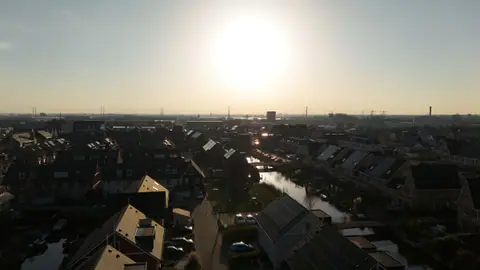
Dutch street snacks and colonial Indonesian cooking define the Amsterdam food scene. Your first daytime stop should be the six-days-a-week Albert Cuyp Market in De Pijp, where stalls griddle fresh stroopwafels to order on hot iron presses, splitting the crisp round wafer horizontally to spread warm caramel syrup inside, alongside dimpled cast-iron pans turning out fluffy buckwheat poffertjes with melting butter and icing sugar. At bridge kiosks along the canals, try Hollandse Nieuwe (mildly cured raw North Sea herring served with chopped white onions and pickles) or crisp double-fried chips (vlaamse friet) topped with peanut satay sauce and mayonnaise.
In the early evening, step into a historic dark-wood bruin café (brown café) to order a plate of golden bitterballen (crunchy beef-ragout croquettes served with grainy mustard) alongside a Dutch pilsner or a tulip glass of juniper-flavoured jenever. For dinner, book a multi-dish Indonesian rijsttafel (rice table), sharing twelve to twenty small spiced bowls of slow-braised beef rendang, chicken satay, spicy sambal and coconut vegetables. Our favourites are in our De Pijp and food guide.
Culture
Built on millions of long wooden piles driven deep through marshy peat into a stable sand layer below sea level, Amsterdam grew from a thirteenth-century fishing dam on the Amstel River into the richest maritime trading port in Europe during the 1600s. Ships of the Dutch East and West India Companies turned the city into a warehouse for grain, timber, porcelain and spices, funding the 1613 concentric Canal Ring expansion and creating a thriving civic market for oil paintings by Rembrandt, Frans Hals and Vermeer.
Unlike absolute monarchies elsewhere in seventeenth-century Europe, the merchant-governed Dutch Republic practised relative freedom of conscience, offering refuge to Sephardic Jews from Iberia (who built the candlelit 1675 Portuguese Synagogue), French Huguenots and writers across the continent, a history traced from the Jewish Cultural Quarter to the preserved Secret Annex at the Anne Frank House on Prinsengracht. Today, Dutch gezelligheid (warm, unpretentious cosiness) and everyday cycling define the city, where bikes outnumber residents. Follow our three-day Amsterdam itinerary to explore at a relaxed pace.
Weather by month
Amsterdam is warmest in August, with average highs around 23°C, and coldest in January, when nights drop to about 2°C. October is the wettest month, with rain on about 13 days. For mild weather with fewer rainy days, aim for May, June, July and September.
| Month | Low | Range | High | Rain | Rainy days |
|---|---|---|---|---|---|
| Jan | 2°C | 7°C | 74 mm | 14 d | |
| Feb | 2°C | 8°C | 63 mm | 11 d | |
| Mar | 4°C | 11°C | 56 mm | 11 d | |
| Apr | 6°C | 14°C | 43 mm | 9 d | |
| May | 10°C | 18°C | 53 mm | 9 d | |
| Jun | 13°C | 21°C | 66 mm | 10 d | |
| Jul | 15°C | 23°C | 78 mm | 11 d | |
| Aug | 15°C | 23°C | 86 mm | 12 d | |
| Sep | 12°C | 20°C | 79 mm | 11 d | |
| Oct | 9°C | 15°C | 89 mm | 13 d | |
| Nov | 5°C | 10°C | 84 mm | 14 d | |
| Dec | 3°C | 8°C | 81 mm | 15 d |
Averages of daily values from 2015 to 2024. Rainy days are days with at least 1 mm of rain. Source: Open-Meteo · Compare destinations by month.
Amsterdam on the map
Every place we cover in Amsterdam. Tap a category or pin to explore.
In-depth Amsterdam guides
Browse the guides grouped by topic: sights, neighbourhoods, food, transport, day trips and trip planning.
Sights, Landmarks & Parks
Key monuments, viewpoints, museums and nature trails.
Neighbourhoods & Where to Stay
Districts, historic quarters and the best bases for your stay.
- The Canal Ring and Jordaan: Bridges, Courtyards and Brown CafésA walking guide to the UNESCO Canal Ring, the Nine Streets and the courtyards of the Jordaan.
- Where to Stay in Amsterdam: Best Neighbourhoods ComparedSix Amsterdam neighbourhoods compared by atmosphere, canal views, stairs and transport links.

Food & Drink
Local dishes, markets, cafés and dining districts.

Getting Around & Arrival
Airport transfers, public transit, passes and driving rules.
Trip Planning & Itineraries
When to visit, what to pack and day-by-day routes.
- Amsterdam: What to Know Before You GoCanal layout, advance museum bookings, bike lane etiquette and card-only rules.
- Best Time to Visit AmsterdamTulip season in spring, long summer evenings on the water and quiet winter museum days.
- What to Wear in AmsterdamWindproof layers, flat walking shoes and why umbrellas struggle in North Sea gusts.
- 3 Days in Amsterdam: A Balanced Canal and Museum ItineraryA day-by-day route pairing pre-booked museums with unhurried walks along the canals.

Need your embassy or consulate in Netherlands? See embassies and consulates in Netherlands.
Reviews
Log in to write a review.
No reviews yet.