A 100-stop architectural and cultural route through Buenos Aires, linking the colonial Manzana de las Luces, San Telmo cobblestone tango squares, Teatro Colón, and Recoleta mansions.
Viceroyalty Port on the Río de la Plata to Belle Époque Boulevards
First founded briefly by Pedro de Mendoza in 1536 and permanently re-established by Juan de Garay in 1580 along the western shore of the Río de la Plata, Buenos Aires rose in 1776 to become capital of the Spanish Viceroyalty of the Río de la Plata. Following the May Revolution of 1810 at the Cabildo on Plaza de Mayo, the port city (whose citizens are known as Porteños) became the political heart of independent Argentina.
Between 1880 and 1930, agricultural exports and European immigration, particularly from Italy and Spain, fuelled an extraordinary architectural boom that lined Avenida de Mayo and Recoleta with Haussmann-style domes, grand cafés, and the acoustics of Teatro Colón while giving birth to tango in the dockside tenements (conventillos) of La Boca and San Telmo.
Plaza de Mayo, Avenida de Mayo & Microcentro
Plaza de Mayo, Casa Rosada, Buenos Aires Cabildo, Metropolitan Cathedral of Buenos Aires, Manzana de las Luces, Café Tortoni, Palacio Barolo, Congressional Palace, Obelisco, and Teatro Colón
Plaza de Mayo
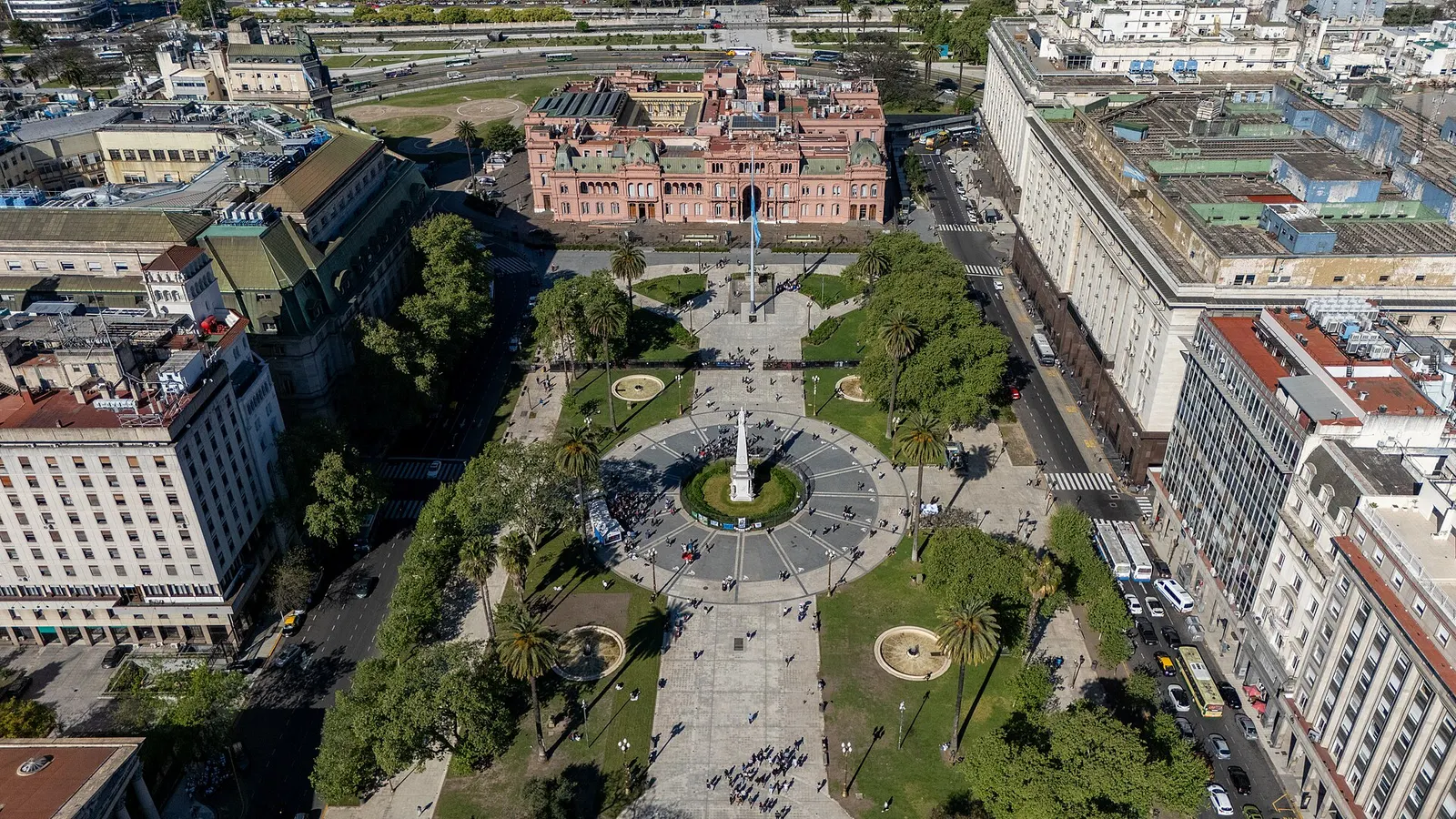
Formed in the sixteenth century, this square serves as the focal point for Argentina's major political upheavals and celebrations. Travellers can observe the central Pirámide de Mayo and the painted white headscarves commemorating the Mothers of the Plaza de Mayo. The open space is bordered by the nation's key government and religious institutions.
Casa Rosada
Distinguished by its baby-pink facade, this Italianate palace sits on the eastern edge of Plaza de Mayo. It occupies the site of an earlier Spanish fortress and postal headquarters, unified by an asymmetrical triumphal arch designed in the late nineteenth century. The presidential balcony overlooking the square remains its most famous architectural feature.
Buenos Aires Cabildo
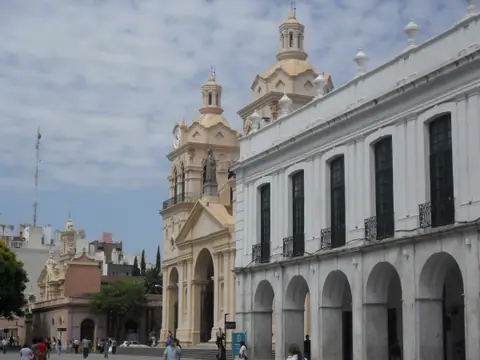
Constructed in the eighteenth century, this whitewashed building functioned as the administrative centre of the viceroyalty. Though partially demolished to make way for adjacent avenues, it retains an authentic colonial clock tower and arcaded galleries. Inside, a museum exhibits viceregal paintings, period furnishings, and documents detailing the May Revolution of 1810.
Metropolitan Cathedral of Buenos Aires
Overlooking Plaza de Mayo, the cathedral features an unexpected twelve-column neoclassical portico modelled after the Palais Bourbon in Paris. The interior preserves gilded eighteenth-century altarpieces, neo-Renaissance nave decoration, and the marble tomb of General José de San Martín, guarded by elite grenadiers. It also displays items dedicated to Pope Francis, who served here as archbishop.
Palacio de la Legislatura de la Ciudad de Buenos Aires
Inaugurated in 1931, the city legislature exhibits French neoclassical lines and a monumental clock tower modelled on the belfry of the Hôtel de Ville in Paris. The tower houses a carillon with thirty-five bells cast in Germany. Inside, the golden salon reflects the opulence of the Hall of Mirrors at Versailles with marble columns and crystal chandeliers.
Manzana de las Luces
Known as the Block of Enlightenment, this collection of seventeenth- and eighteenth-century buildings was the early intellectual core of the city. The Jesuits established colleges, residences, and deep stone-and-brick tunnels here that once linked various defensive structures. Visitors can explore the preserved cloisters and sections of the underground passages.
Church of San Ignacio
Erected by the Jesuits between 1710 and 1722, San Ignacio anchors the Manzana de las Luces with its austere baroque facade. The twin towers and thick masonry walls withstood numerous local conflicts, including British incursions in the early nineteenth century. Inside, the carved and gilded high altar demonstrates classic colonial craftsmanship.
Church of San Francisco
Originally built in the eighteenth century, the church received an elaborate Bavarian-inspired neo-baroque facade during renovations in the early twentieth century. The entrance features stone statues of Dante Alighieri, Giotto, and Christopher Columbus, reflecting historical links to the Franciscan order. A massive tapestry behind the altar ranks among the largest woven textiles in South America.
Casa de la Cultura
Completed in 1898 along Avenida de Mayo, this Beaux-Arts landmark features an ornate bronze statue of Pallas Athena holding an electric torch atop its spire. The interior contains gilded salons, dramatic bronze staircases, and a central courtyard lined with French mirrors. Today, it hosts public cultural exhibitions and concerts managed by the city administration.
Café Tortoni
Established by a French immigrant, Café Tortoni relocated to its present spot on Avenida de Mayo in the 1890s. The interior preserves stained-glass ceilings, dark timber panelling, and marble-topped tables once frequented by writers Jorge Luis Borges and Federico García Lorca. The basement salon continues to present intimate tango and jazz performances.
Palacio Urquiza Anchorena
Positioned near the midpoint of Avenida de Mayo, this palace exemplifies the French and Spanish domestic architecture favoured by the Argentine elite around 1900. It features deep ironwork balconies, slate mansard roofs, and intricate masonry relief on its upper stories. The ground floor now integrates seamlessly into the busy commercial corridor.
Hotel Castelar
Designed by Italian architect Mario Palanti and opened in 1928, this building presents refined classical styling along Avenida de Mayo. The Spanish dramatist Federico García Lorca resided in room 704 for six months during the 1930s, leaving a strong literary legacy. The preserved property displays elegant bronze light fixtures, period stucco work, and a classic streetfront salon.
Palacio Barolo
Completed in 1923, this one-hundred-metre office tower integrates elements of neo-Gothic and neo-Romantic design beneath a dome influenced by Indian temple architecture. Architect Mario Palanti structured the building according to Dante Alighieri's Divine Comedy, dividing it into hell, purgatory, and heaven. At the summit, a revolving lighthouse offers panoramic views over the city.
Palacio del Congreso de la Nación Argentina
Closing the western perspective of Avenida de Mayo, the national congress was designed by Italian architect Vittorio Meano. The building is distinguished by its eighty-metre bronze-plated cupola, massive Corinthian portico, and sculpted chariot atop the entrance. It anchors Congressional Plaza, which contains monuments and bronze casts by Auguste Rodin.
Confitería del Molino
Constructed in 1916 by architect Francisco Gianotti, this Art Nouveau treasure is celebrated for its corner turret crowned with electric windmill blades. The structure features stained glass imported from Venice, Carrara marble counters, and bronze floral relief work. Following extensive restoration, it serves as a public cultural space showcasing early twentieth-century confectionary traditions.
Obelisco de Buenos Aires
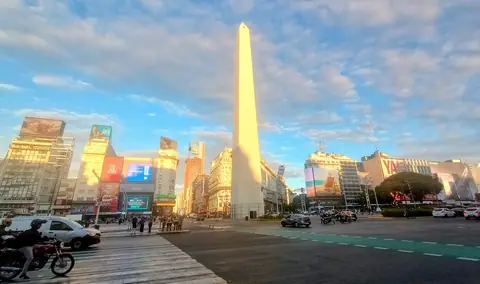
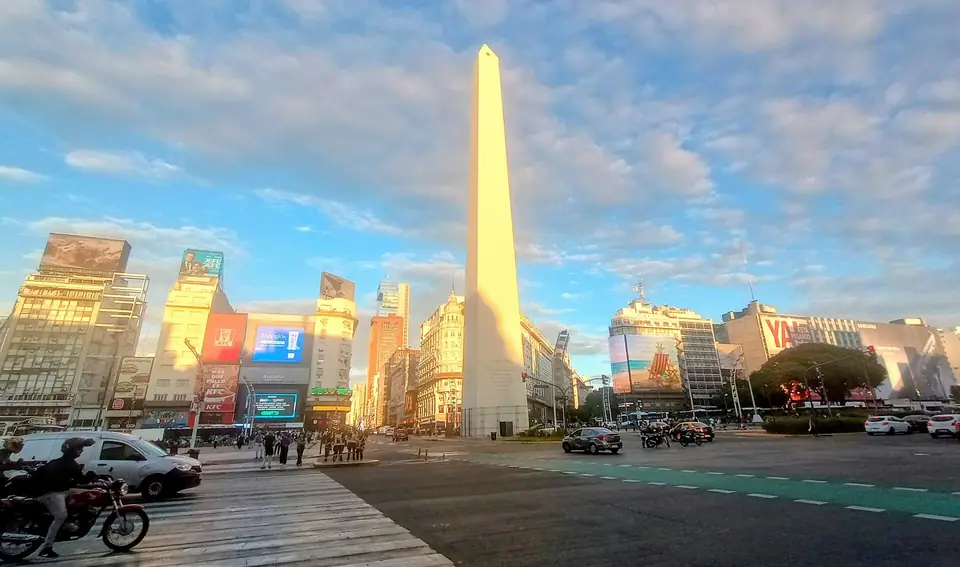
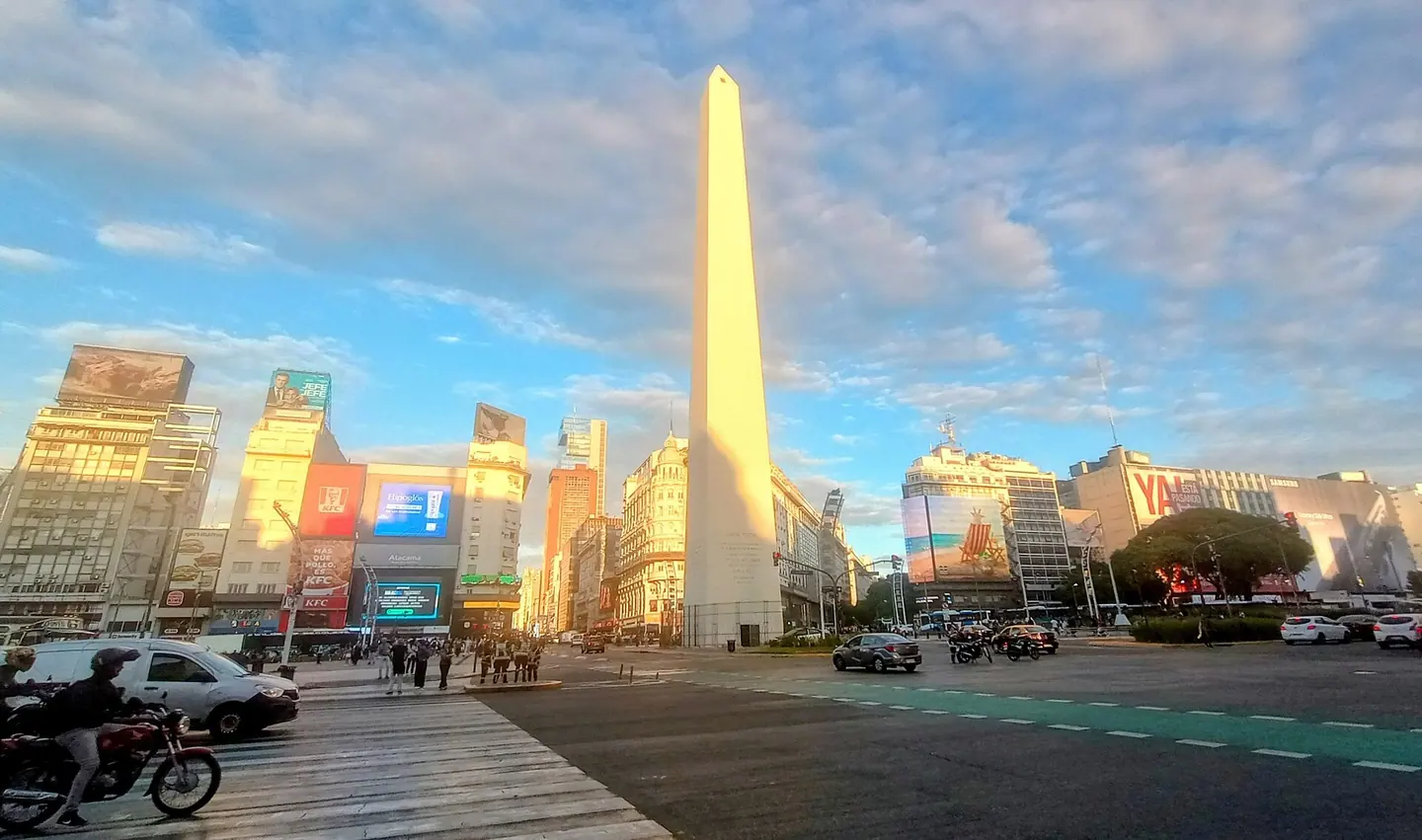
Erected in 1936 to mark the quadricentennial of the city's first foundation, this sixty-seven-metre obelisk stands at the intersection of Corrientes and 9 de Julio. Designed by Alberto Prebisch in just thirty-one days, the hollow concrete shaft features a single entrance and four summit observation windows. It functions as the premier gathering point for national sports victories.
Teatro Colón
Inaugurated in 1908, this opera house ranks among the finest acoustic performance venues in the world. Its horseshoe-shaped auditorium is crowned with a mural by Raúl Soldi, encircled by seven tiers of gilded boxes and red velvet seating. The entrance foyer features French stained glass, Italian marble columns, and statues imported from across Europe.
Cervantes National Theater
Founded by Spanish actress María Guerrero, this theatre opened in 1921 with a facade reproducing the sixteenth-century University of Alcalá de Henares. Tiles, carved woodwork, and stone elements were imported directly from Spain to achieve an authentic Spanish Renaissance aesthetic. It remains Argentina's sole national stage devoted entirely to classical and contemporary theatrical productions.
Sinagoga de la Congregación Israelita de la República Argentina
Dating to 1932, this Byzantine and Romanesque-inspired temple serves as the main synagogue of the country's historic Jewish community. The facade displays sculpted tablets of the Ten Commandments, arched windows, and Stars of David carved into stone reliefs. The interior accommodates a museum detailing Jewish immigration and communal life in Argentina.
Galerías Pacífico
Originally conceived in 1889 in imitation of Milan's Galleria Vittorio Emanuele II, this Beaux-Arts shopping arcade connects Florida and San Martín streets. Its central vaulted cupola features twelve celebrated frescoes completed in 1945 by prominent artists including Antonio Berni and Juan Carlos Castagnino. The building also houses the Borges Cultural Centre on its upper levels.
San Telmo Cobblestones, Defensa & La Boca
Plaza Dorrego, Mercado de San Telmo, Zanjón de Granados, Pasaje de la Defensa, Parque Lezama, Russian Orthodox Church San Telmo, Caminito La Boca, Fundación Proa, La Bombonera, and Usina del Arte
Plaza Dorrego
Second only to Plaza de Mayo in age, this leafy square forms the social heart of San Telmo. On Sundays the cobblestone space transforms into a celebrated flea market filled with gramophones, vintage silver, and spontaneous outdoor tango performances. Around the perimeter, colonial-era bars and nineteenth-century cafes maintain their original wooden counters.
Mercado de San Telmo
Inaugurated in 1897 to cater to European immigrants, this market features cast-iron columns and soaring glass ceiling panels engineered by Juan Antonio Buschiazzo. Today, traditional butchers and vegetable merchants trade alongside vintage clothing sellers and specialty coffee roasters. Visitors can admire the intact nineteenth-century industrial architecture while browsing historic memorabilia.
El Zanjón de Granados
This remarkable archaeological complex reveals four centuries of urban history beneath an aristocratic mansion. Restoration work uncovered vaulted brick tunnels constructed over the bed of the third river stream of early Buenos Aires. Guided tours display colonial cisterns, slave quarters, and domestic artefacts recovered from the subterranean excavations.
Pasaje de la Defensa
Built in the 1880s for the affluent Ezeiza family, this two-storey Italianate residence became a crowded tenement following the 1871 yellow fever epidemic. Today the property functions as a retail gallery where visitors wander between marble-paved inner courtyards and iron balconies. The high ceilings and period staircases provide an authentic glimpse into patrician domestic architecture.
Parque Lezama
Supposed site of the original 1536 foundation of the city by Pedro de Mendoza, this terraced green space slopes toward the river flats. Designed by French-Argentine landscape architect Carlos Thays, the park features neoclassical statues, ancient tipa trees, and an amphitheatre. It serves as an atmospheric transition zone between San Telmo and neighbouring La Boca.
Russian Orthodox Church of the Holy Trinity
Constructed in 1901 by architect Christoph Poppen, this church was the first Russian Orthodox place of worship in South America. The exterior showcases five sky-blue onion domes patterned with gilded stars and detailed Venetian mosaics shipped from Saint Petersburg. Inside, ornate icons and frescoed walls reflect seventeenth-century Yaroslavl decorative traditions.
Caminito
Following an abandoned railway curving alongside the Riachuelo river, this open-air museum was created during the 1950s by artist Benito Quinquela Martín. The tenement buildings feature vivid primary colours, painted in corrugated iron and timber by early Genoese immigrants using surplus boat enamel. Street painters, tango dancers, and craft vendors populate the pedestrian thoroughfare.
Fundación Proa
Set inside an extensively converted nineteenth-century mansion, this contemporary art institution stands directly opposite the old docks of the Riachuelo. Designed by Milanese practice Caruso-Torricella, the centre features sleek white galleries, a photography library, and a rooftop cafe with terrace views across the port. The institution stages rotating exhibitions by prominent international modern artists.
La Bombonera
Officially named Estadio Alberto J. Armando, this famous venue earned its nickname from its D-shaped layout resembling a chocolate box. Built between 1938 and 1940, the stadium is renowned for its steep vertical stands and intense acoustic resonance during matches. Visitors can tour the pitch, locker rooms, and the attached Museum of Boquense Passion.
Usina del Arte
This imposing red-brick complex was built in 1916 by Italian architect Giovanni Chiogna to house the town electricity company. Restored as a multidisciplinary cultural venue, it boasts an internationally acclaimed symphony hall lined with native wood, designed to optimise natural acoustics. Visual art installations and regular chamber concerts fill the spacious cavernous industrial interiors.
Museo Histórico Nacional
Housed within an Italianate mansion inside Parque Lezama, this museum traces Argentina's development from colonial times to the early twentieth century. Key exhibits include General José de San Martín's curved sabre, historical flags, and oil paintings depicting key independence battles. The surrounding veranda and manicured gardens offer a calm retreat above the historic streets.
Museo de Arte Moderno de Buenos Aires
Located on Avenida San Juan, this institution occupies the historic warehouse of the Piccardo tobacco company, retaining its original exposed red-brick façade. Inside, the modern gallery spaces feature over seven thousand works of Argentine and international art from the twentieth and twenty-first centuries. Exhibitions cover painting, sculpture, graphic design, and audiovisual media.
Parroquia San Pedro Telmo
Begun by the Jesuits in 1734 under architect Andrés Blanqui, this church was completed by the Bethlemite friars after the Jesuit expulsion. The façade features twin bell towers and ornate plasterwork added in the early twentieth century by architect Pelayo Sáinz. Inside, visitors find colonial wood carvings and altars dedicated to Saint Peter González Telmo, patron of seafarers.
Casa Mínima
Measuring just two metres and twenty centimetres wide, this tiny whitewashed dwelling on Pasaje San Lorenzo dates from the early nineteenth century. Popular legend describes it as a home given to a freed enslaved person by his former master, though records suggest residual subdivision. The facade displays an intact second-floor wrought-iron balcony and wooden doorway.
Museo de Arte Contemporáneo de Buenos Aires
Standing next to the modern art museum, this private institution showcases geometric abstraction and kinetic art from across the globe. The contemporary building features an expansive glass curtain wall and an interior spiral ramp connecting five distinct exhibition levels. The permanent collection includes notable works by international optical art pioneers.
Museo de Bellas Artes de La Boca de Artistas Argentinos
Donated to the community by painter Benito Quinquela Martín, this riverfront museum served as his personal home, studio, and primary school. The collection features dynamic oil paintings depicting dockworkers unloading coal against fiery port sunsets, alongside a broad selection of maritime figureheads. A rooftop terrace displays figurative sculptures overlooking the Riachuelo channel.
Puente Transbordador Nicolás Avellaneda
Erected in 1914 using British steel components, this rare aerial transporter bridge carried workers across the Riachuelo in a suspended gondola. It remains one of only eight surviving bridges of its structural type in the entire world. Standing beside a newer vehicular bridge, the towering iron framework represents the intense industrial legacy of La Boca.
Iglesia San Juan Evangelista
Consecrated in 1886, this church served as the spiritual and civic anchor for the predominantly Genoese immigrant populace of La Boca. Designed by Italian architect Paolo Besana, the neo-Romanesque structure features a prominent bell tower and rich interior fresco cycles. Historically, the church played an active role in local worker protection societies and neighbourhood mutual aid organisations.
Monumento a Mafalda
Positioned on the street corner outside the former home of cartoonist Quino, this life-sized coloured resin sculpture depicts Mafalda sitting on a bench. Created by artist Pablo Irrgang in 2009, she is flanked by her cartoon companions Manolito and Susanita. The monument marks the starting point of the Paseo de la Historieta, a comic strip walking trail.
Teatro de la Ribera
Constructed on land donated by Benito Quinquela Martín, this civic venue opened in 1971 to promote community theatrical productions and chamber music. The foyer and main auditorium are decorated with original large-scale murals by Quinquela Martín celebrating local maritime life and shipwrights. The theatre forms an essential part of the artistic circuit along the Riachuelo waterfront.
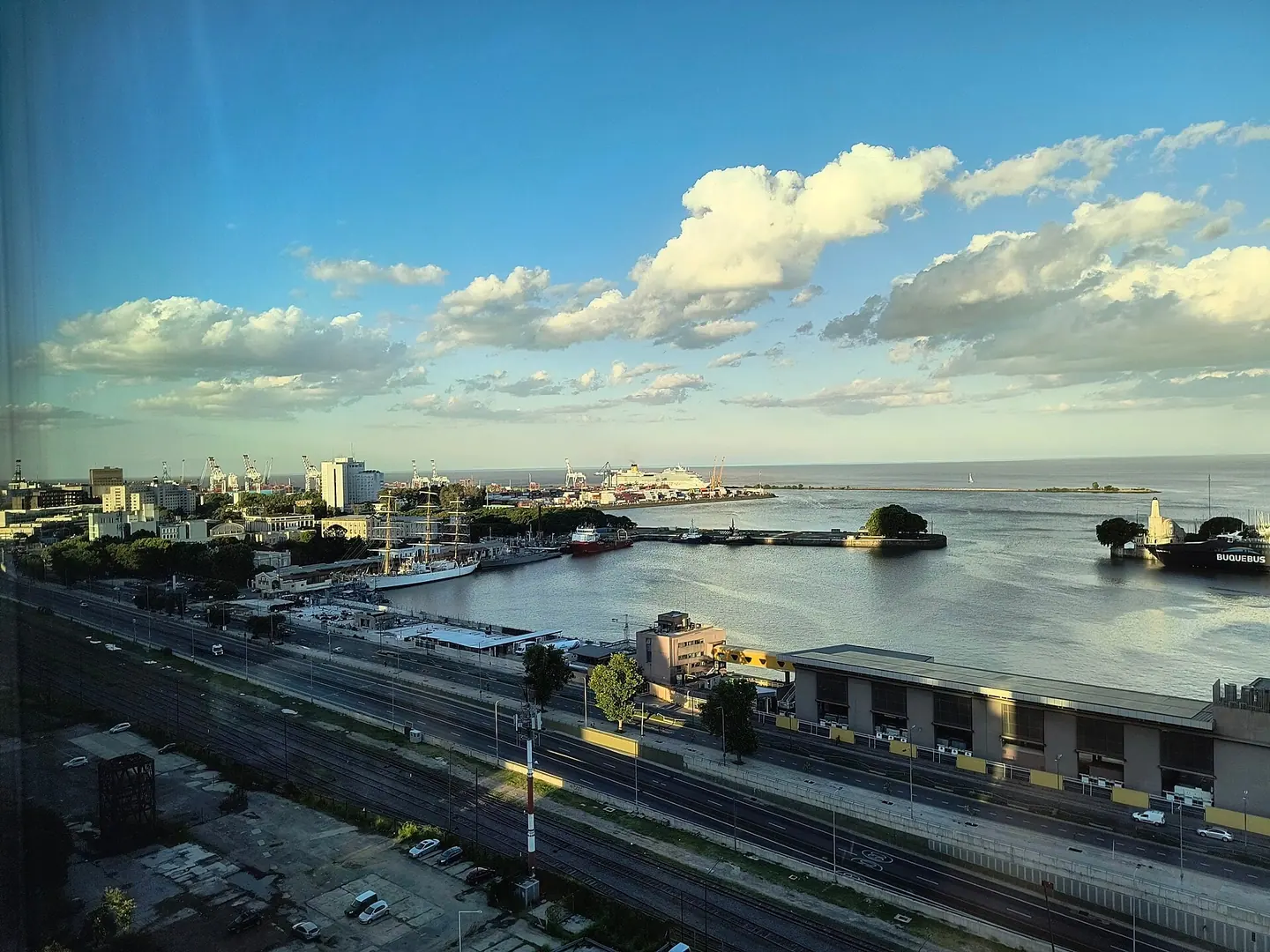
Puerto Madero Docks, Retiro & Plaza San Martín
Puente de la Mujer, Fragata Sarmiento, Kirchner Cultural Centre CCK, Galerías Pacífico, Basilica of the Blessed Sacrament, Plaza San Martín, Palacio Paz, Kavanagh Building, and Torre Monumental
Puente de la Mujer
Completed in 2001, this asymmetric footbridge spans Dock 3 of Puerto Madero with a bold white pylon evoking a couple dancing the tango. Its central section rotates ninety degrees on a mechanical axis to let water traffic pass. Travellers crossing the bridge enjoy open views along the former brick dockland basins.
Fragata ARA Presidente Sarmiento
Constructed in England in 1897, this steel-hulled three-masted clipper undertook dozens of circumnavigations as the Argentine naval cadet flagship. Today permanently berthed at Dock 3, the vessel retains its polished wood decks, brass navigational instruments, and officers' mess rooms. Visitors can step aboard to inspect original steam fittings and naval artillery.
Corbeta ARA Uruguay
Launched in 1874, this venerable sail-and-steam corvette is the oldest surviving vessel in the Argentine Navy. The ship gained fame in 1903 after braving polar ice to rescue the stranded Swedish Antarctic Expedition led by Otto Nordenskjöld. Berthed at Dock 4, its preserved hold contains Antarctic survival artefacts and original logbooks.
Faena Arts Center
Occupying the former engine room of a massive flour mill complex, this venue presents rotating international and Argentine contemporary installations. The monumental cathedral room preserves high industrial arches alongside polished marble and state-of-the-art lighting. It anchors the southern end of Puerto Madero, where avant-garde design meets historic brick architecture.
Colección de Arte Amalia Lacroze de Fortabat
Designed by Rafael Viñoly, this sleek glass and concrete pavilion at Dock 4 features a curved roof with computer-controlled aluminium louvres that track the sun. The galleries display an extensive private collection including works by J.M.W. Turner, Andy Warhol, and Antonio Berni. Visitors find thoughtful curatorial narratives highlighting Argentine masters alongside European classics.
Monumento a los Españoles
Known as the Palacio de Correos and later renamed the Kirchner Cultural Centre, this vast Beaux-Arts landmark was designed by Norbert Maillart. Inside, a striking blue-lit suspended concert hall known as the Whale sits within the historic courtyard. Visitors can inspect the preserved presidential postmaster office and attend public classical music performances.
Luna Park
Opened in the 1930s, this historic arena hosted legendary international prizefights involving Argentine sporting icons like Pascual Pérez and Carlos Monzón. It also witnessed key twentieth-century civic gatherings, including the initial meeting between Juan Perón and Eva Duarte in 1944. Its streamlined Art Deco exterior remains a familiar landmark on Corrientes and Bouchard.
Edificio Comega
Erected between 1931 and 1934 by architects Enrique Douillet and Alfredo Joselevich, this landmark represents one of the earliest examples of rationalist architecture in the capital. Clad in polished Travertine marble, it was the first Argentine high-rise constructed around a reinforced concrete frame. Its tiered silhouette commands the junction of Corrientes and Leandro N. Alem.
Galerías Pacífico
Originally conceived in 1889 as the Argentine branch of Le Bon Marché, this elegant building combines French neoclassical stone facades with glass vaults. Its central dome showcases frescoes painted in 1946 by renowned muralists including Antonio Berni and Juan Carlos Castagnino. Travellers come to admire the decorative arches and browse the historic retail corridors.
Centro Cultural Borges
Situated within the Galerías Pacífico complex, this arts centre honours the literary legacy of writer Jorge Luis Borges. The facility regularly presents photography retrospectives, experimental theatre productions, and contemporary dance workshops. Visitors can explore quiet exhibition galleries tucked away just above the busy downtown pedestrian streets.
Centro Naval
Completed in 1914 by French architect Jacques Dunant and Argentine Gaston Mallet, this social club for naval officers exhibits an extraordinarily detailed facade. The iron entrance gates were forged from bronze artillery recovered during the Argentine War of Independence. Inside, stone staircases, stained-glass windows, and maritime sculptures decorate the grand meeting halls.
Basilica of the Blessed Sacrament
Commissioned by Mercedes Castellanos de Anchorena and consecrated in 1916, this church displays five towers and elegant Lombard Neo-Romanesque lines. The interior features white Carrara marble, blue granite columns, carved oak woodwork, and Venetian mosaics. Its peaceful crypt holds the remains of the patron who funded its construction.
Palacio San Martín
Constructed between 1905 and 1909 for the Anchorena family, this palatial residence was inspired by French eighteenth-century hôtel particulier design. Today serving as the ceremonial seat of the Ministry of Foreign Affairs, the building features three separate residences linked by an impressive cour d'honneur. Its gilded salons contain eighteenth-century tapestries and pre-Columbian ceramic treasures.
Plaza San Martín
Steeped in national history, this sloping public park was the battleground where local forces repelled British troops during the 1807 invasions. French landscape architect Charles Thays landscaped its gardens with jacarandas, tipas, and ombú specimens. It offers views down towards the river plain, framed by some of the city's finest aristocratic mansions.
Monumento al General San Martín
Sculpted by French artist Louis-Joseph Daumas in 1862, this monument shows the liberator General José de San Martín pointing towards the Andes. The elaborate red granite base, designed later by Gustav Eberlein, features bronze reliefs depicting major battles from the South American liberation campaigns. A permanent guard of the mounted Grenadiers Regiment watches over the site.
Cenotafio a los Caídos en Malvinas
Positioned at the base of Plaza San Martín along Avenida del Libertador, this open-air cenotaph commemorates Argentine servicemen lost in the 1982 South Atlantic conflict. Twenty-five black granite slabs bear the names of the deceased, arranged without military rank. An eternal flame burns alongside the coat of arms of Argentina and an honour guard.
Kavanagh Building
Completed in 1936 for Corina Kavanagh, this 120-metre tower was South America's tallest reinforced-concrete structure at the time. Architects Sánchez, Lagos and de la Torre designed stepped rationalist volumes that taper dramatically towards the sky. The residential high-rise remains celebrated for its clean lines, central air conditioning system, and panoramic urban views.
Palacio Paz
Built for newspaper magnate José C. Paz by French architect Louis-Marie Henri Sortais, this enormous residence ranks among the largest private homes ever built in Argentina. The interiors reflect distinct historical European styles, featuring grand ballroom mirrors, ornate stucco ceilings, and marble fire surrounds. The building now serves as the headquarters of the Military Officers' Circle.
Torre Monumental
Gifted by the British community for the 1910 May Revolution centenary, this octagonal tower features red brickwork and carved Portland stone details. The clock mechanism was manufactured by Gillett and Johnston of Croydon, faithfully mimicking the chimes of London's Westminster Abbey. A glass elevator ascends to an open balcony offering views over the railway terminals.
Estación Retiro Mitre
Opened in 1915, this monumental railway station was engineered by British architects Eustace L. Conder, Roger Conder, and F. Farmer. Its immense arched train sheds were prefabricated in Liverpool and assembled on site over vast railway platforms. The ornate concourse preserves original ticket kiosks, coffered ceilings, and decorative ironwork reminiscent of grand European terminals.
Recoleta Cemetery, El Ateneo & Museo Nacional de Bellas Artes
El Ateneo Grand Splendid, Recoleta Cemetery, Basilica of Our Lady of the Pillar, Centro Cultural Recoleta, Palais de Glace, National Museum of Fine Arts MNBA, Floralis Genérica, and Museo de Arte Decorativo
El Ateneo Grand Splendid
Originally opened in 1919 as the Teatro Grand Splendid, this opulent auditorium hosted tango luminaries such as Carlos Gardel. The conversion preserved the painted ceiling frescoes by Nazareno Orlandi, the ornate balconies, and the velvet stage curtains, which now frame a reading cafe.
Plaza Vicente López
Named after the author of the Argentine national anthem, this leafy square sits amidst classical French-influenced architecture in upper Recoleta. Shaded by ancient rubber trees and flowering tipas, it provides a quiet pause before exploring the district's monumental boulevards.
Palacio Duhau
Commissioned in the 1930s by the Duhau family, this stately residence reflects the profound French influence on early twentieth-century Buenos Aires aristocracy. The complex features manicured terraced gardens connecting the neoclassical palace to a contemporary annex, showcasing rotating art installations.
Nunciature of the Holy See
Completed in 1909 by French architect Édouard Le Monnier, this opulent mansion exemplifies Belle Époque grandeur along Avenida Alvear. Acquired by the Vatican in 1947, it serves as the papal embassy and served as Pope John Paul II's residence during his state visits.
Plaza Francia
Designed by landscape architect Carlos Thays, this verdant public space features a central monument gifted by the French community for the 1910 Centennial. Often mistaken for the neighbouring Plaza Intendente Alvear, it hosts open-air cultural gatherings on its gentle slopes.
Basilica of Our Lady of the Pillar
Consecrated in 1732, this whitewashed temple is one of the oldest surviving colonial structures in Buenos Aires. Inside, visitors can examine primitive baroque reredos adorned with Upper Peruvian silverwork and explore the adjacent cloister museum displaying historic liturgical relics.
Recoleta Cemetery Entrance and Main Gate
Inaugurated in 1822 on former convent gardens, the necropolis entrance features four monumental Doric columns installed in 1881. The grand gateway opens onto paved avenues lined with thousands of elaborate private mausoleums crafted from imported Carrara marble and ornamental bronze.
Mausoleum of Eva Perón
Located down a narrow lane within Recoleta Cemetery, the Duarte family crypt contains the remains of Eva Perón, placed here in 1976 after decades of clandestine transit. The modest black marble facade is continually adorned with fresh flowers and commemorative plaques from union delegations.
Tomb of Rufina Cambaceres
This remarkable Art Nouveau monument commemorates Rufina Cambaceres, a young woman who died in 1902. Carved by German sculptor Richard Aigner, the Carrara marble statue shows the maiden holding the vault door, evoking tragic urban lore regarding premature burial.
Centro Cultural Recoleta
Occupying cloisters once belonging to the Recoletos monks, this interdisciplinary arts centre was redeveloped in 1980 by architects Jacques Bedel, Luis Benedit, and Clorindo Testa. Today it presents contemporary visual arts, experimental theatre, street performances, and youth cultural programmes across multiple open courtyards.
Palais de Glace
Opened in 1910 as a skating rink and ballroom, this circular venue played an essential role in popularising tango across upper-class Argentine society. It subsequently became a national exhibition hall, crowned by a large central skylight that illuminates works submitted for the prestigious National Salon of Visual Arts.
Museo Nacional de Bellas Artes
Housed in a converted drainage pump house redesigned by architect Alejandro Bustillo in the 1930s, this museum boasts South America's most extensive public art collection. Galleries showcase European masters such as Goya, Rembrandt, and Monet alongside foundational Argentine works by Cándido López and Antonio Berni.
Monument to Bartolomé Mitre
Sculpted by Italian artists David Calandra and Edoardo Rubino, this monumental ensemble rises on a hillside in Plaza Mitre. Unveiled in 1927, the bronze equestrian figure is supported by an ornate red granite pedestal flanked by allegorical statues depicting Duty, Value, and Justice.
Biblioteca Nacional Mariano Moreno
Conceived in 1961 by architects Clorindo Testa, Francisco Bullrich, and Alicia Cazzaniga, this striking Brutalist structure was completed in 1992. The building elevates reading rooms on heavy concrete cantilevers to preserve public gardens beneath, providing panoramic views across the port and surrounding residential boulevards.
Floralis Genérica
Designed by Argentine architect Eduardo Catalano and inaugurated in 2002, this enormous stainless steel and aluminium sculpture stands inside a reflective pool. The mechanism automatically opens its six immense petals at dawn and closes them at sunset, symbolising continuous rebirth.
Law Faculty of the University of Buenos Aires
Erected in 1949 under the direction of architects Ochoa, Vinent, and Chiappori, this immense structure features a facade of fourteen fluted Doric columns. The grand vestibule contains valuable oil paintings by master Benito Quinquela Martín, alongside lecture halls that have trained numerous Argentine presidents.
Museo Nacional de Arte Decorativo
Formerly the Palacio Errázuriz Alvear, this residence was designed by French architect René Sergent in the early twentieth century. It displays original period interiors, including a Renaissance Great Hall, Louis XVI boudoirs, Flemish tapestries, and miniature portraits spanning several centuries of European decorative arts.
Museo de Arte Popular José Hernández
Housed in a suburban villa bequeathed to the municipality by Felix Bunge, this museum celebrates indigenous and criollo folk arts. Exhibits feature intricate gaucho silverwork, handwoven ponchos, leather saddlery, and wooden carvings representing craft traditions from every province across Argentina.
Museo Evita
Located in an early twentieth-century mansion purchased in 1948 by the Eva Perón Foundation as a temporary home, this museum explores the political life of the famed leader. The collection displays her diplomatic wardrobe, personal letters, trade union memorabilia, and film footage from the Peronist era.
Plaza Alvear
Named after Buenos Aires's transformative first modern mayor, Torcuato de Alvear, this undulating square connects the Recoleta Cemetery to Avenida del Libertador. Old ficus trees shade pathways where weekend artisans assemble, directly beneath the prominent marble monument honouring Alvear's public works.
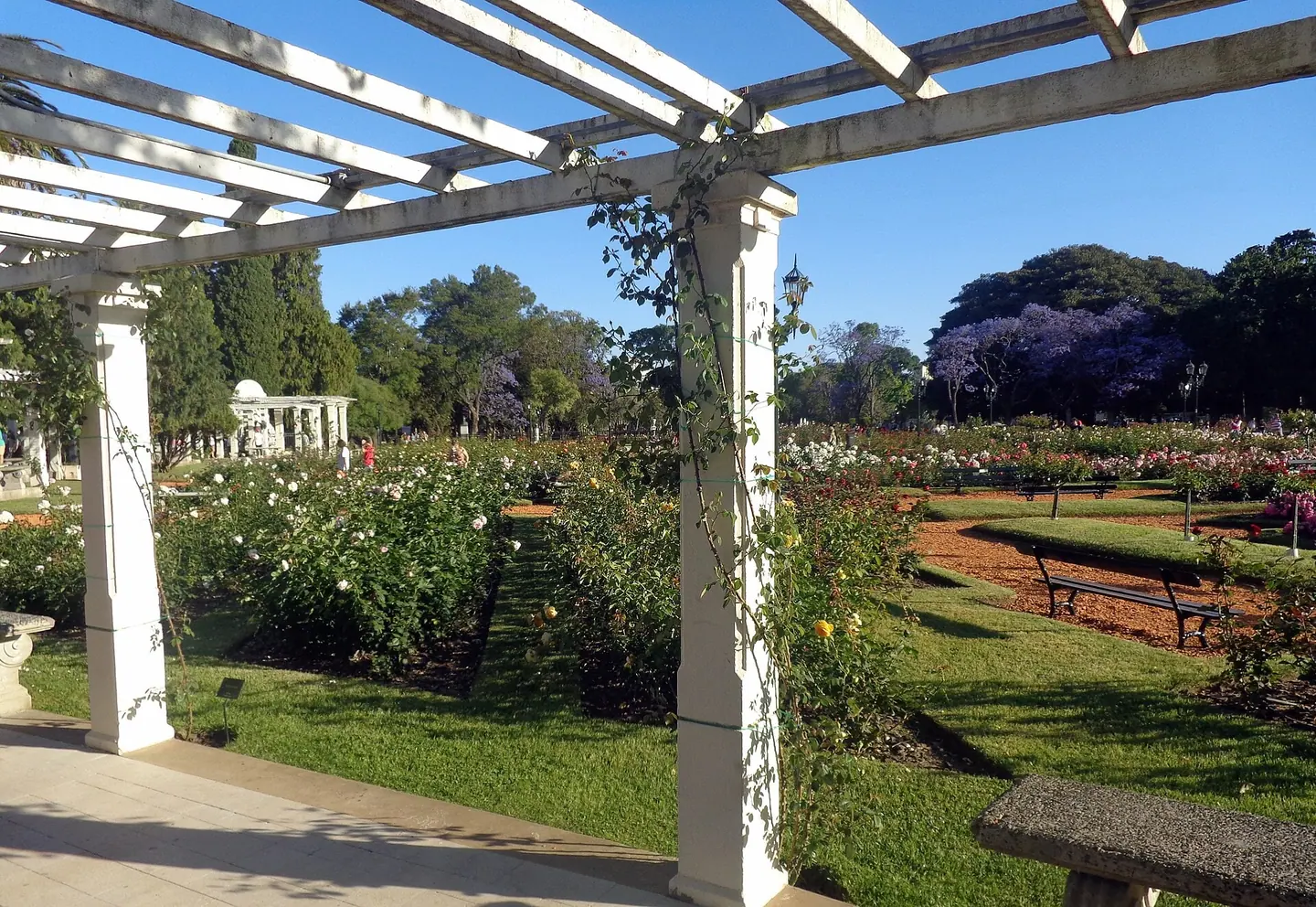
Palermo Bosques, MALBA & Belgrano
MALBA Museum, Buenos Aires Japanese Gardens, Paseo del Rosedal Palermo, Buenos Aires Botanical Garden, Evita Museum, Plaza Serrano Palermo Soho, Chacarita Cemetery, and Museo Larreta Belgrano
MALBA
Opened in 2001, this angular limestone and glass pavilion showcases leading twentieth-century art from across the continent. Inside, travellers can view masterworks by Frida Kahlo, Diego Rivera, and Antonio Berni. The building also hosts an active arthouse cinema and rotating international exhibitions.
Buenos Aires Japanese Gardens
Created in 1967 to commemorate a state visit by the Japanese imperial family, this tranquil park features traditional bridges, koi ponds, and sculpted bonsai trees. The grounds include a traditional tea house and a cultural pavilion showcasing calligraphy and flower arranging. It remains one of the largest Japanese gardens outside Japan.
Paseo del Rosedal
Designed by landscape architect Carlos Thays and completed by Benito Carrasco in 1914, this formal garden holds thousands of rose bushes across neatly bordered parterres. A classical white bridge crosses the lake beside a Greek colonnade. The grounds also feature an open-air poet garden with bronze busts of literary figures.
Galileo Galilei Planetarium
Constructed in 1966 by architect Jan Enrique Jan, this UFO-shaped landmark rests on three massive concrete pillars above a reflection pool. The dome houses a projection theatre presenting astronomical shows alongside genuine lunar rocks and metallic meteorites. At night, computerised light projections illuminate the sphere from below.
Buenos Aires Botanical Garden
Declared a national monument, this public garden was inaugurated in 1898 under the direction of French-Argentine landscape designer Carlos Thays. The grounds host an impressive Art Nouveau greenhouse imported from France, classical statues, and thousands of plant species arranged geographically. An English-style brick mansion serves as the central administrative building.
Evita Museum
Housed in a 1920s mansion that once served as a shelter for women run by the Eva Peron Foundation, this museum chronicles the life of the influential political figure. Exhibits feature personal garments, hats, official documents, and archive footage detailing her social welfare initiatives. A shaded courtyard cafe offers refreshments.
Plaza Cortazar
Commonly known as Plaza Serrano, this circular public space serves as the social heart of the Palermo Soho district. Local artisans sell leather goods, clothing, and crafts around the central fountain during weekend fairs. Sidewalk cafes and bars encircle the perimeter, making it a popular neighbourhood meeting point.
Chacarita Cemetery
Established in 1871 during a yellow fever outbreak, this vast burial ground covers over ninety hectares, far exceeding Recoleta Cemetery in physical area. The grounds contain striking neoclassical tombs, sprawling underground catacombs, and monuments to famous cultural icons. Tango singer Carlos Gardel rests here beside a bronze effigy that often holds a burning cigarette.
Museo de Arte Espanol Enrique Larreta
Writer Enrique Larreta converted this 1886 residence into a Spanish colonial manor to house his extensive collection of Spanish Renaissance and Baroque decorative arts. Visitors can admire ornate wood carvings, antique tapestries, and paintings by El Greco. A tranquil Andalusian-style garden with tiled fountains and dense foliage lies behind the house.
Museo Historico Sarmiento
Designed by Italian architect Juan Antonio Buschiazzo in 1873, this classical building served as the municipal hall of Belgrano before the district joined Buenos Aires. In 1880, it temporarily housed the national congress during the federalisation of the capital. Today, the rooms showcase documents, portraits, and furniture associated with President Domingo Faustino Sarmiento.
Parroquia Inmaculada Concepcion de Belgrano
Popularly known as the Round Church, this distinctive rotunda was designed by engineer Nicola Canale and consecrated in 1878. Its architectural design draws inspiration from the Pantheon in Rome, complete with a Corinthian portico and a massive central dome. The interior holds revered statues of the Immaculate Conception and fine marble altars.
Barrio Chino Gate
Erected at the entrance to Calle Arribenos in 2009, this eleven-metre-tall paifang gate was crafted in China and assembled locally by artisans. Adorned with carved dragons, traditional roof tiles, and stone lions at the base, it marks the gateway to the city's Asian commercial district. The surrounding pedestrian streets are lined with markets and eateries.
Hipodromo Argentino de Palermo
Inaugurated in the late nineteenth century, this renowned turf course features a magnificent French neoclassical grandstand designed by Louis Faure-Dujarric in 1908. It serves as the primary stage for prestigious Argentine horse races, including the Gran Premio Nacional. The facility retains ornate ironwork, historic betting halls, and contemporary entertainment spaces.
Campo Argentino de Polo
Known globally as the Cathedral of Polo, this sporting complex opened in 1928 and hosts the world's most competitive championship, the Argentine Open. The manicured field accommodates thousands of spectators during tournaments. Its central location between Palermo and Las Canitas makes it a focal point for the sport.
Parque de la Memoria
Overlooking the waters of the Rio de la Plata, this public memorial park is dedicated to the victims of Argentina's military dictatorship from 1976 to 1983. A winding concrete monument cuts through the lawn, bearing thousands of engraved names of the disappeared and executed. Sculptures by international artists are spread throughout the grounds.
Museo de Arte Popular Jose Hernandez
Set in a historic mansion donated by Felix Bunge, this institution preserves traditional rural and urban crafts from Argentine history. Exhibits include intricately carved mate gourds, silver saddles, woven ponchos, and leather goods crafted by indigenous and criollo artisans. The collection provides a comprehensive survey of regional craft traditions.
Museo Casa de Yrurtia
Renowned sculptor Rogelio Yrurtia designed this neo-colonial residence in Belgrano, which he bequeathed to the Argentine state in 1942. The house preserves his working studio, plaster casts, and monumental bronze studies, alongside paintings collected by his wife Lía Correa Morales. The quiet interior garden features native trees and marble sculptures.
Monumento de los Espanoles
Donated by the Spanish community to mark the centenary of the May Revolution in 1910, this monument rises nearly twenty-five metres high. Designed by Catalan sculptor Agusti Querol Subirats, it features allegorical bronze figures representing the Argentine provinces and rivers. The base includes a massive fountain surrounding the marble pillar.
Plaza Barrancas de Belgrano
Landscaped by Carlos Thays in 1892, this tiered public park occupies a natural bluff overlooking the old shoreline of the river. The grounds are shaded by centuries-old ombú trees and contain a cast-iron British pavilion, La Glorieta, where locals gather for open-air milongas. An exact miniature replica of the Statue of Liberty stands on the upper level.
Centro Cultural de la Ciencia
Located within the scientific and technological hub of Palermo, this interactive museum opened in 2015 to promote public engagement with scientific research. Visitors encounter interactive displays illustrating physics, biology, and robotics. Adjacent outdoor playgrounds incorporate kinetic installations and play equipment based on microscopic structures.
Subte Lines and Neighbourhood Walks in Buenos Aires
Pair this route with the practical neighbourhood breakdowns, climate charts and transport advice in our Buenos Aires Plaza de Mayo, San Telmo & Recoleta travel overview, alongside additional mapped city walks.