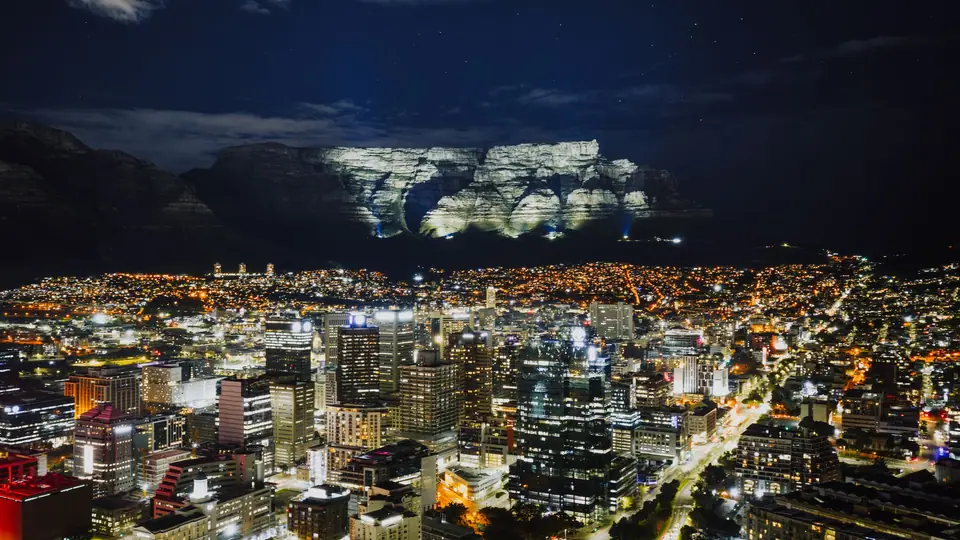
A detailed route between Table Mountain and the two oceans, linking the historic Company’s Garden, Bo-Kaap’s Cape Malay cobbles, Robben Island, Kirstenbosch, and Cape Point.
Khoekhoe Camissa Springs, Tavern of the Seas and the Road to Democracy
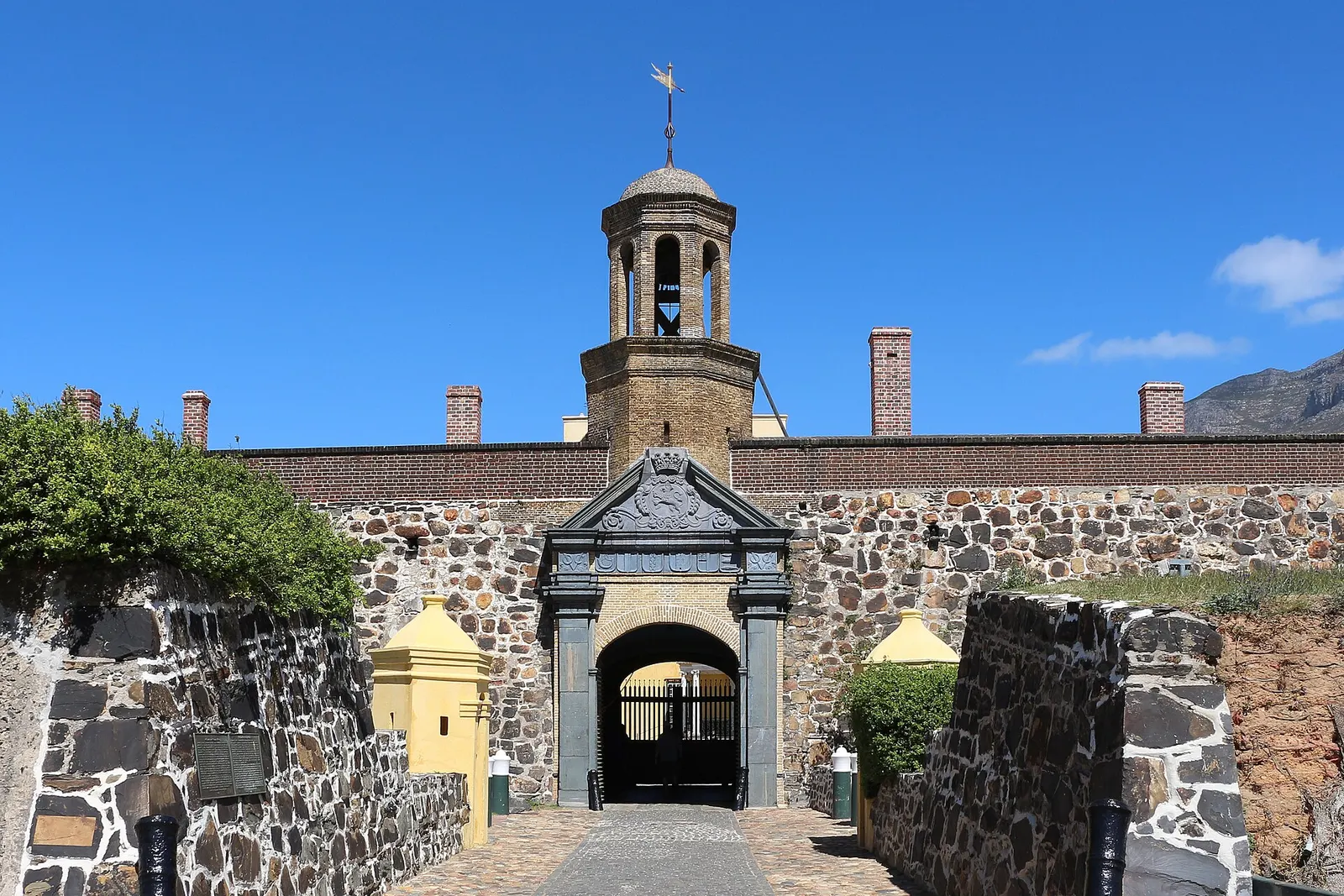
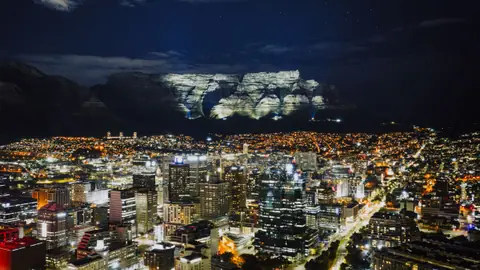
Known to the indigenous Khoekhoe pastoralists as ǁHui !Gaeb (Where the Clouds Gather) beneath the flat sandstone plateau of Hoerikwaggo (Table Mountain), Table Bay became a maritime watering stop after Portuguese navigator Bartolomeu Dias rounded the Cape of Good Hope in 1488. In 1652 Jan van Riebeeck established a victualling garden for the Dutch East India Company (VOC) and erected the pentagonal Castle of Good Hope, South Africa's oldest surviving colonial building.
Shaped by Khoisan heritage, Cape Malay artisans and scholars brought from the Indonesian archipelago to the cobbled slopes of Bo-Kaap, British Victorian harbour works, and the struggle against apartheid immortalised at Robben Island and City Hall (where Nelson Mandela gave his first speech as a free man in 1990), the Mother City unites dramatic natural geography with deep historical memory.
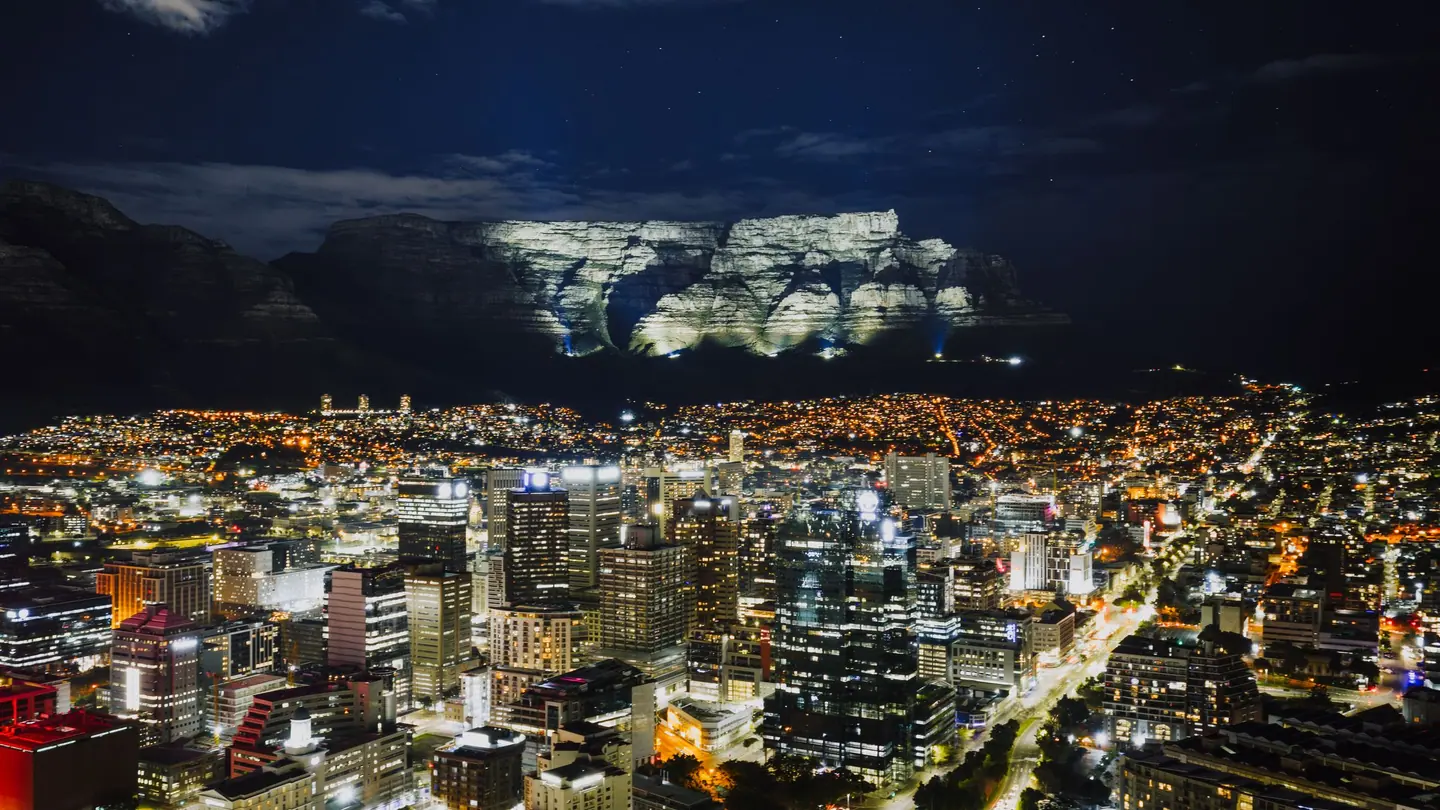
Castle of Good Hope, Company’s Garden & Historic City Bowl
Castle of Good Hope, Grand Parade, Cape Town City Hall Nelson Mandela Balcony, Slave Lodge Museum, St George’s Cathedral, Company’s Garden, South African National Gallery, Iziko South African Museum, Koopmans-de Wet House, and Greenmarket Square
Castle of Good Hope
Constructed between 1666 and 1679 by the Dutch East India Company, this bastion fortress stands as the oldest surviving colonial building in South Africa. Visitors walk through the original stone gateway, which features historic coat of arms carvings. The grounds contain the William Fehr Collection of period decorative arts, historic military dungeons, and expansive parade grounds.
Grand Parade
This broad public open space served as the main military assembly ground for the Dutch East India Company from the late seventeenth century. Flanked by the Castle of Good Hope and the Victorian City Hall, the square now hosts informal trading markets and political rallies. It provides generous sightlines across to Table Mountain and key colonial civic facades.
Cape Town City Hall
Erected in 1905 from honey-coloured Bath limestone, this municipal landmark features a grand central bell tower modelled on London's Big Ben. Nelson Mandela delivered his first public speech from its central balcony upon his release from prison in 1990. A bronze statue of Mandela now stands on that exact balcony, visible from the square below.
Iziko Slave Lodge
Built in 1679, this imposing whitewashed quadrangle originally housed thousands of enslaved men, women, and children owned by the Dutch East India Company. It later functioned as government offices and the Supreme Court before its conversion into a social history museum. Permanent exhibitions meticulously document the brutal realities of Cape slavery and the long struggle towards civil liberties.
St George's Cathedral
Designed by Sir Herbert Baker in 1901 using rough-hewn Table Mountain sandstone, this Anglican cathedral became a focal point of anti-apartheid defiance. Archbishop Desmond Tutu led peaceful marches from its portals during the late twentieth century. Inside, travellers can view stained glass windows and peaceful stone-vaulted chapels that sheltered civil rights activists during police crackdowns.
The Company's Garden
Established in 1652 by Jan van Riebeeck, these grounds produced fresh fruit and vegetables to nourish ships rounding the Cape of Good Hope. Today the shaded avenues boast indigenous flora, centuries-old saffron pear trees, and historical statuary. Paths lead past fountains, fish ponds, and open aviaries right through the civic core of the city.
Iziko South African National Gallery
Set inside the Company's Garden, this gallery opened in 1930 with a classical facade and carved teak doors by Vladimir Meyerowitz. The permanent collection contains British, French, and Dutch paintings alongside indigenous beadwork, sculptures, and anti-apartheid protest artwork. Rotating exhibitions highlight emerging voices alongside established Southern African masters in spacious, skylit interior halls.
Iziko South African Museum
Founded by British diplomat Lord Charles Somerset, this establishment houses more than one million scientific specimens within an austere red-brick Victorian complex. Galleries display dinosaur fossils discovered in the Karoo basin, extensive ocean collections, and life-size whale casts suspended from high ceilings. The museum also incorporates a modern planetarium theatre within its heritage grounds.
Houses of Parliament
Completed in 1884, the original neoclassical parliamentary building faces Government Avenue with an ornate red-brick portico and white Corinthian columns. It served as the seat of the Cape Colony parliament before becoming the national legislature in 1910. Behind the heritage facade lie historic debating chambers and assembly rooms that witnessed crucial constitutional shifts.
Tuynhuys
Beginning in 1682 as a humble tool shed and garden pavilion, this whitewashed manor was expanded into a formal residence for Dutch and British colonial governors. Its elaborate rococo pediments and neo-classical balustrades reflect eighteenth-century Cape Dutch architecture. Today it serves as the official executive office of the South African president in Cape Town.
South African Jewish Museum
This modern museum complex connects with the historic Old Synagogue, constructed in 1863 in an Egyptian Revival style. Exhibits chart the early arrival of Jewish immigrants from Lithuania, their cultural traditions, and their contributions to the anti-apartheid movement. Subterranean galleries lead visitors through evocative recreations of rural Eastern European villages.
Koopmans-de Wet House
Dating to 1701, this elegant townhouse features a neoclassical facade attributed to French architect Louis Michel Thibault. It opened as a museum in 1914, preserving rare Cape Dutch stinkwood furniture, colonial silver, and Imari ceramics. At the rear, visitors can see original slave quarters, paved courtyards, and domestic outbuildings rare in the urban centre.
Greenmarket Square
Laid out in 1696 as a burgher watch post and slave market, this square evolved into a marketplace for fresh produce and provisions. The ground is paved with sea-stone cobblestones, surrounded by Art Deco buildings, Victorian commercial blocks, and Cape Dutch gables. Today artisans trade hand-painted fabrics, beadwork, and wood carvings under open-air canopies.
Old Town House
Completed in 1761 on Greenmarket Square, this stuccoed building served as the Burgher Watch House, city hall, and police station. Its graceful double-storey exterior displays green shutters, a central balcony, and plaster mouldings. The interior accommodates the Michaelis Collection, consisting of seventeenth-century Dutch and Flemish master paintings by Frans Hals and his contemporaries.
Groote Kerk
While the church tower dates from 1704, the cavernous main sanctuary was rebuilt in 1841 without internal supporting pillars to house large congregations. The interior features an intricate carved wooden pulpit supported by lions, sculpted by Anton Anreith. Below the floor lie ancestral vaults containing the remains of early Cape governors and civic leaders.
Centre for the Book
Constructed in 1913 as the administrative offices of the University of the Cape of Good Hope, this stone building exhibits Edwardian Baroque grandeur. The central feature is an octagonal reading hall topped with a high metal dome and polished parquet flooring. Operated by the National Library of South Africa, it actively promotes reading culture and literary events.
National Library of South Africa
Established in 1818 by Lord Charles Somerset, this research library occupies an imposing neoclassical structure on the perimeter of the Company's Garden. Modelled after London's Fitzwilliam Museum, it preserves early printed books, missionary printing presses, and the extensive Grey Collection. The reading rooms continue to serve historians and independent researchers examining southern African printed heritage.
Iziko Bertram House
Built around 1839 by an English merchant, this residence is notable as the sole surviving red-brick Georgian home in the city bowl. Unlike prevailing whitewashed Cape Dutch plaster houses, Bertram House adheres strictly to English domestic design. The interior functions as a house museum showcasing English Regency furniture, delicate porcelain, and family heirlooms.
Mutual Building
Completed in 1939 on Darling Street, this structure ranked as the tallest commercial building in Africa for several decades. Its granite and pink sandstone exterior is famous for an uninterrupted 118-metre continuous carved frieze depicting colonial figures and indigenous tribes. The interior entrance lobby showcases opulent marble finishes, stepped lighting fixtures, and decorative gold leaf.
Metropolitan Methodist Church
Designed by architect Charles Freeman and consecrated in 1879, this sandstone church features a soaring spire that punctuates the Greenmarket Square skyline. The interior boasts decorative open-timber hammerbeam roofs, stained glass, and polished woodwork crafted by British artisans. Its central doors open straight onto the marketplace cobbles, serving urban congregations across generations.
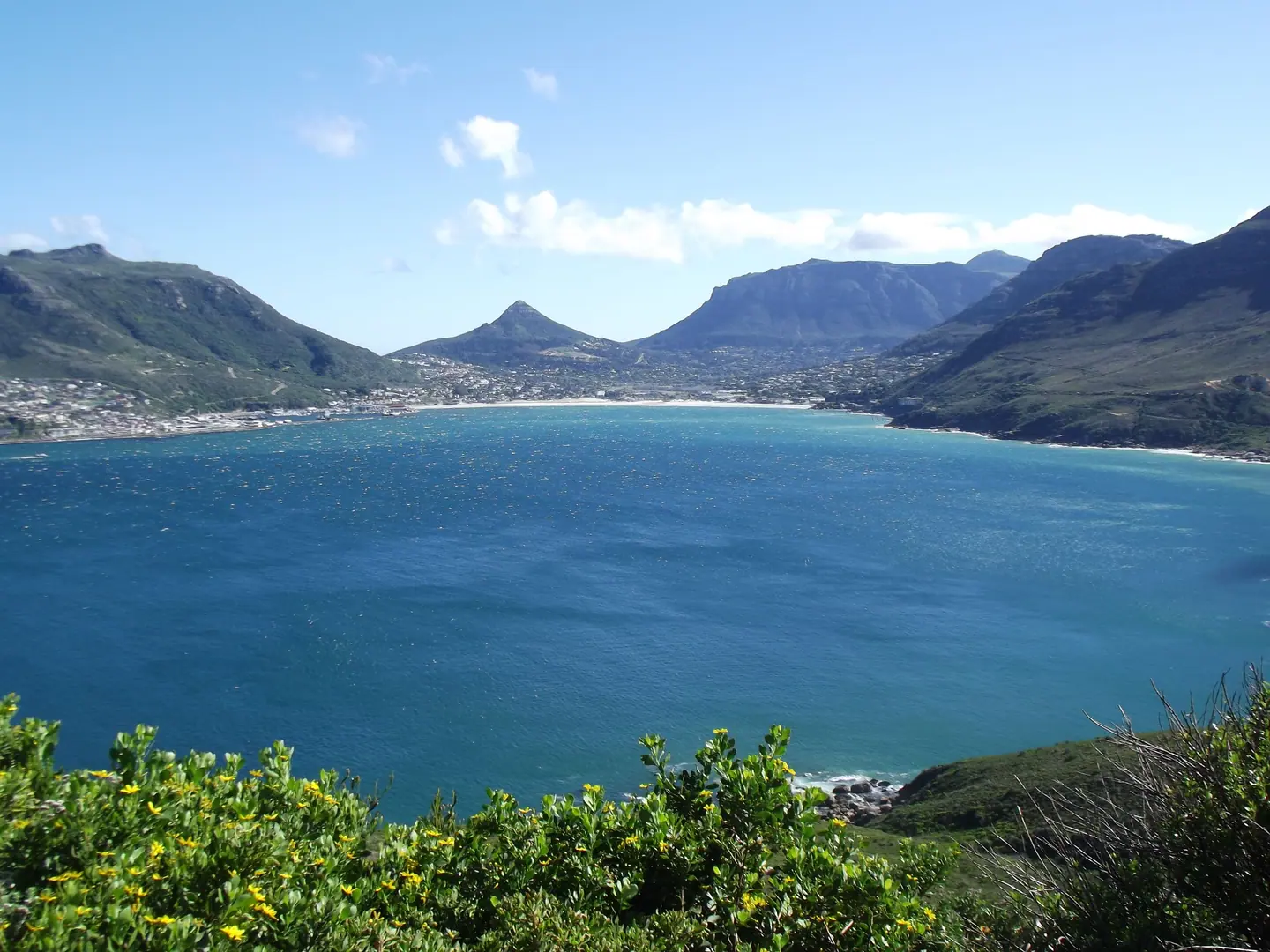
Bo-Kaap, Signal Hill, Table Mountain & Lion’s Head
Bo-Kaap Museum, Auwal Mosque, Chiappini & Wale Streets, Noon Gun Signal Hill, Lion’s Head Trail, Table Mountain Aerial Cableway, Maclear’s Beacon, Platteklip Gorge, and District Six Museum
Bo-Kaap Museum
Operating as a satellite of Iziko Museums, this 1760s residence is the oldest original dwelling in the Bo-Kaap. Its preserved Cape Dutch facade features traditional sash windows, decorative parapets, and original teak woodwork. Inside, rooms recreate the lifestyle of a prosperous nineteenth-century Cape Muslim family alongside exhibitions detailing the community's heritage and anti-apartheid struggles.
Auwal Mosque
Founded in 1794 on Dorp Street, this sanctuary was established by Tuan Guru, an exiled Indonesian prince and scholar. The building originated as a madrasa and prayer room during British colonial rule. Within the prayer hall, travellers can see the handwritten Quran transcribed from memory by Tuan Guru while he was imprisoned on Robben Island.
Chiappini Street
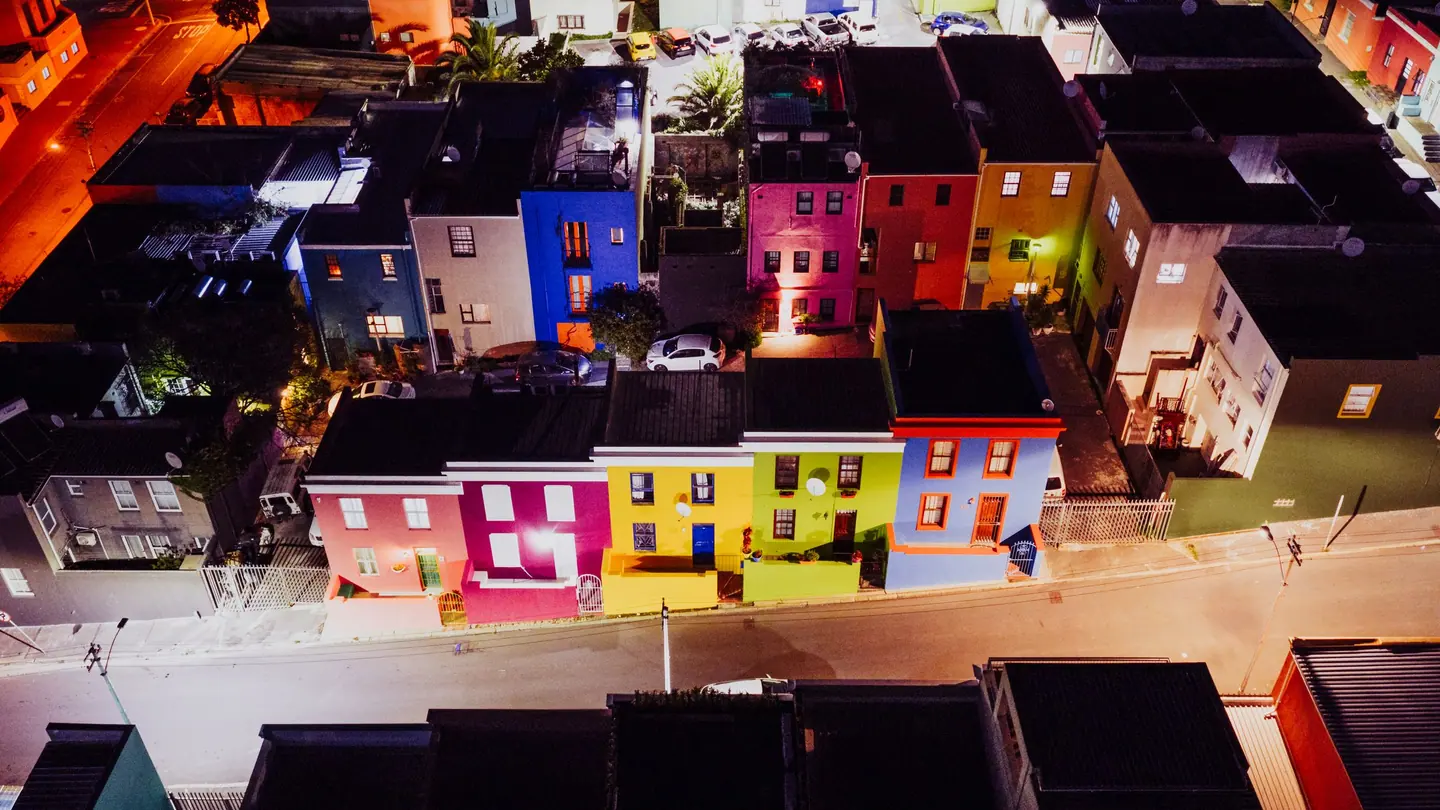
This famous roadway contains some of the neighbourhood's most distinct residential architecture, characterised by bright pastel facades and stone stoeps. Built largely between 1800 and 1840, these row cottages blend Georgian symmetry with Cape Dutch parapets. The colourful coats of paint became widespread after 1994, celebrating the end of apartheid and community identity.
Wale Street
Wale Street serves as the main cultural spine entering the Bo-Kaap from St George's Cathedral. It features nineteenth-century terraced dwellings, traditional spice shops, and small community bakeries selling traditional Cape Malay pastries. The gentle gradient offers open vistas back towards downtown high-rises and the steep slopes of Signal Hill.
Noon Gun
Stationed on Lion Battery atop the lower slopes of Signal Hill, these smoothbore naval cannons have sounded daily since 1806. Cast in England during the reign of King George III, they represent some of the oldest active time-signalling artillery in the world. Visitors can observe naval personnel loading black powder and enjoy panoramic views over Table Bay.
Lion's Head Trail
This spiralling path ascends 669 metres above sea level, encircling the prominent geological formation that flanks Table Mountain. The lower sections traverse indigenous fynbos and remnants of old granite quarries, while the upper climb features fixed metal chains and ladders over sheer sandstone faces. The summit affords comprehensive views of the Atlantic seaboard and City Bowl.
Table Mountain Aerial Cableway
In continuous service since 1929, this mountain engineering project links Tafelberg Road to the northern plateau. Modern rotating cabins provide passengers with a panoramic sweep of the city during the five-minute ascent. The upper cable station sits beside rugged crags, where concrete pathways access viewpoints carved into the hard quartz sandstone.
Maclear's Beacon
Standing 1,086 metres above sea level, this limestone-and-stone cairn was constructed in 1865 by Astronomer Royal Sir Thomas Maclear. Built to measure the curvature of the earth's southern hemisphere, the beacon remains a key geodetic survey point. Hikers reaching the wind-scoured eastern edge of the plateau encounter sweeping views across False Bay.
Platteklip Gorge
Formed by a dramatic geological fracture on the front face of Table Mountain, Platteklip Gorge was the path taken by early European explorers, including Antonio de Saldanha in 1503. The trail consists of thousands of rough stone steps flanking a seasonal mountain stream. Towering rock walls frame narrow views down toward the city docks.
District Six Museum
Housed within the 1883 Central Methodist Church, this museum commemorates the multiracial community uprooted under the Group Areas Act in the 1960s. The interior displays original hand-painted street signs, personal photographs, and an expansive floor map where former residents recorded their dismantled homes. Oral histories and community archives document life before the bulldozers struck.
Signal Hill Summit
Also known as the Lion's Rump, this flat ridge provided maritime communication between colonial authorities and incoming merchant ships. Signal flags and lanterns guided vessels into Table Bay long before telegraph lines were installed. Today, the paved lookout area offers unobstructed views of Sea Point, Green Point Stadium, and the Atlantic coastline.
Tuan Guru Kramat
Situated on the lower slopes of Bo-Kaap within the Tana Baru burial grounds, this sacred dome covers the grave of Imam Abdullah Kadi Abdus Salaam, known as Tuan Guru. Exiled from Tidore in 1780, his leadership established orthodox Islam in southern Africa. Pilgrims and visitors come to pay respects at this whitewashed sanctuary.
Palm Tree Mosque
Standing on Long Street, this structure was built in the 1780s as a private residence before being leased to freed slaves for religious services in 1807. The upper floor was formally consecrated as a prayer hall, while the ground level served as living quarters. Its classic Georgian-Dutch facade features tall sash windows and plaster mouldings.
Tana Baru Cemetery
Deeded to the Muslim community in 1805 following religious freedom edicts by Dutch authorities, this peaceful graveyard holds the tombs of pioneering Islamic leaders, including Tuan Guru and Tuan Sayed Alwie. Closed by health authorities in 1886, the sloping cemetery remains a revered heritage landmark dotted with stone markers, indigenous trees, and views across the City Bowl.
Kloof Corner
Positioned at the western end of the Table Mountain front face, this rocky buttress is reached via an engineered stone trail from Tafelberg Road. The vantage point overlooks the Twelve Apostles mountain chain, Lion's Head, and the Atlantic Ocean. Hikers often pause here to inspect the vertical crags popular with technical rock climbers.
St Stephen's Church
Erected in 1800 on Riebeeck Square as Cape Town's first purpose-built theatre, this neoclassical building features heavy plaster pediments and rusticated masonry. In the 1830s it was purchased by the Dutch Reformed Church to serve emancipated slaves. Known affectionately as the 'Kerk van die Slawe', it remains a symbol of nineteenth-century social reform.
Kramat of Sheikh Mohamed Hassen Ghaibie Shah
Forming part of the sacred Islamic holy circle of shrines surrounding the Cape Peninsula, this domed tomb honours a seventeenth-century Sufi scholar. The whitewashed, green-trimmed kramat overlooks both the harbour and the Atlantic waters. It remains an active site of pilgrimage, quiet reflection, and community prayer, marked by draped silk coverings.
Woodstock Peace Garden
Created through local grassroots initiatives, this open green space revitalised derelict railway ground bordering Woodstock and the upper reaches of District Six. Native flora and drought-tolerant succulents surround stone pathways, community art installations, and play areas. It stands as a neighbourhood tribute to reconciliation and environmental renewal within the urban fabric.
Wally's Cave
Hollowed out of the Table Mountain sandstone crags on the southern flank of Lion's Head, this cave is named after local hiker Wally Mills. The cavern ceiling forms a natural stone archway framing views towards Camps Bay and Table Mountain. The approach follows narrow contour ledges surrounded by diverse Cape fynbos vegetation.
Queen's Blockhouse
Built by British forces in 1795 following the Battle of Muizenberg, this square stone redoubt formed part of the city's eastern defensive line. The solid masonry watchtower features gun loops, heavy timber supports, and surrounding firing trenches. Travellers along the mountain trails can inspect the well-preserved fortification and its vantage over the Cape Flats.
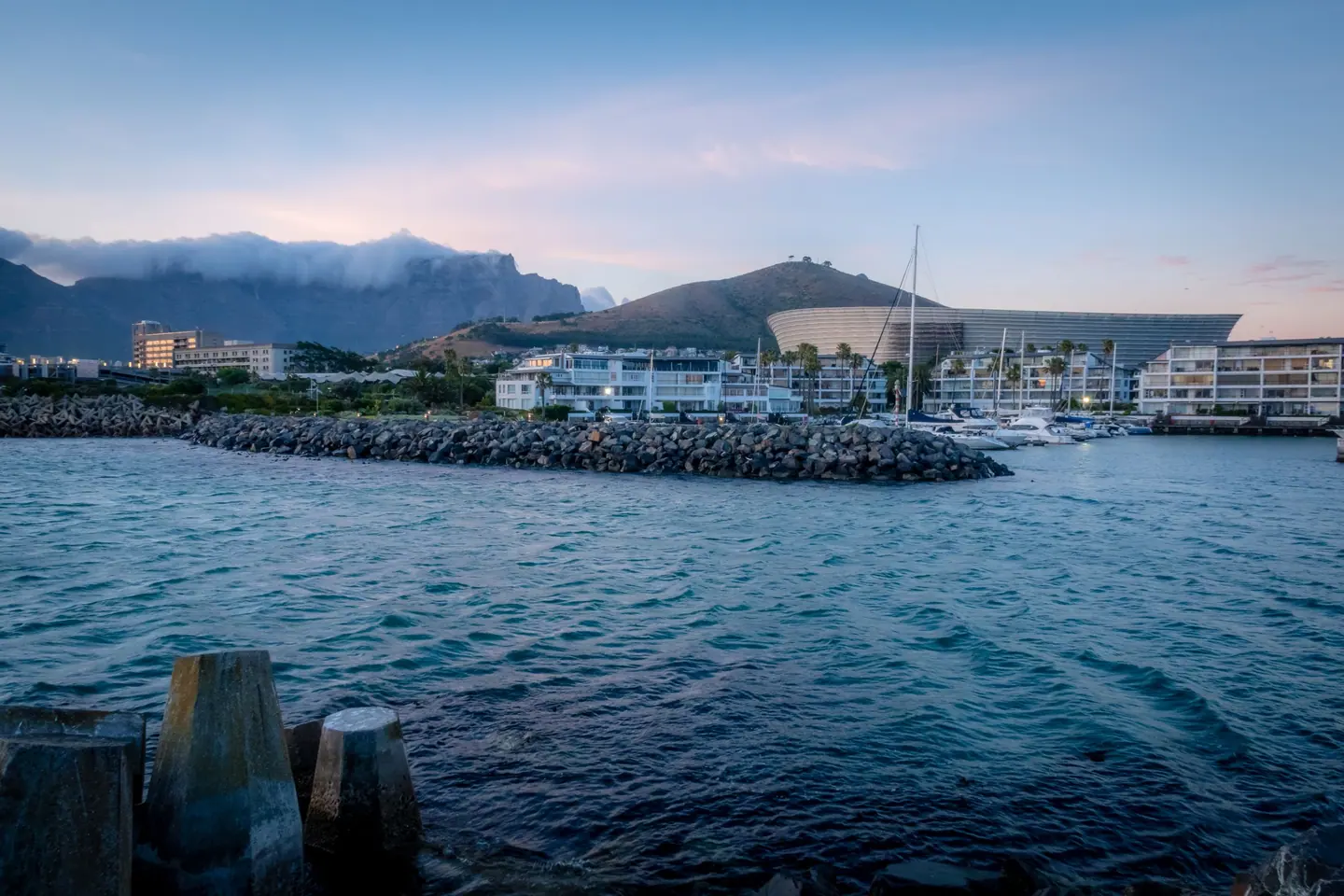
V&A Waterfront, Zeitz MOCAA, Robben Island & Atlantic Seaboard
Chavonnes Battery, Nobel Square V&A Waterfront, Victorian Clock Tower, Nelson Mandela Gateway to Robben Island, Robben Island Maximum Security Prison, Zeitz MOCAA Silo District, Green Point Lighthouse, Sea Point Promenade, Clifton Beaches, and Camps Bay Twelve Apostles
Chavonnes Battery
Constructed between 1714 and 1726 by the Dutch East India Company, this stone bastion once guarded Table Bay with heavy artillery. Excavated during Waterfront development, the subterranean site displays preserved mortar walls, genuine period cannons, and educational models detailing early colonial military defences.
Nobel Square
Sculptor Claudette Schreuders created the four slightly larger than life bronze figures that anchor this paved precinct. They portray Albert Luthuli, Desmond Tutu, F. W. de Klerk, and Nelson Mandela. The installation stands against the maritime harbour backdrop alongside an artwork honouring women and children.
Victorian Clock Tower
Painted in striking red and white, this Gothic-revival landmark originally served as the Port Captain's office overlooking the Alfred Basin. Inside, visitors can inspect the restored tidal gauge mechanism and an ornate decorative mirror room that allowed harbour masters an uninterrupted view of arriving sailing vessels.
Nelson Mandela Gateway to Robben Island
Serving as the mainland departure point for historic island crossings, this contemporary glass-fronted terminal contains extensive historical galleries. The permanent exhibition features archival photographs, political documentary screenings, and artefacts that trace the long freedom struggle against racial segregation in South Africa.
Robben Island Maximum Security Prison
Located in Table Bay, this austere concrete complex detained political activists throughout the twentieth century. Guided tours, often led by former political prisoners, take visitors through communal barracks and past Cell 5 in B-Section, where Nelson Mandela endured eighteen years of rigorous confinement.
Zeitz MOCAA
Architect Thomas Heatherwick carved an expansive atrium through forty-two vertical tubes of a disused 1921 grain silo complex. The institution spans nine floors of gallery space dedicated to twenty-first-century African and diaspora art, illuminated by distinctive faceted pillow-glass windows on the upper levels.
Robinson Dry Dock
Constructed from dressed Malmesbury hornstone and English granite, this Victorian facility represents one of the oldest operating dry docks in the world. Visitors can watch maritime engineers repair working vessels and note the massive stepped masonry walls designed to support wooden shoring timbers.
Old Port Captain's Building
Dating to 1869, this elegant double-storey building displays classic Victorian harbour architecture with broad wooden verandas and cast-iron balustrades. It served as administrative headquarters during the transformation of Table Bay into a safe commercial port and now houses waterfront shops and administrative offices.
Time Ball Tower
Positioned on the ridge above the harbour basin, this white brick tower dropped a heavy black ball precisely at one o'clock daily. The visual signal enabled sea captains anchored across Table Bay to calibrate their marine chronometers accurately before embarking on ocean voyages.
Green Point Lighthouse
Commissioned in 1824 and designed by German architect Herman Schutte, this square masonry beacon displays bold red and white diagonal bands. The tower warned mariners away from dangerous rocky reefs off Mouille Point and continues to operate as an active navigational aid for coastal shipping.
Fort Wynyard
Erected in 1861 during tensions between Britain and regional rivals, this earthwork coastal redoubt guarded the approach to Table Bay. The heritage site preserves heavy naval ordnance, including a nine-inch Armstrong rifled muzzle-loader and an operational disappearing gun mounted inside reinforced concrete emplacements.
Somerset Hospital
Founded in 1859, this palatial stone hospital building features distinctive battlements, pointed lancet windows, and central clock towers. It functioned as South Africa's primary training hospital for doctors and nurses and remains an active provincial medical facility with a small museum of historic healthcare equipment.
Three Anchor Bay
Named after chains secured by three naval anchors to protect the cove during early colonial conflicts, this small pebble beach breaks the Atlantic swell. Today it serves as a departure ramp for sea kayakers and features markers commemorating nineteenth-century coastal navigation.
Sea Point Promenade
Stretching for several kilometres between Mouille Point and Bantry Bay, this seaside esplanade offers clear views of passing ships and Atlantic breakers. The paved path features open lawns, outdoor interactive art installations, and direct access to historic ocean tidal pools and rocky outcrops.
Sea Point Pavilion
Opened in the 1950s over earlier Victorian bathing infrastructure, this recreational landmark sits right beside the ocean waves. The facility draws treated water directly from the Atlantic into an Olympic-sized competition pool, diving board facilities, and shallow wading pools enjoyed by generations of Cape Town swimmers.
Clifton Beaches
Divided into First, Second, Third, and Fourth beaches by ancient granite boulders, these secluded coves lie protected from harsh summer winds. The shoreline is framed by modernist coastal bungalows dating from the early twentieth century, offering views of turquoise waters and Lion's Head.
Maiden's Cove
Wedged between Clifton and Camps Bay, this rocky headland features two small tidal pools built directly into massive shoreline boulders. The spot provides an open panoramic viewpoint toward the Twelve Apostles mountain range and features stone barbecue areas frequented by families on public holidays.
Camps Bay Beach
This expansive white-sand beach has welcomed bathers since Victorian times, when seaside travellers arrived via electric tramways. The promenade is lined with mature palm trees and coastal cafes, all overlooked by the dramatic granite buttresses of the Table Mountain chain.
The Twelve Apostles
Forming the southwestern spine of Table Mountain, these dramatic geological buttresses drop steeply toward the Atlantic Ocean. Geologists date the prominent sandstone and granite layers to hundreds of millions of years ago, and well-maintained hiking trails skirt their lower slopes above the coastal suburbs.
Oudekraal
Tucked along the scenic coastal drive toward Hout Bay, this boulder-strewn cove provided refuge for escaped enslaved people during the Dutch colonial era. Shaded by ancient milkwood trees, the protected inlet contains historical Muslim Kramat gravesites and provides calm water for snorkelling.
Kirstenbosch, Constantia Valley, Muizenberg & Kalk Bay
Rhodes Memorial, Mostert’s Mill, Kirstenbosch National Botanical Garden Boomslang Canopy Walkway, Groot Constantia Manor House, Muizenberg Beach Huts, St James Tidal Pool, Kalk Bay Harbour, and Boulders Beach Penguin Colony Simon’s Town
Rhodes Memorial
Designed by architect Sir Herbert Baker, this classical pavilion honours Cecil John Rhodes using granite quarried from Table Mountain. Modelled on Greek temples at Segesta and Paestum, the terrace features a bronze equestrian statue titled Physical Energy alongside eight sculpted lions. From the monumental staircase, visitors look out over the Cape Flats towards False Bay.
Mostert's Mill
Constructed around 1796 on the Welgelegen farm, this is the oldest surviving windmill in South Africa. The truncated tower mill showcases traditional Dutch vernacular engineering with a thatched cap and timber mechanics. Following significant fire damage in 2021, meticulous restoration programmes returned its sails and internal grinding works to functioning order.
Kirstenbosch National Botanical Garden
Established in 1913 on the eastern slopes of Table Mountain, this botanical institution focuses exclusively on indigenous southern African flora. The landscaped grounds encompass cultivated fynbos terraces, ancient cycad groves, and wild protea collections. Visitors can inspect Van Riebeeck's historic hedge, planted in 1660 to demarcate the Dutch East India Company settlement.
Boomslang Canopy Walkway
Built in 2013 to celebrate Kirstenbosch's centenary, this curved bridge rises twelve metres above the forest floor. Designed by Mark Thomas Architects, the 130-metre structure mimics the skeleton of a tree snake using galvanised steel ribs and slatted timber decking. It offers vantage points through the crowns of yellowwoods and over the Constantia Valley.
Groot Constantia Manor House
Granted to Governor Simon van der Stel in 1685, this property is South Africa's oldest wine producing estate. The central manor house exemplifies the Cape Dutch architectural style, characterised by whitewashed walls, grand gables, and thatch roofing. Inside, period rooms preserve historic Batavian porcelain, brass hardware, and original stinkwood furniture.
Cloete Cellar
Erected in 1791 behind the main manor, this production cellar was designed by French architect Louis Michel Thibault. The building is renowned for its neoclassical pediment relief sculpted by Anton Anreith, depicting infant cherubs frolicking around wine barrels. The interior now houses a museum dedicated to traditional wine-making equipment and historical bottles.
Klein Constantia
Subdivided from the original Constantia grant in 1712, this hillside vineyard gained European renown during the eighteenth century for its natural sweet wine. The farm complex includes a graceful Cape Dutch homestead and mature oak trees framing views of False Bay. Today, the estate continues historical viticultural practices in restored cellars.
Buitenverwachting
Forming another portion of Van der Stel's original seventeenth-century grant, Buitenverwachting means beyond expectation. The farm retains classic Cape Dutch vernacular elements, including an ornate thatched homestead, a whitewashed bell tower, and preserved outbuildings. Cobbled paths lead through formal courtyards shaded by ancient camphor trees.
Alphen Estate
Originally established as a fruit and wine farm, this estate boasts one of the most elaborate Cape Dutch manor houses in the Constantia Valley. Noted for its fine double-storey facade and classical pediments, the compound served as an influential social salon in colonial times. The grounds still feature a historic watermill, defensive gates, and expansive gardens.
Muizenberg Beach Huts
These brightly painted timber bathing boxes line the sandy curve of Muizenberg Beach, reflecting the area's popularity during the late Victorian and Edwardian resort eras. Built to allow bathers to change discreetly near the water, they are maintained as municipal heritage structures. They provide a direct visual link to early twentieth-century leisure culture.
Rhodes Cottage Museum
This modest corrugated-iron and stone cottage on the False Bay coast served as a summer retreat for Cecil John Rhodes, who died here in 1902. Preserved as a historical museum, the property displays original furnishings, personal effects, and photographs documenting political developments in southern Africa. A terrace garden looks directly across the waters of the bay.
Het Posthuys
Constructed in 1742, this simple stone building is one of the oldest habitable structures in South Africa. The Dutch East India Company erected it as a lookout post, toll collection station, and military barracks monitoring False Bay. Today, the restored museum displays naval artefacts and details the 1795 Battle of Muizenberg fought on this shoreline.
Casa Labia
Built in 1929 as the residence of the Italian diplomat Count Natale Labia, this seaside manor is designed in the Venetian Renaissance style. The interior showcases gilded ceilings, authentic Murano glass chandeliers, and marble fireplaces imported directly from Venice. The building now hosts art exhibitions and chamber concerts within its restored state rooms.
St James Tidal Pool
Constructed along the rocky intertidal zone, this walled seawater bath provides calm swimming sheltered from False Bay's powerful surf. The pool is bordered by a row of historic painted bathing huts reminiscent of Edwardian holiday resorts. Stone walkways connect the pool to the historic coastal railway line running between Muizenberg and Simon's Town.
Kalk Bay Harbour
Developed during the nineteenth century by Filipino, Javanese, and local fishermen, this harbour remains a functioning centre for traditional line-fishing. The concrete pier, finished in 1919, protects colourful wooden trawlers bringing in daily catches of snoek and yellowtail. Visitors can watch fishmongers working on the stone quays under the supervision of local Cape fur seals.
Holy Trinity Anglican Church, Kalk Bay
Built from local Table Mountain sandstone, this parish church reflects the early Anglican presence along the False Bay coast. Consecrated in 1874, the building displays English Gothic Revival architecture, complete with narrow lancet windows and a bellcote. The quiet churchyard contains memorial plaques dedicated to maritime families and local fishermen lost at sea.
Simon's Town Museum
Established in 1972, this museum occupies The Residency, an eighteenth-century structure built for Governor Baron van Imhoff. The exhibits record the history of Simon's Town as a Dutch and British naval base, alongside displays covering forced removals under the Group Areas Act. Visitors can explore artefacts detailing the legendary Great Dane dog, Able Seaman Just Nuisance.
South African Naval Museum
Housed within the historic Royal Navy Mast House and Sail Loft dating from 1815, this museum chronicles the maritime defence of South Africa. Exhibits include naval artillery, operational submarine control-room simulators, scale ship models, and historical diving equipment. Outdoors, the collection preserves coastal patrol craft and torpedo tubes overlooking the operating naval base.
Jubilee Square
Serving as the civic heart of the town, Jubilee Square opens directly onto the naval berths and fishing docks of False Bay. The square is dominated by a life-sized bronze statue of Able Seaman Just Nuisance, the only dog officially enlisted in the Royal Navy. Craft stalls and historic stone administrative buildings line its northern edge.
Boulders Beach Penguin Colony
Located just south of Simon's Town, this sheltered coastline features enormous rounded granite boulders dating back hundreds of millions of years. Since 1982, the coves have hosted a thriving colony of African penguins, an endangered marine bird species. Raised timber boardwalks enable visitors to observe nesting burrows, molting areas, and coastal foraging without disturbing the habitat.
Chapman’s Peak, Cape Point & Cape of Good Hope Reserve
Hout Bay Sentinel View, Chapman’s Peak Drive Lookouts, Noordhoek Long Beach, Slangkop Lighthouse, Buffelsfontein, Old Cape Point Lighthouse, Flying Dutchman Funicular, Diaz Beach, and Cape of Good Hope Signpost
The Sentinel
This imposing coastal mountain peak marks the western entrance to Hout Bay. Formed from erosion-resistant Table Mountain sandstone, the formation rises sharply out of the Atlantic Ocean. Hikers follow coastal tracks towards its base to survey marine bird colonies and sea-carved sea caves.
East Fort
Constructed in 1781 by the French garrison on behalf of the Dutch East India Company, this battery defended Hout Bay from British naval attacks. Several original muzzle-loading cannons remain mounted on iron carriages overlooking the water. Restored stone magazines and defensive parapets sit directly along the roadside.
Chapman's Peak Drive Lookouts
Carved into sheer granite and sandstone terraces between 1915 and 1922, this marine drive includes 114 curves along vertical drops. Sheltered picnic viewpoints offer clear lines of sight across Hout Bay and the Karbonkelberg ridge. Sophisticated catch-fences and a half-tunnel gallery now guard motorists from falling rock.
Noordhoek Long Beach
Stretching between Chapman's Peak and the village of Kommetjie, this wide expanse of pale quartz sand borders the Atlantic swell. Coastal dunes shelter breeding grounds for endangered African black oystercatchers. Walkers frequently share the shoreline with horse riders venturing out from local rural paddocks.
SS Kakapo Shipwreck
En route to Sydney in May 1900, this 1,093-ton British steamship ran aground after mistaking Chapman's Peak for Cape Point in heavy mist. The vessel drove so hard onto the sand that no crew lives were lost. Today, its corroded steam boiler and skeletal iron ribs remain stranded amid the dunes.
Slangkop Point Lighthouse
Commissioned in 1919 after maritime delays caused by the First World War, this white circular tower stands 33 metres tall. It marks the treacherous underwater reefs extending outward from the Kommetjie coast. Visitors can explore surrounding boardwalks that wind through indigenous strandveld coastal scrub.
Misty Cliffs
Positioned where coastal bluffs drop directly into the churning ocean, this conservation village is defined by persistent sea spray and wind. The surrounding cliffs support endemic fynbos vegetation that thrives on maritime moisture. Travellers pause along the narrow coastal road to observe migrating southern right whales.
Witsand
Situated just north of Scarborough along the peninsula, this expanse features mobile dunes driven by prevailing south-easterly winds. The coastline consists of sandstone shelves rich in intertidal marine life, including limpets and kelp forests. It serves as an undisturbed research territory for coastal geomorphology.
Cape Peninsula National Park
Covering the southern tip of the peninsula, this nature reserve protects exceptional floral diversity, including thousands of endemic fynbos species. Baboons, bontebok, and Cape mountain zebras roam across its undulating coastal plateaus. Hikers traverse a network of historic gravel tracks leading to secluded coves.
Buffelsfontein Visitor Centre
Located inside the Cape of Good Hope reserve, this interpretive centre occupies an early agricultural homestead. Exhibits detail the botanical importance of the Cape Floral Region alongside maritime archeology from regional wrecks. The facility serves as an administrative junction for hikers setting out on multi-day trails.
Buffels Bay
This east-facing cove along False Bay offers calm swimming waters protected from open-ocean swells. Nineteenth-century stone kilns, once used to burn sea shells into building lime for Cape Town, still stand along the grassy picnic banks. Marine birdwatchers regularly spot Cape cormorants feeding in the bay.
Bordjiesrif
Situated on the False Bay coast of the reserve, this spot features an ocean-fed concrete tidal pool built into jagged sandstone shelves. Grassy terraces above the high-tide line accommodate coastal picnickers. Rock pools here contain diverse molluscs, starfish, and anemones adapted to warmer waters.
Sirkelsvlei
Fed entirely by rainwater and underground aquifers, this isolated coastal lake forms an essential oasis for wildlife on the southern plateau. Rare freshwater amphibians, including the endangered micro frog, inhabit its reed margins. Circular walking paths wind across surrounding restio-covered sand flats.
Olifantsbos
This isolated Atlantic coastline marks the western boundary of the reserve, known for rough breakers and exposed reefs. Coastal paths take walkers past the rusted remains of the SS Thomas T. Tucker, an American liberty ship wrecked in 1942. Bontebok and ostriches frequently graze along the kelp-strewn shoreline.
Old Cape Point Lighthouse
Erected in 1860 at 238 metres above sea level, this historic beacon proved ineffective because cloud and sea fog routinely obscured its beam. The Portuguese liner Lusitania struck Bellows Rock below in 1911, prompting its replacement. Today, its observation gallery affords expansive views across the ocean junction.
New Cape Point Lighthouse
Constructed in 1919 at a lower elevation of 87 metres, this modern beacon is accessible via a steep stone pathway. It ranks as one of the most powerful navigation lights on the African coast, generating millions of candelas. Its beam guides maritime traffic away from dangerous offshore reefs.
Flying Dutchman Funicular
Named after the mythical ghost ship condemned to sail these stormy seas, this funicular began operations in 1996. It carries passengers 585 metres uphill through dense fynbos vegetation to Da Gama Peak. The system replaces old diesel-bus transport, reducing environmental disruption on fragile slopes.
Diaz Beach
Reached by descending several hundred wooden steps, this isolated beach rests between the towering ramparts of Cape Point and Cape Maclear. Powerful ocean swells and dangerous rip currents make swimming hazardous. Visitors come to admire the amphitheatre of jagged sea-cliffs and undisturbed shoreline.
Cape Maclear
This high bluff honors Sir Thomas Maclear, Her Majesty's Astronomer at the Cape who verified southern hemisphere geodetic measurements. The headland features stone cairns and dramatic cliffs beaten by the South Atlantic surf. Walking trails here provide an uncrowded vantage point over Diaz Beach.
Cape of Good Hope Signpost
Positioned at the edge of the rocky foreshore, this wooden signpost marks the south-westernmost geographical extremity of the African continent. Rounded by Bartolomeu Dias in 1488, the cape established the vital maritime sea route to the East Indies. Hikers scale the adjacent bluff for views of incoming oceanic swells.
Mountain Weather and Coastal Drives Around the Cape
Our main Cape Town guide covers airport arrivals, neighbourhood bases and multi-day pacing to complement this walk; see also our full collection of city route guides.