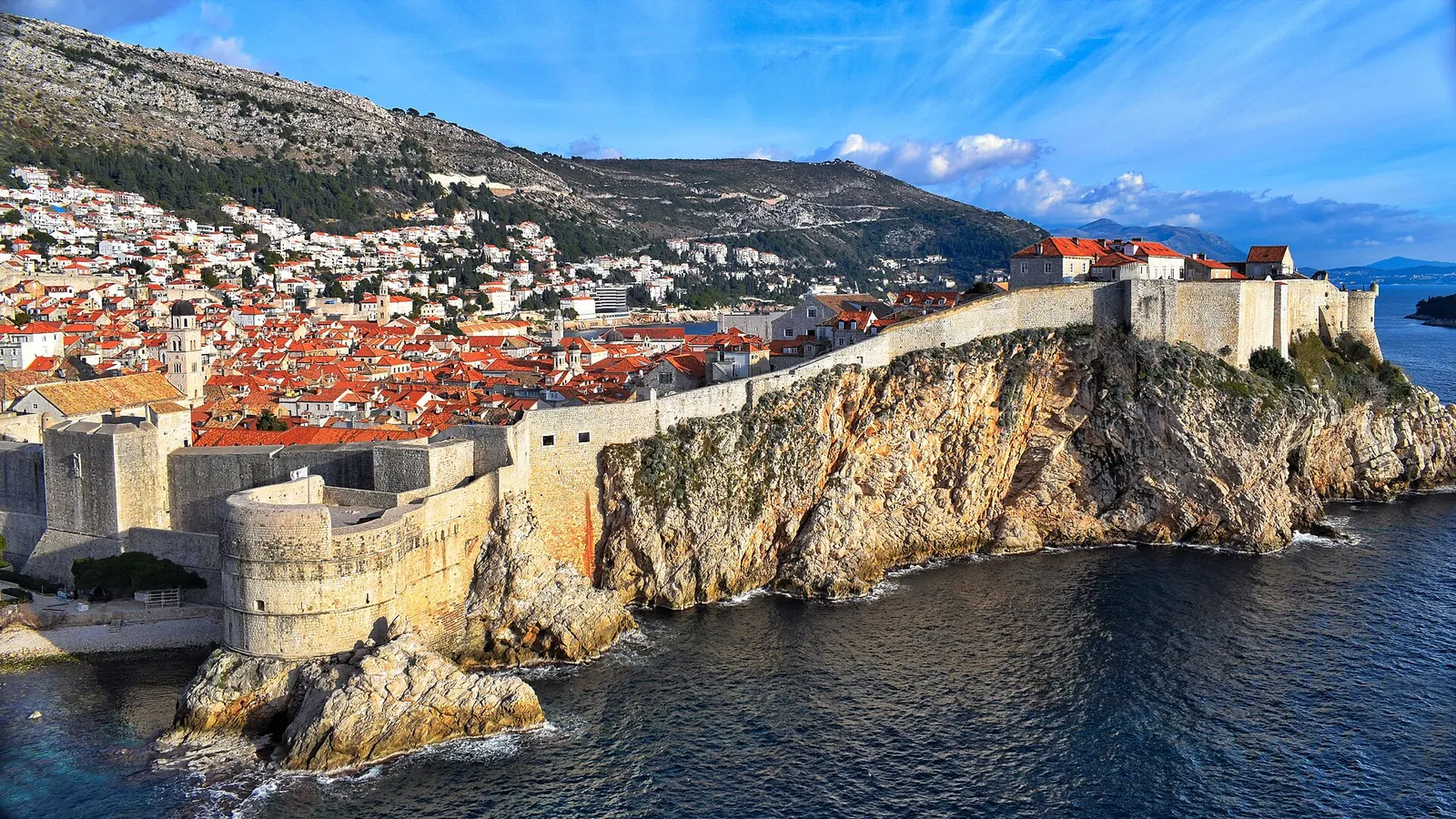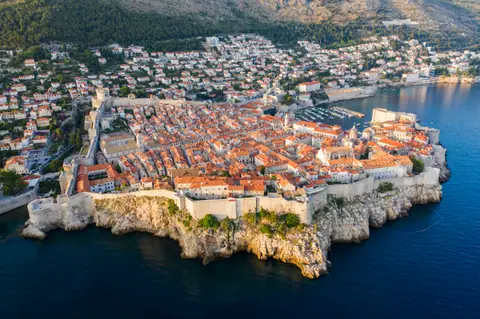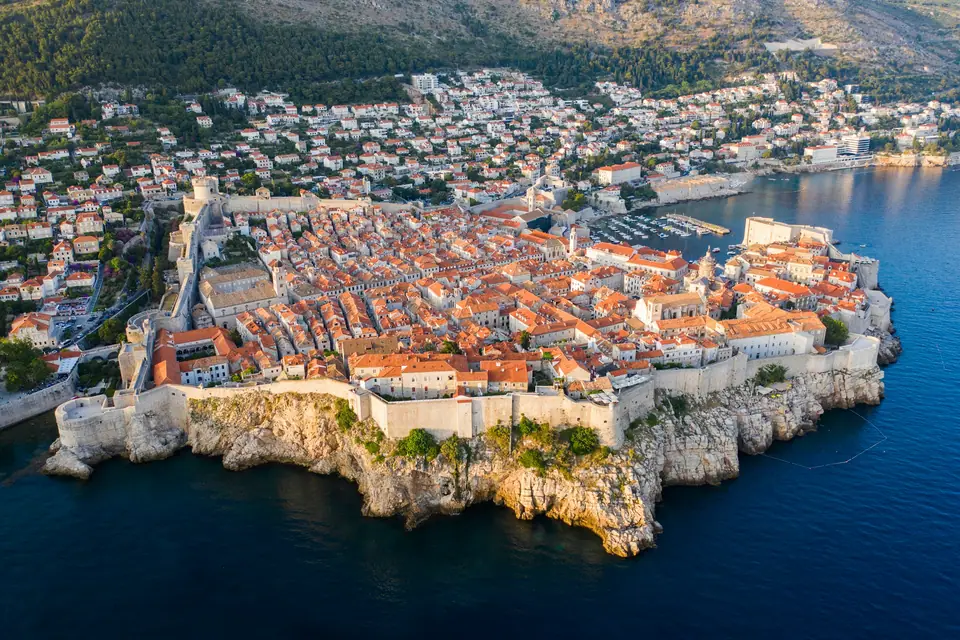
A 100-stop walking and boat route through the limestone Republic of Ragusa: Dubrovnik’s 1,940-metre curtain walls, Stradun palaces, Lokrum Island, and the Elaphiti coast.
Maritime Diplomacy and Stone Urban Planning in the Republic of Ragusa
Founded in the seventh century when refugees from the Greco-Roman city of Epidaurum settled the rocky island of Laus opposite the Slavic oak woodland of Dubrava, the two communities merged when the marshy channel between them was filled to create the limestone thoroughfare of Stradun (Placa). As the maritime Republic of Ragusa (1358, 1808), the city rivalled Venice across the Mediterranean under the motto Non bene pro toto libertas venditur auro (Liberty is not sold for all the gold in the world).
Ragusa pioneered Europe's first quarantine lazarettos in 1377, abolished the slave trade in 1416, and rebuilt its palaces in harmonious Dalmatian Baroque after the catastrophic earthquake of 1667, enclosed inside defensive walls that were never breached by medieval or Ottoman fleets.
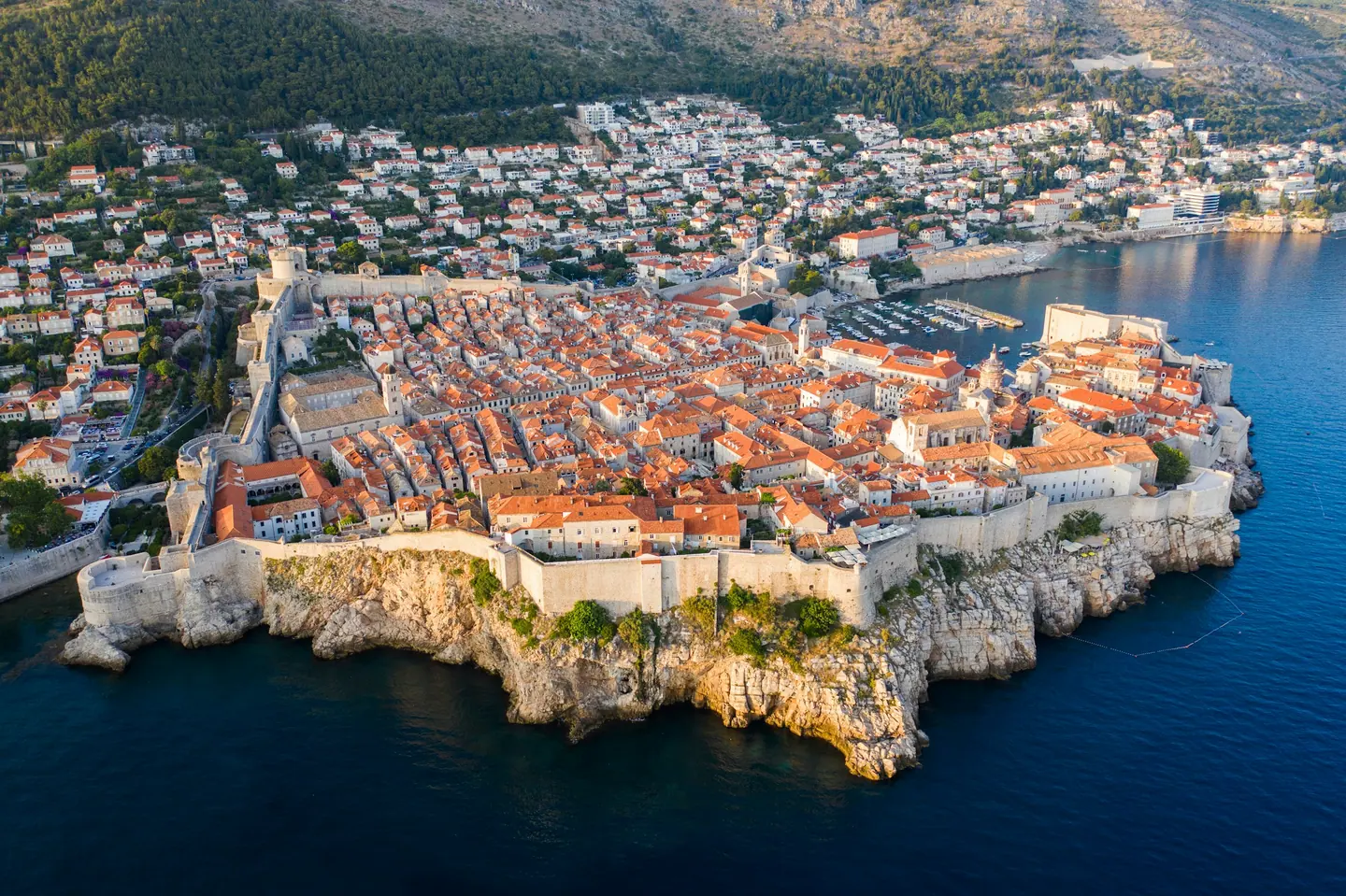
Pile Gate, Stradun & Western Old Town
Pile Gate, Large Onofrio’s Fountain, St Saviour Church, Franciscan Monastery and Old Pharmacy, Stradun Placa, War Photo Limited, Church of St Ignatius, and Jesuit Stairs
Pile Gate
Constructed in 1537, this fortified entrance features a Renaissance stone bridge and a former wooden drawbridge once raised every evening. A stone sculpture of Saint Blaise, the city's patron saint, stands housed in an arched niche directly above the outer portal. Travellers crossing here step down directly onto the limestone paving of the Stradun.
Large Onofrio's Fountain
Designed by architect Onofrio della Cava in 1438, this sixteen-sided fountain marked the terminus of a historic twelve-kilometre aqueduct supplying fresh mountain water to the city. Although heavily damaged during the 1667 earthquake, its stone mask mascarons still dispense drinking water. The central dome rests on carved stone panels displaying relief carvings.
St Saviour Church
Commissioned by the local senate in gratitude after an earthquake in 1520, this small church stands as an intact example of local Renaissance craftsmanship. The facade displays an ornate rose window alongside a Gothic rib-vaulted interior ceiling. Because it survived the disaster of 1667 undamaged, its original architectural details remain preserved in stone.
Franciscan Monastery
Established in 1317 inside the city walls, this expansive complex features a Romanesque cloister supported by double columns capped with animal and human figures. The monastery houses a library of historic manuscripts and liturgical treasures. Surviving sections of the original church include an imposing Gothic portal sculpted by the brothers Leonardo and Petar Petrovic in 1498.
Old Pharmacy of Dubrovnik
Operating continuously within the Franciscan Monastery since 1317, this dispensary ranks among the oldest functioning pharmacies in Europe. The adjacent museum collection preserves original wooden shelving, ceramic drug jars, measurement scales and ancient distillation instruments. Archival recipes show how monastic botanists extracted medicines from native Adriatic herbs.
Stradun
Spanning roughly 300 metres, this polished limestone promenade follows the line of a former sea channel that once divided the ancient settlement. Following the catastrophic 1667 fire, authorities enforced uniform Baroque facades for all adjoining residential blocks. Uniform ground-floor arches, known historically as 'na koljeno', combined shop fronts with rear storage chambers.
Minčeta Tower
Standing as the highest point of the municipal fortifications, this fortress was redesigned into a circular bastion in 1461 by the Florentine architect Michelozzo. Juraj Dalmatinac later added the distinctive rounded battlements and decorative stone base. The high parapet offers wide views across the terracotta rooftops of the town.
Bokar Fortress
Planned by Michelozzo in the fifteenth century to defend the Pile Gate and moat, this horseshoe-shaped casemate fort projects directly over the sea rocks. Its heavy masonry walls housed cannon batteries designed to repel maritime assaults. The structure remains intact as one of the oldest surviving casemated fortifications in southern Europe.
Fort Lawrence
Erected outside the main city walls on a 37-metre-high rock, this stronghold protected the western marine approaches against Venetian naval fleets. The seaward walls measure up to twelve metres in thickness, whereas the inland wall facing the city measures only sixty centimetres. A Latin inscription carved above the entrance proclaims that freedom is not sold for gold.
Peligro Bastion
Positioned between Pile Gate and Fort Bokar, this thick stone platform reinforced the western curtain against landward bombardment. The bastion contains strategic gun ports pointed across Kolorina bay towards Fort Lawrence. Today it anchors the western approach, offering direct vantage over the historic rocky shore where local fishermen moored.
War Photo Limited
Located just south of Stradun on Antuninska street, this gallery exhibits raw photojournalism from global warfare alongside images from the 1990s conflict in Yugoslavia. Founded by photojournalist Wade Goddard, the permanent collection documents the siege of Dubrovnik through unbiased imagery. The two-floor exhibition hall focuses purely on educational, factual accounts of modern human combat.
Church of St Nicholas
Situated on Prijeko street beneath the northern city walls, this is one of the oldest preserved ecclesiastical structures in the municipality. Originally consecrated in the eleventh century, it received a Renaissance facade and stone portal in 1607. Its interior retains an ancient barrel vault, timber altars, and votive paintings left by seafaring residents.
Prijeko Street
Laid out during the late thirteenth century according to a planned urban grid, this straight street runs along the base of the northern slope. Characteristic stone overpasses and residential balconies arch overhead between facing houses. The paved pathway illustrates the precise residential planning enforced by the medieval Senate following the town expansion.
Church of the Transfiguration
Rebuilt after the 1667 earthquake, this compact church stands near the southern side of the Stradun on Od Puca street. The stone structure replaced an earlier Romanesque sanctuary and features a carved portal surmounted by a relief of Christ. Inside, religious artworks and gilded wood carvings reflect the austere devotional style of early modern Ragusan guilds.
Rupe Granary
Constructed in 1590, this massive two-storey utilitarian warehouse was designed to store grain reserves in case of prolonged maritime siege. Fifteen deep stone silos, known as rupe, were carved directly into the living bedrock to preserve thousands of bushels in constant dry humidity. The upper floors now house ethnographic collections detailing regional farming and folk traditions.
Church of St Ignatius
Constructed between 1699 and 1725 under the direction of architect Andrea Pozzo, this single-nave church dominates Poljana Rudjera Boskovica. The interior contains illusionistic ceiling frescoes painted by the Spanish artist Gaetano Garcia depicting scenes from the life of Saint Ignatius. An artificial stone grotto dedicated to Our Lady of Lourdes sits near the entrance.
Collegium Ragusinum
Established beside the Church of St Ignatius, this imposing Baroque academy served as the foremost seat of higher learning in the Republic of Ragusa. Renowned physicist and astronomer Rudjer Boskovic completed his early studies within these halls. The surrounding courtyards feature stone cloisters, classical columns, and open learning spaces that continue to serve regional academic functions.
Jesuit Stairs
Designed in 1738 by the Roman architect Pietro Passalacqua, these flights of steps link Gundulic Square below with the elevated Jesuit church complex above. Modelled deliberately on the Spanish Steps in Rome, the staircase uses convex and concave balustrades to achieve dramatic perspective. Polished stone steps carry thousands of travellers daily between urban levels.
Church of St Roch
Erected in the mid-sixteenth century, this simple church was dedicated to Saint Roch to seek protection against recurring waves of the Black Death. Positioned within the southern maze of residential streets, it displays a Renaissance bell-cot and a rectangular stone portal. The interior preserves stone altars and maritime votive plaques left by historical city residents.
Pustijerna Bastion
Anchoring the southern seaward flank of the historic centre, this bastion defended the ancient residential quarter against naval forces. Built atop sheer cliff edges, the ramparts integrate older medieval stonework with Renaissance military upgrades. Lookouts along this wall section provide unhindered perspectives out across the open sea toward Lokrum Island.
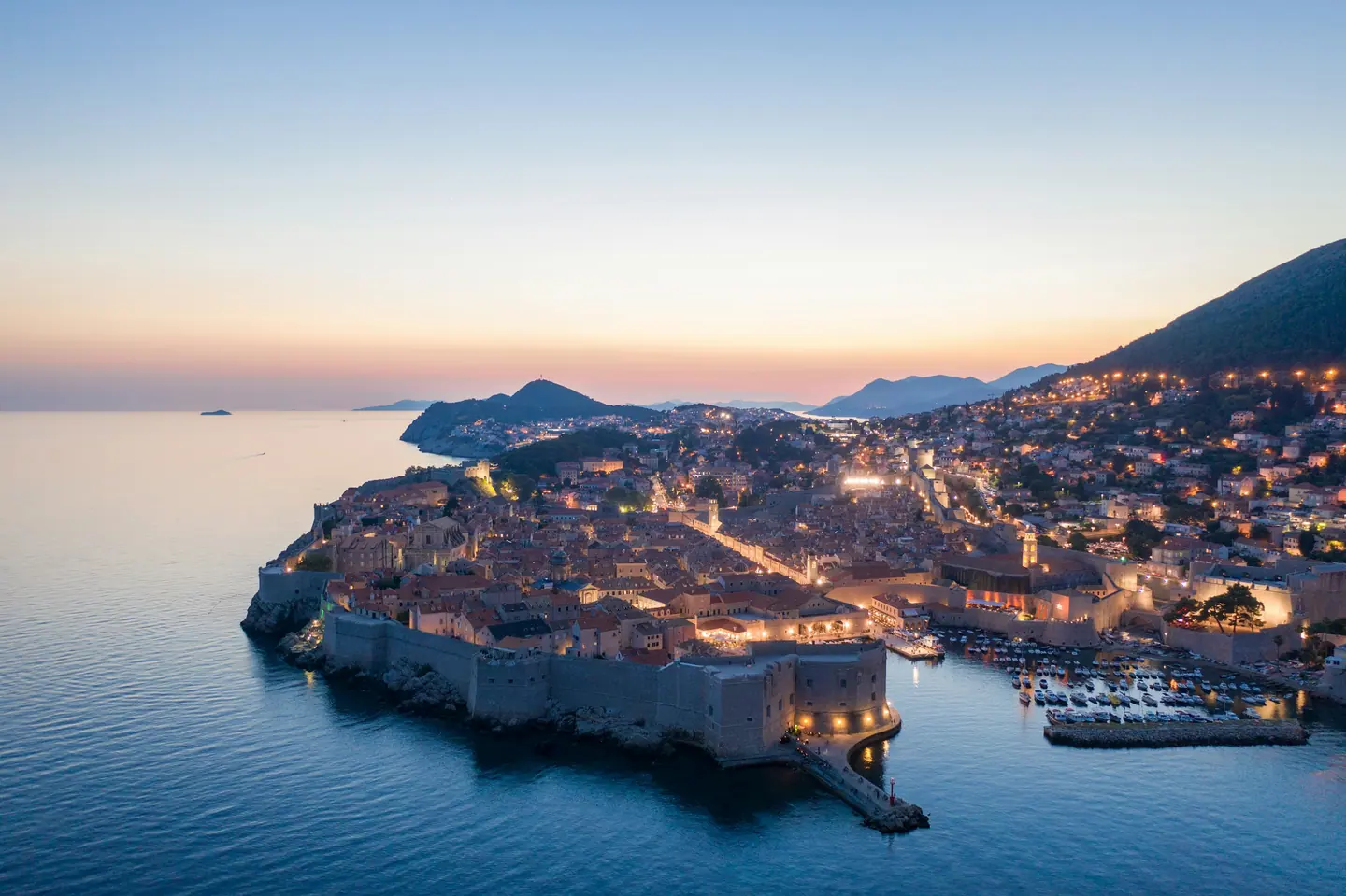
Luža Square, Rector’s Palace & Cathedral Quarter
Sponza Palace, Orlando’s Column, Bell Tower, Church of St Blaise, Small Onofrio’s Fountain, Rector’s Palace, Dubrovnik Cathedral, Marin Držić House, and Old Port Porporela
Sponza Palace
Built between 1516 and 1522 by master builder Paskoje Miličević, this former customs palace survived the catastrophic 1667 earthquake virtually unscathed. Its stone loggia features elegant Renaissance arches supported by Corinthian columns, leading to an inner atrium inscribed with civic trade mottos. Today, the building houses the State Archives, holding centuries of handwritten diplomatic correspondence from the Republic of Ragusa.
Orlando's Column
Carved in 1418 by local sculptor Antun Dubrovčanin and Italian master Bonino da Milano, this limestone monument depicts the legendary medieval knight Roland. It served as the central point for public proclamations, executions, and commercial transactions within the Republic. The length of the knight's right forearm established the official Ragusan cubit, used to measure cloth and merchant wares.
Dubrovnik City Bell Tower
Originally constructed in 1444, this 31-metre stone tower stands at the eastern end of the Stradun beside Luža Square. Two green-patinated bronze figures, affectionately known locally as Maro and Baro, swing hammers to strike the heavy central bell cast by Ivan Rabljanin. A rotating metal globe on the lower facade displays the current lunar phase above the clock dial.
Luža Square
This paved gathering space has formed the political, religious, and economic heart of Dubrovnik since medieval times. Positioned between the Sponza Palace and the Church of Saint Blaise, it once held open-air town meetings and civic ceremonies. Flagstones worn smooth by generations of citizens link the municipal bell tower directly to the ancient thoroughfare leading towards the harbour.
Small Onofrio's Fountain
Designed in 1446 by the Neapolitan architect Onofrio della Cava, this octagonal fountain completed the city's sophisticated fresh water aqueduct network. Sculpted dolphins, kneeling putti, and decorative relief panels adorn its limestone basin, which supplied water to the adjacent market. Pietro di Martino carved the stone ornamentation, creating an intimate public amenity beside the old city guardhouse.
Dubrovnik Main Guard
Rebuilt in the early eighteenth century by Venetian architect Marino Groppelli, this building served as the primary garrison post for the city guard. Its classical facade displays delicate stone capitals and arches that harmonise with the neighbouring medieval belfry. The interior provided barracks for troops charged with securing Luža Square and policing the entrance to the Old Port.
Church of Saint Blaise
Erected between 1706 and 1715 on the foundations of a Romanesque church, this Baroque edifice was designed by Marino Groppelli. The broad flight of exterior steps leads to an ornate interior featuring marble altars and tall arched windows. On the main altar sits a gilded silver statue of Saint Blaise holding a detailed scale model of pre-earthquake Dubrovnik.
Rector's Palace
This magnificent palace served as the political seat for the Ragusan head of state, who resided here during his month-long tenure. The exterior colonnade exhibits capitals carved with mythological figures and foliage, rebuilt after gunpowder explosions in the fifteenth century. Inside, a peaceful stone courtyard features an internal staircase and a bronze bust honouring merchant Miho Pracat.
Cultural Historical Museum in Rector's Palace
Occupying the former administrative chambers of the Rector's Palace, this museum preserves original Ragusan furniture, ceremonial dress, and diplomatic memorabilia. Visitors can examine collections of historical coinage, antique clocks, and key archives that governed regional trade. The ground level preserves the damp stone cells and courtroom where civic magistrates once administered municipal justice.
Monument to Miho Pracat
Cast in 1638 by Italian sculptor Pier Paolo Jacometti, this realistic bronze monument stands within the atrium of the Rector's Palace. It remains the only public statue erected by the Republic of Ragusa to honour a common citizen. Pracat bequeathed his immense shipping fortune to civic charities and ransom funds for captured Christian sailors.
City Hall of Dubrovnik
Constructed in 1869 during Austrian rule, this municipal administrative building occupies the footprint of the fourteenth-century Major Council palace. Architect Emilio Vecchietti designed the structure in a neo-Renaissance style that mirrors the nearby historic palaces. Today, the complex accommodates local government offices and the Marin Držić Theatre, retaining ancient vaulted cellars beneath its modern administrative floor.
Marin Držić Theatre
Established in the nineteenth century within the civic administrative complex, this proscenium theatre honours Dubrovnik's foremost Renaissance dramatist, Marin Držić. The auditorium features three tiers of gilded boxes, plush red upholstery, and a ceiling fresco painted by local artist Vlaho Bukovac. It remains the principal venue for dramatic performances during the annual Dubrovnik Summer Festival.
Dubrovnik Cathedral
Following the devastation of the Romanesque cathedral in 1667, Italian architects Andrea Buffalini and Paolo Andreotti designed this grand Baroque church. Its high dome rises above the city skyline, while the interior features side chapels constructed from regional marble. Behind the high altar hangs a notable sixteenth-century polyptych depicting the Assumption, attributed to the workshop of Titian.
Cathedral Treasury
Secured within a reinforced Baroque chapel beside the cathedral nave, this repository holds more than one hundred precious reliquaries. The collection includes the gold-plated arm, leg, and skull relics of Saint Blaise, fashioned with filigree enamel by medieval goldsmiths. It also protects a fragment of the Holy Cross set within an ornate tenth-century crucifix.
House of Marin Držić
Located on Široka Street, this stone residence serves as an exhibition space tracing the life of sixteenth-century playwright Marin Držić. The displays reconstruct his theatrical sets, political conspiracies against the Ragusan Senate, and travels across Renaissance Europe. Audio installations and contemporary artwork complement historical documents illustrating the author's sharp satirical comedies.
Gundulić Square
Surrounded by historic townhouses, this lively square functions each morning as Dubrovnik's main open-air market for seasonal fruit, dried figs, and lavender. Ivan Rendić sculpted the bronze statue of seventeenth-century poet Ivan Gundulić that dominates the centre of the paved space. In the afternoon, market stalls give way to dining terraces beneath the shadow of the cathedral.
Church of Saint Bartholomew
Tucked beside the passage leading from the Rector's Palace towards the harbour, this modest ecclesiastical building dates to the early medieval era. Its simple limestone exterior reflects the utilitarian architecture common to maritime service chapels within the Republic. Sailors and shipwrights regularly attended services here before embarking on dangerous long-distance trading voyages across the Mediterranean.
Ponta Gate
Piercing the city walls beneath the Rector's Palace and Bell Tower, this Gothic gateway was constructed in the fifteenth century. It served as the primary transit point for goods travelling between the inland market and arriving trading galleys. The stone arch retains defensive portcullis channels and carvings commemorating the patron saint over the portal.
Old Port of Dubrovnik
Constructed in the fifteenth century by Paskoje Miličević, this compact harbour sheltered the mercantile fleet of the Republic of Ragusa. Massive stone breakwaters protect the water from southerly swells, while medieval fortifications overlook the moorings. Today, traditional wooden boats line the quays, ferrying travellers to the nearby island of Lokrum and along the Adriatic coast.
Porporela
Constructed by Austrian naval engineers in the nineteenth century, this limestone pier projects seaward to protect moored ships from heavy waves. It extends eastward beneath the imposing ramparts of Saint John Fortress, offering expansive viewpoints across to Lokrum island. Paved in pale flagstones, the pier features iron bollards and stone benches frequented by fishermen and evening walkers.
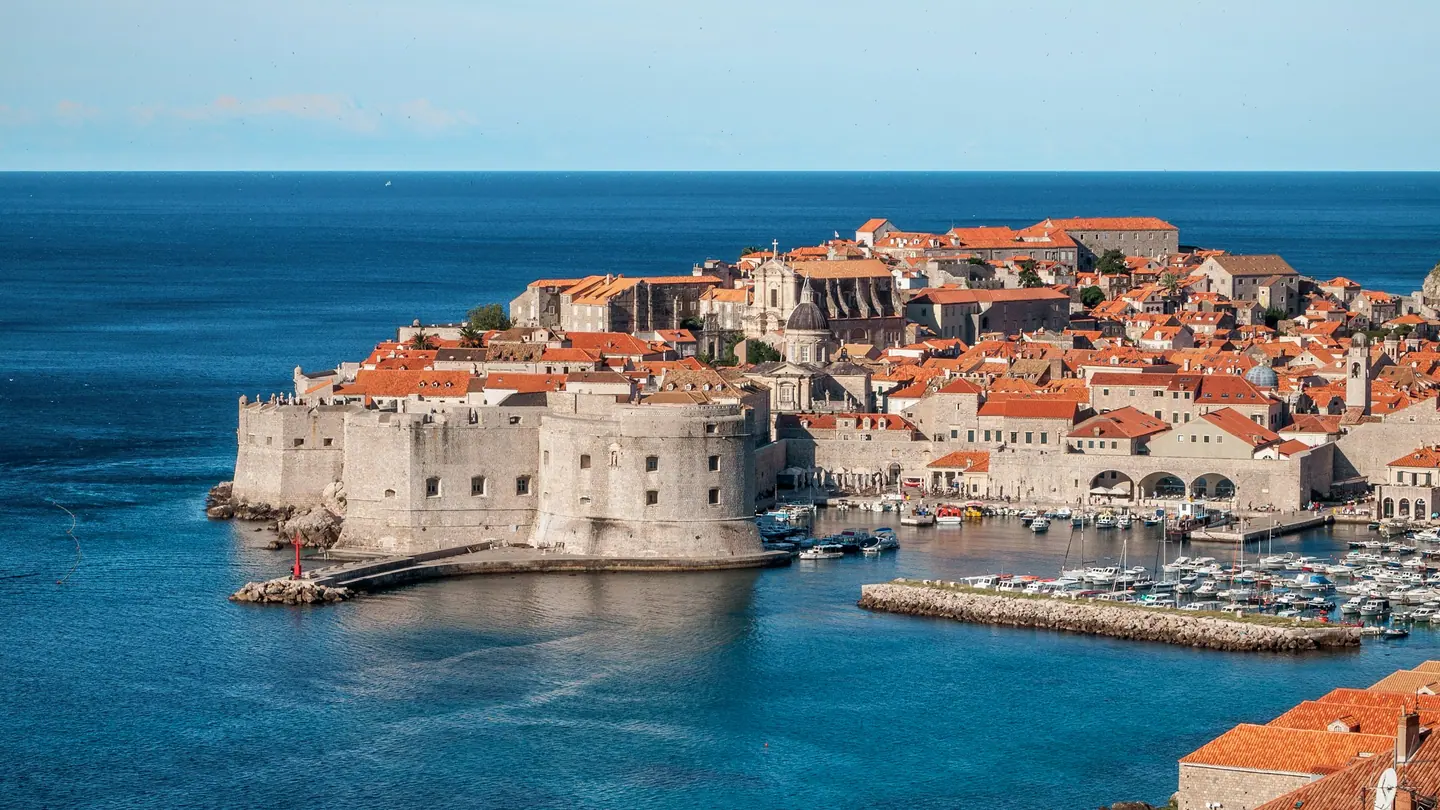
Complete Circuit of the Dubrovnik City Walls
Minčeta Tower, Bokar Fortress, St John Fortress Maritime Museum, Revelin Fortress, Ploče Gate, Buža Cliff Bars, Dubrovnik Synagogue, Dominican Monastery, and Rupe Ethnographic Museum
Minčeta Tower
Constructed originally as a four-sided fort in the fourteenth century, this bastion was transformed into a monumental circular stronghold by architect Michelozzo di Bartolomeo. Travellers ascending to the highest battlements will observe defensive machicolations, thick stone masonry, and sweeping panoramas across terracotta rooftops towards the Adriatic Sea.
Northern Wall Walkway
This high section of the fortifications connects the inland corner towers, presenting defensive embrasures designed to repel land assaults from the hills. The walkway preserves narrow firing slits and patrol parapets that reveal how medieval sentries guarded the republic from northern invaders.
Tower of Saint Francis
Positioned beside the Franciscan Monastery, this bastion reinforced the western flank overlooking the mainland approaches. The masonry features weathered limestone blocks and arrow loops that highlight the continuous reinforcement programme undertaken by the Republic of Ragusa during the fifteenth century.
Pile Gate Fortifications
The western entrance incorporates an outer Renaissance gateway alongside a deeper Gothic archway dating from the fourteenth century. Above the portal stands a carved stone statue of Saint Blaise, holding a model of the historic town, while the dry ditch below now serves as a public garden.
Bokar Fortress
Designed by Michelozzo in the fifteenth century, this cylindrical bastion was engineered to defend the small western bay and the drawbridge system. Visitors can observe thick casemates, embrasures oriented towards Fort Lovrijenac, and preserved stone cannon mounts positioned across two vaulted levels.
Puncjela Tower
Puncjela Tower marks the transition where the western fortifications join the southern sea ramparts. Built atop sheer coastal rocks, the platform contains solid limestone battlements constructed to withstand naval bombardment and high waves during winter storms.
Southern Sea Wall
Erected directly upon jagged limestone bluffs, the southern ramparts relied heavily on natural geography to repel seaborne attackers. Walking along this narrow corridor reveals weathered embrasures, sentry niches, and direct views plunging into the clear blue waters of the Adriatic.
Buža Gate
Unlike the historic medieval portals, this opening was chiselled through the northern wall in the early twentieth century by Austrian administrators. The gateway leads down a steep staircase directly towards the old town centre, demonstrating how the defensive ring adapted to modern pedestrian transport.
Saint Margaret Tower
Named after a long-lost church, this low bastion was constructed to absorb cannon fire and reinforce the precarious southern cliff edge. Its stone terrace retains heavy stone paving and low parapets that give visitors an unobstructed view across the island of Lokrum.
Buža Cliff Path
This discreet opening pierced through the outer sea wall leads down steep steps to rocky platforms outside the defensive perimeter. Historically used by fishermen to moor small boats, the exposed rock ledges now provide quiet coastal seating directly beneath towering masonry.
Fort of Saint Stephen
Erected in the seventeenth century following the great earthquake, this structure strengthened the city against maritime threats from Venice. The thick outer walls feature low artillery emplacements designed to sweep approaching galleys with crossfire before they reached the harbour entrance.
St John Fortress
Originating as an isolated tower in the fourteenth century, this complex was consolidated into a massive fortress to close the port with heavy iron chains. Today the upper gun platform hosts outdoor exhibitions, while interior vaults house maritime collections and a municipal aquarium.
Maritime Museum Dubrovnik
Located within the stone chambers of Saint John Fortress, this museum documents the naval supremacy of the Ragusan Republic. Exhibits include historical scale models of merchant galleons, naval instruments, sea chests, and navigational charts dating back to the sixteenth century.
Old Port Porporela Breakwater
Constructed under Austrian rule to cushion incoming surges, this breakwater extends outwards beneath the fortress walls into the Adriatic. Walking along the seaward edge provides an excellent perspective on the seaward fortifications, harbour moles, and the nearby island of Lokrum.
Saint Luke Tower
Dating to the late thirteenth century, this is one of the earliest preserved fortresses along the inner shoreline. It worked in concert with Saint John Fortress to raise an iron chain across the harbour mouth, safeguarding merchant vessels from surprise evening raids.
Revelin Fortress
Designed by the military engineer Antonio Ferramolino, this massive bastion was built to withstand modern artillery and Ottoman incursions. Its vast stone terrace served as an assembly point during wartime, containing expansive interior vaults that stored the town treasury and cathedral valuables.
Ploče Gate
Constructed with both inner and outer portals, the Ploče Gate served as the primary eastern entrance for trading caravans arriving from the Balkans. An elegant stone bridge, designed by Paskoje Miličević, spans the dry moat beneath a statue of Saint Blaise carved into the outer wall.
Dominican Monastery
Positioned deliberately against the northeastern ramparts, this fortified church complex formed part of the municipal defence plan. Inside, the fifteenth-century Gothic cloister features slender triple arches, surrounded by a museum housing Renaissance altarpieces by Nikola Božidarević and a painted cross by Paolo Veneziano.
Dubrovnik Synagogue
Established in the fourteenth century within the Jewish ghetto street of Žudioska, this is one of the oldest active Sephardic synagogues in Europe. The second-floor sanctuary exhibits seventeenth-century Baroque furnishings, ornate hanging lamps, and valuable Torah scrolls brought by refugees fleeing Spain.
Rupe Ethnographic Museum
Constructed in 1590 to ensure food security during prolonged sieges, this municipal granary features fifteen massive storage silos carved directly into bedrock. The upper floors now house ethnographic collections showcasing traditional Ragusan folk costumes, weaving tools, and rural agricultural implements.
Fort Lovrijenac, Gradac Park, Mount Srđ & Gruž
Fort Lovrijenac, Pile Harbour, Gradac Park, Danče Cove, Lazareti Quarantine Complex, Banje Beach Viewpoint, Mount Srđ Cable Car & Fort Imperial, and Trsteno Arboretum
Fort Lovrijenac
Perched on a 37-metre-high outcrop outside the western ramparts, this bastion protected Ragusa from Venetian naval aggression. The seaward walls reach thicknesses of up to twelve metres, while the inner wall facing the city measures only sixty centimetres to prevent a mutinous commander from threatening the town. The entrance lintel preserves the famous Latin inscription honouring freedom.
Pile Bay
Tucked between Fort Bokar and Fort Lovrijenac, this small inlet once accommodated fishermen and trade boats arriving from western Dalmatia. The bay preserves stone slipways, vaulted boathouses, and ancient mooring bollards cut directly into the shoreline rock. Today, it serves as the primary launching point for sea kayaks navigating the base of the city walls.
Gradac Park
Laid out during the late nineteenth century on a limestone ridge west of Lovrijenac, this woodland reserve features paths bordered by Mediterranean pines, cypresses, and agave plants. The elevated terraces offer sweeping coastal outlooks toward the open sea and the sheer western ramparts of the old town. A central stone fountain and historic benches provide quiet resting spaces.
Danče Cove
This rocky inlet served as the location for the Republic of Ragusa's first permanent quarantine station established in 1430. Stone sunbathing plateaus and sea ladders now cover the limestone formations, which remain a cherished swimming retreat for local residents. The location also represents the birthplace of modern Croatian water polo.
Church of Saint Mary at Danče
Constructed in the fifteenth century near the quarantine hospital, this simple stone sanctuary served travellers and plague victims. Inside hang two masterworks of Ragusan Renaissance painting, including a polyptych by Lovro Dobričević and a triptych by Nikola Božidarević depicting the Virgin with Saint Blaise. Resident Franciscan nuns traditionally ring the church bell to greet passing ships.
Lazareti
Built between 1590 and 1642 to replace earlier isolated facilities, this sprawling stone installation stands outside the eastern Ploče Gate. It comprises ten interconnected halls and five internal courtyards designed to isolate arriving overland caravan merchants and maritime cargoes for forty days. Today, the restored buildings function as a cultural district hosting art exhibitions and musical events.
Banje Beach Viewpoint
Situated along the eastern coastal road towards Ploče, this elevated vantage point looks directly back toward Saint John Fortress and the Old Harbour breakwater. The viewpoint showcases the contrast between the pale limestone fortifications and the waters of the Adriatic. Below, a pebble beach slopes into the sea, offering swimming against the background of the medieval city.
Mount Srđ
Rising 412 metres immediately behind the walled city, this rugged limestone mountain forms a natural defensive barrier against mainland attacks. The summit provides panoramas across the red-tiled roofs of the historic centre, the island of Lokrum, and the distant Elaphiti archipelago. Rocky trails and switchback footpaths ascend the scrub-covered slopes alongside the historic Napoleonic road.
Dubrovnik Cable Car
Originally opened in 1969 and rebuilt following extensive wartime destruction, this aerial cableway connects the northern suburbs to the summit of Mount Srđ. Modern orange cabins glide 778 metres up the rocky mountainside in under four minutes. The upper terminal features multi-level viewing platforms, telescope stations, and an amphitheatre orienting visitors over the Dubrovnik littoral.
Fort Imperial
Commissioned by Marshal Marmont and completed in 1812 under French occupation, this robust stone fortress controlled strategic trade routes through the Dinaric Alps. Austrian military engineers subsequently expanded the bastion with heavy casemates and artillery embankments. Today, the central quarters house a museum chronicling the 1991 to 1992 siege of Dubrovnik during the Croatian Homeland War.
Homeland War Museum
Housed within the scarred ground floor of Fort Imperial, this museum documents the defensive efforts of local residents during the 1990s armed conflict. Exhibits display authentic military equipment, field communications, original documentary footage, and maps detailing artillery impact points across the UNESCO-listed city. The raw, battle-damaged stone vaults reinforce the historical weight of the collection.
White Stone Cross on Mount Srđ
Erected in 1997 to replace an earlier monument destroyed by artillery in 1991, this tall cross is carved entirely from white stone quarried on the island of Brač. Standing on the precipice of Mount Srđ, it serves both as a regional religious monument and a memorial to fallen defenders. The plateau around its base offers views straight down into the walled core.
Gruž Harbour
Located in a wide, sheltered bay north of the Lapad Peninsula, this harbour replaced the shallow Old Port as the city's maritime transit hub during the late nineteenth century. Large cruise liners, regional ferries to the Elaphiti Islands, and fishing vessels dock along its long quays. The waterfront retains historic stone warehouses alongside passenger facilities.
Gruž Market
Operating daily along the Gruž waterfront, this open-air market serves as the primary culinary trading hub for regional farmers and fishermen. Stalls offer seasonal Mediterranean produce from Konavle, dried figs, olive oils, and goat cheeses. An adjacent covered fish hall sells the morning catch directly from fishing trawlers moored on the adjacent quayside.
Petar Sorkočević Summer Villa
Constructed in 1521 for the noble Petar Sorkočević, this aristocratic retreat illustrates the refined countryside life of the Ragusan patriciate. The stone residence features an ornate five-bay Gothic loggia, a formal walled Renaissance garden, and a private enclosed boat dock designed to receive rowing skiffs directly from the bay. The estate currently houses the Dubrovnik Historical Institute.
Church of Saint Nicholas in Gruž
Dating to the medieval period and modified over subsequent centuries, this parish church reflects the nautical traditions of the Gruž district. Its interior contains votive silver offerings, navigational instruments, and marine paintings donated by sea captains who survived storms. A small historical cemetery shaded by cypresses lies directly behind the sanctuary walls.
Trsteno Arboretum
Established around 1492 by the noble Gučetić family, this site ranks among the oldest Renaissance botanical gardens in Europe. The patrician owners commissioned sea captains to return with exotic botanical specimens from world trade voyages. Shaded pathways wind through terraces of camphor trees, ginkgoes, and palms, flanked by a stone aqueduct that supplies water throughout the grounds.
Neptune Fountain at Trsteno
Erected in 1736, this dramatic Baroque fountain terminates the fourteen-arch stone aqueduct system within the lower gardens of the arboretum. Sculpted from local limestone, the central arrangement features the sea god Neptune brandishing a trident, flanked by two water-spouting nymphs. Water cascades down the grotto-like stonework into an oval pond inhabited by water lilies and carp.
Gučetić-Gozze Summer Residence
This sixteenth-century stone mansion served as the intellectual hub of the Gučetić family, who hosted renowned humanists and philosophers within its halls. Rebuilt after the 1667 earthquake, the villa incorporates a broad seaside belvedere, stone balustrades, and a small family chapel dedicated to Saint Jerome. The surrounding paved terraces provide views across the channel to the island of Lopud.
Trsteno Plane Trees
Dominating the central square of Trsteno village just outside the arboretum gates, these two monumental Oriental plane trees (Platanus orientalis) are over five centuries old. Their trunks measure more than twelve metres in circumference, with canopy branches spreading outward above stone support pillars. Brought as saplings from the Bosporus during the Ottoman era, they remain living relics of historical trade.
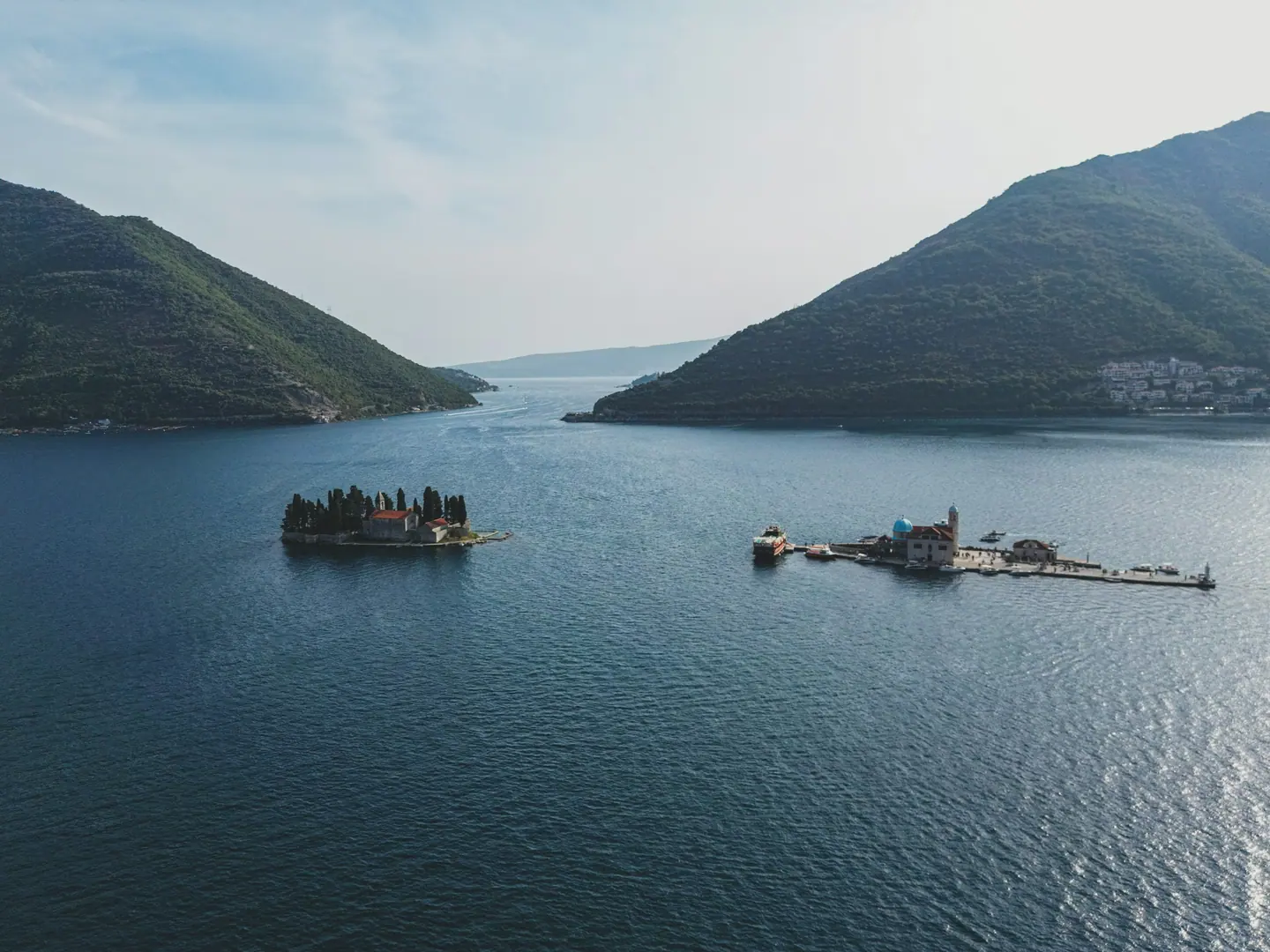
Lokrum Island, Cavtat & Ston Walls
Lokrum Benedictine Monastery, Dead Sea Lake Mrtvo More, Fort Royal Lokrum, Cavtat Promenade, Račić Mausoleum by Ivan Meštrović, Lopud Island Šunj, and Walls of Ston
Benedictine Monastery of St Mary on Lokrum
Founded in the eleventh century, this monastic complex displays layers of Romanesque, Gothic, and Renaissance architecture. The surviving cloister features stone arches, delicate capitals, and an adjoining summer residence built by Archduke Maximilian of Austria. Visitors can inspect historical exhibits detailing island folklore alongside original monastic stonework.
Dead Sea Lake Mrtvo More
Linked to the Adriatic Sea through deep underground caverns, this geological depression filled with calm saltwater centuries ago. Towering limestone crags surround the basin, providing shelter from regional winds. The mineral-rich pool attracts swimmers who seek buoyant waters sheltered beneath the Mediterranean pine canopy.
Fort Royal Lokrum
Constructed in 1806 by French forces under General Marmont, this circular fortification crowns the highest elevation on Lokrum. The defensive stone parapet was later expanded by the Austrian military to guard maritime approaches to the Old Port. The elevated platform offers sweeping views over Dubrovnik and the open sea.
Lokrum Botanical Garden
Planted in the nineteenth century under the direction of Archduke Maximilian, this botanical enclave preserves hundreds of exotic plant species. The grounds showcase extensive arrangements of agave, giant cacti, and Mediterranean palms that flourish in the microclimate. Shaded gravel paths guide visitors past research plots managed by the University of Dubrovnik.
Lazaretto of Lokrum
Begun in 1534 by the Senate of the Republic of Ragusa, this fortified compound was designed to isolate inbound sailors during epidemics. The massive perimeter walls were abandoned before completion due to strategic defence concerns regarding foreign navies. Today, the roofless masonry shells sit silently among thick olive groves.
Cavtat Old Town Promenade
Encircling the Rat Peninsula, this paved walkway follows the ancient site of Greek and Roman Epidaurum. Renaissance palaces, traditional fishing vessels, and waterfront cafes line the sheltered bay. Strollers can explore quiet alleys branching up the pine-covered hillside towards historic churches and archaeological remains.
Račić Mausoleum
Erected in 1921 on the crest of the Rat Peninsula, this octagonal chapel was built using pure Brač limestone without a single piece of iron or metal. Renowned sculptor Ivan Meštrović integrated Art Deco and classical motifs across the relief portraits, ceiling angels, and bronze doors. The interior commemorates the prominent Račić shipowning family.
Bukovac House and Museum
This traditional stone townhouse preserves the early life and creative output of painter Vlaho Bukovac. Restored interior spaces display original nineteenth-century furnishings alongside youthful wall frescoes executed by the artist. Rotating galleries present personal sketchbooks, correspondence, and canvases tracing his international career from Paris to Prague.
Church of St Nicholas in Cavtat
Rebuilt during the fifteenth century, this church anchors the southern edge of the harbour with its classical stone bell tower. The single-nave interior contains several masterworks, including a wooden Gothic crucifix and paintings attributed to the workshop of Palma the Younger. An adjoining picture gallery features regional religious art from the Ragusan period.
Our Lady of the Snow Monastery in Cavtat
Erected in 1484, this complex sits directly at the entrance of Cavtat harbour to welcome approaching mariners. A slender bell tower rises beside the simple Gothic nave, which contains an altarpiece painted by Vlaho Bukovac showing Cavtat port. The quiet inner cloister displays carved stone capitals and antique tombs.
Rector's Palace in Cavtat
Built during the rule of the Republic of Ragusa, this administrative building once housed the local governor. Today it preserves the private library, numismatic treasures, and ethnographic artefacts gathered by jurist Baltazar Bogišić. The stone facade features classical round-arched windows and an open courtyard directly facing the waterfront.
Walls of Ston
Constructed between the fourteenth and fifteenth centuries, this stone fortification system originally spanned seven kilometres to safeguard precious salt pans. Fortified towers, bastions, and battlements traverse steep hillside terrain connecting Ston to Mali Ston. Visitors can walk along the preserved stone parapets, viewing defensive architecture conceived by European masters.
Ston Salt Pans
Recognised as among the oldest active salt factories in Europe, these evaporation basins have harvested sea salt continuously since Roman times. The complex contains granite-lined pools and historic channels driven purely by wind, sun, and sea currents. Hand harvesting continues during summer months following methods unchanged since the medieval era.
Fort Kaštio in Ston
Positioned at the south-western anchor of the municipal ramparts, this massive bastion defended the salt storehouses from landward assaults. Massive stone corner blocks and gun platforms characterise the exterior masonry, which incorporates cisterns and troop quarters. The fort played a vital role in coordinating artillery across the bay.
Koruna Fortress in Mali Ston
Standing as the northern terminus of the defensive network, this citadel was begun in 1347 to secure the sea approaches of the Pelješac channel. Five interconnected defensive towers overlook the harbour and historic oyster beds. The complex included barracks, storehouses, and a secure port basin for naval galleys.
Šunj Beach on Lopud Island
Positioned on the south side of Lopud Island, this natural amphitheatre features a wide expanse of pale sand shelving gently into the sea. Surrounded by dense Mediterranean pines, the bay remains sheltered from prevailing northerly currents. A pedestrian trail leads across the island's central spine from the main village directly to the shore.
Lopud Franciscan Monastery
Overlooking the village harbour, this complex was completed in 1483 and includes a soaring bell tower and heavy protective ramparts. The monastery church preserves fine Renaissance stonework and an ornate carved wooden choir. Following recent restoration, the cloister and gardens host international cultural programmes and historical art installations.
Sutvrac Fortress on Lopud
Constructed by the Republic of Ragusa in 1563, this strategic fortress occupies a central rocky prominence overlooking both northern and southern bays. The stronghold provided emergency shelter for the island's population during regional naval skirmishes. Travellers can climb the stone ruins to survey the Elaphiti archipelago and regional maritime passages.
St Bartholomew Church in Ston
Dating to the fourteenth century, this compact stone church stands high on the northern slopes above the salt evaporation pans. The simple single-nave design features dressed limestone walls and a traditional gabled bell cot. The structure functioned as an essential religious haven for sentries guarding the upper battlements.
Epidaurum Archaeological Site in Cavtat
Long before the founding of Dubrovnik, Epidaurum served as a pivotal commercial port for the southern Adriatic basin. Archaeological digs around Cavtat have uncovered remains of Roman villas, thermal baths, stone conduits, and carved inscriptions. Submerged quays and antique amphorae fields continue to be surveyed by marine archaeologists offshore.
Early-Morning Wall Walks and Adriatic Boat Crossings
Before setting out, check local transit connections, museum booking notes and monthly weather data in our Dubrovnik City Walls, Stradun & Adriatic Islands city guide, and compare other walking itineraries.