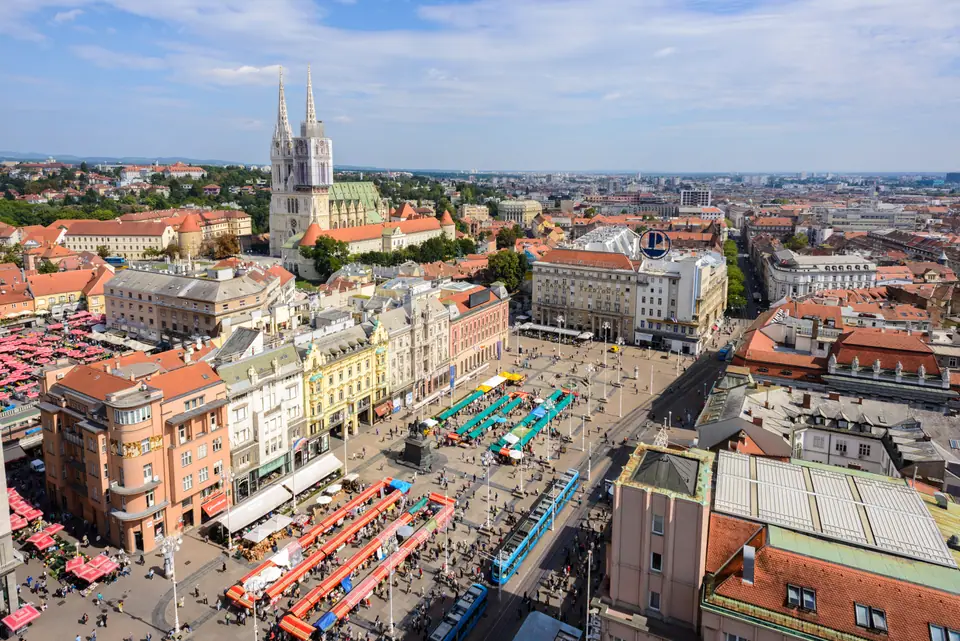
Photo: Nick Savchenko · CC BY-SA 2.0
Zagreb
Zagreb places a medieval hilltop twin town above a nineteenth-century green park ring, stitched together by steep stone alleys, blue electric trams, and shaded market terraces.
Quick decisions
How many days?
Two full days cover Gradec, Kaptol, Ban Jelačić Square, Dolac Market, and Lenuci's Green Horseshoe. Add a third day for Mirogoj Cemetery and Sljeme or Maksimir.
Where should I stay?
Choose Donji grad (Lower Town) between Ban Jelačić Square and Glavni kolodvor for walkable parkland and trams. Pick Gornji grad for quieter cobbled evenings.
Do I need a car?
Inside the city a car slows you down. Walking links both historic hills, while 15 daytime ZET tram lines and regional rails reach the outer parks.
Best for
Austro-Hungarian square architecture, hilltop medieval lanes, inland Croatian dishes like zagorski štrukli, outdoor coffee terraces, and forest cable-car escapes.
Before you go
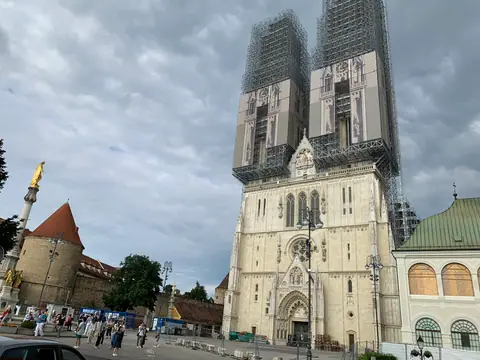
Check current restoration zones: Zagreb Cathedral's nave reopened in late 2025 under exterior scaffolding, while St Mark's Square keeps security fencing.
Getting around
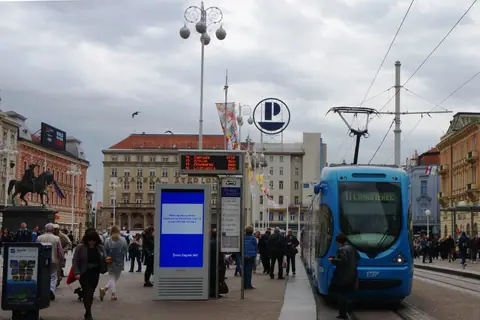
Blue ZET trams run frequently across Zone 1, and the rebuilt 1890 Zagreb Funicular reopened in May 2026 on Tomićeva Street. Airport coaches and Bus 290 reach town.
Overview
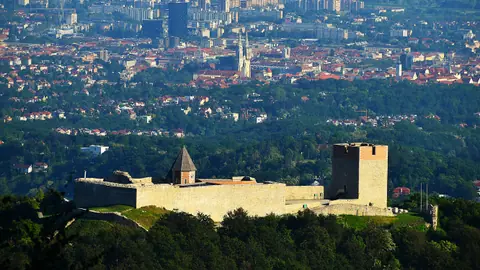
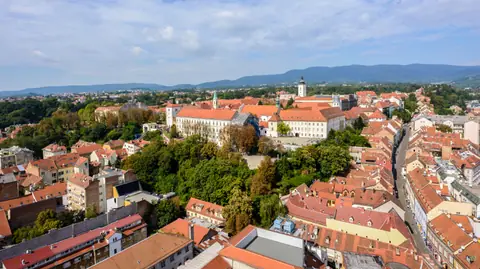
Zagreb sits in northwestern Croatia at around 158 metres above sea level beneath Mount Medvednica. Instead of growing around a harbour, Croatia's capital formed from two facing medieval hills: fortified Gradec on the west ridge and cathedral hill Kaptol across the former Medveščak stream.
Today those upper quarters rise cleanly above Donji grad, a planned grid of nineteenth-century boulevards and Lenuci's Green Horseshoe parks running south to Glavni kolodvor station. Travellers can cross both hills on foot before lunch, ride a bus out to Mirogoj, and review city layout and orientation notes.
Getting there
International flights arrive at Franjo Tuđman Airport roughly 10 kilometres southeast of Glavni kolodvor, served by Pleso Prijevoz coaches and ZET Bus 290. Croatia's entry into the Schengen Area in January 2023 removed passport checks on European Union flights.
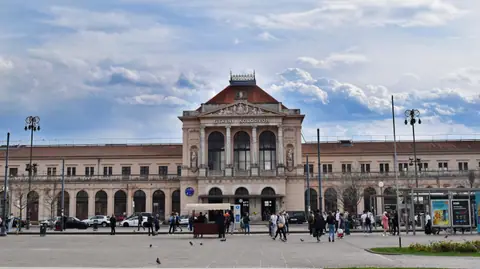
Rail routes terminate at 1892 Glavni kolodvor on King Tomislav Square, while coaches use Autobusni kolodvor along Marin Držić Avenue. Detailed connections and ZET ticket rules sit in our guide to reaching and navigating Zagreb.
Where to stay
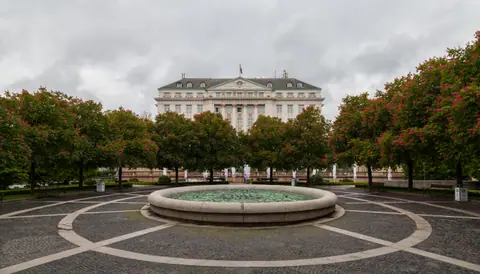
Most central stays cluster in Lower Town between Ban Jelačić Square and the railway ring, where tram lines cross flat streets lined with heritage hotels. Choosing a block near Zrinjevac or King Tomislav Square keeps early train departures simple.
Gradec swaps evening crowds for quiet gas-lit cobbles after dusk, though uphill gradients demand careful planning with heavy cases. Compare street noise, hillside access, and neighbourhood accommodation trade-offs across Zagreb's core.
Things to do
Begin along Ban Jelačić Square, Dolac Market, and Lower Town parks, where Austro-Hungarian facades frame Zrinjevac, the Croatian National Theatre, and open-air produce tables.
Climb into Gradec's St Mark's Church and Lotrščak Tower via the reopened funicular, examine earthquake recovery in Kaptol's cathedral and Mirogoj Cemetery, and map extra stops with our route of things to do across Zagreb.
Food and drink
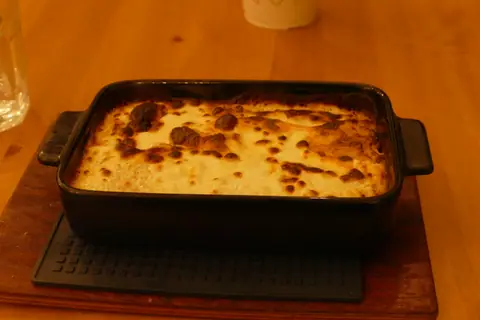
Unlike Adriatic seafood hubs, Zagreb kitchens favour inland Zagorje comfort plates built on dairy, hand-stretched pastry, roasted poultry, and slow winter stews. Bakeries and dedicated bistros off Tkalčićeva turn out bubbling trays of baked zagorski štrukli, while taverns serve roast turkey with mlinci.
Morning errands revolve around Dolac's lower dairy counters and Saturday coffee tables along Cvjetni trg. Browse regional specialities, craft breweries, and traditional Zagreb markets and dishes before booking dinner.
Culture
Earthquakes in 1880 and 2020 shaped Zagreb's skyline decisively, prompting neo-Gothic rebuilding in the nineteenth century and steel-braced restoration today. Cultural landmarks sit mid-transition, with Mimara Museum reopened in November 2026 while the Museum of Arts and Crafts works into 2027.
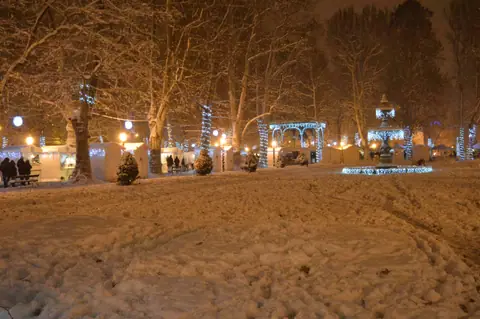
Seasonal weather shifts sharply between festive snow-dusted Advent markets in December and humid summer afternoons ideal for climbing into Sljeme's mountain ridge and Maksimir Park. Check packing advice in our seasonal weather and Advent calendar.
Weather by month
Zagreb is warmest in July, with average highs around 28°C, and coldest in January, when nights drop to about -2°C. September is the wettest month by rainfall (104 mm), with rain on about 12 days. For mild weather with fewer rainy days, aim for October.
| Month | Low | Range | High | Rain | Rainy days |
|---|---|---|---|---|---|
| Jan | -2°C | 5°C | 46 mm | 10 d | |
| Feb | -1°C | 8°C | 45 mm | 10 d | |
| Mar | 3°C | 13°C | 48 mm | 10 d | |
| Apr | 7°C | 18°C | 61 mm | 13 d | |
| May | 11°C | 22°C | 77 mm | 13 d | |
| Jun | 15°C | 26°C | 91 mm | 13 d | |
| Jul | 16°C | 28°C | 80 mm | 11 d | |
| Aug | 16°C | 28°C | 86 mm | 9 d | |
| Sep | 12°C | 23°C | 104 mm | 12 d | |
| Oct | 8°C | 17°C | 89 mm | 11 d | |
| Nov | 3°C | 11°C | 87 mm | 12 d | |
| Dec | -1°C | 5°C | 62 mm | 12 d |
Averages of daily values from 2015 to 2024. Rainy days are days with at least 1 mm of rain. Source: Open-Meteo · Compare destinations by month.
Zagreb on the map
Every place we cover in Zagreb. Tap a category or pin to explore.
In-depth Zagreb guides
Browse the guides grouped by topic: sights, neighbourhoods, food, transport, day trips and trip planning.
Sights, Landmarks & Parks
Key monuments, viewpoints, museums and nature trails.
- Things to Do in ZagrebWalking between medieval hilltop gates, offbeat museums, shaded Austro-Hungarian parks, and forested ridge escapes.
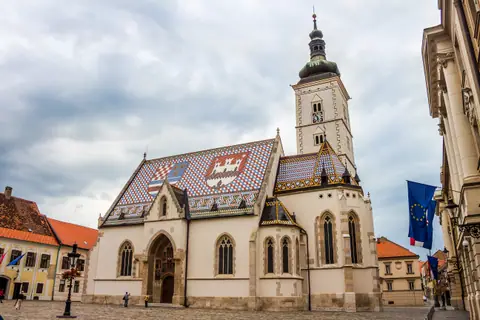
- The Upper Town, St Mark's Church & Lotrščak TowerMedieval Gradec's sunlit ridge linking the reopened 1890 funicular, Lotrščak's midday cannon, Stone Gate, and St Mark's tiled roof.
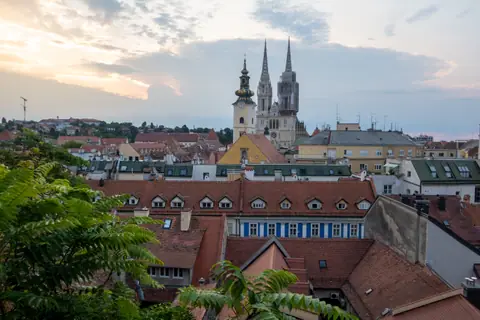
- Zagreb Cathedral, Mirogoj Cemetery & the Two EarthquakesHow seismic fractures in 1880 and 2020 reshaped Kaptol, Hermann Bollé's neo-Gothic spires, and Mirogoj's grand arcades.
- Ban Jelačić Square, Dolac Market & the Lower TownFrom central Ban Jelačić Square and Dolac red parasols through Tkalčićeva cafés and Lenuci Green Horseshoe parks.
Neighbourhoods & Where to Stay
Districts, historic quarters and the best bases for your stay.
Food & Drink
Local dishes, markets, cafés and dining districts.
Getting Around & Arrival
Airport transfers, public transit, passes and driving rules.
Day Trips & Excursions
Easy half-day and full-day trips from the city.
Trip Planning & Itineraries
When to visit, what to pack and day-by-day routes.
- Zagreb Orientation: Upper Town, Lower Town & ParksTwo medieval hills looking down over a planned nineteenth-century park ring, compact enough to map on foot.
- Best Time to Visit ZagrebContinental four-season swings between bright spring café weather, July afternoon storms, crisp autumn parks, and festive Advent lights.
Need your embassy or consulate in Croatia? See embassies and consulates in Croatia.
Reviews
Log in to write a review.
No reviews yet.