A 100-stop harbour, tram, and hillside route across Hong Kong Island, Kowloon, and Lantau, linking incense-filled temples, Edwardian heritage compounds, and skyline viewpoints.
Incense Harbours, Hakka Villages and Terraced Granite Streets
Before the nineteenth century, the granite islands and deep sheltered anchorage of Victoria Harbour were home to Hakka walled villages, Tanka fishing fleets, and incense-tree plantations that gave Heung Gong (Fragrant Harbour) its name, guarded by Tin Hau sea-goddess temples and the Qing Dynasty fort at Kowloon Walled City. Ceded to Britain in 1842 after the First Opium War and expanded with Kowloon and the New Territories lease in 1898, the steep northern shore of Hong Kong Island rapidly developed into the entrepôt of Victoria City.
Linked across the harbour by the 1888 Peak Tram and the 1898 Star Ferry, Hong Kong evolved in the postwar decades into a global financial and cultural metropolis before returning to Chinese sovereignty as a Special Administrative Region in 1997.
Central, Tai Kwun, Man Mo Temple & Victoria Peak
Statue Square, Old Supreme Court Legislative Council Building, St John’s Cathedral Hong Kong, Peak Tram, Victoria Peak Lugard Road Lookout, Mid-Levels Escalator, Tai Kwun, PMQ, and Man Mo Temple
Statue Square
Created through land reclamation in the late nineteenth century, this public pedestrian space once held royal British statues. Today, only the bronze statue of banking head Sir Thomas Jackson remains, surrounded by premier commercial towers. We visit to observe Sunday social gatherings and admire its neoclassical neighbours.
The Cenotaph
Unveiled in 1923, this Portland stone monument reflects Edwin Lutyens's famed London cenotaph design. It honours servicemen who died during the First and Second World Wars. We pause by the carved inscriptions and bronze wreaths set precisely on the northern perimeter of Statue Square.
Old Supreme Court Building
Designed by British architects Aston Webb and Ingress Bell, this granite structure opened in 1912. It served as the Supreme Court and later the Legislative Council before housing the Court of Final Appeal. Look up at the pediment crowned by the blindfolded statue of Justice holding bronze scales.
Old French Mission Building
Built on Government Hill in 1917 for the Paris Foreign Missions Society, this neo-classical ediface incorporates granite columns and decorative red brickwork. It accommodated various judicial bodies throughout the twentieth century. Notice the copper-sheathed dome and ornate inner courtyard framed by arched verandas.
St John's Cathedral
Completed in 1849, this Anglican cathedral displays adapted English Gothic revival architecture with lancet windows and louvred shutters. It withstood wartime occupation and bomb damage. Visitors can view the memorial tablets, the cross of sacrifice outside, and colourful stained-glass windows dedicated to military divisions.
Former Central Government Offices
Erected in phases through the 1950s, this complex exemplifies functional modernist architecture with clean horizontal lines and minimal ornament. It served as the headquarters of the colonial administration until 2011. Now occupied by the Department of Justice, the site features mature banyan trees and preserved granite stairways.
Duddell Street Steps and Gas Lamps
Constructed between 1875 and 1889, these granite steps bridge the elevation between Ice House Street and Queen's Road Central. Four original two-light gas lamps by the British Suggs company still illuminate the balustrades. They remain the only operational street gas lamps in the entire territory.
Peak Tram Lower Terminus
Operating since 1888, the Peak Tram was Asia's first funicular railway, engineered to convey residents up steep mountain slopes. The lower terminus on Garden Road showcases historical carriages and informative railway relics. The system climbs nearly 400 metres across steel cables anchored into bedrock.
Hong Kong Zoological and Botanical Gardens
Opened fully in 1871, this lush municipal sanctuary occupies the northern slope of Victoria Peak. Divided by Albany Road, it features an ornate bronze fountain, historic flight aviaries, and greenhouse pavilions. King George VI's bronze statue stands in the eastern garden among century-old heritage trees.
Victoria Peak
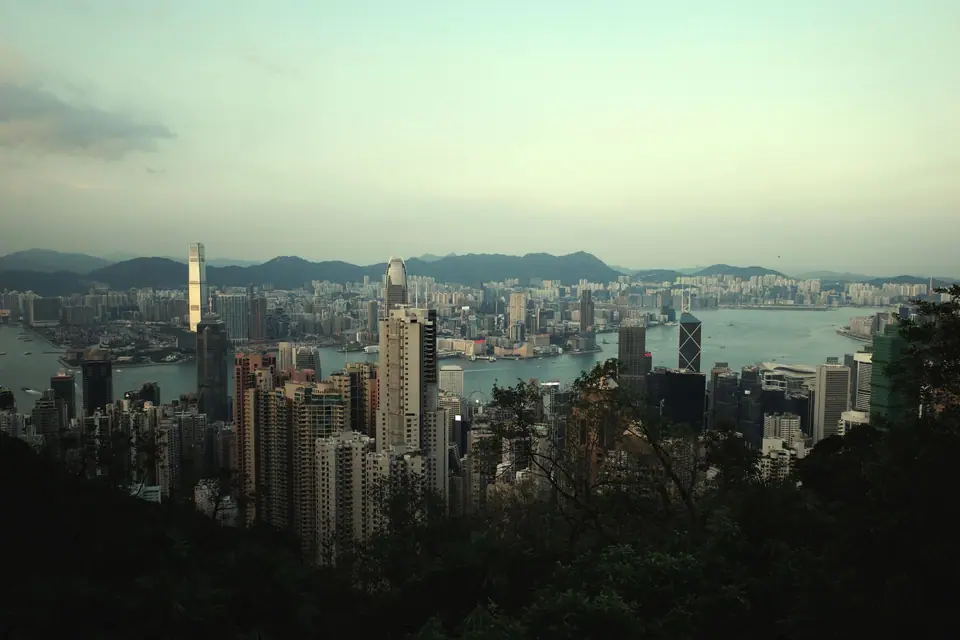
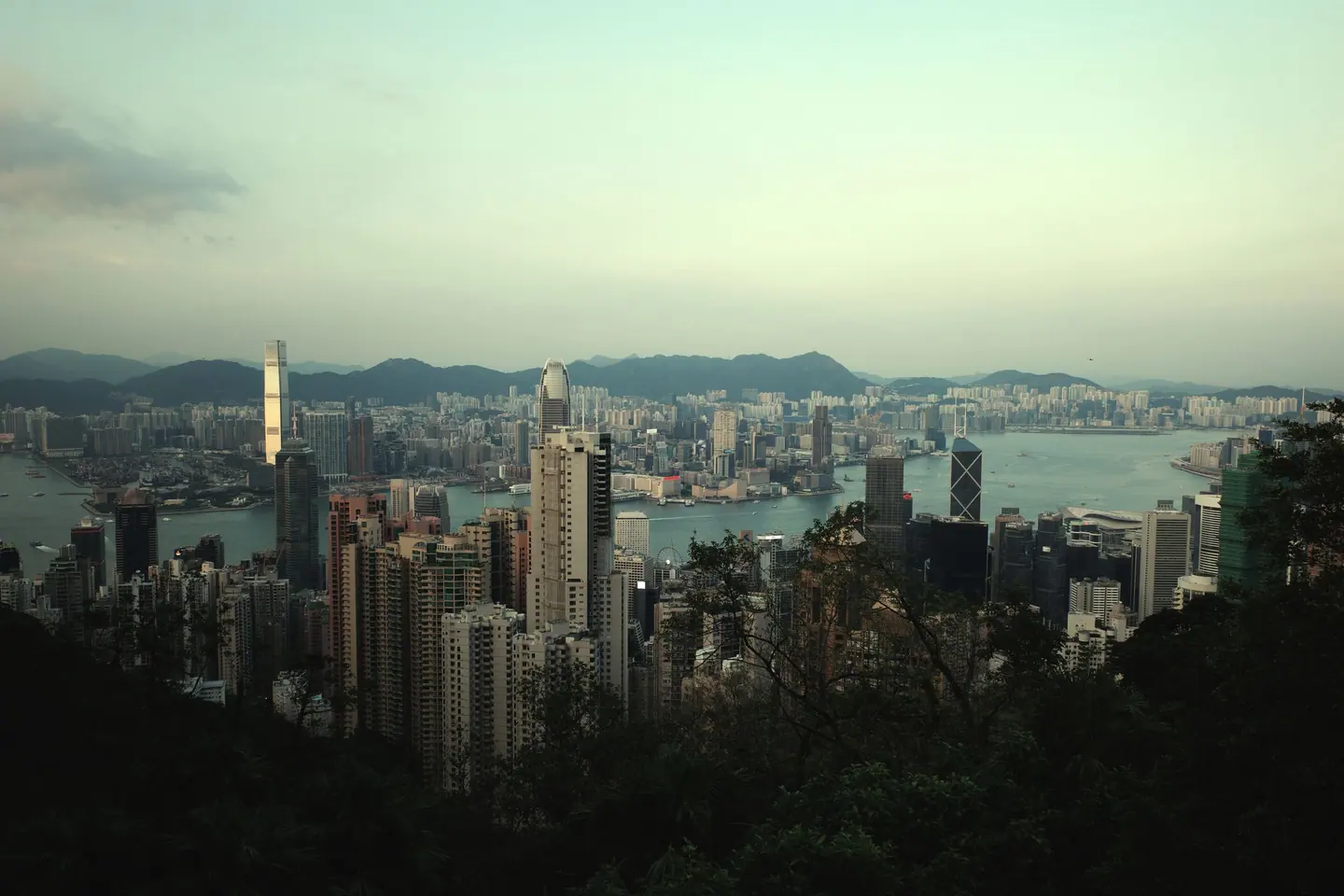
Rising 552 metres above the sea, Mount Austin has served as a strategic signalling station and summer retreat since colonial settlement. The upper areas preserve cool microclimates and thick subtropical vegetation. Walking paths reveal views of shipping lanes, Kowloon, and the outlying islands to the south.
Peak Tower
Architect Terry Farrell designed this bold, anvil-shaped terminal complex, completed in 1997 atop the Peak Tram upper station. Its open rooftop deck provides sweeping vistas across Victoria Harbour. We examine the dramatic cantilevered curves that contrast sharply with the surrounding granite hillsides.
Peak Lookout
Originally constructed in 1901 as a workshop and shelter for engineers during Peak Tram track construction, this low-rise building features stone masonry and pitched tiled roofs. It later became an open-air cafe. The rustic timber lintels and leaded bay windows evoke early-twentieth-century country house architecture.
Victoria Peak Lugard Road Lookout
Carved out between 1913 and 1914, Lugard Road wraps along sheer cliffs roughly 400 metres above the metropolis below. Portions of the narrow route rest on stilt-supported concrete boardwalks anchored directly to the rock face. It yields clear perspectives over Central skyscrapers, Victoria Harbour, and Stonecutters Bridge.
Central, Mid-Levels Escalator
Opened in 1993, this 800-metre system climbs 135 vertical metres from Queen's Road Central to Conduit Road. It includes twenty escalators and three inclined moving walkways under protective canopies. Travelling upward, visitors observe the lively street life along Hollywood Road, Elgin Street, and neighbouring market lanes.
Tai Kwun
Comprising the former Central Police Station, Central Magistracy, and Victoria Prison, this heritage enclave dates from 1864 onwards. Swiss architects Herzog and de Meuron introduced contemporary aluminium-clad galleries alongside brick cells and granite courtyards. Exhibitions detail nineteenth-century penal history and local legal development.
Jamia Mosque
Founded in the 1840s and rebuilt in 1915, this pale-green mosque stands along the stepped incline of Shelley Street. It incorporates horseshoe arches, classical pilasters, and an octagonal minaret surmounted by an onion dome. The quiet interior contains calligraphy roundels and traditional arched prayer halls.
Hong Kong Museum of Medical Sciences
Built in 1906 as the Old Bacteriological Institute following regional plague outbreaks, this handsome Edwardian building displays red brickwork, decorative parapets, and tiled verandas. It operates as an independent museum exploring epidemiology and laboratory science. Inside, restored autopsy suites and early laboratory apparatus remain preserved.
PMQ
Once the site of the Central School where Sun Yat-sen studied, these twin mid-century blocks were converted into Hollywood Road Police Married Quarters in 1951. Today, they host independent design studios and creative businesses. Visitors can walk the central courtyard and see the underground foundation ruins of the original school.
Man Mo Temple
Erected in 1847 by wealthy Chinese merchants, this Qing-dynasty temple compound features stepped granite thresholds, carved ridge decorations, and green ceramic roof tiles. Giant spiral incense coils hang continuously from the timber rafters above. It historically served as both a spiritual sanctuary and a community arbitration centre.
Western Market
Built in 1906 to replace an earlier food bazaar, this Edwardian municipal market features alternating bands of red brick and granite masonry. Corner turrets and arched entrance ways recall Queen Anne revival styling. The interior houses fabric merchants, traditional handicraft shops, and an exposed timber truss roof.
Sheung Wan, Wan Chai Heritage Trail & Causeway Bay
Western Market, Dried Seafood Street Des Voeux Road West, Blue House Wan Chai, Pak Tai Temple Wan Chai, Hung Shing Temple, NoonDay Gun, Victoria Park, and Tin Hau Temple Causeway Bay
Western Market
Constructed in 1906 as the North Block of the municipal market, this Queen Anne Revival landmark features red brickwork with contrasting granite bands. Travellers can examine the corner towers, arched entrance porches and the preserved timber roof trusses inside, where traditional cloth merchants and craft vendors now operate.
Dried Seafood Street
Stretching along Des Voeux Road West, this commerce corridor has served southern Chinese trading networks since the nineteenth century. Glass jars and wooden crates display dried abalone, scallops, sea cucumbers and fish maw outside preserved pre-war shophouses, demonstrating the endurance of maritime trade customs in Sheung Wan.
Hong Kong Museum of Medical Sciences
Established in 1906 as the Old Pathological Institute, this red-brick facility combated early outbreaks of bubonic plague on Hong Kong Island. The premises retain original laboratory benches, ceramic dissection tables and tiled courtyards, presenting exhibitions that contrast Western clinical pathology with traditional Chinese herbal medicine.
Blake Garden
Opened in the late nineteenth century, this urban park occupies the cleared ground of the former Taipingshan neighbourhood, which was demolished following the devastating 1894 plague. Bounded by mature banyan trees clinging to stone retaining walls, the terraced green space provides open courts, stone benches and quiet corners amidst dense residential blocks.
Kwong Fook I Tsz
Erected in 1856 to house the spirit tablets of mainland migrant labourers who died far from home, this compact temple stands on quiet Tai Ping Shan Street. Visitors can observe hundreds of red ancestral tablets, blackened incense coils hanging from the ceiling and altars dedicated to Ksitigarbha and the local Earth God.
Tung Wah Hospital
Founded in 1870, this medical complex was the first hospital in the territory to provide free traditional Chinese healthcare to impoverished residents. While modern wards now function on the slope, the Main Block preserves an elegant 1930s facade alongside an archive room that displays imperial wooden plaques, historic medical tools and early administrative records.
Hollywood Road Park
Occupying the site of Possession Point, where British forces landed in 1841, this urban garden is designed in the classical Jiangnan style. Paved stone pathways meander past koi ponds, decorative Moon Gates and upturned timber pavilions, creating a peaceful historical enclave between Hollywood Road and Queen's Road Central.
Wing Lee Street
This elevated pedestrian terrace consists of twelve mid-twentieth-century residential shophouses, known as tong lau, built against a stone slope. The facades feature metal window grilles, exposed concrete balconies and exterior staircases, offering travellers an authentic glimpse into the architectural and domestic streetscapes of 1950s Hong Kong.
Bridges Street Centre
Built in 1918 by the Chinese YMCA, this red-brick structure was one of the earliest modern community centres on the island. The interior preserves the territory's first indoor heated swimming pool and a suspended timber running track, which sits beneath steel roof trusses inside the third-floor sports hall.
Man Mo Temple
Constructed in 1847, this historic complex comprises three interconnected buildings: the primary temple, Lit Shing Kung and Kung Sor. Heavy smoke drifts from giant incense coils hanging overhead, illuminating carved granite columns, ceramic roof ridge friezes and the gilt sedan chairs once used to carry the deities during community festivals.
Tai Yuen Street
Located in the heart of Wan Chai, Tai Yuen Street has served as a central open-air marketplace for decades. In addition to daily dry goods stalls, the lane is recognised for vendors selling classic tinplate models, vintage action figures and festive decorations beneath dense arrays of green tin hawker stalls.
Hung Shing Temple, Wan Chai
Constructed in 1847 on Queen's Road East, this temple honoured the patron god of seafarers when waves still lapped at the doorway. Due to successive land reclamations the temple now stands inland, with its rear altar chambers dramatically carved directly out of the protruding hillside granite.
Blue House, Wan Chai
Constructed in the 1920s, this historic blue Lingnan-style shophouse retains external timber staircases, high ceilings and cast-iron balustrades. Following an internationally commended conservation initiative, the tenement now houses a community museum, public exhibition spaces and original residents living side by side in the heart of Wan Chai.
Pak Tai Temple, Wan Chai
Built in 1863 by local Wan Chai residents, this three-hall complex features a central courtyard and an imposing granite doorway. The main hall houses a three-metre bronze statue of Pak Tai cast during the Ming Dynasty, accompanied by finely carved timber screen partitions and detailed ceramic roof ridges.
Old Wan Chai Post Office
Erected in 1912, this is the oldest surviving postal building in the territory, characterised by an English gable end and crisp white plasterwork. Now functioning as an environmental resource centre, the interior retains original counter grills, timber rafters and antique postal sorting pigeonholes that demonstrate early public service architecture.
Pak Sha Daoist Temple
Tucked away along Leighton Road on the boundary of Causeway Bay, this modest Daoist shrine serves local residents offering prayers for safety and health. The interior houses carved altars, bronze bells and incense tripods, providing a peaceful spiritual retreat away from the surrounding modern commercial high-rises.
Noon-Day Gun
Located in a small stone enclosure beside the Causeway Bay Typhoon Shelter, this three-pounder naval gun maintains an East India Company tradition dating to the mid-nineteenth century. Serviced by Jardine Matheson staff, the weapon is discharged with a sharp blast every midday following the ringing of a brass bell.
Causeway Bay Typhoon Shelter
Completed in 1883 following severe storm devastation across Victoria Harbour, this enclosed basin remains an active haven for fishing junks and pleasure yachts. Travellers can observe maritime work along the seawalls, small sampans navigating between moorings, and the remnants of historic waterborne community life beneath urban elevated highways.
Victoria Park, Hong Kong
Named after Queen Victoria, whose bronze statue guards the main entrance, this expansive public green covers more than nineteen hectares. The grounds feature broad lawns, tennis arenas and swimming pools, while shaded peripheral pathways draw morning practitioners of tai chi beneath avenues of mature banyan and paperbark trees.
Tin Hau Temple, Causeway Bay
Founded in 1747 by the Tai clan, this Declared Monument features stone pillars, intricate Shiwan ceramic roof ridges and historic cast-iron bells. Originally positioned on a coastal promontory before extensive reclamation transformed Causeway Bay, the temple remains a focal point for prayers, traditional festivals and community offerings.
Star Ferry, Tsim Sha Tsui & West Kowloon Cultural District
Star Ferry Pier, Former Kowloon-Canton Railway Clock Tower, 1881 Heritage, Peninsula Hong Kong, Avenue of Stars, Hong Kong Museum of Art, M+ Museum, and Hong Kong Palace Museum
Tsim Sha Tsui Star Ferry Pier
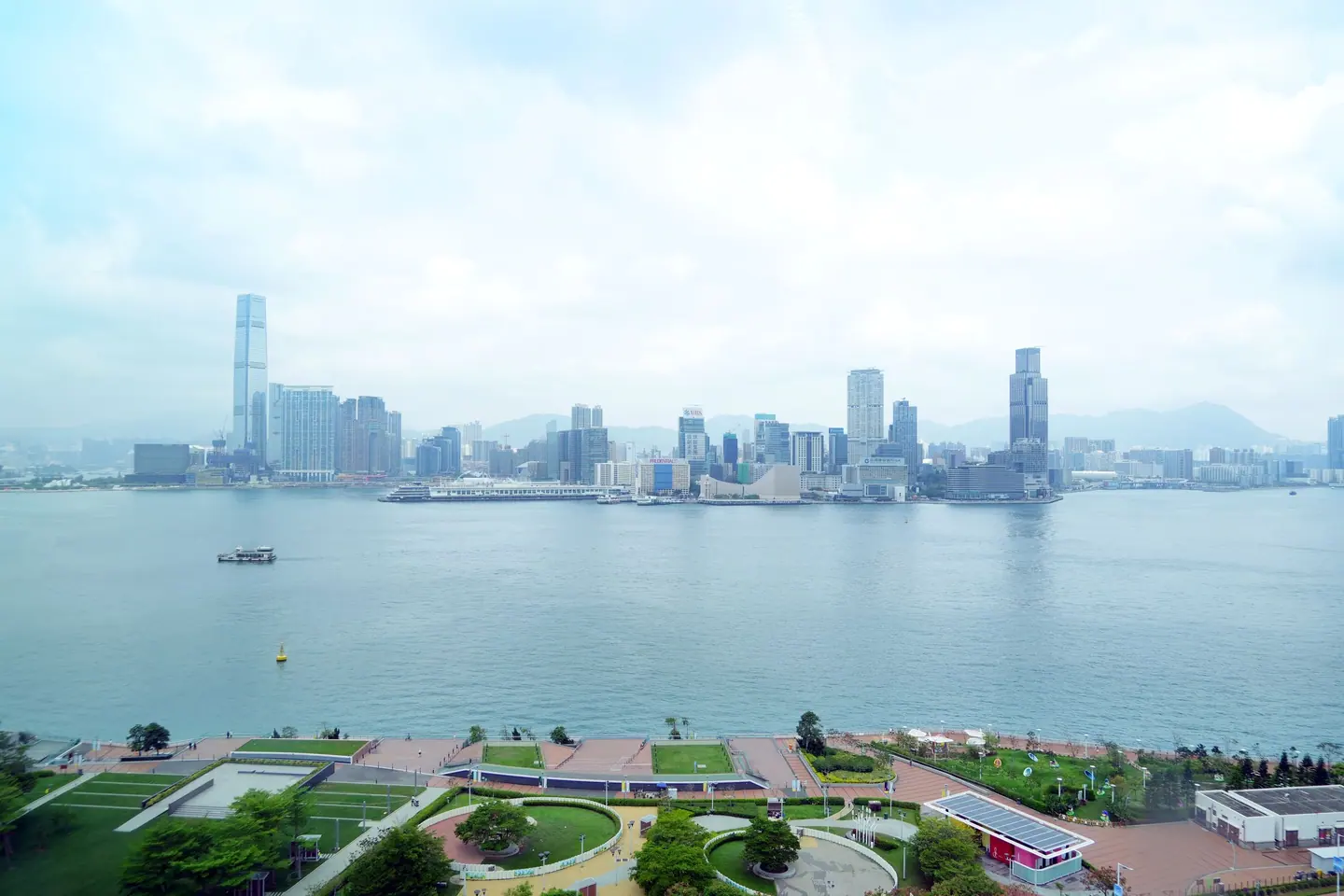
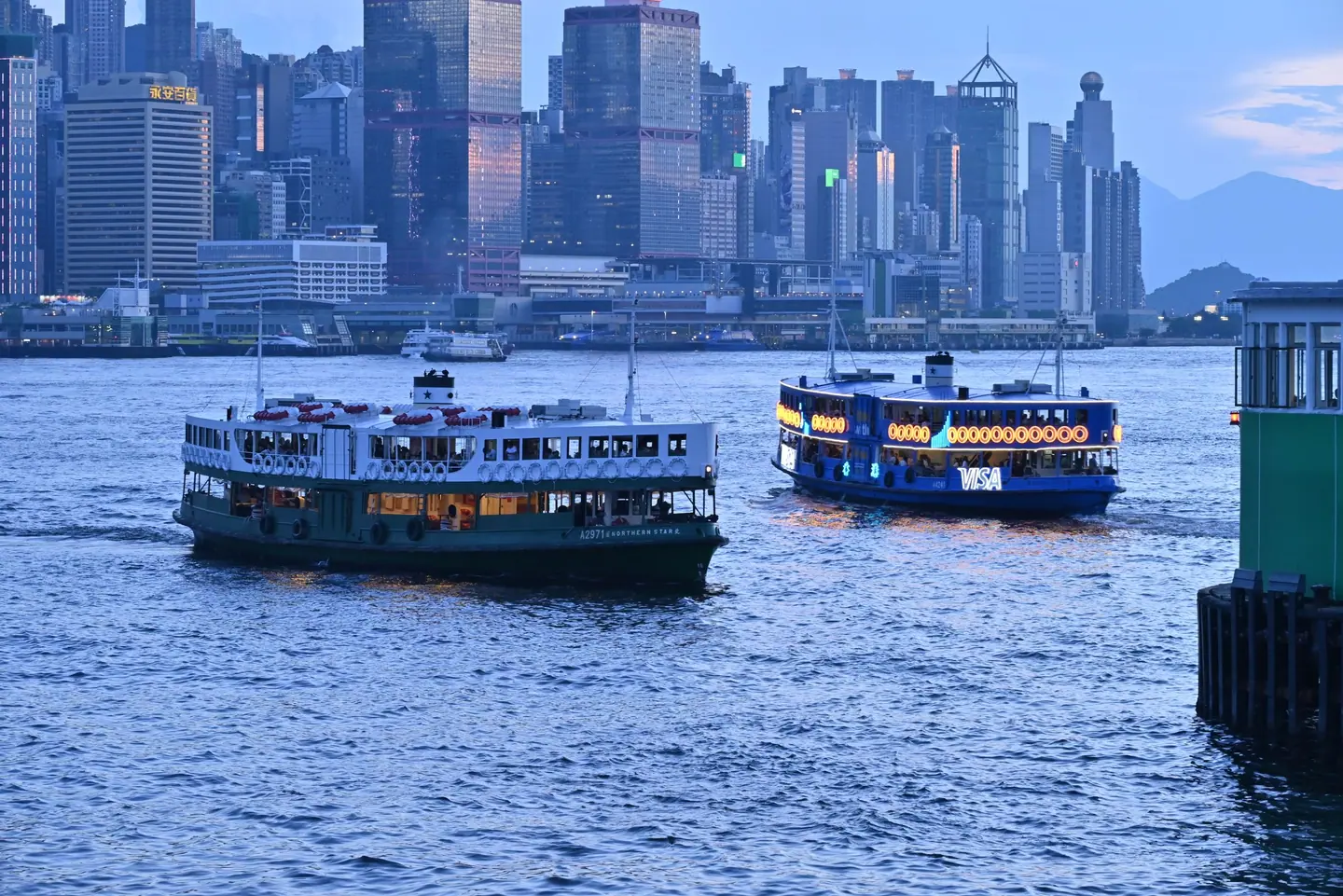
Completed in its current form in the late 1950s, this functionalist transit hub connects Kowloon to Hong Kong Island. Visitors observe timber berths, turnstiles, and vintage green-and-white passenger vessels navigating tidal currents. The upper observation deck provides clear lines of sight across the central fairway toward Wan Chai.
Former Kowloon-Canton Railway Clock Tower
Erected in 1915 as part of the original southern terminus of the Kowloon-Canton Railway, this 44-metre monument is built from red brick and granite. It features a working clock mechanism on four faces and an internal wooden staircase. The surrounding public plaza preserves the memory of historical overland departures toward Europe.
1881 Heritage
Dating to 1884, this restored Victorian complex incorporates classical colonnaded verandas and granite retaining walls on a raised knoll. It preserves the original Signal Tower, which dropped a time ball daily for mariners in the harbour. Subterranean holding cells and stable blocks now accommodate cultural exhibits and hospitality venues.
The Peninsula Hong Kong
Opened in 1928, this grand hotel displays neoclassical columns, gilded ceiling mouldings, and a towering modern annex completed in 1994. The building briefly served as the military headquarters of Japanese occupying forces during the Second World War. Its lobby features high arches and traditional afternoon tea service.
Hong Kong Cultural Centre
Inaugurated in 1989 on the site of the former railway station, this modernist civic complex presents a windowless, curved facade faced in pink ceramic tiles. It houses a concert hall fitted with an 8,000-pipe Austrian organ, alongside two substantial theatres. An elevated outdoor colonnade provides shaded passage beside the harbour.
Hong Kong Space Museum
Recognisable by its ribbed hemispherical dome, this institution opened in 1980 as Hong Kong's principal planetarium. Inside, two permanent halls present interactive models tracing the history of space flight, rocket science, and celestial observation. The planetarium dome uses digital projection systems to simulate constellations and planetary surfaces.
Hong Kong Museum of Art
Reopened in 2019 following an extensive architectural overhaul, the museum features transparent glass facades and expanded exhibition galleries. Its holdings span Chinese calligraphy, antique ceramics, trade paintings, and contemporary Hong Kong art. Upper-floor galleries incorporate expansive glazing that frames views of Hong Kong Island across the water.
Avenue of Stars
Stretching along the Tsim Sha Tsui waterfront, this pedestrian esplanade honours key actors, directors, and technical pioneers from the Hong Kong film industry. Redesigned by landscape architect James Corner, it displays handprints embedded into handrails rather than floor paving. Statues commemorating Bruce Lee and Anita Mui anchor the eastern section.
Signal Hill Tower
Constructed in 1907 by the Hong Kong Observatory, this red-brick tower stands within Blackhead Point Garden. It was raised by one storey in 1927 to ensure visibility for vessels mooring in the eastern harbour. The structure retains its classical pediments, arched windows, and spiral internal stairways.
St. Andrew's Church
Consecrated in 1906, this is the oldest English-speaking Protestant church in Kowloon. Built in the Victorian Gothic style, it features red-brick walls, pointed lancet windows, and exposed timber roof trusses. An adjacent heritage vicarage and landscaped courtyard provide quiet separation from the traffic of Nathan Road.
Kowloon Mosque and Islamic Centre
Rebuilt in 1984 on the site of an 1896 garrison mosque, this prominent religious complex is clad in white marble. Its architecture incorporates four 11-metre minarets, central domes, and traditional arched arcades. The spacious prayer halls accommodate thousands of worshippers, reflecting the long-established Muslim community in the territory.
Kowloon Park
Spanning over thirteen hectares, this park occupies the site of the former Whitfield Barracks, established in the late nineteenth century. Several military blocks survive, alongside modern water gardens, a bird lake housing flamingos, and an extensive aviary. It serves as an open ecological lung amid high-density commercial blocks.
Hong Kong Heritage Discovery Centre
Housed within two restored blocks of the former Whitfield Barracks dating to 1910, this centre preserves colonial verandas, timber rafters, and pitched clay-tile roofs. The interior exhibits artefacts from archaeological excavations across Hong Kong, including Neolithic pottery and Song dynasty coins. Interactive thematic displays highlight local conservation practices.
Chungking Mansions
Erected in 1961, this monolithic five-block complex represents an extraordinary example of hyper-dense urban migration and global trade. The lower arcades house foreign currency exchanges, South Asian food stalls, and import-export businesses, while upper floors contain low-cost guesthouses. Sociologists study the building as a hub of grassroots globalisation.
Former Marine Police Headquarters Signal Tower
Constructed in 1884 on the headland overlooking the western harbour, this masonry tower provided time signals to ocean-going ships. A metal sphere was raised and dropped manually every afternoon at one o'clock until 1907. Visitors can examine the restored lifting gear, masonry base, and historical explanatory plaques.
Kowloon Public Pier
Located south of the Clock Tower, this public maritime facility features four boarding berths equipped with concrete landing steps. It serves pleasure cruisers, harbour tour operators, and public sector launches throughout the day. The open piers offer uninterrupted viewpoints toward Central and the Wan Chai Convention Centre.
M+ Museum
Designed by Herzog and de Meuron, this massive structure opened in 2021 within the West Kowloon Cultural District. It features an inverted T-shaped profile with a facade embedded with thousands of LED lights facing the harbour. The interior houses twenty-first-century visual arts, architectural drawings, and moving image works.
Hong Kong Palace Museum
Completed in 2022, this seven-storey museum references traditional Chinese architectural proportions through an inverted trapezoidal shape. The building is clad in beige aluminium panels, while interior atriums connect visitors vertically across nine themed galleries. It displays loans from the Palace Museum in Beijing, including ceramics, textiles, and imperial portraits.
Xiqu Centre
Serving as the eastern gateway to the West Kowloon Cultural District, this building evokes the parting drapes of a theatre curtain. Its curvilinear facade is formed from thousands of curved aluminium fins. The Grand Theatre is suspended twenty-seven metres above the ground, creating a cavernous public courtyard below.
Freespace
Situated in the Art Park of West Kowloon, this low-rise black-box venue opened in 2019 to accommodate experimental theatre, live music, and dance. It contains the Box, one of the territory's largest flexible theatre spaces, alongside casual café areas. The surrounding lawns host outdoor performances, food trucks, and waterside strolls.
Yau Ma Tei, Mong Kok Markets & Wong Tai Sin
Temple Street Night Market, Tin Hau Temple Yau Ma Tei, Yau Ma Tei Theatre, Jade Market, Ladies Market, Flower Market Road, Wong Tai Sin Temple, Chi Lin Nunnery, and Nan Lian Garden
Tin Hau Temple, Yau Ma Tei
Constructed in 1876, this sprawling complex comprises five adjoining temples facing the leafy public square. Inside, we observe dense coils of hanging incense, elaborate shiwan ceramic roof ridges, and brass bells cast by Qing Dynasty mariners. It remains an active centre of veneration for local boat communities.
Yau Ma Tei Fruit Market
Founded in 1913, this stone and brick complex operates as the primary fruit distribution hub of Kowloon. The exterior walls still carry carved shop signs and weathered colonial pediments dating back to the 1920s. Visiting during daytime offers an architectural look at historic merchant stalls and covered loading bays.
Yau Ma Tei Theatre
Dating to 1930, this venue stands as the only surviving pre-Second World War cinema building in urban Kowloon. Its architecture mixes classical pediment motifs with Art Deco lines, featuring a distinctive pitched roof. Today, it operates as a heritage performance venue dedicated to training youth in traditional Cantonese opera.
Red Brick Building
Erected in 1895 by the colonial government, this red-brick structure is the oldest surviving waterworks building in Hong Kong. It features decorative red brickwork, arched windows, and cast-iron rainwater pipes that reflect late-Victorian utility architecture. It now serves as an administrative annex and rehearsal space for the neighbouring theatre.
Temple Street Night Market
Stretching south from the Tin Hau Temple, this thoroughfare has served as an evening trading hub for decades. The street hosts rows of canopied stalls selling trinkets, opera paraphernalia, and hardware alongside fortune tellers and roadside food stalls. A decorative Chinese gate marks the northern entrance along Kansu Street.
Jade Market
Housed within two designated municipal sheds on Battery Street, this bazaar contains hundreds of registered jade traders. Stalls display an array of amulets, polished bangles, and carved statuettes rendered in white and green jadeite. Traditional hand gestures under cloths are still occasionally employed by traders when negotiating gemstone transactions.
Old Yau Ma Tei Police Station
Constructed in 1922 on reclaimed land, this heritage station features deep verandas, Roman arches, and an eye-catching corner entrance. The blue-and-white colour scheme exemplifies mid-twentieth-century police architecture in British Hong Kong. Although decommissioned from active reporting, the building retains its original custody cells and timber staircase.
Kowloon Methodist Church
Situated on Gascoigne Road, this sanctuary was designed in an austere post-war Gothic revival style and completed in 1951. The exterior displays deep red facing bricks, tall lancet windows, and a prominent bell tower that anchors the street corner. The interior features simple timber pews and a soaring open nave.
Ladies' Market
Occupying a kilometre stretch of Tung Choi Street, this open-air market has operated formally since 1975. Hundreds of temporary metal stalls shelter clothing, accessories, and souvenirs beneath continuous canvas awnings. Walking through reveals the high density typical of Mong Kok, with multi-storey residential blocks towering directly overhead.
Lui Seng Chun
Designed by architects W. H. Bourne and Company in 1931, this Grade I historic shophouse exhibits deep curved verandas and neo-classical columns. The building originally housed a bone-setting clinic on the ground floor and family living quarters above. It has been conserved as a traditional Chinese medicine outpatient centre with exhibition galleries.
Flower Market Road
Centered along Flower Market Road and Prince Edward Road West, this enclave supplies the territory with blooms imported globally. Pavements here are packed with potted orchids, bonsai trees, and cut stems arranged outside pre-war residential buildings. The neighbourhood plays an important cultural role ahead of Lunar New Year celebrations.
Yuen Po Street Bird Garden
Opened in 1997 to replace the cleared bird market on Hong Lok Street, this walled park is designed in traditional Jiangnan courtyard style. It contains ceramic-tiled pavilions, stone benches, and stalls selling hand-carved teak cages and porcelain food dishes. Songbird owners gather each morning to hang cages along sheltered bamboo railings.
Tung Wah Museum
Erected in 1911 as the main hall of Kwong Wah Hospital, this heritage building showcases traditional Cantonese design with Western structural trusses. Inside, we find carved couplets, commemorative bronze plaques, and centuries of philanthropic documents. The exhibition details the hospital group's role in repatriating emigrant remains and assisting the Chinese community.
Wong Tai Sin Temple
Dedicated to the deity Wong Tai Sin, this complex incorporates elements from Taoism, Buddhism, and Confucianism across elaborate pavilions. Visitors encounter painted rafters, carved dragon pillars, and an immense Nine-Dragon Wall modeled after the imperial screen in Beijing. Thousands assemble here daily to practice kau chim, a traditional divination ritual.
Good Wish Garden
Constructed as an annex to Wong Tai Sin Temple, this garden mirrors the classical layout of the Summer Palace in Beijing. It features octagonal waterside pavilions, arched stone bridges, and cascading waterfalls flowing into ponds populated by carp and turtles. Glazed yellow tiles and intricate lattice windows adorn the sheltered surrounding corridors.
Chi Lin Nunnery
Founded in 1934 and rebuilt in 1998, this Buddhist sanctuary was constructed entirely of yellow cedar without utilizing a single iron nail. The complex employs ancient mortise and tenon joinery derived from classical Tang Dynasty architectural manuals. The serene interior courtyards feature lotus ponds, bronze lotus lanterns, and gilded clay statues of the Buddha.
Nan Lian Garden
Covering 3.5 hectares opposite the nunnery, this classical park was laid out strictly following ancient Chinese garden geometry. A golden octagonal Pavilion of Absolute Perfection forms the visual centre, linked across a lotus pond by two vermilion timber bridges. The grounds feature carefully sculpted pines, ancient scholars' stones, and a mill pavilion.
Hau Wong Temple, Kowloon City
Built around 1730, this Grade I historic temple honors General Yang Liangjie, who defended the young Song emperors during their retreat south. The structure features a stepped gable wall, shiwan ceramic roof parapets, and antique stone steles dating from the Qing era. Iron incense burners presented by soldiers from the nearby Kowloon Walled City remain preserved inside.
Kowloon Walled City Park
Occupying the site of the infamous demolished high-density enclave, this park preserves the original nineteenth-century Qing yamen administrative headquarters. Excavated granite foundations, two original bronze cannons, and the outer city gate remnants are on display. The surrounding grounds were landscaped in the Jiangnan style, complete with bamboo groves, pavilions, and ponds.
Former South Gate of Kowloon Walled City
Designated a declared monument, this archaeological pit reveals the original foundations of the South Gate constructed in 1847. During 1994 excavations, archaeologists unearthed two stone lintels inscribed with the fort name alongside flagstone paving and drainage trenches. Informative display walkways allow travellers to view these surviving stone works up close.
Stanley, Aberdeen, Lantau Tian Tan Buddha & Tai O
Aberdeen Harbour Sampans, Repulse Bay Tin Hau Shrine, Murray House Stanley, Ngong Ping 360, Tian Tan Buddha Big Buddha, Po Lin Monastery, Wisdom Path, Tai O Stilt Houses, and Cheung Chau Bun Temple
Aberdeen Harbour
Aberdeen Harbour long functioned as a premier refuge for the indigenous Tanka and Hoklo seafaring communities. Rows of motorized sampans and commercial fishing trawlers still navigate the narrow marine channel between Hong Kong Island and Ap Lei Chau. Visitors can view shipyard slipways and floating boat docks directly from the waterfront promenade.
Ap Lei Chau Hung Shing Temple
Built in 1773 by local fishermen, this maritime sanctuary honors the southern sea deity Hung Shing. The complex retains Qing dynasty architectural layout, including ceramic Shiwan roof ridge decorations, brass bells, and defensive feng shui poles called dragon pillars. It ranks among the oldest intact religious structures in the southern district.
Repulse Bay Tin Hau Temple
Standing at the southeastern edge of the Repulse Bay strand, this seaside complex showcases grand mosaic statues of Tin Hau and Kwun Yum. Constructed in the mid twentieth century by the Hong Kong Life Guard Club, the site includes the Longevity Bridge and ornamental porcelain carp figures overlooking the South China Sea.
Murray House
Erected in 1846 as officers' quarters in Central, this classical colonnaded masonry building was systematically dismantled in 1982 to make way for skyscraper development. The government stored over three thousand catalogued granite blocks before reassembling the structure on the Stanley waterfront during the late 1990s. Heavy Doric columns and deep verandas exemplify early colonial design.
Blake Pier at Stanley
Originally functioning as Blake Pier in Victoria Harbour, this seaside terminal preserves a cast-iron roof pavilion forged during the Edwardian period. After serving temporary duties at Morse Park in Kowloon, the roof was reunited with maritime waters beside Murray House in 2007. The pier provides clear vistas of Tai Tam Bay and serves local excursion vessels.
Stanley Military Cemetery
Resting on a coastal hillside near the Stanley peninsula, this cemetery contains the graves of British, Canadian, Indian, and local volunteers who fell defending Hong Kong in December 1941. The grounds also inter civilians and soldiers who perished within the adjacent wartime internment camp. Neat granite headstones and central Cross of Sacrifice face toward the eastern bays.
Stanley Tin Hau Temple
Dating to 1767, this is one of the oldest Tin Hau temples in southern Hong Kong. The interior preserves historic bells, iron incense burners, and a famed tiger skin purportedly taken from an animal shot in Stanley in 1942. The grey brick halls survived aerial bombardments during the Pacific War.
Old Stanley Police Station
Recognised as the oldest surviving police building in the territory, this two-storey brick structure features classical hipped tiled roofs, exterior verandas, and heavy timber shutters. Built to counter rampant piracy along southern sea routes, it later served as an administrative post and wartime headquarters. It now operates as a commercial venue while retaining its heritage fabric.
Ngong Ping 360
Spanning 5.7 kilometres across northern Lantau, this aerial cable car system connects Tung Chung with the high plateau of Ngong Ping. Cabins glide past North Lantau Country Park, Tung Chung Bay, and the Hong Kong International Airport runways. The elevated transit route presents sweeping regional perspectives of the South China Sea before arriving near the monastery.
Tian Tan Buddha
Completed in 1993, this 34-metre statue required over two hundred separate bronze pieces welded around an internal steel framework. Visitors ascend 268 stone steps to reach the three-tiered lotus base, which houses relics and an exhibition hall. The figure sits facing north towards Beijing, flanked by six bronze statues of devas offering gifts.
Po Lin Monastery
Established in 1906 by visiting Chan monks from Jiangsu, Po Lin has grown from an austere hut settlement into a premier religious centre. The Grand Hall of Ten Thousand Buddhas features thousands of gilded statuettes, ornate carved columns, and glazed ceramic tiles. The monastery maintains operational dining halls serving traditional vegetarian meals to worshippers and travellers.
Wisdom Path
Arranged along the contours of Lantau Peak in a figure-eight configuration, this installation features thirty-eight timber columns cut from African wood. Calligrapher Professor Jao Tsung-I brushed the Chinese characters of the Heart Sutra onto the pillars, symbolising infinity and supreme wisdom. A gentle walking circuit winds between the upright timbers, providing views across southern valleys.
Tai O Stilt Houses
The western Lantau settlement of Tai O is distinguished by pang uk dwellings built on wooden and metal stilts above tidal mudflats. Inhabited by generations of Tanka fishermen, these interconnected structures connect via narrow wooden boardwalks and iron gangways. The tidal riverbanks illustrate traditional vernacular coastal engineering tailored to fishing culture and salt-drying trades.
Tai O Heritage Hotel
Constructed in 1902 on a headland overlooking the mouth of the Pearl River, this colonial station was designed to suppress maritime smuggling and piracy. The Grade II listed building features arched brick verandas, Chinese tiled roof ridges, and conserved cannon bunkers. Modern conservation efforts transformed the facility into an operational heritage hotel with public exhibition areas.
Yeung Hau Temple, Tai O
Built in 1699, this seaside shrine honours Marquis Yang Liangjie, an imperial official who protected the fleeing child emperors of the Southern Song dynasty. The interior contains a historic cast-iron bell dating to the Kangxi period, alongside elaborately painted timber eaves and ceramic ridge sculptures. It acts as an anchor for the annual Tai O dragon boat water parade.
Fan Lau Fort
Constructed in 1729 on Lantau's southwestern tip, this rectangular granite-and-brick fortress guarded the shipping passage into the Pearl River estuary. The original walls, built using dry-stone masonry topped with fired bricks, enclosed small barracks and cannon platforms. Today, conserved defensive parapets stand on the coastal bluff looking towards the boundary waters of Macau.
Cheung Chau Bun Festival Temple
Known formally as Yuk Hui Temple, this landmark was founded in 1783 following a devastating outbreak of plague on Cheung Chau. Dedicated to Pak Tai, the Northern Emperor of Heaven, the main hall houses a Song dynasty iron sword and Qing imperial plaques. The open courtyard fronting the temple hosts the annual Bun Scrambling Competition during the fourth lunar month.
Cheung Po Tsai Cave
Situated on the southwestern cliffs of Cheung Chau, this narrow underground cleft is linked by folklore to the naval pirate Cheung Po Tsai, who roamed the Pearl River delta. The narrow passage requires navigating a steep metal ladder into subterranean granite crevices before emerging onto seaside boulders. Surrounding pathways provide wide perspectives over the West Lamma Channel.
Lamma Island Kamikaze Caves
Excavated along the shoreline of Sok Kwu Wan during the final phase of the Second World War, these coastal tunnels were built by the Japanese occupying forces to house explosive motorboats. The cavern entrances open directly onto the bay, intended for rapid deployment against Allied shipping. Visitors walking the trail between Sok Kwu Wan and Yung Shue Wan can inspect the cavern portals.
Tung Chung Fort
Completed in 1832, this walled fortification served as the headquarters for the Right Battalion of the Dapeng Brigade during the Qing dynasty. The preserved granite perimeter includes three arched gateways, battlements, and six muzzle-loading cannons resting on elevated stone platforms. The enclosed compound later served as a rural school and police post before opening as a public heritage monument.
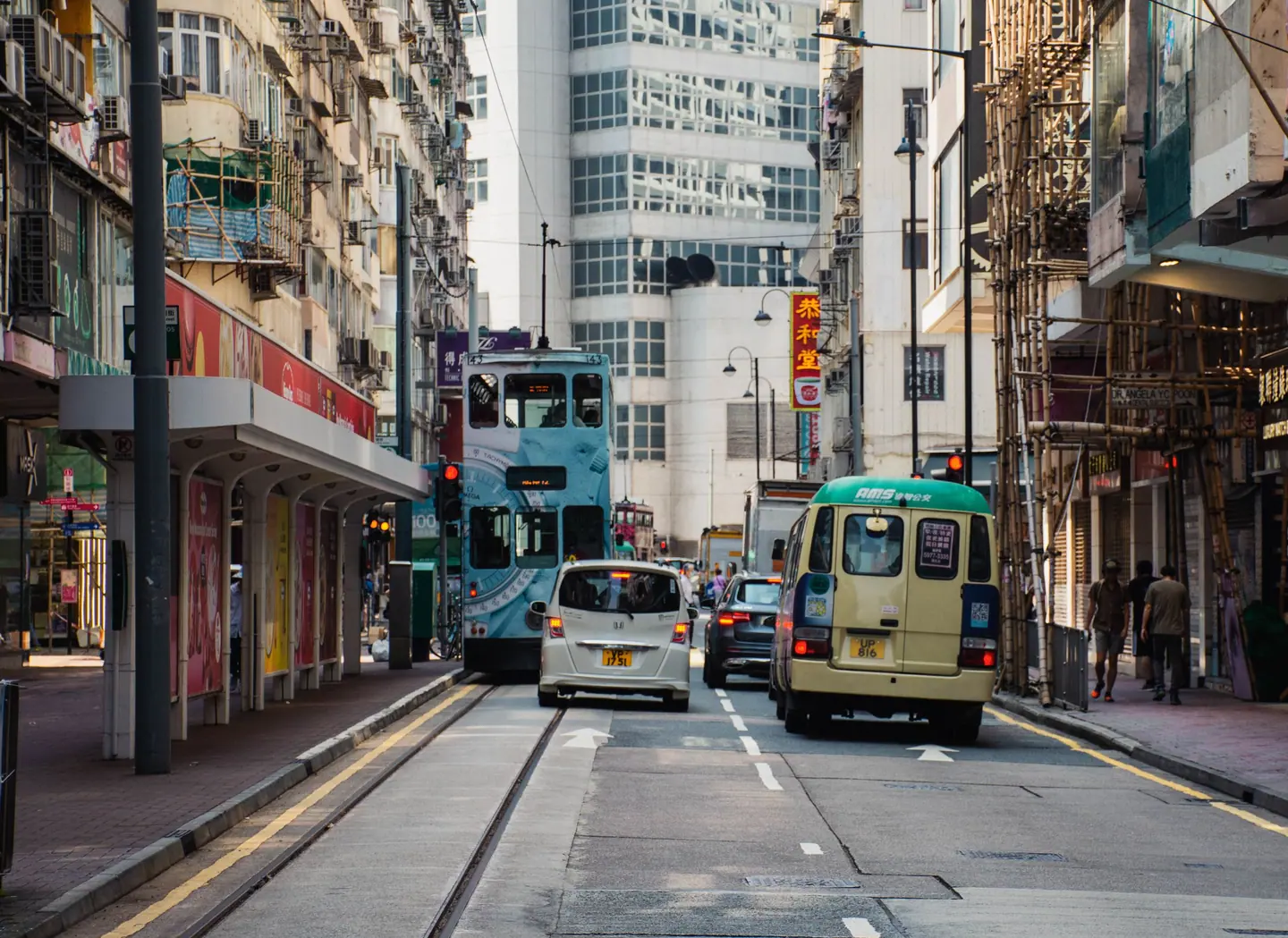
Star Ferry, Ding Ding Trams and Outlying Islands
Pair this route with the practical neighbourhood breakdowns, climate charts and transport advice in our Hong Kong Victoria Harbour, Peak & Kowloon Route travel overview, alongside additional mapped city walks.