





















Oaxaca
Cradled inside three high mountain valleys at 1,555 metres in southern Mexico, Oaxaca de Juárez pairs the 500-BCE hilltop Zapotec capital of Monte Albán and the green-stone Baroque splendour of Santo Domingo with Mexico's richest Indigenous market, mole, and artisanal mezcal traditions.
Quick decisions
How many days?
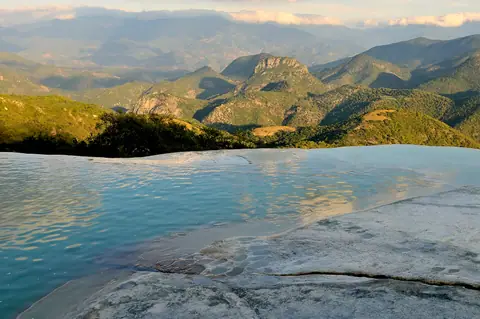
Spend 3 to 4 full days: Day 1 for Santo Domingo, the Ethnobotanical Garden, and Centro Histórico, Day 2 for Monte Albán and the downtown food markets, and Day 3 for the Tlacolula Valley (Tule Tree, Teotitlán, Mitla, and Hierve el Agua).
Where should I stay?
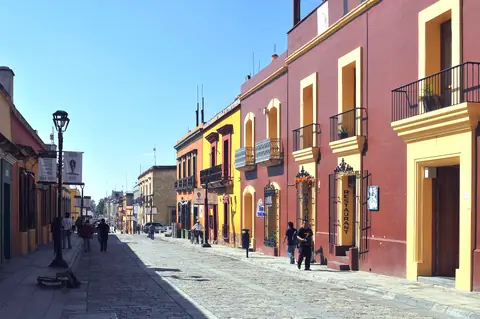
Book a colonial courtyard hotel in Northern Centro Histórico (around Santo Domingo) to walk everywhere, or choose colorful cobbled Barrio de Jalatlaco or Xochimilco for quiet murals and specialty coffee.
Do I need a car?
Never rent a car just for Centro Histórico, where narrow colonial one-way streets have zero parking. Walk everywhere in town, take the 110-MXN shuttle to Monte Albán, and use shared colectivos or small-group tours for the surrounding valleys.
Best for
Pre-Columbian Zapotec and Mixtec pyramids, New Spanish green-stone Baroque churches, Mexico's Seven Moles and smoky Pasillo de Humo meats, ancestral clay-pot mezcal palenques, and Day of the Dead (Día de Muertos) and Guelaguetza festivals.
Before you go
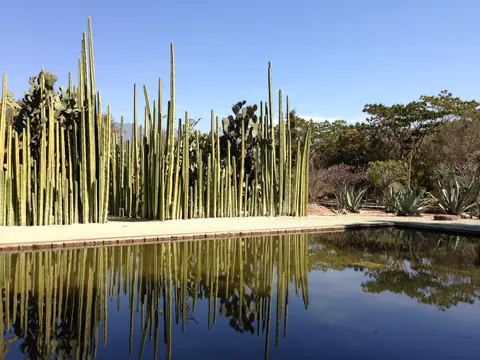
Notice that the Jardín Etnobotánico de Oaxaca can ONLY be entered on an official guided tour (English tours run Tuesday, Thursday, and Saturday at 11:00 for 100 MXN cash as of November 2026; line up 40 minutes early as capacity is strictly capped).
Getting around
Note that Uber and Lyft do not operate in Oaxaca de Juárez (only the DiDi app connects to licensed local yellow taxis). Carry 20, 50, and 100 MXN peso notes for yellow taxis, market stalls, and public restrooms.
Continue your trip
Thanks to the newly opened Barranca Larga to Ventanilla Superhighway (Highway 175D), travelling from Oaxaca City to the Pacific surf beaches of Puerto Escondido and Mazunte now takes just 2.5 to 3 hours by ADO bus instead of 7 hours.
Overview
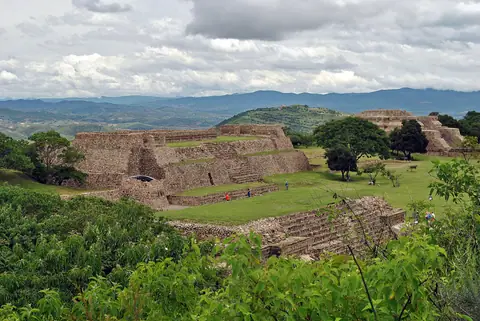
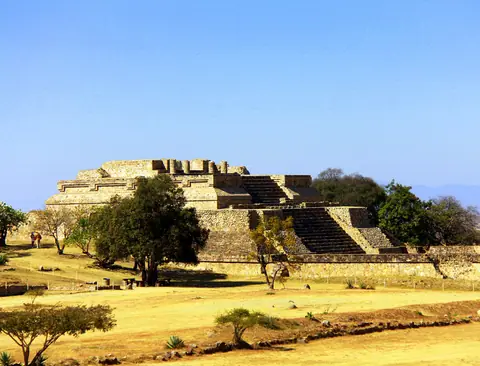
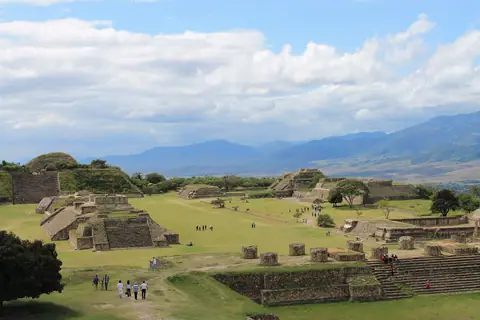
Resting at 1,555 metres (5,100 feet) above sea level where the three fertile arms of the Central Valleys (Etla, Tlacolula, and Zimatlán) meet beneath the Sierra Madre del Sur, Oaxaca de Juárez is the cultural, archaeological, and gastronomic heart of southern Mexico. Around 500 BCE, the Zapotec civilisation levelled the summit of a 400-metre mountain ridge directly above the valley floor to build Monte Albán, the earliest urban metropolis in Mesoamerica. Two thousand years later, in 1529, Spanish royal surveyor Alonso García Bravo laid out the checkerboard grid of colonial Antequera using earthquake-resistant walls carved from local emerald-green volcanic tuff (cantera verde). Today, Oaxaca is home to 16 officially recognised Indigenous peoples, led by the Zapotec and Mixtec, and holds two separate UNESCO World Heritage inscriptions: the Historic Centre of Oaxaca and Archaeological Site of Monte Albán (inscribed 1987, Ref, 415) and the Prehistoric Caves of Yagul and Mitla in the Central Valley of Oaxaca (inscribed 2010, Ref, 1352), where archaeologists found 10,000-year-old squash seeds that document the earliest domestication of plants in the Americas.
Getting there
Fly nonstop into Oaxaca Xoxocotlán International Airport (OAX) from Mexico City, Cancún, Guadalajara, Tijuana, Houston, Dallas, or Los Angeles, or ride a luxury ADO Platino / GL coach down the scenic superhighway from Mexico City TAPO terminal in 6 hours (750 to 1,280 MXN as of November 2026).
Where to stay
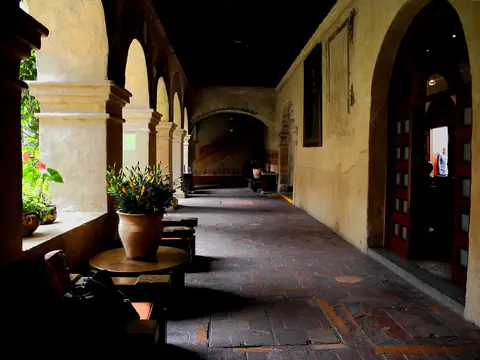
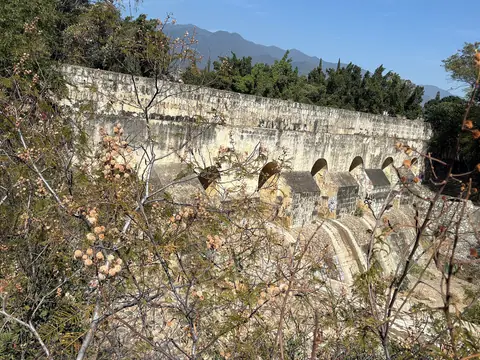
Stay inside a restored 17th-century mansion in Centro Histórico around Santo Domingo, a mural-lined boutique guesthouse in cobblestoned Barrio de Jalatlaco, or an artistic residency hotel beneath the colonial stone arches of Barrio de Xochimilco.
Things to do
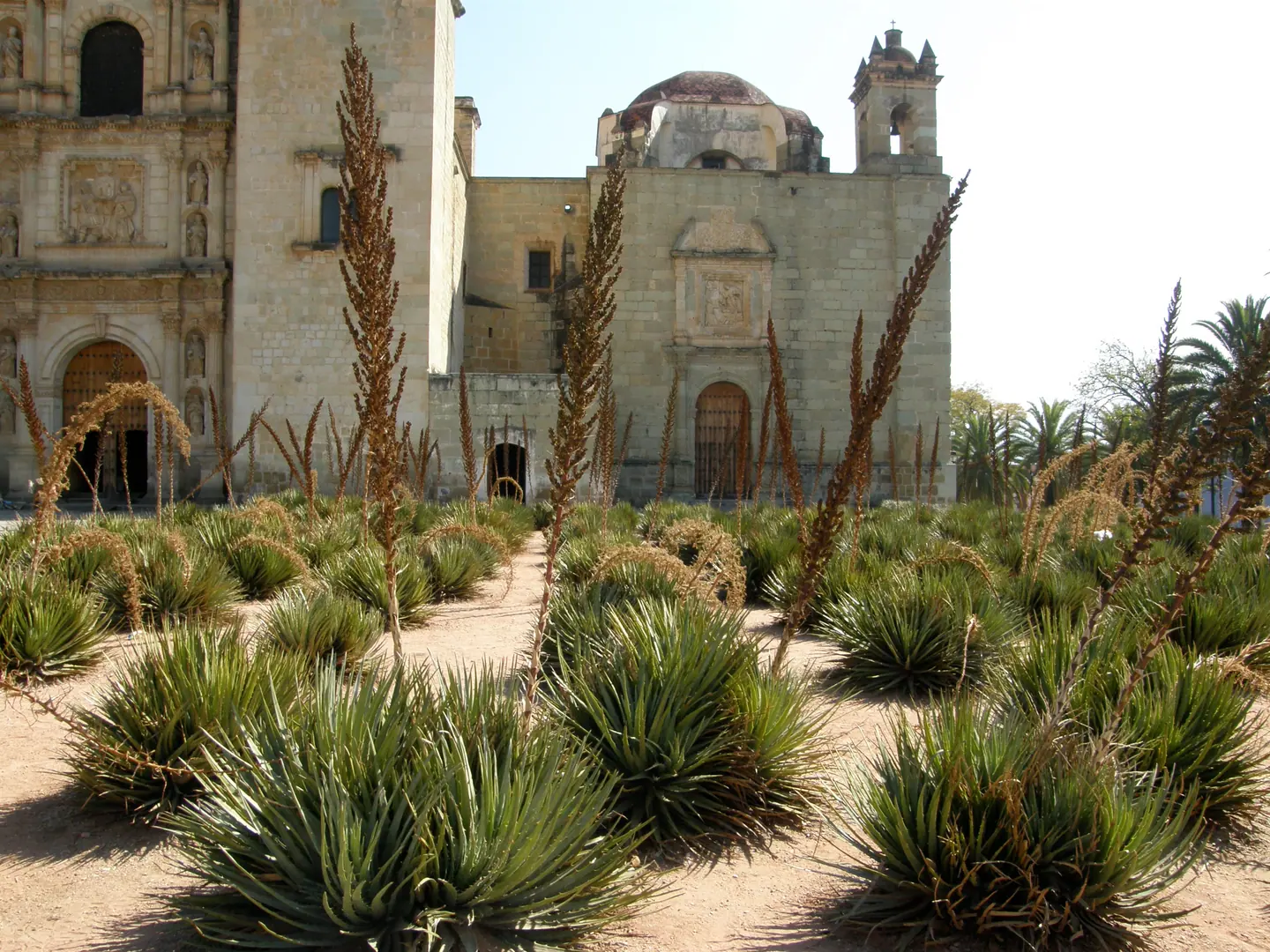
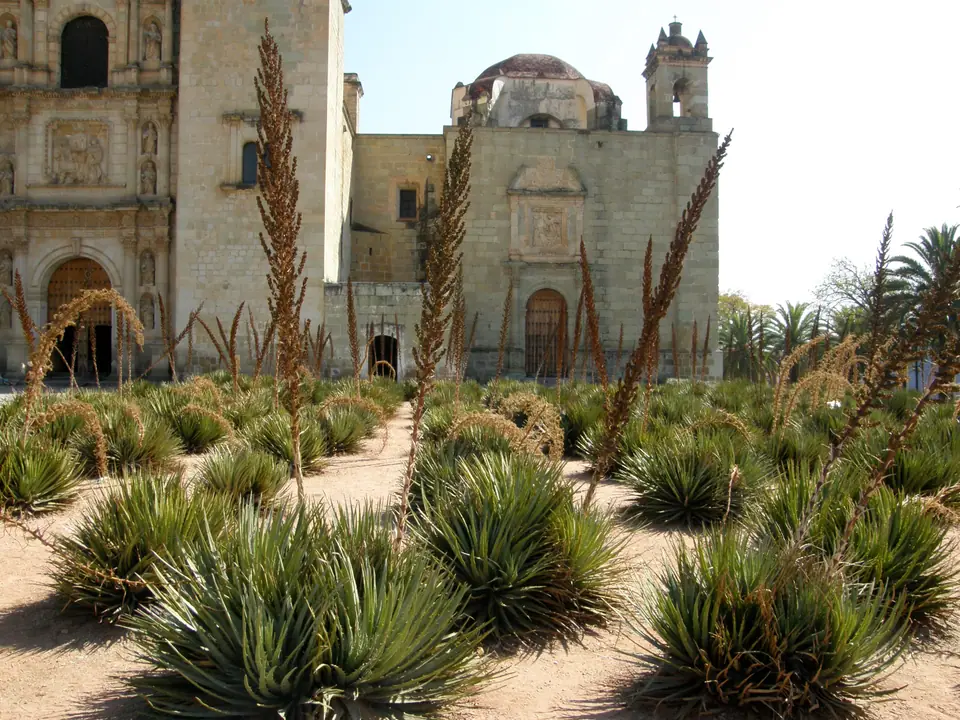
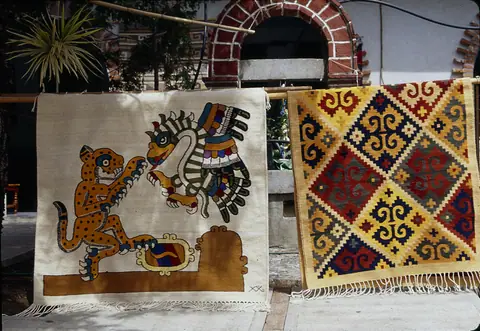
Climb the North and South Platforms of Monte Albán and see the Mixtec gold treasures of Tomb 7 inside the Santo Domingo Cultural Centre, tour the cactus courtyard of the Ethnobotanical Garden, marvel at the geometric stone mosaics of Mitla and the petrified waterfalls of Hierve el Agua, visit Santiago Matatlán mezcal palenques and Teotitlán del Valle weavers, and hike the cloud forests of the Sierra Norte.
Food and drink
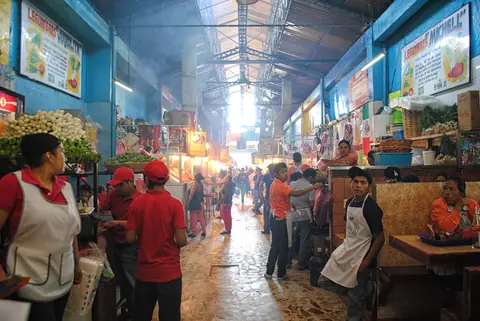
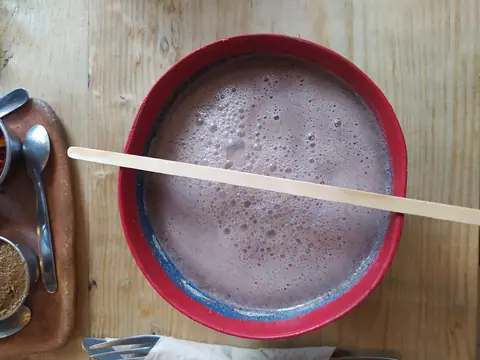
Grill thin ribbons of tasajo beef and cecina inside the smoky Pasillo de Humo at Mercado 20 de Noviembre, taste all of Oaxaca's Seven Moles (led by 30-ingredient Mole Negro), fold a crispy charcoal-toasted Tlayuda topped with quesillo string cheese, and sip stone-ground cacao Tejate ("the drink of the gods") from a painted gourd bowl.
Culture
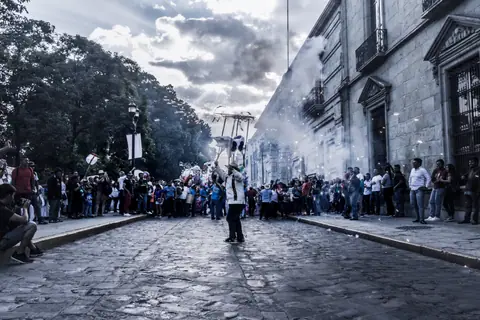
Oaxaca is Mexico's capital of living Indigenous craftsmanship and fiesta culture, where every barrio celebrates multi-day patron saint parades (Calendas) with giant papier-mâché puppets (monos de calenda), brass bands, fireworks castles, and July's famous Guelaguetza Indigenous dance gathering on Cerro del Fortín.
Weather by month
Oaxaca is warmest in April, with average highs around 32°C, and coldest in January, when nights drop to about 9°C. June is the wettest month, with rain on about 15 days. For mild weather with fewer rainy days, aim for January, November and December.
| Month | Low | Range | High | Rain | Rainy days |
|---|---|---|---|---|---|
| Jan | 9°C | 27°C | 7 mm | 1 d | |
| Feb | 10°C | 29°C | 7 mm | 1 d | |
| Mar | 12°C | 31°C | 14 mm | 2 d | |
| Apr | 14°C | 32°C | 28 mm | 4 d | |
| May | 15°C | 31°C | 63 mm | 9 d | |
| Jun | 16°C | 28°C | 105 mm | 15 d | |
| Jul | 15°C | 28°C | 91 mm | 13 d | |
| Aug | 15°C | 28°C | 98 mm | 14 d | |
| Sep | 15°C | 27°C | 105 mm | 15 d | |
| Oct | 13°C | 27°C | 42 mm | 6 d | |
| Nov | 11°C | 27°C | 14 mm | 2 d | |
| Dec | 9°C | 26°C | 7 mm | 1 d |
Averages of daily values from 2015 to 2024. Rainy days are days with at least 1 mm of rain. Source: Open-Meteo · Compare destinations by month.
Oaxaca on the map
Every place we cover in Oaxaca. Tap a category or pin to explore.
In-depth Oaxaca guides
Browse the guides grouped by topic: sights, neighbourhoods, food, transport, day trips and trip planning.
Sights, Landmarks & Parks
Key monuments, viewpoints, museums and nature trails.
- 15 Best Things to Do in Oaxaca: Monte Albán, Santo Domingo & MolesFrom climbing the Zapotec pyramids of Monte Albán at 08:00 and touring the cactus-filled Ethnobotanical Garden to grilling tasajo in the Pasillo de Humo, here are the 15 best experiences in Oaxaca.
- What to Wear in Oaxaca: Altitude Layers, Monte Albán Sun & CobblestonesPractical 2026 packing and dress guide for Oaxaca de Juárez: dressing for 15°C day-to-night temperature swings, UV protection at Monte Albán, and Sierra Norte cloud forest layers.
- Oaxaca 3-Day Itinerary: Monte Albán, Santo Domingo, Hierve el Agua & MarketsStep-by-step 3- and 4-day Oaxaca itinerary for 2026: sequencing Santo Domingo, the Ethnobotanical Garden, Monte Albán at 08:00, Benito Juárez Market, Mitla, and Hierve el Agua.
- Monte Albán Guide 2026: Shuttle Bus, Zapotec Pyramids, Los Danzantes & TipsComplete 2026 visitor guide to the UNESCO Zapotec capital of Monte Albán in Oaxaca: how to catch the 110-MXN shuttle bus, 2026 INAH ticket price, North & South Platforms, and Los Danzantes.
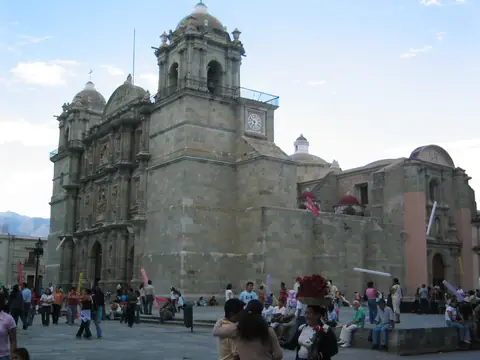
- Santo Domingo Church, Ethnobotanical Garden & Calle Alcalá Guide (2026)Complete 2026 visitor guide to Oaxaca's crown jewel: Templo de Santo Domingo de Guzmán, the Tomb 7 gold inside the Museum of Oaxacan Cultures, the Ethnobotanical Garden tour rules, and Calle Alcalá.
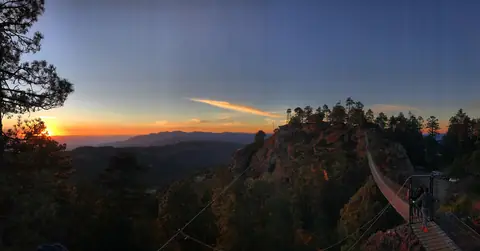
- Sierra Norte Hiking Guide: Pueblos Mancomunados & Cuajimoloyas (2026)How to hike the 3,000-metre cloud forests of Oaxaca's Sierra Norte (Pueblos Mancomunados) in 2026: booking Expediciones Sierra Norte, the Cuajimoloyas suspension bridge, and Benito Juárez trails.
Neighbourhoods & Where to Stay
Districts, historic quarters and the best bases for your stay.
- Oaxaca: 3 Valleys, UNESCO Sights, Cash Rules & Safety (2026)Essential 2026 travel guide to Oaxaca de Juárez, Mexico: how the Historic Centre and 3 Central Valleys work, Monte Albán & Santo Domingo tickets, cash rules, and health tips.
- Best Time to Visit Oaxaca: Day of the Dead, Guelaguetza & SeasonsMonth-by-month weather and festival guide to Oaxaca de Juárez for 2026: Day of the Dead (Oct 31 to Nov 2), July's Guelaguetza, December Night of the Radishes, and dry winter skies.
- Where to Stay in Oaxaca: Santo Domingo, Jalatlaco & Xochimilco GuideNeighbourhood-by-neighbourhood accommodation guide to Oaxaca de Juárez for 2026: colonial mansions around Santo Domingo, cobbled Barrio de Jalatlaco, and quiet Xochimilco.
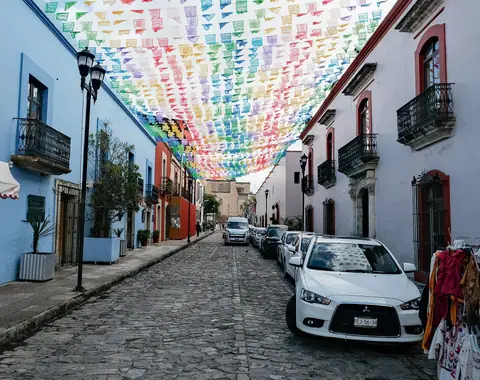
- Barrio de Jalatlaco, Xochimilco Aqueduct & Historic Oaxaca Walking GuideSelf-guided 2026 walking route through Oaxaca's most picturesque neighbourhoods: the cobbled street murals of Barrio de Jalatlaco, the 1727 stone aqueduct of Xochimilco, and the Basilica of La Soledad.
Food & Drink
Local dishes, markets, cafés and dining districts.
- Oaxaca Markets Guide: 20 de Noviembre (Pasillo de Humo), Benito Juárez & TlacolulaHow to navigate Oaxaca's great Indigenous markets in 2026: ordering grilled tasajo in the Pasillo de Humo at Mercado 20 de Noviembre, Benito Juárez Market, Central de Abastos, and the Sunday Tlacolula Tianguis.
- What to Eat in Oaxaca: The Seven Moles, Tlayudas, Tejate & Street FoodEssential 2026 culinary guide to Oaxaca de Juárez, Mexico's food capital: decoding all Seven Moles, charcoal-grilled Tlayudas, Memelas, Quesillo, Tejate, and best restaurants.
Getting Around & Arrival
Airport transfers, public transit, passes and driving rules.
Day Trips & Excursions
Easy half-day and full-day trips from the city.
- Hierve el Agua, Mitla & Tule Tree Day Trip Guide (Tlacolula Valley 2026)Complete 2026 day-trip guide to Oaxaca's Eastern Tlacolula Valley: swimming at Hierve el Agua's petrified waterfalls, Mitla's 100,000 stone mosaic grecas, the UNESCO caves of Yagul, and El Tule Tree.
- Oaxaca Mezcal Palenques, Teotitlán Weavers & Artisan Villages GuideComplete 2026 guide to Oaxaca's mezcal and craft villages: ancestral clay-pot palenques in Santa Catarina Minas vs Santiago Matatlán, cochineal wool dyeing in Teotitlán del Valle, black clay in Coyotepec, and alebrijes.
Need your embassy or consulate in Mexico? See embassies and consulates in Mexico.
Reviews
Log in to write a review.
No reviews yet.