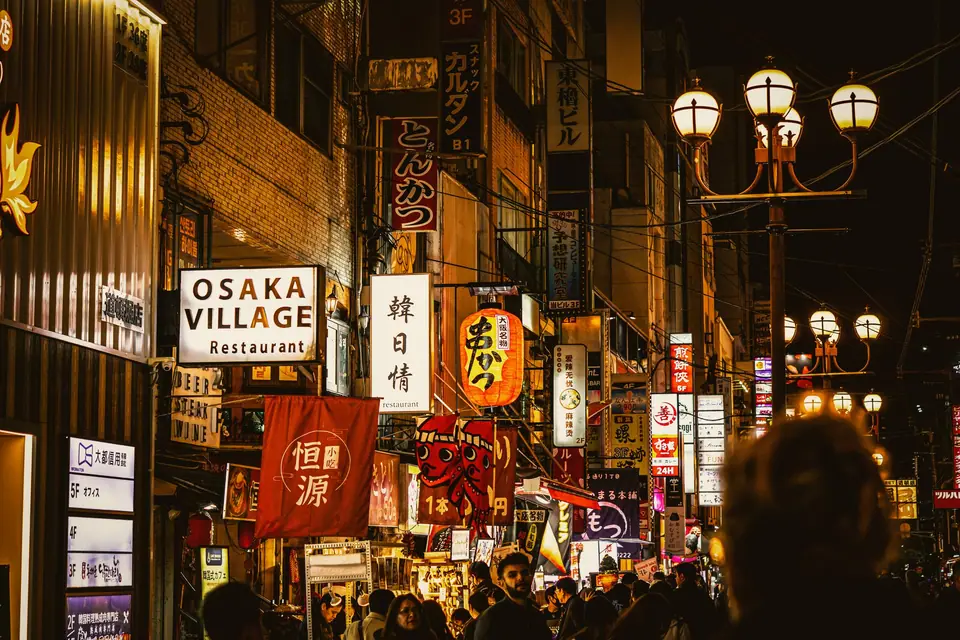
A 100-stop walking and metro route across Osaka, connecting Toyotomi Hideyoshi’s moated fortress, Nakanoshima’s Meiji civic island, Dotonbori’s neon canal bridges, and sixth-century Shitennoji.
Ancient Naniwa Port, Shitennoji and the Edo-Era Kitchen of Japan
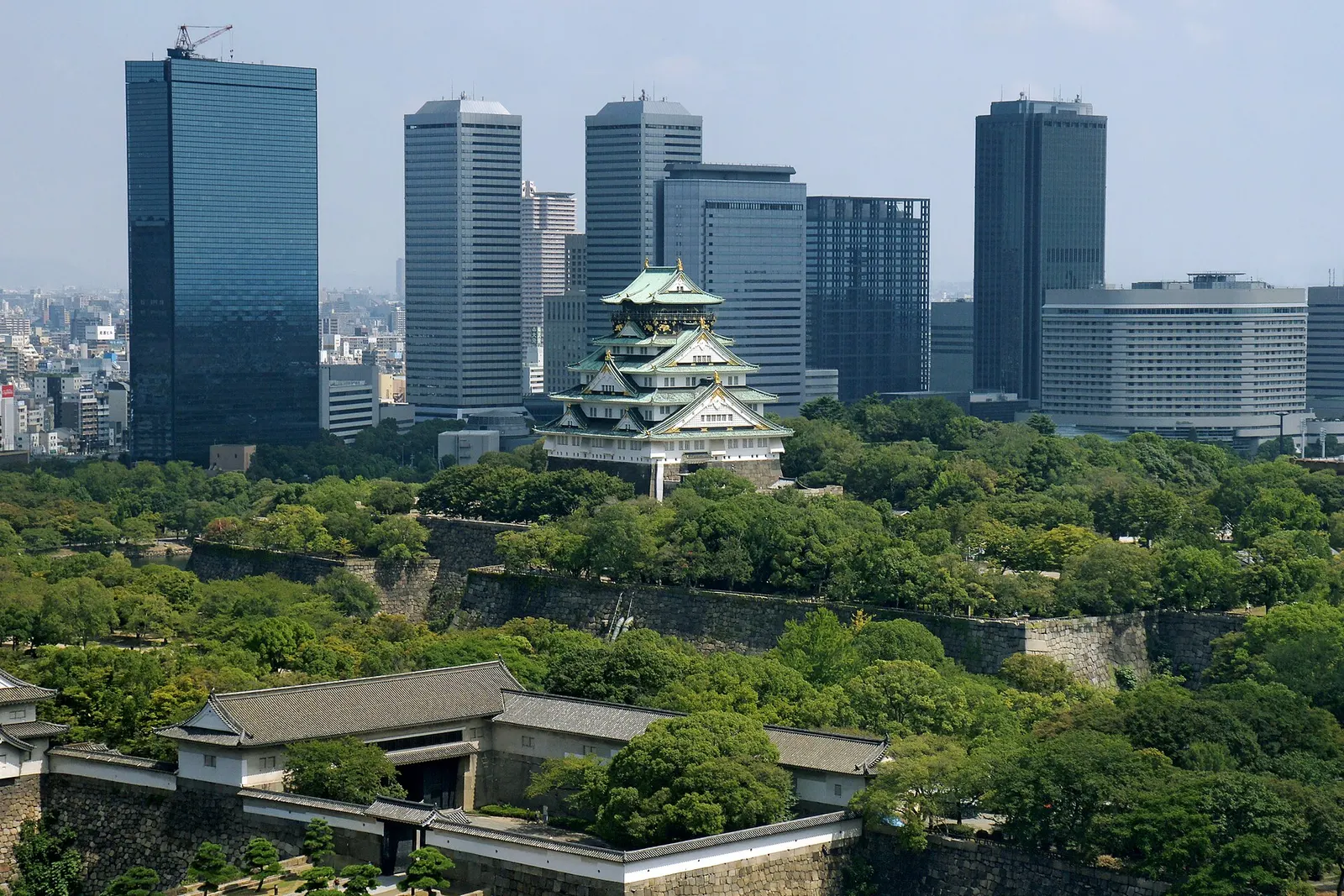
Known in antiquity as Naniwa, Osaka served as Japan's earliest imperial port and gateway to continental Asia, where Prince Shotoku founded Shitennoji, Japan's first state-sponsored Buddhist monastery, in AD 593. In 1583 the unifier Toyotomi Hideyoshi built the monumental stone walls and moats of Osaka Castle on the site of the fortified Ishiyama Hongan-ji temple, making Osaka the political and mercantile hub of sixteenth-century Japan.
During the Edo period, although Tokugawa shoguns ruled from Tokyo, Osaka became Tenka no Daidokoro (The Nation's Kitchen), where rice brokers, bridge builders, and Bunraku puppet playwrights along the Dotonbori canal forged Japan's vibrant merchant culture.
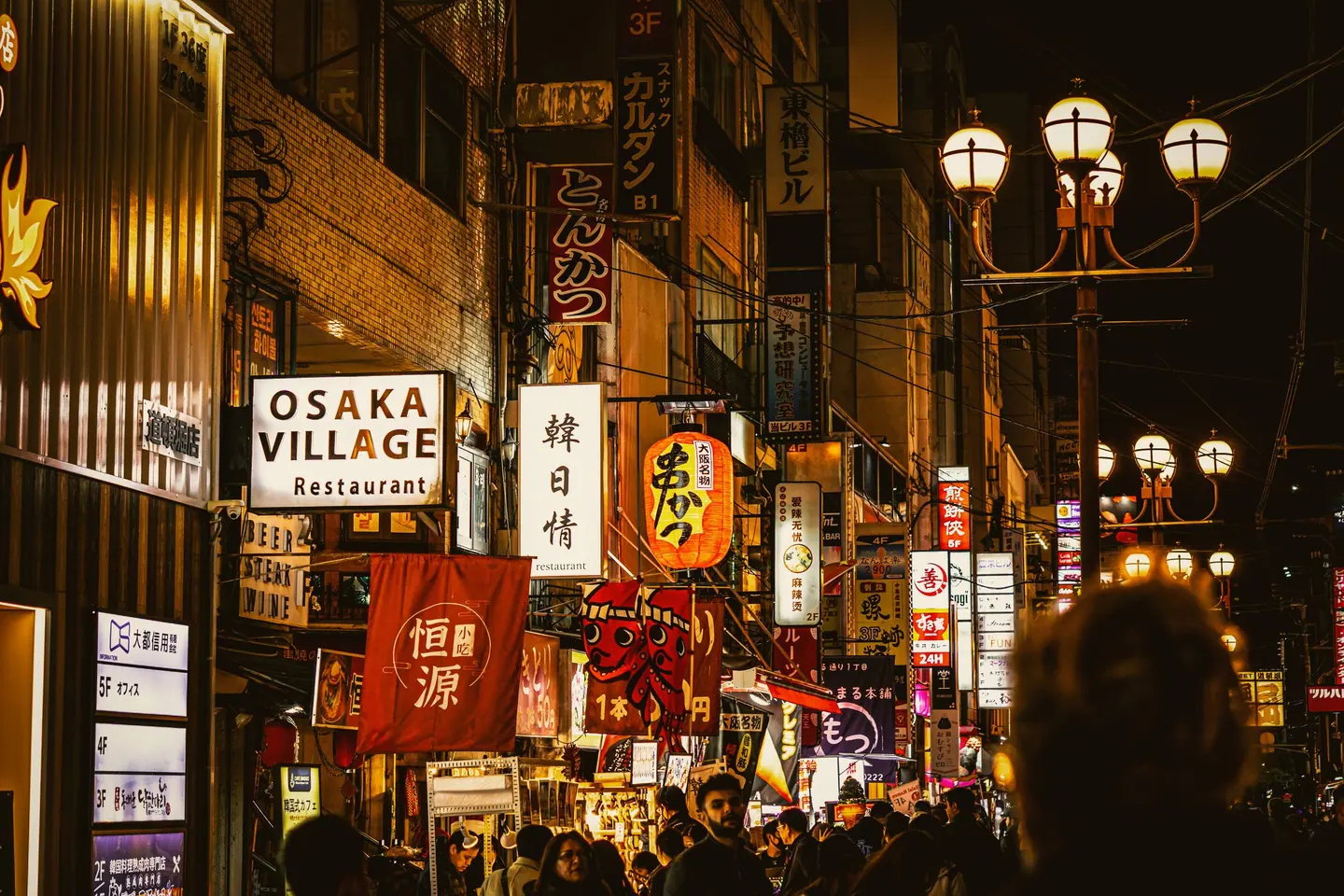
Osaka Castle Park, Museum of History & Tenmabashi
Osaka Castle Main Keep, Otemon Gate, Nishinomaru Garden, Hokoku Shrine, Osaka Museum of History, Naniwa Palace Site, Osaka Mint Bureau, Tenmangu Shrine Osaka, and Tenjinbashisuji Arcade
Osaka Castle Main Keep
Originally constructed by Toyotomi Hideyoshi in 1583, the current central tower dates from 1931 and features ferroconcrete construction with historical decorative trims. Inside, visitors encounter eight floors of artefacts, armour, and panoramic displays overlooking the extensive grounds. We recommend examining the gilded tiger reliefs and roof ornaments along the exterior parapets.
Otemon Gate
Built in 1628 by the Tokugawa shogunate, this grand wooden portal served as the principal entrance to the inner castle precincts. The structure showcases heavy timber beams, iron-reinforced doors, and complex joinery engineered to resist fire and direct assault. We can observe the massive stone masonry lining the approach, built to channel and control approaching traffic.
Sengan Yagura Turret
Constructed in 1620, this defensive watchtower stands atop the southwest corner of the outer ramparts. Its vantage point was designed to guard the approach to Otemon Gate, providing archers and matchlock gunners with sweeping firing lines across the water. The whitewashed plaster walls and projecting embrasures demonstrate classical Edo period military architecture.
Tamon Yagura
Rebuilt in 1848 after lightning destroyed the original structure, this fortified gatehouse forms an imposing defensive barrier above the Otemon Gate complex. The design incorporated a covered passageway where defenders could fire down upon intruders attempting to breach the entrance. Its heavy wooden framework remains one of the largest surviving gatehouse fortifications in Japan.
Sakuramon Gate
This cherry-tree named portal marked the formal entrance to the castle's innermost bailey during the Edo period. Reconstructed in 1887 following its destruction during the Meiji Restoration, the timber gate is flanked by monumental granite stones. Directly behind it lies the legendary Takoishi, an enormous monolith quarried and transported from the Seto Inland Sea.
Takoishi (Octopus Stone)
Weighing roughly 108 tonnes, this colossal granite block is the largest single stone used in the construction of the castle defences. Installed under the direction of the daimyo Ikeda Tadakatsu around 1624, it forms an anchor for the inner courtyard revetments. Observers can identify a natural discolouration pattern on its surface that resembles an octopus shape.
Kinmeisui Well
Sunk 33 metres into the rock, this historic well served as the vital water source for castle residents during prolonged military sieges. A legend claimed that Toyotomi Hideyoshi threw gold into the water to neutralise potential poison, though Tokugawa engineers actually dug the shaft around 1626. A small decorative pavilion with protective mesh preserves the stonework today.
Hokoku Shrine
Established in 1879 by Emperor Meiji, this shrine commemorates Toyotomi Hideyoshi, his brother Hidenaga, and his son Hideyori. Relocated to the castle grounds in 1961, the compound features an imposing bronze statue of Hideyoshi clad in full campaign armour. We can explore its serene stone garden, designed by landscape architect Mirei Shigemori using local dry rock arrangements.
Nishinomaru Garden
Once the site of the residence of Kita no Mandokoro, the wife of Toyotomi Hideyoshi, this lawn covers roughly six hectares of the western bailey. Enclosed by moats and defensive parapets, it is planted with several hundred cherry trees that blossom in early spring. The open parkland provides clear sightlines toward the soaring keep and neighbouring stone bastions.
Osaka Castle Plum Grove
Situated along the eastern moat beneath the castle ramparts, this carefully curated grove contains more than one thousand individual ume trees. First established in the early 1970s, it blossoms in deep pink and white hues between January and March. Cobblestone paths wind through the gentle slope, allowing travellers to examine historical Japanese tree cultivars up close.
Former Osaka City Museum Building
Erected in 1931 using donations from Osaka citizens, this imposing brick and stone edifice originally served as the Fourth Division Headquarters of the Imperial Japanese Army. Its architecture showcases neo-Romanesque features, including battlements, turrets, and arched windows. After operating for decades as the municipal museum, the restored building now accommodates contemporary dining and cultural venues.
Aoya Gate
Constructed in 1628, this defensive postern gate offered direct strategic access to the northern waterway and the auxiliary compounds. Heavily damaged by air raids during the Second World War, the gate underwent extensive reconstruction using period-accurate joinery techniques in 1969. The site affords an unobstructed perspective along the straight masonry walls of the outer moat.
Osaka Museum of History
Positioned just southwest of the castle park, this museum takes travellers on a chronological journey from the ancient imperial court through to twentieth-century commercial eras. The upper floors display full-scale architectural reconstructions of the ancient Naniwa Palace, complete with life-sized court figures and ceremonial pillars. Floor-to-ceiling glass galleries offer striking aerial views across the neighbouring archaeological excavations.
Naniwa Palace Site
Archaeologists uncovered the remains of this ancient imperial residence in 1953, confirming that Osaka served as the capital of Japan during the Asuka and Nara periods. Today, the grassy archaeological park features elevated stone platforms tracing the foundations of the historic Daigokuden (Great Hall of State). Stone bases indicate where monumental wooden pillars supported the palace roofs.
Osaka Mint Bureau
Founded in 1871 with modern minting machinery imported from England, this riverside complex pioneered Western-style currency production in Meiji Japan. The site features an adjacent museum exhibiting historical coins, commemorative medals, and industrial artefacts from the early days of modernisation. Its riverside grounds are celebrated for a historic promenade lined with rare late-blooming cherry cultivars.
Kyu-Tenpoken
This classical stone facade represents one of the oldest examples of Western-style architecture preserved in Osaka. Designed by English surveyor Thomas Waters and completed in 1871, the portico stood at the front of the original gas-lit refinery building. We can observe the clean Doric columns and triangular pediment, which symbolised Japan's early industrial transformation.
Osaka Tenmangu Shrine
Founded in 949 AD, this prominent Shinto shrine is dedicated to the scholar and statesman Sugawara no Michizane. The current main sanctuary, rebuilt in 1843 following a city fire, features elaborate roof carvings and polished wooden verandahs. Students visit regularly to pray for academic success, and the shrine hosts the ancient Tenjin Matsuri festival each summer.
Tenjinbashisuji Shopping Arcade
Extending roughly 2.6 kilometres from Tenjinbashi bridge northwards, this historic retail thoroughfare developed around visitors travelling to the nearby Osaka Tenmangu Shrine. The covered arcade contains hundreds of independent businesses, including knife sharpeners, tea merchants, traditional confectionery shops, and casual diners. Suspended torii gates and artistic motifs mark the boundaries between different civic segments.
Tenma Hanjo Tei
Situated adjacent to Osaka Tenmangu Shrine, this dedicated playhouse is the principal home of Kamigata rakugo, the traditional comic storytelling of western Japan. Opened in 2006 to revive the city's vaudeville heritage, the building features traditional lanterns and cedar wood finishes. The venue presents daily matinée performances featuring solo storytellers seated on a cushion with only a fan.
Tenjimbashi Bridge
Originally built of timber in the late sixteenth century, this crossing long formed one of the three great bridges managed directly by the shogunate. The present steel arch structure was completed in 1934 and carries vehicular and foot traffic between northern commerce centres and southern districts. From the pedestrian walkway, we can look east toward Nakanoshima island and the water approaches.
Nakanoshima River Island, Umeda & Kitahama
Osaka City Central Public Hall, Nakanoshima Prefectural Library, Museum of Oriental Ceramics, Nakanoshima Rose Garden, Osaka Exchange Building Kitahama, Tsuyunoten Shrine Ohatsu Tenjin, and Umeda Sky Building
Osaka City Central Public Hall
Completed in 1918, this monumental red-brick landmark stands at the cultural core of Nakanoshima. Designed by Kingo Tatsuno and Eikichi Okada, it features vaulted ceilings, arched stained-glass windows and classical granite pediments. Visitors can explore the preserved special assembly rooms and study historical exhibition archives in the basement galleries.
Osaka Prefectural Nakanoshima Library
Financed by the Sumitomo family and opened in 1904, this library showcases impressive Neo-Baroque architecture. The central entrance evokes a Roman temple with its towering Doric portico, leading inward to a grand circular wooden staircase under a green copper dome. It remains an active regional research library housing rare historical manuscripts.
Museum of Oriental Ceramics, Osaka
Established in 1982 to house the famed Ataka Collection, this riverside museum ranks among the leading ceramics institutions worldwide. The modern galleries feature sophisticated natural-light systems engineered specifically to reveal delicate celadon glazes and porcelain details. Displays include registered National Treasures and Important Cultural Properties from China, Korea and Japan.
Nakanoshima Park Rose Garden
Founded in 1891 as Osaka's first public park, this landscaped river promontory features several hundred varieties of historic and modern roses. Paved walkways and raised footbridges offer panoramic views across the converging Dojima and Tosabori rivers. It provides quiet waterside lawns directly accessible from adjacent commercial and financial districts.
Osaka Exchange Building
Standing opposite the Kitahama waterfront, this institution originated during the Edo period as the Dojima Rice Exchange. The present complex integrates a dramatic white cylindrical facade from 1935 into a modern commercial skyscraper. A bronze statue of nineteenth-century industrialist Tomoatsu Godai guards the main entrance plaza.
Naniwa Bridge
Affectionately known to locals as Lion Bridge, this historic span carries Sakai-suji avenue across both channels of the river and Nakanoshima. Reconstructed in 1912 with sturdy granite arches and classical balustrades, its piers support four carved Kurokage stone lion sculptures. Southern pylons frame clear sightlines toward Meiji-era merchant premises along Kitahama.
Oe Bridge
Originally constructed during the early Edo era, the present reinforced concrete arch bridge was rebuilt in 1935 under municipal modernisation initiatives. Designed to match neighbouring Yodoyabashi, it features ornamental streetlamps, bronze railings and pale stone cladding. The crossing serves as a key transit artery linking central Nakanoshima to northern Umeda.
Bank of Japan Osaka Branch
Architect Tatsuno Kingo designed this administrative complex, completed in 1903 as the regional seat of the national reserve. Modelled on the National Bank of Belgium, its stone exterior features prominent triangular pediments, corner pavilions and a turquoise copper dome. The historic wing survives alongside modern high-rise office additions.
National Museum of Art, Osaka
Designed by architect Cesar Pelli and relocated to Nakanoshima in 2004, this museum is constructed almost entirely below ground level. Above the surface, soaring titanium-coated stainless steel tubes evoke bamboo reeds bending in the river breeze. Underground galleries showcase prominent post-war Japanese contemporary art and international travelling collections.
Nakanoshima Museum of Art, Osaka
Opened in 2022 after decades of urban planning, this striking structure resembles an enormous black monolith clad in basalt precast concrete panels. Inside, an expansive central atrium houses open escalators leading to airy exhibition spaces. The permanent collection focuses on twentieth-century avant-garde works, regional modernists and graphic design.
Tekijuku
Founded by physician Ogata Koan in 1838, this rare surviving Edo-period townhouse educated prominent reformers of the Meiji Restoration, including Yukichi Fukuzawa. Visitors can walk across squeaking wooden floors to inspect student dormitory rooms, calligraphy tools and Western medical treatises. Central structural posts still bear sword marks made by rebellious samurai pupils.
Koraibashi Bridge
During the Edo era, this bridge marked the official terminus of regional trunk roads and the starting point for measuring provincial distances. The current steel arch structure was erected in 1929, adorned with iron posts echoing Japanese wooden battle lanterns. Stone markers on the abutments record its historical significance as Osaka's gateway bridge.
Sukeno Monument and Aoyama Building
Built in 1921 as a private residence before expanding into commercial offices, this multi-storey masonry building highlights the cosmopolitan architectural heritage of Kitahama. The exterior features climbing ivy, imported Spanish tiles and stained-glass windows framed by warm brickwork. The ground floor now hosts traditional tea salons and design ateliers.
Tsuyu-no-Tenjinja
Dating back over a millennium, this historic shrine is popularly called Ohatsu Tenjin in honour of a famous 1703 double suicide dramatised by Chikamatsu Monzaemon. Tucked behind commercial shopping alleys, the courtyard attracts visitors seeking marital harmony and theatrical history. Bronze statues and stone monuments depict the tragic lovers near the main vermilion sanctuary.
Umeda Sky Building
Completed in 1993 and designed by Hiroshi Hara, this forty-storey structure consists of two independent towers bridged at their summit. Travellers ride glass elevators and an aerial escalator across the central chasm to access the open-air Floating Garden Observatory. The rooftop provides panoramic views stretching over Osaka Bay and the Rokko mountain range.
Hankyu Umeda Main Store Building
Originally established in 1929 as the world's first railway terminus department store, this building anchors the northern transit core of Umeda. Its rebuilt modern facade honours original Gothic details with high arched ceilings, ornate murals and a vast indoor public concourse. It remains an influential showcase of international fashion, decorative crafts and culinary retail.
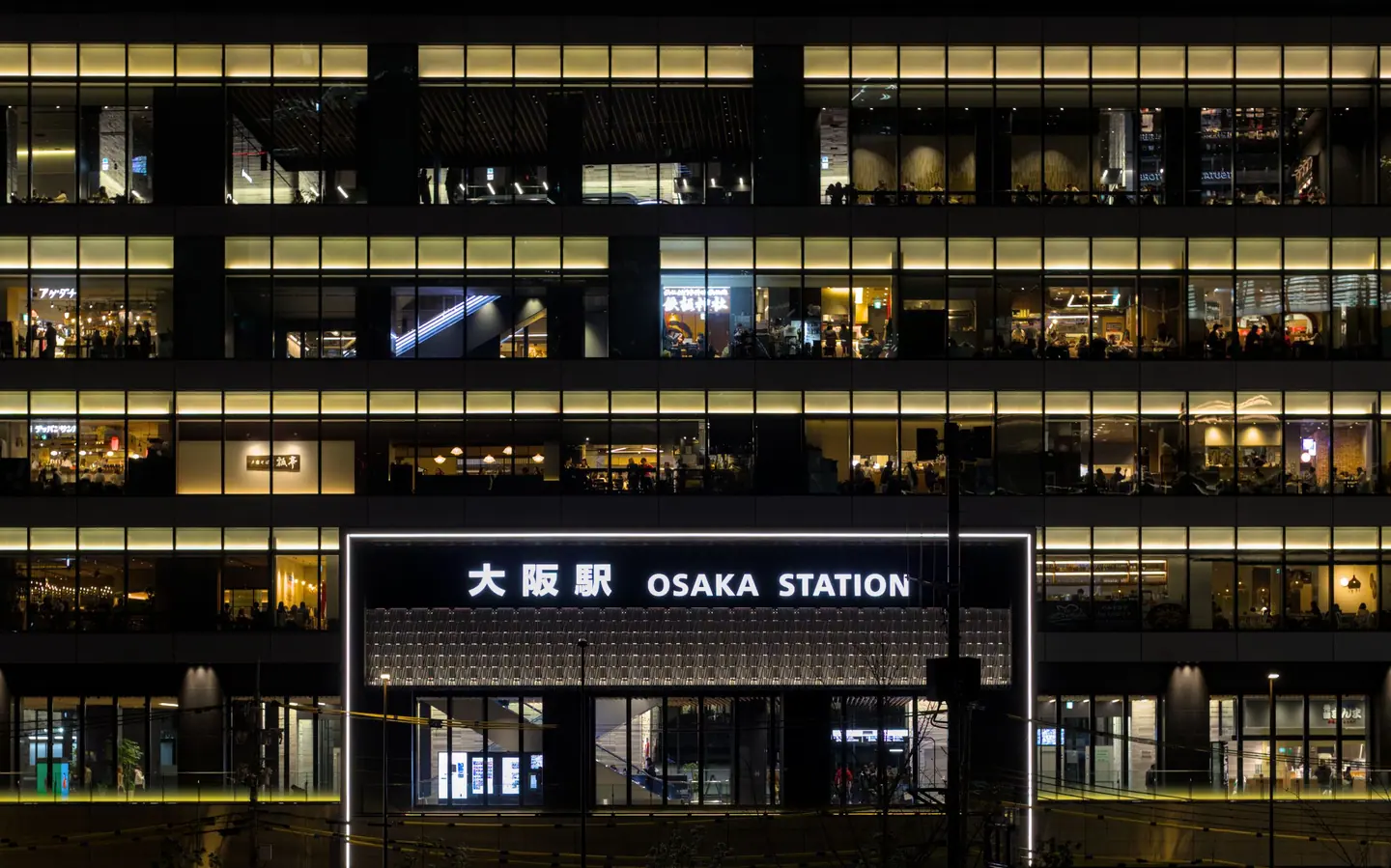
Osaka Station City
Following an ambitious redevelopment completed in 2011, Osaka's central railway terminus was enclosed under a diagonal glass roof span. Terraced rooftop gardens connect the North and South Gate buildings, offering viewing platforms over northern commuter rail networks. The layout combines high-level public plazas, clock towers and elevated pedestrian bridges.
Taiyuji Temple
Founded in 821 by Kobo Daishi, this Shingon Buddhist temple holds deep historical ties to Osaka Castle's ruling families. The temple grounds contain the memorial stupa of Lady Yodo, mother of Toyotomi Hideyori, who died during the Siege of Osaka in 1615. Despite surrounding modern commercial development, it maintains serene gravel courtyards and incense burners.
Suiryu-gu Shrine at Kitahama
Positioned close to the southern edge of Naniwa Bridge, this small precinct is dedicated to river deities protecting merchants and navigators. The shrine reflects centuries of river commerce when produce from inland provinces arrived along the Tosabori River. Today, stone lanterns and miniature torii gates offer an atmospheric contrast against surrounding modern bank offices.
Suijyo Bus Aqua-Liner Pier Nakanoshima
Situated on the southern embankment near the municipal hall, this stone embarcadero continues Osaka's historic identity as the City of Water. Low-profile passenger river craft depart from here to navigate the low-clearance bridges spanning the Okawa and Dojima channels. The embankment displays informative panels outlining Edo-era navigation canal systems.
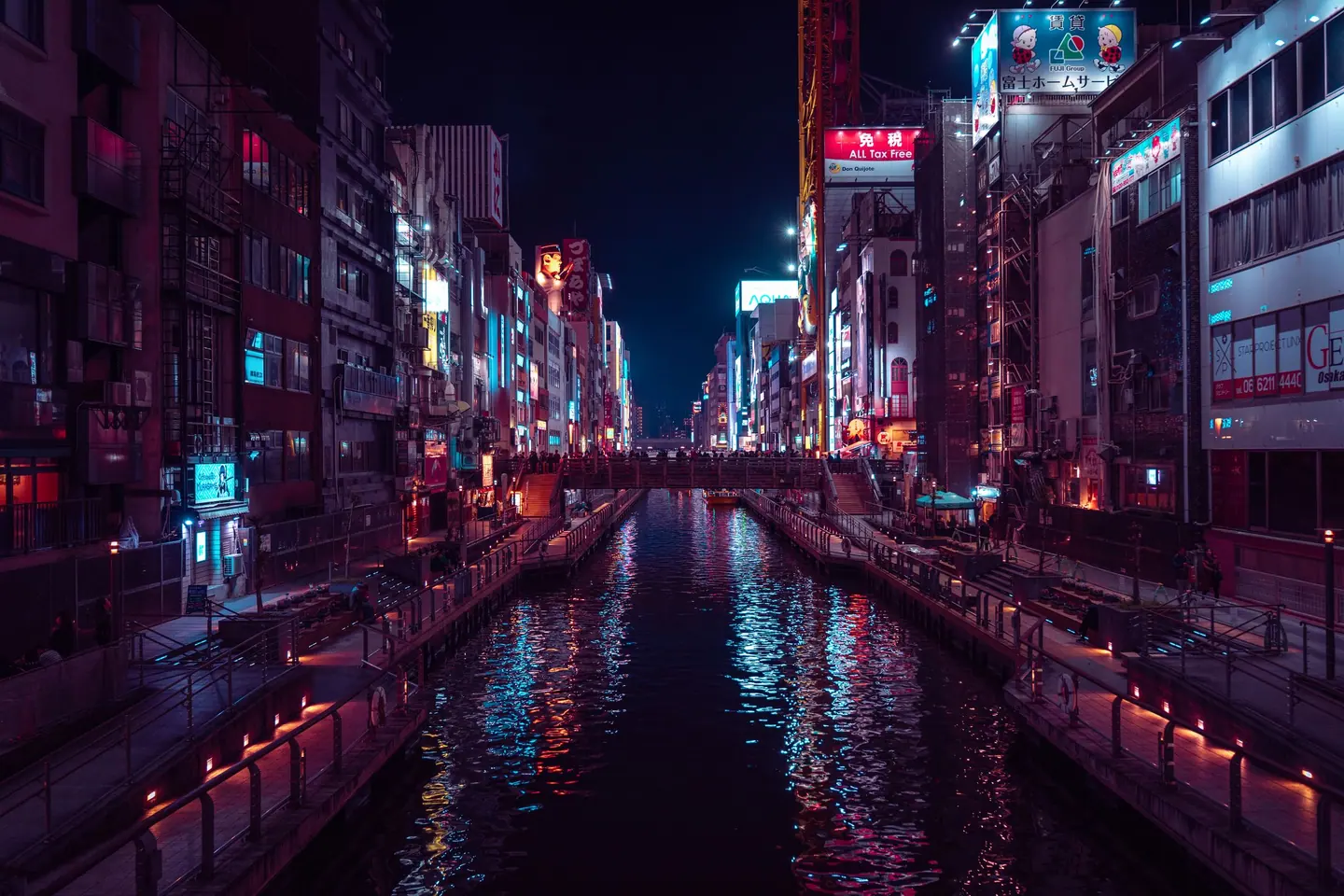
Dotonbori Canal, Hozenji Yokocho & Shinsaibashi
Ebisubashi Bridge Dotonbori, Shochikuza Theatre, Hozenji Temple Moss Fudo, Hozenji Yokocho Alley, Kuromon Ichiba Market, Namba Yasaka Shrine Lion Stage, Shinsaibashisuji, and Amerikamura
Ebisubashi
Constructed originally in the seventeenth century, this pedestrian bridge links Shinsaibashi with the southern entertainment district. Travellers gather here to view neon advertising hoardings reflected on the water below. We recommend examining the modern stone balustrades, which replaced older wooden spans to accommodate dense foot traffic.
Osaka Shochikuza Theatre
Erected in 1923, this landmark venue was designed by architects Eikichi Kataoka and Toshiro Tsutsumi with a prominent Italianate arch facade. Originally opening as a cinema, it now hosts classical kabuki dramas and musical productions. The front terracotta ornamentation remains preserved from the Taisho period.
Hozen-ji
Founded in 1637, this Jodo-shu Buddhist sanctuary survived wartime bombing raids that destroyed surrounding timber tenements. Devotees splash water over the central stone sculpture of Fudo Myoo, giving the image a thick mantle of green moss. Visitors can observe ritual ladles and brass lanterns decorating the intimate courtyard.
Hozenji Yokocho
Paved with dark cobblestones, this narrow alley preserves the intimate scale of pre-war Minami. Traditional timber facades house long-standing tearooms, kappo counters, and bars celebrated in regional literature. We note the stone boundary markers at either entrance, inscribed with calligraphy by local stage actors.
Kamigata Ukiyoe Museum
Situated opposite Hozen-ji, this private institution displays woodblock prints produced in the Kamigata region during the Edo era. Unlike Edo prints depicting courtesans, these artworks focus on realistic portraits of local kabuki actors. The upper level includes a dedicated exhibition room alongside a rooftop garden.
Kuromon Ichiba Market
Known historically as Enmyoji Market after a nearby temple, this covered arcade has supplied restaurant chefs and locals since 1902. Roughly one hundred and fifty merchants trade along the five-hundred-metre passage, displaying fresh seafood, pickles, and seasonal produce. Suspended fiberglass marine sculptures hang beneath the skylit ceiling.
Namba Yasaka Shrine
Records trace this Shinto sanctuary to the fourth century, though current structures date from postwar reconstructions. The complex features a twelve-metre-high lion head stage completed in 1974, with wide open jaws designed to swallow evil spirits. The eyes contain lighting units, while the mouth serves as a performance platform.
Shinsaibashisuji Shopping Street
Dating back to the seventeenth century when merchant shops gathered along the canal, this covered arcade runs north towards Nagahori-dori. Glass skylights shelter hundreds of retail stores, historic kimono merchants, and confectionery outlets. Architectural details incorporate carved stone cornerstones alongside contemporary glass facades.
Amerika-mura
Emerging in the 1970s through renovations of disused warehouses, this quarter became a centre for imported American apparel and music records. Sankaku Koen, a triangular public square, forms the meeting point of the district. Mural artwork by local painter Seitaro Kuroda adorns several concrete exterior walls.
Mitsuhachiman Shrine
Dedicated to Hachiman, this quiet Shinto enclosure sits within the blocks west of the main avenue. Local business owners historically prayed here for commercial success and fire protection. The grounds contain traditional stone komainu guardian statues and sacred camphor trees shading wooden prayer pavilions.
Dotonbori Canal Walkway
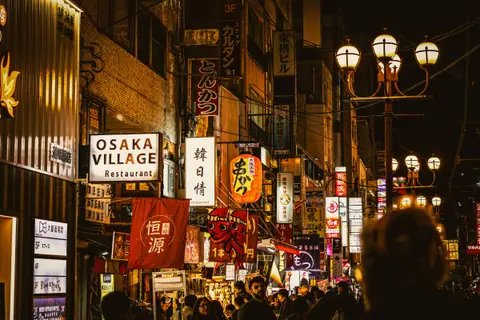
Excavated in 1612 by merchant Yasui Doton, this canal transformed southern Osaka into an active transport artery and entertainment hub. The modern timber-decked promenade allows pedestrian access right beside the water level. We advise studying the bridge supports, which display historic bronze plaques explaining regional water engineering.
Tazaemonbashi
Named after an early Edo period theatre manager, Tazaemonbashi provides passage across the water midway between Ebisubashi and Nipponbashi. Sightseeing riverboats dock directly beside the northern abutment for canal tours. The bridge deck offers open sightlines towards multi-storey neon signboards and restored waterside warehouses.
Aiaibashi
Rebuilt with steel and decorative wood cladding, Aiaibashi evokes the pedestrian bridges that linked theatre playhouses centuries ago. The gentle arch permits small recreational vessels to pass cleanly beneath the main span. Its wide deck features traditional benches and reproduction Edo-style street lanterns.
Nipponbashi Bridge
Marking the eastern limit of the Dotonbori Canal, Nipponbashi carries major vehicular and pedestrian traffic above the waterway. In the Edo period, it served as an entry point for travellers arriving from the south. Stone pillars on the bridge approaches display engraved scripts documenting centuries of municipal bridge works.
National Bunraku Theatre
Designed by architect Kisho Kurokawa and completed in 1984, this complex is the premier venue for traditional bunraku puppet theatre. The interior incorporates elements of traditional Edo performance halls with balanced acoustics and tiered seating. An archive gallery displays antique puppets, ornate embroidered costumes, and musical instruments.
Minatomachi River Place
Anchoring the western end of the Dotonbori waterway, this complex features an octagonal structure housing the Namba Hatch music venue. Stepped outdoor plazas slope down to the water, where tourist ferries turn. The design incorporates industrial steel beams alongside open boardwalks for riverside community events.
Namba Grand Kagetsu
Operated by the entertainment corporation Yoshimoto Kogyo, this theatre is the modern home of manzai comedy and regional slapstick theatre. Opening in its present form in 1987, it continues an entertainment tradition dating to the early twentieth century. Displays in the foyer illustrate the history of Kansai comedic performing arts.
Sennichimae Doguyasuji Shopping Street
This narrow one-hundred-and-fifty-metre arcade evolved from temple fair vendor stalls into a wholesale equipment street for restaurateurs. Outlets present forged chef knives, custom noren curtains, takoyaki cast-iron griddles, and realistic plastic food displays. Handcrafted lanterns and traditional cooking implements hang from doorway ceilings.
Daikokucho Kizu Wholesale Market
Tracing its history over three centuries, Kizu operates as an active wholesale distribution point for fish, meat, and seasonal vegetables. Unlike tourist arcades, this covered facility functions primarily as a morning wholesale exchange for local food operators. Visitors can see large fish-carving counters and early morning vegetable auctions.
Dotombori Ginko Museum
Positioned near the western commercial bank row of early twentieth-century Minami, this site marks the financial exchange houses of old Osaka. Financial guilds here financed theatrical productions and grain transport along the canal. Commemorative plaques and preserved stone facades record the development of monetary credit in western Japan.
Shitennoji Temple, Shinsekai, Tennoji & Abeno
Shitennoji Five-Storey Pagoda, Gokuraku-jodo Garden, Isshinji Temple, Tennoji Park Keitakuen Garden, Tsutenkaku Tower Shinsekai, Janjan Yokocho, Abeno Harukas Observatory, and Abeno Seimei Shrine
Shitenno-ji
Commissioned by Prince Shotoku in 593, this revered complex introduced continental Buddhist architectural styles to Japan. The layout arranges the central gateway, pagoda, main hall, and lecture hall in a strict south-to-north axis. Visitors can inspect reconstructed wooden halls that follow the original Asuka-period proportions.
Shitenno-ji Five-Storey Pagoda
Standing at the core of the inner precinct, this five-storey wooden pagoda houses sacred Buddhist relics. Rebuilt multiple times following fires and war damage, the current structure faithfully mirrors sixth-century engineering. Travellers can climb the narrow interior stairs to view religious tablets displayed along the central pillar.
Gokuraku-jodo Garden
Designed during the early Edo period, this peaceful landscape garden represents the Buddhist Pure Land. Winding paths lead around two distinct ponds fed by natural springs, bordered by cherry trees and irises. Stone lanterns, wooden pavilions, and seasonal flowers create an environment designed for contemplation.
Isshin-ji
Established in 1185 by the monk Honen, this temple holds a unique modern funerary tradition dating from the nineteenth century. Every decade, statues of the Buddha are cast using the powdered ashes of thousands of deceased devotees. The entrance features striking modern gates guarded by bronze statues of guardian deities.
Keitakuen Garden
Created by the renowned landscape architect Ogawa Jihei VII, this garden was completed in 1918 within the grounds of the former Sumitomo family estate. It features a central pond edged with stepping stones, small bridges, and imported rocks from across Japan. The layout provides changing perspectives as visitors walk along the perimeter path.
Osaka City Museum of Fine Arts
Opened in 1936 on the former site of the Sumitomo residence, this stone municipal institution houses over 8,000 works of art. The permanent collection includes classic Japanese paintings, Buddhist sculptures, and ancient Chinese calligraphy donated by private collectors. The exterior reflects interwar public architecture with classical decorative columns.
Tennoji Park
Founded in 1909, this historic public park covers a substantial tract of urban greenery south of the ancient temple district. It encompasses the Chausuyama burial mound, landscaped lawns, and botanical displays. The grounds have witnessed major civic exhibitions and urban transformations throughout the twentieth century.
Chausuyama Mound
This low hill originated as a fifth-century kofun tomb before serving as a strategic military post during the Siege of Osaka in 1614 and 1615. Tokugawa Ieyasu and later Sanada Yukimura positioned their headquarters on its slopes. Today, a wooden footbridge crosses the adjoining Wake Pond towards the summit.
Tsutenkaku
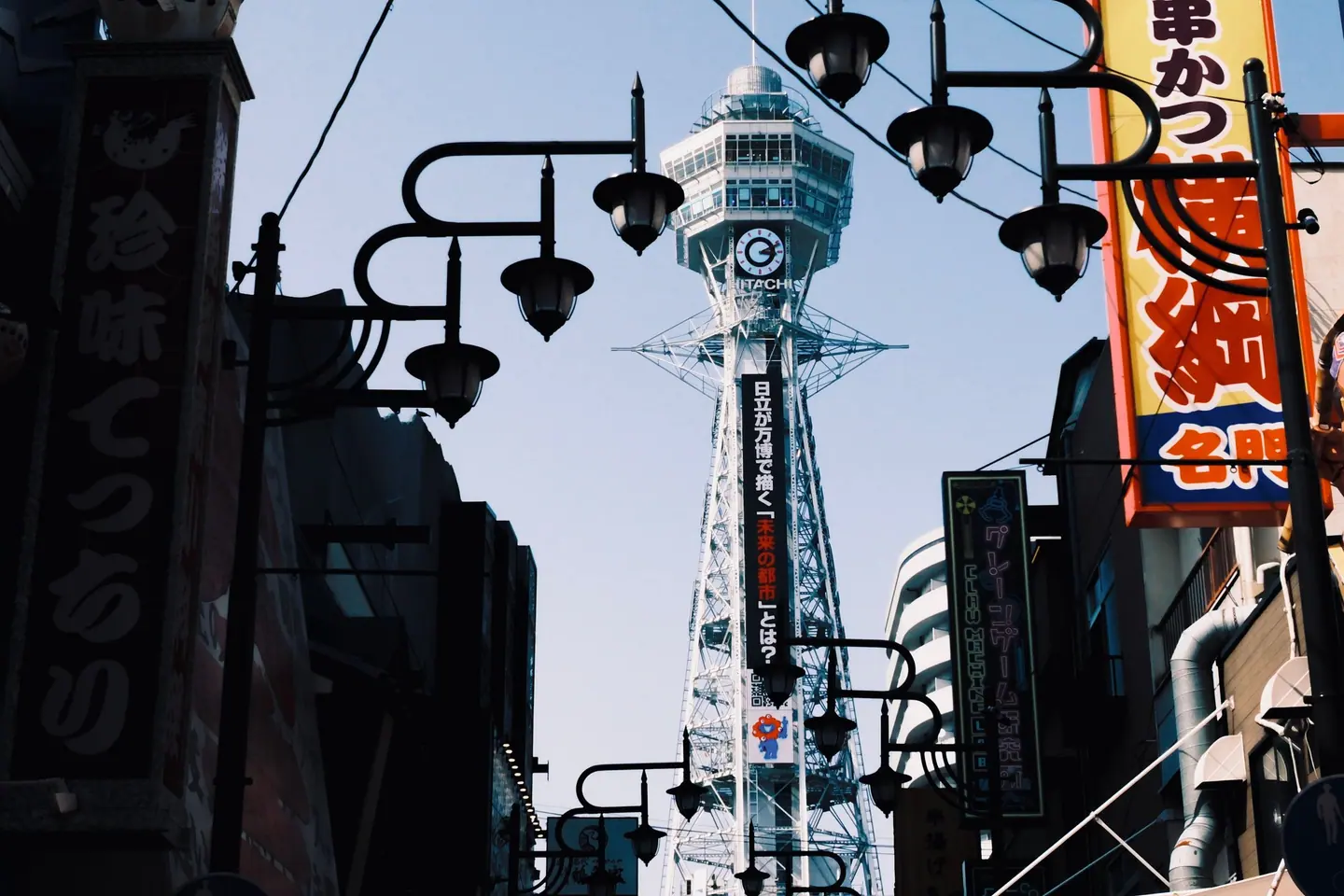
Erected in 1956 to replace an earlier 1912 structure that resembled the Eiffel Tower, this 108-metre lattice tower stands as the focal point of the Shinsekai district. The tower features a statue of the lucky deity Billiken on its observation deck. Neon weather forecasts illuminated at the top inform residents of coming conditions.
Shinsekai
Developed before the First World War, this quarter originally combined architectural elements inspired by Paris and New York. While its original Luna Park amusement centre closed long ago, the streets preserve historic post-war architecture and retro signage. It remains celebrated for food halls, shogi parlours, and kushikatsu restaurants.
Janjan Yokocho
Officially named Nanyo-dori, this covered shopping arcade runs southward from the base of Tsutenkaku. Its nickname originates from the repetitive strumming of shamisen instruments played by historical street performers seeking patrons. Today, counter-style dining spots, traditional board-game halls, and retro storefronts retain the unpolished atmosphere of mid-century Osaka.
Spa World
Opened in 1997, this extensive thermal facility recreates traditional bathhouses from Europe and Asia on alternating floors. The building draws natural hot spring mineral water from deep below the city streets. Its monumental entrance, located beside Shinsekai, marks the modern evolution of communal bathing culture in Osaka.
Horikoshi Shrine
Established simultaneously with Shitenno-ji to protect the temple precinct from southern misfortune, this quiet Shinto shrine has stood for over 1,400 years. It contains several sacred trees, including a grand camphor specimen reputed to be several centuries old. Pilgrims traditionally visit to request the granting of a single wish.
Aizome-do Shoman-in
Originally an infirmary established within the original four-part Shitenno-ji charity system, this temple houses the deity Aizen Myo'o. The standout architectural asset is the two-storey Tahoto pagoda, built in 1597 and recognised as an Important Cultural Property. It is among the oldest surviving wooden buildings in Osaka.
Kiyomizu-dera Osaka
Perched on the western slopes of the Uemachi Plateau, this Edo-period temple features an elevated wooden stage overlooking the lower city. It takes inspiration from the famous Kyoto sanctuary and features the Tamade Fall, the only natural waterfall in Osaka. The hillside cemetery holds monuments commemorating historical scholars and performing artists.
Abeno Harukas
Completed in 2014, this 300-metre structure was designed by architect Cesar Pelli and ranks among the tallest skyscrapers in Japan. The complex houses a railway terminal, department store, art museum, and hotel. The Harukas 300 observation deck occupies the top three floors, offering panoramic views spanning Osaka Bay to Mount Ikoma.
Abeno Seimei Shrine
Located south of central Tennoji, this shrine marks the traditional birth site of the legendary Heian-period court astronomer Abe no Seimei. Founded in 1007, the precinct features symbolic five-pointed pentagram crests and a stone statue of the diviner. Visitors can examine a sacred well believed to yield purified water.
Abe Oji Shrine
Situated adjacent to Abeno Seimei Shrine, this site serves as the only surviving oji shrine within Osaka along the ancient Kumano Kodo pilgrimage path. Established during the Heian period, it functioned as an essential resting and prayer station for travelling emperors. Ancient camphor trees frame the peaceful residential courtyard.
Tennoji Station
Serving as the primary gateway to southern Kansai and Wakayama, this junction first opened during the Meiji era as part of the Osaka Railway. Over the decades, it expanded into a multi-level transit nexus linking suburban lines, metros, and express services. It represents the historical expansion of Osaka beyond its Edo-period commercial core.
Hankai Tramway Minami-Kasumicho Station
Now designated as Shin-Imamiya-Ekimae, this platform serves Osaka's last remaining streetcar network, which has operated continuously since the early twentieth century. The Hankai line connects Shinsekai directly with the ancient port city of Sakai. Watching the vintage single-car trams traverse the street-level rails offers an authentic glimpse of Kansai transportation heritage.
Sumiyoshi Taisha, Tempozan Bay & Sakai Kofun Mounds
Sumiyoshi Taisha Sorihashi Bridge, Sumiyoshi Main Sanctuaries, Hirano Go Town, Osaka Aquarium Kaiyukan, Tempozan Harbour, Red Brick Warehouse Glion, and Daisen Kofun Emperor Nintoku Tomb
Sumiyoshi Taisha
Founded in the third century, this vast complex serves as the head shrine for over two thousand Sumiyoshi sites across Japan. Four main sanctuaries showcase the pure Sumiyoshi-zukuri architectural style, characterised by straight gabled roofs without Chinese influence. We recommend admiring the sacred camphor trees scattered across the pristine wooded grounds.
Sorihashi Bridge
Commonly known as the Taiko Bridge, this steeply arched timber structure crosses the pond fronting the main shrine gates. Originally donated by Toyotomi Hideyori's mother Yodogimi in the late sixteenth century, the bridge requires visitors to take measured steps over its curved wooden slats. Its reflection in the water forms a full circle.
Sumiyoshi Taisha Stone Lanterns
More than six hundred massive stone lanterns line the approach paths to Sumiyoshi Taisha, donated over centuries by shipping guilds and merchants. These lanterns served as functional lighthouses and prayers for safe passage across treacherous coastal trade routes. Many feature intricate carvings depicting celestial patterns and names of long-vanished merchant enterprises.
Goshogo Sacred Stone Ground
Located within the southern grounds of Sumiyoshi Taisha, this gravel enclosure surrounds three ancient cedar trees where maritime rituals occurred. Visitors search through the river stones to find three specific pebbles inscribed with the characters for five, great, and power. Gathering the complete trio acts as a traditional talisman for good fortune and health.
Dainembutsu-ji
Established in 1127 by the monk Ryonin, this Hirano temple complex ranks among the largest wooden temple structures in western Japan. Reconstructed in 1938 following fire damage, the immense main hall houses rare scrolls and implements used in communal chanting. The temple grounds retain an atmosphere of solemn contemplation far removed from modern commercial districts.
Senko-ji
Senko-ji is an ancient Shingon temple founded during the Asuka period by Prince Shotoku. The complex features a vivid attraction illustrating the ten courts of Buddhist hell and the path to paradise. Visitors can insert their heads into a stone hole to listen to the howling winds of the underworld.
Kumata Shrine
Dedicated to Susanoo-no-Mikoto, this ancient shrine was founded in 794 to protect the expanding settlements along the Yamato River basin. The complex boasts a fine carved wooden gate and several grand camphor trees, including one thought to exceed eight hundred years in age. Every summer, it hosts an energetic Danjiri cart festival.
Hirano Town Community Museum
This local preservation museum sits in the heart of the former moat-encircled town of Hirano Go. It displays merchant account books, Edo-period household utensils, and architectural diagrams documenting the town's autonomy during feudal times. The surrounding neighbourhood still preserves winding streets, traditional machiya townhouses, and defensive canal embankments.
Tempozan Harbour Village
Constructed as part of Osaka's major port redevelopment scheme, this harbourfront area revitalised the western pier headlands. It integrates passenger ferry terminals, public boardwalks, open-air plazas, and cultural attractions against the backdrop of industrial docks. It provides sweeping vistas of container ships navigating the bay towards the Inland Sea.
Tempozan Ferris Wheel
Rising 112 metres above Osaka Bay, this massive observation wheel stood as the tallest in the world upon its completion in 1997. Each passenger gondola offers broad views stretching across Mount Ikoma, the Akashi Kaikyo Bridge, and Kansai International Airport. Colourful evening illuminations forecast the following day's coastal weather conditions.
Mount Tempo
Formed in 1831 from silt dredged from the Aji River to improve commercial navigation, this modest mound stands merely 4.53 metres above sea level. It holds official designation as Japan's lowest natural mountain, complete with a second-order triangulation station at the summit. The surrounding park contains cherry trees and seaside benches overlooking cargo operations.
Osaka Aquarium Kaiyukan
Opened in 1990, this pioneering aquarium exhibits aquatic life along the Pacific Rim's volcanic Ring of Fire. Visitors ascend to the top level and spiral down around a massive central tank holding 5,400 tonnes of water, home to whale sharks and manta rays. The exterior features distinctive polychromatic glass and ceramic tiles.
Osaka Port Red Brick Warehouse
Constructed in 1923 by the Sumitomo warehouse company, these red-brick structures represent rare surviving examples of early twentieth-century port architecture in western Japan. The complex now accommodates an extensive collection of rare international motorcars alongside design galleries. The open courtyards preserve the original industrial railway tracks and cargo doors.
Sakai Plaza of Rikyu and Akiko
This museum celebrates two prominent historical figures born in Sakai: tea master Sen no Rikyu and modernist poet Yosano Akiko. Exhibits detail Sakai's merchant autonomy, overseas commerce, and refined tea ceremony aesthetics during the sixteenth century. Visitors can participate in formal tea services conducted according to historical protocols.
Sen no Rikyu House Site
Located in central Sakai, this preserved enclosure marks the original estate of Sen no Rikyu, who codified the wabi-cha tea ceremony. The site retains the Tsubaki-no-I (Camellia Well), whose clear water was used in ritual tea preparations for warlords Oda Nobunaga and Toyotomi Hideyoshi. The roof structure incorporates salvaged tiles from Rikyu's Kyoto residence.
Daisen Kofun
Ranking among the world's largest individual burial monuments, this fifth-century tumulus stretches 486 metres in length and is surrounded by three concentric moats. Traditionally identified as Emperor Nintoku's final resting place, the site forms the centrepiece of the Mozu Kofun UNESCO World Heritage group. A public viewing platform offers perspective on its wooded contours.
Daisen Park
Extending between the tombs of Emperor Nintoku and Emperor Richu, this landscaped park contains broad lawns, ponds, and wooded pathways. The grounds encompass a traditional Japanese strolling garden complete with tea pavilions, bridges, and carp pools. It provides travellers with walking routes linking several minor peripheral burial mounds.
Sakai City Museum
Situated within Daisen Park, this municipal institution chronicles the growth of Sakai from prehistoric tomb construction to medieval weapons manufacture. Key exhibits include bronze mirrors, iron armour, and hollow clay haniwa figures excavated from surrounding mounds. Detailed models illustrate the immense human labour required to construct the fifth-century tumuli.
Kamiishi Kofun
Measuring 365 metres in length, this immense tumulus represents the third-largest burial mound in Japan and predates the neighbouring Daisen Kofun. Surrounded by a wide water moat, its pine-covered slopes house the grave of the seventeenth imperial sovereign. The outer perimeter pathway allows visitors to study early Yamato funerary earthworks.
Sakai City Hall Observation Lobby
Located on the twenty-first floor of the municipal government building, this free observation lobby provides a 360-degree viewpoint over Sakai and Osaka. Because the keyhole mounds are best understood from an elevated vantage point, visitors come here to trace the geometric outlines of the wooded tombs. Displays identify distant landmarks across the Yamato Plain.
Loop Line Trains and Canal Walks in Osaka
Our main Osaka Castle, Dotonbori Canals & Shinsekai guide covers airport arrivals, neighbourhood bases and multi-day pacing to complement this walk; see also our full collection of city route guides.