A detailed architectural route across Shanghai, connecting Art Deco bank palaces along the Bund, Ming-era Yu Garden pavilions, shikumen alleys in the Former French Concession, and Pudong.
Walled Cotton Town, Treaty-Port Concessions and Modern Pudong
Originally a Song and Yuan Dynasty fishing and cotton-weaving county town (Huating) encircled by a sixteenth-century Ming wall built to repel coastal pirates, Shanghai stood at the strategic confluence of the Huangpu River and Suzhou Creek just above the Yangtze estuary. Opened as a treaty port in 1842, the city evolved into a unique patchwork of the Chinese Old City (Nanshi), the International Settlement, and the French Concession.
By the 1920s and 1930s, Shanghai was the financial and publishing capital of Asia, where Neoclassical and Art Deco stone landmarks rose along the Bund and hybrid East-meets-West stone-gate courtyard houses (shikumen) and garden villas lined the plane-tree avenues of Xuhui and Jing'an, before the 1990 opening of Pudong created the supertall skyline of Lujiazui across the river.
The Bund, Suzhou Creek & Nanjing Road Heritage
The Bund Waitan, Peace Hotel Sassoon House, Customs House Big Ching, HSBC Building, Waibaidu Bridge, Broadway Mansions, General Post Office Building, Rockbund Art Museum, and Nanjing Road Pedestrian Mall
The Bund
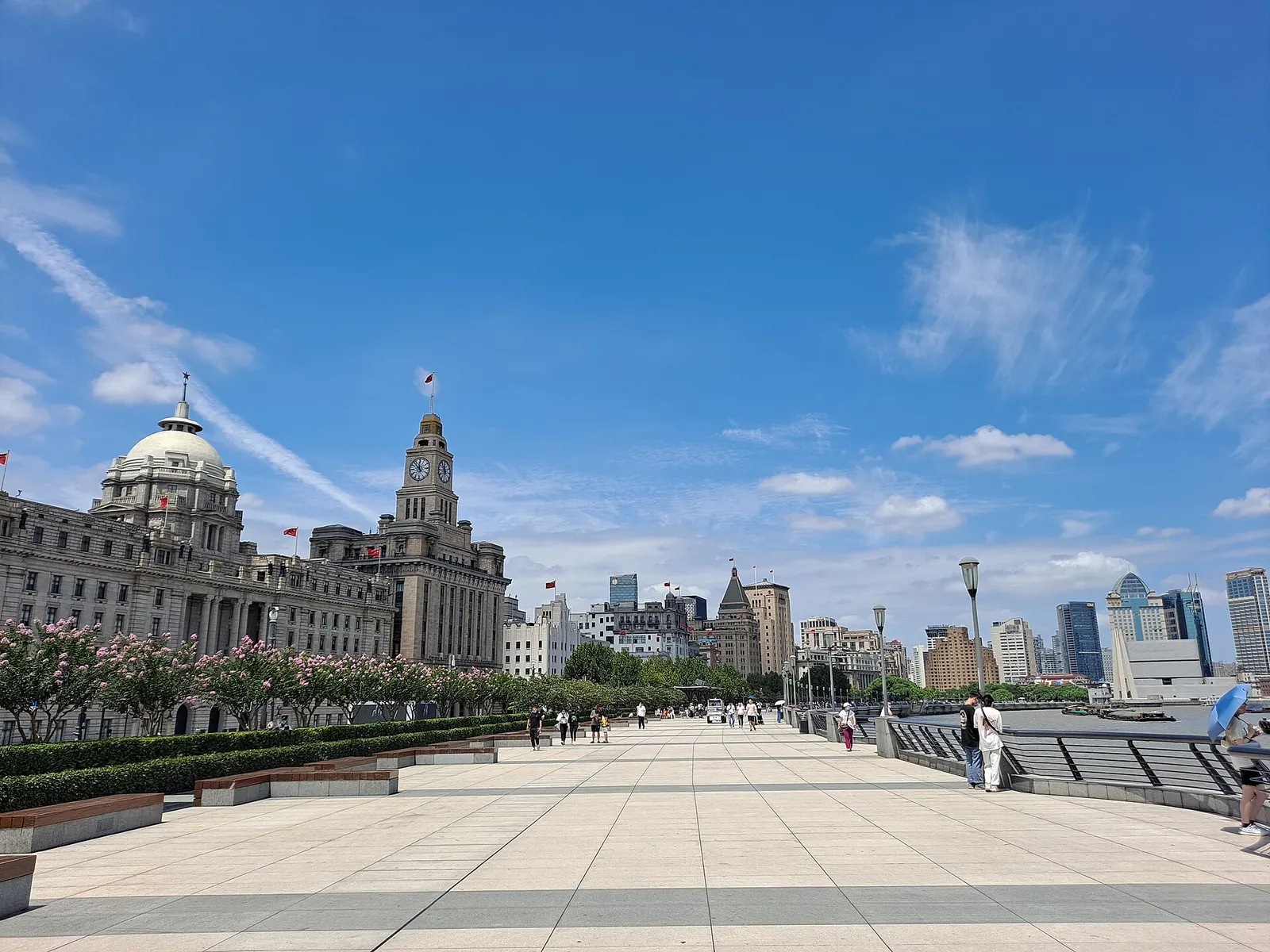
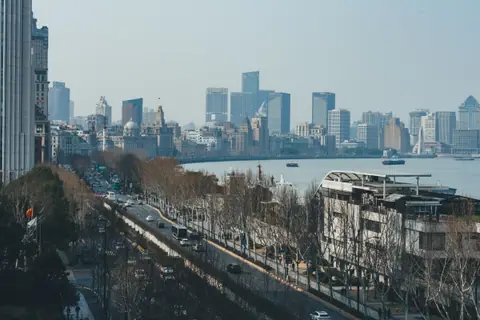
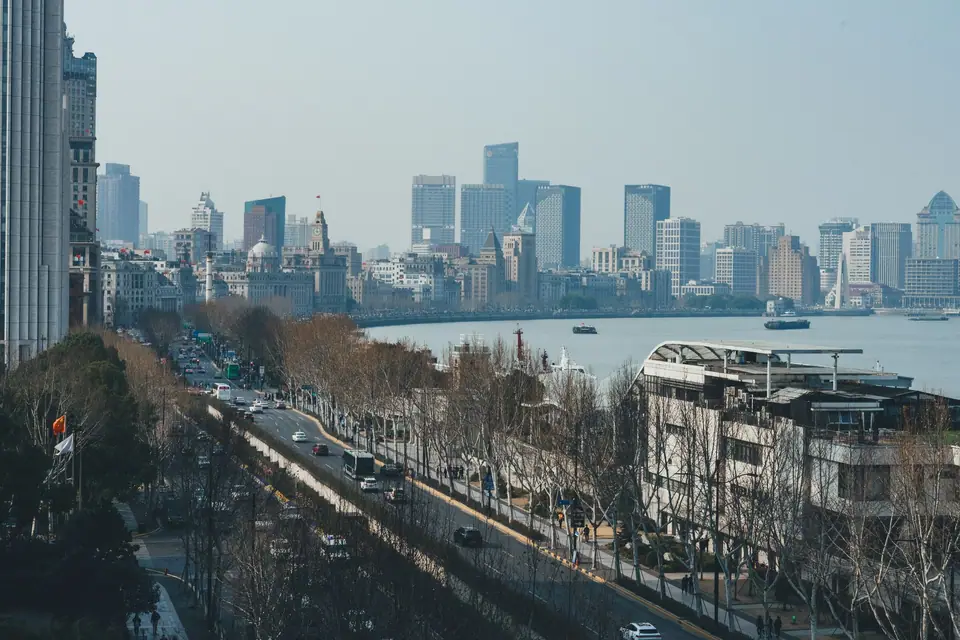
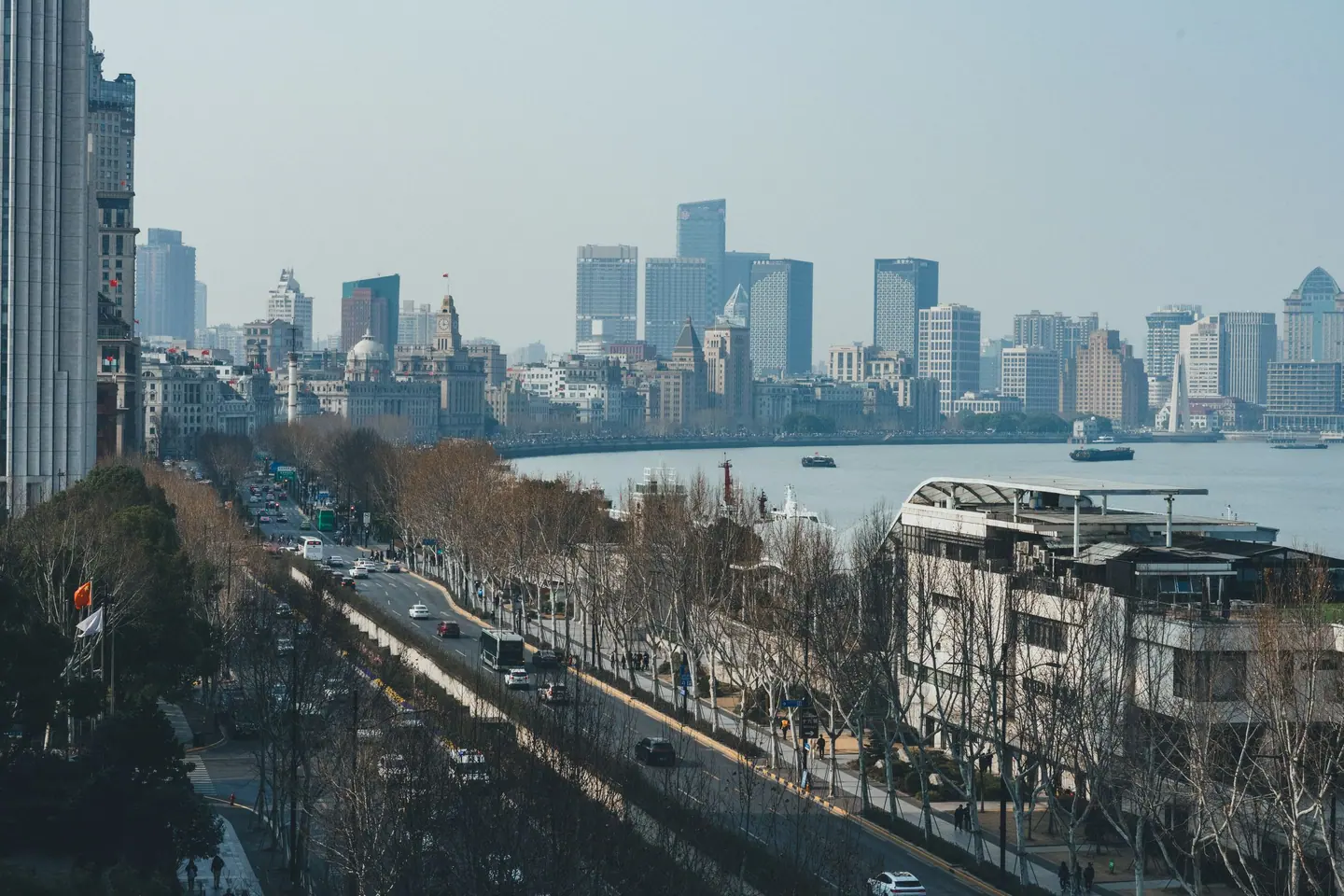
Stretching along the western bank of the Huangpu River, this promenade preserves dozens of foreign concessions buildings erected between the late nineteenth and early twentieth centuries. We observe architectural forms ranging from neoclassical stone facades to Art Deco towers, facing the modern financial skyline of Pudong across the water.
Sassoon House
Erected in 1929, this ten-storey structure is easily identified by its distinctive copper-sheathed pyramidal roof. Today housing the Fairmont Peace Hotel, the interior retains original polished marble floors, ornate brass filigree, and a high octagonal rotunda that reflects the wealth of 1930s commercial trade.
Customs House
Completed in 1927, this eight-storey building features a prominent Greek Doric portico and red granite base. Its belfry holds Big Ching, a bell mechanism modelled on London's Big Ben, which still chimes patriotic melodies over the harbour district throughout the day.
HSBC Building
Constructed in 1923, this massive neoclassical structure long served as the regional headquarters for the Hongkong and Shanghai Banking Corporation. Visitors can inspect the domed central entrance vestibule, which contains restored mosaic murals illustrating major global commercial centres of the interwar era.
Waibaidu Bridge
Opened in 1907, this structure was the first all-steel bridge erected across the mouth of Suzhou Creek. Its heavy iron lattice remains a central transport link, connecting the northern embankment to the primary Bund roadway while carrying regular automotive and pedestrian traffic.
Broadway Mansions
Designed by architect Frank Benjamin and completed in 1934, this stepped brick tower sits immediately north of Waibaidu Bridge. Its nineteen storeys long accommodated expatriate correspondents and foreign diplomats, providing expansive sightlines over the confluence of Suzhou Creek and the Huangpu River.
Shanghai General Post Office Building
Finished in 1924, this imposing Classical Revival complex features Corinthian colonnades and a rooftop baroque clock tower flanked by bronze statues. Inside, the massive former trading hall operates as the Shanghai Postal Museum, detailing the growth of postal routes across eastern China.
Rockbund Art Museum
Established in a 1932 building originally designed for the Royal Asiatic Society, this institution merges Art Deco lines with traditional Chinese lattice motifs. The interior galleries have been refitted to host rotating international contemporary art exhibitions across multiple quiet levels.
Nanjing Road
Laid out in the 1850s, this thoroughfare developed into the premier shopping avenue of mainland China. The eastern pedestrian section displays preserved commercial storefronts from the Republican period, bright neon retail hoardings, and a continual stream of local and international visitors.
Union Building
Completed in 1916 to house insurance offices, this was the first steel-framed building erected on the Bund waterfront. Designed by the architectural firm Palmer and Turner, its exterior displays Renaissance rustication, ornate pediments, and corner cupolas overlooking the river.
Great Northern Telegraph Building
Finished in 1907, this building served as the Chinese terminus for the earliest international undersea telegraph cables. The facade features symmetry, pedimented windows, and paired ionic columns that reflect early twentieth-century civic prestige along the port.
Gutzlaff Signal Tower
Erected in 1907, this slender cylindrical tower provided vital weather forecasts and typhoon warnings to river traffic entering the port. Today, the lower level houses a small historical museum detailing the development of Bund river dykes and navigation systems.
Bank of China Building
Completed in 1937 beside Sassoon House, this tower was designed jointly by Luke Him Sau and Palmer and Turner. Its distinct design incorporates traditional Chinese glazed roof brackets into an otherwise Western streamlined vertical shell, asserting domestic financial independence.
Jardine Matheson Building
Constructed in 1922 for the British trading firm Jardine, Matheson and Company, this five-storey building displays Corinthian order columns and heavy rusticated stonework. The structure represents the massive scale of late imperial trading companies that operated throughout coastal treaty ports.
Former British Consulate
Rebuilt in 1873 following a fire, this two-storey brick compound displays typical colonial veranda architecture surrounded by open lawn gardens. As the oldest extant Western building on the waterfront, it anchors the northern end of the Bund heritage zone.
Holy Trinity Church
Designed by the prominent British architect Sir George Gilbert Scott, this 1869 red brick church stands just behind the main riverfront line. Its towering spire, lancet windows, and broad interior nave served as the principal Anglican place of worship in pre-war Shanghai.
Shanghai Embankment Building
Finished in 1932 by Victor Sassoon, this eight-storey concrete complex followed an S-shaped floor plan along the creek. Once the largest apartment block in Asia, it provided temporary shelter to thousands of European Jewish refugees who arrived in Shanghai during the late 1930s.
Astor House Hotel
Established in 1846 and rebuilt in Neo-Classical style in 1910, this grand hostelry was the site of the first electric lights and film screenings in China. Inside, the Peacock Ballroom retains its original timber floors, ornate plasterwork, and early stock-trading memorabilia.
Wing On Department Store
Opened in 1918 by Cantonese-Australian merchants, this prominent commercial landmark features a decorative baroque corner tower. The building played a transformative role in local retail culture by introducing fixed pricing, large display windows, and comprehensive customer amenities to shoppers.
Sun Sun Department Store
Constructed in 1926 as one of the four legendary department stores on Nanjing Road, this structure features a distinct radio transmission tower on its roof. It originally integrated retail floors with a rooftop amusement garden and early Chinese private broadcasting facilities.
Old City Nanshi, Yu Garden & People’s Square Museums
Yu Garden Yuyuan, Huxinting Teahouse Nine-Turn Bridge, City God Temple Chenghuangmiao, Old City Wall Dajing Ge Pavilion, Shanghai Museum, Shanghai Urban Planning Exhibition Center, Shanghai Grand Theatre, and Park Hotel
Yu Garden
Created during the Ming dynasty by Pan Yunduan, this classical garden contains six distinct scenic areas divided by undulating dragon walls. Visitors can inspect the Exquisite Jade Rock, a porous limestone boulder prized for its weathered perforations, and cross shaded pavilions surrounded by carp-filled waters.
Huxinting Teahouse
Originally built during the Ming dynasty and converted into a public teahouse in 1855, this hexagonal pavilion sits directly in the reservoir fronting Yu Garden. Reached via the famous zigzag bridge designed to deter spirits, the timber structure offers green tea and views of the surrounding historic district.
Nine-Turn Bridge
Known locally as Jiuqu Qiao, this granite footbridge makes nine sharp turns as it leads pedestrians from the street bazaar to Huxinting Teahouse. Traditional Chinese folk belief holds that malevolent spirits can only travel in straight lines, making the bent causeway an effective spiritual and aesthetic barrier.
City God Temple of Shanghai
Established during the Yongle reign of the Ming dynasty, this revered Taoist complex honours three local protectors, including General Huo Guang and scholar Qin Yubo. The halls feature ornate red-lacquered pillars, intricate roof ridge decorations, and aromatic courtyards where worshippers offer incense sticks throughout the day.
Dajing Ge Pavilion
This elevated fortress pavilion sits atop the only remaining fragment of the sixteenth-century ramparts constructed to repel Japanese piratical raids. Inside, exhibits display old cartography and photographs detailing the dismantling of the old earthen walls, while the battlements showcase antique defensive weaponry and architectural stonework.
Shanghai Old Street
Running along Fangbang Middle Road, this heritage avenue is flanked by restored timber façades echoing architectural styles from the Ming and Qing dynasties to the early Republican era. Distinctive horse-head gables, red paper lanterns, and traditional apothecary shopfronts demonstrate the retail heritage of pre-modern Shanghai.
Little South Gate Church
Formally named the Church of St Francis Xavier, this red-brick edifice was completed in 1853 by Spanish Jesuit missionaries within the Nanshi quarter. Its pedimented Romanesque façade and paired bell towers conceal a spacious interior that served as the primary cathedral of Jiangnan before Xujiahui was consecrated.
Shanghai Confucian Temple
Founded in 1294 during the Yuan dynasty, this scholarly sanctuary remains Shanghai's only temple dedicated to Confucius. The grounds contain stone stelae recording imperial examination winners, the grand Dacheng Hall with its carved dragon columns, and quiet courtyards that long hosted the city's second-hand book exchanges.
Old City God Temple Marketplace
Surrounding the core temple grounds, this pedestrianised bazaar features multistoried structures rebuilt in classical jiangnan style with flying eaves. Travelers visit to sample Nanxiang steamed buns, view artisan craft stalls, and admire decorative exterior woodwork that evokes nineteenth-century mercantile life.
People's Square
Constituted from the northern section of the colonial Shanghai Race Club, this public square forms the administrative and cultural pivot of the municipality. Lined with manicured lawns, grand fountains, and civic monuments, it serves as an open gathering ground connecting major governmental halls with surrounding transport nodes.
People's Park
Covering the southern half of the former colonial racecourse, this public park provides shady willow trees, lotus ponds, and paved footpaths. On weekends, the shaded alleys famously host informal marriage matchmaking assemblies, while art pavilions and lotus-patterned footbridges draw strollers seeking quiet away from heavy street traffic.
Shanghai Museum
Conceived in the shape of an ancient ding cooking vessel, this monument houses classical Chinese bronzes, ceramics, calligraphy, and Ming furniture. The square base and round roof reflect ancient cosmological ideas of round heaven and square earth, sheltering over one hundred thousand precious regional artefacts.
Shanghai Urban Planning Exhibition Center
Distinguished by its white membrane roof designed to resemble a blooming white magnolia, this multi-floor exhibition venue details the architectural transformation of Shanghai. A vast, room-sized scale model of the metropolis commands the central gallery, tracing infrastructure projects from colonial treaty port concessions to modern Pudong towers.
Shanghai Grand Theatre
Designed by French architect Jean-Marie Charpentier, this glass-and-steel complex features a striking concave roof that slopes gently upward like an opened scroll. The venue encloses three distinct performance auditoriums, an expansive white marble lobby, and acoustic panels engineered for symphony concerts, opera, and classical ballet.
Park Hotel Shanghai
Completed in 1934, this twenty-two-storey Art Deco landmark stood for decades as the tallest building in Asia. Designed by Hungarian-Slovak architect László Hudec, the brown ceramic-clad tower contains a historic lobby, a small archive museum on its mezzanine, and the official geographic ground zero surveying point of Shanghai.
Grand Theatre
Constructed in 1933 and another masterwork by László Hudec, this cinema features dynamic ribbon windows, curved travertine surfaces, and a sleek neon-lit vertical fin. The auditorium introduced air conditioning and multilingual headphone translation systems to Shanghai cinemagoers, maintaining its architectural presence on West Nanjing Road today.
Museum of Contemporary Art Shanghai
Situated within People's Park, MoCA Shanghai transformed the park's former greenhouse into a luminous glass pavilion devoted to modern artistic expression. The museum features sweeping ramp walkways and minimalist exhibition galleries that host temporary installations, graphic arts showcases, and creative works by domestic and international designers.
Former Shanghai Race Club
Erected in 1933, this imposing red-brick clubhouse features classical columns and a prominent fifty-three-metre clock tower overlooking West Nanjing Road. Formerly the centre of British equine betting and municipal leisure, the restored monument now houses the Shanghai History Museum, tracing centuries of settlement along the Yangtze delta.
Shanghai Municipal Government Building
Positioned on the southern flank of People's Square, this monumental granite-and-glass administrative centre houses the executive government of Shanghai. The building's symmetrical, porticoed façade incorporates modern lines with subtle classical balances, anchored by a raised ceremonial podium and an expansive public esplanade.
Yong'an Department Store
Opened in 1918 by the Guo brothers, this European-style emporium was among the premier Chinese-owned department stores on historic Nanjing Road. The exterior presents elaborate classical pilasters, arched display windows, and a prominent rooftop tower known as the Moon Pavilion, which once staged commercial theatrical entertainments.
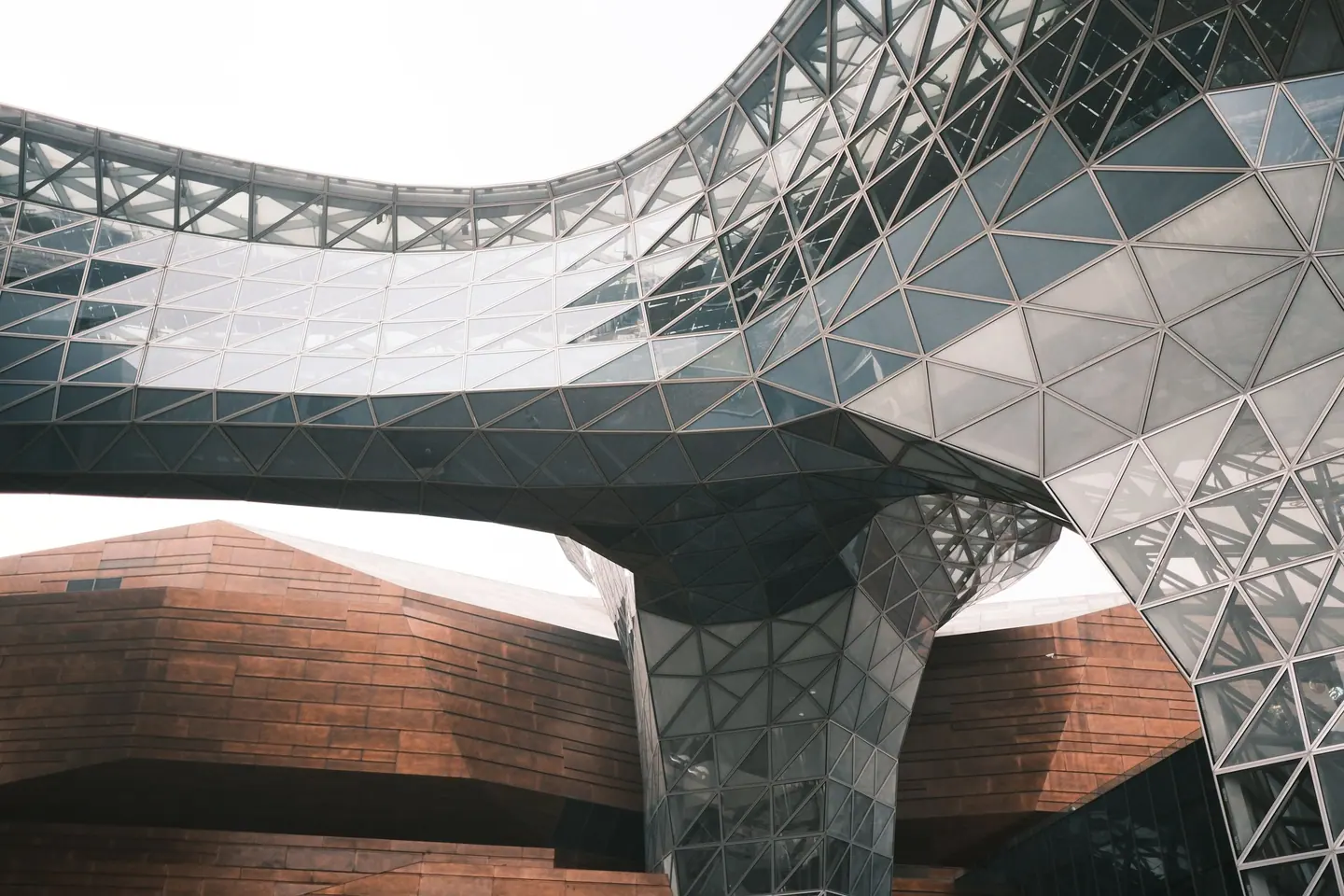
Former French Concession: Xintiandi, Wukang Road & Xuhui
Xintiandi Shikumen Lanes, Sinan Mansions, Fuxing Park, Sun Yat-sen Former Residence, Moller Villa, Wukang Mansion Normandie Apartments, Ferguson Lane, Xujiahui St Ignatius Cathedral, and Xujiahui Bibliotheca
Xintiandi Shikumen Lanes
Constructed initially in the mid nineteenth century, these Shikumen tenements fuse traditional Jiangnan courtyard layouts with Western townhouse facades. Today the historic car-free lanes showcase original brickwork, ornate pediments, and carved lintels that once defined everyday Shanghainese communal living. Visitors can explore the Shikumen Open House Museum to examine authentic period domestic interiors.
Site of the First National Congress of the Chinese Communist Party
This preserved two-storey Shikumen dwelling housed the founding meeting of the Chinese Communist Party in July 1921. Its facade features distinctive red and grey brickwork framed by a traditional carved stone entrance doorway. The interior has been reconstructed with period furniture, archival photographs, and documents recording the historic assembly of early revolutionary leaders.
Sinan Mansions
Built during the 1920s and 1930s, this complex incorporates fifty-one historic detached houses that exemplify various Western architectural forms. Cobbled lanes wander past English country cottages, French villas with mansard roofs, and Mediterranean plastered residences. We observe mature plane trees shading these elegant estates, which once housed Shanghai's cultural and political elite.
Former Residence of Sun Yat-sen
Dr Sun Yat-sen lived in this two-storey European villa between 1918 and 1924 alongside his wife Soong Ching-ling. The dark grey exterior wall with red tile accents overlooks a modest front lawn surrounded by dense greenery. Inside, preserved rooms contain original furnishings, personal effects, and Sun's extensive private library arranged as he left it.
Former Residence of Zhou Enlai
Constructed in the 1930s, this three-storey garden villa functioned as the secret office of the Chinese Communist Party delegation headed by Zhou Enlai. The exterior boasts ivy-covered walls, wooden shutters, and a well-tended garden plot. Inside, the sparse bedrooms, secret press room, and meeting chambers illustrate the tense political negotiations preceding the civil war.
Fuxing Park
Opened in 1909 as Guiji Park, this remains the city centre's only French classical-style municipal green space. The grounds are designed with symmetrical flowerbeds, central fountains, tree-lined allées, and open pavilions. Each morning, local residents gather on the paved plazas to practise ballroom dancing, tai chi, and Chinese water calligraphy.
Moller Villa
Completed in 1936 by businessman Eric Moller, this distinctive private residence draws inspiration from Scandinavian fairy tales and maritime architecture. The building features steep roofs, whimsical brown-tiled spires, nautical porthole windows, and Gothic brick chimneys. Set within manicured grounds, its interior displays intricate teak carvings and maritime-themed stained glass detailing.
Wukang Mansion
Erected in 1924 as the Normandie Apartments, this eight-storey French Renaissance apartment block sits prominently on a triangular street corner. Renowned architect László Hudec used red face brick atop a rusticated limestone base lined with pedestrian arcades. Its ship-like prow remains one of the architectural landmarks of the western residential quarter.
Ferguson Lane
Named after John Calvin Ferguson, an American advisor to the Qing court, this quiet lane features protected residential villas built between 1920 and 1940. The houses showcase pastel stucco finishes, wrought-iron balconies, and deep timber verandahs tucked behind high walls. The precinct now shelters art spaces, courtyards, and small cafes along historic Wukang Road.
Former Residence of Soong Ching-ling
This German-designed red-roofed villa served as the long-time home of Madame Soong Ching-ling from 1948 until 1963. The compound contains a large lawn shaded by century-old camphor trees, a garage housing historic diplomatic cars, and a memorial hall. The main residence preserves Soong's original living quarters, piano parlour, and international diplomatic gifts.
Former Residence of Ba Jin
Renowned writer Ba Jin spent five decades living and writing in this 1920s garden house on Wukang Road. The compound retains a sheltered yard filled with trees planted by the author, alongside thousands of historic books and personal writing desks. Travellers can wander through the preserved study where Ba Jin penned his introspective later works.
Xujiahui Cathedral
Designed by British architect William Doyle and constructed between 1906 and 1910, this twin-spire cathedral remains a primary seat of the Shanghai diocese. The red brick exterior incorporates French Gothic elements, including pointed arch portals and rose windows. Inside, vaulted stone ceilings, marble altars, and stained-glass panels depicting Chinese motifs accommodate large congregations.
Xujiahui Bibliotheca
Founded in 1847 by Jesuit scholars, this was one of the earliest modern research libraries established in China. The two-storey building combines Western neoclassical architecture with traditional Chinese storage spaces, featuring carved cedar wood bookshelves. Its collection houses rare Western manuscripts, maps, and primary sources recording the intellectual dialogue between China and Europe.
Tushanwan Museum
Built on the site of a Jesuit orphanage established in 1864, this workshop complex became an influential centre for Western crafts in China. The museum details how apprentices produced stained glass, wood carvings, printing presses, and Western-style painting techniques. A centrepiece of the exhibition is a large, hand-carved wooden Chinese archway exhibited at four world expositions.
St. Nicholas Russian Orthodox Church
Constructed in 1934 by White Russian emigres, this church stands out for its traditional Moscow-style religious architecture. The building features crisp white stucco walls, decorative kokoshnik arches, and tented roofs crowned by onion domes. Although deconsecrated and repurposed, its distinctive domed silhouette and exterior religious reliefs have been carefully conserved.
Cloister Apartments
Erected around 1930, this two-block residential complex demonstrates the Spanish Colonial Revival style popular in interwar Shanghai. The architecture is defined by light-coloured roughcast render, arched loggias, ornamental ironwork, and low-pitched red-barrel clay tile roofs. The buildings wrap around a tranquil internal garden connected by outdoor staircases and open corridors.
Former Residence of Lu Xun
Set within Continental Terrace, this three-storey brick row house served as Lu Xun's residence during his final years from 1933 to 1936. The house presents a stark, authentic glimpse of urban living, preserved with the author's simple bedroom, writing instruments, and translation drafts. Its modest setting reflects the austere intellectual life Lu Xun led during tumultuous political shifts.
Grosvenor House
Constructed in 1934 as an elite residential tower, this eighteen-storey Art Deco landmark is now part of the Jin Jiang Hotel complex. The building exhibits stepped brick masses, vertical geometric striping, and brown masonry detailing across its stepped wings. We can observe how the grand building anchors one of the most celebrated hospitality sites in Shanghai.
Sheng Xuanhuai Mansion
Built in 1900 for the prominent industrialist and Qing dynasty official Sheng Xuanhuai, this grand garden residence exemplifies Neoclassical splendour. The facade is dominated by Ionic colonnades, symmetry, and carved stone balustrades overlooking wide grounds. Over its history, the estate has functioned as a diplomatic consulate and high-level government administrative centre.
Hengshan Moller Residence
Originally known as Avenue Pétain, Hengshan Road forms the spine of the residential concession district, framed by dense canopies of French plane trees. Along this wide street, travellers encounter an unbroken sequence of 1920s villas, embassies, and Art Deco apartments. The corridor provides clear architectural insight into the planned suburban expansion of interwar Shanghai.
Jing’an Temple, Jade Buddha Temple & Suzhou Creek Warehouses
Jing’an Temple, Starbucks Reserve Roastery, Zhangyuan Shikumen Quarter, Jade Buddha Temple, M50 Art District Moganshan Road, Sihang Warehouse Memorial, Fotografiska Shanghai, and Tianzifang
Jing'an Temple
Originally founded during the Three Kingdoms period, this Buddhist complex occupies a prominent corner in downtown Shanghai. Modern reconstructions in traditional Song dynasty architecture feature towering teak columns, ornate gold-leaf roofs, and a colossal silver Buddha statue. We recommend observing the central courtyard incense burner and the historic copper bell cast during the Ming dynasty.
Jing'an Park
Constructed over the former Bubbling Well Cemetery, this landscaped public park lies directly opposite Jing'an Temple. A central avenue lined with century-old London plane trees provides cooling shade above stone pathways and water features. Travellers regularly gather here to watch residents practice Tai Chi, calligraphy, and traditional musical instruments amidst quiet lotus ponds.
Paramount Hall
Designed by architect S. J. Young and completed in 1933, this entertainment venue served as the premier Art Deco ballroom of old Shanghai. Its streamlined facade, neon tower, and sprung wooden dance floor drew celebrated jazz orchestras throughout the interwar era. Today the restored interior evokes the glamour of the 1930s with lavish chandeliers and sweeping mezzanine galleries.
Cai Yuanpei Former Residence
Set along Huashan Road, this elegant European-style garden villa was the final residence of educator Cai Yuanpei in Shanghai. The red-tiled roof, yellow stucco walls, and bay windows reflect classic British suburban architecture of the 1930s. Inside, original manuscripts, academic regalia, and personal photographs detail Cai's transformative reform of Peking University.
Zhangyuan Shikumen Quarter
Zhangyuan, originally established in 1882 as a private garden, evolved into one of Shanghai's largest shikumen residential enclaves. Recent restoration efforts have preserved over a dozen distinct architectural styles, including decorative lintels, western classical pediments, and interior courtyards. Visitors can admire the brick masonry facades and cast-iron balconies that line its pedestrianised laneways.
Starbucks Reserve Roastery Shanghai
Situated on West Nanjing Road within the HKRI Taikoo Hui complex, this two-storey roasting facility encompasses nearly three thousand square metres. The centrepiece is a two-storey bronze cask adorned with over a thousand hand-carved traditional Chinese stamps detailing coffee culture. Wooden ceiling tiles inspired by espresso machine mechanics create a distinct acoustic canopy overhead.
Moller Villa
Commissioned in 1936 by British shipping merchant Eric Moller, this eccentric mansion features soaring Scandinavian spires, steep gables, and glazed brown tiles. Moller reportedly designed the house based on a dream his daughter described. The interior resembles a ship with porthole windows, nautical woodwork, and narrow wooden staircases connecting multi-tiered drawing rooms.
Site of the Second National Congress of the CCP
Located in Jing'an District, this grey and red brick shikumen townhouse witnessed the drafting of the party's first constitution in July 1922. The compound retains its traditional southern Chinese courtyard layout, carved wooden screens, and stone entrance gates. The permanent exhibition presents archival documents, early newspapers, and personal belongings of the pioneering delegates.
Jade Buddha Temple
Founded in 1882 to house two white jade statues brought from Burma by monk Huigen, this monastery displays classical Song dynasty yellow-walled architecture. The seated Buddha in the upper hall sparkles with inlaid jewels, while the reclining Buddha depicts the parinirvana posture. Courtyards fill with incense smoke as resident monks conduct daily chanting ceremonies.
M50 Art District
Occupying the former Chunming Roving Cotton Mill along Suzhou Creek, this creative quarter represents Shanghai's contemporary art scene. Industrial warehouses retain their raw brick walls, exposed metal trusses, and high sawtooth roofs, now accommodating independent galleries and design studios. Exterior laneways display evolving street murals, metal sculptures, and experimental installation works.
Sihang Warehouse Memorial
This reinforced concrete warehouse on Suzhou Creek became legendary during the 1937 Battle of Shanghai, when Chinese troops held out against intense imperial assaults. The west wall remains intentionally preserved, riddled with hundreds of bullet holes and artillery shell craters. The interior museum houses military artefacts, uniforms, and dioramas recounting the defensive stand.
Fotografiska Shanghai
Housed within early twentieth-century industrial warehouses along the north bank of Suzhou Creek, this photography institution opened in 2023. The architectural restoration preserved exposed concrete pillars, brick facades, and large industrial windows overlooking the water. We suggest exploring the dynamic rotating exhibitions by international and Chinese lens-based artists across multi-level exhibition spaces.
Zhabei Park
Zhabei Park is among northern Shanghai's oldest public parks, established in 1913 around the tomb of nationalist leader Song Jiaoren. Shaded promenades wind past ancient ginkgo trees, ornamental pavilions, and a serene central lake traversed by stone arched bridges. The western quadrant retains a formal memorial plaza flanked by marble balustrades and engraved commemorative steles.
Shanghai Natural History Museum
Located in Jing'an Sculpture Park, this museum building was designed by Perkins and Will to evoke the spiralling form of a nautilus shell. Its landscaped green roof curves gently toward a deep central pond, integrating natural light into multi-level underground halls. Inside, visitors can view towering dinosaur skeletons, ancient regional fossils, and lifelike mammalian dioramas.
Jing'an Sculpture Park
This open green oasis features paved pathways, manicured lawn terraces, and groves of flowering cherry trees. Permanent and rotating large-scale sculptures by acclaimed international artists dot the gardens, blending contemporary artistic expressions with municipal greenery. Travellers can observe creative bronze and polished stainless steel forms situated around a central sunken plaza.
Ohel Rachel Synagogue
Erected in 1920 by businessman Jacob Sassoon in memory of his wife Rachel, this sanctuary is the largest surviving synagogue in Shanghai. The exterior displays Greek Revival ionic porticoes, tall pediments, and arched clerestory windows. The interior retains polished teak pews, marble columns, and the ceremonial Ark that once housed dozens of Torah scrolls.
Former Residence of Mao Zedong
Situated on Maoming North Road, this preserved shikumen lane house served as the home of Mao Zedong and his family in 1924. The residence showcases authentic period furnishings, wooden sliding shutters, and simple living quarters typical of Republican Shanghai. Curated exhibits highlight Mao's labour movement organisation and correspondence during this foundational political chapter.
St. Teresa's Church
Constructed in 1931 near Suzhou Creek, this Catholic parish church presents a distinctive blend of Gothic verticality and clean Art Deco lines. Its central brick tower rises above a stepped entrance portal decorated with subtle limestone cross reliefs. The interior nave features high barrel vaulting, lancet stained-glass panels, and a quiet marble altar.
Tianzifang
Developed within the historic Taikang Road residential block, Tianzifang preserves standard shikumen lanes alongside repurposed industrial workshops. The narrow alleys remain draped with overhead laundry racks, tangled utility wires, and climbing ivy. Independent craft studios, tea shops, and contemporary galleries operate from original ground-floor parlours while residents continue living on the upper storeys.
Shanghai Arts and Crafts Museum
Housed inside a palatial 1905 French Renaissance villa originally built for the French Municipal Council, this museum highlights regional decorative arts. The building features grand exterior stone staircases, ionic pilasters, and intricate wrought-iron balustrades. Inside, master craftspeople demonstrate traditional techniques such as intricate jade carving, micro-calligraphy, boxwood sculpture, and delicate silk embroidery.
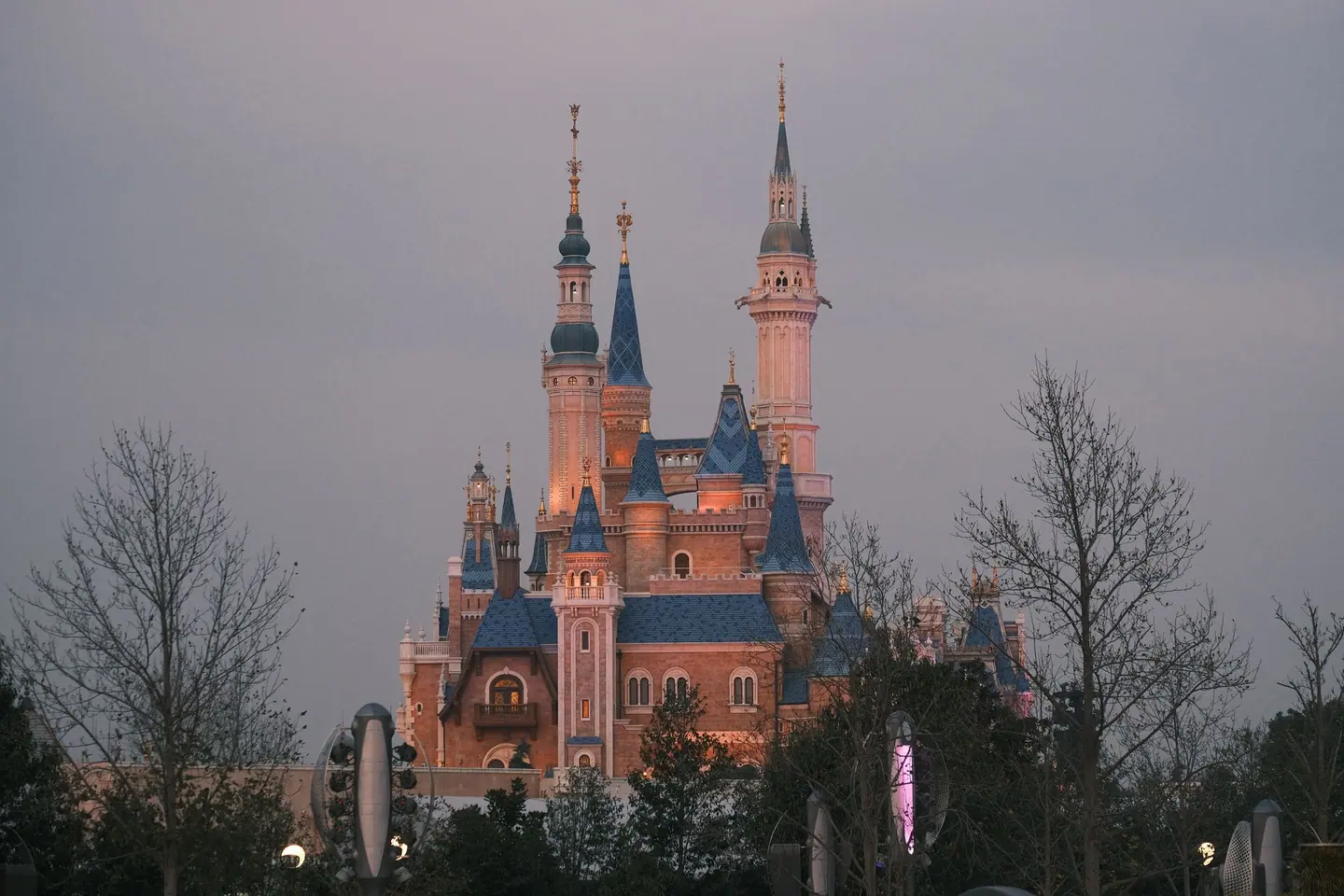
Lujiazui Skyline, West Bund & Zhujiajiao Water Town
Oriental Pearl Tower, Jin Mao Tower, Shanghai World Financial Center, Shanghai Tower, Museum of Art Pudong MAP, China Art Museum, Long Museum West Bund, Yuz Museum, Qibao, and Zhujiajiao Fangsheng Bridge
Oriental Pearl Tower
Completed in 1994, this distinctive tower features eleven spheres linked by vertical columns, reflecting an aesthetic inspired by classical Chinese poetry. Visitors explore tiered observation decks, including a glass-bottomed skywalk offering views over the Huangpu River. The basement hosts the Shanghai History Museum, detailing the city's municipal development prior to 1949.
Jin Mao Tower
Architectural firm Skidmore, Owings and Merrill designed this 420-metre skyscraper using proportions based on the auspicious number eight. Its stepped profile tapers gently towards a needle spire, evoking the rhythmic geometry of Buddhist pagodas. Inside, the Grand Hyatt features an open atrium that rises thirty-three storeys above a ground-floor lobby.
Shanghai World Financial Center
Rising 492 metres, this mixed-use tower is defined by its soaring portal designed to alleviate wind pressure at high altitudes. The design by Kohn Pedersen Fox combines two sweeping arcs intersecting a square volume. High-altitude viewing galleries allow travellers to observe the surrounding Pudong financial district from enclosed bridges suspended across the aperture.
Shanghai Tower
Reaching 632 metres, this structure stands as China's tallest building, conceived as nine stacked cylindrical sections enclosed by a curving glass curtain. Its 120-degree twist significantly reduces wind loads, creating internal sky lobbies that serve as climate-controlled communal spaces. The observation platform near the apex provides expansive views across the Yangtze River Delta.
Museum of Art Pudong
Designed by French architect Jean Nouvel, this white granite institution presents modern and contemporary exhibitions along the Lujiazui promenade. The building integrates two expansive glass facades known as the Mirror Hall, which reflect the historic architecture of the opposite Bund. Inside, gallery volumes accommodate international loan exhibitions and monumental light installations.
Lujiazui Central Green Space
Encompassing ten hectares in the centre of the financial district, this park was landscaped in 1997 to provide open green terrain amid dense commercial development. An artificial lake shaped like Pudong's geographic outline anchors the lawns, encircled by footpaths and sculptured fountains. A preserved residence from the Republican era stands on site, housing local heritage displays.
Aurora Museum
Tadao Ando redesigned the interior of this waterfront tower to house an extensive collection of ancient Chinese jade, pottery, and Buddhist statuary. The Japanese architect deployed geometric concrete partitions and muted lighting to create contemplative galleries overlooking the river. The exhibition route highlights craft techniques and material cultures dating from the Neolithic era to the Qing dynasty.
China Art Museum
Occupying the former China Pavilion of Expo 2010, this museum employs a design inspired by traditional dougong wooden brackets. Its bold red tiers rise above Pudong, housing an extensive municipal art collection focused on modern Chinese painting and urban history. An animated digital reproduction of the twelfth-century scroll Along the River During the Qingming Festival remains a permanent fixture.
Mercedes-Benz Arena
Constructed for Expo 2010 as the Expo Cultural Centre, this aerodynamic saucer structure serves as an entertainment venue seating eighteen thousand spectators. Its exterior is clad in aluminium panels, illuminated at night along the riverbank. The interior hosts an Olympic-size ice rink, public viewing terraces, and commercial retail arcades.
Long Museum West Bund
Atelier Deshaus completed this building in 2014, integrating a 1950s cantilevered bridge that once unloaded coal barges on the Huangpu. The structure employs fair-faced concrete vaulting, known as umbrella vaults, which form free-flowing exhibition spaces. The museum displays modern revolutionary art alongside extensive contemporary works from Chinese and international artists.
West Bund Museum
This institution features three individual gallery volumes arranged in a pinwheel formation, each clad in translucent recycled glass panels. Opened in 2019, the museum maintains a five-year collaborative programme with the Centre Pompidou, presenting touring modern collections to Shanghai. A broad central atrium provides community access directly onto the West Bund public riverside walkway.
Yuz Museum
Architect Sou Fujimoto repurposed a former aircraft hangar at Longhua Airport to establish this spacious contemporary art space. The design preserves the steel trusses of the industrial hangar while adding a transparent glass foyer that welcomes daylight. Large-scale installations, sculptural environments, and media works occupy the expansive nine-thousand-square-metre floor plan.
Tank Shanghai
Studio OPEN Architecture transformed five derelict aviation fuel tanks into an interconnected cultural compound linked by an artificial landscaped mound. Each circular steel cylinder serves a distinct function, accommodating live music spaces, immersive digital installations, and public cafes. The surrounding riverside park features native grasses and public outdoor sculpture along the West Bund corridor.
Longhua Temple
Longhua is Shanghai's oldest religious site, retaining an architectural layout patterned after Song dynasty Buddhist monasteries. The five primary halls house gilded bronze statues, ancient stone steles, and rare Buddhist texts. Outside the entrance rises a forty-metre, seven-storey octagonal brick and timber pagoda, which dates from 977 AD and remains an important city landmark.
Qibao Old Street
Located in Minhang District, this water town retains traditional architecture from the Ming and Qing dynasties along the Puhuitang River. Narrow lanes feature restored timber shophouses selling regional street food, shadow puppets, and cricket-fighting paraphernalia. Several stone arch bridges span the waterways, providing elevated viewpoints across tiled roofs and whitewashed riverside facades.
Qibao Temple
Originally founded in the tenth century and relocated to its current site during the Ming dynasty, this temple complex was extensively rebuilt in 2002. It comprises classical courtyards, the Mahavira Hall, and a soaring seven-storey pagoda housing traditional Buddhist relics. The tranquil temple gardens contrast with the commercial street markets situated directly to the north.
Fangsheng Bridge
Constructed in 1571 during the Ming dynasty and reconstructed in 1812, this stone crossing is the largest bridge of its type in Shanghai. Five rounded arches support an inclined deck lined with stone balustrades carved with dragon designs and guardian lions. Its name references Buddhist release ceremonies, where captive fish were traditionally set free into the river.
Ke Zhi Yuan
Built in 1912 by wealthy merchant Ma Weiqi, this expansive garden combines classical Jiangnan landscaping with subtle European architectural influences. The grounds are split into a domestic courtyard, an artificial rockery garden, and a working farm intended to teach self-sufficiency. A prominent five-storey pavilion known as the Moon View Building marks the property's northern corner.
Zhujiajiao Post Office
Established in 1903 during the Guangxu reign, this restored brick building is one of the few surviving imperial postal facilities in eastern China. Exhibitions inside chronicle the development of the Qing dynasty postal network, complete with antique scales, carrier uniforms, and stamp collections. A stone pier in front of the building highlights where mail boats historically docked.
Yuanjin Buddhist Temple
Founded in 1341 during the Yuan dynasty, this water-town temple is dedicated to the Bodhisattva Guanyin and remains an active centre for local worship. The complex features traditional yellow-plastered walls, carved wooden screens, and the lakeside Chenhuang Pavilion, which offers panoramic views of Zhujiajiao's canals. Scholar-officials historically visited this sanctuary to compose classical verse.
Ferry Crossings and Plane-Tree Walks in Shanghai
Pair this route with the practical neighbourhood breakdowns, climate charts and transport advice in our Shanghai travel overview, alongside additional mapped city walks.