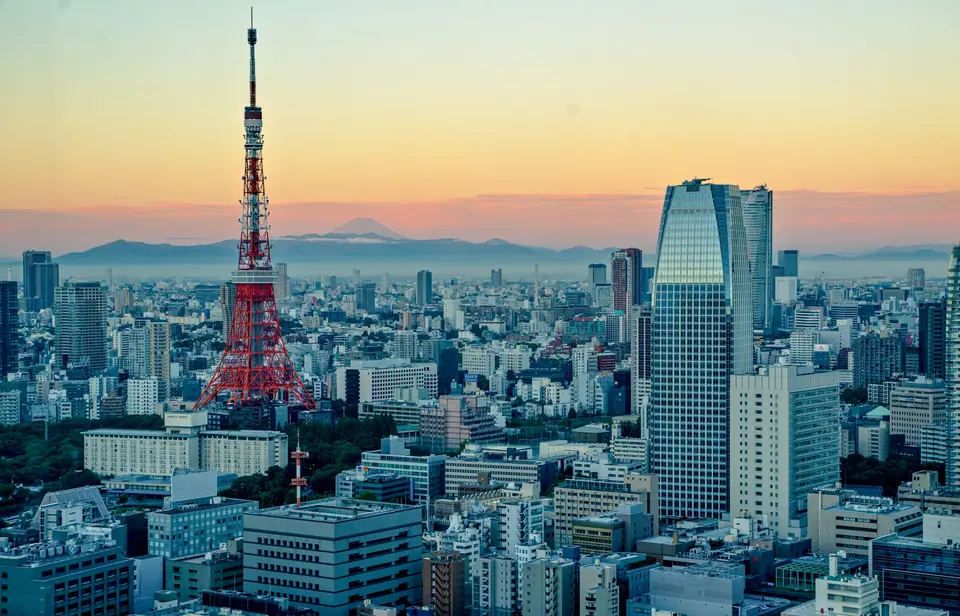
All 100 essential sights across Asakusa, Ueno, Yanaka, the Imperial Palace, Ginza, Tsukiji, Meiji Shrine, Shibuya and Shinjuku mapped in walking order.
How the Shogun’s Castle Town of Edo Became Modern Tokyo
For centuries a small fortified fishing village called Edo at the head of Tokyo Bay, the city was transformed after 1603 when Tokugawa Ieyasu established the Tokugawa Shogunate and made Edo Castle the administrative seat of Japan. Under the alternate-attendance system (sankin-kotai), regional feudal lords (daimyo) maintained grand estates on the western hills (Yamanote), while merchants, artisans and kabuki actors populated the low-lying canal districts (Shitamachi) around Nihonbashi and Asakusa. By the early eighteenth century, Edo had grown to more than one million inhabitants, making it one of the largest and most literate cities on earth.
In 1868, following the Meiji Restoration, Emperor Meiji moved the imperial court from Kyoto into Edo Castle and renamed the city Tokyo ("Eastern Capital"). Rebuilt twice in the twentieth century, after the 1923 Great Kanto Earthquake and the Second World War, Tokyo seamlessly pairs seventh-century Buddhist temples, Edo-period landscape gardens and quiet wooden lanes in Yanaka with futuristic architecture and neon-lit railway hubs.
Asakusa, Senso-ji Temple, Sumida River & Tokyo Skytree
Begin in old Shitamachi at Kaminarimon Gate, Nakamise-dori and Tokyo oldest Buddhist temple, Senso-ji, before crossing the Sumida River toward Tokyo Skytree and Ryogoku.
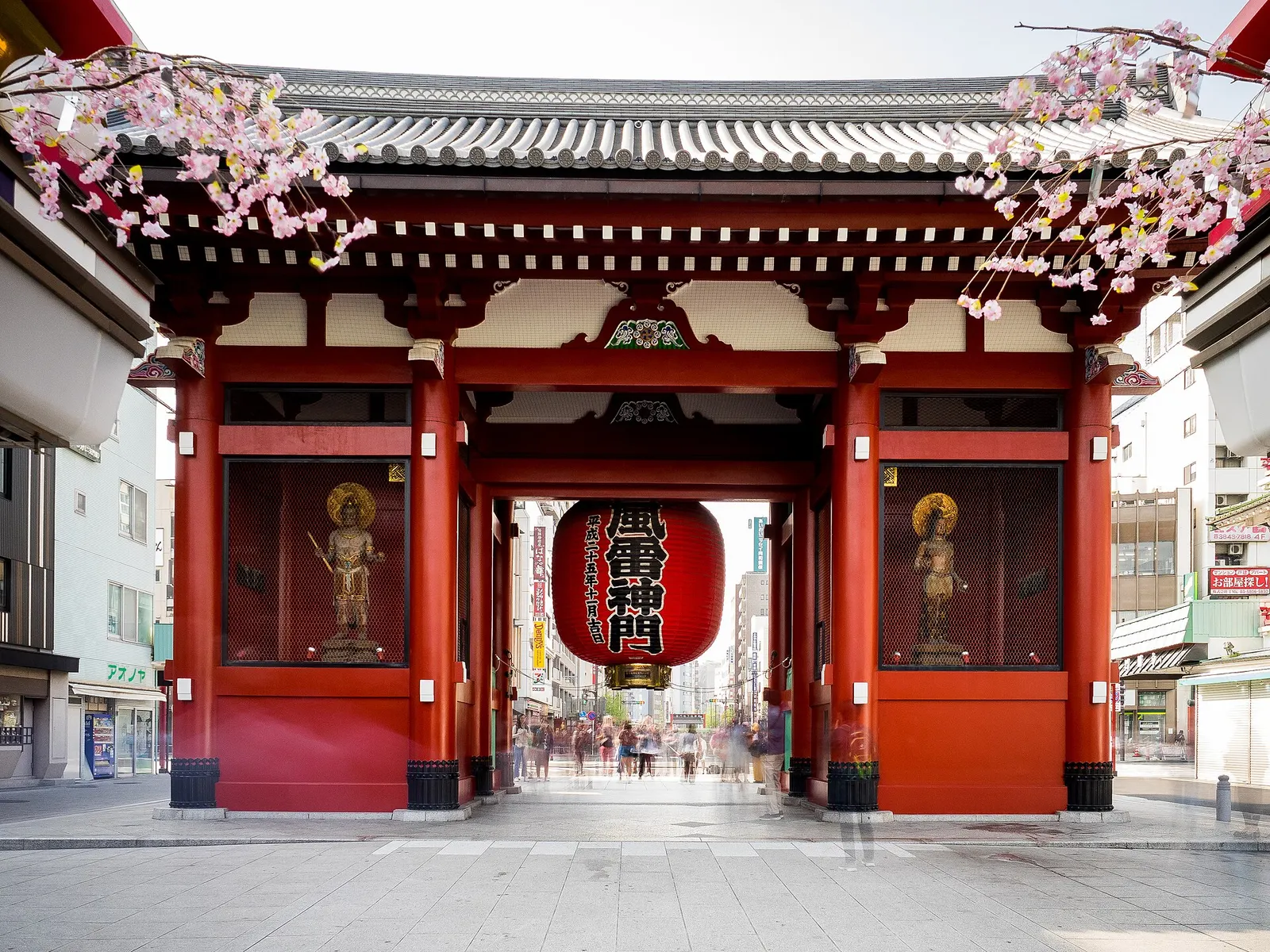
Kaminarimon
First erected in 942 by military commander Taira no Kinmasa, this landmark gate guards the southern approach to Senso-ji. The current structure dates from 1960, rebuilt with funding from Konosuke Matsushita after an 1865 fire. Visitors can examine the colossal paper lantern and stone statues representing Fujin and Raijin, the Shinto gods of wind and thunder.
Nakamise-dori
Operating since the late seventeenth century, this paved pedestrian avenue extends roughly 250 metres northward toward the inner temple precincts. Edo period authorities granted neighbours trading concessions in exchange for sweeping the grounds, establishing an enduring market tradition. Today, timber fronted shops continue to sell traditional folded fans, theatrical masks, and freshly griddled ningyo-yaki cakes.
Hozomon Gate
Originally constructed in 942 and reconstructed in reinforced concrete in 1964, this imposing two-storey gate houses precious Buddhist scriptures including fourteenth-century Lotus Sutra scrolls. Two ferocious Nio guardian figures stand in the front niches to ward off evil spirits. Suspended on the rear wall, we find two giant straw sandals, known as o-waraji, woven to repel demons.
Senso-ji Main Hall
Legend relates that two fishermen pulled a golden statue of Kannon from the Sumida River in 628, prompting the village headman to consecrate his home as a shrine. The monumental main hall, rebuilt after wartime destruction, retains classical steeply pitched irimoya gables. Worshipers gather at the large central incense burner to waft smoke over themselves for spiritual purification.
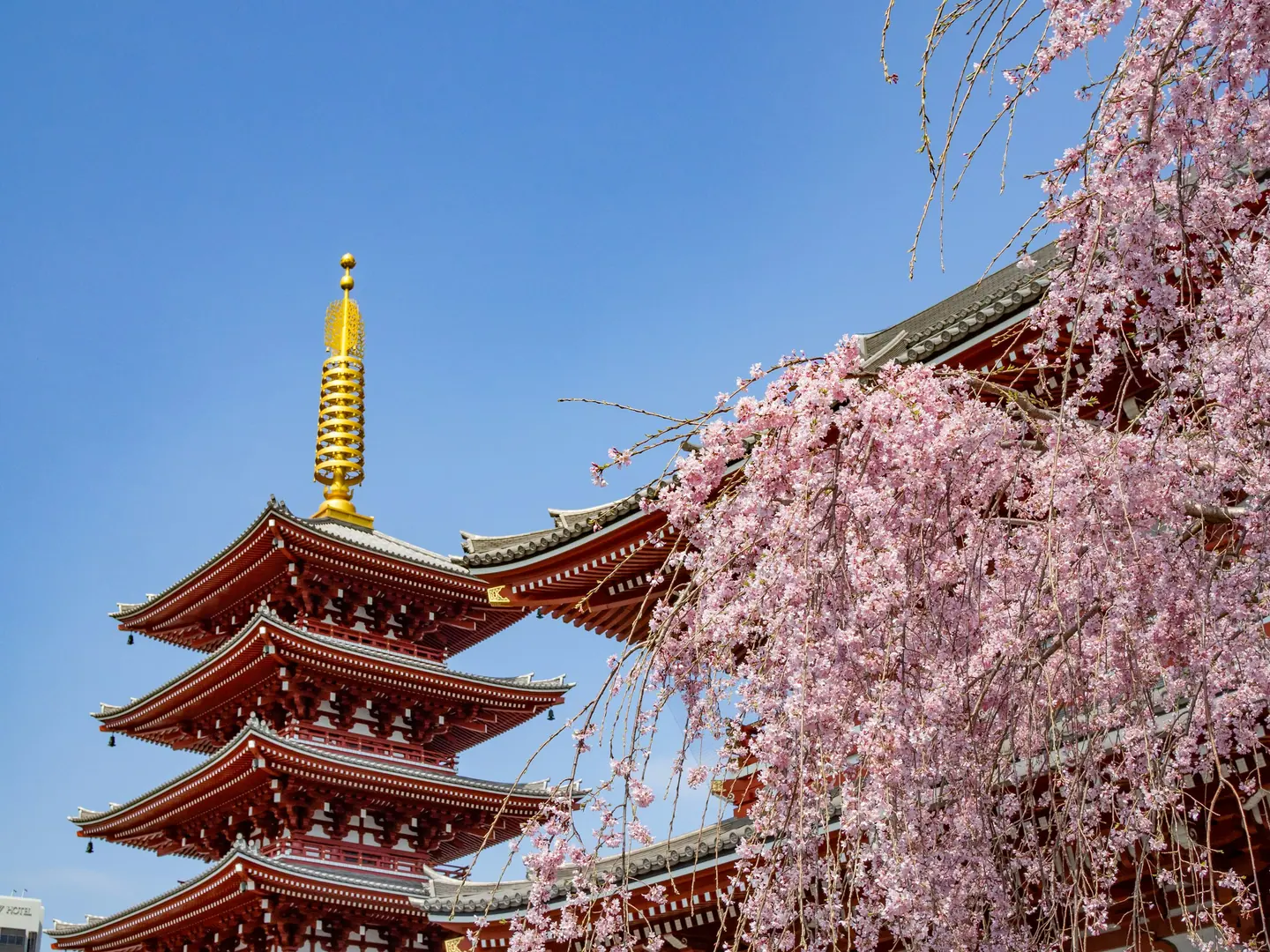
Senso-ji Five-Storey Pagoda
First built in 942 alongside the main temple complex, this elegant pagoda was destroyed in 1945 air raids and meticulously re-erected in 1973. Rising roughly fifty-three metres, the reinforced concrete structure features traditional timber-styled bracket sets and copper roof tiles. The top storey houses sacred ashes of the historical Buddha, donated by the Buddhist community of Sri Lanka.
Asakusa Shrine
Commissioned in 1649 by the third Tokugawa shogun, Iemitsu, this Shinto sanctuary honors the two fishermen and village headman who founded Senso-ji. It survives as one of the few Edo period wooden structures in the area to withstand the 1945 air raids. The architecture exhibits ornate gongen-zukuri styling, characterized by intricate polychrome wood carvings and black lacquer accents.
Nitenmon Gate
Constructed in 1618 as the entrance to the local Toshogu shrine complex, this modest vermilion timber gate survived both the Great Kanto Earthquake and wartime bombardment. It originally housed statues of Buddhist deities Jikokuten and Zochoten, which were later replaced by guardian figures transferred from Kamakura. The structure is officially registered by the national government as an Important Cultural Property.
Dembo-in Garden
Serving as the official residence of Senso-ji head abbot, this private compound features a pond-centred stroll garden designed during the early Edo era. The landscape incorporates reflective water features, stone lanterns, historic teahouses, and weeping cherry trees arranged according to traditional aesthetics. Although access is generally restricted, the monastery occasionally opens its grounds for seasonal cultural exhibitions.
Hanayashiki
Established in 1853 during the closing years of the Tokugawa shogunate, this compact attraction originally opened as a botanical flower park. Following modern redevelopments after the Second World War, it introduced vintage mechanical rides, including Japan oldest surviving steel roller coaster from 1953. The park retains an authentic retro atmosphere, crammed into dense residential blocks behind the temple.
Matsuya Asakusa
Opened in 1931 as the terminus for the Tobu Railway, this striking seven-storey commercial building represents one of the oldest railway department stores in Tokyo. In 2012, restoration work stripped away post-war aluminium cladding to reveal its original Art Deco facade and round arched windows. Inside, extensive underground food halls showcase traditional confectionery and regional delicacies.
Kamiya Bar
Recognised as Tokyo first Western-style bar, Kamiya Bar began business during the Meiji era and relocated to its current reinforced concrete building in 1921. The venue gained fame across modern Japanese literature as a gathering place for writers like Osamu Dazai. Patrons still order Denki Bran, an herbal brandy cocktail originally created here in 1893.
Azuma Bridge
First constructed across the Sumida River in 1774 as a wooden toll bridge, this vital crossing connected Asakusa directly with the eastern provinces. The present steel truss arch bridge dates from 1931 and is painted an eye-catching vermilion to mirror Senso-ji. Crossing the bridge offers expansive views across riverboat wharves toward modern high-rise architecture.
Sumida Park
Straddling both embankments of the Sumida River, this public park was created after Tokugawa Yoshimune ordered the planting of hundreds of cherry trees to control flooding. The promenade remains a focal point for riverside recreation, hosting major open-air fireworks displays since the eighteenth century. Paved pathways provide open sightlines across water taxis, modern barges, and contemporary eastern cityscapes.
Asahi Beer Hall
Completed in 1989 as part of the Asahi Breweries corporate headquarters, this striking black granite hall is topped by a colossal golden flame sculpture. French designer Philippe Starck conceived the aerodynamic silhouette to represent the burning corporate spirit of the brewing firm. The neighbouring main tower was constructed with amber glass to evoke a frothing beer mug.
Sumida River Walk
Opened in 2020, this elevated footbridge hangs directly along the flank of the Tobu Railway steel truss bridge. It links the Asakusa riverbank with the Tokyo Mizumachi entertainment strip on the eastern bank. Glass floor windows built into the decking allow pedestrians to observe passing water traffic and the river current directly below.
Ushijima Shrine
Founded in 860 by the Buddhist monk Ennin, this tranquil Shinto sanctuary occupies a wooded parcel within Sumida Park near the riverbank. It features an unusual three-part torii gate, an architectural rarity comprising three connected wooden arches. Worshipers visit the bronze Nade-ushi recumbent bull sculpture, rubbing its stone surface in hopes of curing bodily ailments.
Tokyo Skytree
Reaching an altitude of 634 metres, this communications tower opened in 2012 to broadcast digital television signals across the Kanto region. The base transitions from an equilateral triangle into a perfect cylinder, referencing the curvature of traditional Japanese swords and ancient pagoda centre-pillars. Enclosed observation decks provide panoramic vistas across the Tokyo metropolis and Mount Fuji.
Tobacco and Salt Museum
Originally opened in Shibuya in 1978 by Japan Tobacco and Salt Public Corporation, this museum relocated to a purpose-built facility in Sumida in 2015. Exhibits trace the history of salt extraction techniques in Japan alongside the cultural evolution of smoking implements worldwide. Displays include antique European snuffboxes, indigenous pipes, and reconstructed traditional salt-making pans.
Sumida Hokusai Museum
Designed by Pritzker Prize laureate Kazuyo Sejima, this angular museum clad in reflective aluminium panels opened in 2016 in the artist native district. It celebrates Katsushika Hokusai, who lived and worked across Sumida during the late Edo period. The permanent gallery exhibits delicate woodblock prints, illustrated books, and a full-scale workshop diorama depicting the artist at work.
Ryogoku Kokugikan
Constructed in 1985 to replace an older arena near Kuramae, this circular stadium serves as the global headquarters for professional sumo wrestling. It hosts three of Japan six official grand tournaments annually beneath a suspended traditional Shinto-style tsuriyane roof. The ground floor accommodates a sumo museum that preserves historic woodblock tournament prints and decorative ceremonial aprons.
Ueno Park Museums, Ameyoko Market, Yanaka & Nezu Shrine
Explore the Tokyo National Museum and temples of Ueno Park, the preserved wooden Edo-style neighbourhood of Yanaka and the vermilion torii tunnels of Nezu Shrine.
Tokyo National Museum
Founded in 1872, this expansive cultural institution houses an extensive collection of classical art, archaeological relics and samurai weaponry across multiple exhibition halls. The Honkan main gallery presents imperial Crown style architecture blending modernist concrete with a traditional tiled roof. Visitors can examine designated National Treasures, including ancient Buddhist sculptures, painted screens and ceramic tea ware.
National Museum of Western Art
Completed in 1959 to display the Matsukata Collection, this reinforced concrete structure is recognised as a UNESCO World Heritage site for its modern architectural significance. The exterior exhibits Rodin bronze sculptures, including The Thinker and The Gates of Hell. Inside, the permanent galleries trace Western art from the late medieval era through to early twentieth-century French Impressionism.
National Museum of Nature and Science
Established in 1877, this complex contains extensive collections illustrating the geological formation of the Japanese archipelago and global biodiversity. The historic Nihonkan building features neo-Renaissance design with a stained-glass dome, while the modern Global Gallery presents colossal dinosaur skeletons and interactive technology exhibitions. An outdoor life-size blue whale model stands prominently near the entrance.
Ueno Toshogu Shrine
Erected in 1627 and renovated in 1651, this lavish Shinto shrine remarkably survived the Battle of Ueno, earthquakes and air raids. The main hall showcases ornate gongen-zukuri architecture layered in gold leaf, carved dragons and intricate floral friezes. An approach lined with over two hundred copper and stone lanterns leads towards the five-storey pagoda.
Kanei-ji Five-Storey Pagoda
Originally constructed in 1631 and rebuilt in 1639 after a fire, this thirty-six-metre wooden pagoda stands as a rare remnant of the original Kanei-ji temple complex. Its balanced eaves and copper roofing demonstrate classical Edo carpentry techniques. While the tower now resides within the grounds of Ueno Zoo, it remains clearly visible from surrounding park walkways.
Kiyomizu Kannon-do
Built in 1631 by high priest Tenkai, this Tendai sect temple features a raised wooden stage looking out across the park. The platform frames the famed Moon Pine, an evergreen branch trained into a complete circle that featured in woodblock prints by Hiroshige. Inside the crimson-lacquered hall sits an image of Senju Kannon, the thousand-armed goddess of mercy.
Benten-do Temple
Dedicated to Benzaiten, the Buddhist patron deity of music, wisdom and water, this octagonal hall rests on an artificial island connected by stone causeways. Rebuilt in reinforced concrete after wartime destruction, the design replicates the seventeenth-century original. Surrounding waters fill with expansive lotus blooms throughout the summer, creating a scenic focal point within the public park.
Shinobazu Pond
This natural pond originally formed part of Tokyo Bay before coastal recession created an inland lagoon during antiquity. The water body is divided into three distinct sections: the lotus pond, the boat pond and a protected cormorant sanctuary. It has served as a cultural setting for classical literature, Edo poetry and traditional printmaking across several centuries.
Statue of Saigo Takamori
Unveiled in 1898, this bronze monument sculpted by Takamura Koun depicts the pivotal Meiji Restoration leader dressed in simple kimono attire alongside his faithful dog, Tsun. Saigo played a central role in negotiating the peaceful surrender of Edo Castle in 1868. The statue stands upon a stone pedestal at the southern entrance of Ueno Park.
Shitaya Shrine
Regarded as one of the oldest Shinto shrines in Tokyo, this site traces its legendary origins back to the eighth century. It holds cultural significance as the location where the first public yose performance of rakugo comic storytelling took place in 1798. The worship hall ceiling features an energetic dragon painting executed by the renowned twentieth-century Japanese artist Yokoyama Taikan.
Ameyoko Shopping Street
Originating as an illicit black market after the Second World War selling American military goods and cheap sweet confectionery, this narrow thoroughfare spans between Ueno and Okachimachi stations. Hundreds of independent vendors offer fresh seafood, dried goods, spices and discounted garments. The market provides a sharp architectural contrast to the quiet cultural institutions situated on the plateau above.
Tokudai-ji Temple
Founded in the early Edo period, this Nichiren sect temple occupies an unusual urban position directly atop concrete commercial buildings facing the railway tracks. It enshrines Marishiten, a guardian deity associated with heavenly light, warrior protection and victory. Visitors climb a steep flight of stairs from the historic market below to reach a calm precinct containing protective wild boar sculptures.
Kanei-ji Temple
Founded in 1625 to protect Edo Castle from malevolent northeastern spiritual influences, this Tendai institution once encompassed the entirety of Ueno Park. Although much of the original complex burned down during the 1868 civil conflict, the surviving Kompon Chudo hall retains profound imperial and samurai heritage. Six Tokugawa shoguns lie buried in the private mausoleum grounds located behind the main hall.
Tokyo Metropolitan Art Museum
Originally established as Japan's first public art gallery, the facility was completely redesigned between 1971 and 1975 by modernist architect Kunio Maekawa. The complex relies on red-brick facades, sunken courtyards and large glass partitions that integrate the exhibition halls with the park greenery. It functions as a venue for independent artist groups, national retrospectives and international loan programmes.
Nezu Shrine
Relocated to its present site in 1706 by the fifth shogun, Tokugawa Tsunayoshi, this shrine displays exceptionally preserved gongen-zukuri woodwork that survived wartime bombing intact. A dense tunnel of bright vermilion torii gates winds gently along the edge of a terraced hillside. The grounds encompass a large carp pond, historic stone bridges and landscaped hills planted with hundreds of azalea bushes.
Yanaka Ginza
This pedestrian street retains the intimate scale of mid-twentieth-century Tokyo, characterised by traditional family-run greengrocers, fishmongers and craft shops. The entrance is marked by the Yuyake Dandan, a wide flight of stone steps celebrated for views of evening sunsets over wooden eaves. The street exemplifies the post-war shitamachi merchant atmosphere preserved in this elevated pocket of the city.
Yanaka Cemetery
Established in 1872 on land previously belonging to Kanei-ji, this vast public burial ground serves as the final resting place for numerous prominent historical figures. Among the graves is the tomb of Tokugawa Yoshinobu, the fifteenth and final shogun of Japan. Broad central avenues bordered by mature cherry trees make this tranquil park-like cemetery an essential site for exploring local heritage.
Tenno-ji Temple
Dating from the late thirteenth century, this ancient temple once operated as a premier lottery centre during the Edo period alongside Meguro and Yushima. Although reduced in size over centuries, the precinct maintains a serene courtyard with raked gravel and seasonal maples. A majestic seated bronze Buddha, cast in 1690, sits peacefully under the open sky beside the modern timber main hall.
Asakura Choso Museum
This cultural museum preserves the working quarters and residence of Fumio Asakura, a foundational figure in modern Japanese Western-style sculpture. The building integrates a modernist concrete studio with high ceilings alongside an elegant traditional sukiya-style wooden home. At the centre of the property lies an extraordinary courtyard water garden dominated by massive boulders, koi fish and delicate seasonal flora.
Kyu-Iwasaki-tei Garden
Constructed in 1896 for Hisaya Iwasaki, the third president of Mitsubishi, this lavish estate features an English Renaissance manor designed by British architect Josiah Conder. The complex includes a timber Swiss-style billiard house connected via an underground passage and a grand Japanese pavilion finished with painted sliding screens. The manicured grounds feature expansive lawns, stone pathways and heritage trees.
Imperial Palace East Gardens, Nihonbashi, Marunouchi & Akihabara
Walk the moats and stone walls of the Imperial Palace East Gardens, red-brick Tokyo Station, the zero-mile bridge of Nihonbashi and Koishikawa Korakuen Garden.
Tokyo Imperial Palace
Built on the former site of Edo Castle, this expansive compound houses the main palace and residential quarters of the imperial family. Surrounded by deep moats and massive stone ramparts, it serves as the political and ceremonial centre of the Japanese monarchy. Visitors can view the perimeter defensive structures and preserved watchtowers.
Nijubashi Bridge
Originally constructed in timber during the Edo period, this double-arched bridge was replaced with a European-style cast-iron structure in the late nineteenth century. It forms the ceremonial entrance to the inner precinct alongside the stone Meganebashi bridge behind it. The reflection of both spans in the calm moat water provides a classic architectural vista.
Sakuradamon Gate
Designated an Important Cultural Property, this imposing defensive gate consists of an outer small gate and a larger inner gate enclosing an open courtyard. It is best known in Japanese history as the site of the 1860 assassination of Chief Minister Ii Naosuke. The heavy wooden beams and iron cladding reflect classic castle gate architecture.
Imperial Palace East Gardens
Occupying the former Honmaru and Ninomaru enclosures of Edo Castle, these expansive gardens contain manicured lawns, seasonal floral plots, and traditional landscape arrangements. Paths wind past the preserved stone foundations of the ancient central keep, destroyed by fire in 1657. The Ninomaru Garden features a pond populated with carp bred from Indonesian and Japanese species.
Fujimi-yagura
Constructed in 1659, this three-tiered defensive tower is the oldest surviving watchtower from Edo Castle. It earned its name because guards could view Mount Fuji from its upper storeys. The tower served as a substitute main keep after the great castle keep was lost, showcasing refined white plaster walls and dark tiled gables.
Museum of the Imperial Collections
Known locally as Sannomaru Shozokan, this modern facility preserves and exhibits thousands of traditional artworks donated to the state by the imperial family. The collection includes ancient calligraphy, decorative screens, ceramics, and textiles that date from the classical eras to the twentieth century. Rotating exhibitions highlight rare national treasures and courtly artefacts.
Otemon Gate
Serving as the main front gate for feudal lords visiting the shogun, Otemon features an L-shaped compound designed to ambush invading forces. Reconstructed in the twentieth century after wartime destruction, the gate retains its original cyclopean masonry walls and heavy wooden doors. It now serves as the primary visitor entrance to the East Gardens.
Wadakura Fountain Park
Established in 1961 to commemorate the wedding of Emperor Akihito, this urban public space was later redesigned for the wedding of Emperor Naruhito. It features a sequence of contemporary fountains connected by stone bridges, tranquil water channels, and shaded walkways. The park offers an open vantage point between the high-rise Marunouchi district and the palace moats.
Tokyo Station
Completed in 1914 to designs by architect Tatsuno Kingo, this red-brick rail hub spans over three hundred metres across the Marunouchi district. Its central brick facade and octagonal dome roofs were meticulously restored to their pre-war appearance in 2012. Inside, the ceiling vaults feature relief sculptures of zodiac animals and eagles.
Mitsubishi Ichigokan Museum
This institution occupies an authentic 2009 reconstruction of Tokyo's first Western office building, originally designed by British architect Josiah Conder in 1894. Built using 2.3 million red bricks, it now displays Western art from the late nineteenth century, including works by Toulouse-Lautrec and Redon. An English-style courtyard garden provides quiet outdoor seating behind the galleries.
Meiji Seimei Kan
Completed in 1934, this stone building is a prominent surviving example of Showa era Classical Revival architecture. Designed by Shinichiro Okada, its facade displays five-storey Corinthian columns crafted from domestic granite. The building served as the headquarters for the Allied Council for Japan during the post-war occupation and retains its historic public rooms.
Tokyo International Forum
Designed by architect Rafael Vinoly and opened in 1996, this comprehensive exhibition complex features an elongated glass atrium rising sixty metres high. The dramatic interior framework resembles the ribbing of an immense ship, illuminated by natural light during the day. Suspended aerial walkways allow visitors to observe the grand structural design from multiple levels.
Nihonbashi Bridge
Designated by Tokugawa Ieyasu in 1603 as the starting point for Japan's five major highway routes, this crossing remains the national zero-mile marker. The current double-arched stone bridge, completed in 1911, features ornate bronze lanterns and statues of winged dragons and Chinese lions. An elevated expressway built for the 1964 Olympics currently crosses overhead.
Bank of Japan Main Building
Completed in 1896 by architect Tatsuno Kingo, this Neo-baroque edifice was modelled closely on the National Bank of Belgium in Brussels. When viewed from above, the footprint famously resembles the Japanese kanji character for yen. The building features sturdy granite masonry, Doric columns, and an underground vault that survived the 1923 Great Kanto earthquake.
Currency Museum of the Bank of Japan
Located directly opposite the Bank of Japan, this educational museum traces the development of Japanese currency from ancient times to the modern era. Displays include ancient Chinese spade money, massive gold oban plates, and early paper notes from the Edo period. Visitors can handle replica bullion bars and learn about anti-counterfeiting print technologies.
Mitsui Memorial Museum
Situated on the seventh floor of the classical Mitsui Main Building, this museum houses the extensive cultural collection amassed by the prominent merchant Mitsui family. The exhibits include tea ceremony utensils, traditional Noh masks, swords, and fine Japanese paintings, several designated as National Treasures. The building itself is an Important Cultural Property built with American neoclassical styling.
Kanda Shrine
Founded in the eighth century, Kanda Shrine has long protected the commoners and merchants of Edo and now watches over modern business and technology sectors. Its bright red lacquer main hall was innovatively constructed from reinforced concrete in 1934, which allowed it to survive wartime bombings intact. The shrine hosts the major biannual Kanda Matsuri festival.
Yushima Seido
Established in 1690 by the fifth Tokugawa shogun, this Confucian sanctuary served as the premier educational institute in feudal Japan. Unlike traditional Japanese shrines, the hall is painted in austere black lacquer, reflecting mainland Chinese scholarly architecture. The grounds include a large bronze statue of Confucius and tranquil tree-lined paths used by students praying for academic success.
Manseibashi Bridge
Spanning the Kanda River, this masonry and steel bridge has existed in various forms since the late seventeenth century. Along its southern bank sit the restored red-brick arches of the former Manseibashi railway station, which operated until wartime damage forced its closure in 1943. Today, the viaducts house design boutiques, and the historic platform hosts an observation cafe.
Koishikawa Korakuen Garden
Initiated in 1629 by the founder of the Mito Tokugawa clan, this preserved daimyo garden incorporates classical Chinese literary influences alongside traditional Japanese design. It features winding paths around a central pond, miniature representations of famous natural landscapes, and the distinctive stone Engetsu-kyo (Full Moon) bridge. The garden retains its tranquil atmosphere against the backdrop of modern sports venues.
Ginza, Tsukiji Outer Market, Hamarikyu Gardens, Zojo-ji & Roppongi
Follow Ginza and Kabuki-za to Tsukiji Outer Market, the tidal teahouse ponds of Hamarikyu Gardens, Zojo-ji Temple beneath Tokyo Tower and Roppongi art museums.
Ginza Wako
Designed by architect Jin Watanabe and completed in 1932, this Hattori Building survived the wartime air raids. Built from polished granite, its curved facade commands the district's central four-chome crossing. Travellers admire the clock chimes from the rooftop tower, which have marked time across the commercial core for generations.
Kabuki-za
Opened in 1889 and rebuilt multiple times, the current hall merges momoyama-style Japanese palace architecture with a contemporary office tower designed by Kengo Kuma. The complex presents classical kabuki performances alongside an accessible rooftop garden. We observe intricate decorative bargeboards, traditional lanterns and dedicated exhibition galleries dedicated to stagecraft.
Matsuya Ginza
Founded as a kimono merchant in Yokohama in 1869, Matsuya opened its sprawling flagship store in Ginza in 1925. The exterior features an expansive glass-block facade that illuminates the streetscape after dusk. Inside, design galleries curate contemporary household objects, fine textiles, and traditional handicrafts sourced throughout regional Japan.
Ginza Six
Occupying a transformed city block along Chuo-dori, this retail complex was conceived by Yoshio Taniguchi. Beneath its shopping concourses lies the relocated Kanze Noh Theatre, preserving classical performing arts. Visitors can access the four-thousand-square-metre rooftop garden, offering panoramic perspectives over central Tokyo and nearby Shinbashi.
National Film Archive of Japan
Situated in neighbouring Kyobashi near Ginza, this museum acts as the country's sole national film institution. It archives thousands of classic Japanese films, vintage posters and historic camera apparatus. Permanent galleries present the evolution of early domestic cinema alongside screening rooms showing preserved masterworks.
Police Museum
Located near Kyobashi Bridge, this museum illustrates the history of the Tokyo Metropolitan Police Department from the Meiji era to modern times. Exhibits display historic uniforms, patrol motorcycles, and investigative forensic tools. Interactive dioramas provide practical insight into community policing techniques and public safety systems.
Tsukiji Hongan-ji
Rebuilt in 1934 by architect Chuta Ito, this Jodo Shinshu branch temple departs from classic Japanese wooden forms, utilising reinforced concrete inspired by ancient Indian Buddhist architecture. The stone facade combines lotus motifs and carved animal figures. Inside, traditional gilded Buddhist altars contrast with stained-glass transoms and a Western pipe organ.
Tsukiji Outer Market
Although the wholesale auction market moved to Toyosu, Tsukiji's outer streets remain a major food centre. Hundreds of compact stalls supply marine produce, dried kelp, kitchen knives and street snacks. Travellers can wander the narrow lanes to observe traditional wholesale culture and sample tamagoyaki rolled omelettes.
Namiyoke Inari Shrine
Dating to 1659 during land reclamation works along Edo Bay, this shrine was founded to protect labourers against storm surges. Its grounds feature memorial mounds dedicated to marine life, including eggs, sushi and blowfish. The main courtyard contains massive ceremonial lion heads carved from wood and paraded during summer festivals.
Kachidoki Bridge
Completed in 1940 to commemorate the Russo-Japanese War, this steel bascule bridge once lifted its central spans to permit passage for large freight vessels. Although the opening mechanism was locked permanently in 1970, the original machinery rooms remain preserved. The crossing offers riverside walkways and wide views along the Sumida.
Hamarikyu Gardens
Originally developed as a falconry ground for the Tokugawa shogunate, these landscaped gardens draw seawater from Tokyo Bay via controlled sluice gates. The central Shioiri Pond changes level according to the tide, surrounding the timber Nakajima Teahouse. Ancient pine trees, duck blinds, and field fortifications remain preserved against neighbouring Shiodome skyscrapers.
Advertising Museum Tokyo
Housed within the Caretta Shiodome complex, this museum documents Japanese commercial advertising from the Edo period to modern digital campaigns. The collection preserves antique nishiki-e woodblock prints, vintage posters and classic television adverts. Research libraries and interactive displays explain the social history behind consumer culture in Japan.
Old Shimbashi Station
Standing on the site of Japan's first railway terminus, this structure reconstructs the western-style wooden building originally designed by American architect Richard P. Bridgens. Archaeological excavations beneath the floor reveal the original stone foundations and platform track beds. The internal exhibition room displays artefacts and historical records from early rail transit.
Atago Shrine
Perched on Atago Hill, the highest natural elevation in central Tokyo, this shrine was established in 1603 by Tokugawa Ieyasu to protect against fire. The steep stone stairway leading to the main torii gate is famous as the Staircase of Success. Shaded grounds contain historic stone lanterns, quiet koi ponds and quiet woodland.
Zojo-ji
Founded in 1393 and relocated here in 1598, Zojo-ji served as the family temple of the Tokugawa shoguns. The monumental main gate, Sangedatsumon, survived wartime bombings and dates from 1622. Six shogunal tombs are located on the grounds, framed by rows of stone Jizo statues with Tokyo Tower rising directly behind the Daiden hall.
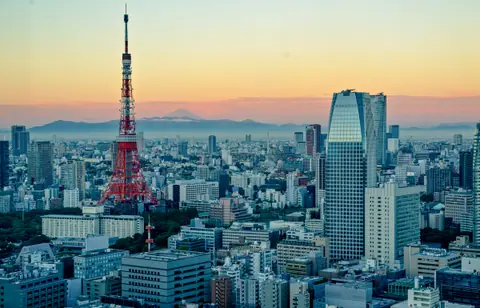
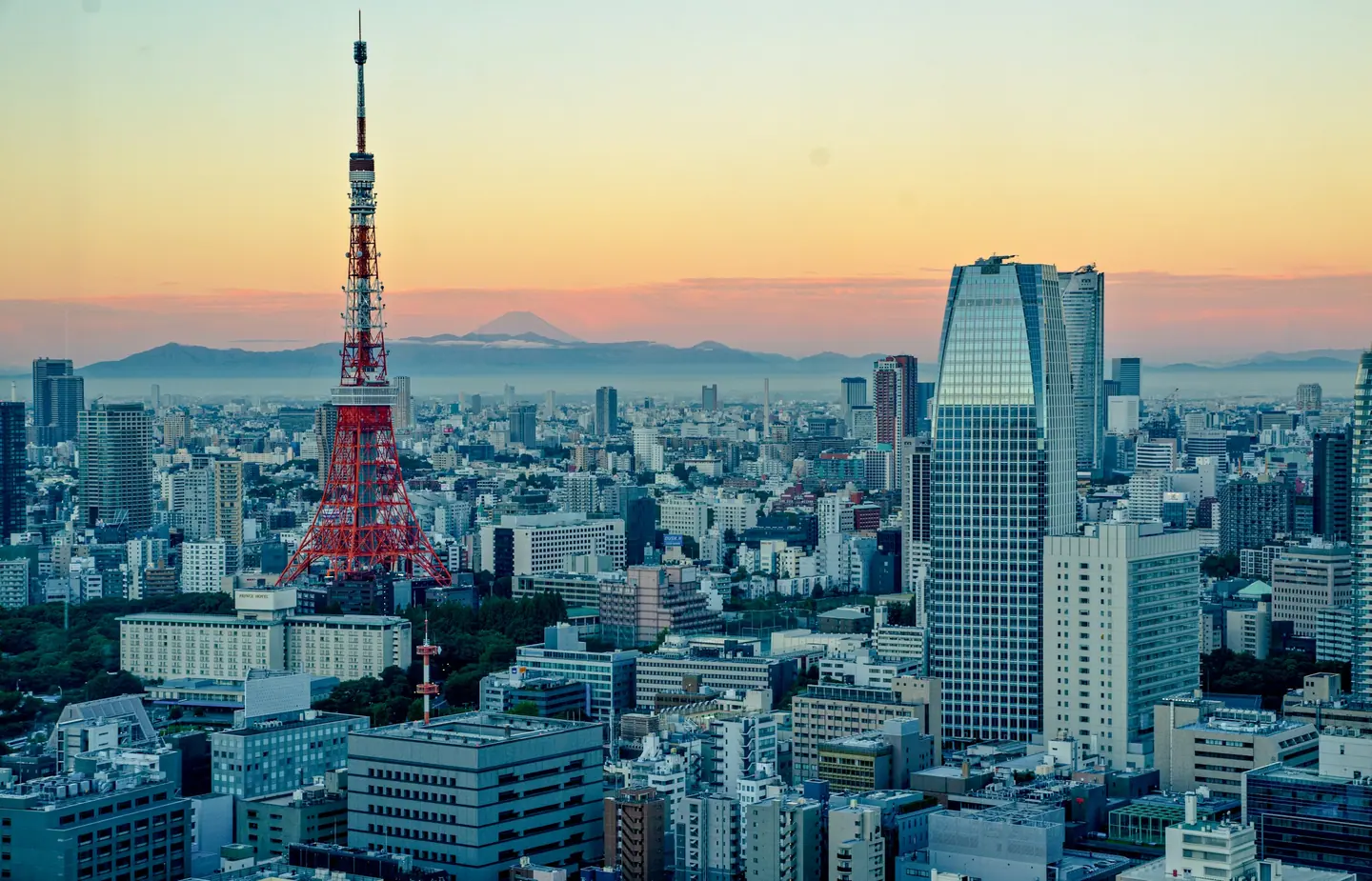
Tokyo Tower
Constructed in 1958 to broadcast television signals across the Kanto region, this 332.9-metre lattice tower is painted in international orange and white. Built with steel sourced partly from recycled tanks, it contains two observation decks. Travellers gain views across Roppongi, central Tokyo and Tokyo Bay, with Mount Fuji visible on clear mornings.
Suntory Museum of Art
Situated within Tokyo Midtown, this museum was designed by Kengo Kuma using paulownia wood and traditional ceramic panels. The institution focuses on art integrated into daily life, curating lacquerware, ceramics, textiles and folding screens. A dedicated tearoom constructed with classic timber techniques hosts educational tea ceremony demonstrations.
21_21 Design Sight
Conceived by fashion designer Issey Miyake and designed by architect Tadao Ando, this subterranean research centre features folded steel roof panels referencing folded cloth. The galleries present rotating exhibitions exploring industrial design, architecture and social solutions. Large sunken courtyards bring natural daylight into the underground concrete presentation halls.
The National Art Center, Tokyo
Designed by Kisho Kurokawa and completed in 2007, this institution operates without a permanent collection, instead hosting large-scale temporary exhibitions across twelve galleries. Its undulating glass curtain wall filters natural light into a lofty public atrium. Inside, two inverted concrete cones support elevated cafes and dining spaces above the entry hall.
Mori Art Museum
Positioned on the fifty-third floor of Roppongi Hills, this non-collecting museum curates cutting-edge contemporary art from Asian and international practitioners. Richard Gluckman designed the minimalist interior galleries to accommodate experimental installations and multi-media retrospectives. Adjoining observation decks offer sweeping 360-degree vistas across the surrounding metropolitan basin.
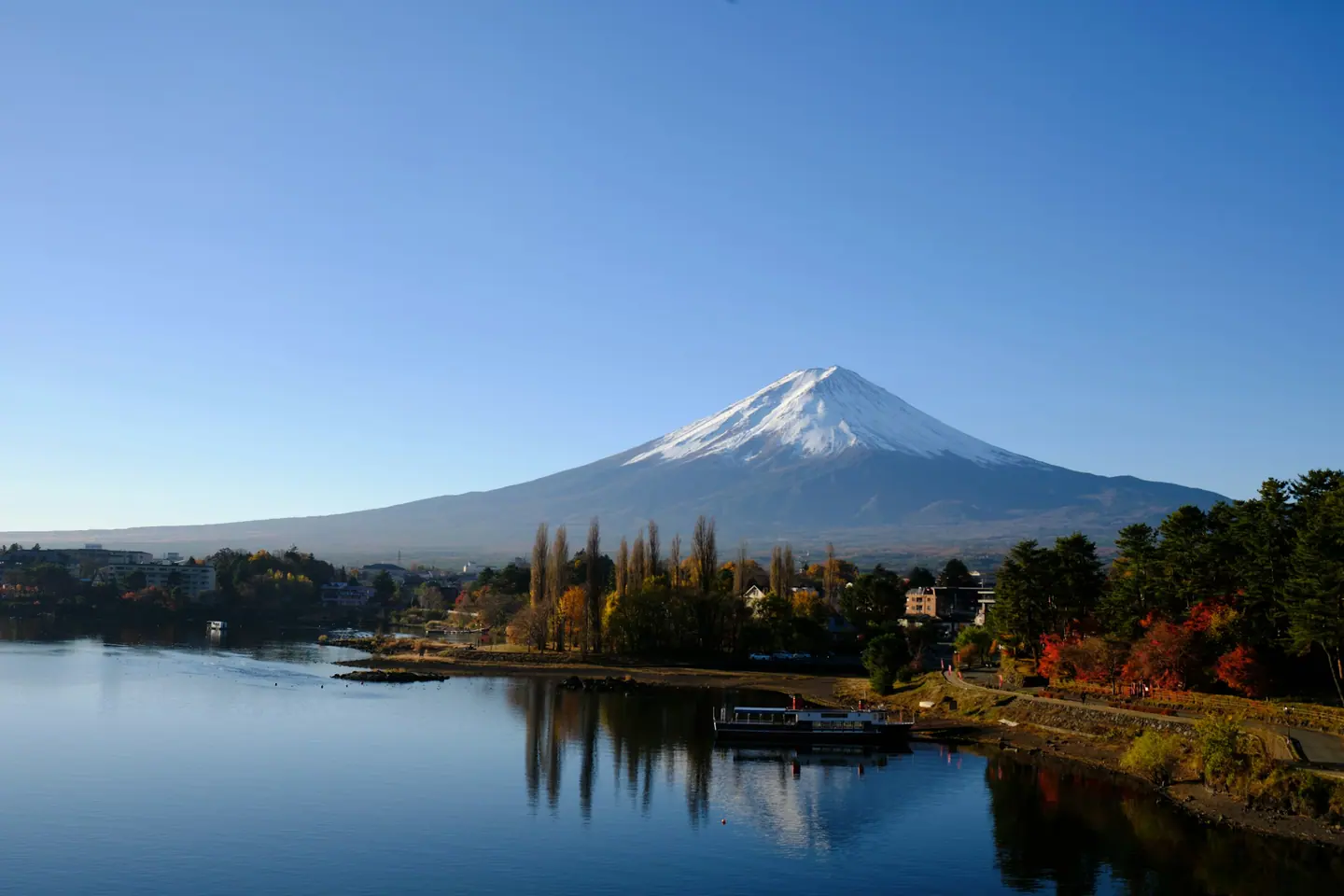
Meiji Shrine, Harajuku, Shibuya Crossing, Shinjuku Gyoen & Shinjuku
Experience western Tokyo from the forested sanctuary of Meiji Jingu, Omotesando and Shibuya Crossing to the gardens of Shinjuku Gyoen and Golden Gai.
Meiji Shrine
Dedicated to the deified spirits of Emperor Meiji and Empress Shoken, this Shinto shrine was completed in 1920. Destroyed during air raids in the Second World War, the sanctuary was rebuilt using Japanese cypress in 1958. We observe towering wooden torii gates and thousands of consecrated sake barrels along the approaches.
Meiji Jingu Museum
Designed by architect Kengo Kuma, this museum opened in 2019 to commemorate the shrine centenary. The structure blends modern steel framing with natural cedar and sweeping eaves that echo traditional Japanese roofs. Visitors can examine the six-horse carriage used by Emperor Meiji alongside court regalia and fine calligraphy.
Yoyogi Park
Originally used as military parade grounds and later as housing for the 1964 Tokyo Olympics, this green expanse opened as a public park in 1967. Wide paved pathways encircle fountains, broad lawns, and dense stands of ginkgo and cherry trees. The grounds offer open recreational space alongside the Meiji woodland.
Yoyogi National Gymnasium
Kenzo Tange designed this structural masterpiece to host swimming and diving events for the 1964 Summer Olympics. Its innovative suspension roof system uses heavy steel cables anchored to concrete pylons, creating a dramatic shell devoid of interior columns. The venue remains an influential monument of postwar structural engineering.
Takeshita Street
Running east from Harajuku Station to Meiji Dori, this narrow pedestrian street emerged as an influential youth culture hub during the 1970s. Indie boutiques, themed cafes, and costume shops crowd both sides of the corridor. The avenue provides insight into contemporary fashion subcultures and visual design trends in western Tokyo.
Togo Shrine
Constructed in 1940, this shrine honours Admiral Togo, who led the Imperial Japanese Navy at the Battle of Tsushima in 1905. Reconstructed in concrete after wartime destruction, the complex features a quiet Japanese stroll garden with a carp pond and black-pine trees, providing a peaceful retreat beside Harajuku.
Ota Memorial Museum of Art
Established in 1980 to house the extensive collection assembled by businessman Ota Seizo V, this institution preserves over 14,000 Japanese woodblock prints. Works by masters such as Hokusai, Hiroshige, and Utamaro rotate through themed exhibitions each month. The interior features tatami mat viewing areas where visitors remove their shoes.
Omotesando Hills
Designed by Tadao Ando and opened in 2006, this development replaced the historic 1920s Bauhaus-style Dojunkai Aoyama Apartments. Ando preserved a small section of the original concrete housing at the eastern end while building a modern atrium where ramps mirror the slope of the avenue outside.
Nezu Museum
Founded on the private collection of rail magnate Nezu Kaichiro, this institution displays pre-modern calligraphy, bronzes, ceramics, and textiles. The modern main building, redesigned by Kengo Kuma in 2009, features a long bamboo-lined entry hall that leads into an expansive traditional stroll garden with teahouses and stone lanterns.
Taro Okamoto Memorial Museum
This former residence and studio of avant-garde painter and sculptor Taro Okamoto preserves his creative environment intact. Visitors can view his paint-splattered brushes, unfinished canvases, and playful bronze sculptures distributed across the home and overgrown garden. The site offers intimate insight into Japanese modernism and postwar public art movements.
Miyashita Park
Originally developed in 1953 alongside the railway tracks, this park was transformed in 2020 into a modern elevated linear green space. The rooftop features a lawn, skateboarding area, and beach volleyball court under curved overhead arches. Below, the multi-storey complex integrates retail galleries and covered street-food alleys.
Shibuya Crossing
Situated outside Shibuya Station Hachiko exit, this pedestrian scramble operates by stopping vehicular traffic in all directions simultaneously. Thousands of pedestrians cross diagonally across painted asphalt against towering facades displaying commercial screens. It represents one of the dense transportation crossroads of western Tokyo.
Hachiko
Sculpted by Ando Takeshi in 1948 to replace a pre-war original melted for metal, this bronze monument honours the faithful dog Hachiko. The animal waited daily at the station for nearly a decade following the death of his owner, Professor Ueno. It remains a historic meeting spot.
Konno Hachimangu Shrine
Dating back to 1092, this shrine preserves connections to the medieval Shibuya family who once maintained a fortress on this site. The present main hall was constructed in 1612 under Tokugawa patronage and survived city fires. The grounds house a rare weeping cherry tree variety associated with warrior Minamoto no Yoritomo.
Shinjuku Gyoen National Garden
Originating in the Edo period as a feudal residence, this site served as an imperial botanical garden before becoming a public national park in 1949. The expansive grounds contain formal French parterres, sweeping English landscape lawns, and traditional Japanese water gardens connected by bridges. A modernist greenhouse exhibits tropical flora.
Hanazono Shrine
Founded in the mid-seventeenth century, this shrine served as the tutelary guardian for the postal town of Naito-Shinjuku. Rebuilt in bright vermilion concrete after Second World War destruction, it hosts Sunday antique markets and traditional performing arts festivals. It remains an important local place of worship for merchants and performers.
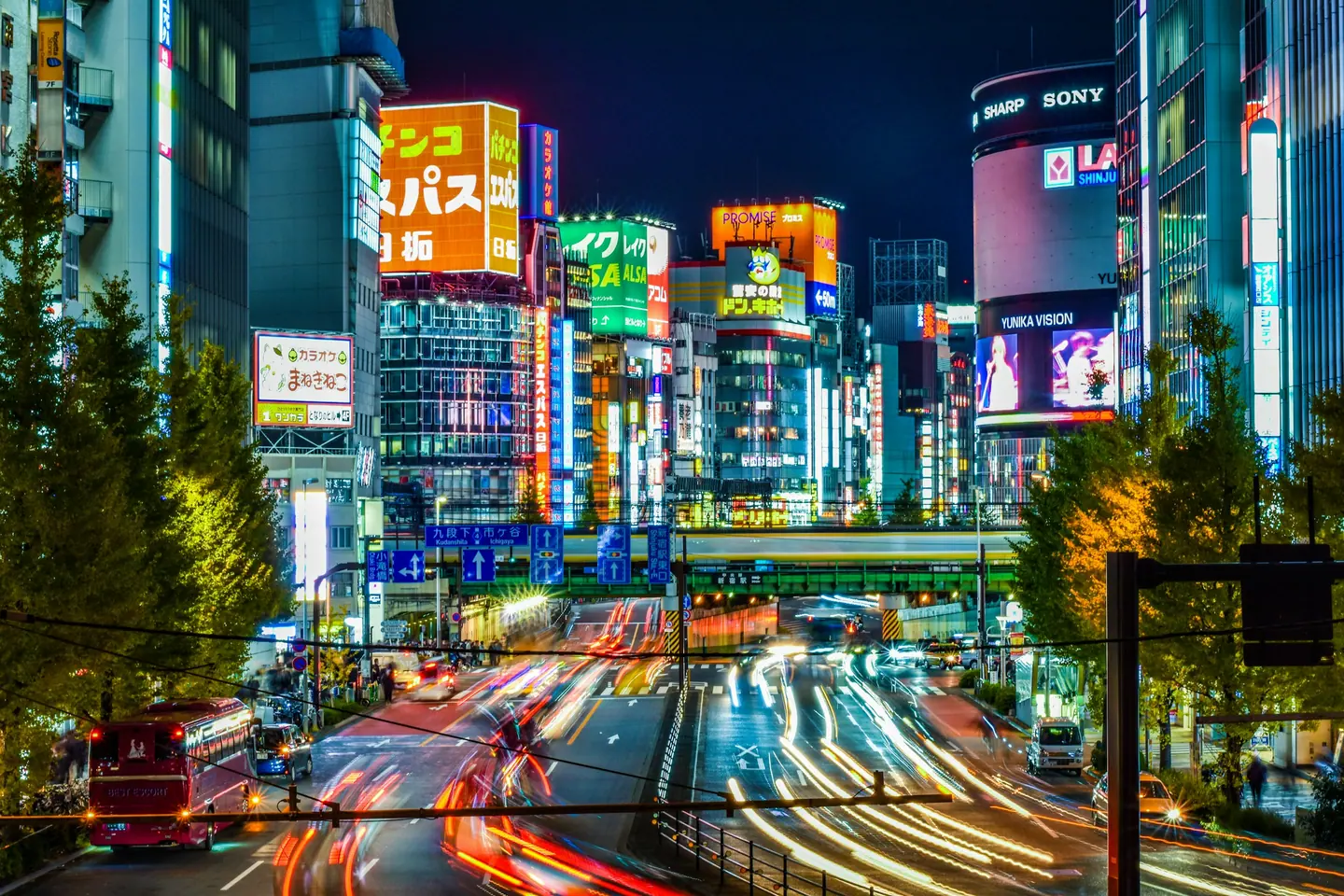
Golden Gai
Comprising six narrow alleys linked by passageways, this district preserves the architectural scale of postwar Tokyo from the late 1940s. Over two hundred miniature, two-storey timber bars stand shoulder to shoulder, each holding only a handful of patrons. The area historically attracted prominent Japanese writers, film directors, and visual artists.
Tokyo Metropolitan Government Building
Completed in 1991 to designs by Kenzo Tange, this 243-metre dual-tower skyscraper serves as the administrative seat of Tokyo Prefecture. The post-modern design references Gothic cathedral towers while evoking microchip circuitry in its granite cladding. Public observation decks on the forty-fifth floors offer sweeping views over Tokyo toward Mount Fuji.
Shinjuku Central Park
Developed on the former site of the Yodobashi Water Filtration Plant, this multi-tiered public park opened in 1968. It provides green lawns, a stepped waterfall cascade, and flowering cherry trees directly opposite the Tokyo Metropolitan Government complex. The park serves as a civic buffer between corporate towers and residential neighbourhoods.
Omoide Yokocho
Established during the late 1940s as a black-market trading area near Shinjuku Station railway tracks, this dense cluster of alleyways retains its Showa-era atmosphere. Counter-seating stalls specialise in skewered meats, soba noodles, and draft beer. Overhead wires and lantern-lit signs illustrate the intimate street patterns of postwar commercial Tokyo.
Getting Around Tokyo’s Rail Loop and Wards
Pair this route with the practical neighbourhood breakdowns, climate charts and transport advice in our Tokyo travel overview, alongside additional mapped city walks.